Freescha Freeschaland

The equivalent to a nature documentarian slow-panning his camera through a kelp forest, the compositions of Californian production partners Nick Huntington and Michael McGroarty (a.k.a. Freescha) waft with viscous resonance. This two-disc set acts as a catch-all for the vinyl, demo, outtake, and online-only rarities that the downtempo duo has released into the same waters that nourish Boards of Canada, Christ., Casino Versus Japan, and Marumari, among others. These 23 tracks collect the ripples and rivulets running through Freescha’s embryonic fluid. Highlights–equally stippled with low- and mid-lights–include “Bulb,” “Lift,” “Pequod,” “Slo-Peeq,” and “Lover Munchkin,” all redolent with pressurized snares and globules of synths.

Mass Effect: A Space Odyssey

BioWare’s Mass Effect was not just one of the most (deservedly) hyped games of 2007, but perhaps the biggest sci-fi epic to ever grace the medium, with an equally impressive soundtrack comparable to the classic scores of Star Wars or Blade Runner. A tall statement, to be sure, but few games in recent memory have been able to evoke both the feeling of atmospheric wonder and impending danger of outer space that composer Jack Wall and his team have created. We spoke with Wall about his involvement in the first installment of the Mass Effect trilogy.

XLR8R: What were your goals for Mass Effect?

Jack Wall: Since Mass Effect is an original title, not based on any pre-existing license, my goal was to create a musical signature for the game that would take it through many years of sequels and expansions. So the challenge was to create something unique and interesting that would really add to the experience and become one with the title over a long period of time.

The music captures the spirit of late ’70s/early ’80s sci-fi films, reminiscent of Tangerine Dream, Vangelis, or even John Carpenter. Did these artists influence you?

Yes, they did. In fact, this was the vision for the score put forth by Casey Hudson, the Project Director on Mass Effect. He had a very clear idea of what the music should be. My job, at least initially, was to come up with a sound to match these influences, but also to make something unique and that could stand on its own. Other influences were the Cliff Martinez score to the remake of Solaris and some other ’80s films with more heroic influences.

Has music achieved a respectable status in gaming?

I think it’s maturing nicely over time. I’ve been totally into the score to Halo 3, where Marty O’Donnell and Michael Salvatori took a very counter-pastoral approach. It ends up highlighting the artwork and gameplay as a more visceral or even spiritual experience. The music is beautiful, which sort of runs counter to what’s happening in the game, but works really well. I see that as a sign of maturity–something film music has done for decades.

What tools did you use to create Mass Effect’s haunting soundscapes?

As with almost all composers nowadays, I use computers to make the music. Since we were basing the score on the ’70s/’80s electronic masters, I used Moog synths, the [Yamaha] CS-80, etcetera, and I equipped myself with the Arturia soft-synth remakes of all of those instruments. I also use Reason, Reaktor, Absynth, Albino, Atmosphere, Trilogy, Stylus RMX, Sonik Synth 2, and the state-of-the-art orchestral- and ethnic-instrument libraries. I want to mention that although I am the lead composer on Mass Effect, I worked with three others on this score–Sam Hulick [was] my co-composer, with Richard Jacques and David Kates providing additional music.

What other games have you worked on? Any other current projects?

I worked on the Myst series for many years, Splinter Cell, Jade Empire, and many other titles–around 30 in all. Right now, I’m focused on Video Games Live with my partner Tommy Tallarico. We’re traveling all over the world performing the greatest hits of videogaming with a full orchestra and choir, synchronized to game footage and a moving light show. It’s really a lot of fun and the demand for it has been increasing at a rapid pace.

Were you a fan of sci-fi before Mass Effect?

Yes! I love the newer, more mysterious side of sci-fi, like the stories in Event Horizon, Solaris, and the much more recent Sunshine. Mass Effect really works well for me since the story starts only a few years in the future with a discovery on Mars. Since, in reality, humans are planning to go to Mars right now, you can sort of extrapolate how the Mass Effect story could actually happen. I think the best sci-fi stories are all firmly grounded in reality. You have to be able to see how they relate to real life. That’s why I’m happy about the direction of the music for Mass Effect–it has the futuristic sound from the electronics mixed with more organic sounds. Machine-meets-man–very cool stuff.

Mass Effects Audio Clips
Listen to audio clips from the soundtrack to BioWare’s Mass Effect.

Audio Clip 1

Audio Clip 2

Audio Clip 3

Audio Clip 4

Audio Clip 5

Mass_Effect_1

Mass_Effect_2

Mass_Effect_3

Mass_Effect_4

Mass_Effect_5

Times to Get Ill

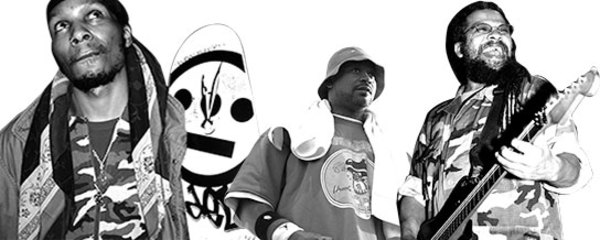
In the late ’70s and early ’80s, the nascent punk and hip-hop scenes–arguably contemporary pop culture’s most creative and influential youth-oriented movements–frequently converged, before eventually adopting differing demographics and aesthetics. Or did they? A glance at the last 30 years suggests today’s urban punk/hip-hop hybrid isn’t exactly a new thing.

1977: Bob Marley hangs out with filmmaker/DJ Don Letts in London and releases single “Punky Reggae Party.”

1979: Bad Brains form in Washington, DC.

1981: Grandmaster Flash opens for The Clash in Times Square, inspiring the hip-hop tribute “The Magnificent Seven”; graffiti artist Futura 2000 paints backdrops for The Clash’s European tour, and the band provides musical backing for the single “Futura 2000 and His Escapades”; Blondie releases “Rapture,” which name-drops Flash and Fab Five Freddy and hits #1; Talking Heads offshoots Tom Tom Club release two hip-hoppish singles: “Wordy Rappinghood” and Genius of Love”

1982: Afrika Bambaataa and Soulsonic Force release “Planet Rock,” a huge influence on hip-hop, new wave, and electro; Blondie’s Chris Stein scores Charlie Ahearn’s seminal semi-documentary “Wild Style;” Hip-hop and punk crowds freely mingle at NYC’s Mudd Club.

1983: Cold Crush Brothers release the single “Punk Rock Rap”; graffiti artist turned Warhol celebrity painter Jean-Paul Basquiat executive-produces Rammellzee and K-Rob’s “Beat Bop”; Run-DMC release “Rock Box,” the first rap-rock fusion track, and create the “rapcore” sound (later associated with producer Rick Rubin); former Sex Pistols manager Malcolm McLaren releases Duck Rock, featuring hip-hop crew the World Famous Supreme Team.

1984: Former punk band the Beastie Boys sample AC/DC on their debut Def Jam single “Rock Hard”; Bambaataa teams with ex-Sex Pistol John Lydon for apocalyptic club hit “World Destruction.”

1985: Punk rock photographer, onetime Suicidal Tendencies manager, and skateboarding enthusiast Glen E. Friedman meets Rick Rubin and goes on to shoot influential photos of the Beastie Boys, Run-DMC, LL Cool J., and Ice-T; George Clinton produces the Red Hot Chili Peppers’ Freaky Styley, combining elements of punk, funk, and hip-hop; LA ska-funk band Fishbone releases their debut EP, featuring “Party at Ground Zero.”

1986: Run-DMC release Top Ten single “Walk this Way” with Aerosmith; Beastie Boys’ Licensed to Ill becomes first hip-hop album to go to #1; Nike releases the Air Jordan I, which becomes both a hip-hop fashion statement and a popular skate shoe.

1988: Public Enemy samples Slayer on “She Watch Channel Zero”; NWA releases Straight Outta Compton, which includes the so-rebellious-it’s-practically-punk anthem “Fuck the Police.” Both albums sell millions of units.

1989: Public Enemy teams with hard rock band Anthrax for “Bring the Noize.”

1991: Cypress Hill releases their debut album, which goes over big with both hip-hop and stoner rock crowds.

1992: Ice-T’s Body Count brings a new meaning to “black metal” with their debut album, featuring the controversial song “Cop Killer”; Rage Against the Machine releases their debut album; the Beastie Boys return to their roots with Check Your Head, which trades the sample-heavy style of previous albums for live instrumentation.

1993: Souls of Mischief release 93 ‘til Infinity; Wu-Tang Clan release Enter the Wu-Tang: 36 Chambers. Both become extremely popular with both hip-hop and skate audiences.

1994: Del tha Funky Homosapien releases No Need for Alarm, a seminal influence on alt.rap; Glen E. Friedman publishes Fuck You Heroes, a photobook detailing punk, hip-hop, and skateboarding icons; Rick Rubin produces Johnny Cash’s American Recordings.

1996: Dr. Octagon’s alt.rap classic Octagonecologyst features cover art by Pushead, known for his work with Metallica and other metal/punk bands.

1998: Dancehall don Buju Banton teams with punk superstars Rancid for three songs, including “Life Won’t Wait”; Philadelphian Stevie Williams becomes first African American skateboarder to land a major sponsorship deal (with DC Shoes); Wu-Tang’s clothing line Wu-Wear peaks with $10 million in sales.

2000: Rage Against the Machine covers Minor Threat, the MC5, SoulSonic Force, Cypress Hill, and Eric B. & Rakim on their final studio album, Renegades; Glen E. Friedman co-authors “Dogtown and the Z-Boys,” an account of the early Southern California skateboard scene, which later becomes an award-winning documentary.

2002: The Roots unveil a rock-tinged sound on Phrenology, featuring guitarist Ben Kenney, who later became the bassist in nu-metal band Incubus.

2003: James Spooner’s documentary “Afro-Punk” documents the black rock experience.

2004: Stevie Williams founds DGK–short for “Dirty Ghetto Kids”–and lands distribution deal with Reebok; Platinum producer Pharrell Williams refers to himself as “Skateboard P” on Snoop Dogg’s “Drop it Like It’s Hot.”

2006: Chicago’s Lupe Fiasco releases the skate-themed single “Kick, Push”; The Pack’s “Vans” becomes a MySpace phenomenon, quickly followed by the Diligentz’ “Punk Rock”; former Bones Brigade skater Tommy Guerrero releases From the Soil to the Soul; Zion-I & the Grouch sample the Clash’s “Guns of Brixton” on the song “Trigger” from Heroes in the City of Dope.

2007: The Pack releases their major-label debut album, Based Boys; Bad Brains drop their reunion album, Build A Nation.

Van Hunt Popular

Neo-soul isn’t exactly the newest flavor du jour. Still, singer-songwriter Van Hunt soldiers on with an album of stripped-down, guitar-based, intimate funk confessionals reminiscent of both early Prince and Lenny Kravitz at his most brooding. Popular has its moments, like “Turn the TV on,” which muses on mindless commercialism, and despite Van Hunt’s penchant for booty-call-waiting lyrics, at least his sparse arrangements sidestep predictable R&B formulas. Doubtless there are some for whom choruses like “I wanna fuck you, baby!” will seem startlingly raw and direct, yet Van Hunt’s oversexed and possibly over-obsessive personality makes you wonder if he isn’t guilty of keeping it too real.

Tea and Sympathy

To kick off 2008, Oakland’s imitable indie rockers Xiu Xiu grace our Jan/Feb cover. We also get the real deal from Deerhunter’s Bradford Cox and his Atlas Sound side-gig. Then, we interview dancehall’s hottest young star, Munga, before chatting it up with Heralds of Change, Boy 8-Bit, Yeasayer, James Pants, The Pack, and Jay Haze. Plus, some fine pics of stylish indie movers and shakers like Telepathe, Crunc Tesla, Soft Circle, and more.

dublab to Host Another Sad Dance Party

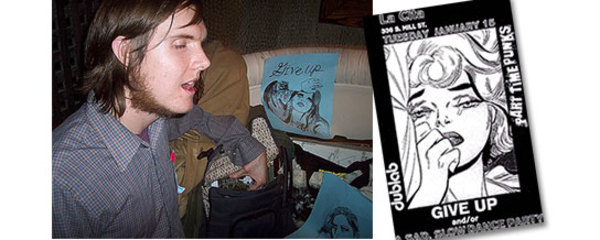
Whether its filling the airwaves with hours of fantastic tunes or reissuing compilations in digital format, we can always count on dublab to bring us great music in many different ways. That said, it’s now time for another party with the crew featuring slow, somber jams and more long faces than a nightclub packed full of emo kids. Joining them will be L.A. club Part Time Punks, who make a mission of finding and showcasing obscure music from numerous genres, many of them as sad as the music slated to be played at this party.

Event Details

Tuesday, January 15, 2008
dublab and Part Time Punks Present:
Give Up Meets a Sad, Slow Dance Party
Music By: Ale, frosty, J.Mendez, Michael Stock, BennyShambles, Jimmy Tamborello, Sam Cooper, Ben Barnes, Anh Do, and other sad sounding souls.
Venue: La CIta, 336 S Hill St., L.A.
Details: 9 p.m. – 2 a.m., FREE, 21+

Above: frosty, feeling the sorrowful vibes at last year’s Give Up. Photo by Kime Buzzelli.

Daedelus and his Monome Hold Custom Mix CD Contest

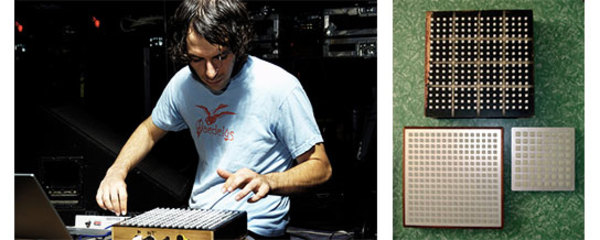
Few artists can match Daedelus when it comes to creativity, and now our favorite L.A. beatmaker has cooked up a special project for fans to coincide with the release of his live album.

From a recent press release:

“Each contestant can choose up to 10 favorite Daedelus tracks for Daedelus to create a custom mix CD using his signature piece of equipment, the Monome. People can sign up for the contest on Daedelus’s MySpace page beginning on the official album release date, Tuesday, January 22. The contest will last two weeks, ending on February 5. One lucky winner will be randomly chosen.”

Sweet. We’re heading straight to our iTunes to spend the next several days picking through Daedelus’ enormous discography to find our 10 favorite tracks. You should do the same.

Pictured above: Daedelus and his trusty family of monomes.

Interview Extras: Fighting

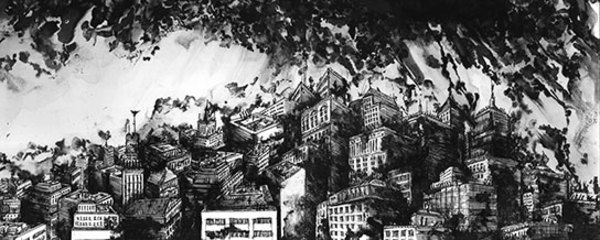
Lukas Geronimas and Niall McClelland, who collectively make up the visual art team Fighting, recently sat down to talk concepts, obsessions, and dream projects with XLR8R. Below are extras from that interview, in which the duo chats inspirations, musical choices and more.

To read the full article on Fighting from XLR8R 114, download a pdf of the issue.

XLR8R: How did you meet?

Lukas: Niall and I met on our first day of high school. We went to a special art high school in the sticks (just outside Toronto; not really the sticks). Our mothers knew each other from the aerobics class they both participated in at the local community center, and so when they found out both their sons were starting out at the same special school, they figured Niall and I ought to be friends. My father would drive me to school in the mornings (being self-employed as a real estate agent, it was his way of getting out of the house at a decent hour), so Niall’s mum arranged for Niall to get a ride with us (we lived like 30 seconds away from each other, so it was the logical thing). At first I thought Niall was a bit of a chump, and I think he thought the same of me, but then we bonded over Star Wars; now we bond over other retarded things.

What is something from your childhood that you think has had a great deal of effect on you as an artist?

Lukas: Monsters and reckless abandon.

Did you go to art school? If so, what is the most important thing you learned there?

Niall: I went to an art school. I studied Communication Design. I enjoyed the cross-pollination of art into design and vice-versa through the various programs and all that diverse interest. A frustrating part was that you didn’t choose who your classmates were; like, I didn’t necessarily want or need a critique from certain people or teachers, and the critiques I sought after were maybe outside of that class structure. It seemed the bureaucracy of the programs kinda hindered the learning. So yeah, I had a good experience for the most part, but it wasn’t without frustrations.

Do you conceptualize a t-shirt design differently from a piece of art?

Lukas: Yes. It’s awful different. People wear t-shirts, so they need to work in a way that will make people feel good about wearing them and looking at them on the street or the subway or folded on the shelf, or hanging nicely on a rack. That’s what I should be thinking about when I’m doing a t-shirt.

Any tips on making collages?

Lukas: Be confident, like you were with the glue stick and construction paper in kindergarten. Don’t cut yourself with your knife or scissors.

Name some things you always have to have by your side when you’re working.

Lukas: I need to have a lot of stuff by my side when I’m working. Mostly water, coffee, and, uh, I don’t know…everything? The internet? A stack of cash so I don’t have to think about making the work commercially viable? That’s not something I need, but I’m sure Niall and I would both like it.

Niall: I usually have coffee, water, or beer and there is usually a TV, radio, or the stereo on in the background–sometimes a healthy combo of any of these things.

What do you do when you’re feeling uninspired?

Niall: Complain, probably. Usually it’s just a lack of recreation or whatever, so I go explore something, get out of the city, or just straight up go out and party with friends. Watching documentaries and reading always help those bare patches too.

What music do you listen to while you work?

Lukas: I listen to books and podcasts or people talking on the radio more than anything else while I work; a lot of the time while working my ears aren’t all that busy, and neither is my brain, so I’m able to learn something while producing. I’m a bore with music at the moment–it all sounds fine to me, as long as it’s old.

Niall: At the moment you could almost guarantee hearing The Constantines, Bison, Early Man, or Bruce Springsteen. I listen to the same things over and over and over again, and they rotate slowly cause I don’t LIKE like a lot of music. I’m picky and it’s hard to break into the “favorites” ranks as a newbie.

Lukas, where do you live in New York? When did you move there and why?

Lukas: I live in Crown Heights, Brooklyn, in what they used to call a “cold-water flat.” [We have a water heater but our landlord’s a cheapskate and won’t hire an electrician to come fix the electricity. He just comes in and futzes about every once in a while and waits for us to holler at him again.] I’ve only been here for five months, but they have been very full months. That’s why I moved here–to get my fill.

Niall, you have an interesting entry on your blog about the drug-addled graffiti of your neighborhood. Tell us more about where you live.

Niall: Vancouver has a fairly intense drug problem, a lot of that takes place in the Downtown Eastside, generally within a neighborhood named Strathcona, and more specifically along East Hastings. There is a lot of heroin, meth, crack, etcetera going on all day, every day. So there’s the drugs, and don’t forget the booze to compliment the drugs, and then there are other things like prostitution and theft that go along with the drug situation. Plus, you start adding in the amount of people running the gauntlet that is East Hastings Street that are mentally ill or suffering from some transmittable disease… Anyways, so I live around there, and it’s crazy too ’cause it’s beautiful! It’s a really amazing place full of interesting people, great parks, neat buildings–it just happens to co-exist with all of those other problems. Basically I watch a crackhead suck some business guy off once a day in my backyard, but it’s worth it ’cause it nearly feels like living in a small town just outside of downtown.

Who is your favorite author?

Lukas: Tom Robbins. He’s a modern master.

Who is your favorite dead artist?

Niall: I have too many favorites… Goya?

What are you working on right now?

Lukas: A lot of things. Not my tan.

What band would you have liked to have been in when you were a teenager?

Lukas: I was in a sweet band called Project Charlie, although I would have rather been in Operation Ivy.

Niall: The Bouncing Souls?

Do you collect anything?

Niall: I collect things in spurts. This summer the subjects of my interest have been bones, wooden boxes, and rusted metal whatevers. My collecting is usually restricted to salvaged objects, though; I can’t be bothered really to go shopping for anything!

What was the last revelation that you had?

Lukas: It’s alright to abject. Also, being deep turns you into a real a-hole.

Panther “Puerto Rican Jukebox”

Formerly just the antics of Charlie Salas-Humara, Panther is now comprised of Humara and drummer Joe Kelly, and the addition of another member has taken the band into surprising directions. The forthcoming 14 KT God still bears some of the clipped, falsetto vocals and screaming beats that made Panther famous, but also sees more traditional, dare we say melancholy, song structures.

Panther – Puerto Rican Jukebox

Afronaut/Simbad vs. Nicole Willis and The Soul Investigators “Holding On”

Here the lovely Nicole Willis getting the remix treatment from the Bugz in the Attic camp. Willis’ soulful vocals and Afronaut’s melodies make this a broken-beat anthem for me.

Page 3019 of 3781
1 3,017 3,018 3,019 3,020 3,021 3,781