Various Summer Records Anthology

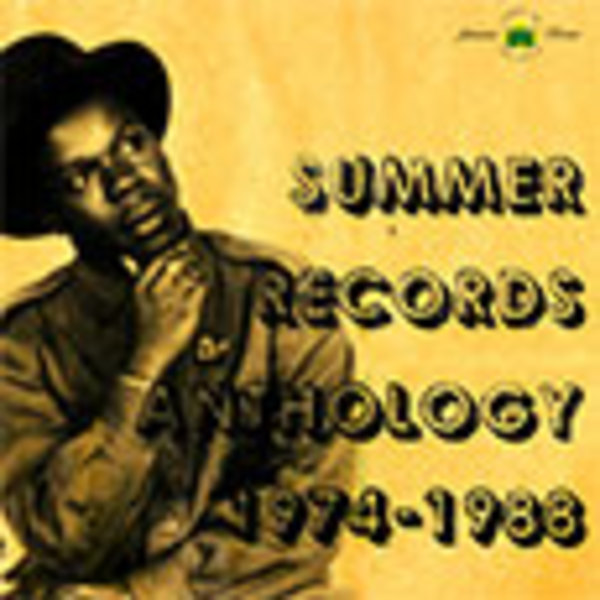
Light in the Attic continues to excavate Jamaican cultural artifacts recorded in Toronto during the 1970s, this time hitting pay dirt in the form of 15 hard-hitting roots tunes, culled from the archives of Summer Records, an obscure label run by Jerry Brown and co-founded by Oswald Creary of Half Moon fame. Summer favored gritty production values that recall Lee Perry’s Black Ark and these exceptional tracks, taken from original master tapes, feature luminaries such as Johnny Osbourne, Bobby Gaynair, and Willi Williams, as well as Brown himself. The limited-edition digipak also features a DVD with footage of Williams and Jackie Mittoo. Great stuff!

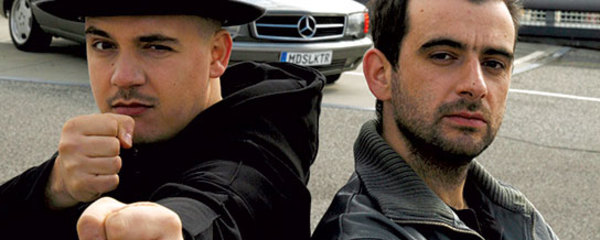
Mestizo “Disclaimer”

Mestizo has earned himself a California pedigree. The Los Angeles-based, Bay Area-bred MC’s new long-player Dream State (Galapagos4), is an interpretive ode to the Land of Milk and Honey. Produced by Julian Code (a.k.a. DJ Morse Code and Sean Julian), this jazzy, heartfelt record features guest spots from 2Mex, Qwel, and Murs, proving that Mestizo can bump with the best of them.

Mestizo_Disclaimer

Hugabass Cruises Drum and Bass

Everything 33-year-old Lionel Cardoso does reflects his role as a champion of good vibes. Since 2004, he and partner Kolsik (née Sylvain Breton) have breathed new life and warmth into the Parisian drum & bass scene with their I Love Jungle events, which have consistently drawn friendly, not-so-serious crowds by mixing liquid funk with old-school ragga and dark and tech-y rhythms. Cardoso’s heart beats at 170 bpms, and you can hear the love coursing through the DJ sets he plays as Hugabass, and in the silky, uplifting D&B he produces as The Funktastics (with Sylvain “C-Nine” Canaux).

Kolsik recently moved south to Toulouse, so I love Jungle ends its run this month with a 2,000-person breakbeat blowout at the Cabaret Sauvage. Cardoso will be sad to see it go, but it will only give him more time to work on his third venture: a clothing line called Stereo Panda. The Panda–whose look is a Japanese-style pop explosion of cartoon bears, ice-cream colors, and bubble fonts–was originally a way to promote Cardoso’s BMX team of the same name, but evolved into a full line three years ago. Since then, they’ve done collabos with drum & bass label C.I.A. and vocalist Jenna G, pop band Tahiti 80, and rapper Leeroy (formerly of Saian Supa Crew).

“I personally think that all the things that were made between 1975 and 1995 are the greatest,” Cardoso says of his influences. “This period begins with the advent of machines, and ends with the beginning of the internet. We lost the space there once was for mistakes that actually made things beautiful.”

It’s a funny comment coming from someone who does graphic design and tweaks samplers and turntables for a living. But Cardoso says he’s just trying to achieve the feeling of the past with the tools of the present. “Just as with music, we sample, deconstruct, and re-arrange all of our influences… We’re definitely trying to get into the state of mind the originators of that era were in… Our philosophy is basically the one we learned from riding BMX: be and stay original, have patience, be consistent, and do it with style.”

Gear Alert: iDJ2 Put To The Test

Numark’s remarkable solo-iPod iDJ2 DJ mixing console was announced in January 2007, made its official debut at gear conventions in August, and was finally released for public consumption September 10. So how does it perform? We’d like to know, but so far the major gear-review web portals such as Gizmodo and CNET are bereft of anything more than cursory feature lists and PR-provided photos.

Numark’s press folks crow that iDJ2 is “the industry’s first DJ-mixing console with Universal Dock for iPod, that features the ability to scratch, control pitch, key-lock, and simultaneously play two songs from a single iPod with a stunning full-color screen.” Announced at $899, the unit is selling at most retailers for about $599. That’s a fairly comparable price to Rane Serato Scratch and other digital-DJ packages. But is it worth the investment?

A quick look at the features list reveals many positives: you need just one iPod to cue multiple tracks on either deck, you can plug in multiple USB storage devices; it’s colorfully lit; its toggle pads can be set to scratch or mix modes (like Pioneer CDJ units); and perhaps most impressively, the device features a fairly large color screen.

The unit’s main panel has a lot of knobs and faders crammed into a somewhat small profile. As such, both the crossfader length, and the two controlling scratch-pad jog wheels will take some getting used to–7-foot, 6-inch pro basketballer Yao Ming would have a hard time mixing a trance set using iDJ’s smallish control devices.

For a broader set of opinions, XLR8R tuned to YouTube, where several tech and DJ bloggers have gotten a jump on things. Australia’s Gear Whores display a very balanced evaluation of iDJ2’s pros and cons. In general, host Andre Cato comes away impressed. Score: iDJ2 = 1, Haters = 0.

Next, Super DJ 1980 walks you through a profanity-laced (hey, he’s keeping it real-Ed.) step-by-step review of the unit’s many features using his band-new iPod Touch. Although his shaky video obscures some of the iDJ2’s menus and functions, 1980 also gives the unit a thumbs-up. iDJ2 = 2, Haters = 0.

Finally, GearWire.com’s Cross Talk video review paints a less-friendly picture. The CNN Hardball-type discussion show features three “dudes” waxing technical on new gear. It’s clear from their review that they don’t get down with MP3-based DJing due to the file’s poor sound quality. The dudes then rail on iDJ2 as a “bandwagon” product, adding “it’s boring; not enough features; there’s no way to nudge tracks…you’re not going to do real DJ work with this…” These guys have no problem writing iDJ2 off as a toy. iDJ2 = 2, Haters = 1!

We’ll leave the final word to the folks at ScratchWorx who have a straightforward video review on their site, and sum it up with this online statement: “Love it or hate it, Apple has the MP3-player market sewn up. And the way it’s heading, it’s soon to have the video market in its pocket as well. A huge number of DJs carry iPods around with them as a matter of course so it makes sense to allow a DJ to use their iPod as their crate. All that was needed was a viable console to play them with. The iDJ2 does everything you would need to rock a party and then some.”

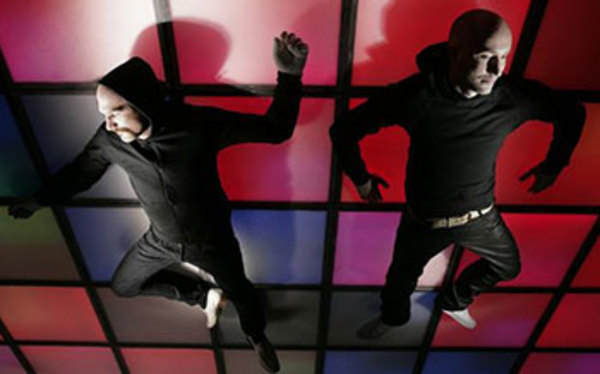
Modeselektor: Selekted Works

XLR8R: How did you meet each other and what did you think of each other when you first met?

Gernot Bronsert: I guess the first time we met was 1993. I met him at school. We went to the same school, but he is four years older than me. I was just a little boy. He was a little boy as well. I remember exactly where. It was in a chemistry room, he had some graffiti paintings on his books and it was the first time that I saw things like this and I was like, “Wow.” But I guess he didn’t recognize me at this time. I was too small. I was 11 or something like that.

Sebastian Szary: I had an exam, so I had no time to see what the little boys were doing.

Gernot: Later, we started DJing together in a club. We had a little weekly club night on a Wednesday in Berlin. [We played] everything, but no techno. We tried to make something different. We both grew up with techno, we are techno kids, we went every week to the Tresor club. We were socialized with techno and later on we tried to find something different.

Sebastian: I remember we played jungle with high-pitched vocals.

How would you describe your sound?

Sebastian: At the end of the day, we still can’t say how we sound. It depends. We’re telling stories to music. We are musicians and we are sitting every day in a studio and we are creating music. We are always searching for the best sounding bass drum.

Gernot: All genres and styles are old-fashioned.

How did you originally meet the graphic designers from Pfadfinderei, with whom you often collaborate on your visuals?

Sebastian: We have been friends for 10 or 12 years. We started a weekly party together in 1998. This party was called Labstyle, and later Labland. [It was] 50% visuals and 50% music. The idea was to watch with the ears and to hear with the eyes. The first two years it was in a small Kurvenstarr hip-hop place we did that every Thursday because they had a video beamer. Then, as it became bigger, we moved to the WMF and then we called it Labland and we did that there for a bunch. Gernot, tell the Labland story.

Gernot: “The Labland story.” It was the first party in the new location. It was 2002, exactly the night when the Deutschmark changed to the Euro. Jamie Lidell was playing. I don’t know how high his fee was. The Euro was 100, the Deutschmark was 50 Euro. I was paying his fee in Euro but with the value of Euro, I gave him the double fee. Then after I was like “Shit, where’s the fucking money gone?” It was like a hit in my face. Shit, I gave him double. We were too shy to ask him [for the money back] two days after. He did a great show. He did the greatest show he ever did

Then we had a DJ set at WMF. We did a conga line throughout the whole club and the party was very excessive. Jimi Tenor was standing in the corner and he was pissed that the party was so good. He was living in New York at the time. He was there with Khan, and Khan said, “Yeah I want to stay here” but it was too much for Jimi and he had to leave. It was really hard clubbing. They couldn’t sell any cocktails because everyone had destroyed all the glasses by smashing them.

Are you still partying so hard?

Gernot: We try to keep our body and mind clear. We try to be not so wasted because we play two or three times per weekend. We don’t use [drugs]. We drink alcohol and smoke pot. I like the feeling of being awake for two days without chemicals helping your body. I see it in a sporty way, like it’s a show of skills. Just have good food, good drinks, and then you can stay awake for seven days! Watch Charlie [Sebastian] and me, we are looking fantastic!

What is one band or artist that you both really like?

Gernot: Shellac, Steve Albini. He was born in Missoula, Montana. We wanted to go to Chicago and visit him but there was not enough time. Also we used to be big Aphex Twin fans. And we like rap, especially the stuff from New York, and the Bay Area, like E-40 and Keak the Sneak.

Tell me some crazy stories from your U.S. tours.

Gernot: New York is my favorite town in the U.S., but last time for me it was depressing to be there. Maybe I was too stoned, but the mood and the mentality of the people wasn’t the same as the West Coast. I remember right after 9/11, we spent a couple of days there with freaky New York artists and they are very critical and enemies of the system. We arrived by night in New York and we went to Ground Zero with Cowboy Mark (a New York DJ). Mark was wearing a hat with an American flag; red, white and blue with silver stars, and a Vietnam veteran’s jacket. He was falling down in front of Ground Zero praying on his knees, screaming, “Why? Why?” and putting his fists into heaven like he was asking God why. It was a performance. He’s kind of crazy. The cops were watching–soldiers, actually–and standing there with guns but they couldn’t say anything.

In New York, you can’t drink alcohol on the street and you can’t smoke inside. What can you do? It’s not the club culture that I was expecting.

That trip was also the first time I heard hyphy and really paid attention to the lyrics. They’re singing such stupid things, like “I wear my white tee.” That’s so weird. My favorite song of the hyphy movement is this R&B track with a very glitchy melody. In the song the guyssings that he is wearing a white tee and every day he buys a new one for one buck. That’s genius. I like it.

What do you do when you’re lacking inspiration?

We eat. Sometimes we get really fat. We are inspired by ourselves, and smoking cigarettes and drinking beers and coffee. We have a studio, but it is more a place for hanging with friends and drinking beer and thinking about God and the world and New York and Oakland hip-hop.

This transcript was taken from Vivian Host’s 2006 interview with Modeselektor, via telephone from Berlin. To read the Modeselektor feature from XLR8R 112, download a pdf of that issue.


Black Ghosts: Get Spooked

It’s getting close to Halloween, and some scary-good music is starting to creep our way. Thanks to the break-up of indie band Simian, two great projects have emerged from its corpse: the on-every-hipster’s-lips Simian Mobile Disco and a second, equally good offshoot, Black Ghosts.

Some of you may have caught their sick single “Any Way You Choose to Give It” with Playgroup’s nasty Baltimore breaks mix on Norman Cook’s Southern Fried imprint. One thing’s for sure–Black Ghosts’s Simon Lord and Theo Keating (formerly of Simian and The Wiseguys, respectively) can rock the funky beats and sing. They have a knack for combining dance-punk, indie-pop, and electro-breaks, and somehow do it without sounding lame.

Now signed to a U.S. deal via IAM Sound, the limey wraiths’ debut EP will drop into your goodie bag on October 31. The four-track EP features the original mix of “Any Way…” plus the infectious electro-goth ditty “I Want Nothing,” sure to be an iPod mainstay for the black-bangs-over-eyes crowd. “Full Moon” is a moody mid-tempo ballad made for smoking cigarettes on the front porch at midnight.

The EP is rounded out with the vaguely Crowded House-sounding “Something New.” Don’t let the comparison throw you, though–Black Ghosts are uncommon pop-geniuses with a knack for catchy songs that avoid clichés. And if you’re too cool for that, then just check the band’s specialty site made for dance snobs like us, Black Ghost Remixes, where you can get your fill of BG’s reworks of The Gossip, Charlotte Gainsbourg, and Skream, plus Plastician’s and Wajeed’s remixes of the Ghosts! Scary!

White Williams “New Violence”

The newest member of the Tigerbeat6 roster is far from a bassy breakcore producer or an over-the-top art-rock outfit. White Williams (a.k.a. Joe Williams) is the 23-year old psych-pop phenomenon who’s toured and worked with everyone from Girl Talk to Drop the Lime over the past few years. Williams’ eclectic and colorful debut, Smoke, is characteristic of his growing potential.

White Williams – New Violence

Etienne Jaumet Repeat Again After Me

Etienne Jaumet is the mastermind behind Zombie Zombie, a duo whose project was to rewrite a Dario Argento movie soundtrack. Jaumet’s own solo tracks usually sound like beautiful melancholic synth loops, somewhere between Terry Riley and Raymond Scott. A 12″ with a Joakim remix was released earlier this year, and their great album will be out in January. This first 12″ is more Goblin-oriented, and it’s killer Åme remix will make you like the saxaphone again. Definitely one of the next months’ floor fillers!

Expats in Paris

Mike Ladd
In 2004, hip-hopper Mike Ladd was tired of paying New York rent; after finding a temporary rent-free situation in Paris, he made the official move to the 9th arrondissement–and ended up marrying his landlord. It was the sort of situation that blows away most people’s expectations of the city, but aside from that, his idea of Paris is less than romantic. “Paris is not cool. It’s a great place to retire after a career in arms dealing or real estate,” he says. “Any romantic notions of Paris as an artists’ haven were gone by the early ’70s in my opinion… What made Paris so exciting in the early and mid-20th century was the combustion of very old modes of living colliding with technology and problematic ideas of internationalism. You have to look elsewhere for that concoction now. I’m here for personal reasons and that’s what makes the living easy.”

Ladd finds Paris’ suburbs an interesting and familiar mix. The suburbs are “a different city altogether,” he explains. “Much more dynamic and diverse; more like Brooklyn and the Bronx (except everything closes at 11) and more cosmopolitan.” So what’s the weirdest facet of French vs. U.S. life? “Our cable TV,” he says. “Press the green button and most shows switch to English.”

Favorite French expression: There’s a magazine store run by an old Asian guy near Porte de Versailles. He can get you any magazine in the world, especially the ones that come with toys.

Favorite French word or expression:Touche mon palet. “Touch my cookie.”

Heartthrob’s Jesse Siminski
“Paris is not the first place one thinks to move to for techno music,” says Jesse Siminski (a.k.a. Heartthrob), but it’s certainly shown much promise for the young producer, who last called New York home. The club scene is good, the trips to the rest of Europe are quick and cheap, and “when some interesting things started to develop with [Berlin label] Minus [to whom Heartthrob recently signed], it just made sense to go for it,” he claims.

Having been in Paris for two years, Siminski laments the city’s lack of good Mexican cuisine, but claims that his neighborhood near Place de la Republique in the 10th arrondissement has “plenty of great places to eat, and creatively minded boutiques around. There is also a lovely canal a few blocks away where people hang out, drink bottles of wine, and people-watch. It’s young and energetic without being too trendy.

“Before I had moved to Paris, I had never visited,” states Heartthrob. “I had an idea that, like New York, it would be big, fast, and would allow access to most things–like any good city should. I guess I didn’t expect it to be quite as sleepy. Many of the streets are dead after 12 a.m. But as someone working at nightclubs most weekends, I don’t mind the peace.”

Siminski’s tourism tip? “I love walking along the Seine near Île de la Cité, in the very heart of Paris. From here you can see the origins of the city and most of the more known historical behemoths in the distance. The city’s elegance is amazing.”

Most romantic place in Paris: The Palais Royal is gorgeous and definitely warms my heart. It is just across from the Louvre, but at the same time out of the way and a bit hidden. There are arcaded walkways and beautiful formal gardens to stroll around in. And on one side, one of the best and oldest three-star restaurants is stationed–Le Grand Véfour. Napolean once ate there.

Favorite French expression:Dégueulasse! “Nasty!”

Beirut’s Zach Condon
“All the French films got to me as a kid,” says Beirut’s Zach Condon about why he briefly moved to Paris this summer. Though Condon expected his apartment to be “five square feet and full of mold,” he says, “it was actually quite beautiful. Other than that, things were like I imagined them to be, but I’ve spent enough time in Paris to know how the city runs. It’s made being in New York feel a bit inhuman…

“I was in Ménilmontant–the 20th arrondissement–a beautiful, uncrowded neighborhood running up and down rue des Pyrénées near Place Gambetta. It had all I wanted nearby: good bars, really good shows (The Kocani Orkestar at La Fleche d’Or in the south, and farther north I saw Mahmoud Ahmed in Parc de Belleville).

So what’s the biggest draw of Paris? “People seem more genuine there. Life is down to earth without being boring. Food. Wine. I’m trying not to repeat myself here. The city has no pretensions of being something other than it actually is… I was skating near the Eiffel Tower and an old man was walking across the bridge au natural, sans shorts. He seemed to truly enjoy it. There was also a guy looking up girls’ skirts with a mirror in the metro…”

Most romantic place in Paris: At the movie theater, watching bad American blockbusters with French subtitles.

Favorite French expression:Un dernier verre pour la route. “One last drink for the road.” I named a song on the new album after that phrase. It was a phrase my friends and I came to use a lot in Paris–bittersweet.

CocoRosie
Bianca Casady of sister act CocoRosie moved to Paris “by accident” five years ago. “It was available, like falling into an easy relationship,” she says. “It was so miserable at first… I went there as a lonely, depressed model and almost killed myself.” But things started to look up when her sister and musical partner Sierra showed up. The two now live in the 18th arrondissement (“the more North African part”), where they feel at home with their other non-French neighbors. “We understand each other’s French. [There’s] lots of action on the street corner at night. [It’s a] crackhead convention,” Casady explains. But the best part about their tenure in the French capital is the anonymity it offers them. “It’s like we’re invisible on the street, no matter what outrageous thing we’re doing,” says Casady. It’s not all they take solace in there, though. They also enjoy being “drunk by the train tracks with our tape recorder/boombox… and ‘The Track’–the outdoor track that we ran at at the local gym, where there was only boys–mostly North African.”

Most romantic place in Paris: Luxembourg Park.

Favorite French expression:Je suis l’homme sauvage. “I am the wild man.”

Chromeo’s Dave One
Pensionnaire étranger is hardly the title we Yanks might normally assign to Chromeo vocalist and Montreal-via-New York expat Dave One, but it suits him fine for his one-year stay at Paris’ Ecole Normale Supérieure, where he’s doing post-grad research for his Columbia University dissertation. He lives in Belleville, “a very bustling, cosmopolitan neighborhood in the north east–the Parisian equivalent of Jackson Heights, Queens.” Besides the scholastic offerings he’s had from the Sorbonne and the ENS, Chromeo’s also benefited from the move, mixing Fancy Footwork with Philippe Zdar on Serge Gainsbourg’s old desk, designing its album artwork with Surface to Air, and shooting the cover with ’60s erotic photographer Harry Peccinotti. Not to mention “that fall evening when Pee [Thugg, from Chromeo] and I went to Justice’s studio and we played each other our still-unfinished albums,” reminisces Dave.

So it’s all good, yeah? “The hardest thing about my move,” he offers, “aside from being away from the fam back home, was dealing with the notoriously Kafka-esque French bureaucracy. And seeing Sarkozy win the elections, of course.” His foil to all of the nonsense: “The most un-Parisian album ever: Springsteen’s Born to Run! I discovered it last winter–yes, that late, believe it or not–so it was one of the soundtracks to my year in France, and my ticket to New York nostalgia.”

Misstress Barbara
Montrealer Misstress Barbara (a.k.a. Barbara Bonfiglio) is just one of a number of Canadians (like Fesit, Gonzales, and Buck 65) who’ve made at least a partial move to Paris. She still retains her Montreal address, but uses Paris as a base for her frequent European tours. It’s home, but “some people are very cold here, not too friendly. It’s completely the opposite with Montreal!” she states emphatically. That’s not to say Paris is without its good times, obviously. Aside from falling in love in front of the Louvre, she’s also a big fan of her second-home neighborhood, the 11th arrondissement; “It’s a more popular neighborhood [with] a lot of cultures and lots of restaurants of different cuisines,” says Bonfiglio. For her, the city still retains its idealistic charm: “It’s beautiful, it’s romantic, it’s classy, and it’s also a pain in the ass when it comes to dealing with the weather,” she laughs. “There are an incredible amount of cafés and great restaurants, cinemas, parks, and museums. You never get enough of it.”

Most romantic place in Paris: There are so many. I would say any of the bridges, or l’Ile St-Louis, or Jardin des Tuileries, the Louvre, Montmartre.

Favorite French expression: I have many I like, but one I use sometimes is J’me barre! It means “I’m outta here!” but in a more mad way.

Page 3074 of 3781
1 3,072 3,073 3,074 3,075 3,076 3,781