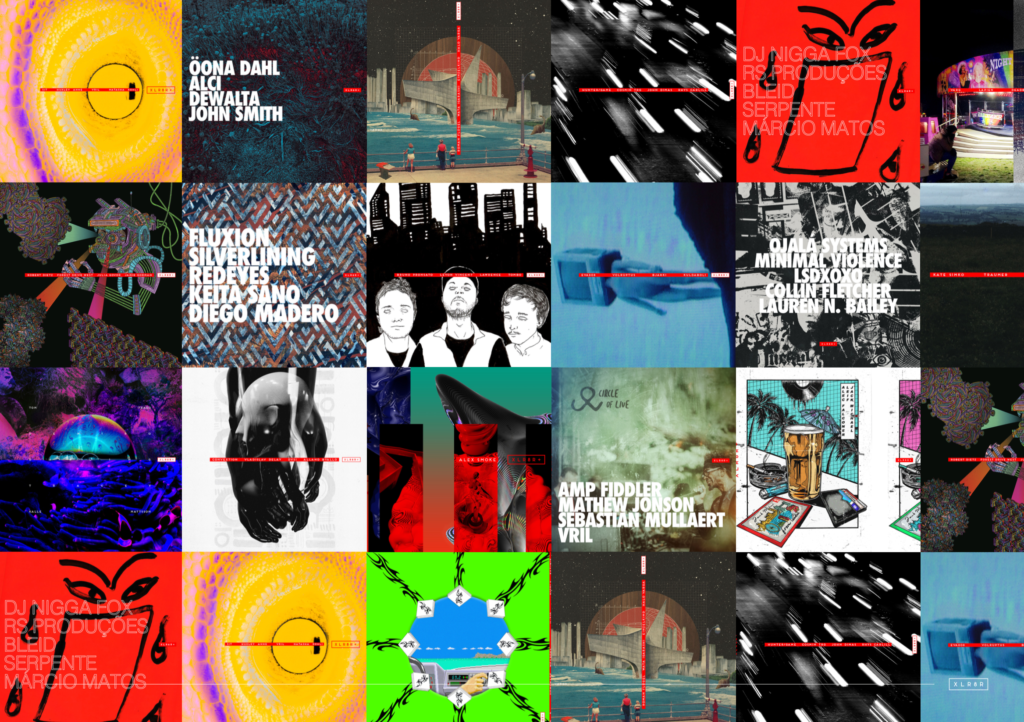
Sly Dunbar is perhaps best known as the “drum” half of original D&B gods Sly & Robbie (whose credits are too numerous to mention). Pressure Sounds’ latest excursion into dubwise version helps explain how Sly (leader of The Revolutionaries) became a deity of riddim-given free reign to tinker and experiment with his sound at the legendary Channel One studio, he did the damn thing. Old-school dub albums are no mystery: They work best when they’re thick, heavy, and dry. Drum Sound offers no real surprises for seasoned echo heads, just killer dubs of 16 classic Channel One tracks.
The Budos Band The Budos Band II
On II, The Budos Band doesn’t achieve anything remarkably new-not that they need to. The Staten Island crew continues to draw the sweat and dirt from heavy funk, still blowing out music that’s as alive today as it would have been 35 years ago. The brassmen sing through lungs seasoned by second-hand smoke from a hundred nightclubs, as best heard in the spy-movie dirges “Ride or Die” and “Scorpion.” A great sense of space enriches the tight-fisted Latin groove of “King Cobra” and the interstellar funk voyage of “Mas O Menos.” It’s referential, but don’t call it “retro.”
Maps We Can Create
“I found a love but lost my soul”. Those kinds of lyrics are par for the course with music as intensely heady as James Chapman’s (a.k.a. Maps), which buries vocal sentiments under broader instrumental ones in the vein of MBV or, more precisely, German folktronic producers like Guitar. But Chapman is not simply the latest guy storming the heavens. He has a profitable intimacy with melodies and atmospherics that bulls-eyes your aural sweet spots. His experimental melding of shoegaze and Brit-pop’s best bits is edgy enough to place him a cut above the bedroom-composer competition.
Tactile/Atlantic Connection Can’t Stop b/w Situations (Stress Level & TC1 Remix)
Another strong release from Dispatch. The “Situations” remix is the cut I’ve been playing for a while now. Stress Level & TC1 have gone deeper on their remix, adding a darker bassline and tuffer beatz than the original. Although well-made, Tactile’s “Can’t Stop,” with its vocodered vocals and growling bass, may be just a bit too hard for my sets.
Swayzak Some Other Country

Swayzak’s James Taylor and David Brown have become some of the more reliable producers in the biz, and their fifth album doesn’t tinker with their signature sound too much: It’s still full of pop-friendly, atmospheric tech-house, where dubby, echoing beats abound. Some Other Country sounds a bit more contemplative than their prior full-lengths, but similar to their spellbinding DJ sets, Swayzak works this veneer of melancholy seamlessly onto the dancefloor. Check Richard Davis’ silky vocals on “No Sad Goodbyes” for nostalgic warmth, while the trance-pitched “Pukka Bumbles” is the next 2 a.m. club anthem, sure to inspire remixes aplenty.
Loading: New BioShock Content, College Football, Streetfighter is Reborn
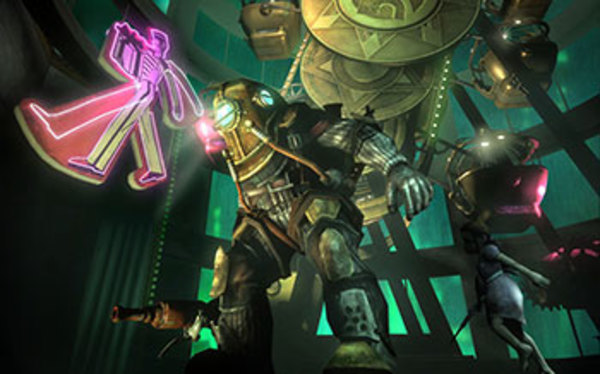
New BioShock Content Soon?
Some industrious hacker types have (not surprisingly) gone to work on BioShock, and have uncovered some curious bits of text that may give the game some life, post-Halo 3.
The text unfortunately isn’t a clue to a crappy looking sex simulator à la Hot Coffee, but instead appears to be some new plasmids, the injected genetic modifiers which are the game’s main means of bad-assery.
These new juices appear to include: Machine Buster (kill machines quicker?), Vending Expert (everything in vending machines is way cheaper?), Sonic Boom (blow dudes across the room?), and EVE Saver (um, save EVE?).
This could, of course, be left over code the creators decided wasn’t worth including. Or it could be fun new ways of dispatching those garter-wearing sluts who throw hooks at us from the ceiling. Seriously, bitches. Step off.
Black College Football Game Coming Soon
Nerjyzed (we’re supposing this is meant to be pronounced like “energized”) Entertainment yesterday announced a new PC game coming this November that’s likely to raise some eyebrows, but one that also faces stiff competition in the shadow of Madden Season: Black College Football: The Xperience (yes, no E).
From the press release:
“Black College Football: The Xperience is a sports game that captures the unique culture of the black college football experience, fusing advanced videogame design with music and entertainment. Nerjyzed has secured an exclusive five-year licensing agreement with three HBCU conferences, including the SWAC, SIAC, and CIAA, several schools within the MEAC, as well as independent HBCUs. The game features more than 40 teams, bands, and mascots, interactive halftime shows, realistic stadiums, play-by-play commentary, and ten authentic Classics.”
Using the Unreal 3 engine, the games graphics look decent, if a little choppy. And while many arguments could be made for/against a game such as this, we just hope that it not only includes a fraternity branding mini-game. but also opens the doors for such titles as the Samoan Football Xperience starring Junior Seau and Tupo Tuupo or the Chinese Basketball Xperience with Yao Ming and …well…probably just Yao Ming.
Street Fighter Movie Director Named
While most of us cringe at the thought of the wildly ridiculous Street Fighter movie from 1994 (starring Jean-Claude Van Damme and poor, poor Raul Julia), it seems Capcom has decided to give it another go earlier this year by announcing another film based on its famous fighting game franchise.
And today they unveiled the director of what is sure to be at least 35% better than the first movie–Andrzej Bartkowiak!
Who?
The dude apparently directed such classics as Romeo Must Die, Exit Wounds, and Cradle to the Grave. So he is sure to include at least one rapper/R&B star in the movie PLUS he has a ‘J’ AND a ‘Z’ in his name. Double Points.
Sigh.
Though as dubious as the director may be, the writer, Justin Marks, gives us hope. Penning the upcoming Voltron, Green Arrow, and He-Man movies, Marks appears to be a true nerd and may just do Street Fighter justice. How, we have no idea.
Do It Alright
Matt Edwards In The Studio
In retrospect, 2001’s “bastard pop” phenomenon was all about the triumph of wit over production prowess. However, as Radio Slave, Matt Edwards and Serge Santiago were among the few artists able to balance both. Their mash-up of Kylie Minogue and New Order (“Can’t Get Blue Monday Out of My Head”) became so popular that Kylie performed the remix at the 2002 Brit Awards–a move that legitimized mash-ups and scored Radio Slave more high-profile remix work.
Radio Slave parted ways in 2003, but Matt Edwards became a successful producer in his own right. Under the aliases Rekid and Quiet Village, he pushed forward a slower, atmospheric style of bassline house, its production so idiosyncratic that a few people tried (and failed) to come up with a new genre name for it. One such attempt, “smack house,” was applied to the sludgy, deliberate pacing of Made in Menorcaa, an album made under Edwards’ Rekid moniker. Thankfully, that name didn’t stick, though the heavy reverberations of Menorca and Edwards’ Rekids imprint–with releases like “My Bleep” and “Next Stop Chicago”–have certainly expanded house’s boundaries exponentially. Here, the Brighton, U.K.-based remix master gives you a look behind the ones and zeroes.
XLR8R:What prompted you to start doing mash-ups and re-edits?
Matt Edwards: Mostly a frustration with the lack of good remixes out there. During the ’90s, it became this thing where artists were hardly using any of the elements of the original song, and it got hard to tell what was and wasn’t a remix. But there were so many records in the ’80s that had these alternate mixes… People used to say we hardly changed the songs we remixed, but I’d rather work with the original parts of a song, EQ and effect those parts, and put it back together.
Was it hard transitioning from the mash-up mentality to original production?
No. When Serge and I were working together, he was doing the engineering and I picked up a lot. I realized around that time that I really liked the technical side of things, so I started learning how to use a few programs like [Fruity Loops] FL Studio, Acid, and Cubase. I had been into doing graphic stuff on PCs prior to producing, so I think getting into the technical part came more naturally.
Do you do most of your sequencing in software?
I’ve never even used MIDI! I’ve always stuck to audio, taking bits from all sorts of things in software…like, one part will be done in FL Studio, and I’ll export that out and arrange it with Cubase. It’s a little more manageable; you can control the fades of individual [drum] sounds with so much more precision that way. I also use a program called Buzz, which is this freeware synthesizer. It has all these generators that let you load up drum machines or effects–you can get amazing sounds from it.
What do you like most about FL Studio?
That you can throw in so many sounds from the side browser and within minutes have a groove going! Also, for me, it’s the quickest way to see if a sample-based loop track will work. A lot of people shake their heads in disbelief when I tell them I use FL Studio, but one look at what you can do [with it] and they’re like, “Fuck! That’s so cool!”
Does arranging in audio ever get cumbersome?
It’s not difficult when you’re working with audio to rearrange what you’ve done and add and subtract elements to build different mixes, et cetera. I have all my [parts] on individual tracks, so I can run new EQ and different effects over them, or cut them up differently and place them elsewhere. I use the Waves plug-ins a lot for that sort of thing, the [Renaissance] reverb especially.
How do you approach quality control when you do a remix?
If the DJs are playing it–guys like Villalobos and François K–I think that’s one way you know it’s good. But I usually make several different versions of a track, and send all those versions off to labels or artists when I’m done. I might send seven versions, but the label might only take three of the mixes, for example.
What’s the most important thing in your studio, aside from your computer?
That would have to be my monitors. You just can’t make a good track if you can’t hear what you’re doing. I’ve got some Dynaudio monitors that are fantastic–the BM5As, I think they’re called. They’re amazing–such a clear sound. I really don’t understand that school of thought where you should use crap monitors…you might as well enjoy what you’re doing, right?
Gear Alert: Cortex dMix-300 iPod Mixing Solution

Cortex’s newest piece of DJ technology, the dMix-300, carries a sophisticated punch, allowing any DJ to excel far beyond many digital DJ devices on the market. The device features an iPod-friendly dock (both Nano, and full-size models work), an LED displaying pitch, track title, and time, two jogging wheels for precision cueing and scratching, and USB connectivity for external hardware. Simply put, it’s the long-lost hub between the digital and analog divide.
In addition to the aforementioned specs, the dMix also carries a detailed search function (artist name, song title, album, or keywords), making for easy MIDI transitions in between songs. And if mixing exclusively with an iPod is not your thing, you can also load CDs and CDRs (with a compatible drive) into the system’s memory. For the lazy, “there’s no one here, I’m gonna drink” DJ, there’s an adjustable auto-fade feature that can blend any playlist instantaneously.
It may not be ideal for a vinyl-only candidate, but the dMix-300 is light years ahead of its digital competition, even at $600.
The dMix-300 is available now from Cortex.
Animal Collective, Chromeo, Simian Mobile Disco, and More Play Pop Montreal
A grip of XLR8R-approved artist will descend on theaters, lofts, loading docks, and traditional venues around Montreal in October, for the sixth edition of Pop Montreal, the city’s annual music, film, and arts festival.
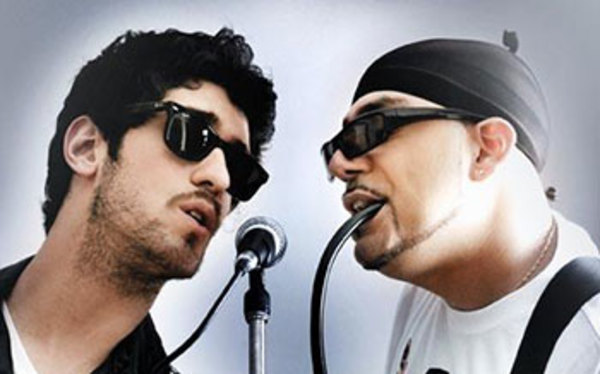
The festival organizers have covered their musical bases quite thoroughly (and organized the festival’s events page extremely well!), enlisting over 300 artists from multiple genres to take the various stages. Animal Collective shares space with Eric Copeland of Black Dice, the Beastie Boys and Chromeo go head-to-head (???), and A-Trak and DJ Mehdi tag team, accompanied by Kid Sister and Ed Banger’s Kavinsky. Meanwhile, Cadence Weapon, DJ Krush, Simian Mobile Disco, Echo a Mano, and Caribou make up only a fraction of the remaining artists on the bill (fanatics can check the full lineup here). Art and fashion shows, as well as film screenings, round out the festival.
Past festival attendees have the opportunity to win free passes to the show by telling a story of their best or worst Pop Montreal experience. Not that $80 is much to throw down for a five-day event featuring this many artists. Still, free passes are free passes.
Pop Montreal takes place Wednesday, October 3 – Sunday, October 7, 2007, at various locations in Montreal.
Caribou, A-Trak, and Yo Majesty