The XLR8R Office Top Ten Album Picks, Nov 20

Eyeless In GazaPlague Of YearsSub Rosa
For over 25 years, the post-punk duo Eyeless In Gaza has been making some of the most spaced-out jams this side of Mars. Their dense, This Heat-oriented, horn-squawking Kraut rock and melodic psychedelia is enough to make the Acid Mothers Temple dudes sound like pop rock.

EbolaCannibal Penis BalletSublight
If Ebola and Otto Von Schirach got together and threw a rave at an insane asylum filled with patients suffering from gastrointestinal trauma, you may have found a parallel to Cannibal Penis Ballet. Like labelmates Hecate and Nick Forté, Ebola disembowels the breakcore format with a twisted blend of vocal screeching, drilling bass, and distorted electro squiggles that come at you from every angle–while still somehow sounding danceable. Weird.

VariousRecloned: A Collection of RemixesClone
Just one listen to Adult.’s “Hard to Phone,” as remixed by Carl Craig, and you’ll be on board. Clone’s fresh new remix comp features über-hits by all-stars from Tiefschwarz to Lindstrom & Prins Thomas–an instant party staple. Sometimes you gotta cut loose and Clone has the hacksaw.

The BeyondersTime CapsuleNonfikshen
Phoenix Orion and ParanormL are The Beyonders…and Kool Keith is bummed. Having created futuristic hip-hop records for several years now (all without any sense of frivolous irony), The Beyonders have come to Earth to destroy the clichés that have made hip-hop a mainstream joke. If anyone has a chance to rescue the genre, this relentlessly underground duo does.

DeerhunterCryptogramsKranky
From the heart of Hotlanta arrives the newest offering from Kranky–and it’s a doozie. Deerhunter is this generation’s answer to Sonic Youth, making great use of minimal ambiance and discordant pop for the modern rock cynic poised to criticize. While a bit more rocking than a majority of the Kranky roster, there’s no shortage of tripped-out entropy here. Get slain.

VariousKitsuné Maison Compilation 3Kitsuné
God bless the French, man. The fine folks at Kitsuné have bestowed upon us one hell of an electro-punk album. The third compilation from the French label finds the Gossip remixed by Soulwax, Klaxons reinterpreted by Van She, and exclusive tracks from Oh No! Oh My!, The Whip, and Dead Disco. Need we say more?

Trans AmSex ChangeThrill Jockey
After two years of continental separation, the ex-D.C.-based trio is back with a staggering vengeance. Following suit with their last album, Liberation, Sex Change is a reminder that synth-rock is completely bad-ass. Written, recorded, and mixed within three weeks, this new full-length is a reminder of just how much talent these gentlemen possess.

VariousFabriclive.31: The GlimmersFabric
When it comes to timeless mixtapes, who else would you turn to other than the 25-year vets The Glimmers? On the newest Fabriclive mix, the Belgian duo mashes together club classics from Roxy Music and Freddie Mercury, while still bringing modern heat with hits from LCD Soundsystem and The Holy Ghost. From reggae to rock to electro and everything in between, The Glimmers are the definition of electro passion.

Michael RoseWarriorM Records
The great Michael Rose has one of the most captivating voices in reggae history. A one-time lead singer of (now reunited) Black Uhuru, Rose has taken the traditional approach to songwriting, ensuring that roots reggae isn’t going anywhere. Sip from the chalice and get into it.

VariousPop Ambient 2007Kompakt
Kompakt’s Pop Ambient series is without a doubt one of the best comps every year. Featuring moody veterans like Thomas Fehlmann, Marsen Jules, and Klimek, 2007 may take the prize for most hypnotic album of the year.

Watch: Stones Throw Record’s YouTube Page

While it might not technically be considered “breaking news,” as it’s been a few weeks since Los Angeles-based Stones Throw Records launched their YouTube page, it’s worth pointing both hip-hop diehards and just regular fans of the genre in that direction. The page features the best of the label’s videos in one big chunk. Twenty are currently housed on the page and span several years of music, so that Quasimoto’s “Rappcats” is as easy to find as the new Chrome Children videos. Some live footage makes for an added bonus.

Stones Throw’s page was most subscribed to director’s channel last week on the entire site, quite a feat considering how much crap you have to wade through to get to decent videos on YouTube. Hats off to the Stones Throw crew.

youtube.com/stonesthrow

Quasimoto “Rappcats” 

Klaxons Video On xlr8r.com

Those crazy UK party kids the Klaxons add some visual accompaniment to “Atlantis To Interzone,” off the Xan Valleys EP released earlier this year. We watched this video, and now we want to know how much time, effort, and money those guys put into finding all that neon clothing.

Check out the video and more at XLR8R‘s Video Section.

Xan Valleys EP is out now on Modular.

Klaxons “Atlantis To Interzone” 

Annuals: Normals That Deliver

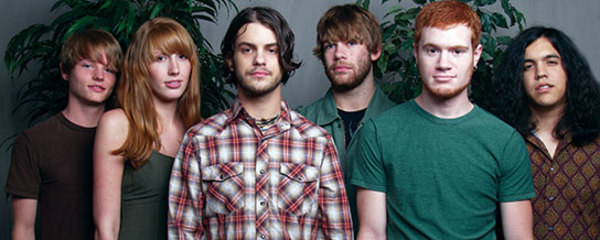
The Panera Bread Company in downtown Chapel Hill, NC is filled with a bunch of average Joes hunched over pricey sandwiches. Picking at chips and sipping cups of soup, no one in the joint bats an eyelash at recent Ace Fu signees Annuals, who’ve seated themselves at a big table by the entrance. This air of indifference has nothing to do with Panera’s generally square patronage, or even the fact that Annuals are far from famous. Rather, its members blend in pretty convincingly with the clientele.

The six members of Raleigh, North Carolina’s Annuals aren’t cowboy-shirted hipsters, or aloof New York post-grads; not what you’d expect from a band currently scaling the cool-kid ranks and pulling paragraphs from heavyweight critics. And even though their strange, wide-eyed songs might suggest otherwise, Annuals are some of the most normal kids in indie rock. Nonetheless, the band delivers just what the blogosphere has been waiting for–exotic, experimental rock made by people too genuine and young (average age: 20) to call pretentious.

“We’re so tired of waiting,” bassist Mike Robinson says of the impending release of his band’s debut album, Be He Me. “Everything we’ve done has built up to this since we were kids. We’re coming up on a decade of playing together, and finally it’s happening.”

It was 1999 when Robinson, Kenny Florence, and Adam Baker–then middle-schoolers–formed their first band, playing meaty punk rock songs for crowds of their friends. But everything changed when the trio met Zach Oden, an adventurous percussionist and music appreciator, whose influence compelled them to trade in Blink 182 riffs for Mike Patton-esque sonic weirdness.

“Basically, we were sick and tired of rock ‘n’ roll music,” says Baker, who initially helmed the Annuals project on his own. “The biggest thing for me was meeting Zach, who brought all this great music to the table that we had never heard.”

Throughout Be He Me, just what was brought to the table becomes clear: kaleidoscopic pop experimentalism. Album opener “Brother” travels through an enchanted forest only to break into a clearing filled with propulsive, percussion-led stomp. From the Latin funk of “Carry Around” to the glitchy zip of “Ida, My,” Annuals borrows the prettiest and strangest elements of Flaming Lips’ psych-rock and Animal Collective’s fairy-dust jamborees.

But Annuals sees the world through bright and happy (not bloodshot) eyes, remaining ever mindful of their songs’ pop backbones. This is where the band truly succeeds: being memorable and catchy in the strangest of ways, but normal at the same time.

The Week In Music, November 17

This week’s selection of news on the latest festivals, releases, tours, events, acts of mischief, and various strange occurrences.

Last week ended with news of Bloc Party drummer Matt Tong being hospitalized on account of a collapsed lung. This week began with the band being forced to cancel their US tour because of Tong’s recovering health. Ticket holders are encouraged to head over to the point of purchase for refunds asap.

A couple days later, another artist’s fans were disappointed, as Lady Sovereign broke down onstage Wednesday night two songs into her LA show. Another show will be rescheduled for December, following her US tour.

By contrast, things are looking up for James Murphy and his LCD Soundsystem project. Murphy and crew have chosen a name and release date for their next album. Sound of Silver will be out March 20, 2007, with a tour to follow.

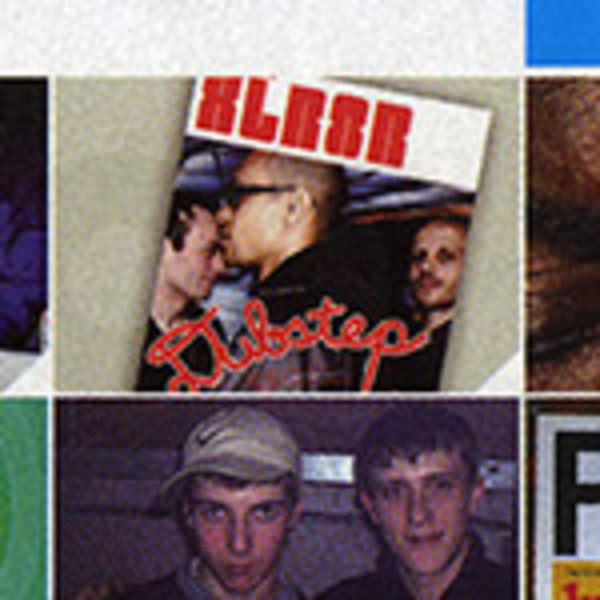
Finally, a very eventful week for the XLR8R staff, as we discovered that not only is our issue 60 cover included on the CD jacket of The Roots Dubstep compilation, we also have readers who enjoy turning our covers into artwork. Maybe that’ll help us win the PLUG award we were nominated for.

Imaginary Foundation Cellphone Wallpapers

Streetwear company Imaginary Foundation has gone from T-shirts to T-mobile…and other cell phone providers in the US. The design team is featuring cellphone wallpapers on Start Mobile, available for free through 2007. The designs featured on the wallpapers are some of the most popular t-shirts and posters at IF’s online store. For those of you with T-Mobile, Cingular, or AT&T, start downloading your favorite IF designs. To all of you on Sprint and Verizon, um, get a new service provider.

startmobile.net

imaginaryfoundation.com

XLR8R’s Podcast Interview: Tom Moulton vs. Rub-N-Tug

In issue 103 XLR8R‘s Fred Miketa brought Tom Moulton, the man responsible for inventing the 12-inch single, and nu-disco masters Rub-N-Tug together for a conversation on favorite records, clubs, and much more.

Besides his contribution to singles, Moulton is also a highly-sought producer, arranger, and engineer. Eric Duncan and Thomas Bullock of Rub-N-Tug have been bringing the disco live to New York for over a decade, through both music production and parties.

The interview is available in audio format exclusively through the XLR8R Podcast Interview Series, so start downloading. Be sure to pick up a copy of the December issue when it hits newsstands, so you can read along. iTunes 4.9 or higher recommended.

Photos by Rayon Richards

Eric Duncan and Thomas Bullock (in photo) of Rub-N-Tug.

Tom Moulton 

World Tour Documentary Series Hits London

Saturday, November 18, 2006
Stussy and Nike Present
World Tour: London

A Documentary Series Celebrating The Creative Process Of 16 Global Artists.

Artists included:
Rob Abeyta
Eric Elms
Futura
Ghost
Haze
Wes Humpston
Kaws
KR
Geoff McFetridge
Mister Cartoon
Neckface
Gary Panter
Brent Rollins
Kostas Seremetis
SK8 Thing
Tetsu “Tet” Nishyama

National Film Theatre (NFT1)
Belvedere Road, Southbank, Waterloo, London
Part of RESFEST10
RSVP for entry

Mixed Signals: Digital Dillema

Think back to that first time that you saw a laptop onstage at a club. Now think back to the last time you didn’t see one onstage. It’s no stretch to say that the digital world has taken over music production and, to a lesser extent, performance, with hardware/software combinations firmly establishing their place in the live music pantheon beside guitars, turntables, and drum machines.

But are they all that they’re cracked up to be? We gathered a unique group of DJs, who use even more diverse gear-and-software setups, to give us the skinny: Ninja Tune producer/DJ Amon Tobin, an early Final Scratch user who has since switched to Numark HDX hard drive/CD-R turntables to manipulate digital files; David Dewaele of Soulwax/2ManyDJs, a true believer in Pioneer CDJs and CD-R technology; DJ Craze, a hip-hop/drum & bass battle DJ who prefers Stanton Final Scratch above all; and DJs Low Budget and Cosmo Baker, analog- and turntable-lovin’ hip-hop/funk/electro/soul jocks sold on the strengths of Rane’s Serato Scratch Live.

With so many options out there, we asked these five which platforms perform the best, what needs improving, and who still buys records.

What made you make the switch to digital DJing?

DJ Craze: I used to carry two or three record crates on each trip–me being a small dude, it sucked having to carry all that. What also sucked was that in Europe, most airlines are stingy with the weight [limit], so I would end up paying extra weight fees. Another good thing about Final Scratch is that I can show up to any gig and be ready for any kind of crowd.

Amon Tobin: It was the early days when I had the first whiff of [Final Scratch]. Up until that point I was making my sets with dubplates, and this was my main reason for [switching to] these digital formats… In the end”m still bringing my own decks to the shows; it’s not exactly making it more lightweight or less cumbersome. The only reason for [using Final Scratch], from my personal point of view, is to have an alternative to cutting acetate every week. I want to play my own stuff that I’ve made before I get it pressed, and also be able to customize other bits of music.

What does your current DJ setup consist of?

Amon Tobin: What I’m currently using is the Numark HDX [hard-drive /CD turntables]. I was using the CDXs for a while. I started out with Final Scratch, but that was so volatile… I landed on Numark because it’s the only turntable that’s doing it with the proper 12″ platter that moves with the right torque, and it just seems like the closest thing to a [Technics] 1210.
Cosmo Baker: Unless I have a new piece of vinyl that I haven’t encoded yet–and I still buy vinyl every week–I’ll play strictly off of Serato. I just did the Sunglasses Is a Must Tour this spring with A-Trak and Ayres. We used four laptops, four turntables, two Pioneer DJM-909 mixers, and two samplers… it was just crazy. But everything we did was sent through either Serato or Ableton Live. Serato is great because I play a lot with cue points and with programmable loops and whatnot.

What were your early experiences with digital systems?

Amon Tobin: [I tried] Pioneer CDJs, but I could never get my head around them because I was so used to the 1210s that I just couldn’t ever get used to not having a moving platter. Final Scratch was awesome: I could still use my 1210s and I could play all my customized tracks. It was a mess for a while because it was in beta testing, but it was a fantastic idea. It worked when it worked, but there were a lot of problems with how the software reacted with the signal path, from the time code on the record to the needle to the tone arm to the USB device to the software itself. There were many, many places where there could be a break in the link.

How did the crowds react to the new format?

Amon Tobin: It was very hard to get it across to people that you were actually doing exactly the same thing. There’s a real status quo with gear and equipment, and people are constantly looking at developments in gear and shunning them, saying, “You can’t do that” or “That’s not proper DJing” or “That’s cheating.” And until a recognized DJ actually starts using the stuff, then the reaction is very negative. When I started playing on Final Scratch’ had a huge amount of resistance. People would be standing in front of me, booing, and yelling out, “Vinyl is not dead!” without realizing it’s the same fucking thing… I see it as a parallel to when electric guitars came out.

DJ Craze: The biggest problem was the ignorance of people in the beginning. People really thought that I was just pressing buttons on the computer and the scratches were just magically coming out by themselves. There was actually a couple times in the beginning where I was having technical problems. I remember the computer crashin’ on me.

So what do you think of the gear and software itself?

Low Budget: I’ve been pretty much just using Serato for almost two years now, and as far as duplicating the experience of spinning vinyl, it’s fine… The main difference [between Serato and vinyl DJing] is just having to look for your next song by reading text. You start to associate songs with pictures and sleeves and colors, so when you’re looking for a song, you don’t really read. But now you have to read, and typing skills come into play. So when I search for a song, and I’ll misspell it”m like, “Where the hell is it at? Oh’ spelled it wrong.” This is like at 2 a.m., after I’ve been drinking [laughs].

David Dewaele: When you bring CDs or vinyl, you’re kind of limited to your selection, which I think is a really good thing, as opposed to bringing 20 million MP3s and just browsing through them. Something like Final Scratch lacks another advantage the CDJs have: You can do all these loop points and be really creative with where to come in and out and loop certain things.

Low Budget: I didn’t try Final Scratch. [It] was a bit ahead of its time, and I just feel like more people have laptops now and are more computer-savvy. When Final Scratch came out’ was broke, and there was no way I was getting a laptop, and I couldn’t even comprehend something like that. I almost started [playing with] CDJs but I just couldn’t get used to the feel; I was just so used to vinyl.

Amon Tobin: One of the things that the Numarks do, that Final Scratch didn’t at the time, is let you lock the pitch of a track or assign a pitch to a track on the fly, so you can make proper musical mixes. I started doing key mixes, as well as BPM mixes, so that everything flows musically really well together. That’s a really big part of my set now. It’s a really good use of technology.

Do you still buy records?

Low Budget: Not too often. Especially the “flavor of the month” Top 40 stuff, or the bangers that you play in clubs that you play for a little while and then don’t really need after. I still go record shopping ’cause I like to talk to people to see what’s hot, and to get acapellas and instrumentals and harder-to-find stuff. There’s digital record pools and digital promos, too, so I don’t go to the record stores as much.

What are the other obstacles with the hardware/software digital controllers?

David Dewaele: I’m always afraid that it’s gonna crash and then there’s nothing. It’s basically at a point right now where I don’t think it’s good enough. I’ve tried them all out and it seems like it’s not there yet.

So what’s the ideal situation?

Amon Tobin: If I could do away with laptops altogether, that would be a start. I don’t particularly like the notion of looking at a laptop when I’m playing records, and I think Serato has gone a long way in their design to help overcome this. For instance, you can scroll through your tracks by dipping your needle in different parts of the vinyl instead of always using your mouse. Because, in the end, we do all come from a background where we’re using turntables, and there’s something just a bit cold about looking over and mousing through your tracks. I’m hoping that if things can get integrated properly, the way Rane are trying to do it with their mixer, the next stage would be to have the laptop itself (like the hard drive) inside the mixer, so you basically slot your tracks into the mixer and you play them off your decks.

David Dewaele: There’s this thing called Coverflow [recently purchased by iTunes]. [It] links all your iTunes albums to covers, so you see these huge images of records that you know, and then you click on them and hear the music. It makes the whole experience of choosing music completely different. If I were to have that and be able to DJ while looking at [the images] instead of Times New Roman fonts or whatever… If that was possible, and things could be linked in a more tactile way, that’d be ideal. If people could see the whole library, like it was projected onto a wall–that’ think, would be cool. [With technology], a lot of things are being focused on the wrong way. It’s always the flukes that end up being the big successes.

Page 3284 of 3781
1 3,282 3,283 3,284 3,285 3,286 3,781