Mixed Signals: Digital Dillema

Think back to that first time that you saw a laptop onstage at a club. Now think back to the last time you didn’t see one onstage. It’s no stretch to say that the digital world has taken over music production and, to a lesser extent, performance, with hardware/software combinations firmly establishing their place in the live music pantheon beside guitars, turntables, and drum machines.

But are they all that they’re cracked up to be? We gathered a unique group of DJs, who use even more diverse gear-and-software setups, to give us the skinny: Ninja Tune producer/DJ Amon Tobin, an early Final Scratch user who has since switched to Numark HDX hard drive/CD-R turntables to manipulate digital files; David Dewaele of Soulwax/2ManyDJs, a true believer in Pioneer CDJs and CD-R technology; DJ Craze, a hip-hop/drum & bass battle DJ who prefers Stanton Final Scratch above all; and DJs Low Budget and Cosmo Baker, analog- and turntable-lovin’ hip-hop/funk/electro/soul jocks sold on the strengths of Rane’s Serato Scratch Live.

With so many options out there, we asked these five which platforms perform the best, what needs improving, and who still buys records.

What made you make the switch to digital DJing?

DJ Craze: I used to carry two or three record crates on each trip–me being a small dude, it sucked having to carry all that. What also sucked was that in Europe, most airlines are stingy with the weight [limit], so I would end up paying extra weight fees. Another good thing about Final Scratch is that I can show up to any gig and be ready for any kind of crowd.

Amon Tobin: It was the early days when I had the first whiff of [Final Scratch]. Up until that point I was making my sets with dubplates, and this was my main reason for [switching to] these digital formats… In the end”m still bringing my own decks to the shows; it’s not exactly making it more lightweight or less cumbersome. The only reason for [using Final Scratch], from my personal point of view, is to have an alternative to cutting acetate every week. I want to play my own stuff that I’ve made before I get it pressed, and also be able to customize other bits of music.

What does your current DJ setup consist of?

Amon Tobin: What I’m currently using is the Numark HDX [hard-drive /CD turntables]. I was using the CDXs for a while. I started out with Final Scratch, but that was so volatile… I landed on Numark because it’s the only turntable that’s doing it with the proper 12″ platter that moves with the right torque, and it just seems like the closest thing to a [Technics] 1210.
Cosmo Baker: Unless I have a new piece of vinyl that I haven’t encoded yet–and I still buy vinyl every week–I’ll play strictly off of Serato. I just did the Sunglasses Is a Must Tour this spring with A-Trak and Ayres. We used four laptops, four turntables, two Pioneer DJM-909 mixers, and two samplers… it was just crazy. But everything we did was sent through either Serato or Ableton Live. Serato is great because I play a lot with cue points and with programmable loops and whatnot.

What were your early experiences with digital systems?

Amon Tobin: [I tried] Pioneer CDJs, but I could never get my head around them because I was so used to the 1210s that I just couldn’t ever get used to not having a moving platter. Final Scratch was awesome: I could still use my 1210s and I could play all my customized tracks. It was a mess for a while because it was in beta testing, but it was a fantastic idea. It worked when it worked, but there were a lot of problems with how the software reacted with the signal path, from the time code on the record to the needle to the tone arm to the USB device to the software itself. There were many, many places where there could be a break in the link.

How did the crowds react to the new format?

Amon Tobin: It was very hard to get it across to people that you were actually doing exactly the same thing. There’s a real status quo with gear and equipment, and people are constantly looking at developments in gear and shunning them, saying, “You can’t do that” or “That’s not proper DJing” or “That’s cheating.” And until a recognized DJ actually starts using the stuff, then the reaction is very negative. When I started playing on Final Scratch’ had a huge amount of resistance. People would be standing in front of me, booing, and yelling out, “Vinyl is not dead!” without realizing it’s the same fucking thing… I see it as a parallel to when electric guitars came out.

DJ Craze: The biggest problem was the ignorance of people in the beginning. People really thought that I was just pressing buttons on the computer and the scratches were just magically coming out by themselves. There was actually a couple times in the beginning where I was having technical problems. I remember the computer crashin’ on me.

So what do you think of the gear and software itself?

Low Budget: I’ve been pretty much just using Serato for almost two years now, and as far as duplicating the experience of spinning vinyl, it’s fine… The main difference [between Serato and vinyl DJing] is just having to look for your next song by reading text. You start to associate songs with pictures and sleeves and colors, so when you’re looking for a song, you don’t really read. But now you have to read, and typing skills come into play. So when I search for a song, and I’ll misspell it”m like, “Where the hell is it at? Oh’ spelled it wrong.” This is like at 2 a.m., after I’ve been drinking [laughs].

David Dewaele: When you bring CDs or vinyl, you’re kind of limited to your selection, which I think is a really good thing, as opposed to bringing 20 million MP3s and just browsing through them. Something like Final Scratch lacks another advantage the CDJs have: You can do all these loop points and be really creative with where to come in and out and loop certain things.

Low Budget: I didn’t try Final Scratch. [It] was a bit ahead of its time, and I just feel like more people have laptops now and are more computer-savvy. When Final Scratch came out’ was broke, and there was no way I was getting a laptop, and I couldn’t even comprehend something like that. I almost started [playing with] CDJs but I just couldn’t get used to the feel; I was just so used to vinyl.

Amon Tobin: One of the things that the Numarks do, that Final Scratch didn’t at the time, is let you lock the pitch of a track or assign a pitch to a track on the fly, so you can make proper musical mixes. I started doing key mixes, as well as BPM mixes, so that everything flows musically really well together. That’s a really big part of my set now. It’s a really good use of technology.

Do you still buy records?

Low Budget: Not too often. Especially the “flavor of the month” Top 40 stuff, or the bangers that you play in clubs that you play for a little while and then don’t really need after. I still go record shopping ’cause I like to talk to people to see what’s hot, and to get acapellas and instrumentals and harder-to-find stuff. There’s digital record pools and digital promos, too, so I don’t go to the record stores as much.

What are the other obstacles with the hardware/software digital controllers?

David Dewaele: I’m always afraid that it’s gonna crash and then there’s nothing. It’s basically at a point right now where I don’t think it’s good enough. I’ve tried them all out and it seems like it’s not there yet.

So what’s the ideal situation?

Amon Tobin: If I could do away with laptops altogether, that would be a start. I don’t particularly like the notion of looking at a laptop when I’m playing records, and I think Serato has gone a long way in their design to help overcome this. For instance, you can scroll through your tracks by dipping your needle in different parts of the vinyl instead of always using your mouse. Because, in the end, we do all come from a background where we’re using turntables, and there’s something just a bit cold about looking over and mousing through your tracks. I’m hoping that if things can get integrated properly, the way Rane are trying to do it with their mixer, the next stage would be to have the laptop itself (like the hard drive) inside the mixer, so you basically slot your tracks into the mixer and you play them off your decks.

David Dewaele: There’s this thing called Coverflow [recently purchased by iTunes]. [It] links all your iTunes albums to covers, so you see these huge images of records that you know, and then you click on them and hear the music. It makes the whole experience of choosing music completely different. If I were to have that and be able to DJ while looking at [the images] instead of Times New Roman fonts or whatever… If that was possible, and things could be linked in a more tactile way, that’d be ideal. If people could see the whole library, like it was projected onto a wall–that’ think, would be cool. [With technology], a lot of things are being focused on the wrong way. It’s always the flukes that end up being the big successes.


PSD, Keak Da Sneak, Messy Marv Collaborate

One of the founders of Thizz Nation, Vallejo, California’s PSD has teamed up with Bay Area hyphy dons Keak Da Sneak and Messy Marv, and this trio is definitely bringing Da Bidness. The collaborative album features production from Droop-E, Rick Rock, PSD, and others, and features guest appearances from Bay Area rappers like E-40, Mac Dre, and Misah F.A.B.

Begun as a project between PSD and Keak and originally titled The Hyphy/Cool Nigga Project, the album has since become, according to PSD, “the foundation of the Bay Area on one project: San Francisco (Mess), Oakland (Keak), and Vallejo (PSD). Three of the baddest cats wit hands, feet, and the gift of gab.”

Da Bidness is out February 2007 on Thizz/SMC Recordings.

Track List

1. Too Cool…
2. YEEE!!!
3. Cuz, Cuz
4. Gumbo Pot feat E-40
5. Fakin’ It
6. Deerfoot feat. Dubee (a.k.a. Sugawolf & Mistah F.A.B.)
7. Hey Girl feat. San Quinn
8. If She Know Me She Owe Me
9. Hoes feat. Mac Dre
10. Reloaded
11. Burdens Of His Youth
12. Bottom Bitch feat. Rydah J Clyde
13. That Go! (Keak Solo)
14. Thick O’ Thangz
15. A Better Day (PSD Solo)

Sizzla Releases New Album With Damon Dash

The reggae/dancehall star Sizzla has signed to Damon Dash Music Group (DDMG) for his upcoming release The Overstanding. Like Elephant Man, who recently inked his own deal, with Diddy, Sizzla is one of the few reggae/dancehall stars to cross into mainstream music, and his signing to DDMG will likely push him further into that realm. An artist who rarely even grants interviews, he’ll have to change his reclusive ways as one of the chief aims in this deal is exposing him to a new set of fans. That would explain the guest appearance from Busta Rhymes. In any case, expect more magazine features and interviews with the artist at your local newsstand very soon.

The Overstanding is out November 21, 2006 via Dame Dash Music Group.

Track List

1. The Overstanding
2. Just One Of Those Days
3. Break Free
4. Black Woman & Child
5. Cost Of Living
6. Solid As A Rock
7. I’ve Been Watching
8. I Love You Baby
9. Thank You For Loving Me
10. Pay To Learn
11. Give Me A Try
12. Smoke Marijuana
13. Thank You Mama
14. Beautiful Day
15. Rebel Music feat. Busta Rhymes 

Christopher Willits/”Colors Shifting” Remix Contest

XLR8R has teamed up with Creative Commons and Ghostly International for the Christopher Willits/”Colors Shifting” Remix Contest!

Willits is offering the audio source files from the song “Colors Shifting” online under a Creative Commons Attribution-NonCommercial license, so that you budding producers (and you established ones too) can use the sounds in remixes and new compositions. The winning remix of “Colors Shifting,” chosen by Wilits himself, will be featured on XLR8R‘s exclusive INCITE CD.

Full Contest Listing

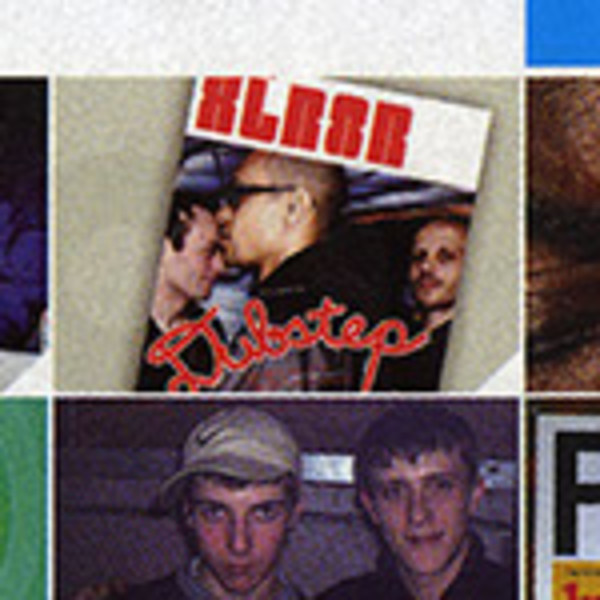
Dubstep History Honors XLR8R

Sure, it’s tacky, but a moment of narcissism is in order for the staff of XLR8R, as the last two weeks have yielded both acknowledgment of and gratitude for the magazine’s involvement with the dubstep scene over the last several years.

First, the BBC’s Radio 1 DJ Mary Anne Hobbs thanked XLR8R for coining the term dubstep. Whether or not we actually did remains unclear to this writer, but why argue with one of the UK’s premiere Radio 1 DJs?

Not too many days later a copy of Tempa Recordings’ The Roots Of Dubstep compilation came through the editors’ mail bins. Included on the CD cover was a snapshot of Issue #60, our very first dubstep feature that came out in July 2002. As the CD liner notes go, “The Roots Of Dubstep is the first project to return to the nascent dubstep scene circa 2000-2004 to document its birth.” XLR8R is honored to be considered a part of that history.

The Roots Of Dubstep is out now on Tempa.

Fidget House: A Guide

A guide to these five producers’ many aliases.

Induceve
Members: Dave Taylor & Jesse Rose
Where it all started. Induceve is an amalgamation of crunchy, cut ‘n’ paste Herbert-style house and samples ranging from hip-hop to dub to folk. Their Pick It Up EP (Dubsided) was the first officially dubbed “fidget.”

Switch
Members: Trevor Loveys & Dave Taylor
Responsible for some of the crew’s biggest records including “A Bit Patchy” (Dubsided), a worldwide hit thanks its brukbeat house twist on the “Apache” break. Equal parts deep Chicago house and Detroit techno, the track is made uniquely their own with clever sampling, squelchy keys, and super-fat bass.

Solid Groove
Members: Dave Taylor
The most prolific alias on the scene, Solid Groove has remixed house giants Basement Jaxx and Blaze, broken beat don Domu, and Brazilian funkeiro Edu K. Original credits include the broken beat anthem “Flookin” (Loungin), championed by tastemaker Gilles Peterson and big-room bombs like “This Is Sick” (Front Room).

Brucker and Sinden
Members: Dave Taylor & Graeme Sinden
Taking things in a more hip-hop and Baltimore club-influenced direction, these two are the Hollertronix of fidgit. They’ve jacked up Ying-Yang Twins’ “Shake,” mashed up Pharrell’s “Can I Have It Like That” with Mr. Vegas’ version of “Under Mi Sensi,” and crunked up Busta Rhymes & Amerie’s “Touch.”

Speaker JunkK
Members: Trevor Loveys & Joshua Herve
This duo deftly crafts jacking, warbly bass club monsters. Their premier 12-inch was May’s “Scratch Up the Music” for their eponymous label, and they’ve kept up the pressure with broken electro-house reworkings of Jimi Hendrix and Busta Rhymes.

Plastic Little Release She’s Mature

Free News Projects and ToneArm Records are releasing She’s Mature, the latest effort from Philly’s filthiest, Plastic Little, and all kinds of exciting schwag has been packaged with the album for your consumer culture needs. To begin with, there’s the album, which guest stars Ghostface Killah, MF Doom, Diplo, Spankrock and Amanda Blank, includes a cover of The Smiths’ “This Charming Man” and comes with a bonus DVD of music videos. Then there’s shesmature.com — although the album isn’t in stores just yet, you can order it now via the website and get a copy of Jayson Musson‘s zine Too Black for B.E.T. Episode II: The Black Boy George and a ton of Plastic Little stickers. Finally, there’s limited edition vinyl picture disc versions of the album and an exclusive extended single of the song “Crambodia” to geek out on.

If that’s still not enough, check out the kickin’ (and FREE) release party on November 17, 2006 at 205 Bar in New York City featuring performances by Plastic Little, Sweatheart, Kid America Club and a bunch of supersecret surprise guests.

She’s Mature is out November 17, 2006 on ToneArm Records.

Kerry McLaughlin

Berlin Wasted Youth Remixed

While surfing the web we ran across the October issue of XLR8R, only to find that particular cover had sparked an anagram face-off among users of False Profit’s website. All of the “attractive anagram packages” were put together using the letters of XLR8R‘s annual city issue, which focused on Berlin this year.

Post your own XLR8R cover anagram remix photos to the False Profit group pool on flickr with the tag “berlinwastedremix.” Just ignore that reference to Tiesto at the bottom of the listing.

Some of the anagrams were catchy:

Some were provocative:

But our favorite, ironically, was discovered not at False Profit’s site, but at the Issue 101 release party in San Francisco back at the beginning of October. Apparently the new thing is to carry scissors out to club events.

Monome & Me: MIDI Mayhem

For the past couple of years, I’ve been fidgeting with an odd invention that an equally odd musician, Brian Crabtree, came up with: The monome 100h. It’s a combination of sequencer, Lite-Brite, and sampler with MacGyver-esque possibilities–all addictively simple. Now it’s being somewhat mass-made and I wanted to introduce it, so perhaps it’ll make some sense of what I might be doing on a stage in a town near you.

First, I like to take songs I’ve produced in Pro Tools and pick choice bits from them: drum breaks, basslines, synth pads, vocals, complete phrases. Then I’ll load these sometimes wildly inappropriate sound selections (as AIFFs) into the mlr, the open-source software built for my monome 100h (my prototype version is a 16 x 16-button grid, which connects to a laptop by MIDI cables; the newer, fancier monome 40h connects by USB), which then allows me to not only play samples simultaneously but also chop the hell out of them on the fly.

The samples or loops are mapped across a row of buttons by dragging and dropping the files on the mlr software screen. The light indicates the playback position of the sample. When I press a button, it cuts to that position of the sample. (The idea is that you visually learn the contour of the sound, like where the kick and snare are located, and can then improvise.)

Once placed, I can trigger the sound on any grid point in these 16 steps, playing the sample from that point. I can mix several groups at once, and have other sounds cancel each other out. Imagine a music measure consisting of four quarter notes: each quarter note is made of four sixteenth notes, so if I map a measure-long sound to a line, each button triggers a different sixteenth-note subdivision.

This leads to a deliriously fun decision-making process: Try to recreate a song light by light, mirroring each flipped sample from my original song? Or completely leave the past behind and fuse the existing with newly created backwards-chopped-screwed-re-pitched bits for a whole new creation?

There’s also this crazy little thing, like the button you shouldn’t press on the Great Glass Wonkavator from Charlie and the Chocolate Factory. By throwing a virtual switch in the mlr software, I can have the computer learn what buttons I press and repeat this process–Simon style–in musical time, no matter what sample set I might be choosing from. It allows my fingers a little freedom to flip other samples just as vigorously, which can lead to quite a racket.

Unsettling? Good, because it becomes a mad mix after enough bashing at light buttons. It’s all at your fingertips, literally, as every little measured flip is solidly in your control; and it’s better than some other fancy controllers because you don’t have to constantly stare at the screen. This way, you don’t have to see my face illuminated solely by laptop light–which is very unflattering, I’ve been told.

More on Daedelus

New At INCITE Online, Nov 14

If you would like to receive weekly updates on our FREE downloads, subscribe to the XLR8R Podcast. iTunes 4.9 or higher recommended.

Life Force Trio – Carlos Nino and crew make a composition of deep synth harmonies that bubble under the surface of melancholic string arrangements that are somehow uplifting when put together. Added bonus: the album was mixed by Plug Research labelmate Nobody, at his bedroom studio.

Lyrics Born – The Bay Area’s notorious party-starting MC gathers tracks from his 2005 appearances in Melbourne and Sydney, Australia, for an hour’s worth of energetic hip-hop from LB’s first two albums, backed by a 4-piece band.

The Beyonders – Phoenix Orion and ParanormL are on a mission, one that involves destroying mainstream perceptions of hip-hop and stamping their own brand of futuristic beats upon the genre with their new album Time Capsule.

Plan B – Crisp, programmed beats and wobbly guitar notes make an unlikely pairing with the feather-like quality of the vocals, yet somehow the many musical elements, along with the numerous guests artists, merge into a single, enjoyable entity on the album.

Melodium – The seventh album from France’s Laurent Girard is all about minimalism and based mostly around lone piano notes and gently plucked strings, and simplicity definitely pays off here.

Page 3285 of 3781
1 3,283 3,284 3,285 3,286 3,287 3,781