In the ever-changing podcast evolution Hiero Imperium leads the pack, and this month’s edition of the Hierocast goes lengths to prove that. Hosted by Opio (Souls of Mischief), the podcast contains not just tracks from the likes of Casual, O.C., and Pigeon John, but also gives fans several opportunities to interact.
Previous to the release of this edition fans were able to submit their questions via message board to Opio, and between songs he answers these queries that range from the serious (What producers would you like to work with in the future?) to the ridiculous (Who would win in a fight between Tajai and Pep Love?).
Listeners also get the chance to win an iKEY portable USB recorder, which allows a user to record digital audio directly to any MP3 player. All you have to do is head over to the Hieroglyphics website and answer a few questions.
Hierocast Tracklisting A Plus “Patna Please” (from the forthcoming album My Last Good Deed) Opio “Granite Earth” feat. Pigeon John (from the album Triangulation Station) Casual “Bitin & Freakin'” (from the album Casual Presents: Smash Rockwell) O.C. “Shortly” (from the album Smoke and Mirrors) Opio “For Those Who Don’t Know” (from the album Triangulation Station)
VariousThe DFA Remixes: Chapter 2DFA When it comes to remix albums, Tim Goldsworthy and James Murphy could churn a Melissa Ethridge song into a full-on Italo-disco party. This time around the DFA duo takes on artists from Nine Inch Nails to N.E.R.D. all while making friends and foes of the originals with their danceable fervor.
Planet AsiaThe MedicineABB Much tougher than past Planet Asia albums, The Medicine is a hard-hitting return from one of the underground’s most popular MCs. Crafty, narrative lyrics and dark production from Dilated Peoples’ Evidence keep this long-player a staple in contemporary street music
XLR8R annouces the brand new XLR8R Podcast Interview Series. Available starting every third Thursday of each month, the series contains content from interviews exclusive to xlr8r.com or extended versions of interviews from the pages of XLR8R.
To kick things off Greg Gillis, aka Girl Talk speaks, argues, and shouts with Renee Scroggins of art-funk ensemble E.S.G. over the ethics of sampling. Packed with insightful thoughts, music clips, and some heated tempers, the interview provides a look at both sides of the great music sampling debate, as well as some entertaining moments where the two artists truly disagree on the subject.
The XLR8R Podcast Interview Series is available exclusively through XLR8R. Just subscribe to our Podcast and you’re all set. iTunes 4.9 or higher recommended.
Before 29-year-olds Julian Hamilton and Kim Moyes were The Presets, they were studying piano and percussion, respectively, at Sydney’s Conservatorium of Music. And, like most arty kids rebelling against the system (in this case a hard-core regimen of music composition and theory), the pair also had an experimental band in the works. “Prop was instrumental music with vibraphones and marimbas and keyboards,” explains Hamilton. “It was a bit like Tortoise. You know, music for the soul, instrumental, film-scorey, ‘meaningful’ music.”
When not leaning towards the leftfield, Hamilton and Moyes were also clubbing like mad, immersing themselves in Australia’s nascent big beat and breaks scenes. Not surprisingly, the dancing and hedonism eventually became more meaningful than “meaningful music.” “We wanted to do music that was stupid and easy and immediate and didn’t require too much brains–something that was more for the hips and less for the head,” explains Hamilton. “There was something more immediate and guttural that really needed to spew out of us. So we didn’t even really decide to do The Presets. I mean, you don’t decide to throw up or have diarrhea, you just do it.”
Thankfully, their album Beams (Modular) sounds little like throw-up or diarrhea. On the contrary, it’s constructed with the thoughtfulness of pop, pairing catchy keyboard melodies with clever percussive turns and Hamilton’s quasi-glam vocals. Driving album-openers like the snaking, sexually pulsating “Steamworks,” the demanding “Are You The One,” and the prancing “Down Down Down” are quickly becoming what The Presets are known for, but Beams’ strengths are its surprises: “Girl and the Sea” could be a lost OMD song, while the title track is a quiet, orchestral soundtrack for rainy Sundays.
Beams’ unpredictability makes it a perfect fit for the Modular label, which is quickly defining Australia’s eclectic music scene with acts as diverse as Ben Lee, Cut Copy, and Wolfmother. And although The Presets deny there’s much about themselves that’s quintessentially Australian, it’s hard to ignore their sunny dispositions, massive amounts of regional slang, and, of course, those accents.
When pressed, Hamilton admits he does have a fondness for clichés about Australia (the surf, the ‘roos, the Sydney opera house), and for the country’s unofficial patron saint, bush ranger Ned Kelly, who ran things in the country in the late 1800s. “He was like a cowboy or an outlaw, and he wore a big metal garbage bin with the eyes cut out, and he made his own armor,” he explains. “He got in a lot of gunfights in the outback. He was just a wild guy on the run for a long time.” Sounds like someone’s got a new role model.
The history of Studio One and every Kingston recording hut and soundsystem of the ’60s has been told many times through Soul Jazz and Trojan Records compilations. But while their liner-note scribes venture into every nook and cranny of the music’s fascinating history, their stories all seem to end in Jamaica. Enter Light In the Attic‘s Jamaica to Toronto, a series of discs that charts the reggae kings’ often-unknown post-Kingston history, when many musicians moved north to Toronto to reunite with their work-seeking families and start new lives. Following the brilliant Wayne McGhie & The Sounds of Joy, reissued 34 years after its original release on Canadian label Birchmount, Seattle’s LITA is now set to release Jamaica to Toronto: Funk Soul & Reggae 1967-1974, a compilation that tells a different story–one in which the reggae pioneers adapt to playing funk for a Canadian, R&B-loving public and Jackie Mittoo opens up a record store in Toronto’s Hillcrest neighborhood. Vancouver-based historian and researcher Kevin Howes (a.k.a. DJ Sipreano) further explains the journey north and how Jamaica to Toronto came to be.
XLR8R: How did you find out about this untapped well of vintage music?
Kevin Howes: Back in the mid-’90s, I dated a girl whose father owned a Jamaican record store and label in Toronto in the ’70s. Listening to records she’d inherited from her pops and getting turned onto albums like Wayne McGhie & The Sounds Of Joy by my homies Sureshot and Mr. Supreme (a.k.a. The Sharpshooters) set it off, but my own interest in Canadian sound heritage got me wanting to go even deeper.
Why was Toronto the destination for so many of these musicians? Why not New York or some other place?
By the ’60s, there was really large West Indian population in Toronto. Many had come to Canada as domestic and train workers. Once they received landed-immigrant status they were able to call for their families to join them. I think Vietnam and the possibility of being drafted was a big deterrent from settling in the States. Actually, there were a lot of American musicians who came north for the same reason.
What was the most surprising bit of information you uncovered?
That nobody had really taken the time to document what was going on. Growing up close to Toronto, you can’t help but notice the large West Indian population. As soon as I found my first [copy of] Wishbone [Jackie Mittoo’s first Canadian reggae LP from 1971] and read the liner notes, it wasn’t too hard figure that something magical was happening there. When Pablo (Cougars/Sounds Of Joy drummer Everton Paul) played me his unreleased white label copy of The Cougars’ “I Wish It Would Rain,” he had to pick me up off the ground.
Tell me about the studios and labels in Toronto at that time.
These musicians were pioneers. They built everything from the ground up. In the ’60s, they had to use the commercial recording studios of the day; places like Sound Canada, Thunder Sound, Eastern Sound, and Arc. Most of the time they had to pay for their own sessions too, but in 1974 the fist two black-owned studios opened, Oswald Creary’s Half Moon and Jerry Brown’s Summer Records.
How did the funk style come into play, considering these guys were generally known as reggae players?
Ever heard of “Funky Kingston?” I’ve always found it interesting that Jamaican musicians can emulate the American R&B sound as good [as], if not better than, many US players. These folks are extremely versatile, understand the dynamics, and really love what they’re doing. In the ’60s, Toronto was an R&B town. If you wanted to pay the bills, you adapted or didn’t eat.
If you keep up with our weekly top ten, you’ll notice that Sublight artists have been having their way with us – and Wisp is no exception. Honor Beats is, dare we say it, the perfect semblance of medieval breakcore (complete with bagpipes, heavy synths, and some wholly dark ambiance). This dude has done himself, and probably J.R.R. Tolkien, quite proud.
Nothing is more cathartic than hearing Cat Power’s Chan Marshall pouring her soul out, over Oliver Alary’s moody single, ‘Disown Delete.’ As Ensemble, Alary has crossed the atmospheric folk threshold with some bittersweet love songs that will stick to your heart stronger than a lifetime of fast food. This debut may be the start of something really, really big.
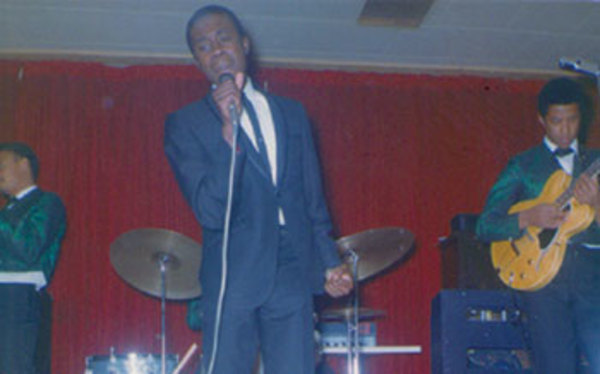
Funk doesn’t come easy…unless you were in the Kashmere Stage Band somewhere during their 12-year reign. For those of you who aren’t extreme vinyl collectors or funk archivists, KSB was a high school band with a slew of changing members, that knew the meaning of wholesome jams. This two-disc collection contains re-mastered and unreleased tracks, and live performances that showcase this hidden gem from a bygone era.
I remember a time when Bloc Party remixes dominated clubs form coast to coast. Well, if recent history’s taught us anything, Test Icicles’ remix EP just might follow suit. Featuring rerubs from James Ford, Armani XXXchange, and Statik, you’ll find yourself shaking your ass involuntarily.
By no means a typical XLR8R record, Danava’s one-sided 12″ debut shreds so much we had to include it in our top ten. ‘Quiet Babies Astray in a Manger’ is the quintessential prog-rock banger of 2006. With over 12 minutes of guitar-laden fury and analog space, weï’ve taken the trip and it’s awesome.