Matthew Herbert: The Finest Allusion

Matthew Herbert is no stranger to offbeat recording techniques. On records like 2001’s Bodily Functions (!K7) and last year’s Plat du Jour (Accidental), he sampled everything from heartbeats to crushed Starbucks cups and wove them into bumptious micro-house, languid electronic ballads, and melodic jazz. Herbert rarely tinkers with his sampler for the sake of generating weird noises–like his spiritual allies Matmos, he girds each record with theoretical underpinnings. But while Plat du Jour, by Herbert’s own admission, sometimes became a bit too weighty in its exploration of the food chain, his new album, Scale, contains his sunniest and warmest tunes yet, despite having a meditation on life, death and distance encoded in its sampled DNA.

“I wanted to hold up a mirror to society,” Herbert says of the record. “It can be charming and warm and generous and luxurious and [can] look like it’s having fun but actually underneath it, there’s a sinister tone. [Scale is] based on violence, whether it be historical violence–like the British empire, in our case, or slavery–or current violence like the war in Iraq. In a way that’s part of the illusion of the record, the illusion of everything being okay.”

The illusory charm and warmth Herbert speaks of comes through right away on songs like “Something Isn’t Right,” where Neil Thomas and Dani Siciliano trade vocals over chugging, string-drenched backdrops. But for all Scale’s glossy surfaces, there’s always something gritty going on beneath–a framework constructed of countless found sounds and samples assembled by the genre’s new master.

For instance, what is that jet noise puncturing “Moving Like a Train?” It’s not an innocent passenger plane, but a British Tornado bomber (a tiny depiction of which appears, along with the over 700 other items Herbert sampled for the album, on the cover artwork). This mix of the mundane and the unusual, of pacifist and violent elements, is part of Herbert’s point. “It’s about this distance in our lives, between the things that we do–between our childhood and our death, for example,” he offers. “We have constant ways of measuring our childhood–we have birthdays every year, for example–so we know how far we are from our childhood, but we never know how far we are from our death. We don’t know if it’s this afternoon or in 100 years’ time. So really I’m looking for ways to express this distance, whether metaphorically or literally, [through sampling]. The sound of a coffin is [something] you may never hear, but there are sounds [on the record] that you may hear every day, like the [crunching of] breakfast cereal.”

Welcome to Matthew Herbert’s micro-world, where even the seemingly innocent sound of breakfast cereal is laden with meaning. And don’t even get him started on the cereal box–less a container than a vehicle for sinister cultural subtext. “I couldn’t believe how disgraceful it was,” he says of the cereal box he bought. “It was limited-edition Apple Jacks, and there’s a photograph of it. It has blue carrot shapes in it, but it says on the packet, ‘No apple taste! No carrot taste!’ It’s like it’s a selling point that it doesn’t taste of apples or carrots. It’s really a lunatic position the world is coming to. Proper madness!”

To keep himself from engaging in the polemics that weighed down Plat du Jour, Herbert intended to try a different approach to sampling for Scale. “My plan was to make a record where I hadn’t recorded any of the sounds or any of the musicians [myself]. In the end I did a bit of recording, so it didn’t quite work out that way, but the idea that the recording process itself is part of the metaphor of the record appealed to me. So we recorded some of the drums at 100 mph with the drummer in the back of my little BMW that’s 25 years old–so not [only were we] breaking the law, we could [have been] in personal danger. How does the drummer play if he thinks it’s going to be the last thing he ever plays? If you think of [the process] like that, instead of a conceptual burden, it becomes fun. Basically, I wrote a big list of [all the samples] I wanted and asked my assistant Alexis to go off and record them. He traveled the country and he had to call a lot of different people before they allowed me near a coffin. So if you look at the thanks on the album there’s a lot of “No thanks” to people who said no!”

The coffin is perhaps the central sample Scale. Twelve of them appear in the artwork, another artifact of Herbert’s twin desires for a theoretically stimulating process and an aesthetically pleasing result. “The coffins were recorded from the inside out–the microphone was inside the coffin–so unless you were buried alive, it’s a sound you will never hear. It’s the friction between the ordinary and the extraordinary that I was looking for. I recorded everything in groups of 12–that way I have the freedom to include one coffin per track, or put all 12 in one piece. I enjoyed the playfulness of having deliberate numbers of organizing things, to reinforce any ideas or motifs. It doesn’t make the slightest difference really, the sound is the same, but I like the rigor of it, and also it makes me laugh! Can’t underestimate that.”

The darkest turn on the album is “Just Once,” which is assembled from messages recorded on a special phone line. “I wanted to do a piece where I didn’t know any of the noises. I wanted to know how that affected how I wrote it and how I used it. Would I be more respectful or more playful? So [I set up a] hotline [for people to leave noises on]. I asked people not to say what the noise was and not to say their name or anything, so it could be one person leaving 177 messages, it could be my parents, it could be the Russian mafia killing someone! But what I like is there are now 177 people with a completely different relationship to the music, embedding their stories within the music, and nobody knows [what the sounds are] apart from them. The track is kind of about death [and] suicide bombing, and when you know that, it suddenly becomes even more spooky. And on top of that it’s coming down the telephone line, another expression of distance.”

Once this track sweeps by, the album ends on a goofy note–Matthew Herbert singing “Wrong” over a lone piano. He’s no Jamie Lidell, but the casual bar melody fits Herbert’s newfound playfulness, a cheeky mood that also emerges in the presentation of the album, with a booklet depicting everything from plastic toys to computer cables and writing so tiny that you cannot study the liner notes and listen to the music at the same time.

“I like that the artwork makes no distinction between what made noises and what was used. We had to decide somewhere to stop, otherwise we’d have to [include] all the food that we ate and all that stuff. If you wanted to recreate the record, these are all the things you’d have to assemble together somehow and work it out. But I think you’d come up with something completely different!”

Adult Swim and Chocolate Industries Serve Up a Sweet Free EP

Adult Swim (Cartoon Network’s block of animated TV shows for “mature” adults) and hip-hop indie Chocolate Industries join forces for the first time this summer to release a free EP called Chocolate Swim. Six mp3s are downloadable now at adultswim.com, including originals and new remixes from artists Lady Sovereign and Mos Def, as well as an exclusive art book.

This isn’t the channel’s first attempt to reach out to hip-hop heads; following the success of October 2005’s skit-filled DangerDOOM: The Mouse and The Mask (Epitaph), Cartoon Network is also planning a collaborative album with indie stalwarts Stones Throw to be released in September.

In the meantime, don’t get too tied up watching scheming toddler masterminds try to take over the world or talking fast food items battle villains: Chocolate Swim is only available until July 26, 2006.

adultswim.com

Adult. Set Tour Dates

Detroit-based duo Nicola Kuperus and Adam Lee Miller have seen a busy last year. Their album Gimmie Trouble was released on Thrill Jockey Records and met with international praise. In January they parted ways with Samuel Consiglio, who made up the third member of the band for a year. They even got a MySpace page, though it remains to be seen how much they’ll be updating it since another tour looms in the near future. And keep your ears open for news of another album on the way, the details of which we’ll be bringing soon.

Tour Dates
9/16, Sao Paulo, Motomix Festival
10/05, San Francisco, Mezzanine
10/06, Los Angeles, Troubadour
10/07, San Diego, Casbah
10/13, Denver, Larimer Lounge
10/14, Lincoln, Knickerbockers
10/15, Lawrence, The Jackpot Saloon
10/16, Iowa City, Gabes Oasis
10/17, Minneapolis, 7th Street Entry
10/18, Milwaukee, Stonefly Brewery
10/19, Chicago, Empty Bottle
10/20, Detroit, Magic Stick

adultperiod.com

The XLR8R Office Top Ten Album Picks, July 7

Otto Von SchirachMaxipad DetentionIpecac
Sent as a 38-track CDR directly to Ipecac’s mastermind Mike Patton by Otto himself, Maxipad Detention is Patton’s edited mix of the noisy, breakcore-fueled IDM that Von Schirach has become infamous for. While not necessarily our favorite choice for a hung-over Monday morning, this eclectic, bass-oriented banger definitely has its place in the XLR8R library. Let it be said that there’s no surprise that this guy scared the crap out of Skinny Puppy fans everywhere with his demonic, grinding jams.

Marsen JulesLes FleursCity Centre Offices
What’s up, Germany? Straight from the school of Harold Budd, Eno, and Co. comes this generation’s next ambient pioneer. Les Fleurs chimes, hisses, and rings in the type of moodiness that quenches every nerve of the ear. As a follow-up to his 2005 debut Herbstlaub, Jules meshes some profoundly orchestral layering with just the right amount of space to keep you from nodding off in ambient-laden hypnosis.

VariousD-Block:CD/DVD MixtapeKoch
D-Block is the kind of Brooklyn hip-hop that makes us want to get into fist fights. Formed by Sheek Louch, Jadakiss, and Styles-P, the D-Block label has mastered the art of witty and angry street music. On this audio/visual mixtape, the D-Block boys showcase some new songs complete with numerous gunshot samples, over two hours of live footage, a documentary, and some authentic behind-the-scenes footage shots. Be prepared for war.

FrequencyFrequencyThrill Jockey
Thrill Jockey has really showcased some innovative, legendary acts over the past few months and you can add Frequency to that growing list. Comprised of Chicago underground Jazz veterans Harrison Bankhead, Nicole Mitchell, Avreeayl Ra, and Edward Wilkerson, Frequency’s seasoned collaborative effort brings to life the improvisational spirit of the bop era. Dark, technical, and chaotic, this is the weirdo’s guide to traditionally discordinant jazz.

North Valley Subconscious OrchestraThe Right Kind of NothingGhostly International
NVSO is Medicine’s Brad Laner and San Francisco’s Christopher Willits chugging through electronic drone the way it should be done. Slated as Ghostly’s first digital-only full-length, The Right Kind of Nothing is much more detonative than either collaborator’s solo work, showcasing layer upon layer of distorted melancholia. It would be to our great surprise if the editorial world doesn’t go fucking nuts over this well-produced glimpse into the sonic future.

Bellmer DollsThe Big Cats Will Throw Themselves OverHungry Eye
You can affix the label post-punk, goth, or noise to this trio, but the fact is that these passionate mystics make artful jams with more soul than your average gloomy outfit. Featuring members of Love Life, Universal Order of Armageddon, et al., The Big Cats Will Throw Themselves Over is the aural equivalent of a weeklong bender in the most seedy, sensual nightclub this side of Babylon.

AudionomRetrospektivKemado
Taken from recordings made between 1999 and 2002, Sweden’s Audionom has certainly beaten a majority of contemporary psych-rockers to the punch with their Hawkwindian electro compositions. Fueled with the dancey rigor of Joy Division and with the technical touches of Neu!, Retrospektiv is easily one of the most energetic records we’ve had grace our desks in a while. Give this long-player a couple of months and DJs from coast to coast will have their sets dominated by these consistent retro-bangers.

VariousFabric 29: TiefschwarzFabric
Tiefschwarz has a history of getting kids off of their asses, contorting their legendary DJ sets in all sorts of directions. On their 70-minute-plus set for Fabric, the brothers mix together some experimental techno that slowly soaks into your skull, eventually bringing you to life with their own patented blend of electronic mayhem. For fans of Depeche Mode and Thomas Schumaker alike.

Roc

CutUp Barcelona Exhibition

CutUp have been proclaimed by many to be the most innovative art collective around these days. The London-based group’s aim of reordering urban landscapes through film, collage, and installation has led them all over the world and gained them praise from the likes of Wooster Collective, BBC, and others.

Fortunately this credo of disrupting the street doesn’t keep them out of the galleries, and should you happen to be in Barcelona this summer, now’s the time to see the collective’s work up close. In their exhibition entitled La Vida Te Espera, CutUp will translate their street concept for the gallery space. How exactly this will play out remains to be seen, but we know they plan to board up the windows outside the space and host the exhibition inside a giant wooden crate to be placed inside the gallery. Stay tuned for more clues.

La Vida Te Espera runs July 27 – August 16, 2006

Niu Gallery
Alogavers, 208, Barcelona

Serena-Maneesh: Power-Trippers

Emil Nikolaisen–the guitarist, lead singer, and songwriter of Norwegian rock band Serena Maneesh–talks about writing songs like the late Hunter S. Thompson talked about lost weekends in Vegas. This isn’t a pharmacological comparison by any means. It’s just that Nikolaisen channels pure passion when music is the subject at hand; he aggressively, almost breathlessly, gushes that he wants to make music that challenges preconceived notions of pop and rock.

“There are so many ways to let a tone or melody shine through,” he says. “Every song should have a personality and an upbringing. They’re like kids.”

The kids, certainly, are alright. Nikolaisen’s verbal excitement hints at the raucous, unhinged sound Serena-Maneesh creates on stage, with sets of songs that sound like gilded My Bloody Valentine-style sonic structures being demolished by the macho rage of The Stooges. At their March show at Chicago’s Empty Bottle, the group dropped into a trance and Nikolaisen followed suit, his thin frame contorting and channeling feedback like a Norse Jimi Hendrix. Surrounded by fog belched from a smoke machine, his left arm, wrapped in a swirling snake tattoo, shook the electric guitar’s fretboard while his right hand unleashed warm waves of fuzz. “Every night we play is a new story,” he says. “On stage, we’re a psychedelic band of gypsies.”

The band’s history certainly supports that comparison. The group has seen members come and go over time, from its formation in Oslo in 1999 to the recording of the 2002 Fixations EP and their self-titled debut album. Nikolaisen’s striking sister, Hilma, often compared to chanteuse Nico, plays bass (though she wasn’t in the lineup for their American tour last winter). The band is also rootless, having traveled extensively (Chicago, New York, Stockholm) while recording their debut full-length.

The only constant with the wandering members of Serena-Maneesh is their inquisitive musical approach. “We’re trying to return back to when rock was immature and curious and take a new tangent,” Nikolaisen offers. That tangent involves taking apart pop and building it back up again, threading lines of gorgeous, extroverted guitar between droning soundscapes, tribal drumming, and cryptic English lyrics. Though comparisons have been made to shoegaze bands, Nikolaisen feels the group has more in common with acts like Royal Trux and The Stooges. On songs like “Sapphire Eyes,” pushed ahead by a manic beat and ethereal blues riffs, and “Beehiver II,” which courses with aggressive and sleazy guitar, the influence of those groups isn’t hard to divine. But in other places, the head rush of layered noise and warm vocals recalls something My Bloody Valentine’s Kevin Shields would cook up in the studio.

Already at work on a remix album and a fall U.S. tour, Serena-Maneesh plans to continue pressing forward, with little rest in sight. The end goal is as nebulous as the band’s music. Nikolaisen speaks of a dream sound he hears in his head. As the band navigates its way through one intense live performance after another, it’s easy to imagine that sound is lost somewhere inside the chaos.

Wassup Rockers: Larry Clark’s Angels

It’s been more than 10 years since Larry Clark’s seminal Kids made every teenager in America want to move to New York City, and every parent in America want to keep them as far away as humanly possible. With Wassup Rockers, Clark brings his signature style to the West Coast, following a group of Latino punks on a racially and socially charged journey from their home in South Central to the surreal world of Beverly Hills. Like Kids, the film blurs the line between documentary and narrative filmmaking, with handheld cameras and non-actors taking starring roles.

Wassup Rockers grew out of a chance meeting between Clark and the teenage stars of the film while Clark was on a photo shoot for a French magazine. “My first thought was that you never see kids like this in film,” says the director. “They’re at an age where they should have the freedom to express themselves in any way they want to,” he continues. “But the peer pressure to conform in the ghetto is amazing–it’s stronger than Beverly Hills or the suburbs or anywhere else. These kids have to fight because they want to wear their hair long and listen to punk rock and skate and wear tight clothes and just have fun and not smoke pot [or] drink.”

Boboshanti Culture: The Enclave

After ascending a steep, rocky path in the blazing Jamaican sun, we reach the impressive entrance to Bobo Hill. A bamboo guardhouse manned by a Rasta in white military clothes is decorated with biblical quotes and has a plaque that reads “Ethiopian Congress.” Fresh-faced children dash about an idyllic settlement of wooden huts dispersed across a hillside, the entire thing surrounded by a bamboo fence in fading shades of red, gold, and green, the colors of the Ethiopian flag adopted by Rastafarians to pay homage to former Ethiopian emperor Haile Selassie I, their spiritual leader.

Many would-be visitors fail to gain entrance to the camp. So, despite having a pre-arranged appointment, a camp priest’s “empress” (partner) as a guide, and wearing modest attire (a long skirt, tunic, and headscarf), nerves about failing the righteous test render me unable to appreciate the serene vibes. A female camp elder wearing robes and a turban–worn differently than the men by way of a fall, a flowing section of fabric hanging down the back–greets us wielding a calendar.

“When did your menstrual cycle finish?” she asks.

Women, both visitors and residents, are only allowed to roam around Bobo Hill 21 days after their menstrual cycle has finished, a time segment camp elders say allows for cleansing based on biblical teachings and the movement of the moon. For the average lady, this gives a window of opportunity for one week of freedom; she’ll spend the rest of her days making handicrafts, praying, and reading alongside other ovulating ladies inside a designated women’s hut (not a cage, as is rumored).

Fortunately, I’d been warned about this procedure and planned my visit accordingly.

“5th of February,” I chant.

Slowly she checks off the 22 days in between the February 5th and February 27th, then eyes me suspiciously. “OK. You’re free.”

In 1972, after being moved nine times by the Jamaican authorities, Bobo Hill in Nine Miles, Bull Bay, Jamaica became the base of the Boboshanti, the house of Rastafari brought to public attention by dancehall artists Sizzla, Capleton, and Turbulence. Unlike most Rastafarians–who regard only Haile Selassie as their spiritual leader–Bobos praise three powers that they regard as the perfect Trinity of King, Priest, and Prophet: Haile Selassie as King; Prince Emmanuel, a Jamaican man who started the movement in 1958, as Priest; and Marcus Garvey, the black nationalist crusader and leader of the “Back To Africa” movement, as Prophet.

Life at Bobo Hill is dominated by prayer and work, its 100 or so residents undertaking both with varying degrees of discipline. Religious practices closely emulate those of Jewish Mosaic Law, which adheres closely to the Ten Commandments as laid down by Moses in the Old Testament. A drum signals the start of early morning, midday, and evening prayers; a handful of priests participate in these rituals in the tabernacle, the camp’s holy site, while the rest of the camp sporadically takes part. During our three-hour visit we pray, always facing east towards Ethiopia, four times–once on entrance, once before our interview with the priests, once after the interview with the priests, and once during the camp’s official evening prayers. During these pious moments, cell phone ringtones pierce the air–the most ironic being Michael Jackson’s “Thriller.”

To generate both personal and camp income, ladies crochet and sew garments that the men sell outside the camp. Men make brooms–an item symbolic of the Bobos’ belief in earning an income, cooking in a communal kitchen, and growing crops. Before Prince Emmanuel died in the early ’80s (an event that surprised the community, who believed he was immortal and waited three days for him to rise before burying him) the camp had a self-sufficient system of food harvesting and wealth sharing. No official leader has been re-appointed, so the camp has become less organized and there is a clear lack of funds, made apparent by the incessant hawking of crafts throughout our time there.

Our guides are the friendly, humble, and relatively relaxed Priest Radcliffe and Priest Lloyd, members of the camp drumming group. Like the other 20-to-30-year-old drum group members, the humdrum nature of camp life clearly does not satisfy them despite their being entirely devoted to it. They are eager to tour the world and are in the process of setting up their own cultural record label. Many elder Bobos assert they want no association with the evils of reggae music (African drumming is fine), while the younger generation, including Priest Radcliffe, see it as “a way of bringing culture to the people in Babylon who need culture the most.”

The longer we stay at Bobo Hill, the more paradoxes emerge. The Boboshantis’ inspiring mission to live outside the “system” is marred by its repression of women and bizarre denial of death, which means the ill are carried from the camp to die outside and their corpses ignored until an outside family member or undertaker deals with them.

An elderly Bobo woman, permanently free since menopause, summarizes my confused feelings. “The devil is everywhere and here is no different. As a young woman I could not live here but many take the subjugation gladly compared to the sin in the outside world. I don’t live at Bobo Hill by listening to the rules. I live by listening to what’s in my heart.”

Silent Flute’s Favorite Things

“Being from Baltimore, it was tough to get involved in the stuff that I’m interested in,” 25-year-old Nat Thomson tells me when I ask him about the impetus for starting his web blog A Silent Flute. Thomson’s thorough street-style coverage means New Yorkers read it to find out what’s fresh in Japan, while you know his ill grasp of East Coast slang is being jocked by thousands of Gotham-obsessed teens in Shibuya. Thomson, whose all-time favorite things include T. Rex’s Electric Warrior album and Hysteric Glamour’s Sonic Youth tour shirt, concedes that blogging is dorky, but oh-so necessary, and we can’t argue. Here are his picks for the summer.

1. ARI Sneakers
This one’s for all the downtown NYC spotters. If you’re sharp like that, you’ve no doubt caught the ARI logo all over the LES, as he’s pretty much Dutch Master-ed that shit. In a logical progression, ARI’s taken his sneaker-centricity to the next level, creating a limited run of menthol-flavored (and boxed) joints aimed at those highbrow/lowbrow shoe masters out there, complete with a foil-lined, flip-top box with filter insole. Available at Clientele, 267 Lafayette St., NYC

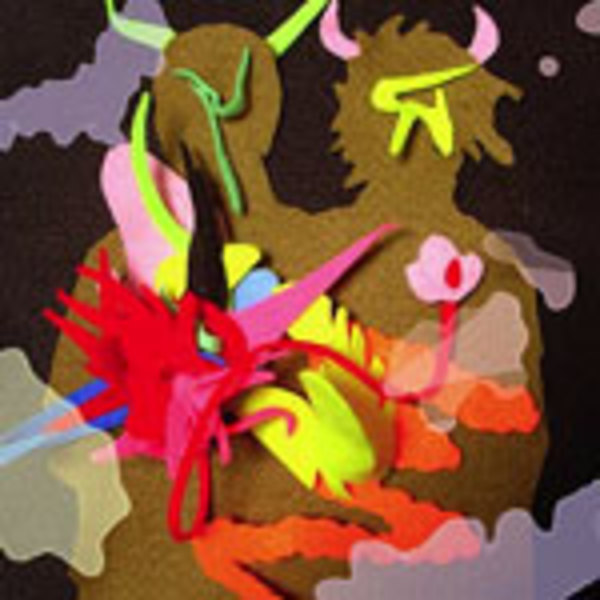
2. A Silent Flute for Mishka Shirt
I created this t-shirt for Mishka’s summer line after a fruitful brainstorm sesh–imagine Carvel’s space cake and Cookie Puss gone psychotropic. In the subsequent design process, I had to tackle some tough Parsons-like design decisions, like “Should I use weed or hash for the hat?” and “Are cocaine eyes too predictable?” At the end of the day, it came out exactly like I pictured it. What’s next? A Phil Manzanera shirt, doye.

3. Garni White Cross Necklace
While tacky-on-purpose gold is running downtown-NYC style right now, Tokyo’s flavor is all-the-way silver, with Garni running things as one of the best silver specialty brands in the scene. This particular pendant is a favorite: a mellow chain, nice length, and a silver cross with white leather thread. Maybe I’ve been listening to too much Mobb Deep, but I always tuck mine. Girls love this shit, by the way. Available at Shop Gentei, 1010 MOrton St., Baltimore.

Page 3343 of 3781
1 3,341 3,342 3,343 3,344 3,345 3,781