This UK soul sister will make your head bob and your feet move for the ’06. Mark de Clive Lowe provides his downtempo soul sound that will have Rasiyah easily pulling forward from her contemporaries Erykah Badu and Jill Scott. Her LP, dropping later this year, will be a must have for any neo-soul fan.
DJ Regal Shock Ya Mind
Regal has been running the TTs at clubs for years with the Wiseguys and Bronx Dogs. This truly funked-out club banger will surely have you clapping your hands and pumping your fist to the beat. With Funk Weapons putting out his record, you know it‘s going to be a dancefloor favorite!
Broken Keys Sling Shot
Nostalgia 77 and Natural Self came together to complete an amazing studio project and will be issuing a double LP later this year. Their first single, “Sling Shot,” is a dancefloor burner! It’s an uptempo funk dancer that will have the partygoers screaming in delight and the b-boys asking you to play it again. Funk like this hasn’t been heard in 30 years!
Mr. Dead: Off the Deep End
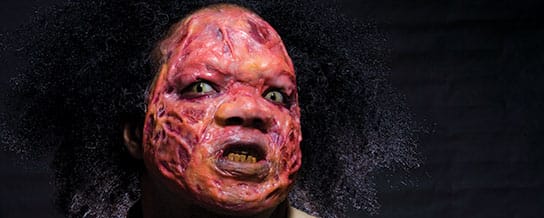
If MF Doom is hip-hop’s vaudeville villain then horror/B-movie makeup artist and MC Mr. Dead is rap music’s Vincent Price-or maybe its Peter Sellers.
Best known for his absurd cameos on Prince Paul’s many side projects, Dead is a man of many different faces. There’s Creeqo Valencio, a deranged choreographer in pink leg warmers who hijacks Prince Paul’s MTV Diary and Jean Grae’s “The Jam” video; Johnny Massengill, the “vaginal crooner” who just wants to keep your pussy clean; and Pimp Daddy Shrimp, an old hustler with a sweet spot for seafood. And don’t forget about Peter O’Tool, frontman for over-the-hill soul survivors The Dix, or Manfred Winters, the well-heeled Handsome Boy Modeling School “instructor.”
Dead was formerly one half of horrorcore duo Metabolics, which released its debut album The M-Virus on WordSound Recordings in 1998. Following the departure of partner Big Pat, he kept the Metabolics name and released what was essentially his first solo album (though Pat appeared on a handful of tracks), 2001’s Vol. 2: Dawn of the Dead. MV3: Dynamic Tension (Raptivism), Dead’s first proper solo release, is a chaotic tour of the Brooklyn native’s many personas. There’s the apocalyptic imagery of “Burial Ground,” the straight-up battle rap of “Hostyle Takeover,” and the positive messages on “Love One”s Self.” Johnny Massengill and Pimp Daddy Shrimp appear, contributing the hilarious “Sweet Lady” and “Return of the Pimp Daddy Shrimp,” respectively.
“Besides the strange hairdos, the things all those characters have in common is they’re off-the-top,” Dead explains, arriving for an interview at Brooklyn’s Broadway Junction subway station with his 11-year-old son “Little Dead” in tow. “Everything I do is very not planned and very sporadic.”
Dead, who landed his first movie job designing creatures for the Troma Pictures flick Sgt. Kabukiman NYPD back in 1991, is also finalizing plans to direct his own horror film, Four Sides, with frequent collaborator Ryan Monihan (who directed the “Dynamic Tension” video).
“[The movie is] about this single woman trying to overcome tribulations and a tenant in the basement of her new apartment building, played by me, who has four sides and all four are sick,” Dead says. “Rufus and Becky–me and my wife, Nakir-are the comic relief. Rufus is an older, weed-smoking type of guy with greasy, slicked-back hair and Becky is a Mary J. Blige fan who always has a fur coat and shades on even when she’s cooking.”
Dead’s next two musical releases also appear headed further towards the deep end: Son of Blowfly, the story of a fatherless rapper who finds out his dad is none other than the X-rated funk legend, will follow Tender Titties Vol. 2, a full EP from Johnny Massengill.
“I’ve been blessed with the ability to multitask,” Dead says. “So I’m open to all venues of entertainment.”
Nicolay In the Studio
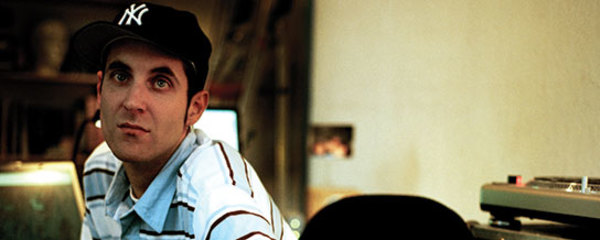
The Foreign Exchange’s Connected was one of 2004’s biggest surprises, simply because of how it was produced. The hip-hop record was proof-positive of how far the internet has taken recorded music. Raleigh, NC-based rapper Phonte (of Little Brother) and Dutch DJ/producer Nicolay concocted an entire album without seeing each other in person or even speaking on the telephone. They met through an Okay Player message board and began swapping audio files across the Atlantic via Instant Messenger, eventually piecing together a seamless record. When XLR8R conversed with Nicolay over IM, he was finishing up his solo full-length Here (to feature artists such as Phonte, Black Spade, Jada Avenue, and Darien Brockington), at his home studio in Utrecht, Netherlands.
XLR8R: What’s the first piece of equipment in your studio that you’d brag about?
Nicolay: My Roland Juno 60 synthesizer. If I am not mistaken, it’s from like, ’83 or something, but the sound is incredible. No MIDI; it’s analog as it can be. Can’t go wrong for pads and basses, man. I used that one a lot [on the new record], along with my [Yamaha] Motif 7 for the more “conventional” sounds and I ended up using my MicroKorg here and there.
What’s the best aspect of the Juno?
The sound, mainly its loud low [and] high; also, the chorus feature is crazy-it makes me sound [like I have] totally wide stereo. Plus, it has a big-range keyboard. There is a [new] track called “My Story” that actually has a lot of both Juno and MicroKorg on it; the track has a more synthesized background, but has a lot of more organic keyboards like piano, Rhodes, and organ on the front.
How different is the production on Here from Connected, besides not emailing the tracks back and forth?
The new record displays a wider variety of sounds-both my extremes if you will. The first tracks that people got to know from me were boom-bappish, sample-driven hip-hop such as “Light It Up,” and when the Foreign Exchange record dropped it was generally perceived as mellow-but I have both sides in me. The new record has a lot of the musical depth that Foreign Exchange had, but it has a lot of what you could call “bangers” as well and I think everything in between; some of it I could even classify as rock.
You definitely have grounding in modern hip-hop and R&B. How did you learn the studio production for those styles?
Honestly, as far as hip-hop and R&B go, I think I have learned to make those genres my own by just doing it. My huge advantage is that I am a classically trained musician. Ironically enough, I studied classical music for about seven years, while I would, at the same time, eat and drink hip-hop and jazz. In general, knowing how melody and harmony work and knowing how to play instruments will pretty much enable you to pick up any genre.
On the new record, did you play most of the music or sample it?
This time it really is a 50/50 [situation]. I ended up playing a lot more instruments even than on the Foreign Exchange album, but at the same time I sampled more. But even when I sample, I always play instruments on top-like I always play basslines on my bass guitar or the Juno.
It’s interesting that I can’t tell what is sampled and what is not.
You can’t? That’s great. Yeah, that’s what I try to do: mask the samples or make it into truly a new product.
Besides the Juno, what other instruments do you use?
[Vega] bass guitar and [an Ibanez] electric guitar, I sometimes use an acoustic too. Let’s see: turntables and Numark mixer, Yamaha Motif 7, Yamaha DX11, and I used some other stuff here and there that I can’t remember.
Where did you record the vocalists?
Parts were done during sessions that we had in NYC. Others were recorded in their respective cities, Foreign Exchange-style. Yesterday I finished the track that features Darien Brockington after they IM’d us the vocals on Thursday that they recorded on Wednesday. That’s how fast the [turnaround] can be sometimes.
What software do you use?
I use ModPlug for sequencing and ProTools 6.4 for multi-tracking, recording, and mixing. And I use SoundForge 5.0 for editing.
What effects do you often use?
I think the most used effect has got to be compression. Other than that, I am a big fan of the Frohmage plug-in. I use reverb here and there, but sparsely. Frohmage is a plug-in that beefs up your sound using filter banks-it’s incredible.
Caroline: A Degree In Dream Pop

A fascinating voice has ascended from the bustling musical circuitry of Japan: Caroline. With dreamy vocals and captivating programming-somewhere between the melancholic charm of The Cranes’ Ali Shaw and the innocently sensual minimalism of the Ghostly International roster-24-year-old Caroline Lufkin is staking a unique place for herself in a pop-ambient sphere already congested with Björk and Tujiko Noriko imposters.
As Lufkin explains, it’s been quite a journey to the release of her debut long-player Murmurs, on Brooklyn’s Temporary Residence (the home of epic and densely powerful instrumental bands Mono and Explosions in the Sky). After moving to Boston from Japan at age 18, Caroline enrolled in the esteemed Berklee College of Music to study songwriting as a vocal principle. Though analyzing a variety of music under the guidance of professors certainly aided this ambitious pop gem, it didn’t define her style. “I wouldn’t say that the songwriting department [at Berklee] helped me, but the harmony department did,” giggles Caroline. “It was just good listening to other people and being inspired by [them].”
Upon graduating, it wasn’t all glory for the motivated vocalist. Seeing potential in Japan for her music, Caroline migrated back to Tokyo, hoping to produce an album that captured her essence. Unfortunately, the Japanese market wasn’t quite ready for her. “Basically, my old management took me around to a lot of record labels and they all said ”Yes,” but in the middle of recording my album, it wasn’t going the way I wanted. So I just kind of quit,” says Lufkin. “Everyone was really nice and supportive of the record, but they already had an image of me in mind and I didn’t want that.”
Instead of engulfing herself in J-pop, Caroline moved to Los Angeles and recorded the synth-saturated single “Where’s My Love,” instantly forming a relationship with Temporary Residence. “I just emailed them and asked if I could send my demo. I guess I was lucky because they liked my songs; a few days later they were like, ‘We’re gonna sign you,” she recalls.
Excited by the whirlwind of Murmurs and planning an extensive tour in the fall, this diligent songstress refuses to compromise her musical vision. “I want to stay away from the jingles, even if it’s a quick way to make money,” she says. “I just want to concentrate on my music.”
FKO
Prozack Turner: Comes Back Hungry
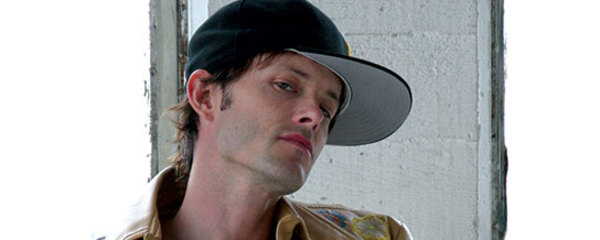
When Prozack Turner (of Bay Area hip-hop act Foreign Legion) left the States last year for a six-week retreat in Ireland, he wasn’t exactly on a quest for rest and relaxation. He headed overseas with his rhyme book in hand, on a mission to record his new solo effort, Bangathon. “When not in the pubs, I was in the studio or on double-decker buses writing the album,” recalls Prozack in his Bay Area twang. “So it was definitely a great place to get away and put things into perspective.”
Prozack rightfully had a lot to contemplate. Following two independently released albums with Foreign Legion, this animated MC got signed by DreamWorks to record his solo debut. They even gave him a budget big enough to get first-class beatsmiths like The Alchemist, Pete Rock, and the late J Dilla in the studio. But not long after the completion of Death, Taxes and Prozack, DreamWorks got bought out, leaving the album stuck in the vaults.
Prozack never received the other 50 percent of the money he was owed, and wound up losing most of what he bought with his advance check-including his prized Cadillac Seville. “I never really gave a damn about money, just as long as my cell phone’s on,” says Prozack. “I did enjoy the splendors and I didn’t work for a couple years and that was cool, but I could care less about the money. I would have done the record for free. Just the opportunity to get my thoughts out there and share it with the world is what being an artist is all about.”
If there’s one thing the DreamWorks situation taught this MC, it’s that when it comes to business, you can’t rely on anyone but yourself. Once Prozack returned from Ireland, he was so eager to get his new album out that he launched his own record label, Hungerstrike, to do so. “After going through being on a major label for a while and previously being on independent labels, it’s like I have a college education in the music industry,” Prozack explains. “It’s like, ”Why don’t I just do this all myself?” It’s a lot of work, but it’s very satisfying at the end of the day when you know that everything is getting done.”
Prozack may no longer have the budget to record with hip-hop greats, but on Bangathon, he proves that the people he works with aren’t nearly as important as the story he has to tell. Fellow independent artists will relish the story of his struggle within the record industry and his ultimate perseverance on the track “Hungry.” Meanwhile, everyday guys will relate to Prozack’s frustration with club-going women and their shifty behavior on “Club Girls.” He may not have one target audience, but Prozack rarely fails to entertain with his vivid and brutally honest raps. “There’s no bullshit in there,” he says of his new album, but he could just as easily be describing himself.
Edu K: A Brazilian Punk Hauls Ass

The raunchy, distorted crunch of an electric guitar’s power chords; the chest-convulsing thump of a speaker-wall of beats; a soccer mob chanting the booty-worship refrain “Vai, Popozuda!” (which translates roughly to “Shake that hot ass, girl!”). For the past four years, it’s been hard to escape “Popozuda Rock ‘n’ Roll,” Brazilian producer Edu K’s anthemic mating of metallic guitars with Rio’s bass-heavy baile funk. The song has appeared on Brazilian rock radio, favela funk compilations from Diplo and Essay Recordings, even European car commercials. Now, with a full-length album of rock- and reggaeton-inflected baile boomers, Frenétiko (Man Recordings), Edu K feels ready to take the sound of Brazil’s ghettos to the world.
Edu K’s musical career began far from the late-night funk dances of Rio’s shantytowns, in the relatively sleepy town of Porto Alegre in Brazil’s southeast. It was there, in the ’80s, that Edu K and a few friends aligned with European New Wave and formed Defalla, the post-punk band Edu K fronted until 2000.
“Defalla was for the goth, English rock stuff originally,” he says. “I was just a kid hangin’ around in full makeup, dark clothes, and big, messed-up hair. Aside from us few, the city’s youth was totally into nativismo [traditional Southern Brazilian folklore, music, and clothes], so it was totally ‘style wars’ here.”
Defalla became one of Brazil’s biggest homegrown punk acts, but all the while the ubiquitous beat of baile funk-the Miami bass-influenced party sound prevalent throughout the favela-was rumbling in the background. In the late ’90s, as funk became more acceptable to the Brazilian mainstream, Edu K and Defalla fell for its slamming beats and simple, repetitive refrains. They came to believe baile was punk’s true heir, a philosophy of funk that few share.
“There’s a lot of prejudice when it comes to baile funk,” says Edu K. “People say it’s the music from the poor, and rock kids don’t exactly dig the funk scene. [Defalla] was one of a [few] bands to make the bridge between punk and funk. ‘Who says a rock band can play funk?’ was the general attitude. Well, George Clinton did!”
On Frenétiko, Edu K takes his punk-baile sound a step further, incorporating elements of his early electronic interests (Kraftwerk and Giorgio Moroder, for instance) and current reggaeton sounds on an album to be released only outside Brazil. To Edu K, that’s the ultimate goal: to make music based in Brazil, but with worldwide influences and appeal.
“Reggaeton, dancehall beats-they all groove a lot like traditional Brazilian folklore riddims,” says Edu K of a connection that might lure Brazil’s music out of its self-imposed samba/bossa pigeonhole. “That’s the hook: the African-Jamaican-Brazilian connection! Brazil’s a huge country, and it’s been looking a little bit too much at its own bellybutton in past years, but that’s all starting to change. We’re on our way to being a part of the global village.”