Alden Tyrell: Disco Fried

While gallons of ink have been ceremoniously spilled over the music scenes of Detroit, Berlin, and Chicago, the southern Dutch shipping port of Rotterdam remains a neglected focal point of electronic innovation. But even an accidental tourist in the city would notice the extent to which electronic music permeates life on the Nieuwe Maas river. Open the door of any cab and be bludgeoned by the bellowing sound of 180-beat-per-minute gabber; pass any café with its doors ajar and galloping 808s pour out.
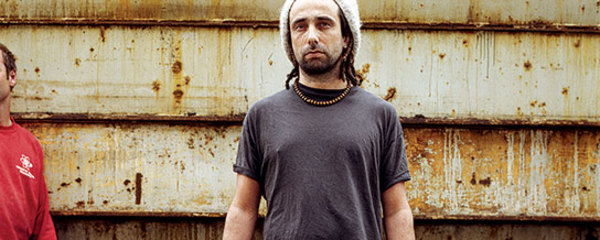
“It’s really nothing special,” counters dreadlocked Rotterdam artist Alden Tyrell. “It’s flat and grey and there are some guys who share the same passion for music and sitting at home-we like to complain about life and make music.”
Blasé though he may be, this electronic superman is the one-man embodiment of the city’s electronic music history. Tyrell has steadily worked his way into the pantheon of nu-disco with releases on Clone, Viewlexx, and DUB (under aliases including A Visitor From Another Meaning, Partisan Midi, Ardathbey, and with friends as EOG and Frustrated Figures). His frothy, expertly arranged take on the dancefloor-filling golden years of Italo-disco and NRG is compelling; stories of the past can be heard in every bouncing sine-wave bassline and each dramatic, synthesized woosh.
Growing up, electronic music was everywhere for Tyrell. “When I was 12, the school invited a local engineer to class who brought some synthesizers that had me totally flabbergasted,” he remembers. “And the stuff I heard on the radio sounded like it coming was from outer space.” Radio played a huge part in his formative years, introducing the young Tyrell to prodigious NRG producers like Bobby O and Claudio Simonetti. “The Hague was the Italo city,” he says. “This illegal radio station called City Radio Den Haag played non-stop disco and early electro stuff. I lived in a little suburb nearby and could just receive it on my radio.”
It wasn’t long before Tyrell purchased his first synthesizer and was playing along to tracks on his friends’ nationally syndicated radio program. “We did mixes for the Soul Show,” he recalls. “Cutting and pasting the tapes, mixing the records, and me doing the synth stuff and using a small drum computer. They thought we used samplers, but we couldn’t afford them at all as it was 1984!”
Twenty years on and reigning pop queens are once again bathing themselves in the warm light of disco, while Italo records [such as Fantasy Life’s “Over & Over” and Models’ “J.R. Robot”] fetch triple digits on eBay. This is due in no small part to the ripple effect caused by Rotterdam’s disco-loving record-label ring, which takes in the Clone empire and all its sub-labels as well as I-F’s Viewlexx imprint. “We’re all friends,” Tyrell explains of the connection. “Clone is just around the corner from my house and even closer to the studio. I-F lives in Delft, 10 minutes from Rotterdam. Like me, he almost never leaves his cave.”
Truly, Tyrell lurks in the shadows; though he frequently masters records and produces tracks, he remains notoriously reclusive. This position is about to change with the release of his first full-length, Times Like These. Gathering together sought-after singles like “Love Explosion” and “Knockers” alongside new tracks, Times (Clone) is a remarkable homage to the analog-powered euphoria of a cosmic bygone era, yet it is polished with skillful engineering and computer know-how.
Remaining true to the originators, Tyrell mostly favors old-school machinery. “I have some quite old synths and a whole range of drum machines,” he muses. “My favorite machines are the Oberheim OBXA, MiniMoog, and the Roland TR808.” But, much to his chagrin, he often must turn to higher processing speeds to get the final mixing and editing done.
“The computer is the devil,” he says. “I try to use it just as a tape recorder instead of a sound source, but it’s too tempting. The most difficult thing to handle is the fact that you can postpone all decisions you have to make while making a track-you can work on a track forever.”
Vybz Kartel’s Favorites

Every few years, some know-it-all music writer (ahem) makes the bold proclamation that dancehall is on the verge of blowing up in the States, but if I were you, I wouldn’t hold my breath for the day that Ruth from Duluth bawls out “A here forward!” at her local soundclash.
On the other hand, the contra flux has flowed steadily for years now: Hip-hop is massively popular in Jamaica. According to Vybz Kartel, easily one of the island’s biggest stars, “Jamaicans appreciate all genres of music-good music-and hip-hop is black urban music, so it’s natural.”
Vybz is no stranger to hip-hop. In addition to being a fan of the music, he appeared alongside M.I.A. on Missy Elliot’s “Bad Man” from her 2005 album The Cookbook and starred on the gunshot-laden “Double Down” with The Clipse that same year. With his inventive, rapid-fire delivery, ability to lyrically slay any and all comers, and, of course, his “up to di time” catchphrase, he’s now ready to take on the task of “bringing the business of Vybz Kartel to America.”
To that end, he just released an album of his own, JMT (which stands for Jamaican Mean Time). We recently caught up with the jet-setting trendsetter via phone in Kingston, Jamaica, where he listed his top five rappers of all time.
Vybz Kartel’s Personal Top Five U.S. Rappers
1. Tupac Shakur
“To me, Tupac is my number one. Not only for music but for his lifestyle and what he represents, how his music focused on the culture of black America. Who do you think got people here doin’ all kinda tattoos and shit? And he sang “Dear Mama”… Jamaican DJs always have tribute songs to mama.”
2. Notorious B.I.G.
“You know say a Biggie! And you know his mom is from Jamaica.”
3. Jay-Z
“To me, Jay-Z is the man that really filled the gap for the East Coast after Biggie. He brought back the focus to New York.”
4. 50 Cent
“They call me ‘the 50 Cent of Jamaica’ sometimes. We have a lot in common lyrically. When I came out, I came out with five mixtapes; he did the same thing. And we both say things that people are scared to say.”
5. Snoop Dogg:
“I like his style; it’s somethin’ different. He’s always biggin’ up the chronic, so you know he’s popular here in Jamaica.”
Freerange Records: 10 Years Deep

Whether fish or fowl, non-vegetarians know that food tastes better uncaged. Apparently, Jamie Odell also knew this when he began gathering his cast of animals for the Freerange Records label 10 years ago. Starting with releases by his own Jimpster and Audiomontage aliases, Odell followed with singles and albums from Sweden’s Stateless, Ohio’s Hanna, and the UK’s Trevor Loveys. Now the farm has a diverse population that includes Square One’s dream-tech, Only Freak’s retro house, Shur-I-Kan’s intelligent future jazz, and Switch’s punchy beats.
Odell explains that the London-based label has evolved from its eclectic downtempo- and jazz-influenced beginnings into more club-friendly, deep house sounds. But the last decade hasn’t been all tasty eggs and fine meat; the liquidation of their main distributor, Ideal, nearly put them under, says Odell. “We, as well as the artists, lost a lot of money. So we re-focused on what we were trying to do and luckily pulled through it.” Part of regrouping meant coping with the digital era, but Odell promises that Freerange’s music is now available “on any one of the million or so download sites.”
With fans from SF to Helsinki tuned in to the Freerange empire, Odell and Co. seem poised for another decade. But the question remains: Have the artists on the label actually visited a free-range farm? “Oh yes,” Odell replies, “but we prefer the funny farm!”
Jimpster’s Essential Freerange Releases
1. Switch “Get Ya Dub On”
2. Audiomontage Fun Kit EP
3. Only Freak “Can’t Get Away from Your Love”
The Streets: Coming Clean

Sitting across from me-barefoot, in an Agnès B suit jacket and diamond pinky ring, and fidgeting mercilessly with the hotel’s cordless phone-is 27-year-old Sagittarian Mike Skinner, who, as The Streets, has done quite a bit to elevate the emo bad boy’s place in hip-hop. His daytime persona is polite and gracious, and he dabbles in distinctly upper-middle-class pleasures. A Bill Bryson book sits on the end table, a bottle of Dior Homme cologne in the bathroom. He and his publicist discuss high-end dinners and the lemon juice fasts they’ve been on; in total sincerity, he cues up ’80s slow-dance ballads (including Patrick Swayze’s “She’s Like The Wind” and Kim Carnes’ “Bette Davis Eyes”) on the stereo.
Though Skinner’s clearly capable of being a gentleman when he needs to, he breaks out in a devilish grin when talking about spending his birthday with strippers in Vegas, a saucy interview he’s just had with Black Book, and the naughty posters in the American Apparel store. And though he doesn’t admit to anything more scandalous than that during this interview, he doesn’t exactly have to-his third album, The Hardest Way to Make an Easy Living (Vice), contains all the dirt you would ever want to know. From getting in fist fights with his manager to smoking crack with pop stars to complaining about camera phones (they make it impossible to do lines of coke in front of complete strangers), this record is juicier than any Jackie Collins novel.
The Hardest Way is a fluorescent-lit mug shot of The Streets-an extreme step in the evolution that began with the poignant ennui of 2002’s Original Pirate Material and its follow-up, the caper soundtrack known as A Grand Don’t Come For Free. Skinner’s sound-monotone storytelling, sing-songy choruses, beats that veer wildly between moody downtempo, R&B/lounge numbers, and grimy techno hip-hop-definitely won’t appeal to everyone, but that’s not what this is about. This, to paraphrase Usher, is Mike Skinner’s confession.
XLR8R: Did you have an identity crisis lyrically once you were living a celebrity lifestyle, and weren’t the ”voice of the common man” anymore?
No, not really. I actually felt quite excited. Suddenly, there was a lot of crazy shit to write about. People don’t really like change, but that’s what I’ve always stood for. Before, people always thought what I was writing about was too mundane; at first, they didn’t seem to want to hear about themselves. Now everything is about the mundane, so maybe they won’t want to hear about celebrity.
What’s the biggest lie you’ve read about yourself?
The weirdest thing is how you get linked to people, other celebrities that you don’t even know. Like Natasha Bedingfield; I’ve barely spoken to her, and they said I was dating her. But my favorite rumor is the one that says I’m a genius. Who doesn’t want to think they’re a genius? Plus, it helps me get laid.
What artist or group were you obsessed with as a teenager?
I was quite into Wu-Tang Clan. There was a lot to buy into, a lot of different characters within the group. I really liked Raekwon’s rhymes and RZA: that album as Bobby Digital was amazing. In fact, when I was younger I always had the idea to make this group called 2BC, a kind of rip-off of the Wu-Tang Clan. I’m from Birmingham and our soccer club is called Birmingham City, hence BCFC. So the “BC” in 2BC would stand for Birmingham City, but it would be a whole load of us rapping about what Birmingham would have been like 2, years ago. [Laughs] I don’t think I’ve ever told anyone that before.
What artist’s mythology do you really get into?
I really like Johnny Cash and Jimi Hendrix. Everyone’s got demons and everyone is struggling with the fact that nothing quite adds up and Johnny Cash was able to be honest about that. He walked the line-what a cliché, but he did-between good and bad. But the bad stuff wasn’t even bad-it was just honest. Jimi Hendrix has always appealed to me because he was focused, determined. I like the image of him cooking breakfast with his guitar on. I identify with that. A lot of times I’m writing lyrics while eating breakfast.
Why did you decide to make this album so confessional?
A lot has already been written about me. A lot of stuff has come out that I didn’t want to come out. People in my local pub know the better part of what I regret. At least this way, people hear my side of the story. I didn’t want to brush over it. I want to explain the reasons why everything has happened. Looking back, I didn’t want to go in the local pub and have the guy behind the bar laughing at me. Basically, anything I admit to myself I will write about.
What quality do you most detest in other people?
Well, they say the things you hate the most in other people are things you hate about yourself. I don’t like it when people are untactful or superficial…or too sensitive.
MSTRKRFT: Dirty Looks

In the video for MSTRKRFT‘s first single, “Easy Love,” four well-endowed women in tight business attire sit patiently in a room. After suggestively drinking four strawberry milkshakes, they individually lie down on a dentist’s chair and have gallons of a pink, creamy substance dripped in their mouths in what some might call a pornographic fashion.
Jesse F. Keeler, half of the Toronto DJ/production duo (pronounced “master craft”), begs to differ. “[The girls are] drinking milkshakes, and then the milkshakes get fed to them. That’s the whole fucking video,” he says indignantly, as he chows down on an omelette at a Toronto restaurant. “It’s only sexual if you’ve got that background of information for your brain to reference. A six-year-old kid is going to think it’s funny, like being slimed on Nickelodeon.”
It’s difficult to believe that Keeler and his partner Al-P didn’t intend to arouse some viewers-provocation is what they do best. Just look at the two of them: Their over-it attitude and great hair make them perfect hipster pin-ups. But their music-complete with thick basslines, aggressive drums, and thumping beats-is what’s really driving their growing fanbase wild. Watching them perform conjures up some fuzzy feelings too; you get the sense that there’s no dingy rock ‘n’ roll club that they can’t turn into a sweaty, over-sexed rave.
Making hearts (and other body parts) flutter wasn’t always what MSTRKRFT was about. The duo is best known for fashioning a plethora of rock remixes, tackling everything from Metric and Bloc Party to Juliette and The Licks. The twosome first garnered attention at last year’s SXSW festival in Austin, Texas. That’s when Vice released MSTRKRFT’s remix of Panthers’ “Thank Me With Your Hands,” a track that outlined the group’s remixing blueprint: no guitars or grunginess, just heavy bass and infectious house beats. It’s a style some of their clients dislike.
“I don’t think we’ve ever used anything other than vocals from any song we’ve been given,” says Al-P. “And some people take offense to that,” adds Keeler. “Vice was going to do a video for the [Panthers remix] that was basically just the singer singing and the band packing up their equipment and leaving. I think they nipped it in the bud because the band probably put up a real fight, like, ‘Please don’t make that video. It’s our biggest song and we’re not even it in it.'”
It’s not uncommon for a MSTRKRFT version to fare better than the source track. Their remix of Bloc Party’s “Two More Years” received more radio play than the original, and their take on Metric’s “Monster Hospital” is getting tossed around the net like a helpless crowd surfer.
Keeler and Al-P’s penchant for rock ‘n’ roll remixes is directly related to their status as reformed rockers. Al gave it up years ago (he was in Girls Are Short), but Keeler’s having more trouble shedding his past. As one half of aggressive drum-and-bass-only rock duo Death From Above 1979, he’s been on a bass-wielding bender for the last couple years. Although he plans to release another DFA 1979 album in the future, he’s not totally happy with where the outfit is going. “[We] became an ‘alternative rock’ band, which I can’t stand,” he says of the group, which toured with NIN and Queens of the Stone Age last year. “I hate that stuff. I don’t listen to it. I don’t buy it. In no point in my musical progression did I like Nirvana.”
No matter. Keeler thinks MSTRKRFT has the potential to be way bigger than DFA1979. “There’s a way broader audience for it,” he explains. “With MSTRKRFT we’ve already gone to places that DFA1979 never went to-like going down to Miami to play for days on end.”
Their debut disc, The Looks (Last Gang), should further cement their reputation as rock-dance’s new wild boys. The album is mostly house music shot with rock attitude, but it also features electro, disco, and synthesized vocals à la Daft Punk. Keeler, who grew up on soul and funk, says the record marks his return to the dancefloor. “[After Led Zeppelin]’ was into punk and then gradually I got into disco,” he says. “Now I’m playing techno in a club in Chicago, headbanging like a raver.”
Crazy
Gnarls Barkley: Totally Gnarly
Gnarls Barkley isn’t what you expect. The culmnation of a years-long musical conversation between super-producer Danger Mouse and Southern soul machine Cee-Lo, it strays from the already-esoteric blueprint of both artists’ careers into stranger and more anguished territory. Far from the cool, cynical tones of Damon Albarn (who drew DM into Gorillaz’ Demon Days), or MF Doom’s zippy, sardonic rhymes (which fueled Dangerdoom’s The Mouse and the Mask), Cee-Lo is Danger Mouse’s most engaged and emotionally generous collaborator to date. Meanwhile, Danger Mouse brings out a different Cee-Lo from the one first heard in Goodie Mob or even on his more personal solo work.
The duo’s new album, St. Elsewhere, contains 14 tracks whose subject matter ranges from suicidal tendencies (“Just a Thought”) and necrophilia (“Necromancing”) to action figures (“Transformer”). The lead single, “Crazy,” exemplifies the album’s dark, intense vibe. Cee-Lo sings, “I remember when/I remember/I remember when I lost my mind/But there was something so present about that place…/Hearing your emotions at an echo in so much space…/Does that make me crazy?/Possibly.” Danger Mouse’s production responds dramatically, double-tracking Cee-Lo’s backing vocals over an ominous bassline and violin chorus, evoking a feeling that’s both high-strung and cathartic.
“‘Crazy’ is missionary work,” explains Cee-Lo (who often speaks in ornate, metaphorical language). “The song is about freedom, exploration, and things of that nature. There’s a thin line between crazy and conviction. I must have been either crazy or convinced.
“I believe that [someone who is] literally crazy, or technically crazy, or insane does not even question the thought [of being crazy],” he continues. “There is no doubt [when] you are insane. You never even think twice about it, you know what I’m saying? So the fact that it’s asking a question is sanity.”
Here, in Danger Mouse and Cee-Lo’s own words, is the story behind the making of St. Elsewhere.
Cee-Lo: Me and Danger hooked up for a remix on the Danger Mouse and Jemini album Ghetto Pop Life. I did a remix for them for “What You Sittin’ On?” (released on DM and Jemini’s Twenty Six Inch EP). After we had completed the session, he asked if he could send me a couple of things he was working on. I was like, “Cool.”
DM: We wound up using three of the tracks I originally played [Cee-Lo] for the record: “Necromancer,” “Just A Thought,” and “Storm Coming.”
Cee-Lo: He sent me some things that were impressive, to say the least. I asked him to let me use a couple of tracks. He was like, “I don’t do tracks. I do albums.” So I was like, “Okay. Let’s do an album.” It just happened from there.
DM: That was maybe October 2003, so that was before The Grey Album even came into my mind, and before [Cee-Lo] was finished with his last record [2004’s Cee-Lo Green is the Soul Machine]. We had started on the record back then.
Cee-Lo: We actually didn’t even speak about the direction of the album. He just more or less gave me the freedom to be me and do my thing.
DM: The music always came first. I would do a bunch of music. When I was happy with where something was at, I would give it to him. Then he would find his way into the song, as far as [singing goes]. Then we would record it together. There are about four or five songs where we were in separate places when the recording was done but, for the most part, we were together. He would go in and cut his vocal over the track. Sometimes I changed the track around to fit [his vocal]. But most of the time he adjusted himself. He wrote exactly to the way the music was.
Cee-Lo: With this particular album, a lot of the chord progressions and changes propelled me to melody. I didn’t think that you could necessarily rhyme over this stuff. I guess that’s where I’m at. Rhyming is a lot more limiting. To me, there are possibilities with the melodies and the harmonies. You can bend and shape and twist and turn and stretch a melody and harmony into different things. So I would confront that.
There are only a few things that you can rap about, and only a few things that you can wrap stuff in, you know? I’m not saying I’m done with MCing, but songwriting is the focal point at this point in my career.
DM: There are a couple of tracks on the Gnarls record where I would program a drum beat with the drum machine, then pick up the bass guitar, organs, and stuff like that-whatever I’ve got around. I like to collect old organs and old keyboards. I get a lot of my sounds out of those. Then I screw around on the bass. The guitar I’m not very good at, but I can still get some sounds out of it, or I’ll get somebody else to do it with me.
I played all the stuff on “Smiling Faces,” and then I [played the instruments] on “The Boogie Monster.” [On “The Boogie Monster”] I found a cool, kicking snare sound, looped it, then played the bass and piano on there. It was real simple, but it was what I was looking for on that track: a real spooky, psychedelic [sound]. On “Smiling Faces,” I wanted to make a Motown-sounding track.
Cee-Lo: Maybe these emotions are from many different pools of how I felt at different points in time. I always say [these tracks] were the perfect excuse for me to elaborate and delve deeper into my emotions and into song. Songs like “Just a Thought” that contemplate suicide…I didn’t think that I was saying anything shocking. I am told that pretty much everyone has thought about it. At least that’s why the song is called “Just a Thought.” I definitely don’t have any plans on acting on it. It’s just that it’s crossed my mind a time or two.
It’s really simple for me. People are going to take [St. Elsewhere] as dark, but I get so light about it, because I get a chance to express it. So it’s not necessarily dark. It would be darker if I had no outlet for it. So thank God for music.
DM: We were working together and we thought we were going to try and do something different. We didn’t want it to be “Cee-Lo and Danger Mouse” or whatever.
Cee-Lo: There’s no big, generic story behind the name [Gnarls Barkley]. Danger Mouse said it one day and it just clicked. I trust his judgment, and I trust his vision. So I didn’t even trip.
DM: It’s not like we went, “Oh, we like Charles Barkley! Let’s name it this!” It just kind of came through.
Cee-Lo: Initially, the album was meant to be an independent effort. We were funding it ourselves. It was only during the last quarter [of the making] of the record when we got the deal [from Warner/Atlantic]. We had already done 75 percent of it out-of-pocket.
DM: Gnarls Barkley is definitely its own thing, its own group. I wouldn’t call it a side project because it could be bigger than either one of us is ourselves. [But] we went into it not thinking anything about whether it would be bigger or not. We both contributed to it, and we’ll continue to. We definitely want to do it again.
Cee-Lo: I’m very pleased. It’s some of my best work to date. I’m really coming into my own. I’m really growing, and I can look upon it as me coming into my own. This album felt like an out-of-body experience.

Nobody: Trip Fantastic

My obsession with ’60s psychedelic rock started around 1997, shortly after I joined college radio station KXLU 88.9 FM in Los Angeles. At the same time, I was also spinning rare groove and funk 45s at various small clubs, which led to an eventual meeting with a true superfreak. Digging on the heavy funk I was playing was a character who towered over everyone and looked straight-up like Peter Fonda in outrageous psychedelic garb. This was eons before this modern-day retro-rock revival, when a guy like this might get his ass beat walking down the street.
He also talked the talk-he was asking me about the “heavy tunes that were dynamite and outta sight” that were played that night. I was a bit taken aback by his freakiness, but also intrigued-thus began my relationship with Tartarex, the psychedelic guru from the OC that hipped me to the world of underground, mostly European, psychedelic rock. Every chance meeting with Rex resulted in me buying at least one of his mixtapes, with names like Dose of Orange Memories and Lady Sex and the Flowermen. Each handmade tape contained at least 25 songs, all recorded by bands that I had never heard of, complete with liner notes and photocopied group photos. He also made sure to include the year of release and country of origin, something missing from the rare groove mixtapes I was buying a few years earlier.
At first listen, most of the music-in particular the soaring four-part harmonies-sounded very Beatles-esque, but it grew on me. I immediately started my search, as any good beat digger would, for originals of some of these songs-I hadn’t been so excited since finding old jazz and soul records that my favorite hip-hop producers got hip to years earlier. At the same time, I discovered that many hip-hop producers beat me to the punch; hearing the “Jingling Baby” break on a pretty square record by L.A. studio group The Grassroots was mind-bending as well as copping the Turtles record that got De La in heat with the RIAA (but not my hometown heroes Freestyle Fellowship, oddly enough).
What was even more of a mind fuck was the amount of shit that hadn’t been sampled. When I found my first copy of the Silver Apples’ first LP I couldn’t believe what I was hearing. It was like a remix of an old Beatles tune with the most banging drums. Checking out other bands-Can, July, Damnation of Adam Blessing-let me know that there were probably tons of acts that had a penchant for mixing their drums loud as hell with drummers that could hold down some pretty sick beats.
There are some psych records that truly stand out as solid albums musically and production-wise, and also draw the head bob out of even the most discriminating hip-hop kid. Here are the top five that I bring out to get the party started.
Nobody’s Five Most Essential Psychedelic 45 Bangers
The Millennium: Prelude (Columbia)
The drummer and keyboard player of this band once belonged to garage legends The Music Machine, but traded in their black outfits and black gloves for the sparkling clean white suits of Curt Boettcher’s Millennium. Their one last aggressive tune together is the intro to the band’s soft psych classic album Begin. The most vibrant, catchy harpsichord melody is destroyed by the heaviest drums recorded on the West Coast.
Aphrodite’s Child: Air (Polydor)
This song sounds like The Meters on acid. Along with the funky drumming and over-the-top organ playing, it has the catchiest wordless chorus à la The Meters’ ‘Look-Ka Py Py.’ Then the psychedelics kick in as Vangelis sings ‘Your mind is full of air!’ through a Leslie organ and the entire song dissolves into phasing and feedback. And the drums! They’re all over compressed and crash heavy with phasing and stuff.
The Time Machine: Turn Back the Time (Pathe)
Not the danciest of tunes, but an extremely drum-heavy number by a ’60s French band that is sure to please. The sincerity of the lyrics, along with the violins and pan flute, give it a really sweet Euro-pop vibe that is complimented by huge banging drums that stay steady throughout the song. If that isn’t enough to convince you, the b-side is the same song backwards with only pan flute and piano! I remember playing this much to Shadow’s approval at the first Product Placement show in LA.
The African People: Neanderthal Man (Polydor)
Holy shit! A cover of ‘Neanderthal Man’ by an African psych band…or is it a French band pretending to be African? I don’t know, but I found this one after eating two hash bon-bons in Amsterdam. When it came on in the headphones, the heavens opened up, and when the drum break happened I saw a man appear from the heavens with a bone in his nose. It’s like Dilla played the drums for this band in 1971 somehow.
People: Glastonbury (Deram)
Not to be confused with the American band, this is a one-off single by a UK studio group. Things start off a bit slow and eerie with bell tolls and spooky vocals, but once the second verse comes in, the group’s perfect harmonies cruise over a sparse piano and percussion groove that’s supported by a very heavy 6/8 drum beat. You are treated to a sweet flute solo and an even sweeter drum solo towards the end of the song that leaves you with the kick drum buried deep in your chest.