Tujiko Noriko & Aoki Takamasa’s Tips

They say that if you’re going to take nude photos of yourself, make sure to do it before you’re 30. Though the latest team effort from Japanese artists Tujiko Noriko and Aoki Takamasa isn’t quite as revealing as snaps of a drugged-out night in Terry Richardson’s apartment, 28 (Fat Cat) is no less a personal document. Three years in the making, 28 was recorded between Takamasa’s home in Osaka and Noriko’s Parisian outpost, and blends Noriko’s softly hewn Japanese vocals with rhythmic layers of found sounds and lush, sometimes-erratic beats. Photographic references aside–well, not entirely aside, as the audio-recording function on Takamasa’s camcorder played a role in putting certain sound sources to disk–the pair of 28-year-olds gave us a quick look into the tools that made their ‘cross-the-bandwidth collaboration possible.
Mac PowerBook G4 1Ghz Laptop
This is the main tool for me to create sounds and songs. Unfortunately, I can’t make music without it at the moment. Most PCs look awful so I don’t want to put them in my room, and I don’t feel like creating music with such a badly designed tool, so that’s why I chose the PowerBook–it’s much better to look at! And also, OSX looks much nicer than Windows. Aoki Takamasa
Neumann TLM 103 Microphone & MOTU 2408 Soundcard
I have this microphone in my flat so I can sing and record on my own at anytime. I record directly into my computer through a MOTU soundcard. That’s it. Tujiko Noriko
Taiyo Yuden CD-Rs
This is a Japanese company and the discs are quite reasonably priced. They sound much better than other cheap CD-Rs. Aside from CD-Rs, though, I also uploaded unfinished songs and files on my server and had Noriko download them. Aoki Takamasa
Korg Z1 Synthesizer
Most of the synth sounds on 28 came from this synthesizer. It’s my favorite. It’s also got a great look, and really fits my style. I especially love its bass sound. Aoki Takamasa
Logic Pro 6.4.1 and Max/MSP 4.2.1 Software
I edit most of the sound files with Logic Pro and do almost all of the mixing work with this, too. But I use Max/MSP software to create my favorite sounds. I also use it to create strange sequences for drum patterns and special sound effects. Aoki Takamasa
Dave Ghetto: Never Silenced
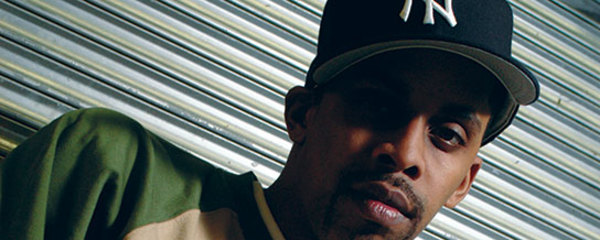
While talkative MC Dave Ghetto claims to also be an able beatmaker, he bluntly states that he has a reason to rap. “I have to be heard verbally,” says Ghetto, “’cause I got a lot of shit to say.”
That he does, especially when he speaks about his hometown of Camden, NJ. This town (seated across from Philly) is now, according to Morgan-Quitno Press’ annual rankings, considered the most dangerous city in America. And Dave can’t stay silent about this declaration. “They say Camden is the most dangerous city in the country–this shit is not City of God, though,” he says. “Let’s be honest. It’s hard, but it ain’t that hard. We got running water and lights. Although the cops is corrupt, we learn to maneuver.”
Camden may not be as wild as the slums of Rio de Janeiro, but it shaped Dave Ghetto as a man and an MC. “It has taught me to make the best out of the worst,” Dave says of his city.
Coming up with his Nuthouse crew in the late ’90s, Dave worked hard at getting his name out and was able to release material on the premier independent labels of the time, like Fondle Em and Goodvibe. Yet Dave admits that he quickly got caught up in an elitist mentality. “You know how we get,” he says. “If it ain’t underground, it’s garbage.”
But when this perceptive MC looked around at his immediate environment and saw the people’s desire to hear thug-styled rap, it actually helped him expand his horizons…and his subject matter. “All these years I was busy tryin’ to find that safe medium between me being a dickhead from time to time and being somebody who’s about the culture of hip-hop,” he says, illuminating the balance he’s achieved between conscious rhyming and real life.
On his solo debut on Miami’s Counterflow records, LoveLife?, Dave does talk shit about pseudo thugs and the like. But on songs like “Hey Young World Pt. 2” (featuring Phonte and Mystic) and “Spread The Light,” he balances vivid ghetto narratives with an optimistic outlook. “That just all comes from being a father, me being older, me being able to see what I’ve seen over the years and knowing that the way that we do things in life are not necessarily the right way,” Dave explains.
While LoveLife? is often a smooth, even-tempered album, don’t expect Dave to come back with a similar sound next time around–the dude won’t be pigeonholed. “I’m angry right now,” says Dave. “I might do a Public Enemy album one time. You never know.”
Welcome To Brasil
Son Do Braza
Scotch, Rocks
This month we go transatlantic to get inside the minds of post-shoegaze posterboys Mogwai. We get down with Kill Rock Stars and quiz everyone from Miranda July and label owner Slim Moon to Deerhoof, The Gossip, and Stereo Total. We also catch up with grime personality Jammer, while drum & bass soldier Shy FX talks shop. Also featured: Tortoise, Eliot Lipp, Bwana Spoons, US Reggae Stores, and Ghislain Poirier.
Tortoise: Deep Covers
The premise behind The Brave and the Bold–putting post-rock innovators Tortoise in a studio with country-tinged singer Will Oldham (Bonnie “Prince” Billy, Palace Music)–sounds like an episode of an indie rock reality show. But after the assembled musicians finished the two-week-long recording sessions that produced the album, the combination turned out to be a genre-splicing success. “It was really natural,” said Tortoise guitarist Jeff Parker of the collaboration. “Will is something else. His stamina is crazy. That dude would sing all day.”
Parker and Tortoise drummer John Herndon recently told XLR8R about the process of selecting and reworking the record’s offbeat covers, which span legendary punk tracks, country ballads, and Brazilian grooves.
“Cravo é Canela” by Milton Nascimento
“All of us in Tortoise love Brazilian music and we’re big fans of Milton. He’s arguably the most famous Brazilian musician. He’s like Michael Jackson down there.” Jeff Parker
“I think Will just learned Portuguese phonetically for this track. I think he did a great job singing, though I don’t know Portuguese. Maybe people in Brazil and Portugal are going to hear it and get pissed and ban him from the country.” John Herndon
“Thunder Road” by Bruce Springsteen
“We made this one a slow jam by changing all the chords to minor chords and slowing down the tempo.” Jeff Parker
“It was chosen partly because the fellow that runs Overcoat Recordings, Howard Greynolds, loves The Boss. I think it’s great, and I don’t think that about a lot of stuff I’ve recorded. I still really love to listen to it.” John Herndon
“It’s Expected I’m Gone” by The Minutemen
“Doug McCombs (Tortoise’s bassist) should run the Minutemen fan club. He loves them like no one else I know. This cover is different than the original–a little slower and chunkier–but we were trying to stay in the rock spirit. Parker added this sort of Southern rock guitar lick at the end, which made all of us go nuts.” John Herndon
“That’s Pep!” by Devo
“This one was kind of difficult. I’m not sure we totally hit the mark. It’s really hard because they are one of my all-time favorite bands and that kind of makes it more difficult. I don’t think you can get much more perfect than Devo.” John Herndon
“Pancho” by Dan Williams
“Will wanted to do this one because he thought it was really, really hilarious. It’s got this kind of homoerotic undertone, just the whole thing with these two cowboys; it kind of shed a different light on the story of the Cisco Kid. As a tune, there’s not really much to it. It’s pretty straightforward and goofy.” Jeff Parker
Kill Rock Stars: Riot Act
Kurt Cobain was late. It was Valentine’s Day 1991, and he walked into Olympia, WA’s North Shore Surf Club just as Bratmobile was exiting the stage. “I ran up to him and said, ‘You missed us!'” recalls Bratmobile vocalist Allison Wolfe of the band’s first ever performance. “[Kurt] was like, ‘Sorry!’ He seemed flustered.”
One person who did catch Bratmobile was Slim Moon, a guy that Wolfe had been seeing at punk shows and parties around Olympia for years. Though Bratmobile was more of an idea than a band at that point, Moon wanted to include their song “Girl Germs” on a compilation named after his new label, Kill Rock Stars. The seed was planted.
That July, Kill Rock Stars–featuring Nirvana, Unwound, Courtney Love, and Bikini Kill (who also played the Surf Club show)–was released at Olympia’s International Pop Underground Convention, where dozens of bands performed at what some argue was the last moment of innocence for ’80s underground punk and indie rock. Nirvana’s Nevermind was released a few weeks later; then came the mainstream media’s microscopes: “Seattle grunge,” and “riot grrrl” profiled in Seventeen, the beginning of “alternative rock,” and flannel on the runways. Steering clear of the hype and staying true to their roots, Kill Rock Stars prevailed–15 years later, they remain one of the US’ most innovative indie labels, their music and aesthetic having inspired artists from Cobra Killer to Chicks on Speed.
“We kind of just kept on doing what we were doing,” Moon explains, before sharing the principles that continue to define KRS. “I had a notion about music that means something. And I definitely had a philosophy that the people who know what is best for a band is the band themselves.”
Two Labels, No Labels
Taking punk up on its dare to “do it yourself,” Slim Moon officially registered Kill Rock Stars as a business in 1991. The name came from a line spontaneously written on one of his paintings; the inspiration was the Olympia music scene itself. “People [here] started bands just to have fun, or to play for their friends, not with intentions of fame,” Moon says. “I like that purity of expression.”
The initial KRS concept was a “wordcore” label, dedicated to spoken word 7″s by the likes of Jean Smith and Penny Arcade. In fact, one of Moon’s early finds was a young Miranda July. Now an acclaimed indie filmmaker (Me and You and Everyone We Know), July says she still has a Patti Smith tape that Moon gave her a decade ago when she was a spoken word artist.
Kill Rock Stars quickly became more about music, with Moon unwittingly creating a focus on the Pacific Northwest in the same way that Dischord did for DC. Era-defining all-girl punk bands Bratmobile, Huggy Bear, and Bikini Kill kicked macho ‘n’ misogynistic rock in the eye with riot grrrl diatribes like Kathleen Hanna’s notorious rant on Bikini Kill’s “Suck My Left One.” Joey Ramone dueted with ’60s pop star Ronnie Spector. Volatile noise-rockers Unwound experimented with dub while gazing at meteor showers on Repetition, and DJ Spooky dissolved a Free Kitten song into an unexpected hiss of Chinatown steam and a hail of jungle beats.
In 1997, Moon pushed boundaries even further, creating sister label 5 Rue Christine–so titled after Lost Generation writer Gertrude Stein’s Parisian address–to release music too abstract and experimental to fit on KRS. The label has found Sacramento’s Hella confusing arenas full of System of a Down fans with a racket made from little more than a guitar and drum set, and Nintendo cover band The Advantage delivering guitar renditions of “Moon Level” from the videogame Ducktails and “Mine Shaft” from Ninja Gaiden.
KRS and 5RC both have catalogs so diverse that they give no idea of where they are going next. Sleater-Kinney guitarist Carrie Brownstein defines the label by its sheer fearlessness. “[They have a] desire to present something dangerous in a time when people want easy listening,” she says.
“Kill Rock Stars does not have a sound,” concurs Deerhoof drummer Greg Saunier. “It’s very unclear what it is [Slim’s] looking for. And every time we turn around, he’s added some band to the roster that makes you go, ‘What?’ That’s something from the beginning that we always respected about the label and still do–it’s amazing that it has survived.”
Living Dangerously
Saunier’s Deerhoof–a Cubist noise-pop trio from San Francisco–is an example of another KRS trait: Moon is willing to release any record by an artist he believes in. Deerhoof connected with Moon a decade ago–at the time, they were rehearsing in their San Francisco kitchen, feeding bass through a tiny amp and playing drums with fingers so as not to disturb the neighbors. The band caused KRS to lose money for seven consecutive years before becoming one of the label’s most popular, says Saunier “[Moon] never even hinted that it was a problem for him,” Saunier recalls. “It sounds corny, but I feel that they believed in us when it didn’t feel like there was much of a reason to.”
“Whenever a band doesn’t really do that well and they want to do a record next year, Kill Rock Stars always says yes,” concurs Brace Paine, guitarist for The Gossip, the punk/blues/basement dance-party jewel of the current KRS roster. “It’s honest and raw for [Slim] to put himself out there [like that].”
When talking to KRS bands, it becomes clear that Moon’s supportiveness is the glue that holds this family together. Miranda July, whose last album was released on Kill Rock Stars in 1998, sums it up best. “(Moon) was the first person who–it sounds cheesy–more or less told me I was a ‘star,'” she says. “At that time, I had just dropped out of college and was pretty unsure [of myself]. I definitely needed the support of him saying, ‘Yes, you are really good at this. You can go as far as you want to.'”
Moon downplays his own achievements. “Recently, I’m feeling like we’ve had a lot less impact than I expected, to be honest,” he says. Nonetheless, it appears that Moon and company will not stop the flow of fresh ideas anytime soon. Recent releases include reissues of post-punkers Delta 5 and Berlin’s pioneering DIY electro outfit Stereo Total, plus renegade projects like Starter Set, a DVD of performances by modern dance groups like the Hysterica Dance Co. and the 4 Hard Gulps Theater Company. July, for one, is a fan. “[With Starter Set], I like the fact that it is some out-of-leftfield thing to do, not really commercial, but giving something new to a really hungry audience,” she said. “That is a great indication that Slim is still Slim.”
(page 2 of 2)
Stars On Stars
Artists and Label Heads Show Love for Kill Rock Stars.
“Elliott Smith provides a reminder that modern music can have intense emotional impact, be interesting, accessible, and inspirational. I’m sure I’m not the only one who considers him the Lennon of my generation.” RJD2
“Their roster reminds me of an ex that hates me.” Slug, Atmosphere
“I bought my first Bikini Kill record in 1995 in Melbourne, Australia. I didn’t know what KRS was or what an indie label meant back then. It wasn’t ’til two years later, when we made our first Chicks on Speed 7″, that I looked at the record label in more detail.” Alex Murray-Leslie, Chicks on Speed
“KRS and Bikini Kill were a big inspiration for me to start Tigerbeat6; alongside labels like Alternative Tentacles, Gravity, Threeoneg, GSL, and Lookout, they paved the way for the real American independent label. I admired them even more when they set up 5RC and started releasing my current favorite band, Xiu Xiu, as well as other great Bay Area peeps like xbxrx and Deerhoof.” Kid 606, Tigerbeat6
“No matter what tour I’m on or whatever the reason is that I’m on the road, I’m always listening to Unwound. I last saw them play on September 11, 2002 in Atlanta. They killed it, and I was pissed I didn’t get a shirt with a horse on it. Then they broke up. I still play them out, ironically, as much as the first two Elliott Smith records.” Prefuse 73
“Some record labels feed on the fertile and radical food that’s hidden in the punk, raunchy bottom of our corporate-crazy music food chain. Slim Moon’s Kill Rock Stars is a label that has always worked the other way ’round. Constantly fertilizing the unkempt underbelly of tomorrow’s sound, KRS has become an independent rallying cry around that ol’ down-home saying “For the fucking love of music, stupid!” DJ Olive, theAgriculture
“I was staying at a friend’s house in Olympia, WA, and one of the housemates walked into the living room and told me ‘You have to listen to this record. This is the greatest thing you are ever going to hear.’ Whenever someone tells me something like that, I automatically kind of tune out… but the thing is, he was right. He put on Sleater-Kinney’s Dig Me Out (KRS 279) and it was indeed the greatest thing I ever heard. I want to say thank you to Kill Rock Stars for putting out their records, but maybe the tons of money I have spent on their catalog (Bikini Kill, Heavens to Betsy, Bratmobile) is thanks enough. Fred Armisen, SNL/former Trenchmouth drummer
“5RC and Kill Rock Stars has been releasing some of the most exciting, important, and groundbreaking music for the past decade and has inspired us to constantly push the envelope of our musical abilities.” Daniel and Jess of The Post Office Gals
Test Icicles For Screening Purposes Only
On their buzzed-to-death Domino debut, the three young Brits in Test Icicles create democratically cacophonous sound. Each song is a squealing gas fire of hardcore intensity and horror-punk braggadocio. But within seconds, the seemingly straightforward (read: meat-headed) tunes burn to the ground, revealing curious but confident shards of post-punk and beat-heavy faux-hop. What the band lacks in polish, it makes up for in zeal, with 15 relentless battles between vocalist Rory Aggwelt‘s piercing bleat, fat, sequenced drums, and the metallic ghost story his carefully coiffed compatriots weave.
Choncey Langford The Enthusiast
As one-third of Seattle‘s Lamplighter, Langford helped to forge one of the Northwest‘s most diverse and interesting IDM albums of the decade with 2003‘s A Three Point Perspective. Since moving to LA, he‘s focused on solo production. The Enthusiast finds him exploring techno‘s dubbier and glitchier strata with off-kilter inventiveness, while maintaining his IDM pedigree “(Max Ernst” and “Harvey Milk” teem with unpredictable pinball rhythms and murmuring hospital-equipment sounds). Langford also understands the value of concision, maximizing stimulation in 39 minutes over 12 tracks. With one foot on the tech-house dancefloor, the other in the tonal tomfoolery of Mille Plateaux, Langford embarks on a promising solo career.