Jammer: Jammed Frequencies

A menacing string B-line kicks in as a budget camera shot pans around a shabby street in London’s East End. Viewers prepare themselves for the kind of gritty, voyeuristic journey around a UK hood that is synonymous with grime and then… blam! A 5′ 6″ dreadlocked super hero–resplendent in a purple, black, and green homemade one-piece, facemask and cape–ricochets into the shot, Karate Kid-style.

Leaping on top of phone boxes and cars, the half-comic/half-frightening character barks, “It’s the Merkle Man/Never gonna fix that Urkel man/Continue to circle man/All for the green and purple man.” Who is this Lil’ Jon-like figure, rhyming about sitcom nerd Steve Urkel, chucking boys in business suits out of phone booths, and carting big girls around East London on the back of his four-wheeler?

The man behind the Merkle mask is Jammer, formerly the official producer of the N.A.S.T.Y. crew and currently the figurehead of pioneering grime label Jah Mek The World Productions. Known for blood-curdling, future-industrial basslines favored by top MCs like Dizzee Rascal, Wiley, and D Double E, Jammer’s MC alter ego is a hilarious twist on the grime cliché of a screwface producer sitting in a graffiti-blasted basement. “It definitely took people by surprise,” laughs Jammer.

In a scene where hard-earned reputations are shattered with a single clash or potent diss track, stepping out as Merkle Man took balls of steel. “I put the suit on, looked in the mirror, and thought, ‘Shit, am I gonna walk down the street like this? Once I’m outside there’s no turning back. There’s 40 mans watching and I’m filming outside Leytonstone Underground Station,'” recalls Jammer. “I knew it was all or nothing.”

Whistle While You Merk
Jammer pulled a Pharrell and stepped out from the anonymity of producing at his 21st birthday bash (he’s now 23), where he MCed alongside friend Dizzee Rascal. After contributing to sessions held at his home studio, he was encouraged by MCs to take up the mic seriously. Littering his flow with fiercely delivered yet amusing self-penned catch phrases (neckle, seckle, meckle, merkle) and highlighting on his own posse-cut productions like “Saw It Coming,” “Slew Dem,” and “Joy Ride,” he catapulted into the MC elite.

Like The Neptunes’ big man, it’s not so much Jammer’s rhyme skills people have bought into but his enigmatic character. Ricocheting around stages like the Energizer bunny on speed, Jammer’s manic aura is infectious. Live PAs of Merkle Man see crowds breaking into fervent moshing. Jammer’s unbilled performance of the track at a recent Kano showcase sent the crowd into a riot even after the fifth rewind. Not one of Kano’s lyrics got the same reaction.

So what exactly does all of Jammer’s vernacular mean? “[The word] ‘merk’ has been in the grime scene since day one. If you ‘merk’ someone, you’ve killed them in a clash or dissed them in a lyric,” explains Jammer. “‘Merkle Man’ is a funny way of saying I can merk anyone in the scene.” And neckle? “Neckle means anything that’s good. Seckle means ‘chillout.’ And meckle I use instead of mental. Everyone’s tired of hearing the same old shit. That’s why the whole nekkle thing caught on so quickly.”

Power Bars
Jammer (Jahmek Power) was born to Rastafarian parents in Leytonstone, East London; he works in a basement studio in the house he grew up in. The home has an industrious, lively energy. Posters of Bob Marley share space with family photographs, one of which shows the eldest of his four sisters graduating from law school. The kitchen bursts with his younger sister’s friends practicing dance routines as his mother cooks, seemingly unhindered. His father, a reggae soundsystem operator and musician, keeps a watchful eye over Jahsiya, Jammer’s three-year-old son, as he scoots about humming the basslines of “Daddy’s songs.”

Jammer has music in his blood. At 12, he was getting bookings to DJ reggae, dancehall, and jungle with his friend Supa D; by 14, he was commanding his own soundsystem, Demolition. His first experience of UK garage was his older sister playing him Karl ‘Tuff Enuff’ Brown tapes. “Coming from a reggae background I thought, ‘What’s this funny music? This is swag,'” he says of the initially house-and-R&B-driven two-step sound. A few years later, during the So Solid Crew-dominated era, Jammer worked at the distribution company Essentials, and was impressed by the amount of vinyl that homegrown talent was shifting. “Mans was moving 6,000 copies in a week,” he says. “I knew from then making tunes was the only way forward.”

Three years later, in 2002, Jammer merged the bass-heavy fundamentals of reggae with the double-time structure of garage to become one of the founding fathers of grime. “It’s the dirt down your fingernails,” he says, describing the sound. “The residue in the bath. I’ve never liked the term as it’s everything bad–but, at the end of the day, the music’s grimy and that’s why it’s stuck.” He takes a pull on a spliff, then reflects with confidence, “Whatever you want to call it, in 10 years time it’s gonna be as big as hip-hop. Just remember, it was me and Wiley that started it.”

Jah Mek Extra: Mizz Beats
Meet 19-year-old grime producer Mizz Beats.

Mizz Beats is the jewel in Jah Mek The World’s otherwise male-dominated crown. Working with the label since she was 17, the 19-year-old producer (born Iman Yanee) connected with Jammer through an unlikely incident in the Leytonstone post office.

“I was standing in line when these two guys came in trying to sell the Lord Of The Decks, [a grime DVD documentary]. They asked me if I wanted to buy one and when I told them I didn’t have enough money they gave me it. One of the guys turned out to be rapper DM. We exchanged numbers and when we hooked up I played him a CD with 20 of my tracks. He took me to Jammer, played him the CD, and I’ve been working with him since.”

A hip-hop and R&B producer by trade–”I was into hip-hop before I could talk properly,” she claims–Mizz Beats was, oddly, never a fan of grime. “I couldn’t get into it. It was watching Lord Of The Decks that made me realize it was good because it represented our own way of living.”

Thanks to her unique blending of hip-hop and R&B with grime sentiments (double-time rhythms, stark instrumentation)–and Jammer’s endorsement–Mizz Beats has experienced a meteoric rise to prominence. “I did the ‘Signal’ tune with D Double E and everything went mad,” she says. “I’ve only just started but I’ve done tracks on Dizzee’s LP, Estelle’s LP, Lady Sovereign’s LP, and I’ve got some big things lined up with US artists next year. I’d like to think it was all down to my music but I’m sure it helps being a woman in such a male-dominated genre.”

Oliver Wang: Crate Digging

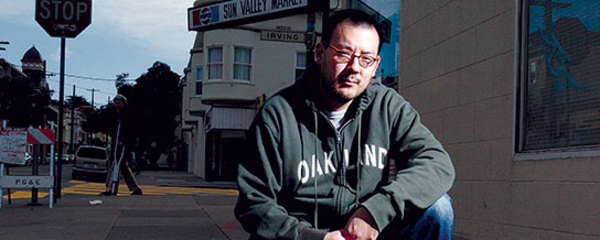
San Francisco writer/DJ Oliver Wang has always had his taste-making hands in every pot on the stove–from contributing to NPR and Vibe to maintaining blogs for MSN, Napster, and his own critically vaunted Soul Sides audioblog–so it was only a matter of time before he got into the compilation-curating game. Wang culled down a list of 50 dust-covered soul gems to arrive at the 14 beautiful slabs on his first compilation, Soul Sides Volume One. Here he tells XLR8R about some of the jams that made the cut–and one that got away.

More on Oliver Wang

Charles May and Annette May Thomas “Keep My Baby Warm”
“I originally found this on 45 at Rooky Ricardo’s in San Francisco and was just blown away by how beautifully the song blended gospel, soul, and funk. It took me years to track down the album.”

Erma Franklin “Piece of My Heart”
“It kills me that so many people think Erma covered Janis Joplin when it’s the other way around. Erma never had the fame her sister Aretha enjoyed, and it’s a bitter truth that Joplin blew this song up better than Erma [but] I’m glad we got it on here so we could set the record straight.”

Linda Lyndell “What A Man”
“An old friend, Georges Sulmers, was spinning in a small bar in Brooklyn and threw this song on. I recognized it from the Salt ‘N’ Pepa remake but was instantly charmed by the original. I recently had a chance to interview Lyndell–despite a 25-year hiatus, she is now back making music.”

Al Green “Strong as Death (Sweet as Love)”
“This 7-inch-only song was recorded right before Green’s ‘Belle’ era and it’s one of the most amazing tracks from his years at Hi. So soulful it’s searing but, for whatever reason, it never made any album. We were ready to put this on the comp but it turned out to be too expensive.”

Stereo Total: Utopian Lounge-Punks

“It wasn’t love at first sight, musically,” says Brezel Göring of his first forays into music-making with girlfriend and Stereo Total co-conspirator Françoise Cactus. Eventually, the pair struck upon a way to combine Göring’s background in the Neue Deutsche Welle (“German New Wave”) scene with Cactus’ love for French chansons and ’60s garage rock. In 1995, they released their debut, Oh Ah! (Bungalow), and over the course of five more albums cemented a signature sound: minimal and cute electro-pop backdrops topped by knowingly naive lyrics about horror films and bunnies and Holiday Inns (sung by Cactus in heavily-accented English, Japanese, German, and many other languages, including her native French). With an EP, Discotheque, just released on Disko-B and KRS reissuing My Melody (1998) and Jukebox Alarm (1999), we caught up with the duo at home in Berlin.

XLR8R: What has been the biggest change for you as a band since My Melody and Jukebox Alarm came out?

Françoise: At this time, there were two other people in the band. Now it’s just the two of us. It’s much easier and it has changed everything, even the music. It made it more simple and more minimal. [I was really influenced by] this band in the ’80s in France called Rita Mitsouko. There were just two of them–a man and a woman–and they were also a couple. I think it’s nice. Anyway, I have always loved minimal music. You can see that on our cover version of Hot Chocolate “Heaven’s in the Backseat of My Cadillac” (from Jukebox Alarm). It’s not funky at all! It’s almost nothing. I think that My Melody and Jukebox Alarm are not as well produced as Musique Automatique; the sound is sometimes a bit more scratchy and rough. I like sounds that are wild… but still not scratching my ears.

You two are very influenced by ’60s French music. Who is your favorite artist?

Brezel: Always, [we] come back to Serge Gainsbourg. He had a very psychological way of writing songs. They’re not just good pop tunes with good instrumentation or good melodies; his lyrics also have a double meaning–something really intelligent or really dirty but really funny at the same time. Also, he used jazz, rock ‘n’ roll, and even psychedelic stuff and reggae and put it all in this chanson context. [I like] this way of using music–taking it out of its context and putting it in another–and this is something I like to do myself.

What are you working on right now?

Brezel: We are doing a musical about Patty Hearst [in April]; Gina D’Orio from Cobra Killer is going to play Patty. In Germany, [we just released] a record with six new songs, Discotheque. There’s one song that goes “I hate everybody in the discotheque/I don’t like pills/I don’t like coke/I don’t like the stroboscope.” Also, did you hear about this life-sized puppet Françoise made out of wool? It’s called Woolita. She showed it in a group exhibition last year and… there was this scandal because this puppet looked so fleshy. There’s a little book about the scandal and the tabloid yellow press [published by Martin Schmitz Verlag] and [it comes with] a record we made where the puppet is singing.

The Gossip: Soulful Rebellion

Somewhere out there, Etta James and Iggy Pop are scratching their heads and asking, “How in Christ’s name does The Gossip come up with this shit?” This Portland-by-way-of-Arkansas three-piece crushes their garage rock crescendo with more soul than BET and more angst than a pack of small-town teenagers. The band’s latest offering, Standing in the Way of Control, is a potent blend of R&B and spasmodic rock that’s got asses bouncing and bodies crashing from coast to coast. Lead singer Beth Ditto explains it all while hanging curtain rods.

How did you hook up with Kill Rock Stars?
I was 18 and we just moved from Arkansas. I didn’t know shit about Kill Rock Stars. I literally thought that they were a tape label out of a bedroom. We started playing house parties, and Carrie Brownstein from Sleater-Kinney saw us, and Calvin Johnson from K Records saw us and asked for our 7″. Then Carrie was like ‘You should go on tour with us.’ So we put out the 7″ with K, did a six-week tour, and right before we left to go on our tour with Sleater-Kinney, they were like ‘How do you guys feel about putting out a full length?’ And I was like, ‘OK.’ That’s how we got stuck with them.

How does it feel to play bigger venues as opposed to house parties and basement shows?
I miss little shows because I really hate business. I like money, but I hate business. I like energy. If we play a show [in a big venue], and there’s 30 kids, that’s a shitload of kids. That’s like half of my graduating class. It just feels weird because you’re in a huge venue and you’re being treated all weird. But if you’re in a basement, it just makes sense. I always find that I’m at my best–I perform better, I sound better, I feel more comfortable–when I’m at a show with 30 people. It’s just more fun. I miss basement shows a lot.

Do you feel the spirit of punk is still alive and well?
I am a punk who makes music and I feel like I’m in a punk band. I think the spirit of The Gossip is very punk. It comes from a raw place.

Your new record definitely reflects that raw place.
When the record was made it was all about encouragement. This major label wanted our record, but we were doing it with Kill Rock Stars. We were like ‘We’re going to do it the way we can and make it as big as we can and spread this message, and make a living off of it’–which is capitalist, but necessary. What else am I going to do? Work at McDonald’s?

Me Magazine: Creating Cover Stars

They say you can learn a lot about people by meeting their friends, and Me Magazine ($8, subscription $25)–run by former Index/Visionaire/V Magazine creative Claudia Wu–is proof that “they” are not wrong.

Each issue of this independent quarterly, which debuted in autumn of 2004, focuses on getting to know one special person by interviewing about 15 of their closest confidantes. It goes without saying that Me cover stars aren’t trashmen or toll-booth employees–past issues have focused on the likes of United Bamboo designer Miho Aoki, Rivington Arms gallery owners Mirabelle Marden and Melissa Bent, and photographer/former Black Dice member Hisham Bharoocha. Naturally, these people have interesting and famous friends, among them artists assumevividastrofocus and Ashley Macomber, and musicians like Tyondai Braxton and Prefuse 73. As a result, Me can occasionally seem cliqu-ish, but interesting interview questions and compelling photography elevate its voyeuristic pleasures far above those of a Lower East Side art opening.

Wu is also keen to nip the heretofore New York-centric vibe of the publication in the bud by moving the focus of future issues to LA and beyond. “I have a theory that, eventually, every person in New York will have been in the magazine at least once, if not more,” she explains via email. “I’m trying to branch out before that happens!” And, contrary to popular belief, Me‘s cover stars aren’t culled from Wu’s inner circle. “I have a ‘no friends’ policy,” she says. “I take recommendations from people or try to reach out to [those] who I think are interesting.”

Can’s Irmin Schmidt: Father-Kraut

At a time when Germany was literally rebuilding itself from the ground up, artists in Cologne (both visual and musical) flourished, giving birth to a new post-war culture. In fact, the revolution was in full swing from San Francisco to Europe. While students rioted on campuses around the globe, experimental electronic music spread boundlessly in cities everywhere. A pupil of composer Karlheinz Stockhausen, pianist Irmin Schmidt was at the eye of the storm, channeling all manner of sounds and politics, and assembling what would become the band most synonymous with the Krautrock sound: Can.

From his residence near Avignon, France, Schmidt is still susceptible to the whims of electronic technology. Our telephone conversation is briefly interrupted as the cycles of nuclear power shipped out to his countryside home encounter a delay and cut the phone line temporarily. In keeping with Schmidt’s Cagean philosophy, it turns out that our interview, too, is subject to the indeterminacy of its environment.

XLR8R: Set the scene for us in Cologne in 1968.

Irmin Schmidt: Cologne was a very lively place at that time. It was the center of electronic music in Germany: Stockhausen had founded his electronic music studio in the radio station WDR (Westdeutscher Rundfunk); the orchestras all performed works by Stockhausen and Boulez; and there was also quite a lively jazz scene. In fact, [Can’s] Jaki Liebezeit was the drummer in a jazz orchestra when we found him.

How about politically? What was going on?

Lots of things happened politically. I was not very active in politics, though. My main action was quitting classical conducting and composing, and founding a rock group, which was, in a way, also a political statement. For a classical musician with a decent career as a pianist, conductor, and composer, [to throw] that away to found a totally crazy group seemed a fairly insane act of waste.

So why did you do it?

I was rather unsatisfied with the state of contemporary music at that time in this circle…because it was very dogmatic. It claimed to be the only way to be contemporary, to be new. On the other hand, I thought of ‘new’ in terms of Western culture, comparing what Western jazz artists did to re-contextualize boring instruments like the saxophone with what Stockhausen was doing. [Jazz] was at least as new a cultural phenomenon as Stockhausen was for me.

So what did you think of electronic music when you first heard it and brought it into Can’s sound?

In the beginning, I hated synthesizers. I found them quite boring, so I invented my own. What was very important was that I wanted to create electronic sounds spontaneously on the stage without long preparations.

Was this always thought of as a problem with electronic instrumentation, that there was too much programming or not enough human emotion involved?

I don’t ever think that electronic music should replace our rich instrumental possibilities. It’s most interesting when the two are combined with each other… I don’t really understand the argument of human or inhuman. When people have a drum machine and try to make it a little bit imperfect to sound human, I find that quite strange. All electronic instruments are human creations, so what’s inhuman about it?

When you went through the process of re-mastering these discs for reissue, what was your main goal?

We wanted to go back to the originals because the existing CDs, which were mastered in the ’80s, were always too contaminated by this euphoric belief in the new early ’80s technology. There were all kinds of effects, which one thought could improve the sound. Actually, what happened was that it got worse…

We very carefully de-noised [the original tapes], so that nothing of the sound was changed. We loved that the environment was part of the music. We left the windows open. If somebody came in and started talking, we still recorded. it was a very Cagean idea. And when we put it on CD, like the origianal tape sounded, we came to realize that what we really wanted now actually sounds very modern.

A-Track: A Tribe Called Request

In battle footage from his new DVD, Sunglasses is a Must (Audio Research, $17.98), 15-year-old turntable prodigy A-Trak ends a routine by lip-synching the cocky line “What do you have that could possibly beat me?” It was as legitimate a challenge then–when he was winning the 1997 DMC Championships–as it is now for the Kanye West-tour-supporting 23-year-old DJ. The DVD–a compilation of quirky home videos, dizzying turntable routines, and A-Trak’s wry narration from his personal “study”–shows the Montreal native coming of age. But, true to his Jewish heritage, A-Trak (Alain Macklovitch) really became a man at his bar mitzvah (in fact, he used the money he received that day to buy his first pair of turntables). XLR8R asked him to compile the right tunes for making Jewish kids crunk.

Chi-Ali “Age Ain’t Nothin’ But a #”
“I think he was really young when he made this, like 13 years old. It’s all about young guys hooking up with young girls, so you should definitely play this at a bar mitzvah.”

Kris Kross “Jump,” or something by Mobb Deep
“You have to keep playing the young artists. Also, Mobb Deep’s debut album was called Juvenile Hell.”

Non-Phixion “The C.I.A. is Trying to Kill Me”
“This group is full of hardcore, militant rappers that are Jewish. They would definitely offend an aunt or two since they make hardcore rap and don’t sing in Hebrew or anything. But maybe some activist uncle would like it.”

Puff Daddy “It’s All About the Benjamins (Original Bootleg Version)”
One of the original lines in this song, which is censored in the official version, is ‘stack chips like Hebrews.’ It talks about Jews, so you have to put it in there.”

Black Market Militia “Paintbrush”
“This group includes Tragedy Khadafi, a Queensbridge rapper and black Israelite. I’m not sure what that means, but he talks about Solomon and drops this Hebrew prayer in another song.”

Anything by the Beastie Boys
“This just goes without saying. You must have them on the list.”

North America’s Finest Reggae Shops

You can satisfy all your vinyl needs over the internet nowadays but there’s still no substitute for the experience of the record store. This holds particularly true in the world of reggae, where shoppers often have the opportunity to be advised on their purchases by the real experts. Until shortly before his death two years ago, reggae godfather Clement “Sir Coxsone” Dodd could be found manning the counter at Coxsone’s Music City, down under the J-Z tracks in Cypress Hills, Brooklyn. In London, you’ll find the UK’s pre-eminent roots ambassador Mikey Dread behind the counter at Roots and Culture Music on Leytonstone Road. Even Prince Buster, now a Miami resident, still shows up behind the register at Prince Buster’s Record Shack when he’s in Kingston. Here’s a look at some of the United States’ premier reggae retailers and the figures behind them.

Twelve Tribes Reggae Shop
345 N. 5th Ave., Tucson
520-620-1810

“A little Jamaican hideaway in the desert” is how Trenchtown native Papa Ranger describes Twelve Tribes Reggae Shop, which, in addition to being the only reggae specialty store between California and Texas, serves as a mechanic’s workshop and the premier venue for live reggae events in Tucson. While there isn’t much of a West Indian community to speak of in this city of a half-million people, Twelve Tribes is well supported by students at the nearby University of Arizona as well as the area’s large Native American community, according to Papa Ranger, a veteran soundsystem operator who moved to Tucson 15 years ago after originally opening the store in Detroit. “Native folks are more into reggae than anyone else in this country,” says the 50-year-old Ranger, who runs the business with his 21-year-old son, Jamar. While some dancehall is stocked, roots consciousness is the name of the game. “I screen my newer stuff before I even buy. If it doesn’t sound like something I want to represent to somebody, if the lyrics are incorrect, I don’t buy.”

Best-sellers: “When you can pick something up at Target, that’s usually when we drop it,” says Papa Ranger.” We’re in the business of oldies but goodies. [That said], Bob Marley Legend probably sold the most for us.”

Papa Ranger Recommends:
1. Black Uhuru Chill Out (Taxi/Palm Pictures)
2. Burning Spear Marcus Garvey (Fox/Palm Pictures)
3. Dennis Brown Wolves and Leopards (DEB)
4. Jimmy Cliff “Originator” 45
5. U-Roy Wake The Town (1966-1971) (Rhino)

Wisdom Records
4308 Mission St., San Francisco
415-841-1258

Javier Ibarra–DJ I-Vier of San Francisco sound system Jah Warrior Shelter Hi-Fi–was selling 45s out of his house until the operation “got so popular we had to get cats out of my living room.” So he and fellow selector Alexis Friedman (a.k.a. Empress I Lexis) “found a good deal on real estate” and opened Wisdom Records, Northern California’s first reggae specialty shop, at Mission and Silver in the city’s Excelsior district. According to Ibarra, 70% of Wisdom’s business is 45s, but with no other reggae-first outlets anywhere else in the area, mixes, CDs, and 12″s by the Bay Area’s finest–the Lustre Kings, Rocker-T, Luna Angel, Rankin Screw, XLR8R scribe Ross Hogg, and Ibarra’s own Jah Warrior Shelter–are keys to the business as well. “We were getting a lot of local DJ remixes on 12″ and 7″–”Marijuana on the Corner” on “Jamrock,” I-Wayne on “Murder She Wrote”–but the RIAA started busting on a lot of the DJs so that’s slowed down. Not to boast but my crew, Jah Warrior, did a series of roots CDs and those are some of our best sellers.”

Best-sellers: “The two biggest records at our shop are ‘Jamrock’ and (Tanya Stephens’) ‘It’s A Pity.’ We probably sold close to 1,000 copies of the ‘Jamrock’ 45,” Ibarra says.

DJ I-Vier Recommends:
1. Fantan Mojah Hail The King LP or CD (Greensleeves)
2. Seasons Rhythm (Rhythm Streetz Series Volume 5) LP, CD or 45s (Don Corleon)
3. Sizzla Da Real Live Thing DVD/CD (Special Edition 2 Disc Package) (VP)
4. Selected Speeches Of H.I.M. Haile Selassie I, 1918-1967
5. Rockers: 25th Anniversary Edition DVD

Zion’s Gate Records
1100 E. Pike St., Seattle
206-568-5446

What do metal and reggae have in common besides dreadlocks? The two genres share top billin’ at Seattle’s Zion’s Gate Records. In a few short years, the outfit has grown from owner Stephen Benbrook importing UK dub to his apartment into a general-interest music store that also counts house, drum & bass, ragga jungle, and hip-hop among its specialties. “I’ve been into metal my whole life–I didn’t discover reggae until I was older,” says Benbrook, who spins steppers under the name DJ Elevate. “When I started expanding, I noticed I was selling everything but metal. Now, we’re finding that a lot of the same people who buy reggae also buy the heavy stuff, especially on the internet.” One of the biggest sellers of both metal and reggae on Ebay, Benbrook recently began releasing dub and ragga (the first releases include Dub Magic, a compilation of dubplates from UK producers Alpha & Omega, and Debaser’s recent “Hills and Valleys” 12″) under the Zion’s Gate name, and plans to launch a separate metal imprint, Kreation Records, this spring.

Best-sellers: “Reggae and metal are definitely our top sellers. Among reggae records, King Tubby Meets Rockers Uptown has always done really well for us.”

DJ Elevate Recommends:
1. The Congos Heart of the Congos (VP/Blood & Fire)
2. Lee Perry Return of the Super Ape (VP)
3. Sleep Sleep’s Holy Mountain (Earache)
4. Witchcraft Firewood (Rise Above)
5. Earth 2 (Sub Pop)

Jammyland
60 E. 3rd St. (at 2nd Ave.), Manhattan
212-614-0185

While you might expect to see people like Lloyd “Bullwackie” Barnes or Congo Ashanti Roy inside the authentically roots-centric Jammyland, the store’s location in the heart of the East Village (across the street from long-running DJ shop Dance Tracks) ensures some more surprising visitors as well. Billy Gibbons from ZZ Top, Walter Becker from Steely Dan, and actor Michael Rappaport are all Jammyland regulars; even Friends star Lisa Kudrow has been known to pass through, according to Ira Heaps, a Manhattan native who opened up shop in 1992 after returning from a five-year sojourn in Jamaica. In abundance are NYU students and other newbies eager for guidance from Heaps (who is the bassist in Ari Up’s band, The True Warriors) and his helpful staff (Black Redemption Sound selector Ras Kush was a fixture behind the counter for years). Dub, rocksteady, roots, and ska reissues are definitely the focus here, but all the key new dancehall releases are usually in stock as well.

Best-sellers: “The King’s Dub record is selling real well since, well, we’re the place to get it. Heart of the Congos is our all-time best-seller. When people walk in off the street–usually white kids with a rock ‘n’ roll or pop background–and say ‘I’m new to reggae, can you hook me up with something cool?’ that is what we give them. It embodies the whole roots vibe of Jammyland–(Ashanti Roy) is a friend of ours, it incorporates Lee Perry and Scientist. Most of the time they’re like ‘Oh my god, can I have more like that?'”

Ira Recommends:
1. Dr. Alimantado Best Dressed Chicken In Town (Greensleeves)
2. Horace Andy Dancehall Style (Wackie’s)
3. Downbeat the Ruler Killer Dancehall Instrumentals Studio One Collection (Rounder)
4. The Congos Heart of the Congos (VP/Blood and Fire)
5. Burning Spear Presenting Burning Spear (Studio One)

Aquarius Records
9487 SW 160th St., Miami
305-232-9874

A South Florida strip mall might be the last place in the world you’d expect to find authentic culture, but a suburban stretch of southwest Miami is where you’ll find the US outpost of Kingston’s legendary Aquarius Records. Behind the counter, often flanked by his many kids, is the sage Herman Chin-Loy, a wealth of knowledge and wisdom for whom even the most basic of questions elicits an answer full of depth and clarity. Leaving the original Aquarius shop to his brother-in-law (Bass Odyssey Soundsystem founder Bunny), Chin-Loy set up shop in Miami 11 years ago–but, unfortunately, the original Augustus Pablo doesn’t see much future for reggae vinyl in his adopted hometown. “Everybody downloads off the computer or burns a CD,” Chin-Loy says, noting his new focus on clothing and general goods for the Jamaican community. “That’s how I am going to pay the rent.” Still, with its selection of new CDs and old 45s, Aquarius remains one of the go-to music operations in a city with the second largest Jamaican population in the US.

Best-sellers: “The biggest thing is Bob Marley t-shirts, Puma sneakers in the Jamaican colors, and Cooyah tanktops. What do you call them, wifebeaters? We’re also selling a lot of paintings from Jamaica lately.”

Herman Chin-Loy Recommends:
1. Various Artists Universal Message Vol. 3 (VP)
2. Warrior King Hold the Faith (VP/Universal)
3. Junior Kelly Tough Life (VP)
4. Luciano Gold: Very Best of Luciano (Jetstar)
5. Damian Marley Welcome to Jamrock CD (Tuff Gong)

Moodies Records
3976 White Plains Rd. (at 225th St.), The Bronx
718-654-8368

Greenwich Village might be the vinyl capital of the world, but NYC’s pre-eminent reggae shop is in a far-flung corner of the northeastern Bronx in Flatbush, the heart and soul of Caribbean New York. Directly under the 22nd Street elevated station on White Plains Road is Moodie’s Record & Tape, with its stacks upon stacks of classic roots and dancehall 45s, stray Studio One originals, and all the latest slackness on CD and DVD. “If anybody is starting a soundsystem, this is the first place they always go because it’s the only place where you can find everything from way back up to now,” boasts Earl Moodie, who opened shop in 1983 after working at the now-defunct Brad’s Records (an early Bronx reggae shop opened by Clocktower Records founder Brad Osbourne). Moodie, who counts Kool Herc and Japanese soundbwoys Mighty Crown among his loyal customers, promises to resurrect the Moodies label–which issued such hard-to-find mid-’80s classics as Junior Delgado’s “Illegal Gun” and Gregory Isaacs’ “How I Feel”–via a highly necessary rarities compilation this year. Moodie’s Jam City in nearby Eastchester (3428-A Boston Road, 718-231-4575) is operated by Earl’s son, Doobie.

Best-sellers: “The Sean Paul ‘We Be Burnin’ and Richie Spice ‘Earth Alert’ 45s are the biggest sellers for us right now. I’ve never seen more excitement here than when 50 Cent (Get Rich or Die Tryin’) came out.”

Earl Moodie Recommends:
1. Bob Andy Songbook (Studio One)
2. Heptones On Top (Studio One)
3. Hugh Mundell Africa Must Be Free By 1983 (Message/RAS/Greensleeves)
4. Barry Brown Far East (Hitbound/Channel One)
5. Jacob Miller Dread, Dread (United Artists/Island)

Ernie B’s
Chances are, if you can’t find it through Ernie B’s Reggae Distribution, it’s probably not in print anymore. With more than 13,000 titles, the El Dorado Hills, CA-based wholesaler/internet retailer currently has the world’s most extensive reggae music catalog. Proprietor Ernie Boetius explains the science behind the reggae retail game.

XLR8R: Who are your strongest customers?

EB: Amoeba in San Francisco and Hollywood. They have management that understands you need to spend a little time and sacrifice a little space and payroll to make a good reggae section. Most record store managers don’t understand or want to focus on exactly what it would take to have one.

How much of your business is wholesale to stores versus direct to consumers?

It’s probably 80% wholesale and 20% to individuals.

I’m sure you’ve had some big surprises or accidental scores…

We purchased about 20,000 records from Tin Reddy’s basement in 1995. It was Christmas every day going through those boxes. We sold them all for 10% of what they were worth but we made a lot of people happy. When you think you’ve seen it all, someone comes with a record you can’t believe exists.

What are your best-sellers?

It’s usually things that are exclusive to us. We’re selling a lot of Lacksley Castell’s Princess Lady, which we re-issued with Negus Roots, and Mikey Dread’s Evolutionary Rockers. Prince Buster’s Fly Flying Ska has also been a huge one for us.

(page 2 of 2)

Best of the Rest: New York
There are probably more reggae-centric shops in New York City than the whole rest of the US combined. South of Prospect Park in Brooklyn, Flatbush Avenue becomes “Yard Street,” dotted with shacks carrying the latest soundsystem mixes, bootleg artist CDs, and Passa Passa DVDs.

You’ll have to travel to the farthest-flung corner of East Flatbush to find Jah Life Records & Dub Studio (1234 Utica Ave. at Avenue D, 718-629-0841), home of the Jah Life label–which put out Barrington Levy’s seminal early ’80s output–and Jah Life International Sound System.

Crown Heights’ Ethiopian Taste (985 Nostrand Ave., 718-774-0804) is another store with a label, and more books about Haile Selassie than you knew existed.

Over in Manhattan, soundsystem Deadlty Dragon Sound (102-B Forsyth St., 646-613-0139) recently opened a location in Chinatown and these new kids on the block already have one of the best selections of 45s in the city.

White Plains Road has NYC’s most untouched cluster of record shops, with several excellent vinyl-oriented stores within blocks of the 225th Street station. Millennium Record (4045 White Plains Rd., 718-515-1909) has everything Caribbean, from soca to calypso, and a deep, disorganized selection of ’80s and ’90s dancehall singles.

And is there any better combination in the world then old vinyl and porn? Tony Ryan’s (3956 White Plains Rd., 718-798-0773) stocks both and, despite the owners’ Jamaican accents, their strong suit is actually used R&B and soul.

Out in Jamaica–Queens, of course–is the world headquarters and flagship storefront of VP Records (170-21 Jamaica Ave., 718-297-5802).


Page 3372 of 3781
1 3,370 3,371 3,372 3,373 3,374 3,781