House Music Clubs: Testify!

Three Chicago clubs loom large over the history of dance music: The Warehouse, The Power Plant and The Music Box. The Warehouse was the first–from 1977 until he left to open The Power Plant in 1982, Frankie Knuckles was its king, turning dancers inside out with his New York-style mixing skills. When Knuckles left, The Warehouse’s owners opened The Music Box and hired the late Ron Hardy, whose thirst for innovation was matched only by his penchant for excess. Though few in the crowd would have said they were dancing to “house music,” the blend of disco, New Wave, R&B and soul heard at The Warehouse, The Power Plant and The Music Box would go on to define the genre until the present day. We asked some folks who were there to tell us what they remember.

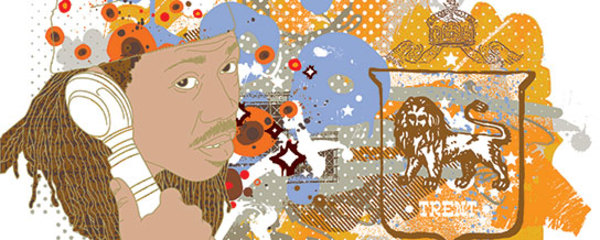
Frankie Knuckles on the songs of The Warehouse and The Power Plant:
“If there was any song that signified The Warehouse experience it would be ‘Let No Man Put Asunder’ by First Choice. It spoke of everything–the relationship I had with the folks that frequented The Warehouse weekly. It was a happy wedding/marriage that occurred every Saturday night/Sunday morning, religiously. And that one song is at the root of what all house music is about–its backbeat and strong vocal delivery of faith and devotion is what kept folks coming back for me.

“For The Power Plant, it had to be the introduction of Jamie Principle and his anthems ‘Your Love,’ ‘Baby Wants To Ride’ and ‘I’m Gonna Make You Scream’ that ushered in a whole new way for the kids in Chicago to recognize their own homegrown talent. Living in this world during that period, none of us could’ve ever imagined that what we were doing would blossom into what it has [or] spawned as much as it has. And no matter how many ways from Sunday that someone new comes along trying to reinvent the wheel, the core of what this music is will always be traced right back to these few songs and these two artists.”

Chip E on The Warehouse:
“I’d never seen so many beautiful people enjoy music so freely.”

DJ Pierre on The Music Box:
“The thing I remember most about The Music Box was that it was the first time I [had] ever seen people praising a DJ as if he were a prophet of the Lord. People were screaming Ron Hardy’s name like their very souls depended on him and his music. Hundreds of people lined the underground car park like it was Woodstock! The first time I came there was the day I was truly baptized into the true meaning of house music.”

Screamin’ Rachel on The Music Box:
“My favorite club of all time was The Music Box. I have traveled the world and still never experienced a DJ who mesmerized a crowd like Ron Hardy. The experience was raw and primal and shook you to the core of your being. When Ron introduced a new record, he literally burned it to the ground. A night I will always remember was hanging out with Marshall Jefferson, Hercules and Bam Bam with Ron Hardy slammin’ our new cut at the time, 88’s “Rock Me”–it was pure musical orgasm! The Music Box was the true spirit of house.”

Chip E on The Music Box vs. The Power Plant:
“The [music at] The Power Plant was more conservative. It was more of your contemporary disco, R&B and soul. The Music Box was much more cutting edge, much more avant garde. You’d hear Laurie Anderson ‘O Superman.’ You’d hear the weirdest tracks, just rhythm tracks played back to back continuously. It was all about feeling the music more than hearing it, all about what would get you moving. So you’d hear a lot more tracks and more obscure material at The Music Box, whereas The Power Plant was a lot more vocals and established hits.

“The Music Box was a much more raw crowd. The people really didn’t care what they were wearing–they came there to dance and sweat. The Power Plant [had] a bit more mature crowd. A lot of people had grown up with The Warehouse, and they put on their Armanis and such. They’d dance, but try not to sweat too much–you know, dry cleaning bills! But The Music Box was a totally raw experience. It was a minimalist environment, almost like being in an enclosed alley with a couple of Mars lights and some strobes. Between the two clubs, there might have been 20-30% people who’d go to both clubs, but [usually] you were either a kinda mature, Friday night Power Plant guy or a you were a down and dirty Saturday night Music Box guy.”

Gene Hunt on The Music Box vs. The Power Plant:
“What was the difference between Ron Hardy and Frankie Knuckles? They’re both the godfathers of house, but it breaks down to this: one crowd [was] more bougie and the other crowd was ghetto. Frankie Knuckles’s crowd was the ‘Oh, no. You’re not good enough to be around us–we’re the elite.’ Ron Hardy’s crowd was the kids that went to the projects, the kids that were from the streets. [But] if they did something on the same night, they’d both have crowds. Chicago’s so funny like that. People would be like ‘OK, let’s go check out Ronnie for a while then we’re gonna slide up and check out Frankie for a couple of hours.'”

Lumpen: Agitating Art

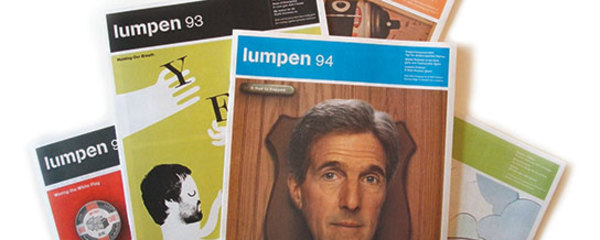
Some people turn off the television in disgust, bitch about it for hours on end, then turn it right back on again. Ed Marszewski, the mover behind the Lumpen Media Group‘s outstanding muckraking, does something about it. For 15 years solid, Lumpen has dedicated itself to speaking truth to power, and it’s armed itself with a variety of imaginative ways to do it, including the long-running magazine of the same name, a gripload of video and art festivals, DVD and CD compilations from its own Lumptronic label and much more. The Lumpen faithful are antsy activists, and they’re not afraid to call bullshit on what they see as a world crawling slowly toward conformity.

“We believe what A.J. Liebling said, ‘Freedom of the press belongs to those who own one,'” explains Marszewski. “And it’s a good thing we do–we’re using it to defeat mediocrity in all of its forms while celebrating the vibrancy of emerging cultures. Our projects seek to widen the discourse and explore new cultural forms.”

They’ve done that specifically by launching some of the city’s most compelling thought-swaps, including the Select Media and Version Convergence festivals–the former interrogates the interdisciplinary uses (and abuses) of technology, while the latter promotes the work of local media artists not yet immortalized in Chicago’s Museum of Contemporary Art.

More importantly, Lumpen has planted their progressive flag in the community by creating the aptly named cultural center Buddy (although the name is scheduled for a change). The facility, located on N. Milwaukee Avenue, is equal parts gallery, social space and party central for the various artists and activists who meet there. All of which brings new meaning to Carl Sandburg’s City of Big Shoulders.

“Chicago is the best place to be 10 years ago and right now,” enthuses Marszewski. “The countercultures are thriving, and the attitude and generosity of its inhabitants keeps us endlessly charged, inspired and active. Our goal is to highlight the real shit happening in town and abroad, and reject the corporate hype and propaganda machines defining culture for us.”

Marc Hellner: Pulseprogramming

Few North American cities can cop to having a musical support system like Chicago’s. Just ask Marc Hellner, a wandering solo artist who’s made a career out of collaborating with the city’s numerous fireflies. Formerly of L’Altra, and one of the founding members of the waylaid Pulseprogramming, Hellner’s currently preparing for the release of his new full-length Marriages (Peacefrog), which–despite being a solo record–relies heavily on collaborations with members of bands like Tortoise and Telefon Tel Aviv. “There’s a lot of musicians on it from the jazz scene around here,” he says. “It’s a little more composition-oriented. I wrote string arrangements, so it’s much more live and string-oriented, but there’s a lot of programming and processing as well. If you’re familiar with the Pulse stuff, you’ll hear a bit of that in it.”

Indeed, Marriages might be the closest we get to a proper Pulseprogramming follow-up for quite some time. Although the Aesthetics label is releasing a remix record (with contributions from Nudge, Laub and Ghislain Poirer) this month, Hellner says the multimedia collective has been on hold for a couple of years now with no immediate reunion in sight. “We’re not completely finished but we’re not working together, and we haven’t since [2003’s] Tulsa For One Second,” he says. “Everyone’s doing their own thing. It was a collaborative group and my own work kind of took over.”

In keeping with his contemporaries’ herculean output levels, Hellner’s got a number of other plates in the air. In addition to assembling a touring band for an imminent Marriages tour, he’s recording with a local classical pianist, engineering a solo album for L’Altra’s Lindsay Anderson and working on another solo record of contemporary classical string music. It’s an energy and work ethic that the former Oregonian attributes to his current surroundings. “Oregon is really beautiful, but it’s a bit sleepy and hard to get things done. In Chicago, there’s a wide-ranging, hard-working array of musicians and talent and labels. It’s really unique in that you can just ask people to play and they’ll play. It’s not competitive like other cities can be.”

White Sox Versus Cubs: Digging Deep

October 27, 2004. The Beachwood Inn, a bar on Chicago’s near Westside, is full of patrons, but eerily quiet. There is a once-in-a-century spectacular lunar eclipse in the warm night sky and the Boston Red Sox, the most famously hard-luck team in the annals of sport, is about to win the World Series for the first time in 86 years. As St. Louis Cardinals shortstop Edgar Renteria grounds into the final out and the Boston players start whooping and celebrating in the infield, nobody in the Beachwood has much of anything to say. “Huh,” one of the bartenders opines. “Did you see that moon tonight?”

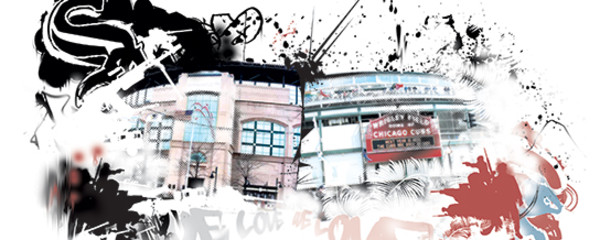
Since time immemorial, the annual Chicago baseball ritual has been watching somebody else play in, and win, the World Series. The Chicago White Sox haven’t appeared in the fall classic since 1959, and were last world champions in 1917. The Chicago Cubs played in the 1945 World Series and have yet to return. Their last world title was in 1908. The only thing that truly connects these two franchises is their relative geography and utter lack of success. Other than that, they could hardly be more different.

The Cubs play in the friendly confines of Wrigley Field, an ancient and storied park on Chicago’s Northside. Old-timey ambience, ivy-covered walls and beery sell-out crowds make it one of the city’s most popular tourist attractions. Wrigley draws plenty of dentist/lawyer yuppie dudes and their scantily clad ladyfriends and because the tickets are more expensive, especially for the good seats, they’re usually the folks you see on TV.

The White Sox home is U.S. Cellular Field, a rather drably designed stadium where, if sitting in the upper deck and the stiflingly polluted summer air isn’t too thick, one can see the notorious Robert Taylor Homes standing out across the Dan Ryan Expressway. It can be argued that the White Sox have a much larger black and Hispanic fan base than the Cubs because they draw so much support from the largely black Southside.

Caucasian White Sox fans from the surrounding neighborhoods tend to be one of two groups: auto mechanics or construction workers out to get drunk, or zealous baseball fanatics out to get drunk. The vibe of the place can be nasty. During a game two seasons ago, a father/son duo jumped out of the stands and attacked a Kansas City Royals coach right out on the field. A scant few weeks later another disgruntled fan emerged from the crowd to tackle the umpire.

Chicago baseball has led me to renounce God. I wish that was a joke, but you weren’t there in ’84 to see Steve Garvey run around the basepaths with his fist in the air while mighty Cubs hurler Lee Smith could only dig at the mound with his huge cleats in defeat and disbelief. I was inconsolable and 10 years old, and my Mom put me to bed crying like an infant; from that tearful night forward, The Lord and I just didn’t see eye to eye.

It’s the great baseball riddle: how could my team lose? I have forsaken members of my own family (Uncle Stu, why be a Cardinals fan? Pujols is a bum and you have terminal brainfog from pounding too much Busch!). I have taunted strangers on Chicago streets wearing Yankees hats from a moving car. “Hey Dame Dash,” I lustily shouted once, “What borough are you from?”

This fuels my unquenchable and unceasing Yankee-based eruptions of jealousy. My utter awe at their winning providence turns my heart into fire every summer, even when I’m trying to do normal person things like eat deep-fried Twinkies and shop for toilet paper and feel up some rump to the Crooklyn Clan on Friday night. But tonight was good. Final score: Sox 2-Yanks 1 in the Bronx. The White Sox still have the best record in the bigs. Who knows. Maybe this is our year?

The Pacifics: Keep It Universal

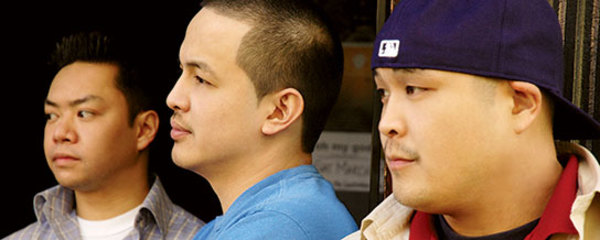
“Even if we weren’t doing music, we’d still be eating chicken.” These are the words of KP (MC/producer) from The Pacifics, who cooks up a fresh batch of fried chicken for himself and his longtime crewmates, MC Strike3 and MC/DJ Norman Rockwell, to enjoy every Sunday. While each of these MCs holds down nine-to-fives (some working six days a week), as true friends they keep their schedules clear at least once a week to kick back, get their eat on, and create their thoroughly enjoyable hip-hop.

In celebration of their weekly tradition and kinship, this Chicago hip-hop trio aptly named their latest album Sunday’s Chicken (All Natural Inc.). The follow-up to their self-released 2002 debut, The September First Project: Long Overdue (Propaganda Movement), Chicken is the upshot of eight-plus years of paying dues in the Chicago underground. With its party-ready beats, tag-team rhymes and intriguing concepts, the record simply showcases what can be accomplished when talented artists actually get along.

“By getting together all the time, it just keeps everything more tight-knit,” explains Strike3. “We knock out a lot of ideas when we’re together,” adds Norman Rockwell. “A lot of times we’ll just ask each other for help,” adds KP. “So you can find a little bit of everybody in each of us. We play off each other a lot and I think it shows.”

The Pacifics rap about more than just fried chicken–their rhymes have detailed everything from their shared love for their hometown (“Hold It Down”) to their need to get tipsy after a hard day’s work (“Nobody”). While they also all share a Filipino nationality, this trio chooses to not let their Asian background become a gimmick. “We don’t use our race as a crutch,” says KP. “It is important to know your heritage, but at the same time, once you get over-indulged in that, I think people would just get turned away.”

Thus The Pacifics opt to deliver hip-hop universally, one song and one concept at a time. As Strike3 clarifies, “A lot of people like to label it Asian hip-hop (but) there’s no label on it–it’s just hip-hop.”

Africa Hi-Fi: Rob Trent’s Monthly

Ron Trent recently relocated back to his hometown of Chicago after absorbing the New York City music scene for the past several years. Upon his return, Trent immediately set to the task of applying the Big Apple’s enthusiasm to a club night of his own. “My whole thing was to come back to Chicago and bring that energy back home,” explains Trent. With the help of his partner, the beautiful and entrepreneurial Sonia Hassan, Trent created Africa Hi-Fi, a third-Friday-of-the-month party that explores African-influenced dance music.

While African music became more visible after Fela Kuti’s passing, Hassan stresses that Africa Hi-Fi is not just an Afrobeat party. “The concept of the night is that we pay respect to Africa as a mother, we pay respect to Africa as a culture and an influence to music in general,” she says.

In addition to raising funds for Next Aid, an AIDS orphan charity operating in South Africa, Africa Hi-Fi’s purpose is to bring conscious people together: “We’re using music to build consciousness from a visible aspect as well as an audible aspect,” says Trent. “Make them feel good, leave an impression and while you have their attention give ’em a little education.” Hassan adds: “We’re bringing together house heads, hip-hop heads, jazz heads, whatever. Being able to bring all those people together, all races, all ages too–we have a range from, like, 21-year-olds to people 50-55 and that’s beautiful. How wonderful is it that you can have a 21-year-old and a 70-year old together listening to the same music and enjoying it and vibing off it together? When these people come and they realize that they can be in the same room together and enjoy the same things together it breaches the spectrum of race, religion and identity–it speaks more than just music.”

“We’re building our own world basically,” Trent reckons. And what a sweet world it is.

Deeper Soul Records: New Jazz

Josh Deep has only begun to scratch the surface of all he has in store for his label Deeper Soul. At just over a year in existence it has six releases under its belt including original work and remixes from Osunlade, Henrik Schwarz, Alton Miller’s G Culture and Chicago jazz musician Kahil El Zabar. Already, Deeper Soul is fulfilling its mission: to release genre-defying music that is not only heard but, more importantly, felt.

Josh says that growing up in Chicago has had a heavy influence on his ideology. “Chicago has all these types of music: blues, jazz, house, hip-hop, soul. These experiences [all] incorporated [into] a music I could feel–it was all soulful music to me and I saw an ability to learn from those experiences and create a new sound.” This new sound marries modern production to a live jazz aesthetic, as Josh aims “to create a greater synergy between live musicians and studio producers.” “The response that we get from that experience needs to happen, and goes beyond articulation,” he avows.

As it happens, Deeper Soul is really starting to cook. A slew of releases centered around El Zabar are up next, including a double CD of original material and remixes and an accompanying 12″ sampler featuring unreleased tracks. Kahil and the Ethnic Heritage Ensemble are also touring Europe this month, leading up to the Nova Arts Festival in Bordeaux, France. The three-day festival will find the Ethnic Heritage Ensemble performing live with IG Culture and Josh Deep, plus turns by Archie Shepp, Henrik Schwarz, Charles Webster, Djinji Brown and a live painting exhibition from HVW8.

Josh says Chicago has been a necessary catalyst for all these projects, as has his friendship with El Zabar. “When he and I started working together it became very clear that for a period in time this was going to be our future: to have this [relationship] as a vehicle to get music which [Kahil] and I feel has a strong cultural value to more people and to bring groups of like-minded people together.”

Consumers Research & Development

The right and left coasts may regard the Midwest as a cattle parking lot, but the curatorial lasso of Chicago’s Consumers Research and Development label cuts a wide swathe through this foolish chimera, rounding up an eclectic aural assemblage of the Midwest’s finest audio individualists.

Formed in 2001 by Jodi Williams and Geoffrey Wilson, the label–very much a sum of its divergent parts–boasts adventurous electronic material by Alder and Elius, String Theory, Miles Tilmann and The Timeout Drawer, usually lusciously packaged on colored vinyl and limited edition CD. “Factory, Skam, Schematic, Matador, Mo’ Wax–these were labels blurring the lines, combining art and music in a way that it didn’t matter what [they released], you’d pick it up,” says avid record collector Wilson. “Nobody had a problem with Mo’ Wax putting out Money Mark, no one cared when Matador put out Large Professor.”

And yet, people seem to really care when Consumers puts out a record, whether it’s Signaldrift’s twisted electronic dancefloor elegies, The Timeout Drawer’s ethereal instrumental epics or Single Minded Pros’ sturdy underground hip-hop. The imprint’s blindingly effective manifesto is best summed up with the recently released Hazardous Materials compilation, which features back catalog treasures buttressed by new tracks and remixes, all packaged with that distinctive Consumers designer sheen.

“One of the first labels for me was Def Jam, and if you look at [them], basically the label is the logo,” explains Wilson. “The label reflects the aesthetic.” Similarly, Consumers defines its aesthetic by working local designers and artists, including Safety Orange Type, Marshall Preheim and Someoddpilot, an outfit run by The Timeout Drawer drummer Christopher Eichenseer. “All this is because of a domino action,” says Wilson. “It’s definitely a small town scene here with a good community. This person leads to that person…” And that person leads right to you.

Page 3420 of 3781
1 3,418 3,419 3,420 3,421 3,422 3,781