Numero Group: Going Off the Deep End

“We take most of our meetings here during the summer, around 10 or 11 feet,” says Ken Shipley of Chicago Park District’s Olympic-sized pride and joy–Holstein Pool. “We just hang on the side during lap swims. If they had a wireless connection here, we’d be here all the time. We tried once to log on, but there is no signal down here.”

Shipley is a founding third of reissues label Numero Group, and this pool is where much of the creative thunder has rumbled “The sequencing meetings for the Capsoul release were here,” he remembers, almost wistfully. “We were humming the songs, trying to figure out the order.”

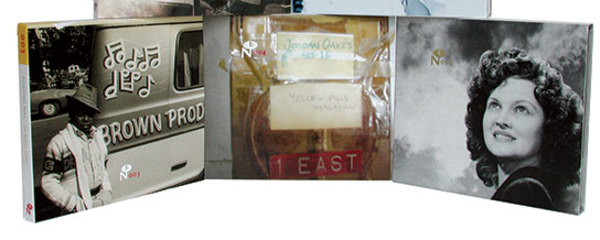
Shipley and partners Rob Sevier and Tom Lunt have quickly turned Numero from a curious boutique outfit into a reissue zeitgeist–garnering raves from casual fans to collectors, from NPR to national mags. Numero brings the forgotten to the fore with lovingly packaged CD collections of artists known only to deep-crate diggers or those who were around “back in the day.” “We started [by] putting together stacks of 45s, sorting ’em by label and talking about how we were going to find these people,” says Shipley. Their first choice was Ohio’s long-defunct sweet soul label, Capsoul. “In the summer of 2003, we went to Columbus, Ohio and talked to (Capsoul founder) Bill Moss,” says Shipley. “He gave us the go, and we’ve been running with it ever since.”

In the last two years, Numero has amassed an impressive and eclectic catalog, spanning from Factory Records also-rans Antena (an all-female French electro-samba band) to reissues from Chicago funk label Bandit to the country gospel of Fern Jones, who was the Patsy Cline of the southern revival tent circuit.

While those releases put them on the map, the next few are positively nuclear. First up is a primer on Belizean funk, where calypso and James Brown meet the hurricane-inflicted diaspora. Then comes a 100-plus track Deep City boxset, chronicling the Miami label, famously helmed by Clarence Reed and Willy Clark, from 1964-68. “The Deep City box started how all of our projects do,” explains Shipley. “You finally get your hands on this amazing single, and then think, ‘There has got to be more where this came from.’ Then you find some discography, and that leads you to this wealth of people. And then, suddenly, you wind up with never-heard-before acetates dug up from Willy Clark’s wife’s closet.”

Drag City: Pioneering Rock Decadence

“Did we really love the music that much? Did we want to get closer to the stars? Were we young and impressionable? Were we hoping to make money? Or were we just sick of our jobs? It was a bit of all of these things–and it happened in 1989.”

So says Drag City‘s veteran sales manager Rian Murphy, tongue no doubt screwed securely into his cheek. Truth is, the leftfield Chicago independent has been aiding musical evolution ever since two dudes named Dan (Osborn and Koretzky, to be exact) dumped their promoter gigs and rode the burgeoning DIY boom for all it was worth, along the way propelling alt-rock pioneers like Pavement, Stereolab, Royal Trux, Jim O’Rourke and more into popular consciousness. Since then, Drag City has gone global with bands like Ghost (Japan), Alasdair Roberts (Europe) and more, as well as back in time with reissues of long-lost collections from psych-rock weirdos like Mayo Thompson and Gary Higgins. Which is to say that, if the Drag City faithful didn’t do it because they love music, they have nevertheless helped carve out its multicultural, cross-genre future.

Murphy is no doubt thinking about the, um, future when he sagely says, “rock ‘n’ roll is for the young…or those who lustfully and semi-legally prey on the young.” But seriously, both young and old alike are raising glasses to the label’s longevity, fortified as it is by able-bodied newcomers like avant-folkie Joanna Newsom and freakout maestro Ben Chasny (Six Organs of Admittance, August Born). Not that Drag City’s heady roster of old-school virtuosos like O’Rourke and David Pajo (Slint, Papa M, Tortoise and into the stratosphere) is anything to sneeze at either.

And finally, how does Drag City feel about the place it calls home? “If cities were women, we wouldn’t call Chicago a whore or anything, but we have our ups and downs with her,” sighs Murphy. “And love her just the same.”

Gramaphone Records: Standing Strong

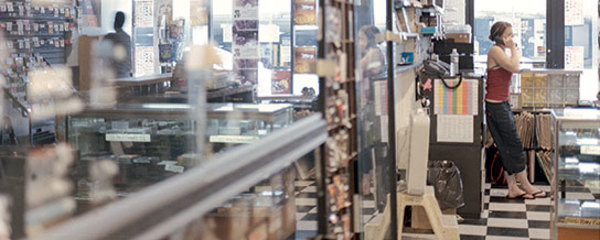
Longevity. No word better describes Gramaphone Records, which has been selling quality vinyl on Chicago’s Northside since 1969. The store has embraced the city’s love of jazz and blues and has played an integral part in the explosion of house and hip-hop music thereafter. And even with vinyl sales steadily declining these days, 12″s remain the store’s staple product. “We’ll stick with it as long as we can and it’ll be probably be 2020 in Gramaphone and you’ll still see a majority of vinyl,” says store manager Andy Moy, who’s been with the outfit since 1984.

While Gramaphone has recently moved a few blocks north of its original location to a more spacious site at 2843 N. Clark, the essence of the store hasn’t changed a bit. “It’s a meeting place, kind of like the barbershop,” says Moy. “You have everybody in the music business coming over to meet people, give each other a hug, ask them what’s going on this week, what’s happening. And that’s what the store is all about: it’s a community. That’s what we’ve always billed the store as–35 years later it still has the same feeling.”

The barbershop-like atmosphere has attracted world-renowned talent over the years–both workers (e.g. Derrick Carter and DJ PNS) and shoppers (e.g. Daft Punk and Paul Oakenfold). Moy, who introduced house music to the store, cites the arrival of Derrick Carter as helping spark this phenomenon. “In this business you meet people who come and go, but people like him–this man had music in his blood, just pouring out of his pores,” says Moy. “And I recognized it right away.”

Reaching out to up-and-coming talent has been a regular occurrence with the Gramaphone family, whether it’s employing well-known DJs or stocking albums from an unsigned act. “We like to try to make artists out of whoever we can,” says Moy. “You got talent? It’s our job to try to get you up there. ‘Cause that’s what the music business or any art is all about. And that’s what we pride ourselves on.”

Koncept and Meiotic: House City

Frankie Knuckles and Marshall Jefferson. Green Velvet and DJ Heather. Trax and Dust Traxx. If you like electronic music and didn’t know that Chicago is House City you’ve been living under a rock or had amnesia for the past 2 years. But Ol’ Mama Disco begat two children to the modern dance era: house and techno. While the latter is more commonly associated with the city of Detroit, the entire Midwest shares a passion for pounding drums, and Chi-town is no exception.

For the past six years, two Windy City club production pillars have made sure the techno scene is properly represented: Koncept Promo‘s George Moreira and Meiotic‘s Marc Martin. But how easy is it to promote techno in such a house-and hip-hop-dominated city? “We have a very strong, loyal fan base,” says Moreira. “That’s something we’re very grateful for.” Martin concurs: “[Compared] to the respective scenes throughout the United States, [it ‘s not out of line to say] that Chicago’s got one of the strongest communities Stateside.”

The communal strength is reflected in Koncept and Meiotic’s close working relationship. The two run the bi-monthly Your Formula Life event at Tini Martini, which has featured DJs like Todd Sines, DJ Shift and bootymaster DJ Funk. And the word has spread far and wide. “We have kids regularly coming in from Iowa, Wisconsin and Detroit to check out our events,” beams Moreira.

“It does seem like more electronic music enthusiasts–be it house, IDM or even the new dance rock kids–are discovering techno/house tracks,” says Martin of the music’s expanding fanbase. “People are finding out that these Kompakt, Perlon, Playhouse, Spectral and UR tracks are beautiful…I love that!”

Koncept and Meiotic’s strong community has also helped them weather the ups and downs of nightlife–from The Station fire disaster in February 23 that killed 21 people to 9/11’s effects on booking DJs to more mundane things. “We booked amazing three-deck DJ Cristian Varela from Spain [and he] became friendly with the club’s attractive bartender, who challenged him to keep up with her in the shot department,” relates Moreira. “When it was his turn to get on the decks, he played three records, [threw up] and proceeded to fall in and out of consciousness. We laughed about it after, but quite a few fans were left disappointed.”

The disappointment doesn’t seem to last long with their audiences. “Our crowd is so damn supportive,” explains Martin. “It’s [that] Midwestern soul–Chicago gets down!”

Galapagos 4: The Island of Hip-Hop

“We’re trying to bring back actual intelligence and reality to [hip-hop],” says Jeff Kuglich, owner and president of Chicago-based label Galapagos 4. Kuglich started the imprint in 1999 with little but a clearly articulated mission: to preserve the integrity of hip-hop music. Sure, it smacked of fresh-from-college idealism, but Kuglich, who was then 22, somehow managed to express his high-minded vision without pretension or arrogance. And after six years of hacking away at the music industry, Kuglich’s devotion to hip-hop culture is still so earnest it’s damn near admirable.

The label is home to artists of the same ilk. Take Typical Cats, a trio of MCs (Qwaazar, Denizen Kane and Qwel) who have gleefully embraced the underground ethos, candidly exploring socio-political issues while staying sharply focused on literary mechanics. Their 2001 self-titled debut was among the first of G4’s releases, recorded at the label’s original Chicago HQ, a “house-slash-office-slash-studio” furnished sparingly with one microphone and an array of dated analog equipment. But the gritty crackle and pop quality of those early recordings only added to G4’s indie mystique. “It’s not like we went out and bought all that stuff–it’s just what we had at the time; it’s what we could afford,” says Kuglich.

These days G4 has more than 10 artists on its roster, including up-and-comers Maker, Meaty Ogre and Mestizo, and they’ve accrued a sizeable fan base. But despite the label’s outward growth, its daily operations are still handled on the cottage industry scale. Kuglich single-handedly takes care of all distribution, management, booking and publicity from his Bay Area apartment. He relocated last year for personal reasons, but still considers G4 a Chicago label.

“When we initially started, it was because we wanted to give people an outlet to actually get their music on record and get it out of Chicago, across the country and world,” he says. “The only thing that’s changed is that now I’m sending out my e-mails from here.”

The Eternals: Sonic Manipulation

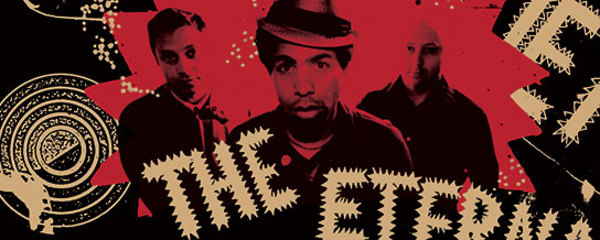
Damon Locks and Wayne Montana spent the ’90s in the underrated Trenchmouth, helping push the post-rock juggernaut built by pals like Tortoise and others forward into the new millennium. So far, they’ve spent the 21st century tearing down cozy genre classifications altogether as the brains behind The Eternals.

“By the time Trenchmouth finished,” confesses Locks, “we had already become disinterested in playing rock-based music. When The Eternals started, it was our chance to create something different, something we had not heard before.”

Montana agrees. “Concepts of sound manipulation and arrangement needed to change. So we changed them for ourselves.”

That’s for sure. So far, The Eternals have released two mind-fucking full-lengths–including their palindrome-rich 2004 effort Rawar Style–as well as a flurry of singles on outer-sound giant Thrill Jockey. Up next is an international tour (including a coveted slot on the All Tomorrow’s Parties’ UK installment), a remix EP featuring badasses like Prefuse 73 and A Grape Dope and a new full-length, not to mention a new 7″ courtesy of Gold Standard Labs, the Cali-based indie label co-owned by Mars Volta’s Omar Rodriguez-Lopez.

The incest of the whole thing is enough to make you sweat, but that’s the way Locks and Montana like it. They’ve got friends left and right in Chicago’s insanely fertile experimental scene, and they’ve got nothing but love for them all.

“Chicago is definitely the brain-drain of the Midwest,” explains Locks. “The best from all around end up here, and I try to interact with every last one of them. The musicians I’ve met from Chicago have a hard-working aesthetic like no other.”

Quantazelle: Machine Woman

“I had a Commodore 64 computer when I was six and haven’t gone more than four months without a computer since then,” says 27-year-old Liz McLean Knight, who says she spends anywhere between seven and 16 hours a day behind the gleaming silver keys of her laptop.

But Knight is not just wasting time on Myspace or feverishly trading on eBay–truly a product of the computer age, her work is entirely predicated on technology. She runs an online magazine called Modsquare, dedicated to profiling the IDM/experimental techno scene via interviews and event reviews. Under the name Zelle, she designs jewelry made from MIDI cables, diodes and microprocessors. Knight also runs a record label called subVariant, for which she has released several albums of minimal techno and lush, melodic IDM tracks (inspired by Autechre and early Aphex Twin) under the name Quantazelle.

“My first songs were done in Impulse Tracker–this sequencer [program] where you had to learn hexadecimal just to put reverb on a few notes,” says Knight, who started making techno tracks four years ago. “[It’s] the sort of thing that people would have used to score early videogames. It had a bit of a learning curve but it’s awesome.” Knight has since moved on to sequencing in Cubase VST with a keyboard nearby for sketching out quick melodies.

Somehow, in between circuit bending and stringing together capacitors, Knight has also found time to DJ at Chicago techno events, produce more 4/4 tracks to play in her DJ set and assemble a compilation for subVariant, featuring beat surgery from the likes of Kero, edit and Quench. What makes all this possible? Knight says she couldn’t do it anywhere but Chicago.

“[In Chicago], I can really focus on my work without being overly stressed about the basic standard of living costs, and there are a lot of great people here doing things–from holding software workshops to festivals and fashion shows. People from other labels based here (like Hefty, Consumers and Chocolate Industries) have been helpful with their advice and experience. And the city is big enough that we get a lot of great acts coming through–there’s pretty much always something to do.”

Chicago Rocks!

Our fourth annual city issue jumps into the heart of Chicago. Thrill Jockey founder Bettina Richards sets the tone of the issue with her intro to Chicago, then we follow up with over 40 features including Steve Albini, DJ Funk, Struggle Inc, Galapagos 4, Hefty, Chocolate Industries, Ron Trent, Pit er Pat, Drag City, Groove Distribution, Lumpen, and Consumer Research & Development.

Minus 8 Solaris (Pascal Hahn & Minus 8 Remix)

Compost Black‘s latest double A-side is their fourth installment into edgier, techier nu-house. While “Solaris” is on a darker (yet almost too clean to be dirty) tip-appealing to those feeling the Tiefschwarz vibe-Zwicker‘s “Made Up” is a much more lush deep house cut with subtle effects and sweet, robotic vocals perfect for those sweaty basement nights.

Page 3421 of 3781
1 3,419 3,420 3,421 3,422 3,423 3,781