I‘m sitting here with Tom Autobot and he‘s passed me this to review and said, “It‘s probably the funkiest thing we‘ve ever done, and that‘s why we put the hardest motherfucking tune on the flip!” And in that precise comment, Tom has summed up the wonderful Venn diagram that is the breakbeat universe.
What’s the Use
Multiply
Pitchfork Media: Online Exposure
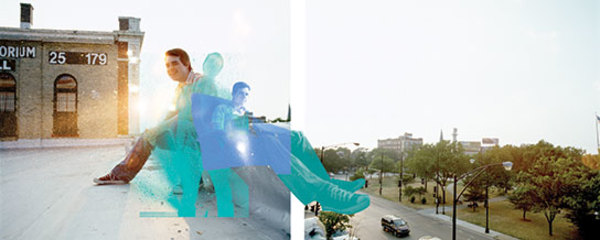
Ryan Schreiber claims that the worst traffic in Chicago is outside his Logan Square office.
“It’s probably the worst intersection in the city for driving,” he explains. “It’s a huge circle and the lanes are splitting off in 20 different directions. Nobody has ever seen a huge traffic circle like it anywhere so no one really knows what to do.”
Logan’s overly trafficked roundabout is an apt metaphor for the daily commotion of the record industry, especially since the internet blew a dam for music. And standing over that teeming circle with a fishing net is Schreiber’s online music zine, Pitchfork Media. Averaging 125,000 hits a day and with its critical influence rivaling that of many print music magazines, the 10-year-old site is quickly rising to the top of the music journalism pack.
While indie rock is PFM’s staple, its writers also review hip-hop, jazz, funk, electronic and experimental music, along with running features on everything from the avant-garde nature of videogame sounds to the “lost generation” of late ’90s bands that critics loved but nobody heard. Matmos’ Drew Daniel reviews singles, while XLR8R’s own Philip Sherburne writes a monthly column on techno.
Boosters laud PFM for its writers’ honesty–reportedly causing some record shops to piously stock their recommendations. Haters accuse PFM of being elitists or hacks who mainly delight in watering art from the bladder.
“I think the appeal of Pitchfork is that we’re not bullshitting anyone,” Schreiber says. “When we love an artist, we do the best we can to evangelize them, sing their praises and hopefully get them heard by people who might share our interest in them. And when we hate an artist or a record, we’re very blunt and forthcoming about that.”
As for the future, Schreiber plans to bring PFM into internet radio, along with beefing up the site and organizing another large concert like last July’s successful Intonation Festival at Chicago’s Union Park.
“I still feel completely optimistic about the state of music and where it’s headed,” Schreiber declares. “I mean, there’s a lot of great shit buried out there in history, but I’ve also heard a lot of it and don’t feel the need to pore over the same records a billion times for the sake of nostalgia or some sugar-coated fictionalization of a better time.”
Danny the Wildchild & Phantom 45
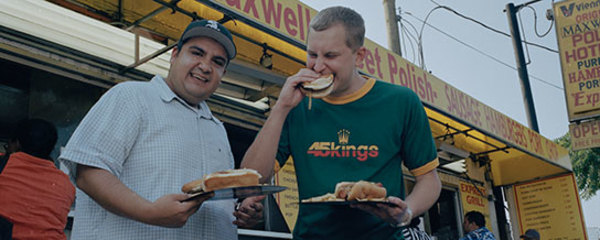
Phantom 45 (Brian Sarpalius) and Danny The Wildchild (Daniel Garcia) are both in love with Maxwell Street Polish. “It’s our equivalent to Philly’s cheesesteak spots like Pat’s and Geno’s,” explains Danny of the sausage stand. “It’s all outdoors. People are there at five or six in the morning, eating on top of their cars.” It’s not surprising the pair frequent Maxwell’s–it espouses many of the values they hold dear: it’s unpretentious, it’s fun and it stays up all night long.
Phantom and Danny have been nearly inseparable since they met in 1992 at Hot Jams. Phantom, who was doing the ordering for the record store, turned Danny, an avid turntablist, onto the breakbeat hardcore sounds coming from UK acts like Acen and 2 Bad Mice–both were instantly smitten by the so-called ‘ardkore sound (drum & bass’s predecessor). When the Chicago drum & bass scene blew up in 1994–with warehouse parties like Ripe drawing 2,000 to 4,000 champagne-swilling, lighter-waving ravers per weekend–Danny and Phantom were playing nearly every event.
Though US rave fever has cooled considerably, the duo still plays around the country regularly. Their styles complement each other–both play dancefloor-ready tracks from the likes of True Playaz and Ram Records, but where Phantom goes with smooth, house-style mixing, Danny layers fierce scratch routines over the beats. “You see DJs and they’re a dime a dozen,” declares Danny. “They’re smoking a cigarette, talking to someone in the booth–it’s really not exciting. Even if there’s a little string breakdown, I tend to add scratches to it to let [the crowd] know that I’m behind the decks and I’m ready.”
Those who know Phantom and Danny know that mixing is about the only thing they take seriously. Phantom is known for his Southside Chicago pride and his fondness for Mexican beer, while Danny’s famous for his easy laugh and his fondness for the sticky greens.
Not surprisingly, these jokesters say that they have never had a fight with each other; in fact, they’ve learned a lot from hanging out. “Brian has taught me how to have fun on the road,” says Danny. “From Danny, I’ve learned that you should put a towel underneath the hotel door if you’re going to be smoking,” adds Brian. “And also a shower cap goes right over the smoke detector.”
Dante Carfagna: The Magic Funk Touch

A dimly lit bar tucked into a Chicago side street, Danny’s Tavern normally draws a laid-back bohemian crowd. But on the first Wednesday of each month, Dante Carfagna and the Sheer Magic crew dust off some old vinyl and create a bass-heavy, funk-fueled ruckus.
“I’ve never considered myself a DJ,” says the modest-to-a-fault Carfagna. “I have some interesting records that people want to hear, so I’m a DJ by default.” Yet his sets aren’t your average musical history lessons. Carfagna could be called the Indiana Jones of vinyl archeology due to the amount of rare funk and soul records he’s rescued from obscurity.
The Sheer Magic nights–started in Kansas City by Carfagna’s friend Courtland Green before both of them moved up to Chicago–provide the public with a chance to sample some of the gems of Carfagna’s massive collection. Though many may boast it, Sheer Magic really does play stuff that won’t be heard anywhere else.
In addition to the typical record collector m.o. of scouting record fairs and gabbing with other music fans, Carfagna’s passion has gotten him involved in almost every aspect of recorded music–he’s a guest editor for collecting bible Wax Poetics, he’s released instrumental hip-hop under the Express Rising moniker and he’s helped put together reissue albums for labels like the Quannum-affiliated Cali-Tex. Currently, he’s in the process of assembling a massive book about funk 45s with fellow record fetishist Josh Davis, better known as DJ Shadow. “Josh and I discussed the fact that some would consider this task a lifetime’s work,” said Carfagna, “and here we are trying to fit it into our normal schedules.”
Born in 1974 in Columbus, Ohio, Carfagna started feeding his crate-digging habit as a kid with money he made delivering newspapers. By the time he was a teenager and living in Miami, he was spinning obscure, rarified records. One day, Public Enemy’s Professor Griff happened to be walking by the apartment building Carfagna was living in, and Griff was so intrigued by the music Carfagna was playing that he had to knock on the door to discover what they were (two Ruth Copeland LPs).
“It was not a snake charmer moment, though I’d like to think of it that way,” says Carfagna.
DJ Funk: Pump It, Work It
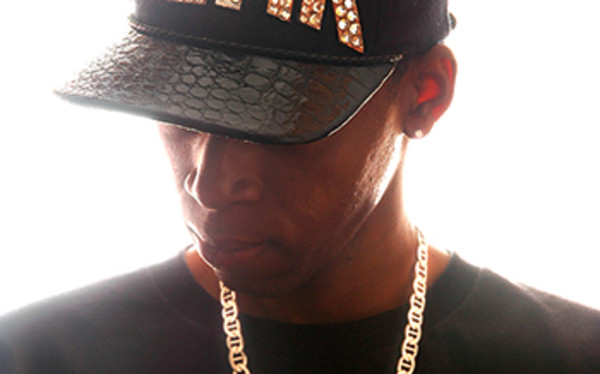
Before ghetto tech and Lil’ Jon and juke, there was ghetto house. Originating on the predominately black Westside and Southside of Chicago, the music jacked house, added even lower 808s and 909s to it, then commanded the dancefloor to “Pump it,” “Work it” and other, dirtier things. DJ Funk (born Charles Chambers) has been at the center of this maelstrom since day one, releasing for Dance Mania and his own Funk Records imprint. His music–along with that of cohorts like Deeon, Sluggo and Milton–spread like a virus from booty clubs to Midwest raves, and eventually overseas, with Basement Jaxx commissioning remixes and European promoters knocking at the door. We recently tracked down the elusive DJ Funk and asked him to tell us a ghetto house story.
“[I grew up] on the Westside of Chicago. A ghetto, hardcore, rough neighborhood. [In Chicago], black folks stay out on the Westside, the Southside, the hundreds and the suburbs. When I was 12, I used to DJ with 8-tracks and old-school record players that didn’t even have pitches or anything, but I used to put tapes together. You could use the pause button on cassette players and get an edit just like in a professional studio. It was shitty but my heart was there.
“[When I was DJing], I was behind a hip-hop group called Do Or Die–they was with Tung Twista when their first album came out. I was the DJ of the group but when they got signed I didn’t want to do hip-hop because I saw where it was going. I sat down and thought to myself ‘Which way do you really want to go if you’re successful?’ And I was like ‘I can’t really do hip-hop because I don’t really want to hang out at bars and still be getting shot up.’ Instead, I [would rather] go out to a booty club and see nice, hot, sexy, beautiful women shaking that ass.
“Ghetto house started at this club called The Factory with me, Jammin Gerald and Houz’ Mon. We didn’t have a record deal at the time so we used 4-tracks, drum machines and samplers live. I saw that people really loved when the tracks was really simple and broke down. They went crazy–lots of sexual energy! So I started to make mixtapes and CDs. [Me and the other ghetto house guys] Deeon, Sluggo, Milton all met through Ray Barney [from Dance Mania]. Then we started hooking up on our own doing mixtapes and records. One place [you could always find all the ghetto DJs] was [his record store], Barney’s Records.
“When I was coming up, I admired guys like Lil’ Louis and Farley [Jackmaster Funk]. [House and hip-house] was a phenomenon. It was the shit! When the ghetto house came along black folks would listen to it but they would never listen to the techno stuff. The only way it ever came through the hood was with the lyrics, ‘cos people really like you to tell them what to do. If you at a party and you say ‘Shake that ass, bitch!’ You know…motherfuckers gotta shake that ass!! And the techno stuff, for black folks, it’s not enough words. They don’t know what to do to the music.
“[As far as the lyrics being offensive], some of these records are made for certain women. Certain women are hoes. But everybody not a ho. That’s just how we party at our house–if you want to come and join us then you welcome to. As far as me, I can call a girl a bitch on that DJ Funk shit and get away with it. I use it all the way up; I ain’t even gonna front. But I don’t try to diss women, I just talk from where I came and how I feel. I love women.
“What kind of girls I like? Awww shit! All of them. I started DJing so I could get girls. I wanted to get with black girls, white girls, Asian girls. I was just kind of wondering how the coochie was. And actually, it ain’t that much different. I thought I was onto something. I thought it was like, if I had an Asian girl it would have been some exotic coochie. Some sparks and a cape would have been like…super coochie. But it was just regular old good coochie. Some women are really freaky, and some are not. I just really like beautiful, sexy, gorgeous women. You see them at raves too….they might have big pants on but they still look cute. And when they take them big pants off, that ass drop like Pow!
“If I was doing the music for the money, I would have been out the game ‘cos it’s not like I’m rich. I don’t trip so much on the music getting out. The music is for free. The music is for people to enjoy themselves and have a good time. I just got to make sure that I can eat. And that’s why [the scene fell apart]! ‘Cos we ain’t fucking get no fucking money off the shit! All of us has basically been dealing with shitty labels and it don’t encourage you to make new music.
“I’ve been out of tune for the last few years. I had a real bad relationship and it went off into my music and my friendships. But the last six months I’ve been getting back out. I just finished my new album and all I got to do is negotiate a distribution deal. There’s a new Chicago sound that came out called juke. It’s just like the stuff that we did but it’s more 808 bass-y. It’s really more ghetto. I don’t think its really going to pop off really popular because they’re not really riding on a 4/4 beat real hard–it’s way more like hip-hop. I’m combining the juke sound with the ghetto house sound.
“[As far as my DJ Funk hat], hell yeah I still have it! And I’m getting it fixed and I’m starting to wear it in a minute. That was a hood hat, for real. Some of my rhinestones fell off but that’s alright. I’ll get me a couple of bucks and some glue.”
Chocolate Industries: Kindred Rhythm
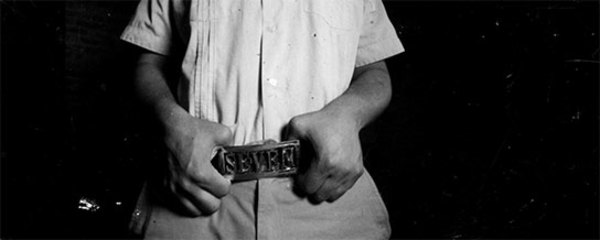
IDM kids think of Chocolate Industries as one of glitch-hop’s first homes, indie hip-hop heads rate it for bridging the styles between Warp and Def Jux and crate diggers know it as the label that recently reissued McNeal & Niles’ 1979 pearl, Thrust. But ask CI founder Seven for the parameters of his label and he’ll come up one buzz phrase short. “I think at one point people were able to link what was on the label aesthetically,” he says. “But for me now, I guess it’s all linked by emotion.”
Glitch-hop, hip-hop, digital soul, dusty groove–over the course of Chocolate’s six-plus years, Seven’s touched ’em all. Spun out of Miami imprint Schematic Records in 1998 and relocated to Chicago late the following year, Chocolate insinuated itself into backpacks everywhere with instrumental electronic music from outfits like East Flatbush Project and Push Button Objects and the digitally contoured hip-hop of Chicago rhymesayer Diverse and the Urban Renewal Program series.
But for every straight-up electronic or hip-hop record in its discography, there’s another that’s more difficult to categorize, like Caural’s organic, post-rocky clatter, Via Tania’s refracted nu-soul or Ghislain Poirier’s off-kilter, syncopated cut-up act. In the course of cataloguing Seven’s passions, sometimes the label even taps into something bigger. “The Neptunes’ production now is kinda no different than what we were doing back [in 2001],” he observes. “It’s just more geared towards the commercial [market]. That said, there are a lot of people that were making an identical kind of music in different parts of the country that we never knew about. Three Six Mafia was doing shit in ’94 that Prefuse is doing now!”
With a new label manager affording him the opportunity to focus solely on the creative side of the business, Seven is working on a project with London’s Lady Sovereign and prepping new releases from Diverse, Poirer, Tania, Scott Herren (as Piano Overlord) and Cannibal Ox album Vast Aire. Also in the works, alongside fellow Chicagoan Dante Carfagna, is Personal Space, a collection of black electronic music from the ’60s and ’70s. “It’s urban archeology,” he says. “No one even knows about it. Some of it sounds like Aphex Twin could’ve made it, some of it sounds like Andre 3000.”
Sonotheque: A Club That Can Boast
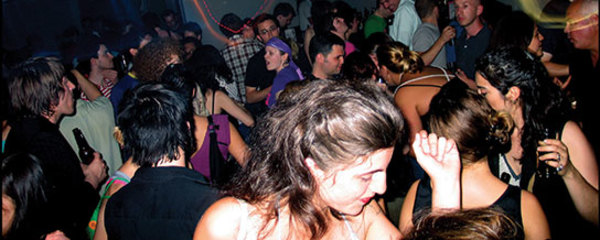
It doesn’t take long to realize that Joe Bryl is a seasoned veteran of the Chicago music scene. Having divvied up the last 25 years working with many of Chicago’s premier night spots, he now has a new home at Sonotheque, a Chicago lounge that boasts line-ups as diverse as Lady Sovereign, Marcus Intalex and DJ Spinna in the same weekend.
The brainchild of Bryl and partners Donnie Madia and Terry Alexander, the now three-year-old venue was born out of a desire to have more control over a club of their own. “We did the [construction of the space] according to our needs, which were to make it a great place for listening…[and to have something] that reflected our own aesthetics,” explains Bryl. “It’s a really great sounding room, and most DJs who come here are really amazed at how much thought and effort has gone into the process.”
Sonotheque’s formula is a fluid one, equal parts musical ingenuity and positive vibrations at a reasonable price. “It’s an ongoing project,” explains Bryl of the space and its programming. “Before it had more of a Straight No Chaser-magazine vibe, and there were only six or seven DJs or collaborators. It’s transformed from that into a space that has 25 different events a month.”
Sonotheque’s diverse amalgam of sound ranges from DJ Rik Shaw’s Jamaican music night Cool & Deadly Digital to Bombay Beat Box, an Asian and world music night sponsored by Six Degrees Records. Bass By The Pound drops drum & bass there, Chicago DJs Ron Trent and Anthony Nicholson throw down house vibrations and internationally-known names like Aesop Rock, Diplo, DJ Premier, Kyoto Jazz Massive and Quantic have all graced the stage. Bryl says the vibe of the venue has just as much to do with the artists who roll through as it does the lights, sound and décor.
“There are always those types of people who we work with locally and globally who give accent to what we’re doing here,” he declares.
Groove Distribution: Vinyl Crew
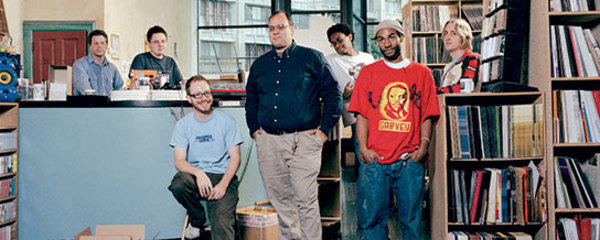
How do obscure underground 12″ singles–red-hot mash-ups from London, broken bossanova from Rome, drum & bass from Stockholm–find their way onto the shelves of your local record emporium? There’s a good chance they come from Chicago’s Groove Distribution, fine purveyor of “music with soul and music that falls through the cracks,” as founder and president Dirk van den Heuvel puts it.
Van den Heuvel worked at Cargo Distribution for nine years; when they went out of business in 1995 he founded Groove Dis, which has become a vital link between forward-thinking labels and listeners. If you run a record shop and want to make sure you have the latest soulful house 12″ from Paris’ Q-Tape Records or an upcoming nu-jazz CD from Japanese compilation experts KSR, you better be in touch with van den Heuvel.
But unlike a DJ whose only concern is having the freshest sounds, van den Heuvel has to make sure these records are going to sell. “There’s records that get written up in magazines, that people love and whatever, and then you cut through the bull and you find out, ‘Well, shit, they only sold 300 copies!'” van den Heuvel explains with more than a note of exasperation. Besides the paucity of consumers with good taste, another challenge Groove Dis is currently tackling is the general decline of DJ culture.
“We’re in the business of selling dance music to people who like dance music and not in the business of selling 12″ singles to DJs,” he explains. “If your business model is based on selling vinyl records to DJs, you’re doomed. That’s just a teeny part of the market out there and it’s getting smaller every day.” To that end, Groove Dis expends much effort scouting out CDs and keeping an eye on digital music developments. With 10 employees devoted to finding the kind of music “Gilles [Peterson] might play,” the company does an amazing job of staying abreast of the latest movements, but van den Heuvel is well aware that he’s not about to challenge the Virgin Mega’s of the world for revenue. “I’m sure if I liked stuff that was a little bit more popular we’d be a bigger company,” he laughs.