Midnight Movies: Elegant Surrealists

During the day, the modern world and its straight lines prevail–money and machines, time and technology, order and organization… but after dark, the winds of the imagination come into play. In the middle of the night, strange creatures appear, unusual events occur, familiar objects take on new aspects, the real becomes the ethereal.

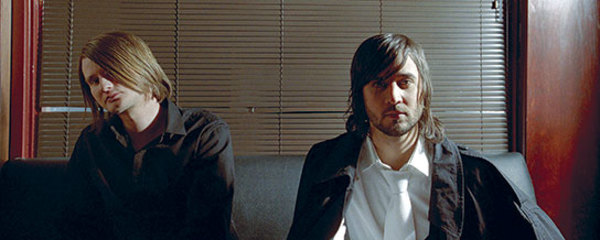
Like a story told in the late hours, the music on Midnight Movies’ self-titled debut conjures these dreamlike images–autumn mists at twilight, hazy, multi-shaded tableaus, psychedelic colors and shapes. Their name comes from a book about ’60s-era underground films, and it fits perfectly with their spacey, kaleidoscopic sound. Far from presenting some sort of contrived image, however, the band’s style comes simply from a natural ease between its members. Having met through musicians’ wanted ads, they originally got together as a group of six, but quickly whittled themselves down to three whose visions and aesthetics aligned effortlessly.

Midnight Movies is a first for two of its members–drummer/singer Gena Olivier and keyboardist/guitarist Jason Hammons had never been in serious bands before, having both previously been involved in electronic projects. Their prior experience makes itself plain on the album, as Hammons’ pulsating synth tones and lush keyboard landscapes blend seamlessly with Olivier’s vocals and Larry Schemel’s reverberating guitars. The result? A moving, hauntingly ethereal cult thriller soundtrack that is as palpably vibrant on record as it is on stage.

Their conspicuous live presence has helped contribute to the buzz surrounding the band–Hammons plays with a laptop but, preferring to keep the human element as tangible as possible, uses almost no sequences. Schemel tackles his instrument like a man on a mission, and the sight of Olivier crooning in her eerie tone while briskly pounding her kit is both electrifying and exhilarating.

Though the music itself is otherworldly, the process by which it comes about is surprisingly natural. The band members, in their own words, don’t “try” to write music, they simply allow the songs to come into being. Schemel says the songs can come from anything: “…other music, dreams, art–we’ll all write parts and kind of flesh out the idea. It’s like we’re creating this little creature.”

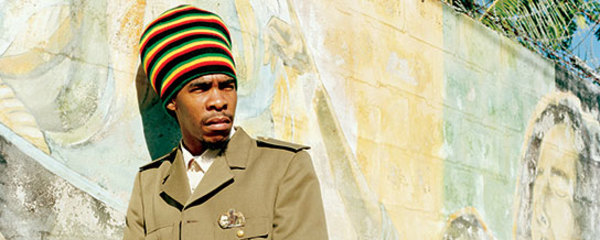
Turbulence: A Rising Singjay

“Let me tell you this again, I could have been one of the most notorious/I got saved by the king, and his grace is so gloriooooous.” If you’re a follower of dancehall, you couldn’t have missed the rallying tones of Turbulence’s inimitable “Notorious” single. Voiced on the Scallawah riddim–a fresh hip-hop tinged b-line with a penetrating electric guitar riff from new Jamaican collective THC Muzik–Turbulence’s militantly righteous singing/deejaying makes this a street anthem for rastas, big men, and rude bwoys alike.

The track’s hard-hitting video narrative depicts Turbulence and his Higher Trod backing crew preparing to bury alive an enemy when they unearth a Kebra Negast African Bible, which causes them to rethink their actions. Of the video Turbulence says, “When you’re moving through the ghetto every day you get tough. It’s easy to get caught up. We show the youths no matter who disrespect you, Jah is the only judgement.”

Although it was the rawness of “Notorious” that catapulted Turbulence to top status, he varies his style from gruff deejaying to melodic singing. For example, his latest album on VP Records, Songs Of Solomon, is a classic culture album. “The most important thing in life is love,” confesses Turbulence. “Songs of Solomon educates with no bigotry or racism, just unification, upliftment, and reality.”

Born Sheldon Campbell in Hungry Town, Kingston, Jamaica, the 25-year-old has been a music man since his school days. “It’s my calling,” he says of the artform. Like most up-and-coming artists Turbulence struggled to get his first break–his skills as a deejay and singer confused the island’s producers. Eventually Phillip Fattis Burrell, production don of Exterminator Records, spotted his potential and the two have worked together since, with Burrell producing two albums, Hail To The King and Rising.

Turbulence is different from the current school of popular culture artists: Ritchie Spice, I-Wayne, Jah Cure, and previously reigning Boboshanti-dread dancehall artists like Capleton and Sizzla. He is righteous but streetwise, earthy but cool. He cruises around Kingston with his Higher Trod crew all on motorbikes. He wears a tam and Africa pendant with coordinating brand-name streetwear. For his debut UK performance supporting Sizzla, he wore a shirt and patterned necktie with army fatigues. And now his music reflects his hybrid sartorial style, as well as his huge potential for crossing over into an MTV-obsessed urban fan base.

Of this comparison Turbulence laughs. “Yes, me always like to mix it up,” he says. “My original name was Double Trouble–come two-styles. It was an elderly ras that named me Turbulence–disturbing to Babylon, electrifyingly strong. I’m rasta but I love de street vibes. I want to see myself on BET, MTV. Some artists burn them but that’s where I see myself, for real.”

Andrew Pommier: Figurative Fantasies

Andrew Pommier likes to draw bunnies, sparrows, and people wearing animal heads. And more often than not, they’re smoking. Seems pretty weird for someone whose favorite saying is “never smoke,” but this Canadian is a study in contradictions. He and his younger brother–skate photographer Scott Pommier–were raised in the comparatively little mining town of Sudbury in Ontario, Canada but their work has been all over the world, from the pages of Thrasher and Transworld (Scott) to shows in Italy, Australia, and New York (Andrew). And though skate graphics often convey toughness through hackneyed metal clichés (skulls, hesh fonts, monsters), Pommier’s art for skate companies like Toy Machine, RVCA, and Momentum is often touching, with renderings of Ed Templeton hugging an owl and Rick McCrank screaming in a squid outfit.

Many of these graphics–-along with Pommier’s signature, saucer-eyed indie kids–can be found in Things I Don’t Remember, published last November by the UK’s Holy Water. “The book draws from the past nine years of sketchbook drawings, paintings (both watercolor and oil), and a smattering of the commercial work I have done,” says Pommier. “I really like that I could include a lot of sketchbook stuff because I love it when I get to see how other artists get their initial ideas. Sketches pull back the curtain a little.”

Following his May show, The Parallel Campaign, with Derrick Hodgson at Los Angeles’ Lab 101 gallery, we caught up with this soft-spoken 31-year-old back home in Vancouver. He advised us to stay humble and, of course, never smoke.

XLR8R: Your human characters often wear animal ears, horns, or costumes. What does this symbolize for you?

Andrew Pommier: I don’t really think in symbolic ways. My paintings and drawings aren’t created based on a grand theory or for cerebral satisfaction. The images are created for the love of humor and affection for the odd and out of place. The displacement also rings with a kind of sadness. My paintings are about playing with images and icons. The costumes and cigarettes in some cases reinforce the separation of the characters from a normal day-to-day–the outsider.

Are the people that you draw and paint people that you know?

The people that I paint are almost always faces from my head. There are maybe one or two paintings that I was thinking about a person but never trying to duplicate their features; it’s more about picking up on visual clues. I just draw and the face that comes out is the face that comes out.

You’ve said that you’re a big fan of John Currin’s work. Where did you first encounter his work and what is it you like most about it?

I became aware of Currin’s work when I went to the Venice Bienniale in 1995 while I was going to school in Florence. It didn’t really strike me at first but in later years I would trip over his work here and there and I really liked the direction he was going. I like that he sticks close to figurative work and works within the traditions of painting; also, his work is very playful and whimsical and sometimes just plain silly. All that and he is pretty successful.

What does the cigarette as an object represent to you?

The cigarette adds a certain toughness to the image. Also it seems to make the characters I draw or paint to be more based in the real world, [as if] the characters are just normal people going through their day. I also like the cigarette because it is one way to spoil the cuteness factor. I have always liked using symbols and this one symbol has been with me for a while. It seems to really connect to people. It is a commonality.

Who was your favorite skater growing up?

Mike Vallely. At the time he was one of the best street skaters and he rode for Powell-Peralta–everybody’s favorite company in the ’80s. As he states proudly these days, he was one of the first pros to break away from the major companies and ride for World Industries, a small upstart at the time. So he lead the charge and that was pretty dope when I was a 15-year-old kid living in Sudbury.

What character from a movie do you most relate to?

Fiver in Watership Down.

What is your big fear?

Immobility.

How do you and your brother [skate photographer Scott Pommier] influence each other?

We have introduced each other to so many different things. I can’t even imagine what I would be like if I didn’t grow up with Scott. He is pretty integral to the person I am today and I’m sure he would say the same of me. Scott has showed me what hard work and sacrifice can lead to. He has such a strong work ethic and is sharp as a tack figuratively and literally. Yes, he is a very pointy young lad. Ouch.

Where is your art going next? Any new mediums or stuff you’re changing?

I think I’ll be changing a lot of the imagery I have relied upon for the past few years. Once I finish paintings for a show I always feel that it is time for a change. I don’t really plan what to do next. I just roll with what I’m drawing in my sketchbook at the time. There is no medium shift at the moment. Oil painting will always be what I love to do. Watercolor is still pretty new to me and I’m happy with what I am producing so that will continue.

What song did you have your first make-out session to?

Something by Led Zeppelin. The fact that was playing in the background will forever piss me off because I really can’t stand that band and it will always be with me. It was only playing because I was at my friend’s apartment and I put the tape on because I thought the girl would like it. As it turns out it didn’t really matter what I put on, so I wish it had been Black Flag or the Dead Kennedys.

What are some of your favorite skateboard graphics ever?

I have always been a fan of the Chris Miller decks from the ’89-’90 period–the ones with the drawings of the cats. The Mike Hill period at Alien Workshop was also pretty kick ass, all those dioramas. I really get a big kick out of skate graphics from the early ’90s because there were no rules–nobody was thinking of branding or marketing. There was almost no money in skateboarding so nobody cared all that much about the graphics, a lot [of boards] didn’t even have company logos or pro names on them. There are some real gems from that period, boards that would never see the light of day if you produced them today.

List five random things that are making you happy at this moment in time.

A day out with [my girlfriend] Tiffany and the dog. Morning coffee. Faber Castel pens. Apple products. Velcro.

Chris Cunningham: Cunning Man

Chris Cunningham is the award-winning film director who built Björk into a robot and morphed Madonna into a murder of crows. Best known for grafting Aphex Twin’s head onto a gang of unruly kids and a bevy of bootylicious babes in the “Come To Daddy” and “Windowlicker” videos, in his latest work Cunningham has turned the camera on himself–with typically freakish results.

In the six-minute Rubber Johnny, his first new piece since 2000’s art flick Flex, Cunningham used his own skinny naked body as the model for Johnny, a cellar-dwelling wheelchair-bound boy cursed with an abnormally large head and genitals. Shot on grainy grey-green nightvision DV and meticulously edited in time to Aphex Twin’s Drukqs track “Afx 237v.7,” the short catches naughty Johnny goofing around in his domestic dungeon with his equally bizarre pet dog. Released on Warp Films, the electronic label’s burgeoning movie and DVD imprint, the disc is packaged with a 42-page book of Cunningham’s grotesquely prurient drawings and photography. An Italian firm due to print the book refused, claiming the images of impossible anatomical configurations were too offensive.

While his groundbreaking human animation in Rubber Johnny is technically dazzling, impatient fans of the 34-year-old director will rightly wonder what he’s been doing for the last five years, particularly when he returns with this relatively low-key work. “Rubber Johnny might look like a six-minute sketch but it’s technically more advanced than anything I’ve done before,” insists Cunningham, resplendent as ever in tatty jeans and a once-white cardigan, in a noisy bar in London’s Soho. “It’s sketchy in that it’s not on the same scale as other videos I’ve done but on a technical level it’s light years past them. When you watch it you’ll see that just about every aspect of my craft has improved.”

Like the star of his new short, Cunningham has spent the best part of this century locked away, developing his craft in his north London apartment (bought with the proceeds from directing Madonna’s “Frozen” promo in 1998). With no desire to direct more pop videos, despite regular offers, he embarked on a series of treatments for scripts based on William Gibson’s Neuromancer, cult Italian graphic novel RanXerox, and a Philip K. Dick tale, none of which worked out. “I think that directors in the feature film business spend a lot of time on projects that don’t happen,” he sighs.

This time indoors wasn’t an entire waste, however. “I’ve been doing nothing but crafting for five years,” he admits. Surprisingly old-fashioned in his approach to art, Cunningham–an exquisite draughtsman who didn’t attend art school–firmly believes that artists should do their utmost to master their chosen craft. “I think if you want to play around with the rules then first you have to know the rules inside out,” he says. “Let’s say you’re making music videos but you hate big-budget MTV videos, that doesn’t mean you should make cheap and nasty videos. You should try to make videos which are as technically accomplished as the cheesy clichéd ones.”

When he started working in the film industry as a teenage assistant to Stanley Kubrick, Cunningham wasn’t just attracted to being a sculptor or an engineer or a make-up artist–he wanted to excel at every discipline, like a latter-day Renaissance man. “My plan is to be really multimedia,” he says. “I don’t want to be a jack of all trades and master of none, but be a master of all of them. I’m not saying I’ve mastered any yet but that’s the aim.”

With this in mind, and given his obvious love of music, Cunningham attends all manner of gigs and raves in London and can occasionally be heard DJing a fine blend of synth pop, soundtracks, and musique concrète–it’s not shocking to learn that he’s written stacks of his own tracks. “I love learning stuff and setting myself challenges,” he says. “Making those videos I became more interested in music to the point where I realized I spent all my time studying and writing music. What usually happens is a video director goes off and makes a feature film. I’m in a weird position where I’m more interested in music than I am in film.”

It’s a tantalizing prospect, certainly. As to the precise nature of his compositions, Cunningham isn’t giving much away. But you don’t need to be Fox Mulder to figure out what his music might sound like. “The bottom line for me has always been songs,” he says. “If something crosses over it’s to do with the songs, the craft of the songwriting. The trouble with most electronic music is it’s just one long verse. That’s why I love Kraftwerk–Computer World is innovative sonically but it still has incredible songs. And that was my rule: I’m not doing anything unless I’ve got a really good song first and then I go off and start.”

Cunningham says he’s always sketched out songs on his guitar and keyboard. For him, refreshingly, melody is king. For this reason he adores Aphex’s celestial harmonies and French techno whiz Vitalic’s stirring anthems. “My favorite kind of pop music is melancholy pop music: Giorgio Moroder, Abba, you know, Tears For Fears’ first album. All the best songs are sad songs about missed opportunities and longing.”

Whether his music will be released remains to be seen. But there’s no doubt he’s keen to master this latest craft. “To people I know, it looks like I haven’t been doing anything,” he adds. “But in a year’s time it’s going to be obvious what I’ve been doing because I’ll have a load of stuff out. And everyone will be like, how the fuck did you find time to do all that stuff?”

And with that he shuffles out of the bar and into Soho. He slips his headphones over his long hair. What’s he listening to? Phil Collins. You have been warned.

Norwegian Disco: Disco Infernal

Pick up any travel brochure on Norway and they all talk about one thing: fjords. For some reason, these glacially carved inlets of water have come to define the country and its people: cool, distant, romantic. The same can be said of their music. Over the last decade, northern Norwegian downtempo and ambient acts from Biosphere to Röyksopp have invaded lounges and living rooms with the kind of isolated arctic coolness that could only have emerged from Scandinavia.

But lately there’s been a rumbling coming from Oslo. What started as a spark has grown to a slow burn that’s set to melt the icecaps. The sound is an unbridled blend of Detroit futurism driven by the rhythms of Krautrock; it’s the sound of prog rock psychedelia colliding with echo-chambered dub effects; it’s touches of Chicago acid, hip-hop, and Euro disco kitsch; it’s the imaginary result of Ron Hardy jamming with Pink Floyd at the Paradise Garage. It’s called Norwegian disko and everyone from DFA’s James Murphy to Doc Martin to Trevor Jackson has been jocking it.

While New Jersey’s Metro Area were arguably the first to prove that disco could be more than just cheesy strings and horn stabs, Nordic producers like Lindstrøm, Prins Thomas, Rune Lindbaek, Kango’s Stein Massiv, and Todd Terje are taking the genre deeper, dubbier, and further into the stratosphere on homegrown labels like Trailerpark, Beatservice, and Feedelity, as well as the UK’s Bear Funk and the Brooklyn-based Modal Music.

Hans-Peter Lindstrøm
With a list of credits that includes dome-blowing remixes for LCD Soundsystem, The Juan Maclean, and Chicken Lips, Hans-Peter Lindstrøm is probably the most name-checked disko artist out of Norway right now. A relative newcomer to the Norwegian dance music scene, this self-professed shy guy and studio recluse caught the disco bug at an early age. “I was 10 years old and my first cassette I found on the street,” remembers Lindstrøm. ”It was a Boney M album, the one with the naked women on the cover and it’s still one of my all-time favorites in terms of production.” But Lindstrøm wasn’t always so eager to share his disco passion. As a musically talented teen growing up on the rock ‘n’ roll dominated west coast of Norway, Lindstrøm had to keep his disco jones in check. “At the time I was playing keyboards in a heavy metal band,” he recalls, “and they really made fun of me for the disco thing.”

After trading in his keyboard for a guitar and moving from metal to Hank Williams-inspired country western, Lindstrøm followed his ear back to the sounds that moved him as a child, and relocated to Oslo. “Because of my background, I’m always trying to incorporate all the styles that I listen to all the time,” he explains. “I play all the instruments myself–bass, guitar, drums, keyboards–so the songs get very personal. These days I’m not using any samples at all; everybody’s using Reason and stuff and for me that’s just not very personal. What I love about the disco style is that it’s so versatile, it can be wonderfully avant-garde or really commercial.”

Listen to any of the Lindstrøm remixes on the Norwegian disko comp Prima Norsk 3 (Beatservice)–especially his collabs with fellow Norwegian Prins Thomas–and it’s clear that versatility is his mantra. For Lindstrøm and Thomas anything is fodder for inspiration, from mid-‘80s Italian film soundtracks to Led Zeppelin and Hot Butter. Since they joined forces in 2003, the pair has been busy running their Oslo-based Feedelity records while sharing a studio in one of the sketchiest smack-infested neighbourhoods in Oslo.

Prins Thomas
Dubbed “The Remiks King” by his peers, Prins Thomas is an avid record collector (half of his collection takes up much of his studio) who can trace his influence to the fertile early ‘80s disco nexus of Chicago and New York. “In the beginning, I was more into Larry Levan,” muses Thomas. “When I first heard Ron Hardy I thought it sounded too… brutal. Now I’m just the opposite. I’m more interested in Hardy. I think it’s important to take into consideration the limitations. I really believe that the most interesting music is made with limitations.”

For Thomas–who gigs regularly in Europe and has a monthly radio show on with Lindstrøm on Tokyo’s Shibyua FM–DJing and producing is all about taking chances. “David Mancuso came to a club in Norway and played [ethno-techno outfit] Deep Forest–which is one of the records I hate the most–and in the setting it sounded really, really good,” he recollects. “It was hilarious. I actually started to laugh–like, it actually made sense! More and more I’ve been learning that you get the most satisfaction when you just trust your instincts. In production, [that means] you actually have the balls to go in a new direction, finding that cheesy melody and sticking with it rather than worrying that people won’t like it. Or even doing a track at 140bpm that gets you excited–at least the ballsiest people will play it, or maybe you can get a crossover hit with people that play gabber.”

According to Thomas, there’s something distinctly Norwegian about this style of freeform musical experimentation. “We’re kind of independent here. It’s never been a big scene–or most importantly, nobody’s made much money with it–so nobody’s hanging carrots in front of your face,” he explains. “If you do it, it must be for the love.”

Rune Lindbaek
Not to say that it’s too tough surviving as an artist in Norway. Since the discovery of oil off the coast in the 1960s, Norway’s economic prosperity has resulted in a generous welfare and artist support system. Veteran house producer Rune Lindbaek–whose releases on Paper Recordings helped pave the way for the current crop of Norwegian disko talent–believes that to be another reason for the fresh sounds coming from his country. “For three years in a row Norway has been voted the best place to live in the world according to the U.N.’s human development index,” explains Lindbaek. “There isn’t the same money desperation here compared to somewhere like England and that affects the artists. Also, around here, the corporate money machine that sponsored clubs and parties has now taken on the rock scene; the noise around electronic music is disappearing, which is really a good thing. It’s these middle periods, like those years just after disco, that are interesting. Post-disco was a reaction that had to happen and that’s the way it should be.”

Kango’s Stein Massiv
With the recent collapse of the larger commercial club scene in Norway, the local underground scene is surging, and so is the output of producers like Kango of Kango’s Stein Massiv. “Here even the good clubs are not really that good, but if the club scene in Oslo was really good, I wouldn’t produce so much,” explains the outspoken Kango. “If I moved to New York, I wouldn’t produce. I’d want to just go out and buy records.”

In fact, Kango–whose wild style productions wouldn’t sound out of place on a late ‘70s/early ‘80s Lower East Side dancefloor–recently did just that. “When I went to A1 in New York two years ago I bought 187 disco records and the guy at the shop said, ‘You Norwegians are really crazy about disco!’” But for Kango, doing what they do is the furthest thing from crazy. “We’re all friends here: me, Thomas and Lindstrøm, Rune. We’re all just having fun and we don’t care what people think. In a way, you can really hear that in the production. Because we’re not totally depending on the tracks the way that many people are, we can help each other out and experiment a lot more.”

Röyksopp: Passion In Colored Pulp

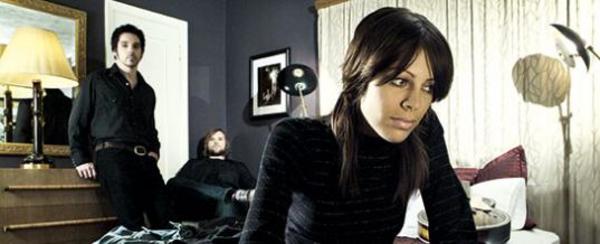
Talking to Röyksopp‘s tow-headed Torbjørn Brundtland and bearded Svein Berge is like wandering through a densely overgrown forest–comments meander off the beaten path, sometimes rejoining the trail of thought five minutes later, sometimes never at all. It’s similar to listening to their music, where skeins of electro, softly woven synths, and tender vocals tiptoe through airy, pulsating backgrounds of chilled out Euro-pop–the journey as the destination. On July 12, the duo released The Understanding (Astralwerks), their follow-up to 2001’s lauded Melody A.M. Though they were vague about the album–except to say that it’s a more vocal affair–these surreal superheroes were happy to talk about the influence comic books have had on them.

“Comics [have] been part of us ever since we were kids. We started with [Swedish comic] Bamse (pronounced “bum-suh”), which is a nice story of a bear-like creature who has to eat special honey to become very strong. We also like Robert Crumb, Dave Cooper at Fantagraphic, and Carl Barks, who drew Donald Duck. And Jim Woodring; he’s just released something in the form of a children’s book about a small animal called Trosper, a cute mini-elephant. It’s not splatter-type horror but I would hesitate more to show this to my potential kid than to show them a horror movie. It’s like a David Lynch Eraserhead kind of dark. The nice thing about comics is that it doesn’t take that much resources to make a good one. If you have an idea for the best science fiction movie in the world–say 10 times better than Star Wars–and there’s no way that you can become a big Hollywood director with a huge budget, you can still make a cartoon and share these ideas. Comic books [are so appealing] because they don’t have limitations.”

Kele Le Roc: Comes Out Swinging

Born in 1978 in London’s East End, UK singer Kelly Biggs walked home with two MOBOs (British Grammy) for best newcomer and single (the garage burner “My Love”) by her 21st birthday. Known by her stage name Kele Le Roc, Biggs is used to the fast pace of success and the tribulations that come with it. “I wanna be successful for myself,” she says, “because I’m an ambitious person.”

Ambitious is hardly an exaggeration for a singer whose multi-stylistic approach to music has thoroughly impacted both Britain’s underground and mainstream charts. Following her hugely successful Polydor album (Everybody’s Somebody) in 1999, Biggs collaborated with a host of underground heavies, including soul man Omar, drum & bass producers Shy FX and T-Power, jazz musician Courtney Pine, and Basement Jaxx (on hit track “Romeo” off Rooty).

In June, Biggs went back to her family’s Jamaican roots and dropped the lovers rock reggae 7″ bomb “Even Though You’re Gone” (Curtis Lynch Music). “I enjoy singing, and I don’t think it’s fair for people to pigeonhole me,” Biggs explains.

Vocally, Biggs incorporates the power of Chaka Khan with the grace of Patti Labelle. You can hear it on the wobbly Sticky-produced 2-step track “Things We Do” and on her latest funky house single with Fanatix, “Lesson Learned” (Osirus Records). The latter proves she can belt out vocal house as good as Martha Wash or any of the major divas. “I tend to write about love a lot,” she explains, “’cause I think its something that everyone can understand. I don’t think there’s enough love in the world. [The songs] are my way of subliminally touching people.”

Biggs took time while getting out her record contract to launch a clothing label called Funkin Bitch (“My mum’s a designer, so I’ve always made my clothes from quite young”) and to assemble her next album, which spans rock, soul, funk, and electronic genres. “Out here in the UK, [the varied styles] are causing me a problem ’cause people are like, ‘Well, you know, it doesn’t have a theme.’ Why does it need a theme? I like to sing, and these are songs,” she says tersely.

The first track, “Naked,” from the unreleased album (working title: Kelepy) is making the rounds on white label. Produced by Denmark’s Maximum Risk, the song blends her explosive soul vox with organic elements–banjo, live flute, and bongos. “The problem in this country is that it doesn’t sound like anything they’ve heard from America, whereas when I went to America [and played it for labels] they were like, ‘Yeah, we love it.'”

Maybe Biggs, a huge fan of eclectic Americans Andre 3000 and Gwen Stefani, will soon find a home for her music on these fair shores. The talent is there, along with the drive she’s shown time and again. “I’ve achieved so much,” she muses, “but I’ll never be satisfied because I’ll always want to take it to the next level.”

Jon Cutler: Puts “Class” In Classic

Brooklyn has always loved to dance, whether it’s disco, hip-hop, rock, or the sometimes-ignored streak of house in the borough. DJ and producer Jon Cutler belongs in the last camp, spinning smooth-yet-relentless deep house that calls to mind the soulful, funky disco that spanned the city in the ’70s. While his 12″, “It’s Yours,” is a bona fide house classic–still getting played three years on and even mashed up with Usher’s “Yeah” by an anonymous white-label bandit–Cutler came to house almost by chance.

“I hung out in all the clubs, I knew all the guys there who kept pushing me towards the house side,” he recalls. “I was doing some DJ stuff in the neighborhood and it went from there. I was playing everything back in the day–hip-hop, reggae, all that stuff. When I started doing the production in ’96, I just started running towards house.”

Cutler’s love of house manifested itself in his Distant Music label, formed the same year he got behind the mixing desk. The label’s been quiet in the past year as Cutler engaged in jet-set touring and released 12″s for labels like Nervous and Milk ‘N 2 Sugars; no fear, Distant’s now on its 30th release and back with a banging compilation called Planet. And the excitement of dropping his own tunes in his trademark diva-laced mixes has got Cutler back in the swing of production. “It’s a love and hate thing with traveling,” he confesses. “But the thing with DJing [is] when you run into a guy where you know his records, you just always seem to hit it off. There’s a family community in it. Now I know the majority of the [international DJs and producers] around the world, and the ones I don’t, when we play together it just takes like a half an hour before you’re bonding.”

When DJs congregate, the talk naturally turns to records old and new and Cutler flies the flag of the ’70s, both in the mellow keys and soul vocals shot through his tunes and the dusty vinyl on his stereo. “I try to bring the most pumped stuff but still on a soulful vibe,” he explains. “I still haven’t gone past the point of just totally banging it out. I listen to all the ’70s stuff: Barry White, Crown Heights Affair, Chic. I was always drawn toward them–[but now it’s] for different purposes–for arrangements. Beat-wise, I’m always listening to the classics.”

Page 3447 of 3781
1 3,445 3,446 3,447 3,448 3,449 3,781