Mathew Jonson’s Jungle Roots

If you were looking for someone to map the incestuous interbreeding of the electronic music community, look no further than Vancouver, BC producer Mathew Jonson.

In the past year, Jonson has become virtually ubiquitous thanks to a steady stream of anthemic insta-classics; last October, with perhaps half a dozen new records hitting the market, he peppered the DJ charts in Germany’s Groove magazine as A-sides and B-sides alike rose to the top of European playlists. What’s more, Jonson–who draws from electro, techno, trance, and downbeat jazz–epitomizes crossover in an era when UK progressive house jocks cane Kompakt Speicher singles and gay circuit parties rock Roman Flügel’s “Geht’s Noch?”

Jonson’s recorded for Perlon, Sub Static, M_nus, Kompakt, The Mole’s Arbutus imprint, and his own Itiswhatitis label; has had tracks licensed everywhere from Tiefschwarz’s Misch Masch mix to Carl Craig’s The Workout; and he’s surely the only person ever to have remixed the Chemical Brothers, Swayzak, and ethno-pop sensation Nelly Furtado.

“Actually, my first release on vinyl was for her,” confirms Jonson, who turned in a drum & bass mix for the Canadian singer back in 2000. “We used to hang out and write music before she got signed.” Jonson would even back up the fellow British Columbian at her live gigs; nowadays, he’s more likely to be spotted backstage with Ricardo Villalobos or Richie Hawtin at a Berlin warehouse party. Despite his sudden ascendancy to minimal techno royalty status, though, Jonson is happy to maintain a life outside “the scene.”

“I don’t really listen to techno at home,” he says. “I prefer listening to hip-hop and R&B. In the clubs, it can be pretty interesting, but I’d say that there’s only a small amount of techno being made that I like that much.” In truth, Jonson is eager to return to his junglist roots, claiming that he’s “itching to get back into drum & bass,” specifically the mid-’90s output of outfits like Metalheadz, Moving Shadow, and V Recordings. “I’m totally behind the times,” he says, laughing.

His backwards glance isn’t unsurprising; Jonson’s techno productions sound like they could have been made any time in the past 10 or 15 years–but avoid being preciously retro. This might stem from his preferred working method: slogging it out over hardware in real time rather than getting hung up on computer-based production. This results in the exultant, sweeping productions like “Decompression” and “Love Letter to the Enemy,” drum-machine-driven monsters that sound like they’ll go on humming long after the vinyl gives out.

South Rakkas Crew: Bionic Dancehall

“I met [producer] Alex G in Canada years ago while I was working security at a rave,” says South Rakkas Crew’s Dennis “Dow Jones” Shaw of the genesis of his team’s musical partnership. “It was during an incident with a naked girl on roller skates, but that’s a whole other story.”

These days, Shaw is relaxing in sleepy Orlando, Florida, home to the miserable NBA franchise The Magic, Disney’s Epcot Center, and lots of evangelical Christians. What there’s not a lot of in Orlando is dancehall reggae–that is, until Shaw and his Jamaican compatriots from Toronto arrived.

Comprised of producers Shaw, Alex G, Riprok, and associate member DJ Ninja Kid (their eyes and ears in Jamaica), South Rakkas Crew is rising to prominence in the dancehall world. In three years, the quartet has completed a trifecta of riddim albums (Clappas, Red Alert, and Bionic Ras) that has obliterated the charts, made their way into DJ boxes from Berlin to the Bronx, and caused major labels to come knocking. In particular, remixes for M.I.A. (“Galang”) and Beck have caused their buzz in tastemaker circles to hit critical mass.

South Rakkas’ unique sound draws not only on bubbling, jump-up Jamaican rhythms and hand-waving, party-time calypso, but also on shuffling, titanium-smooth techno and sub-bass-driven two-step motifs more common to electronic subgenres like grime or microhouse. Their decidedly new school flavor is derived via Macs equipped with Logic and ProTools, and plug-ins galore, all of which gives their music its sharp, digital feel. Clappas–one of Greensleeves’ all-time top selling riddim albums–draws from King Jammy$ Sleng Teng riddim and warps it via a back-and-forth, 3/4-time hopscotch beat with laser beam synths that march in time. SRC’s Red Alert riddim is something completely different: a 120 BPM pop-house monster with just enough island spice to make it a serious crossover contender.

“We are by no means exclusive to dancehall,” explains Shaw. “Prior to SRC, we’ve collectively produced everything from pop to hip-hop to Latin. However, when we are speaking about dancehall we like to keep it separate from anything else going on. We wanted to build the SRC name on our own merits.”

The global interest in their music was enough for South Rakkas to launch their own Riddim Riddin series–it debuted with the surging, techy backdrop of Bionic Ras and spawned Sizzla’s “Spring Break,” which quickly shot to number one on BBC 1Xtra’s dancehall chart.

Even with their meteoric success, Shaw and company maintain a down to Earth perspective. “I was born in Jamaica, but lived most of my life in Canada and now the US,” reflects Shaw. “I have always wanted to produce dancehall music, and being able to contribute to this music’s history is an unbelievable feeling.”

Moonstarr: Machines Sing by Moonlight

He’s 6’7” tall, but no, he doesn’t play basketball. He’s Canadian, but (despite the back cover of his 2002 album Dupont) he doesn’t play hockey. Kevin Moon a.k.a. Moonstarr’s game is making beats, and he’s damn good at it.

Just ask Jazzanova or Gilles Peterson or Mad Mats from Raw Fusion–when it comes to rhythms, Moon is a one-man wrecking crew. “I don’t play drums, but I do know my samplers pretty well,” the soft-spoken producer modestly explains over the phone from his home in Montreal. Take a listen to his absolutely slamming remix of Povo’s “Uam Uam” and hear his understatement as precisely chopped snares ricochet off rapid-fire hi-hats, turning an already vibrant tune into a devastating piéce de resistance that marries the swing of hip-hop, the drive of drum & bass, and the groove of broken beat.

Maybe Moon’s drum fixation is a form of revenge. “When I was in junior high there was a tryout to play drum kit for the year, but of course the really talented drummer beat me out. I felt like I could’ve been the next Keith Moon!” he says with a rueful laugh. Moon’s jones for the beat instead began to take shape through a love of hip-hop, as he bought records like Digital Underground’s “Doowutchyalike” while growing up outside of Toronto.

Then came the inevitable move from DJing to production. “As I got older I got inquisitive, like ‘How the hell are they looping this shit up?’ and I wanted to get behind the technology behind it,” says Moon, who started off with a cheap Korg DSS-1 synthesizer/sampler that heavily influenced his sound. “I started out arranging from the get-go…[and] I had an advantage in terms of making songs that were entertaining from start to finish.”

Not content with just making his own music, he co-founded Public Transit Recordings and helped spread love for the Toronto scene with the Code 416 compilation, which included music by LAL, an act that blends hip-hop, South Asian, and electronic influences with politically conscious lyrics. Next up for PTR is a compilation of Moonstarr remixes, including re-rubs of Ivana Santilli and Middlefield.

Proving that there is another side to Moon beyond just beats, a portion of the proceeds from his still-in-the-works solo artist album will go to the David Suzuki Foundation, a Canadian environmental nonprofit. Moon also earmarked some of the profits from his Detroit EP to go to The Heidelberg Project, a community arts project in that city. As Moon says, “We’re not tree-huggers, but it’s inside us and we have to let that side talk every now and then.”

Prince Paul: The Clown Prince

It’s easy to rattle off Prince Paul’s resume–boy wonder DJ for Stetsasonic, producer of the first three De La Soul albums, inventor of the hip-hop skit, sound bwoy for Chris Rock, one half of the category-killing Handsome Boy Modeling School. Where the Long Island native has truly come into his own is in the series of unique albums he’s done under his own name: 1997’s Psychoanalysis, 1999’s Prince Among Thieves, 2003’s Politics of the Business, and this year’s itsTRUmental–all misunderstood treatises that show a restless but rich imagination. Despite a fruitful year that has seen the emergence of The Dix–an allegedly legendary but forgotten unit with doo-wop roots and an arsenal of dick jokes (actually a hilarious gag consisting of Prince Paul crew members like Mr. Len and Paul Barman)–Paul says he’s giving up making albums of his own. In a series of recent conversations, Paul told XLR8R he might have better things in store.

XLR8R: Hey Paul. What are you doing right now?

Prince Paul: Mostly kid stuff. I’ve been away so much this year so I have all these domestic things I have to do. I’m starting this Bernie Worrell project, making music with my man Newkirk. Me and Hank Shocklee are supposed to be doing a record together so we’ve been sitting around, just analyzing music. We are trying to create something totally different so it has to have a blueprint.

How did this project with [Parliament/Funkadelic keyboardist] Bernie Worrell come about? I know he’s a hero of yours…

I met him in the early ‘90s and we talked for a bit. Last year I was asked to be in a documentary about Bernie and I was re-introduced to him. His wife suggested we do a record together, and he was up for it. My man Newkirk is working on it with me, and I have a feeling if everything goes as we envision it, it should be a good album. There is a lot of trust, which makes it easy in one sense but difficult in another. There’s a lot of pressure to create something good but it’s good because I’ll have to rise to the occasion.

Last time I talked to you, you told me itsTRUmental was going to be the last Prince Paul record. Is that still the case?

The next Prince Paul record I do will be the last. If I felt I was more relevant or necessary I would probably make more records. I might make a children’s record, or another Dix record. The next year is going to be the beginning of a few eras for me, and the end of a few eras, and that is definitely one of them. I am going to start putting myself in the background more.

So what was the idea behind itsTRUmental? You got a lot of random things going on. I love that dancehall song about donuts.

Peter Agoston, who runs Female Fun, asked me to do an instrumental album. It has beats from a couple different periods of my work. Some of it I did on the 808, one song is from a four-track, some of it is ADAT. It’s kind of like an advanced instrumental album–there are some vocals where it fits. “The Boston Top,” that’s based on a true story of Newkirk buying a Boston cream donut where the icing came off like a magic shell in one piece. It was rather odd, so we made a song about it.

What about something like the Dix record? How did you wind up connecting doo-wop, dick jokes and picking up women?

I don’t know where these ideas come from. I guess just from being bored and silly. I haven’t really grown up. People rarely act on the ideas that pop into their heads because they think it is stupid or farfetched or they don’t want to put in the effort. I act upon the craziness of what I think. Each idea I come up with I wonder how many record labels I will get dropped from with it, and then I just go for it (laughs). If nobody else cares I made myself happy. Nothing I do is ever really intentional–even with (3rd Bass’) “Gas Face,” which was one of the only hits I have had, the drum programming was a mistake I kept. I’m the guy who, if I don’t have to be anywhere at a specific time, I will just sit there and daydream. I drive my old lady crazy ‘cause I’ll daydream when she talks to me. I know how to amuse myself. I don’t know it that’s good or bad because it prevents me from making normal, accessible music that people like.

Talk about the cast of characters that turns up on your records. People who have been following your career since Three Feet might know Newkirk, and Mr. Dead was in Metabolics.

My crew of friends are like a comedy troupe but we use music. There are no black comedy troupes that are bizarre like that. That’s basically who The Dix are. Mr. Dead–who is Peter O’Tool, the frontman for the Dix–is an untapped talent. You will see him in a lot of things that I do in the next few years. He is one of those guys that gets it. It is important to have people that work with you who, if you bring up an idea, they can expound upon it as opposed to saying it’s stupid. With the right opportunity, he has the potential of being a superstar because he goes places where black people don’t go. He goes to the limit on everything the way someone like Jim Carrey does.

Yeah, hip-hop has gotten so far away from the vibe you tap into that it seems like comedy might be the best venue for someone like you. But if you’re offbeat in hip-hop your audience is limited to college-age white kids.

Musically there is only so far that I can go. More and more the creative and experimental doors of exposure are closing. You got the internet, but who hears that? There is so much crap to filter through and no promotion behind it. At least when I was on Tommy Boy and I made Psychoanalysis, Bambaataa played some of it on his Zulu Nation show. Prince Among Thieves got played on the major stations at night. Now you will never get played on the radio.

What would you do if you weren’t making music?

I was known as a writer for a hot second. Nickelodeon approached me a while back after I was involved with the Chris Rock Show but then Viacom laid off the whole department. I am going to start writing again. Come up with something real stupid and see if anybody likes it.

Are you working on anything right now?

I developed a show to pitch to BET. Their writing is bad and the shows are horrible. I thought they needed something fresh so I put together a talk show like a black Conan O’Brien. After working with Chris Rock and Chappelle, I think I have an edge, though I’m not as funny as those guys. I don’t think BET sees the brilliance. They want to piggyback on what everyone is doing but poorly. Have you seen College Hill? Oh my god. And I can’t get a show? You got to be kidding! That’s my life story, I don’t stress it too much. People always point out the stuff I have done but I still don’t feel like I have gotten that big break. Yeah I had a few records buzz up but I’ve never gotten to the point where I’m comfortable. I doubt I’ll get to that point but, really, I’m not even close. Keeping it real doesn’t concern me–what concerns me is that people freak out when they hear what I’m doing. I get criticized for that but I know hip-hop is not about wearing a bulletproof vest.

Labels We Love 2005

People want products that feel personal, and no one puts more blood, sweat, tears, and hard-earned pennies into their craft than small label owners, who have to be part parent, part curator (and sometimes part dictator) to get the job done. As a result, independent labels are awesome reflections of the people who run them and their aesthetics–a personal touch that should ensure they last long after the BMG/Universals of the world crash and burn. Tons of new labels have surged forth in the last few years, making it again hard to pick our favorite indies–we had to leave some out because we sing their praises on a monthly basis, and we didn’t delve too deep into 12-inch-only imprints. After some agonizing, we whittled our list down to these 25 dependable outposts for good tunes–here are the labels we’re rocking and jocking…and you should be too.

20:20 Vision
Location: Leeds, England
Artists: Random Factor, Jesper Dählback, Dubble D, Inland Knights
Sound: Tweaky, bass-heavy house, pumping electro techno.
Best-seller: Fred Everything “Light of Day”
What’s in a name: “Our name literally means ‘perfect sight,’ with each artist having free rein with their own view of the 20:20 Vision sound,” says label manager Andy Whittaker.
Upcoming: Silver City’s self-titled debut, with remixes coming from Ewan Pearson, Lindstrom, Phonogenic, and Boogie Corporation.

BBE
Location: The Arsenal, London, England
Artists: Roy Ayers, Baby Blak, Jay Dee, The Foreign Exchange
Sound: True-school hip-hop, soulful house, and funk from the greats.
Best-seller: Jazzy Jeff The Magnificent
Funny story: “It’s always about Keb Darge,” proclaims co-founder Peter Adarkwah, “and it involves fighting, swearing, paying silly amounts for records, and not making it to the bathroom on time–the life and times of a Scottish legend.”
Upcoming: Albums by D’Nell and Alice Smith, a Radiohead tribute compilation, and The Kings of House: Mixed by Masters At Work on BBE/Rapster.

Carpark.
Location: New York, New York
Artists: Keith Fullerton Whitman, Animal Collective, Marumari, Signer
Sound: Electronic pop, post-punk reissues (on Acute), and modern psychedelia (on Paw Tracks).
Best-seller: Animal Collective Here Comes The Indian (Paw Tracks)
Funny story: “I was recently with members of Ariel Pink, helping them buy some gear at a Manhattan music shop,” says founder Todd Hyman. “After picking up a new amp and keyboard, the sales guy asked me if we were forming a band. I said, ‘It seems like it, but they’re actually playing at Tonic tonight.’”
Upcoming: A Greg Davis/Sebastien Roux collaboration, plus new albums from Casino Vs. Japan, Panda Bear, and Ariel Pink.

Dim Mak
Location: Hollywood, California
Artists: Pony Up!, Battles, Libretto
Sound: Like the best college radio station anywhere, from garage rock to electro-punk to hip-hop.
Best-seller: Bloc Party’s Silent Alarm
What’s in a name: “I started the label when I was 18 and Bruce Lee was a major role model in my life growing up as an Asian in America,” divulges founder Steve Aoki. “I wanted the label name to have some sort of mysterious connection with Lee, and some Chinese elders theorize that the dim mak (which means “death touch” in Chinese) is what ended up killing him.
Upcoming: A 12” from Mike Skinner’s side project, Grafiti, and new albums from The Rakes, Icarus Line, From Monument to Masses, and Neon Blonde (Johnny and Mark from Blood Brothers).

FatCat
Location: Brighton, England and now Brooklyn, New York
Artists: To Rococo Rot, Black Dice, Mice Parade, Him
Sound: Where post-rock, leftfield folk, and esoteric electronics meet.
Best-seller: Múm Finally We Are No One in the US, Sigur Rós elsewhere.
Funny story: “I traveled in a row boat with the Múm kids through high seas when they were trying to land on the rocky shores of their lighthouse recording studio in Iceland. I was almost shitting my pants the whole time…” says label founder Dave Cawley.
Upcoming: Releases from The Mutts, Songs of Green Pheasant, Charlottefield, and a new Animal Collective album.

Page 2 of 6

Female Fun
Location: Deep in Bushwick, Brooklyn
Artists: Ge-ology, Dooley O, DJ Spinna, Prince Paul
Sound: Both traditional and uncharacteristically distinctive hip-hop.
Best-seller: Prince Paul Itstrumental and MF Doom Special Herbs Vol. 1
What’s in a name: It comes from the innocent and unadulterated affection towards women, and more importantly servicing their needs on a dancefloor and beyond.
Upcoming: New LPs by Sadat X and Shawn J. Period, and an EP from Spencer Doran.

Freerange
Location: East London, UK
Artists: Jimpster,Swell Session, Robert Strauss
Sound: Soulful disco, warm broken beat and jazz, and sometimes jackin’ house.
Best-seller: Switch Get Ya Dub On
Funny story: “At last year’s Freerange Christmas party, Trevor Loveys (our prized caner at the label) got so bleached that he eventually passed out and couldn’t be woken by any of us,” remembers artist/label owner Jamie Odell. “The club security had to call his girlfriend who trekked the whole way across town to come and take him home. She was very cross and tried to ground him!”
Upcoming: Robert Strauss Quasars And Phasars and singles from Audiomontage, Palm Skin Productions, Only Freak, Swell Session, and Marco Da Sousa.

Get Physical
Location: Berlin, Germany
Artists: Booka Shade, Chelonis R. Jones, M.A.N.D.Y.
Sound: Maximal electro/Italo/Chicago/disco house.
Best-seller: DJ T. “Freemind”
Funny story: “Once I was entering the club, the dancefloor was in the middle of the room, and there were 200 people around sitting, standing and waiting,” says artist and co-owner DJ T. “I was late, carrying my biggest case in front of me, hurrying over the empty dancefloor to the booth, not able to see the floor. There was a little platform in the middle of the dancefloor…and you can guess what’s next.”
Upcoming: Chelonis R. Jones Dislocated Genius album, a Booka Shade remix of The Juan Maclean, M.A.N.D.Y. remixes of Fischerspooner and Mylo, and a DJ T. remix of Mylo.

Gomma
Location: Munich, Germany
Artists: Munk, Headman, Midnight Mike
Sound: German house culture and leftfield disco meets psychedelic rock, No Wave, and Italo.
Best-seller: Headman “It Rough” and Munk Apertivo
What’s in a name: “Gomma means ‘rubber’ in Italian and ‘to be totally stoned’ in Colombian,” says label owner Mathias Modica. “Everybody was using very German-sounding words when we started the label and we didn’t want to have a cliché German name too.”
Upcoming: The re-release of Leroy Hanghofer’s White Trash, and new 12”s from Tomboy and WhoMadeWho.

Greensleeves
Location: London, England
Artists: Ward 21, Elephant Man, Red Rat, Steven “Lenky” Marsden
Sound: Hot and heavy dancehall, reggae, and riddims.
Best-seller: Shaggy “Oh Carolina” and Mr. Vegas’ Heads High album.
What’s in a name: “We originally planned to open a chain of record stores and ‘Greensleeves’ is the title of one of the first known English folk songs,” explains co-founder Chris Cracknell.
Upcoming: New albums from Vybz Kartel, Sizzla, and Macka Diamond, plus the Biggest Ragga Dancehall Anthems2005 double disc.

Page 3 of 6

Kranky
Location: Chicago, Illinois
Artists: Out Hud, Pan-American, Stars of the Lid, Labradford
Sound: Out-rock, neo-surrealist head music.
Best-seller: We’re not telling.
Funny story: “When we worked together at Cargo Distributors, one of our co-workers pranked co-founder Joel [Loeschke] by writing ‘Honk if You Hate People, Too’ on the back of Joel’s dusty car,” says co-founder Bruce Adams. “That admonition has become a series of label bumper stickers and people sell them on eBay.”
Upcoming: New full-lengths from Boduf Songs, Lichens, Brian McBride, Windy and Carl, and Out Hud’s “It’s For You” single.

Leaf
Location: Brixton, London
Artists: Colleen, Triosk, Murcof, Clue to Kalo
Sound: Lush, textural electronic pop enveloping rock, folk, and free jazz influences.
Best-seller: Manitoba Up In Flames
What’s in a name: “I wanted something organic and tactile,” says founder Tony Morley. “A friend came up with it in the queue for a takeaway.”
Upcoming: Murcof’s second album, Born Again (a double-disc collection of Sutekh remixes), a 10-year label comp, and a Caribou DVD.

Planet Mu
Location: Worcester, England
Artists: Venetian Snares, Exile, Virus Syndicate, Bizzy B
Sound: Techno, dubstep, jungle, grime, breakcore, and noise.
Best-seller: µ-ZIQ’s Bilious Paths
What’s in a name: “Planet Mu is the name of my old recording studio in London,” says owner Mike Paradinas.
Upcoming: New albums from Frog Pocket, Kyler, and Jega plus a DVD, The Sacred Symbols of Mu.

Rhymesayers
Location: Minneapolis, Minnesota
Artists: Blueprint, Eyedea & Abilities, Grayskul, Brother Ali
Sound: Pure hip-hop.
Best-seller: Atmosphere Seven’s Travels
What’s in a name: “We came up with it in ’92, ’93,” says Siddiq, who started the label with Ant, Slug, and Musab. “It’s a play on one of the founders’ last names, which is Sayers.”
Upcoming: Murs and Slug’s Felt Two (a tribute to Lisa Bonet), a new Atmosphere record (You Can’t Imagine How Much Fun We’re Having), and LPs from P.O.S. and I Self Divine.

Sonar Kollektiv
Location: Berlin, Germany
Artists: Umod, Sirius Mo, Dixon, Micatone
Sound: Full spectrum club music for the aging b-boy.
Best-seller: Jazzanova …mixing
Funny story: “Our freshest signing is also our oldest artist: a gospel keyboardist from Washington,” explains Alex Barck.
Upcoming: A Jazzanova compilation called Secret Love: A View on Folk, the Kyoto Jazz Massive 10thanniversary record, and new albums by Slope and Wahoo.

Page 4 of 6

Soul Jazz
Location: London, England
Artists: A Certain Ratio, Hu Vibrational, Arthur Russell, Jackie Mittoo
Sound: Reggae, funk, hip-hop, house, and punk reissues, many of obscure micro-genres.
Best-seller:New Orleans Funk and Studio One Rockers.
What’s in a name: “Initially we started off selling second hand soul, jazz, funk, and rare groove in the ‘80s and it kinda stuck!” offers owner Stuart Baker.
Upcoming: Electronic compilation Microsolutions, Tropicalia (a collection of ‘60s Brazilian psychedelia) and loads more Studio One reggae stuff.

Stones Throw
Location: Highland Park area of Los Angeles, California
Artists: Madlib, J Dilla, Wildchild, MF Doom
Sound: Primarily hip-hop, but we release some jazz (from free to soul), new wave, broken beat, soul, and funk.
Best-seller: Madvillain’s Madvillainy
Funny story: “Before meeting Madlib in 1999 I heard stories about how prolific he was but I assumed it was hyperbole,” says co-founder Jeff Jank. “One night after coming home from a club, Madlib says, ‘I’m staying up tonight to make an album.��� Chris (Peanut Butter Wolf) and I laughed because we were both dead tired. Next morning, I woke up at 8 a.m. to the muted sounds of drums coming from the bomb shelter studio. Madlib had been at work all night recording and multi-tracking an album. He decided it was finished when the 72-minute CD was full.”
Upcoming: Koushik’s “Be With” EP, new records from Sound Directions and Percee P, and Madvillain.

Temporary Residence
Location: Brooklyn, New York
Artists: Mono, Eluvium, Howard Hello
Sound: Intense, instrumental.
Best-seller: Explosions In The Sky The Earth Is Not a Cold Dead Place
Funny story: “This guy calmly and politely walked up to Matthew Cooper (Eluvium) to ask him for a light,” recounts label head Jeremy Atkins. “The guy’s hand and arm were bleeding profusely, so Matthew let him keep the lighter. A few minutes later a half dozen cops swarmed around us with guns drawn–turns out the guy had just stabbed an elderly woman, then killed a cop with his own gun, then asked Matthew for a light. I guess that’s not really a funny story.”
Upcoming: New albums from Sleeping People, Bellini, and Explosions in the Sky, plus four limited edition Nice Nice CDs.

Thirsty Ear
Location: Norwalk, Connecticut
Artists: DJ Spooky, Meat Beat Manifesto, El-P, DJ Logic
Sound: Melding well-known improvisational jazz players with hip-hop and electronic artists.
Best-seller: DJ Spooky Optometry
Funny story: “While recording Spring Heel Jack’s first Blue Series release, Masses, John Coxon was trying to explain to an ensemble of some of NYC’s finest free jazz musicians where the ‘one’ was in the beat,” recalls proprietor David Aaron. “The concept of conducting free jazz players is an oxymoron in and of itself.”
Upcoming: New albums from Charlie Hunter & Bobby Previte, John Medeski & Matthew Shipp, and Beans (with William Parker and Hamid Drake).

Thrill Jockey
Location: Chicago, Illinois
Artists: Tortoise, Mouse on Mars, Califone, Sam Prekop
Sound: Unpredictable, encompassing indie and post-rock, improv jazz, electronic boundary-pushers, and even hip-hop and bluegrass.
Best-seller: I’m sure you can guess…but we are most proud of our Jimmy Martin record.
Funny story: “When I first started in New York, I used a really cheap printer on 43rd Street,” says founder Bettina Richards. “They were always really friendly when I called, excessively so. They always used the word thrill–like ‘Hey thrill, baby,’ ‘How’s your day, thriller?’…and so on. One day I finally went over to the printers and found out why. They printed porno boxes and wanted to know what kind of porn we made.”
Upcoming: New Adult. and Tom Verlaine records, Tortoise rarities, and a series of books of artwork with music (the first will be from Aki Tsyuoko).

Page 5 of 6

Tigerbeat 6
Location: Oakland, California
Artists: Soft Pink Truth, DJ/Rupture, The Bug, Knifehandchop
Sound: The intersection of computer music and punk rock: hard, soft, nasty, or nice.
Best-seller: Kid 606 Who Still Kill Sound
What’s in a name: “We were still teenagers when we started the label,” shares Miguel “Kid 606” Depedro, “and thought it would be funny for us to adopt the name of an old teeny-bop magazine we thought wasn’t around anymore–it turns out it was, so that’s why we threw the 6 on.”
Upcoming: New stuff from Quintron and Miss Pussycat, Christian Vogel, Boy from Brazil, and Phon.o.

Touch & Go
Location: Chicago, IL
Artists: Calexico, !!!, Slint, Blonde Redhead, Supersystem, TV On The Radio
Sound: Punk rock to chamber music to dance rock.
Best-seller: Big Black Songs About Fucking
Funny story: “At our CMJ showcase in 2002, the members of !!! took the stage dressed as human disco balls,” remembers owner Corey Rusk. “Initially, anyone not familiar with them was pretty freaked out, but by the time Nic scaled some speakers 20 feet above the crowd and started performing what looked like an update on the Humpty Dance, the whole room was into it. On the down side, since the costumes were made by gluing hundreds of pieces of broken mirrors to thin, black, stretchy, nylon clothing, most of the band was bleeding throughout the show.”
Upcoming: New albums from CocoRosie, The EX, and Dirty Three.

Ubiquity
Location: Costa Mesa, California
Artists: Quantic Soul Orchestra, Beatless, Jeremy Ellis, Nostalgia 77
Sound: Organic, funky sounds from the realms of broken beat, house, Afro-Cuban music, and hip-hop.
Best-seller: Greyboy, but SA-RA, PPP, and Breakestra are nipping at his heels.
What’s in a name: “We got our start releasing hard to find soul and funk tunes and trying to make those records and the artists who originally recorded them ubiquitous,” says A&R man Andrew Jervis.
Upcoming: New albums from Ohmega Watts, John Arnold, Breakestra, SA-RA, and Greyboy, compilations with HVW8 and Gilles Peterson, and the second volume of Bay Area Funk.

VP Records
Location: Jamaica, New York
Artists: Capleton, Lady Saw, Wayne Wonder, Tanya Stephens, T.O.K.
Sound: Dancehall, reggae, and soca burners.
Best-seller: Sean Paul Dutty Rock
Funny story: Promotions don Chris Schlarb writes, “We have a kitchen where Shirley, one of our employees, cooks up curry goat and steam fish that stinks up the whole building. Smells bad, but tastes great!”
Upcoming: New albums from Elephant Man, I-Wayne, Assassin, Warrior King, and Sizzla.

Warp
Location: London, England and New York, New York
Artists: Autechre, Squarepusher, Two Lone Swordsmen, Maximo Park
Sound: Twisted IDM, pastoral laptop sounds, spliffed downtempo, leftfield hip-hop, and guitar bands.
Best-seller: Aphex Twin’s Windowlicker
Funny story: “Statistically, Warp artists are the most unprolific in the world,” says US label manager Simon Halliday. “Aphex Twin: four years since Drukqs. LFO: three albums in 15 years. Boards of Canada: two albums in eight years. Jamie Lidell took five years to deliver Multiply. The Olympics are more frequent.”
Upcoming: New albums from Broadcast, Jackson, and Boards of Canada.

Page 6 of 6

Runners Up
4Lux
The dons of nu-jazz and broken beat queue up to record for this Amsterdam hotshot.

Audio Dregs
Portland, Oregon’s homestead for bucolic, acoustic/electric micro-pop.

Beat Service
Showing off groundbreaking Norwegian talent (Lindstrom’s kinky disco, Future Prophecies’ intense d&b).

City Centre Offices
Intimate IDM and highly detailed ambient from Ulrich Schnauss, I Am Not A Gun, and The Remote Viewer

Eskimo
Dark New Wave and dirty techno hand-picked by The Glimmers.

Fatbeats
No-nonsense classic rap from NY’s well-respected hip-hop one-stop.

~scape
Laptop futurists like Pole, Deadbeat, and Burnt Friedman purveying boom and bass.

Soma
This Scottish stalwart keeps pumping out the hits, from slamming techno and minimal electro to searing tech-house.

Violence
Sinister, otherworldly drum & bass that places a premium on clever beat programming.

Tru Thoughts
Organic house, quirky downtempo, jazz breaks, and new school funk.

Eclectic Method VJs In the Studio

Ever seen Method Man rapping with The Muppets or Andre 3000 drumming for The Beatles? If not, you’ve probably never been to an Eclectic Method show. Like renegade DJs for the MTV generation, the three-man group mashes up music videos and other pop culture clips, using Pioneer DVJ-X1 video turntables and VJamm software. Their eclectic aesthetic is heavily in demand: in the past year they’ve rocked scores of venues, ranging from clubs like Dublin’s Redbox to a Swiss fashion show to a London NFL event where they remixed the Super Bowl. Lately they’ve also been spending some quality time in their studio, putting together a bootleg music-video mix DVD called We’re Not VJs. As the title shows, these irreverent Londoners like to thumb their noses at easy categories–just call them eclectic. Jonny Wilson (aka B.R.K.) chats about his group’s techniques and explains why he thinks video turntables will soon be coming to a club near you.

XLR8R: What are some of the essential components of your studio setup?Jonny Wilson: We use PCs mostly, and we have video capture devices, and now we’ve started using the Pioneer DVJ a lot more. We’ll burn some video clips and audio on DVD and then try it out on the DVJ and scratch and resample it, doing live jamming. But mainly we use a desktop PC and Sony Vaio laptops to compose our video mixes. There are a few other things, like an e-Mu E6400 sampler, but that’s mainly used for remixing beats. How about software? One of our main programs is Sony Vegas, a video and audio mixing program. We also use After Effects, Combustion, and Premiere. On the music side, we use Cubase. A live video-sampling program called VJamm is our main staple, because the DVJs are quite big and hard to take on a plane when we tour. If they could be smaller, they would be fucking amazing. I reckon in about five years’ time, we’ll probably end up doing most of our show just on DVJs. Why? Clubs will replace Pioneer CDJs with DVJs, so they have the option to do video mixing. DVJs are already starting to get more widespread. We went to the Sundance Film Festival, and they had DVJs there; I think a lot of big events are renting them out. A club we went to in London the other day, Koko, had them built in. It’s going to be the standard now.For DJs who are considering adding visuals to their sets, how difficult do you think it would be to learn how to use the Pioneer DVJ? I think it would be easy. It’s basically the same principle, but you’re just crossfading video as well. There are so many people starting on CDJs now, and the DVJ is quite similar to the CDJ-1000. The scratch pad responds in exactly the same way, and it has the same cue points and buttons; the difference is that the DVJ has extra features for DVDs. But in order to use the DVJ properly, you have to do a bit of preparation. Ian is using it very much like a scratch DJ–he’s scratching up acappellas like anyone would–so we’ve had to make acappella [music] videos where we take the video and put just the voice [from the same song, minus instruments] over it. I think it’s fair to say we have the world’s largest collection of a cappella videos. We were joking with Matt Black [of Coldcut] about doing a battle breaks acappella DVD, which is illegal, really, but someone’s going to do it.What trends do you see in bootleg mixing or live video mixing? Well, the bootleg thing is massive and is pretty much a staple of most DJ sets now– even big trance DJs will mix in Beyoncé acappellas and stuff. But I’m waiting to see other people doing music video mixing out there. I just haven’t seen enough of it yet, and it’s something that’s so easy to do. It’s like how music-making became easier 10 years ago, when everything could be done on a computer, so there must be loads of kids out there doing it–and if not, they should try it.

Os Gemeos: Favela Walls and Fine Art

Located on walls around São Paulo, the fantastically bright paintings of Os Gemeos (“The Twins”) grab the attention of passersby like a float from Carnival. Full of fluid lines, eye-popping colors (often yellow and red), and surreal characters, their work would be at home in a children’s book, but the story of these artists runs much deeper than Dr. Seuss.

Growing up in the Cambuci neighborhood of São Paulo, artistically inclined identical twins Octavio and Gustavo Pandolfo started doing street art in 1987, after discovering hip-hop culture and b-boying. They’ve since become fixtures in the Brazilian art world, founding Fiz, the first full-color magazine covering graffiti in their hometown. Though hip-hop exerts a strong influence on their work, they’ve never strayed far from their roots, always incorporating the values and visuals of Brazilian folk art in their painting.

The story has even gone international. After an auspicious meeting with San Francisco artist Barry McGee (Twist) in 1993, the twins have begun to exhibit around the world. Their paintings and installations have been the focus of shows at San Francisco’s Luggage Store Gallery and New York’s prestigious Deitch Projects, and earlier this summer they painted a mural at Coney Island as part of Creative Time and Espo’s Dreamland Artist Club project.

As their style has matured over the years, they’ve broadened their storytelling skills beyond latex paint and rollers. Many pieces now include long passages of Portuguese text, an apt metaphor for their style, where every piece is merely a page in a much larger book.

XLR8R: How long have you been painting?

Since we’ve known paper and pencil. When we were children, our grandfather worked in a big print factory, so he always had a lot of paper at home. When we stayed at his house we’d draw all night. Our family also supported us a lot. Our parents would buy us paint and brushes and our older brother, Arnaldo, would help us a lot. He’d stay up and draw with us, and he always had good ideas.

How did you get involved with graffiti? What were your artistic influences?

We learned about graffiti in 1987. We always liked to go out and play in the streets. We’d play with toys, set trashcans on fire, and even ring the doorbells of our neighbors and run away. At this time in Cambuci, the part of the city we were growing up in, there were a lot of b-boys. They’d dance in front of our houses until late at night, and they had graffiti designs on their clothes. We liked that.

Tell us about doing your first graf piece.

We went with our family to visit our grandmother, who lived like 10 blocks from our house. Our dad didn’t like graffiti and hip-hop at this time, so we had to be careful when we put the paint cans in the car and not make a sound. It was very funny. We went inside our grandmother’s for a minute then told our dad that we wanted to go play downstairs. Then we stole the keys to his car, took the cans of paint and bombed three walls near there. They were very ugly pieces!

Folk tales play a big part in your work. Why do you think they transfer well to graffiti?

It’s very simple. Folk art shows the roots of the country. Brazil is very rich in culture in all segments: dance, music, and art. We want to be an example for the world. We want people to say Brazilians have this beautiful culture, a very simple one with a lot of energy and love inside, like our Carnival. We don’t need things, like the best new shoes or a brand new car, to be happy. We worry more about what’s inside, not what’s outside. We just need a beer in the summer and some friends. We love simplicity. We love that you can go out and play football with your friend in the middle of the street, or if you’re a little cold you can make a fire in the street and be warm. Simplicity, freedom, and the ability to improvise–these are the important parts of being Brazilian.

When did the Brazilian graffiti scene start and what sets it apart from other countries?

Brazilian graffiti started in the ‘80s. People used latex paint and rollers to make big figures, but since the beginning, we’ve had many different styles. Some look like things from the Berlin Wall, some use really good stencils. The way it developed here is much different than other countries. São Paulo had no law for graffiti and by the end of the ’80s, around 1987, we had unique pixaçao (what we call tags) and grapixo (pieces). A lot of people who did graffiti in the ‘80s have stopped, but a new generation is doing their own thing. We always say whomever lives in the past belongs in a museum.

What messages do you try to spread with your work?

Our dreams, our love, our hate, things that we learn, messages from our family, fun, political messages, contradictions in the world, stupid things.

How did you two meet Barry McGee? Did working with him influence your style?

We met Barry in 1993 when he came to São Paulo for a gallery show. It was very cool. It was his first contact with graffiti from Brazil, and he didn’t realize that we had this style of graffiti. It was good for us because we learned a lot about American graffiti, like the movie Style Wars, stuff like that. We had some great times with him. We painted some things on the train lines and in the streets. We saw in his work a simplicity of style, how you can do something very simple yet very difficult. You don’t need 10 cans to do a “masterpiece,” just one color. He used a lot of black and white, and we like the way that his work is different than the traditional stuff.

How did your project at Coney Island go?

We had a great time there. We had good people work with us and support what we were doing. And Coney Island is a very nice place, very magical. The name of the wall is “O Teatro da Vida,” the Theater of Life. It’s about 100 feet tall. It contains everything around us: our lives, our dreams, and our reality.

What is the worst twins joke you two have heard?

People saying to us “You guys are brothers?”

War Inna Babylon

Most Jamaicans can’t be bothered with the War on Terror, but the music tells another story.

When the US invaded Iraq, I was living in Kingston, doing research for my dissertation. As I waited for a bus on Hope Road, a man biked past me and sneered “Bloodclaat American!” Similarly stereotyped, people of Middle Eastern descent in Jamaica became popularly referred to as “Taliban,” as in Elephant Man’s matter-of-fact address “whether you a baldhead or a Taliban.” Ele delivers the line over the Coolie Danceriddim, partaking in the same discourse about the Middle East as the American media and further reinforcing differences between the West and the rest.

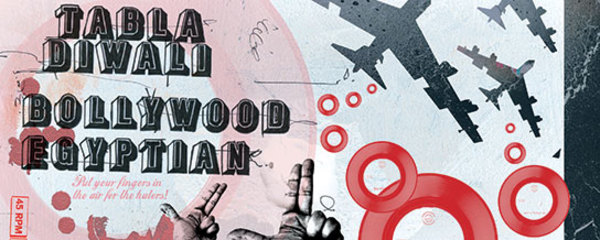
The Coolie Dance is one of many “orientalist” riddims that have mashed up the dance in the last few years; others include Tabla, Diwali, Bollywood, Egyptian, Amharic, Sign, Baghdad, Allo Allo, and Middle East. Partly inspired by a parallel trend in US hip-hop (“Get Ur Freak On,” “React,” “Addictive”), partly from a longstanding tradition of Jamaica’s own fascination with the East (“Eastern Standard Time,” “East of the River Nile,” “’Til I’m Laid To Rest”), and partly enabled by the tabla patches and “Indian flutes” available on the studio-standard Korg Triton, Jamaican producers and DJs have been responding to the Bush administration’s War on Terror in myriad ways. One hears everything from explicit anti-war songs–Capleton’s “Baghdad” and Luciano’s “For the Leaders”–to tracks that incorporate references to the war in a subtler manner. Vybz Kartel’s compliment to a Jamaican woman in “Stress Free”–“Skin smooth, e? You a wha? Barbie doll?/You nuh haffi hide your face like Bin Laden gal”–expresses a preference for a Western sense of beauty and a willingness to trade in stereotypes of Muslim women.

Whether or not Kartel intends it, such sentiments reinforce neo-conservative ideologies of “freedom” and universal–which is to say, unilateral–rights. American ideologies circulate globally via American music, including music once considered oppositional (such as hip-hop). These ideologies are then partly reproduced, partly resisted, and newly articulated through the lens of Jamaican culture.

When people talk of war in Jamaica, they usually mean the gun battles that routinely erupt in downtown Kingston, and the “gun hand” in the air remains the most common form of audience approval. If war can be found right down the road, why worry about some fanciful American crusade abroad?

In a comedy routine I heard in Kingston during the spring of 2003, a redneck-accented George W. asked Prime Minister P.J. Patterson if he could commit some troops to the “coalition of the willing.” P.J. responded, “We don’t have enough troops to fight a war with Tivoli.” The crowd roared. For them, Jamaica’s internal war–symbolized by the reference to Tivoli Gardens, longtime stronghold of the JLP, the opposition party to Patterson’s PNP–clearly presents a more urgent problem than “bringing democracy to the Middle East.”

Even so, Jamaicans feel the effects of the War on Terror, and reggae has registered much of this anxiety. “The Bombing” is one of the more eloquent reflections on 9/11 and its aftermath. Not only does Elephant Man come up with a coup of a couplet, rhyming “Bin Laden” with “cannot be forgotten,” he notes that “Visa a get deny through the bombing,” calling attention to one salient consequence of 9/11 for many Jamaicans: further restriction of mobility.

In contemporary dancehall videos, sampled news footage of Falluja gunfights, bombed-out buildings, and morbid scenes from Abu Ghraib fit perhaps too easily alongside images of downtown Kingston. The “Jamaican street” remains as hostile toward the American government as ever, but the dancehall massive is “still jammin’,” according to Elephant Man: “Down in Jamaica, yes, fun we still havin’/All of we dancehall dem keep on rammin’/Gal a do hair, fingernail, and shopping…music lick on, champagne still popping.”

Wayne Marshall is an ethnomusicologist working on an intertwined history of reggae and hip-hop.

Whitey: Causing an Electro-Rock Riot

By his own admission, the electro-rock powerhouse named Nathan J. Whitey is a lazy, alcoholic bookworm. “I’ve spent most of my life either drunk or reading, but I learned how to play instruments in between,” he says, before detailing his new regime. “I drank nothing but Jack [Daniels] for years, but I realized it was making me fat and stupid. I’ve switched to vodka and fruit juice now, so I’m constantly hydrating myself and pumping myself full of vitamins while I’m drinking.” He pauses, watching my black Sharpie commit his words indelibly to lined paper. “But don’t make me sound like a health nut.”

No danger there. With nearly two years of touring–and a nigh constant hangover–under his belt, East London-based Whitey is finally living the rock ‘n’ roll dream his tracks promise. Though most of his music–from remixes for Chromeo, Soulwax, and Bloc Party to his April debut, The Light At The End of The Tunnel Is A Train (1234)–was made solo, it has a fuck-off swagger that sounds as if an entire sweaty band is trapped in the room with you. Pairing the metronomic garage rock stomp of the White Stripes or The Hives with electronic touches (a vocoded vocal here, tweaky effects there), Whitey has created the purest definition yet of electro-rock, rendering arguments over the differences between “dance rock” and “rock dance” moot.

“When I was young, I was in really shit guitar bands and then I got disenchanted with that,” says Whitey of the genesis of his sound. Ditching Iggy Pop rip-offs for rave (a word he hates), he had a string of “rubbish” breakbeat hardcore records released between 1990 and 1995, but continued to listen to The Pixies, Mudhoney, and Fugazi. In 1997, he decided to once and for all combine his influences. “There are incredible sonic similarities between rock and electronic music: how they crash and build up again and surge,” he explains. “It seemed perfectly natural to use both.”

Using other people’s studios–often between two and eight in the morning–Whitey crafted his album tracks in one take each. Amazingly, they sound perfectly natural when performed live by his black-clad band, who wail on guitars and drums while Whitey stands in the middle looking like he raided Elvis Costello’s closet: pork pie hat, black suit, and black tie loosened in a louche fashion. Sometimes balls-out, occasionally deadpan, he makes an interesting frontman. “I’m quite honest when I’m on stage,” he states. “If I’m tired/crashing horribly then you’ll see that, and if I’m excited/rising stiffly then it’s different. I like to just gradually get worked up.”

Page 3449 of 3781
1 3,447 3,448 3,449 3,450 3,451 3,781