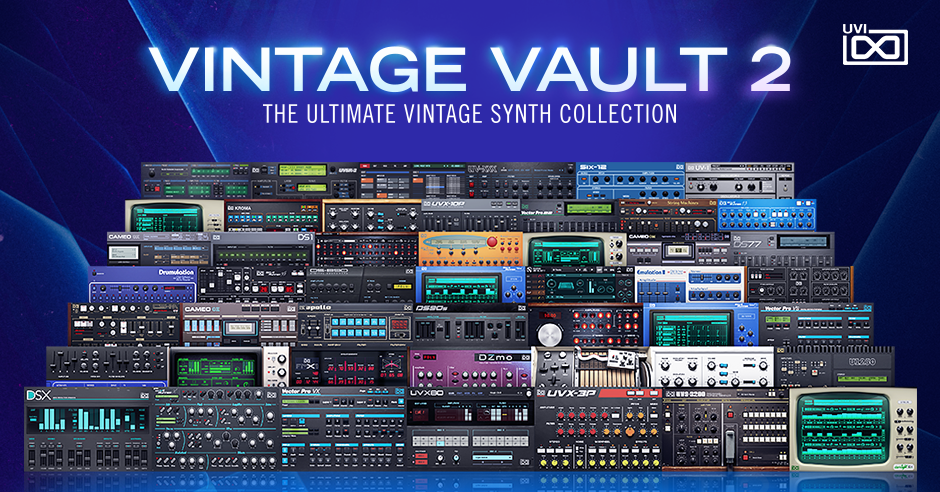
Paris-based software developer UVI recently released Vintage Vault 2, a massive update to their premier vintage synth collection that now includes 50 instruments, 111 drum machines, over 7,000 presets, and 300,000+ samples.
This new version sees the addition of 15 instruments and over 3,000 patches from seven new products, including BeatBox Anthology 2, Cameo, Digital Synsations Vol. 2, PX Apollo, UVS-3200, UVX80, and OB Legacy. The package covers well-known classic machines as well as obscure synths and rhythm boxes, all of which are cleverly grouped into 20 products, each focusing on a specific instrument group or form of synthesis. This impressive collection is enough to keep you busy for a while—and your neighbors from sleeping!
How does it work?
UVI offers a free workstation—”UVI Workstation”—in which the instruments can be loaded and tweaked. Following a simple installation, this workstation shows up in your Digital Audio Workstation (DAW) as a virtual instrument plugin (AU, VST, …). It’s also possible to use it standalone.
The workstation is designed to create a simple and familiar interface through which all the UVI soundbanks can be accessed, avoiding a list of 20 separate “plugins” in the plugin-window of your DAW. This helps to keep things organized. You can run as many UVI instruments as you want, on different channels—or as many as your computer will allow.
To bring some much-needed structure into this vast collection of software instruments, UVI has categorized and grouped the separate modules into 20 products. The products each cover a certain form of synthesis (FM, Wavetable etc.), instrument group, or period that is significant to the history of synthesis. Many of these products encompass several separate modules, such as the “Waverunner” instrument—a retrospective on German wavetable synths such as the Waldorf Microwave—or the “Beatbox Anthology,” which combines the sounds from 111 classic drum machines in a single interface.
The way UVI has organized the patches and modules offers a certain flexibility in your working process. Rather than choosing a specific synth by a specific developer within your DAW, you can now load an “Instrument” into the UVI Workstation that offers a specific sonic spectrum or character that you want to add to your production. For example: if you think your track might need a thin, glassy lead sound, you can simply load the “Waverunner” or “Vector Pro” instrument and try out the separate instruments inside. This way you can intuitively choose the best-fitting module without having to drag and drop new instruments into your MIDI channel. And there is a module for every need.
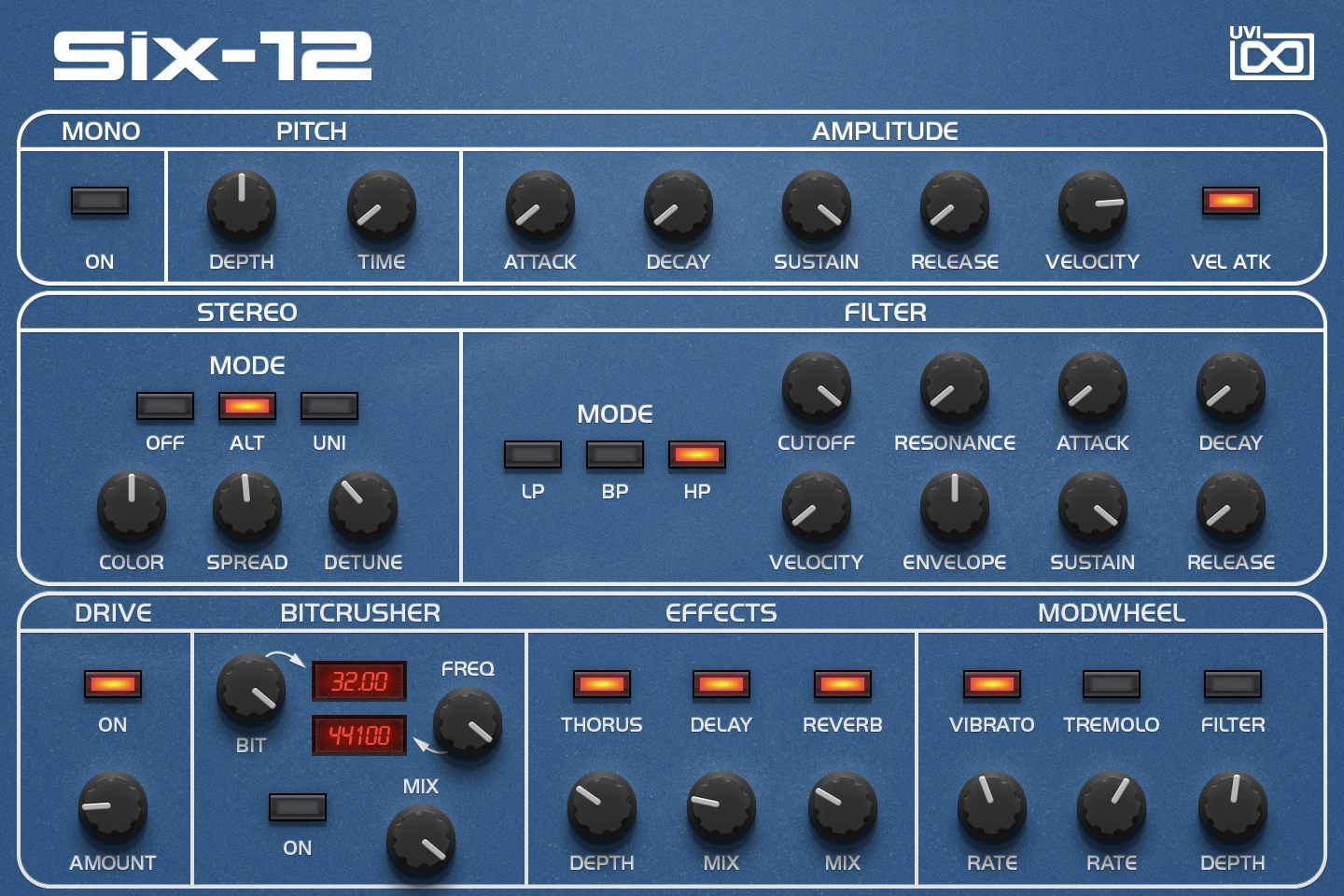
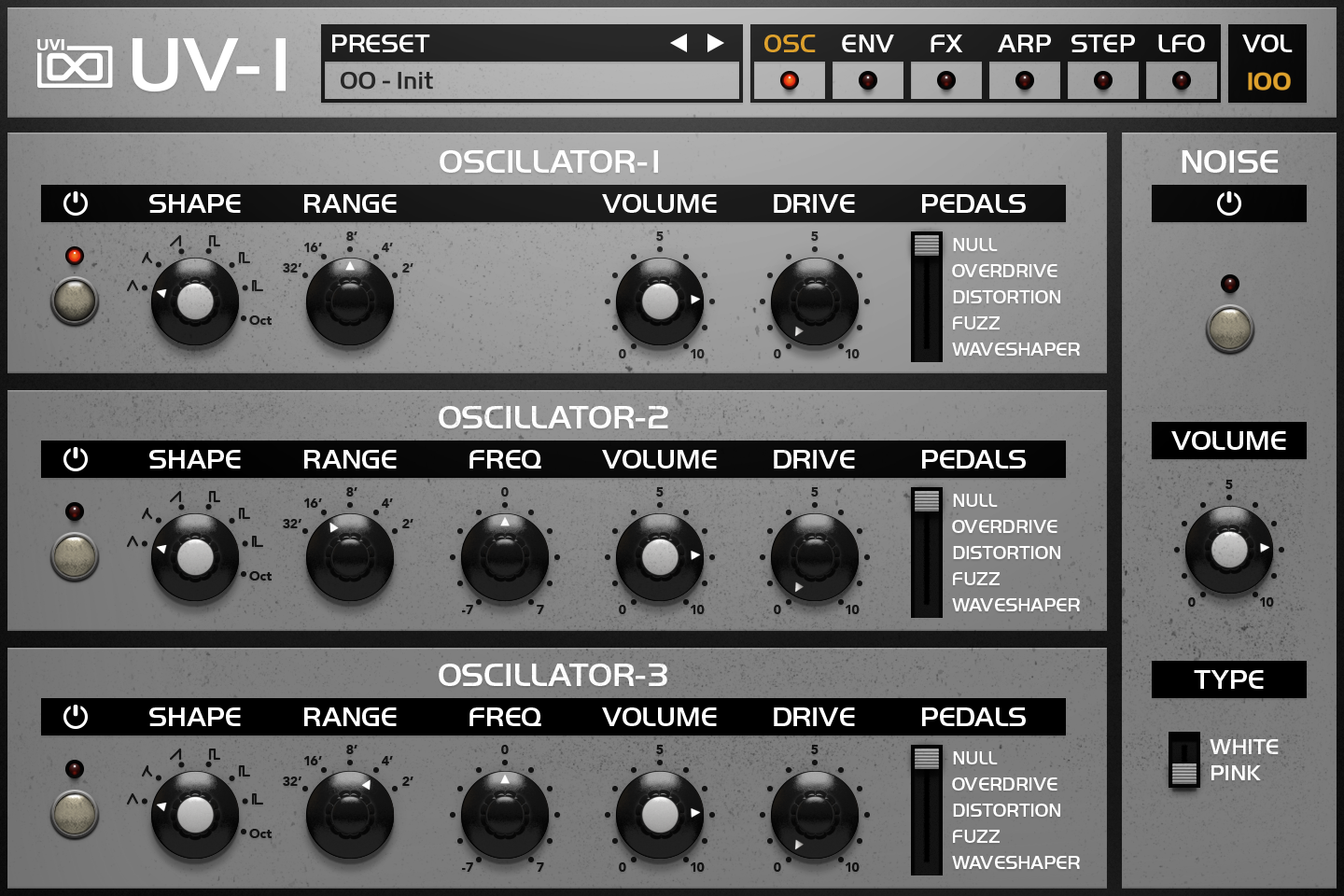
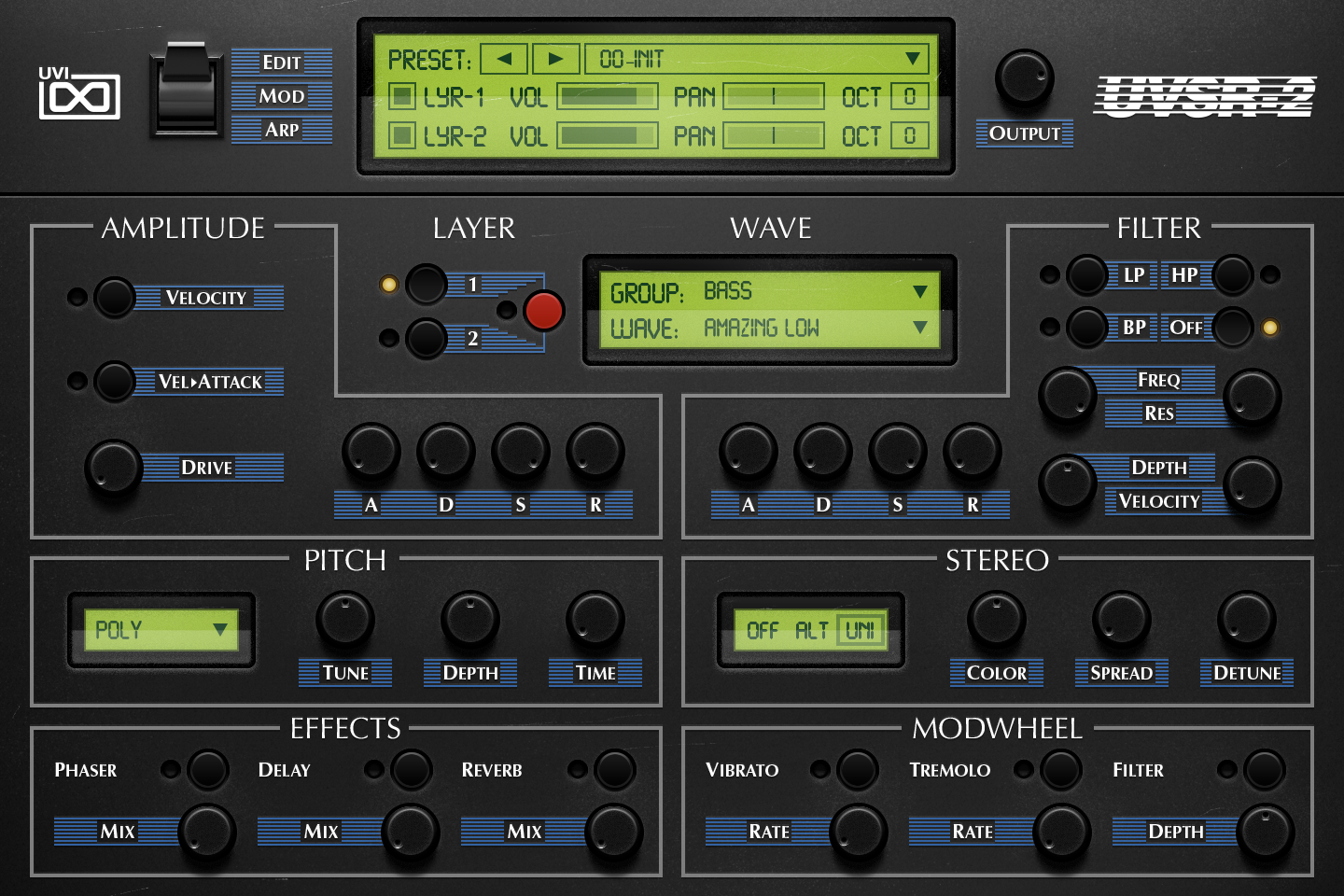
The interfaces of most of the modules are truthful in design to the interfaces of the original synths, which gives a feeling of familiarity if you are already had the pleasure of using the real machine before. The functionality and controls are not identical with those of the original machines but have been “streamlined” (as UVI states on the homepage) in order to make the instruments more user-friendly. In other words, they want to save you from the tedious work of digging into the complex sub-menus of the different complex synths. In this way, UVI has used the original hardware and sound source and inspiration to build their own unique instruments—with easy programmability as one of the main goals.
We will now take a deeper look into three of the products to see if and to what degree the functionality of the original machines have been compromised in order to make the instruments easier to program.
Because the collection of instruments is so comprehensive, we chose to focus on three of the most exciting produces: “Waverunner,” “OB Legacy,” and “BeatBox Anthology 2.”
List of Instruments
BEATBOX ANTHOLOGY 2 NEW
CAMEO NEW
DARKLIGHT IIX –
DIGITAL SYNSATIONS
DIGITAL SYNSATIONS VOL. 2 NEW
EMULATION ONE
EMULATION II
MELLO
OB LEGACY NEW
PX APOLLO NEW
STRING MACHINES
THE BEAST
ULTRAMINI
UVS-3200 NEW
UVX80 NEW
UVX-3P
UVX-10P
VECTOR PRO – Collection of 3 Vector synthesizers
VINTAGE LEGENDS
WAVERUNNER – Collection of 7 Wavetable synthesizers
OB Legacy
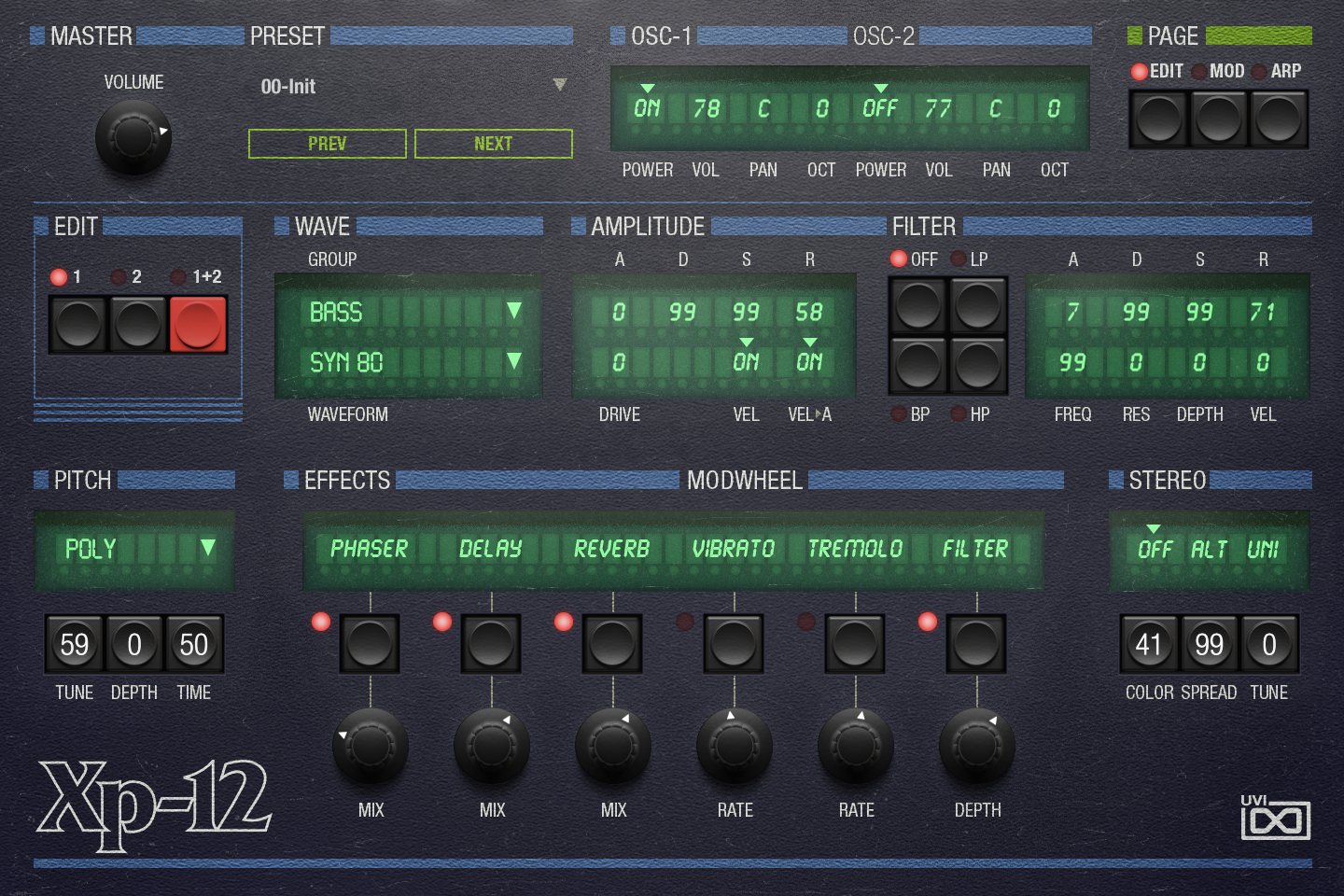
“OB Legacy” is a tribute to the legendary audio engineer and synthesizer producer Tom Oberheim. It is a package of six instruments based on 10 of his most prolific synths. It is the only completely new instrument within the package—and one of the most exciting. One of the synths UVI recreated is the popular Matrix 6 / Matrix 1000, which is known for its great pads and leads sound and is used in many Detroit-techno classics but is also notoriously hard to program because of many sub-menus and lack of knobs and sliders.
How It Works
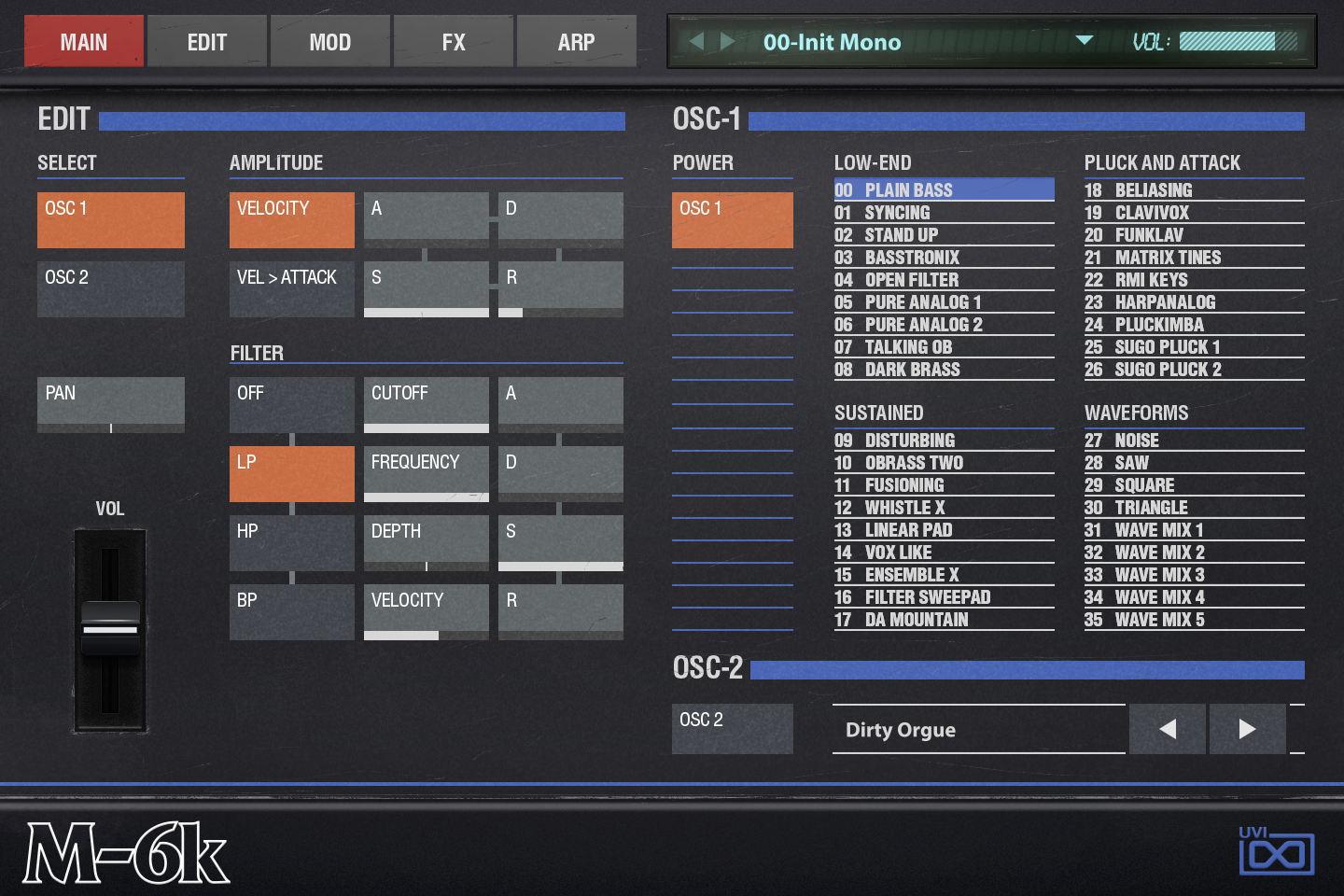
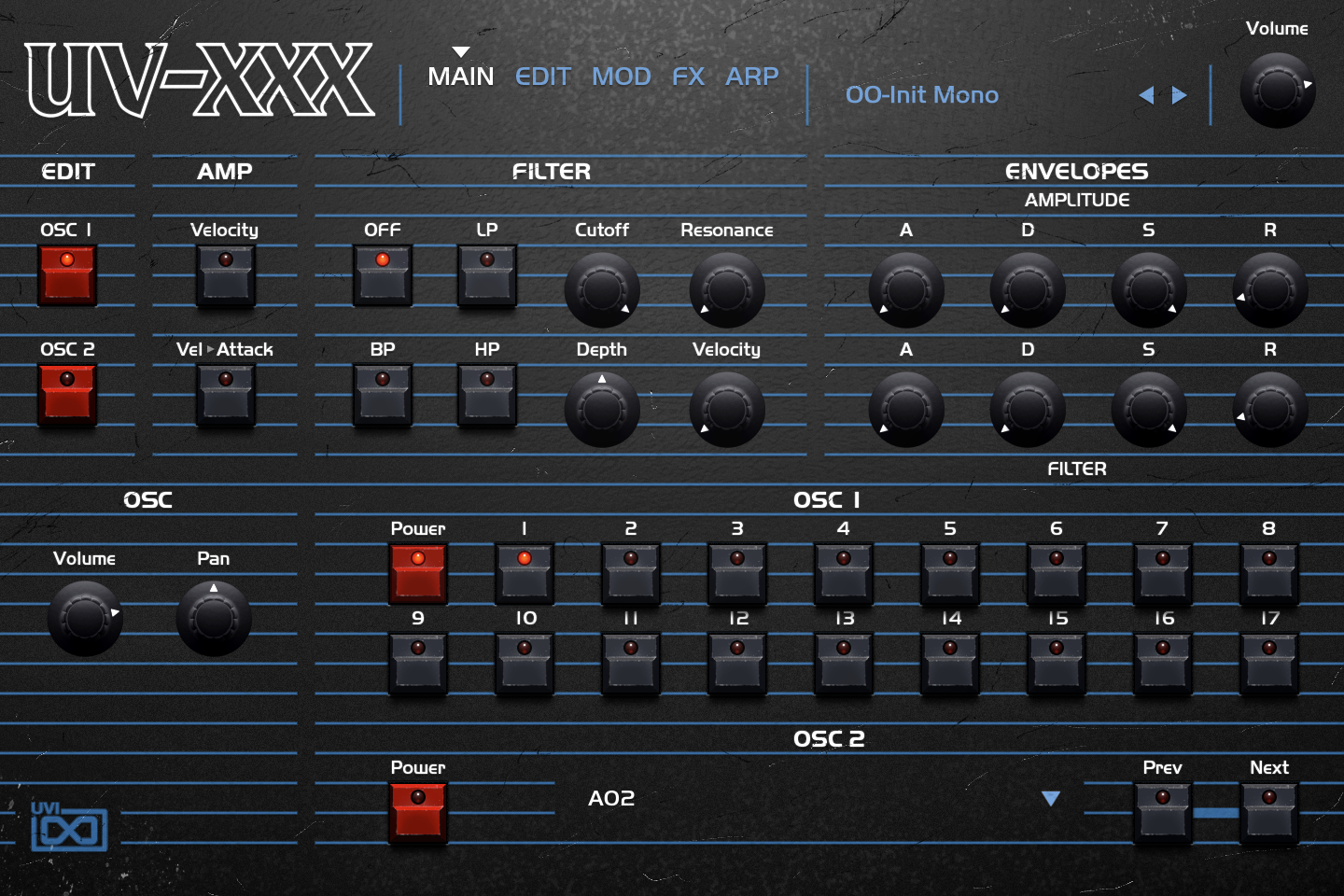
As promised, UVI found a smart way to make the programming more accessible, and more fun. The editor is split up into five windows”
“Main”—In which the oscillators, filters, and amplitude can be chosen or adjusted;
“Edit”—In which the voicing, pitch, mod wheel assignment, and stereo imaging can be set.
” Mod”—in which modulators (two LFO and two ramp generators or step generators) can be programmed and assigned.
“Fx”—In which the onboard FX can be added and adjusted.
“Arp”— built-in Arpeggiator.
This left-to-right approach (OSC-ENV-FILT-MOD-FX-ARP) is both convenient and familiar, as most of the ’60s and ’70s synths have been designed like this. So UVI is not re-inventing the wheel but combining the hands-on approach of ’60s synth design, with the enhanced modulation options of the ’80s synths.
What makes the Matrix M-6k (Matrix 6) so unique is the modulation options, which make this a perfect synth for complex evolving patches. With the ramp generator, you can program your own “modulation-step-sequence” that consists of 16 steps, each of which has an adjustable value. You can assign this modulation-sequence to the filter or oscillator, after fine-tuning parameters such as speed (similar to LFO speed), delay, and rise. Between the two LFOs and two Ramp generators combined, you can endlessly tweak your patch and modulate both sound and mind.
It feels like the engineers at UVI first studied the synth sound spectrum and functionality meticulously and then created an interface that lets you intuitively edit the synth—while still being truthful to the sound of the original—with great results.
Waverunner
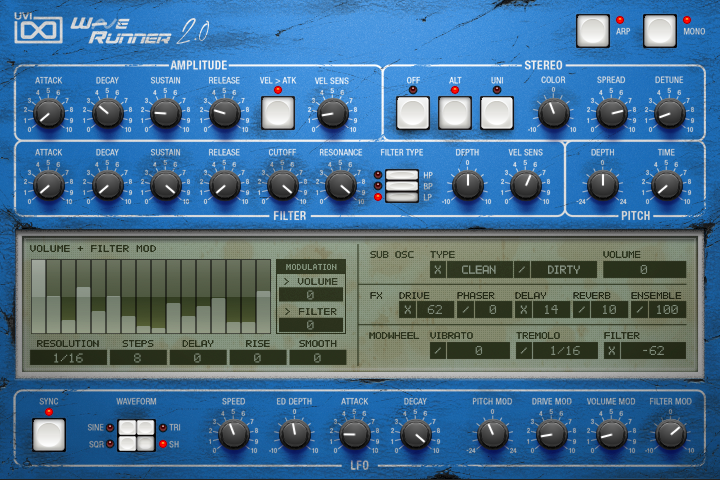
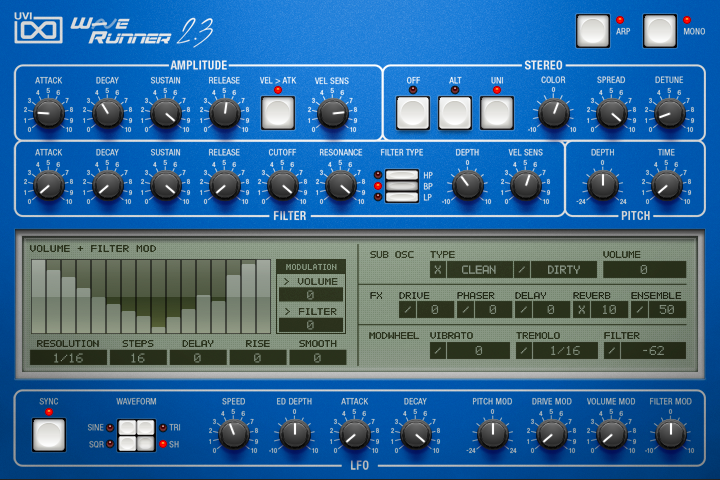
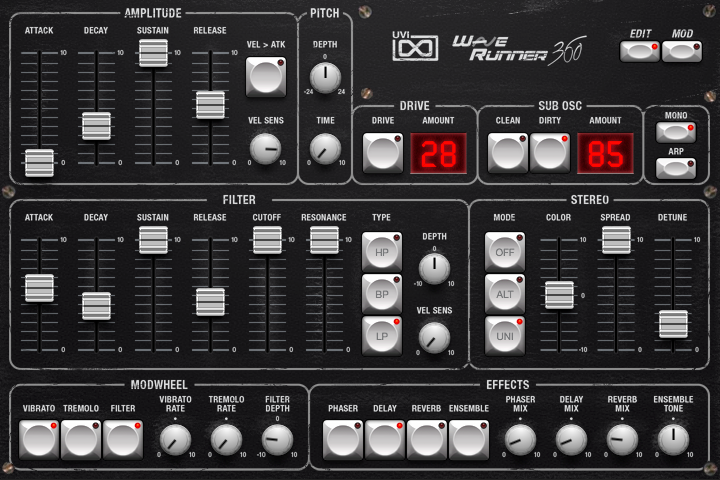
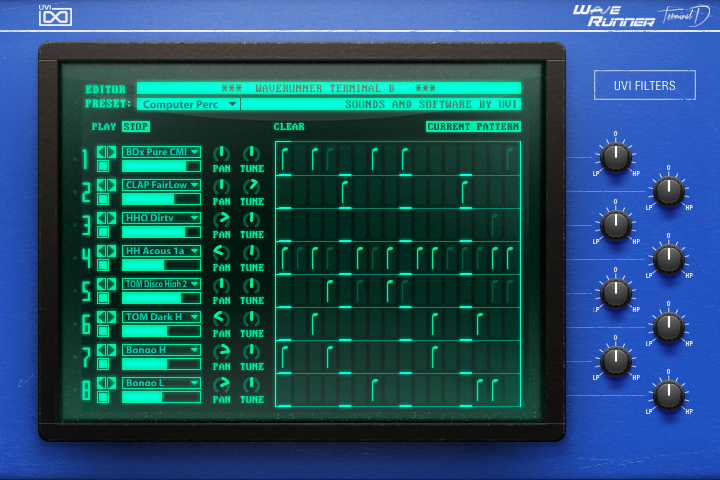
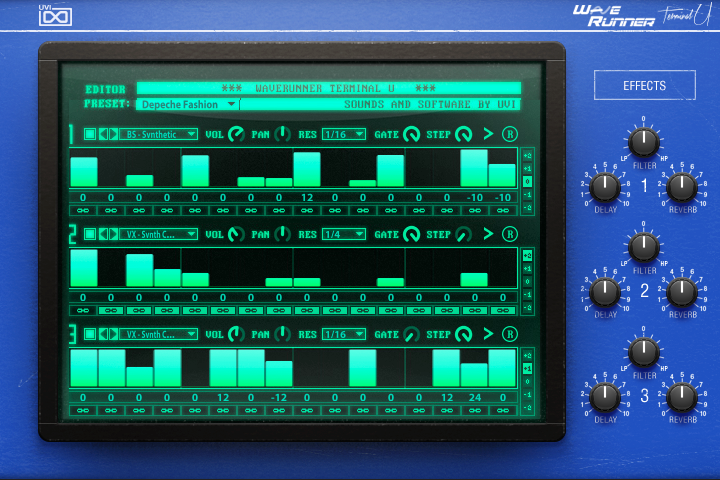
The Waverunner is a retrospect of German wavetable synthesizers. It explores the unique sounds of wavetable synthesis through seven instruments that are inspired by some of the most iconic wavetable synths.
How it works
As with most of the instruments within the Vintage Vault package, the instrument interfaces are instantly recognizable and the instrument functionality works in a similar fashion as its ancestor—but in this case, there is one major difference.
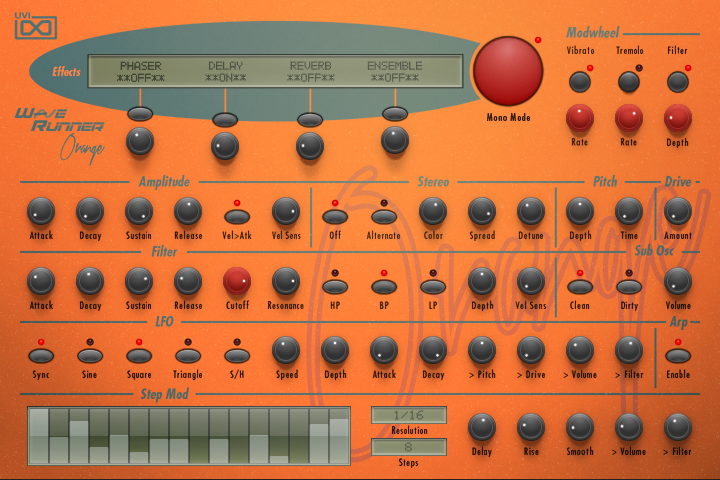
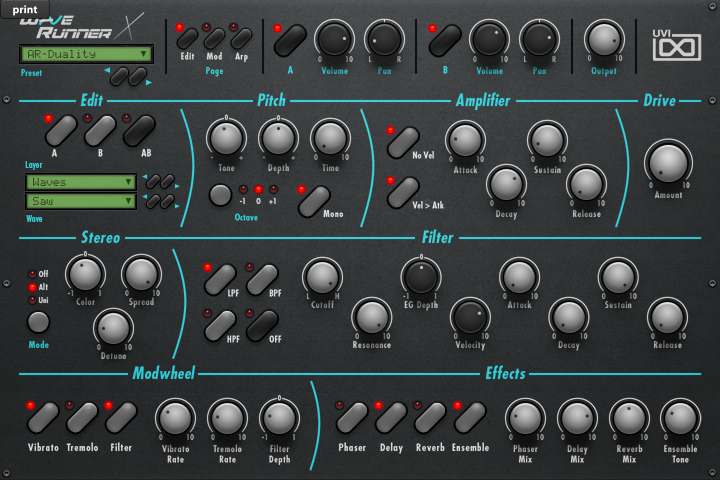
In the Waverunner Orange (inspired by the Microwave XT), for example, the wavetable section (referred to as the oscillator section on the XT) is absent. The different waveforms, that are sampled from the original Microwave XT, are only accessible through the pre-sets, so you have to switch pre-sets to switch waveforms.
So if you want to build your own patch from scratch, you first have to select a preset that you want to edit, remove all the effects, arpeggiators, and other settings, and then start building.
“Officially, none of these seven instruments are wavetable synths, but instruments inspired by wavetable synthesizers. This is important to keep in mind when you purchase the instruments, otherwise, you might end up being disappointed.”
This is highly inefficient and this setup is sure to demotivate users from building their own patches. The worst part is that, even when you follow the above instructions and erase all the setting from one of the presets, you are still not able to edit the wavetable—to choose the wavetable and “scroll” through the wavetable to choose a partition—which is exactly what makes wavetable synthesis so interesting and versatile. Officially, none of these seven instruments are wavetable synths, but instruments inspired by wavetable synthesizers. This is important to keep in mind when you purchase the instruments, otherwise, you might end up being disappointed.
UVI made a lot of good decisions in building their instruments within the Vintage Vault, but the fact that they let out the most exciting part of wavetable synthesis is a giant misstep. What is left is a collection of good sounding and editable pre-sets, which is fun to play with but won’t be any serious competition to, for example, the PPG Wave 3 plugin, in which you can choose and edit the wavetables by hand. I can’t help but think what a waste this is, knowing how much time and effort UVI took to restore and sample the original machine. In this case, the functionality is definitely compromised.
Beatbox Anthology 2
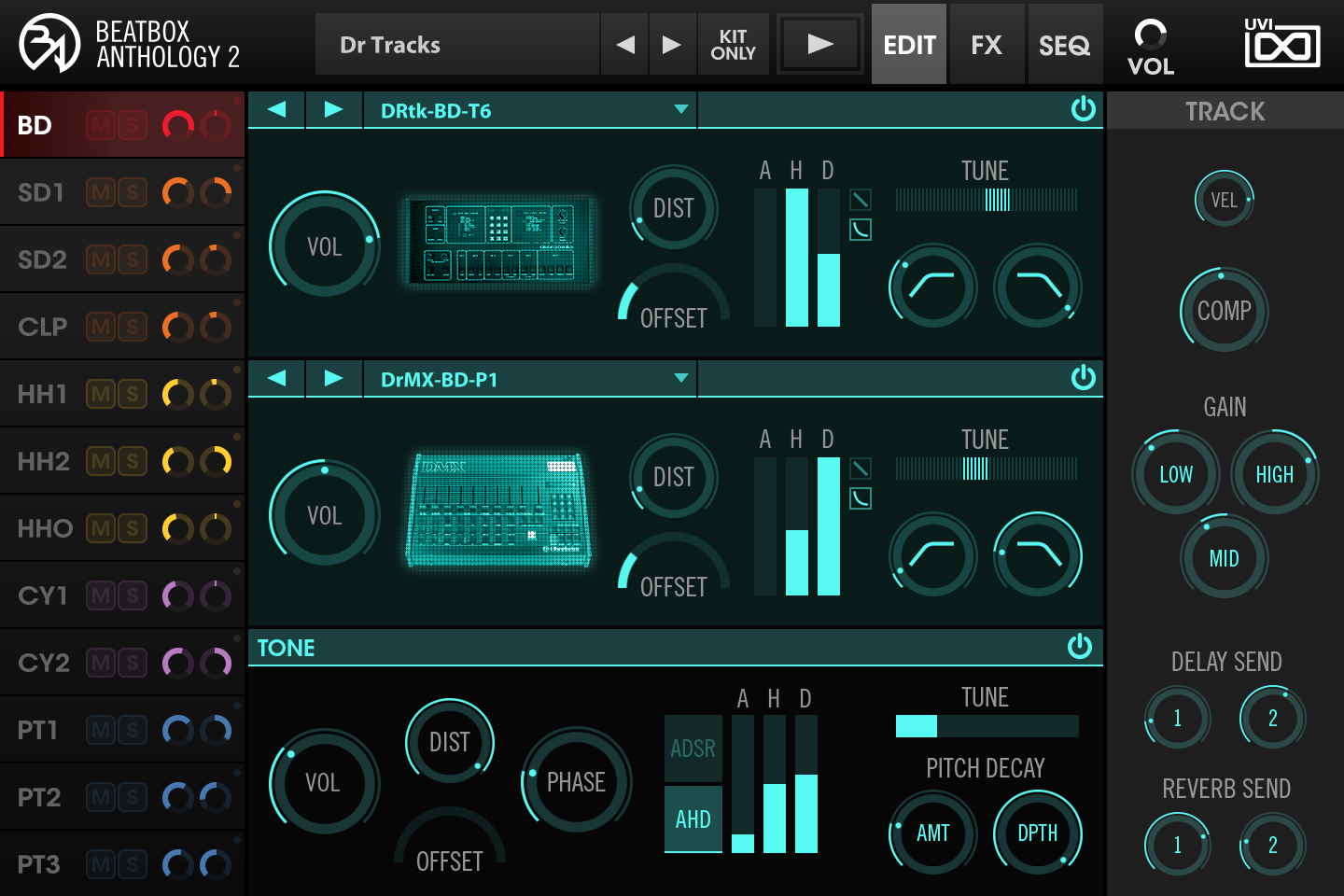
The Beatbox Anthology, in a way, is the “odd one out” in this instruments package. It covers such a large number of drum computers (111) in one interface that the design-team of UVI had to let go of the design, look or aesthetic of the original machines and come up with a brand new interface in which all instruments and sounds included are integrated and easily accessible. It, therefore, has a more “2017” look in comparison to the other modules that are designed to resemble the original interface of the synthesizers by which they were inspired.
The market for extensive packages of drum samples of classic drum computers, drum synths, and groove boxes is vast and ever-growing. And when every bedroom-producer already owns a number of different packs with high-quality samples of the classic drum computers, it becomes harder and harder for developers to differentiate from the existing offering. But with the Beatbox Anthology 2, UVI offers more than just another pack of popular and obscure drum sounds, recorded through expensive pre-amps and converters.
What separates this instrument from other collections of carefully recorded and meticulously documented sounds is the interface, which makes it easier and more fun to freely combine, layer, and sequence a seemingly infinite number of sounds on the fly.
How it works
The interface of the Beatbox Anthology 2 is split up into three parts: Edit, FX, and Seq.
You start out by selecting the desired samples in the “Edit” section. You can choose one of the existing drum-kits (that sound surprisingly good) or assemble your own kit. Each of the 12 drum sounds (BD, SN, etc.) can be shaped and molded to taste by layering two different samples out of the extensive collection of sounds. There is a simple sample editor with a dedicated AHD envelope, distortion, tune, and filter section and four FX sends that can be controlled in the FX window.
When you have your drum-kit set up, you can fine-tune the applied effects in the FX window—which has two delay and two reverb units and a bit crusher. The effects sound decent enough but don’t add much to the native effects of your DAW, let alone dedicated effect units. Nonetheless, it’s useful if you want to add a bit of delay or room to certain sounds within the module.
Then you move on to the “Sequencer,” and this is where it gets really interesting. Drawing a sequence is intuitive and fun. The sounds are color coded and you can easily draw the triggers and velocities with the mouse by moving the cursor from left to right in a certain field (for example HH), with the mouse pressed in. Moving the cursor slightly up and down will translate into different velocity values. This way you can create dynamic patterns intuitively, rather than adjusting the velocity per note by hand. When you prefer to draw patterns in your DAW, this is also possible, with every drum sounds linked to a note on your piano roll. Easy does it.
“….the quality of the units is fantastic and UVI completely fails to communicate how powerful and versatile this package is for producers operating in all genres.”
Conclusion
When plug-ins or virtual instruments are offered in such bulk, it’s easy to become skeptical about the quality of the individual units. In the case of Vintage Vault 2, this feeling is amplified by the chosen marketing strategy and visual communication, which emphasizes the vast amount of presets (7000), modules (50) and years of synthesizing history enclosed in the package. In truth, this gives it a bit of a cheap feel.
Also, the demonstration videos and Soundcloud clips are not convincing in demonstrating what the instruments are capable of. They have a vintage approach and feel to them rather than giving an impression of what they can do in a more modern context. This is a shame because the quality of the units is fantastic and UVI completely fails to communicate how powerful and versatile this package is for producers operating in all genres. Unfortunately, not everyone gets to test the product to find out the power of these instruments.
The value-for-money is unparalleled: the brand new OB-Legacy instrument only already goes for €200, which is more than reasonable for a six-instrument package of this quality. This Vintage Vault 2 package consists of 20 of these individual products, with a collected value of €2600, for a mere €600.
But what makes this package so interesting, besides the variety and quality of the individual units, is that it offers the sound of some rare and much sought after synthesizers and makes it available for a small price. A good example of this is the PX Apollo, of which there are only two known units existing—of which UVI purchased and restored one. So this package contains some pretty unique instruments that can help shape your sound—if you dig deep into the programmers of the individual synths and look past the factory patches, that is.
UVI efforts to make the instruments as functional and accessible possible are noticeable and this makes it a pleasure to work with them—but they might have taken this effort a bit to far. It is easy to fiddle around with the factory patches of the OB-Legacy instrument and adjust these sounds to your taste. But the fact that there is no ‘user-patch’ bank and that it takes you a while to figure out how to save your own-made patch already indicates that the focus of UVI was to impress the users with their ready-made patches, rather than motivating them to start building sounds from scratch and build their own bank of unique user patches.
Another example of this is the absence of the oscillator section in most of the instruments within the Waverunner pack, where the only access to the different wavetables or oscillators is through the presets—which is a serious compromise in functionality in relation to the original machine. Luckily this isn’t the case for all instruments and if you look past the premeditated patches, the Vintage Vault 2 can sound unique and powerful and might just become one your most indispensable tools in your toolbox.