Kllo Backwater

Ghostly International has never been afraid to dip its toes into the pop waters—the low-toned, Berlin-period Bowie-isms of Matthew Dear and the swirling, overstuffed swoon of Deastro come to mind, but there are plenty of other pop-tinged nuggets nestled throughout the label’s discography.

But rarely has Ghostly embraced pure pop as fully as it has with cousins Chloe Kaul and Simon Lam, the Australian duo better known as Kllo. Their label debut, last year’s Well Worn EP (itself a follow-up to 2014’s Cusp and a 2015 seven-incher, “Underlie”) saw the pair perfecting a finespun, occasionally otherworldly version of synthpop, one that fused skittering rhythms indebted to two-step, UK garage and the like to wistful melodies and yearning vocals. Kaul and Lam’s latest release, Backwater, is a further refinement of their sound, fleshing it out and blanketing it with a gauzy patina that’s almost intrinsically appealing.

The album’s lead track, “Downfall,” sets the tone for much of what follows. Skipping breakbeats, looped synth patterns and clipped vocals set the tempo; quietly majestic orchestration and a melancholy-tinged tunefulness set the mood; and Kaul’s gentle but confident singing provides the focus, via lyrics concerned with the fact that life is a series of hurdles to be overcome. (At least, we think that’s what she’s referring to—her songwriting tends to be on the hazily oblique side. Elsewhere, the elusiveness of love seems to be a common theme.) The song builds, gracefully and nearly imperceptibly, into something approaching a crescendo, before finally drifting off. It feels like a fleeting reverie, leaving a spectral hint of longing in its wake.

At times, there’s a bit more intensity: the cracking snare, cascading keys, swirling vocal sample, and sparse yet forceful low end of “By Your Side,” for instance, lend a powerful poignancy to its repeated “want to be by your side again” lyric. At other times, the songs drift through the firmament, as with the pensive, layered “Nylon,” a hymnal, nearly beat-free ode to a love affair that might, perhaps, be doomed. Some of the cuts lean toward R&B, as with the spectral ballad “Too Fast”; others, like the shivering “Making Distractions,” are imbued with a touch of delicate abstraction.

In truth, these are only the slightest of variations of a theme, one that’s defined by gorgeous sound design (some of its synth washes can raise goosebumps), lush arrangements, soft-focus vibe and most of all, the album’s hugely emotive melodies and Kaul’s intimate, affecting voice. But really, that lack of variation is one of Backwater’s strengths—Kllo have created a gossamer dreamscape of a world, and it’s a gorgeous place to dwell for a while.

Tracklisting 

01 Downfall
02 Still Motion
03 Virtue
04 Predicament
05 Last Yearn
06 Backwater
07 Dissolve
08 By Your Side
09 Making Distractions
10 Too Fast
11 Nylon
12 Not Like Them

Watch a Tripped-Out Video From BRZZVLL

Belgian band BRZZVLL released their sixth studio album, Waiho, last week via Sdban Ultra.

The album, a free-flowing psychedelic jazz-funk odyssey, arrives with an equally tripped-out video by Jochem Baelus, a Belgian musician and filmmaker. In the video, a protagonist moves through a series of bizarre, humorous, and confounding scenes, soundtracked by the innovative electronics and instrumentation of BRZZVLL.

You can watch the video in full via the player above, with the album available here.

Cropper & Dross ‘Jaxa’

Cropper‘s latest EP, Sunlight, dropped last week on Brighton-based Blah Blah Blah Records.

The new EP, which has already picked up support from artist such as Hannah Wants, Nick Warren, and Richy Ahmed, among others, follows a recent collaboration with Byron The Aquarius—Cropper contributed to the lead track to Byron The Aquarius’ latest EP on Eglo Records, released last month—and arrives backed by a remix from Hackman.

In support of his recent outings, Cropper has offered up a track with old musical friend Dross as today’s XLR8R download. The track follows a summer performance from the pair at Glastonbury and will be the first offering from the partnership—a new joint live show is also in the works for the pair, as well as a mixtape on their Lobe Records imprint.

You can pre-order Sunlighthere, with “Jaxa” available via WeTransfer below.

Jaxa

Stream a Track From Hyetal’s Impressive New Album

Hyetal‘s latest album, Youth & Power, will drop via Other/other on October 27.

Following on from his two previous full-lengths on True Panther Sounds and Black Acre, Youth & Power was recorded over the three years since 2013’s Modern Worship and presents somewhat of a transformation for Hyetal, moving from a more off-kilter dance style to pop-driven pastures. The haunting, textured atmospheres and bent rhythms remain, but there’s more of an emotional honesty, openness, and beauty to the tracks, something Hyetal explains was a direct response to feeling detached from his music: “Previously my approach to writing music was very rooted in escapism. I began experiencing a sense of detachment in my life which led me to question how healthy this approach was. I wanted music to help me feel connected again.”

Ahead of the release, you can pre-order Youth & Powerhere, with album cut “Permanence” streaming in full below.

Review: Maschine MK3

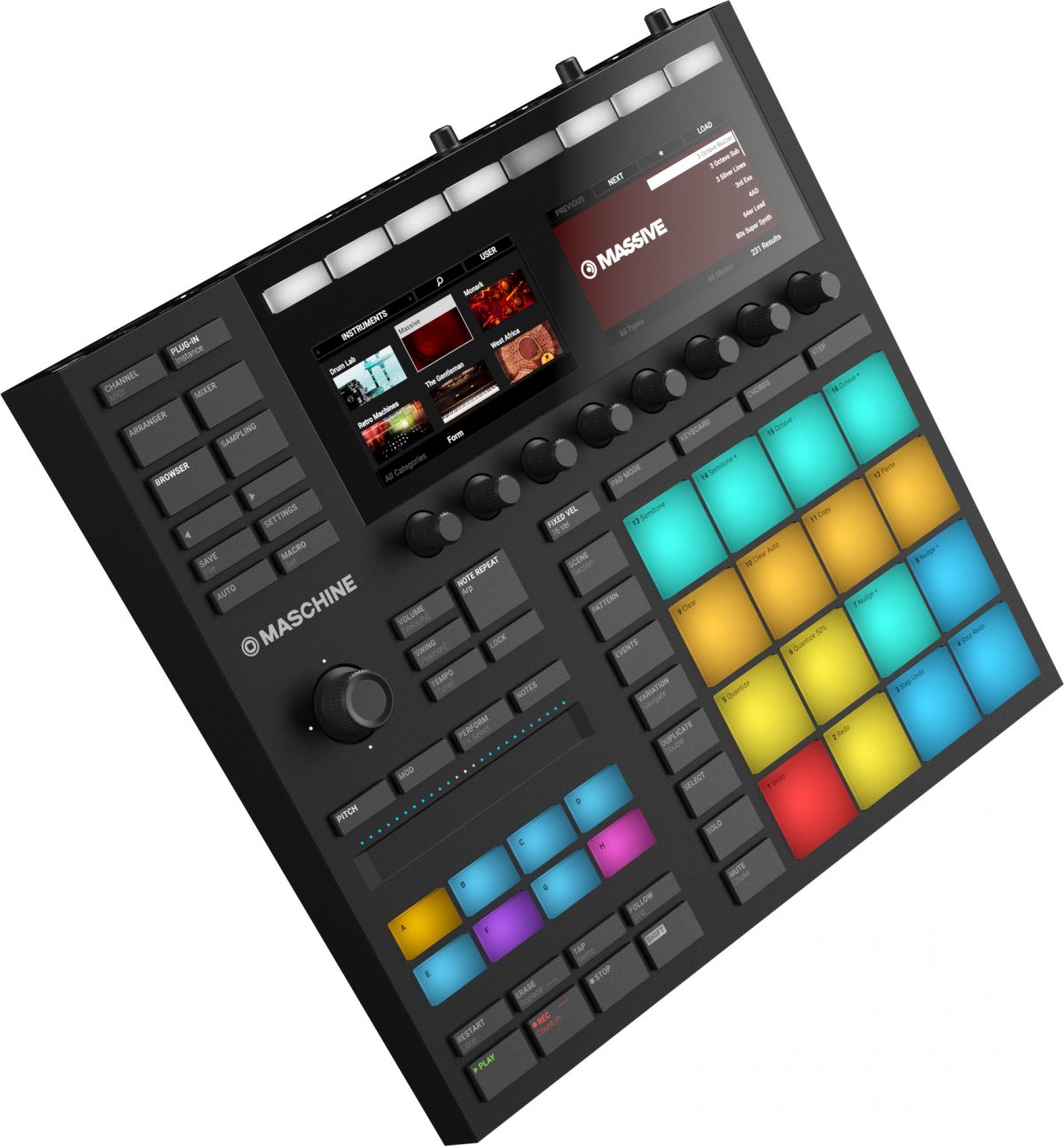
As an all-in-one studio production and live performance tool, Native InstrumentsMaschine line has been one of the most popular in modern music. The company’s latest revision, the Maschine MK3, comes roughly four years after the release of the larger Maschine Studio, and a year after that of the more performance-oriented Maschine Jam. It’s currently available in one size, fitting a host of features from the (larger) Studio and the (smaller) Jam into a portable 12.6″ x 11.85″ x 1.61″ footprint, and further streamlining the Maschine workflow.

How it Looks

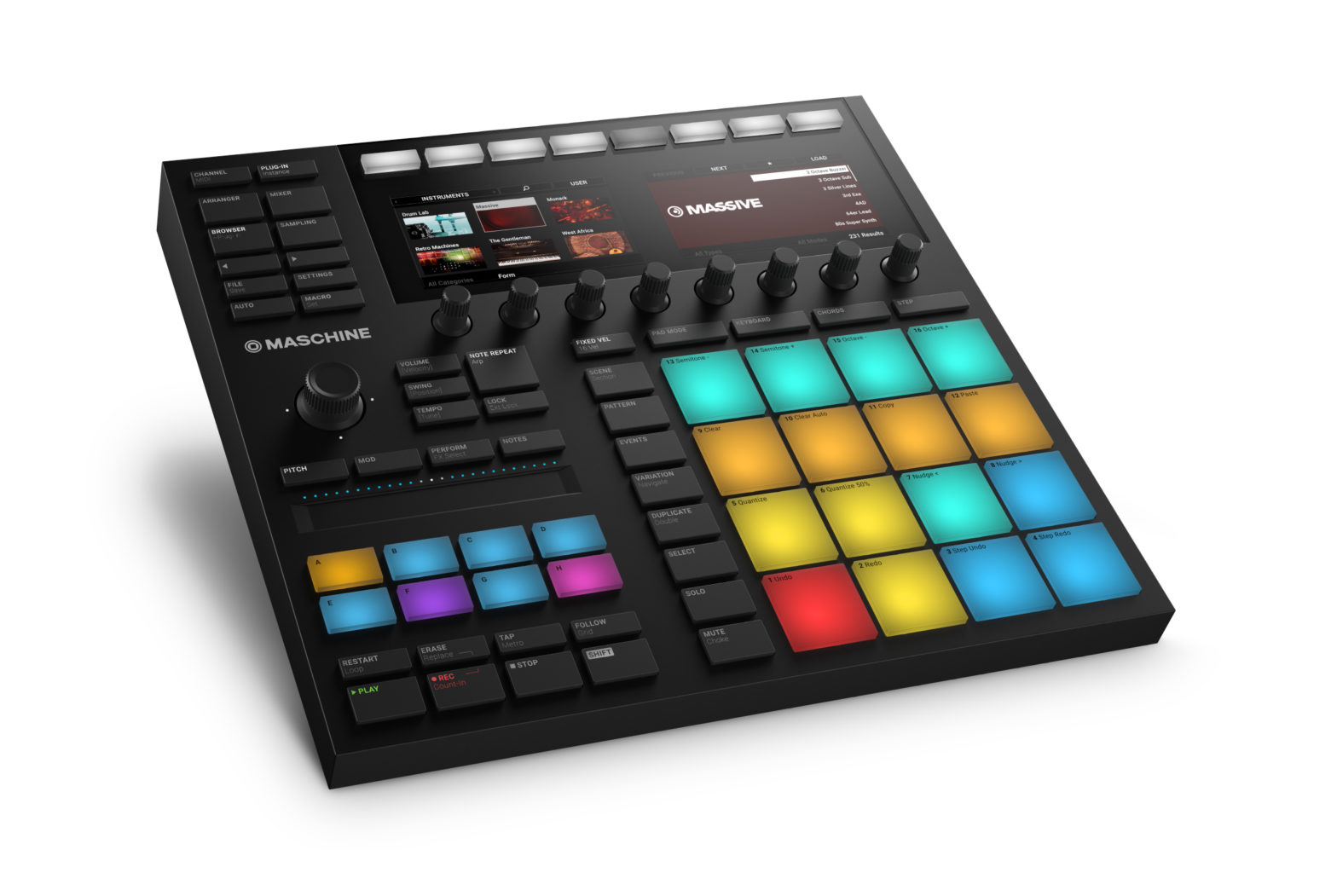
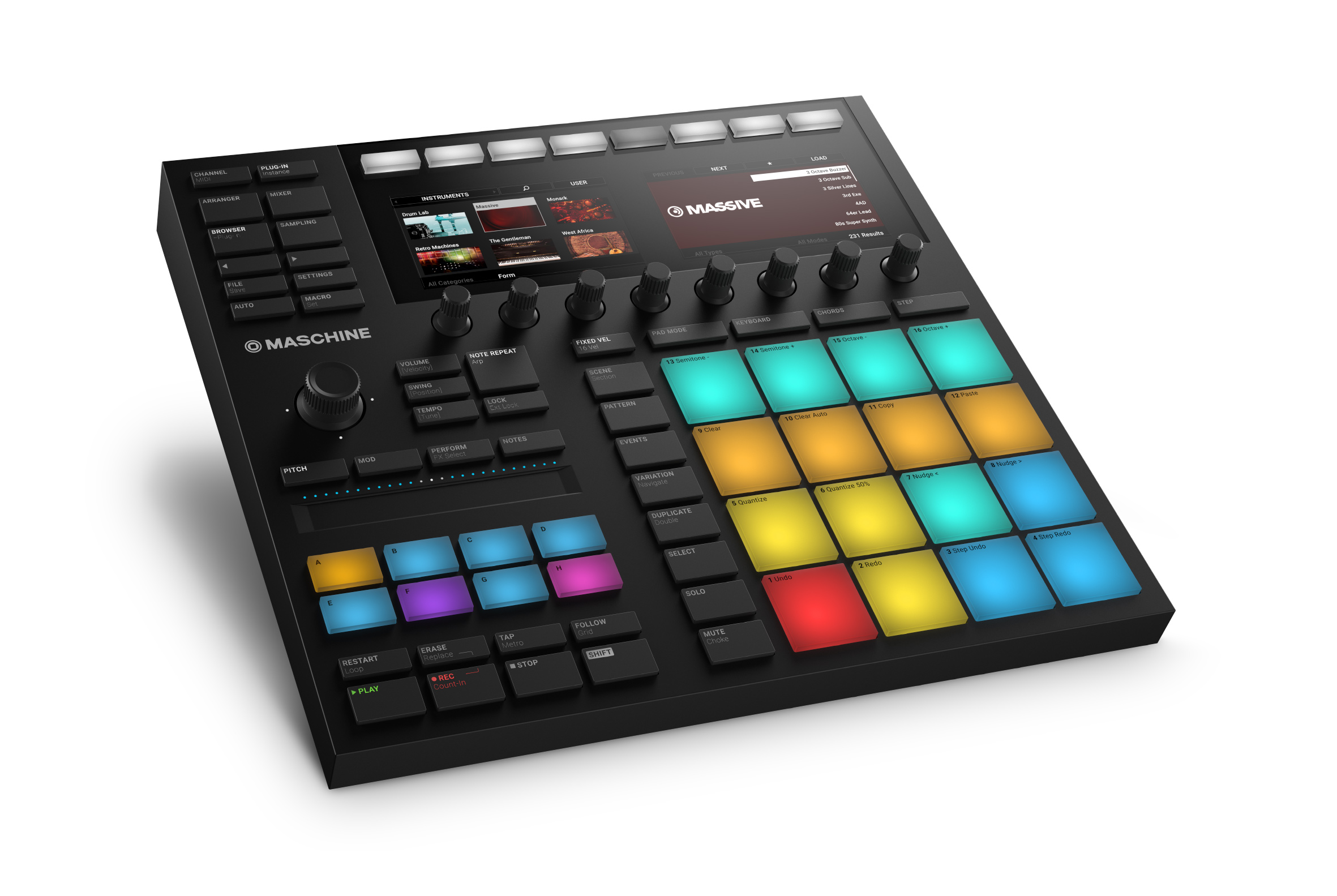
The MK3 is a sleek update of the hardware, refining both aesthetics and layout into what feels very much like the best Maschine hardware to date. The most obvious upgrade is the integration of dual screens, which are now proper color LCD displays (the same screens used on the Maschine Studio), allowing for much better browsing, sequencing, and sound-shaping, further removing the need to look back at the computer screen between edits.

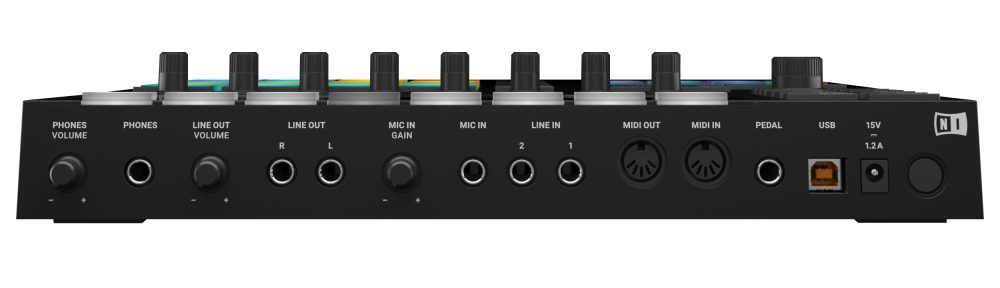
Even more significant for some is the fact that the MK3 also functions as a 24-bit/96 kHz audio interface with stereo line inputs and outputs, as well as a mic input and headphone output (it also maintains MIDI I/O jacks). The Maschine pads are slightly bigger than those found in previous versions, and feel more responsive across their surface (something of particular note for finger drummers). There’s a touch strip, the primary use of which is for performative actions (as seen on the Jam), like sound and effect modulation, and even “strumming” played sounds.

The layout has changed in a number of ways, with the addition of dedicated buttons for the different play modes (Pad / Keyboard / Chord / Step), as well as several performance-based buttons for the touch strip controls. There’s a dedicated Macro button, as well as touch-sensitivity on the knobs for efficiently adding parameters as macros, as well as a larger encoder knob that now also functions as a button, used for navigating the Maschine menus.

In terms of its industrial design, the MK3 is easily the most solidly-constructed Maschine model so far. The general visual styling, including the matte finish and left-justified text on the buttons, is reminiscent of Ableton’s Push controller; not a bad thing, per se, but worth noting. (The color palette of the LEDs still feels more NI than Ableton, for what it’s worth).

How it Plays

The MK3 feels like a proper follow-up, evolving the Maschine workflow in a handful of key ways. The layout has been refined such that things generally feel more like they’re in the “right” place, and getting around the interface simply feels quicker and more intuitive than ever before. The touch strip serves as a nice alternative to knob-twisting as a way to input automation, and the dedicated Keyboard and Chord buttons make playing keys and chords much more accessible and intuitive than it was in previous iterations. The built-in audio interface is a nice addition, and will mean less clutter on the desk for many producers, and be a boon to those who want one less piece of gear to lug around to live gigs or studios (even if the tiny gain knobs on the back of the unit are a bit ungainly).

Perhaps the most useful new feature on the MK3 is the “Lock” function (which, to be fair, originated in the Maschine Jam). Press it, and you’ll temporarily save a snapshot of the current parameter settings for your project; tweak your sounds and effects to your heart’s content, and then when you’re ready, hit the Lock button again—and everything immediately snaps back to the captured snapshot. What’s great is that you can save up to 64 of these “lock states,” which you can then move between via either immediate or gradual “morphing” transitions. It’s a brilliant workflow improvement and helps open up new creative pathways, and one we’ll likely see copied by other manufacturers in the coming years.

The Bottom Line

While not a revolutionary upheaval, Maschine MK3 feels like a smart, significant evolution of the platform. For those considering an upgrade, the MK3 definitely feels like a worthwhile step up from the MK1 and MK2, while perhaps less so for studio owners who don’t need to save the desk space (or perform live). Choosing between this and Ableton’s Push, however, remains largely a matter of workflow taste: Maschine continues to excel as an all-in-one beat machine and sampler; while Push functions as a more comprehensive, wide-ranging interface for Ableton’s ubiquitous DAW.

Price: $599

Nina Kraviz Delivers ‘Essential Mix’

Nina Kraviz delivered her second Essential Mix on BBC Radio 1 over the weekend.

The Russian producer debuted on the series in 2012.

Her second submission is described by the BBC as “a slamming mix of new and classic techno and electro,” and features the work of Speedy J, Blawan, and new material from Nina’s label Trip.

Listen to it now via this link.

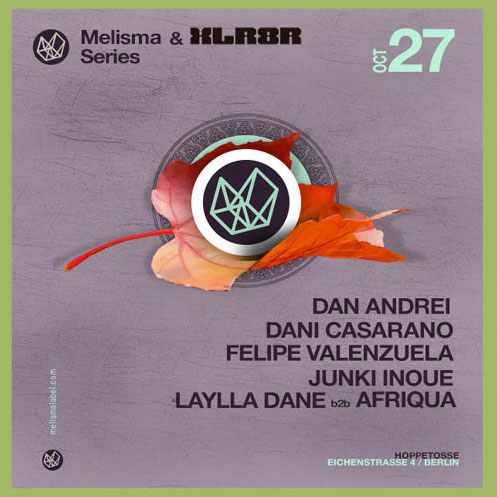
XLR8R x Melisma to Host Dan Andrei, Laylla Dane, Afriqua, and More

XLR8R have partnered with Melisma for a party at Berlin’s Hoppetosse on October 27.

Melisma is run by Dani Casarano and Felipe Valenzuela, both of whom will play the event. They’ll be joined by several artists affiliated with the label, including Afriqua, Laylla Dane, and Romanian Dan Andrei.

The full lineup is as follows:

Dan Andrei
Dani Casarano
Felipe Valenzuela
Junki Inoue
Laylla Dane b2b Afriqua

More information can be on Afriqua and Laylla Dane here and here, with Laylla Dane’s podcast streaming below.

The event takes place October 27 at Berlin’s Hoppetosse.

Damiano Von Erckert Announces New Album

Damiano Von Erckert has a new LP in the works, titled In Case You Don’t Know What To Play.

The 10-track release, which lands after his 2 EP earlier this year, will form the musical aspect of Damiano von Erckert’s latest project, In Case You Don’t Know What To Do, and will be accompanied by a movie and an art installation.

The album, In Case You Don’t Know What To Play, is committed to the world of dancing, drawing eclectic inspiration from the streets of Tokyo, traditional African rhythms, US underground techno, and the sound of Recklinghausen. The movie, In Case You Don’t Know What To Watch, gives an insight into von Erckert and his work; while Damiano is also shown creating a painting from the last part in the trilogy, In Case You Don’t Know What To Look At.

Tracklisting

01. From The Sun
02. Tribute To A Hero
03. In Case You Don’t Know What To Play [TECHNO]
04. Unknown Afrique
05. Tokio 1987
06. All Night Long
07. Sometimes It’s Like That, No_
08. In Case You Don’t Know What To Play [HOUSE]
09. In Case You Don’t Know What To Play [AFRO]
10. What Is Eigentlich Wrong_

In Case You Don’t Know What To Play LP is scheduled for November 28 release via AVA. Records, with clips available below.

Bibio Returns with New Warp LP

Stephen James Wilkinson (a.k.a Bibio) will soon return to Warp with a new album, titled Phantom Brickworks.

The nine-track collection is a collection of “mostly improvised musical pieces, that for some years now, have provided me with a mental portal into places and times—some real, some imaginary, some a combination of both,” Bibio explains. “Human beings are highly sensitive to the atmospheres of places, which can be enhanced or dramatically altered when you learn about the context of their history. Echoes and voices can sometimes be heard, in some way or another. Places sometimes have things to say.”

The LP is available on limited edition double vinyl, with inner and outer sleeves printed using a hand-inked letterpress, the entire print process being attended by Bibio himself. The album will also be available in the usual more widely available formats, including a standard edition of the double vinyl.

Tracklisting:

01. 9:13
02. Phantom Brickworks
03. Pantglas
04. Phantom Brickworks II
05. Capel Celyn
06. Phantom Brickworks III
07. Ivy Charcoal
08. Branch Line
09. Capel Bethania

Phantom Brickworks LP is scheduled for November 3 release, with an edit of “Phantom Brickworks III” streaming above.

Real Talk: Cosmin TRG

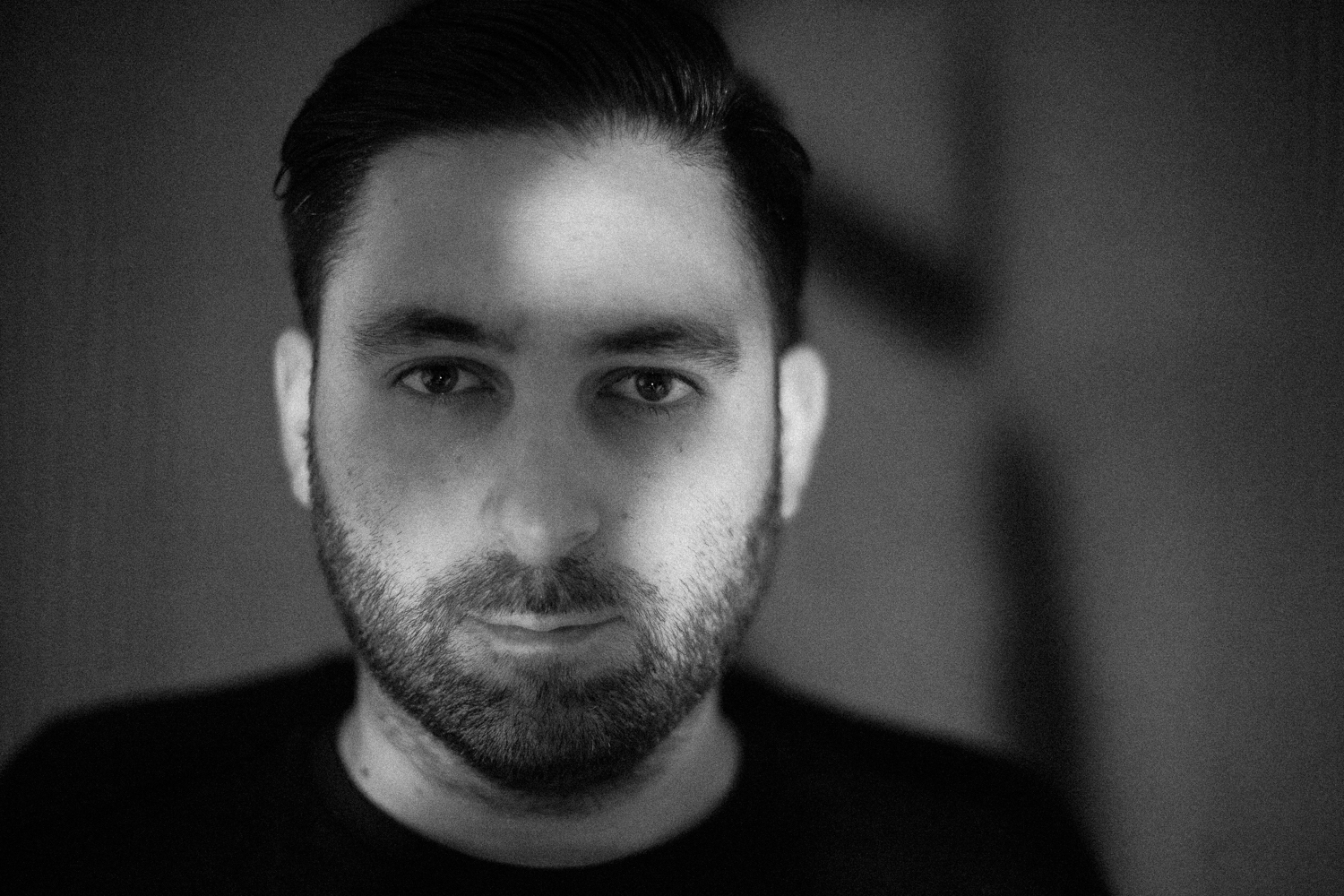
Our Real Talk series returns, this time with Cosmin TRG, formerly known as TRG, and now one of dance music’s ubiquitous figures. Throughout a career spanning almost a decade, the Berlin-based Romanian producer has released music with Hessle Audio, Hemlock, Running Back, Rush Hour, and 50Weapons, building a diverse and iconoclastic catalog in the process.

Taking cues from ’90s era leftfield electronics, warehouse techno, the pioneers of early lab recordings, and minimal film scores, Cosmin TRG has created his own brand of modern, textural sonics in a contemporary context. His flair for abstract, low-end drum section methodology and a natural propensity for sculpting arresting soundscapes have earned him a solid reputation with audiences, peers, and critics worldwide.

After a flurry of releases, including two full-length albums (Simulat;2011, Gordian; 2013), Cosmin TRG recently returned with a new two-track EP on Sportiv, his first release of 2017. Though impossible to pin down, there’s a distinguished and distinguishable sonic personality about all to that which bares Cosmin’s name, from his earlier work to his more techno releases of more recent years. But that’s what makes him the essential electronic talent that he is.

For this month’s Real Talk, he offered to explore how social media has broken the dance music ecosystem.

“Ugh, not the fucking Novotel,” I winced, muffling my disgruntled moan with my memory foam flight pillow. Air meets the eyes and feels like sandpaper, muscles ache like having just gone through the trials for a Japanese TV show, thoughts racing at Warp 10. An excruciating 50-minute flight from Berlin to Amsterdam can do that to a man.

Well now, the paragraph above is all tongue in cheek, but could easily describe the agony (or perception of it) of touring DJs. Recent events have highlighted the plight of event promoters who need to cater to artists’ requests or put up with their respective borderline psychotic management. As the harrowing affair was exposed on social media, details of the experience went viral in meme form. The artist’s lodging requirements became the object of online derision, the mobs drew blood, and privileges were checked. The trivial issue of riders surfaced again in the public eye, but wasn’t it just the tip of the iceberg? Haven’t we constructed a glamorous image of a scene, only to scoff at its inanities when they’re fed back to us?

“The role of social media has completely and unequivocally changed the dynamics of dance music, how it’s made, who it’s made for and how it’s consumed.”

The role of social media is sort of the industry’s secret of Polichinelle. It has completely and unequivocally changed the dynamics of dance music, how it’s made, who it’s made for and how it’s consumed. The “scene” is a construct, and it operates with myths, which it would rather see unchallenged because its very identity is at stake. There are many things people who work in the industry will not address, for fear the sheen would quickly wear off. However, there is an urgent need for transparency and myth-busting so we can clean out tired stereotypes.

Social media has undoubtedly had immensely positive effects on dance music. The ability to connect like-minded individuals and present them with cutting-edge music instantaneously is one of the biggest gains of our times. Geographically isolated scenes have flourished and the benefits of instant cultural communication are undeniable.

At the same time though, we are witnessing a shift in how the message is delivered. Facebook, Twitter, and Instagram have taken over traditional media as visual-based channels. How do you communicate new music, for instance, over media that’s focused on the visual and not so much on the audible?

Attention has shifted from the actual music to its visual signifiers. Crates of vinyl, rows of modular knobs and blinking lights, dusty MPCs have become the norm in the visual communication of electronic music, that caters to a form of rather passé fetishism. This, in turn, has a collateral effect on artists who don’t adhere to this visual code. Having a strong catalog is no longer sufficient; one has to master the several media platforms and produce relevant, engaging content for as many users as possible. Disgusting marketing speak, right? And yet it has come to this. The quest for likes, followers, validation is a reality in dance music that won’t go away too soon.

Here’s the deal: social networks have gone from the faceless, stateless, trans-geographic utopias of IRC, forums, and mailing lists to the carefully curated personal branding islands of sexless narcissism of Facebook and Instagram. As a social ecosystem, dance music relies heavily on communication and community; it relies on social media. But their premises do not coincide.

For dance music, art is its main product. In social media, you are the product. As such, platforms will treat artists like businesses, and not like generators of content, taste-makers or opinion leaders. For instance, through its algorithms, Faceboook has made it impossible for artists to share their music, by severely limiting the visibility of relevant posts and favoring memes, selfies, and sponsored content. Whenever you see that an artist has a sponsored account, you assume there’s some kind of corporate interest behind, when in fact it might just be that artist’s only way to make sure someone sees their posts.

Whenever I share a music video or a release that I like, Facebook offers to “boost” it for me, for X amount of money, so it reaches a certain audience. Even then, the algorithms are not transparent and you end up engaging with an army of bots that are totally removed from your real community. Some will argue that as an artist that gets paid, you’re sort of a business, so you should sort of pay for using a service. But last I checked, Facebook’s mission was to “Give people the power to build community and bring the world closer together.” There’s nothing there about making you pay for it.

Indeed, the issue of music promotion on Facebook might seem frivolous compared to how insidious the whole platform really is. Instead of merely empowering its users to have a voice, Facebook tracks their online behavior, mimics social patterns and then plies them with advertising. It essentially sells you, or a version of you, back to you.

This brings me to the critical topic of how we broke the dance music ecosystem. Music is no longer enough; we need narratives. We need online personas, we need visual aids to navigate an increasingly crammed pool of artists vying for attention. And the attention span is increasingly smaller. Technology has democratized access to music production and consumption. On the other hand, social platforms have infantilized the process and how it’s presented to the world. It’s left specialist press outlets hanging by a thread.

Look, taking selfies with your modular setup is the new taking press pics with your silver Sony headphones. Most DJs look goofy, uncomfortable, sullen or distraught in official photos because there’s only a number of things you can do with your hands. There’s only so much food on a plate that you can take pictures of and boast on Instagram.

The circuit by which release news makes it onto specialist online media outlets is in itself gradually unsustainable. In his The Ransom Note piece, Dan Cole explains the plight of contemporary music journalism: “In today’s age, I now know very few full-time paid music journalists, and out of that, a very small percentage make their living without having to supplement their income through erroneous tasks such as marketing, bar-work, or even PR. (By the way, if you are one of those operating within the duality of PR and journalism, itself being a huge conflict of interest, you are a betrayal to the cause).”

In the midst of a growing demand for a democratized scene, social media and press outlets have helped to create a dance music aristocracy. Its select few members are mentioned incessantly, as they rake in the clicks of their pious fans. Their mundane activities are turned into news-worthy material. A twitter statement on the enduring vinyl versus mp3 dispute will be blown to epic proportions. Their culinary/ lifestyle/ sartorial preferences will be paraded over several “socials,” in a thinly veiled attempt at creating shareable content.

In turn, the obsessive focus on the same 100-something household “brand” names gives the general public the impression that there is an elite group, a Super League; outside this bunch, the other artists seem like hobbyists who should really try a little bit more. One look at festival lineups and club nights will reveal a somewhat homogenous booking policy.

Again, the divide between public discourse and market reality couldn’t be deeper: as audiences and taste-makers clamor for diversity and change, bookers have to work within the confines of economic reality. Often, it becomes a game of one-upmanship where clubs compete against each other by stacking up lineups with more royalty than a Berghain anniversary for a 300 capacity venue. A delectable experience for the audience I’m sure, but one that upsets the natural dynamics of a scene and is ultimately confusing.

There is probably no quick fix to the status quo. By the looks of it, many things we hate about our scene are only going to get worse. But I think it’s absolutely essential that we acknowledge the immense progress that has been achieved in recent years and start a conversation. In a world that’s rapidly changing, and not necessarily for the better, it’s now more important than ever to send a clear, strong message of positivity, inclusivity, equality, and community that has been the pillar of dance music for decades.


Page 503 of 3781
1 501 502 503 504 505 3,781