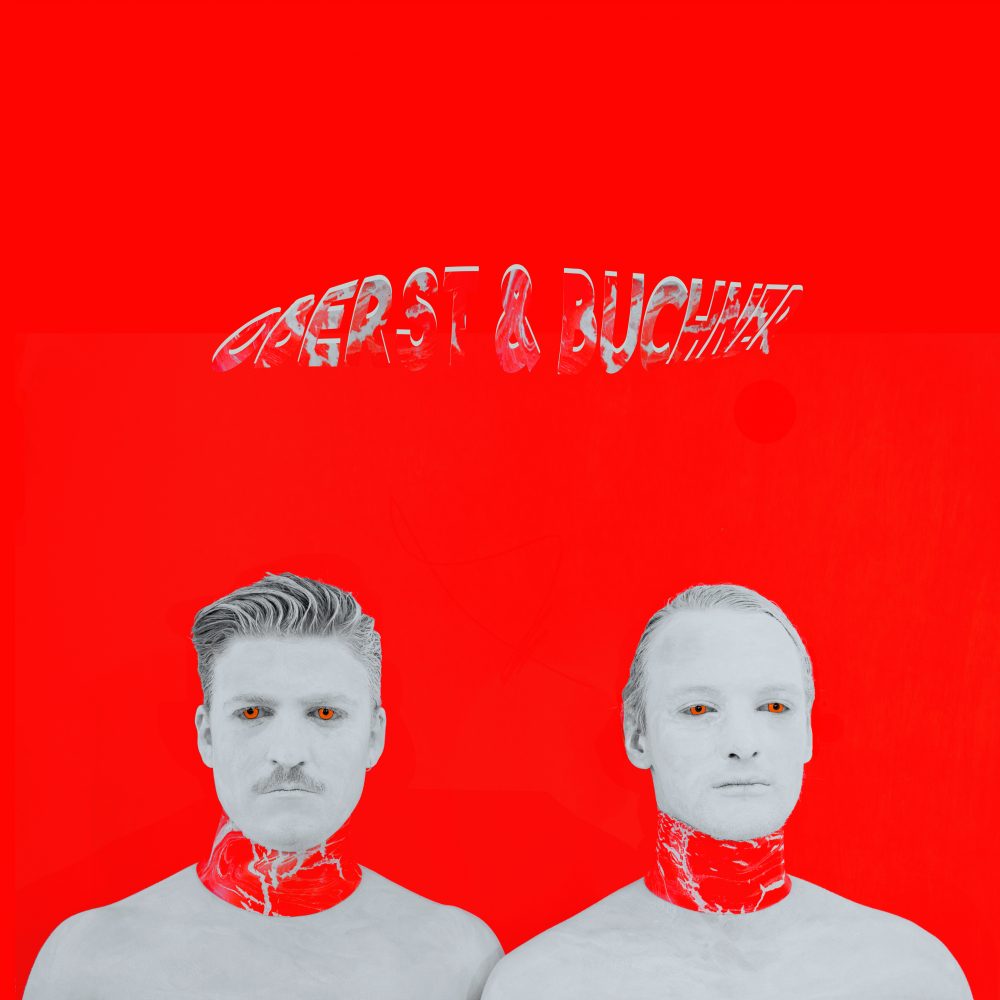
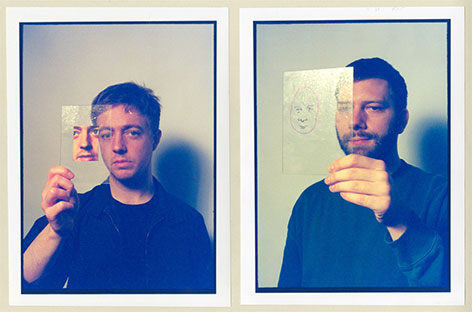
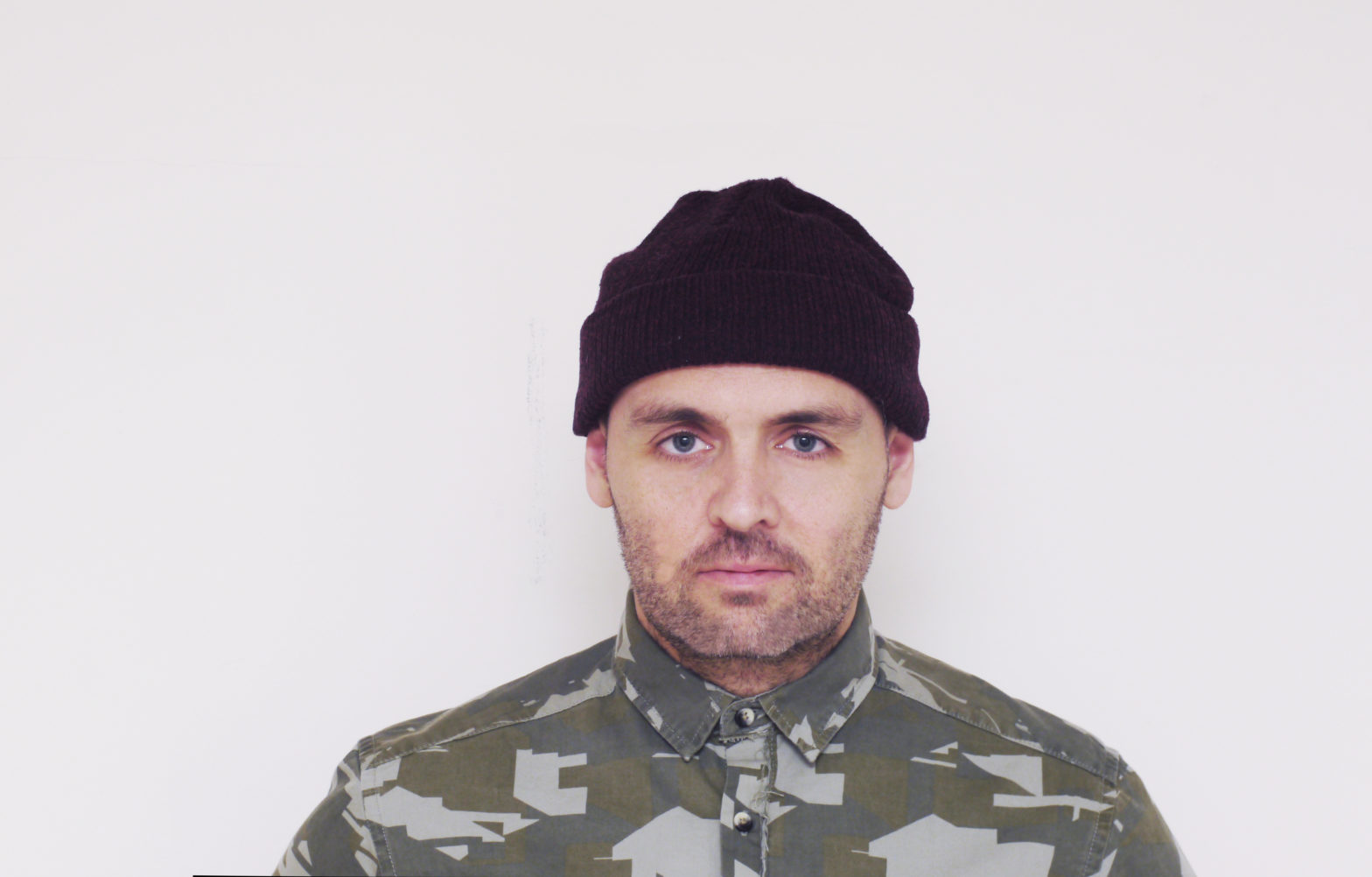
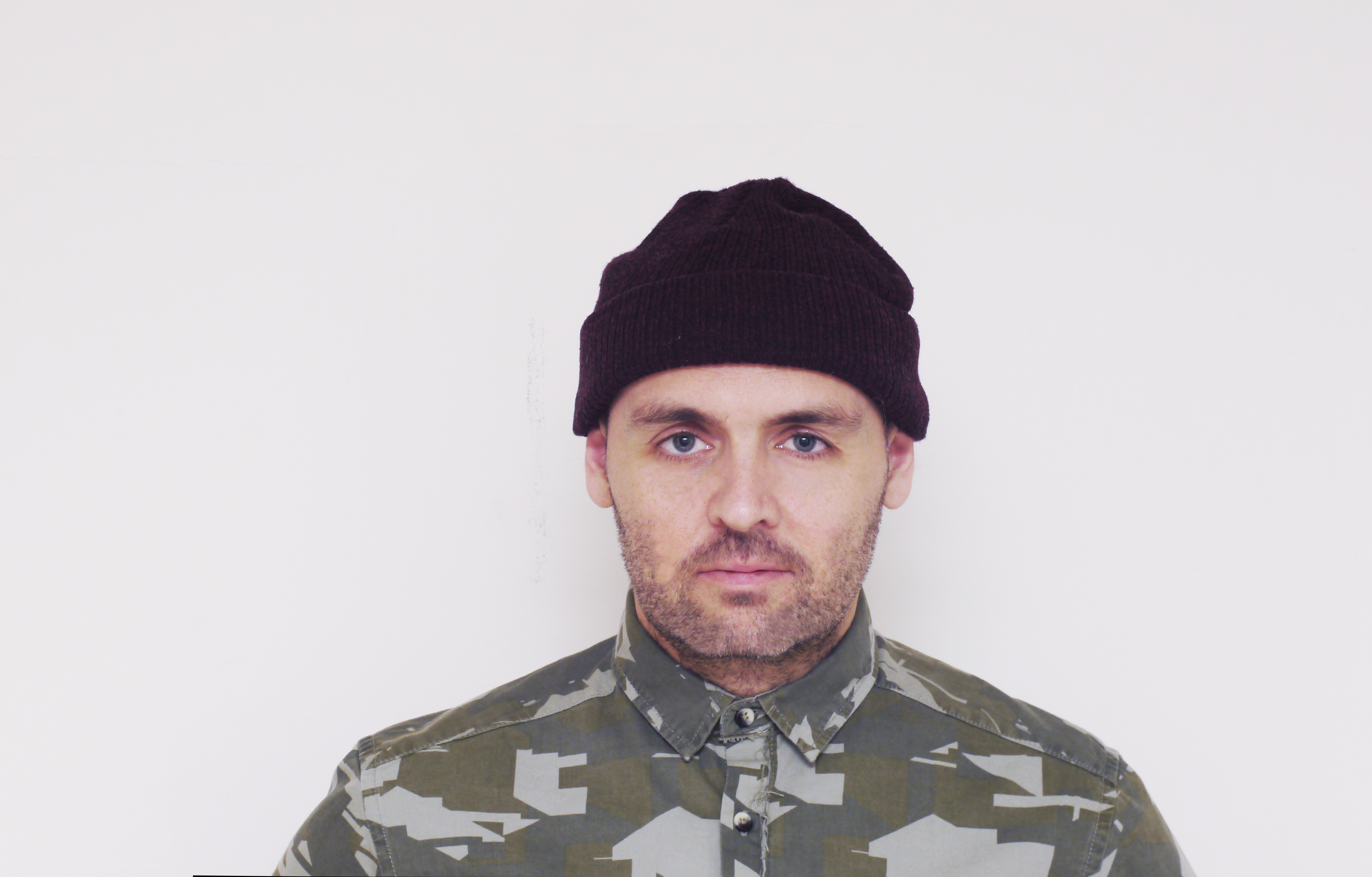
Titled Emilie, the EP offers the duo’s interpretation of what “modern summer togetherness sounds like,” with three broken-beats cuts that range from the sun-tinged opener, “Greg,” to the stripped-back, subtle grooves of “Embrace” and the melancholic wonderment of the title track. Each cut marries organic, free-flowing samples with more machine-driven elements, creating a fascinating collection of enticing sonics.
To give you a taste of the sounds contained within the EP, Oberst & Buchner have passed on the title track as today’s XLR8R download, available via WeTransfer below.
Later this week, Berlin-based producer and DJ Matthew Burton will release his latest EP, Vielen Donk.
Comprised of four original compositions, Vielen Donk will officially launch Luke Black‘s new Chord Records imprint. The four cuts on the EP all sit at the deeper end of the house spectrum, ethereal grooves that lay down the framework for what’s the come from the label, which also recently held its first event at The Rainbow Venues in Birmingham, featuring performances from house and techno stalwarts Jane Fitz, Mathew Jonson, Daniel Bell, and Magda.
To give you a preview of the EP, Chord and Burton has offered up a full stream of the EP’s title track. Opening up the EP, Burton expertly weaves intricate synth lines and groove-led percussion into an otherworldly mix, subtly developing the elements across the six-and-a-half minute run time.
You can pre-order Vielen Donkhere before the July 14 release, with a full stream of the title track below.
Having only just announced our next Ask The Experts feature, we’re now publishing our last one—this time with Guy Brewer (a.k.a Shifted), of sound artistry’s most exciting and forward-thinking figures.
After departing his esteemed group Commix, Brewer uprooted his UK drum & bass beginnings and started Shifted—a project that has become known for its mastery of sound and space, texture, and tonalities. From his debut on Luke Slater‘s Mote Evolver label, to Dominick Fernow’s (Vatican Shadow) Hospital Productions and Bed Of Nails, and to his recent recordings for his own smartly curated imprint, Avian—home to techno experiments from Alessandro Cortini‘s Skarn, Peder Mannerfelt, SHXCXCHCXSH, and more—Brewer’s work radiates in its capacity to meld to context and circumstance without artistic compromise, and at once to color outside purist lines, push boundaries, and provoke thought in a call to progressive techno, electronic, noise and experimental music as a whole.
With the intention of pushing various forays further, Brewer has also birthed numerous other projects, notably the techno-drone outfit Covered In Sand (with releases on Avian’s sister label, Mira, Ascetic House, and more) and the doomy soundtrack wielding of Alexander Lewis (home on Blackest Ever Black, Vereker’s Endangered Species). In this versatility there is a steadfast dedication to a perpetual movement forward—arguably leaving Brewer to embody a pure, unadulterated spirit of what it means to be an electronic musician: a rebel artist treading new territories with a fascination and fixation to craft brilliance with a new noise.
In this month’s Ask the Experts, he goes deep on your questions.
How do you get that analog sound on your drums and percussion? It definitely sounds like it’s come out of a modular, but is there any specific way in which you approach the drums?
I have a few modules in Eurorack format, but actually for drums I use drum machines, samplers and the computer way more. I’ll start with something, be it a sample or something I’ve made on a drum machine, once it’s recorded to the computer the grunt of the work begins.
I really like the way drums sound when they are pitched beyond their normal realm; for example, I’ll have, an 808 tom, but you won’t really be able to tell that’s what it started life as. It’ll be pitched, compressed, sometimes sent back out of the computer for additional processing and then I’ll layer it with some other kick or maybe an unpitched version or something. Then I’ll buss that and keep trying out FX or dynamics, automating or the changing the timing of things until I start to vibe off something.
I use saturation a lot on my drums, perhaps this is what you mean by an “analog sound.” Since I’m not so great at doing hours and hours of EQ work, using saturation gives me another way of gelling layers together quickly. Getting an interesting, evolving rhythm section is always the goal, in my opinion, the way you handle and mix your drums is one of, if not the most important skill to master. Sometimes I fail with the layering and have to compromise on the way that something cuts through or whatever, but I enjoy this process, I couldn’t be one of these people who just rolls with the same drum sounds because they bang on a system; to me, that’s not the craft.
“Make no mistake about it, if one thing kills this scene it’ll be mediocrity.”
You and Blawan mentioned a hyper-productivity dead-end regarding techno. How do you think techno will be like in the future? And how does reflecting on such a phenomenon influence your way of producing and your motivation as an artist?
This thing of ours is very important to me, and so, it’s obviously a conversation I’m having quite often, and hearing a lot from other artists, too. No one really knows when/if the bubble is going to burst, and how things are going to progress/regress. You just have to stick to doing what you love, put as much passion into it as possible and set your goals and standards high.
I don’t want to come across negative here, that’s for 7 a.m. conversations with my closest friends and sometimes Twitter; so I’ll say this: there’s still a huge amount of places this genre can go, so many sonic mutations that are yet to be stumbled upon, and that’s an exciting prospect. If I can add just one other thing, it would be that it’s up to labels and promoters to demand excellence. If it’s just OK, then that’s not enough. Make no mistake about it, if one thing kills this scene it’ll be mediocrity.
How do you go about finishing tracks from the stems you get from your hardware gear? Are they long jams or resampled outtakes and loops re-arranged?
I’d say both. I spend a long time recording sequences with whatever it might be, then I’ll start with editing. I can’t get a tight loop that I feel comfortable with arranging before I’ve taken my time over the fundamentals of the track, i.e. the rhythm section and whatever is actually pushing it forward. This takes real time for me to achieve since the way a Shifted record sounds is largely down to the way I process in the computer. Once I have that core base there and I’m happy with it, I can be bit more loose and live with whatever else I put over it.
“…if you are, like myself, purely experimenting and hoping to stumble upon little accidents I think it’s quite difficult to have any real formula.”
As your material relies heavily on textures, which method do you apply to keep them interesting to yourself—is their origin conceived in your head and then thoroughly transferred to audio?
I’m certainly not sticking to a concept when I’m writing any element of a track really, this is something that I consider when I’m selecting music for a release. Obviously, there needs to be some kind of line throughout, something that makes it feel like a cohesive body of work—not just some random tracks thrown together.
My last album is an exception for me. There was a concept that I wanted to use throughout the record, but that wasn’t too hard to achieve as it was about the source material and not the end result. Writing music for me is often a struggle: I sometimes have to go through hours and hours of torturous bullshit before I finally land on something worth progressing with. Perhaps people who are more traditionally musical see things differently, but if you are, like myself, purely experimenting and hoping to stumble upon little accidents I think it’s quite difficult to have any real formula. I do have processes and tricks that I use time and time again. There are also samples I’ve used in a dozen tracks, or just messed around with in different ways. I think it’s these little things that define who you are as a producer. Of course, as long as they evolve.
Do you have any regrets regarding your career, your path?
My path is exactly that. My path. Every experience I had, be it positive or negative, has made me, my sound, and vision to what it is now.
Of course, there are records I shouldn’t have released or remixes I shouldn’t have accepted, just because I wanted to maintain a constant presence. The mistakes we make are as important as the things we view as failures. Sometimes we need these lessons.
“If there’s an aesthetic quality that surrounds my work and the music I release on Avian, it’s as much informed by “Metal Gear Solid,” “Syndicate Wars,” “Rifts,” Stanley Kubrick, Frank Miller, David Lynch or Katsuhiro Otomo, as it is by anythI’vei’ve discovered more recently.”
When talking about creative process, people often focus on the tools and the atmosphere in the studio required to develop ideas successfully. Having said that, I wanted to ask you about your outside influences: is there a defining trigger in art or design, literature or film that spurs you on creatively?
I’ve definitely heard people talk about going to see an exhibition and feeling inspired to go home and create, but this isn’t really something I relate to. Rather, I think that all of us become a product of our surroundings. Everything I do and see becomes a layer of what makes me who I am. Taking an interest in the art world beyond music is something that I only really began in any more serious way at the end of my 20s. Before that, I was like a sponge soaking up everything that surrounded me growing up. If there’s an aesthetic quality that surrounds my work and the music I release on Avian, it’s as much informed by “Metal Gear Solid,” “Syndicate Wars,” “Rifts,” Stanley Kubrick, Frank Miller, David Lynch or Katsuhiro Otomo, as it is by anythI’vei’ve discovered more recently.
What do you think about releasing ambient music on a techno label? Do you think it’s the beginning of something new in the world of club-orientated music or do you think it just serves techno?
Well, I wouldn’t say this is something particularly new. Artists known for their more floor- focussed productions have been flirting with more experimental material for a long time. You only have to look a the catalogs of labels such as R&S, Tresor or Downwards for evidence.
In recent years this has become more defined, to the point that you could see a little movement. I don’t know how to describe it really; kids who are raised on techno music but who are not working within those confines? It’s lead to some incredible records, perhaps also to some very bad ones. Although whenever we have a little trend around something you can say the same thing.
When it comes to Avian, I try to balance this. The label is supposed to represent both sides of my interests. It can’t become formulaic. I don’t want a pattern that we stick to. Avian should be as fluid as the A&R process is. I like things that fall into place, rather than being hammered into position.
Have you planned any upcoming collaborations?
Honestly, after years working as part of a duo I became a little weird about collaboration of any kind. You spend so long compromising and being just one voice of two. After a while you start to crave total creative control. At least for me this was the case. There have been exceptions, the A Model Authority record with Sigha, for instance.
Recently I decided to try and make some collaborative efforts happen again. I’ve started this Drifting Over imprint. I think this could be a better platform for collaboration than Avian actually is. It’s too early to say with who though, but I’ve been working on ideas with a couple of like-minded producers. Hopefully the fruits of this will get finished and see the light of day.
What is your creative process, do you always finish all the tracks you start?
I’d say the entire process is dependant of my state of mind at any one time. Music can be effortless or a total nightmare. There are periods when I feel particularly inspired and every time I turn on the machines, I walk away with something. Other times it’s very different. I sit there with a kick drum looping around for hours on end messing around and never getting anywhere. These sessions are always recorded too. It’s rare that I’ll come out without anything. Even if its just a sound or beat I can use another time. One thing I’d say is that in these moments of creative block the only real way to shake it off it is to push through and still try to get stuff done. If you sit on your ass and avoid the studio, it only amplifies the problem.
“As much as I’m all for people letting go while writing and just letting the process take them forward, I also think there’s a certain amount of thought that should go into deciding who you want to be, what you want to represent.”
What are you looking for when you make music?
It’s a hard thing to vocalise. Trying to find a sound that is uniquely me, perhaps. This doesn’t happen when I’m jamming with synths and coming up with initial grooves. It’s in the processing stages I find whatever it is that makes something sound like Shifted. From a technical level something obviously has to work sonically and translate on a system, the hard part is getting that to working within my aesthetic.
As much as I’m all for people letting go while writing and just letting the process take them forward, I also think there’s a certain amount of thought that should go into deciding who you want to be, what you want to represent. I choose bits of equipment for each track because I know they lead me in certain directions, and I might avoid or highlight certain techniques for the same reason. I guess my point is that you have to develop a mindset or code for who you are as an artist. These type of constraints massively help you define your “sound.”
“My favourite artists have always been people that seem to effortlessly glide between styles but still never loose what it is about their music that makes it unique.”
What’s the key to staying relevant within techno in this day and age?
Mutation is absolutely key in my opinion. My favorite artists have always been people that seem to effortlessly glide between styles but still never lose what it is about their music that makes it unique. This is the difference between someone who’s just making tracks and someone who can add this intangible quality to something and make it their own. I should definitely add that I’m not putting myself in this bracket, but to reach that point should be the goal of every producer.
Right now I feel like I have to make a conscious change within my music. I feel as though with the palette that I’m known for I’ve maybe said enough or too much already. It’s quite a frightening prospect trying to bend yourself away from a place where you’ve become comfortable and try new things. Every sound has a shelf life in my opinion, and to remain future-facing and “original” with music requires having the balls take risks, even if it’s one small one at a time.
What advice could you give to a producer who would like to release music on Avian? What kind of sound/ emotion, are you looking for?
There’s certainly something that I’m listening for, but it’s not something I’m really able to describe. I just know almost immediately if it feels right or not. There have been instances where I’ve not trusted my instinct, when I’ve done it for other reasons than just feeling that initial click. Those are the times I’ve ended up regretting the decision down the line.
It’s taken quite a long time to get to the place the label is at right now. I’ve made side steps into areas, come back, changed my mind, fucked stuff up …, been lazy all along the way. But thankfully I’ve been incredibly lucky to have so many talented friends around me that have helped shaped Avian into something that I think is perhaps unique.
What drew you to become a techno DJ? What still excites you in the scene & how do you imagine its future, any personal ideas/projects/utopias?
I certainly didn’t ever plan on this, it’s something I just suddenly found myself doing. I’ve just ridden the wave and tried to make the best of it. When you think about what’s transpired in order to take you down a certain path. It’s quite interesting actually, the people you’ve met along the way who have led you into things you would never have discovered otherwise. Chance encounters that have had a huge impact on your life.
It’s amazing to me that after years of doing this I’m still able to find stuff that can make my pulse race the way it did when I first discovered electronic music. I’m excited by this global community we have, that I can go to any corner of the planet and find people who are so passionate about this music. I think it’s quite unique, you arrive somewhere and meet people for the first time, but you know you have this link. This is something that I’m proud to be a part of. People have been making techno music since the 1980s, and the scene has changed and been reborn several times over, it’s not going anywhere.
Mount Kimbie have a new album on the way, titled Love What Survives.
Love What Survives will be Kai Campos and Dominic Maker’s third LP, and their first since 2013’s Cold Spring Fault Less Youth LP—also for Warp. It is the product of three years of “intense creative development,” continually honed by the duo writing and rewriting their ideas to form something “wholly idiosyncratic and personal.” According to the label, the record’s expansive nature is indebted to the fact it was made between London where Kai Campos resides and Los Angeles where Dom Maker moved in 2016. The duo would travel back and forth to work together, cultivating ideas in intensive sessions. For Maker, putting down roots in a foreign city with its cultural differences and geographical vastness was alienating at first but it gave fresh perspective and inspiration.
The album features collaborations with King Krule, Micachu, Andrea Balency, and James Blake—one of which, “We Go Home Together,” surfaced back in April.
Tracklisting
01. Four Years And One Day 02. Blue Train Lines feat. King Krule 03. Audition 04. Marilyn feat. Micachu 05. SP12 Beat 06. You Look Certain (I’m Not So Sure) feat. Andrea Balency 07. Poison 08. We Go Home Together feat. James Blake 09. Delta 10. T.A.M.E.D 11. How We Got By feat. James Blake
Love What Survives LP is scheduled for September 8 release, with “Blue Train Lines” (ft. King Krule) streamable in full above.
Berlin’s ELSE continue its summer season by hosting the likes of Dinky, DVS1, Shifted, Hunee, Karenn, and more leading names over the coming weeks.
ELSE is the open-air institution curated by Salon zur Wilden Renate on the banks of the river Spree. During the week it is a perfect spot to spend those lazy summer days, but on the weekend it transforms into something akin to the main stage of a festival—an intense and upbeat party place where you can dance, walk around and chat with your while enjoying some drinks in the summer sun.
The upcoming Sunday lineups are as follows:
Sunday, July 16 — Dekmantel Soundsystem & Friends
Hunee Palms Trax Call Super Intergalactic Gary Tako & Jamie Tiller Lola Luc Dekmantel Soundsystem
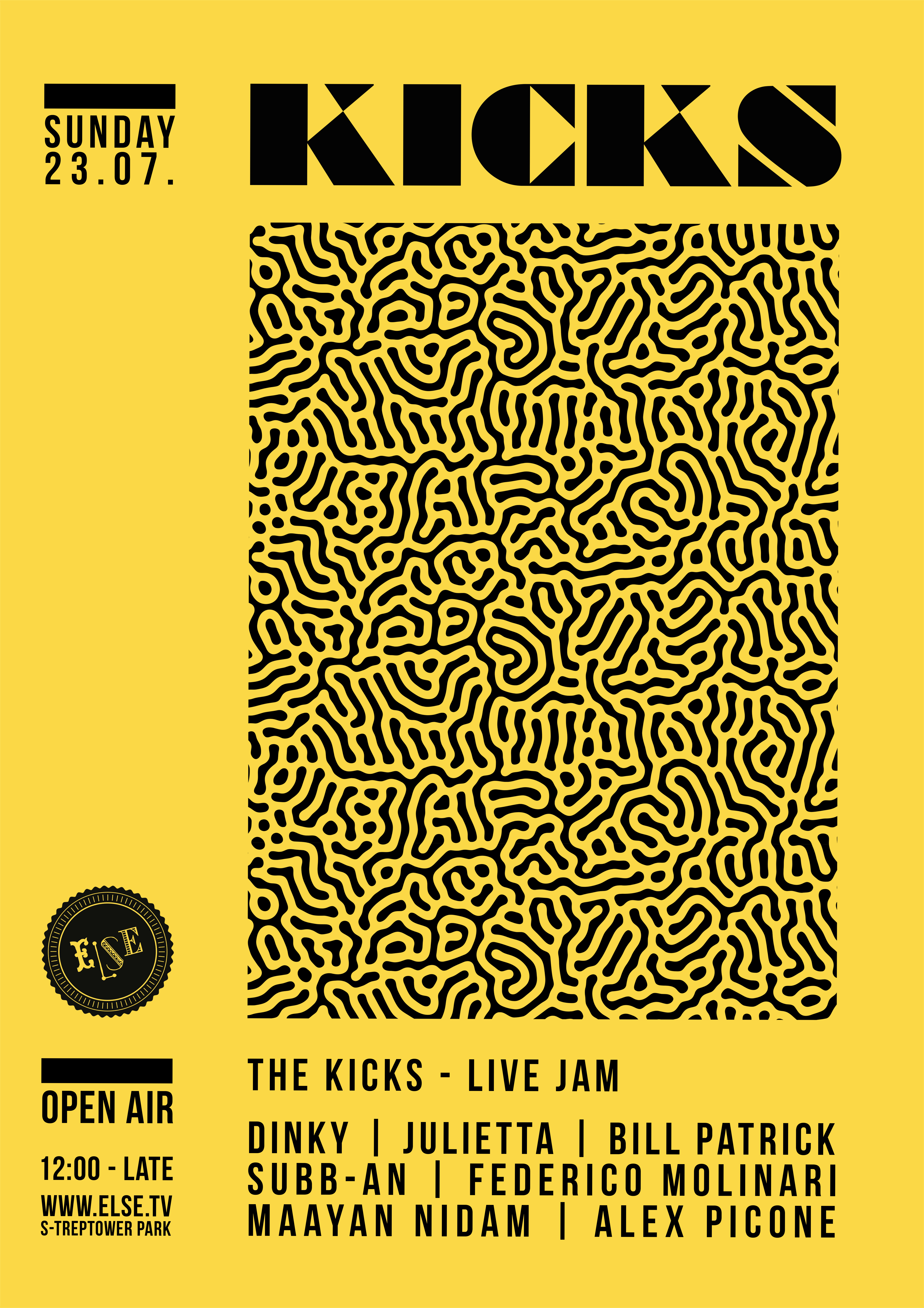
Sunday, July 23 — Kicks /w. Dinky, Julietta, Subb-an & More
The Kicks (live) (Maayan Nidam, Alex Picone, and Federico Molinari) Dinky Julietta Bill Patrick Subb-an
Sunday, July 30 — Triangle presents TTT
Ben Sims Cari Lekebusch Cleric Dasha Rush DVS1 Ellen Allien Henning Baer James Ruskin Karenn Len Faki Psyk Regal Setaoc Mass Shifted Sigha Spencer Parker Tommy Four Seven
For more information and tickets, please visit here.
Clockwork has offered up a new EP for free download, titled Age of Prime.
Age of Prime was intended as a “bigger picture” which, due to timely reasons, didn’t mutate into what it was initially thought for,” Clockwork explains. “Having recently invested most of my time in producing pianist Gloria Campaner for the OPUS 3000 album which will be out this winter amongst other productions and movie scores, I didn’t have much time to develop and follow up on work I had previously started on as Clockwork. Nevertheless, I’m happy to say I will finally be able to work on more music for this project in the near future. For now, I’ll share these two new weird cuts with you. Thanks for listening. Hope you enjoy them.”
Tracklisting
01. Age of Prime 02. Primitive Bliss
“Age of Prime” and “Primitive Bliss” are both available to download via the WeTransfer button below.
The roots of this particular project date back to 2012 when he decided to launch a re-edit series with humble ambitions of self-releasing a few white labels—but it has grown considerably from there. Having quickly found acclaim, Adesse Versions has maintained a steady stream of original productions and remixes, all of which appear amongst the edits—on labels including Numbers, Local Talk, Heist, Toy Tonics, and Crosstown Rebels. His most recent remix was for the re-issue of Leftfield’s legendary Leftism album.
Interestingly, he explains that software is the main part of his production process: the vast majority of his impressive productions have been produced using only samples, Ableton live, and a mixing desk, rather than the hardware-heavy setups endorsed by so many today. Talking here, therefore, Gorman gives five tips on how to get the best from his production approach.
Today I want to talk about a way of creating a raw and heavy sound. In particular, how you don’t need thousands of dollars worth of hardware to achieve it. We live in an age of gear fetishism: almost every week a new synth or drum machine comes out, all promising that “authentic” sound—creating a generation of hungry music equipment consumers, who think that they can’t succeed without the latest bit of kit, or a classic (and very expensive) drum machine.
So, to buck this trend, I’m going to focus on a few things that you probably already have, such as presets built into Ableton Live. Plus a few other elements that have been a vital part of my productions for the last few years.
Adesse Versions will be at Farr Festival alongside names including Craig Richards, Young Marco, and more. More information here.
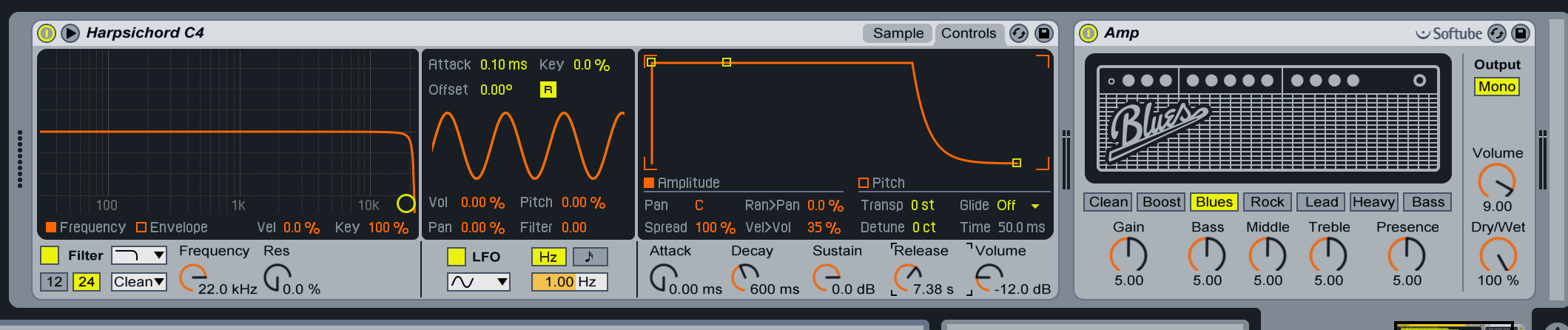
Get mono and distorted with Amp.
This has been my go-to plugin for years.
In most cases, I don’t even fiddle with the preset value. I insert it on a track and just change the dry/wet setting. Mostly I have it set to a small amount, to add crisp distortion to the highs and a boomier low end. I also leave it set to MONO because MONO is your friend (more on this later). I find Amp works best on midrange sounds—snares, claps, lead synths, and vocals. It gives a lovely boxy lo-fi effect.
Another favorite of mine is to load a synth sample (cheaper the better, e.g Casio 8 bit) into Simpler, put the spread to 100% and then insert the Amp after that. At 100% wet you get beautiful distorted mono chorus weirdness—think Hieroglyphic Being or ’80s Chicago House. Or pull down the wetness and bring in some of the stereo spread for a richer sound.
For an example of this, check the synths on my track “First Time” for Numbers. Or the drums on my remix of “Original” by Leftfield.
Use Saturator to Get Kick Drums from Chicago
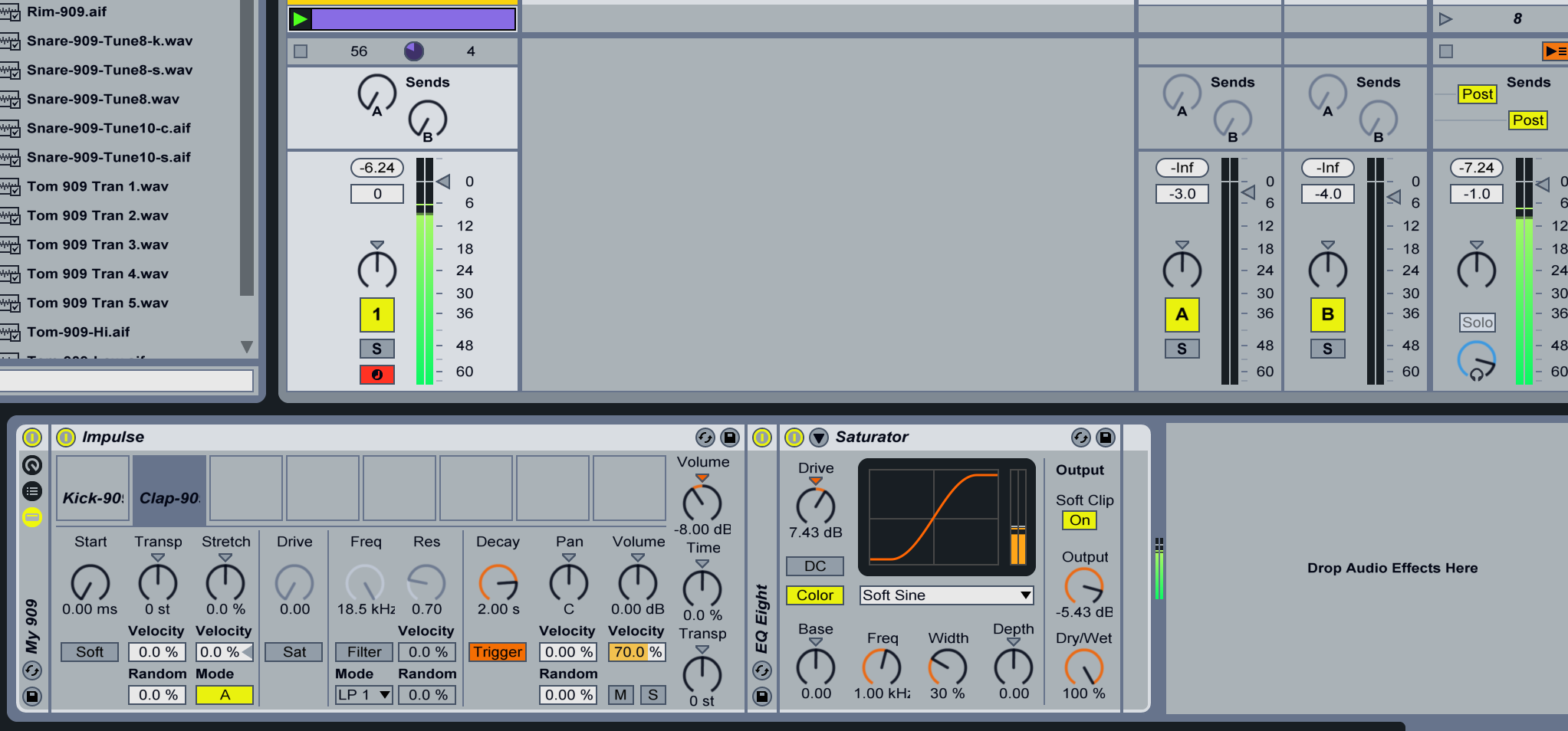
Saturator is my new Amp. I really am quite lazy. I can’t be bothered to research the latest and best plugins. I’d rather spend my time getting what I can out of Ableton Live. Though to be fair, it doesn’t disappoint. Saturation is beautiful on kick drums, especially the 909. Set it to “Soft Sine” and “Soft Clip” then gradually turn up the gain. Slowly listen to the bass start to disintegrate. I like it just at that point before it gets too obvious. I want my kicks to sound like ’90s Cajual, not Dutch Gabba.
Another tip: group your kick and clap together, then put that through the Saturator. It sounds lovely when they hit together. I’d been doing this for years with my hardware mixer, but this is equally effective—and kinder to your hardware.
Saturation is also good for adding some midrange distortion to a very “subby” basslines, to make your bass more audible on small speakers. There are hundreds of more uses for it, but that’s mainly how I roll!
Choose Mono Reverb for Raw Sounds
If you are into raw sounding ’80s and ’90s productions, mono is the way to go. Not for the entire mixdown, but certain elements. There is beauty in the simplicity and directness of mono sounds.
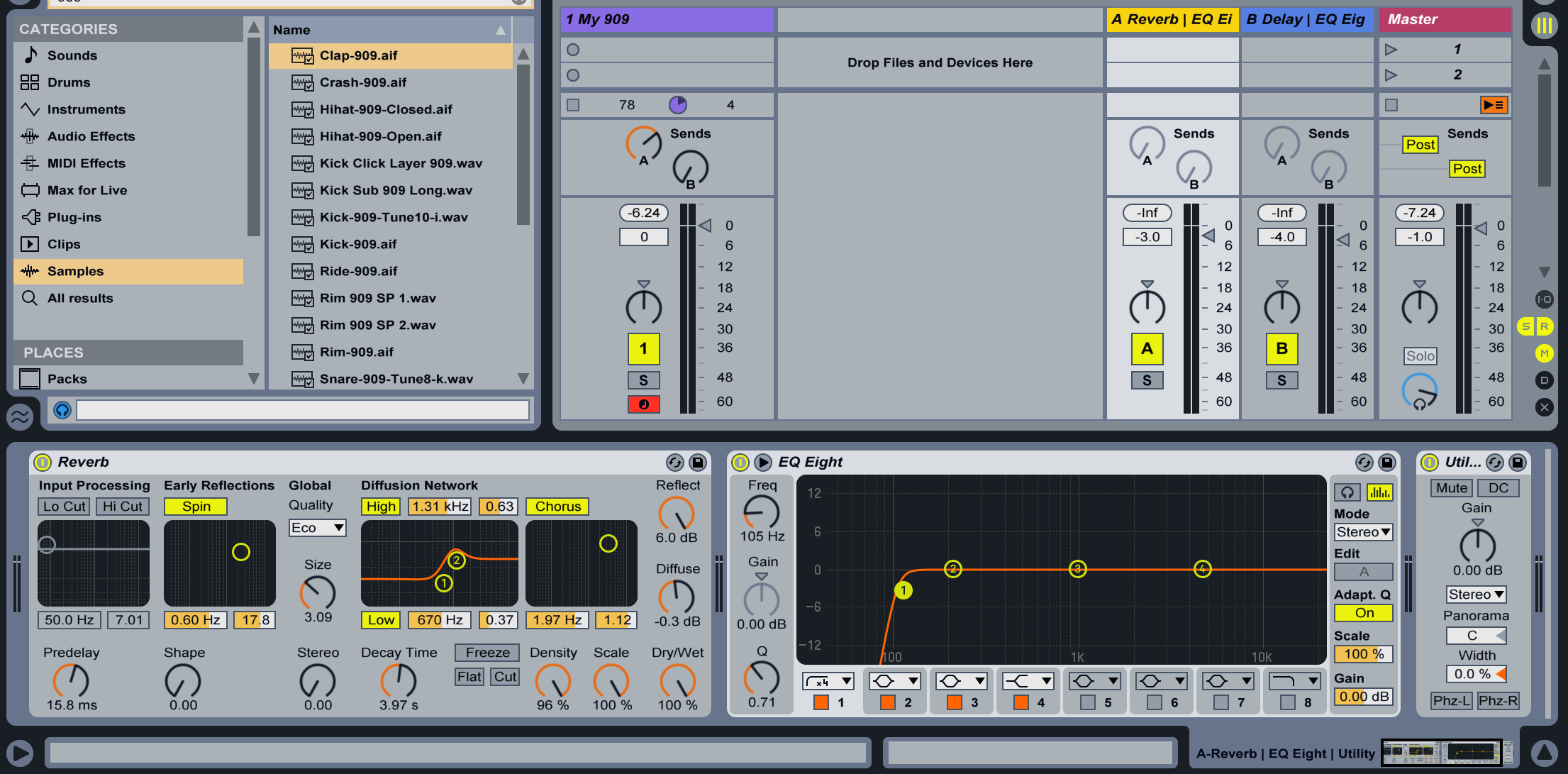
Years ago I was messing with the Ableton Live Reverb plugin and just happened to turn the stereo image to 0% (i.e. Mono). Instantly I could hear that raw and rough reverb of old records. It was direct and basic, like a Green Velvet track or even King Tubby.
For years, I’d not really used Reverb much, but now it’s all over everything I do, just in mono. Mostly, as a send and return effect, so all channels share the same basic reverb send. This is another old school trick, from when people only had a couple of effect units in their studio to call upon. I also like the Reverb plugin on ‘eco’ mode—cheap and full of character!
To hear this in action, check the track “Push It Along” on Heist. All the sounds are sent to a basic mono Reverb effect. Sometimes in subtle ways but also as a big reverberated crash at the end of sections.
Use Your Ear While Mixing Down
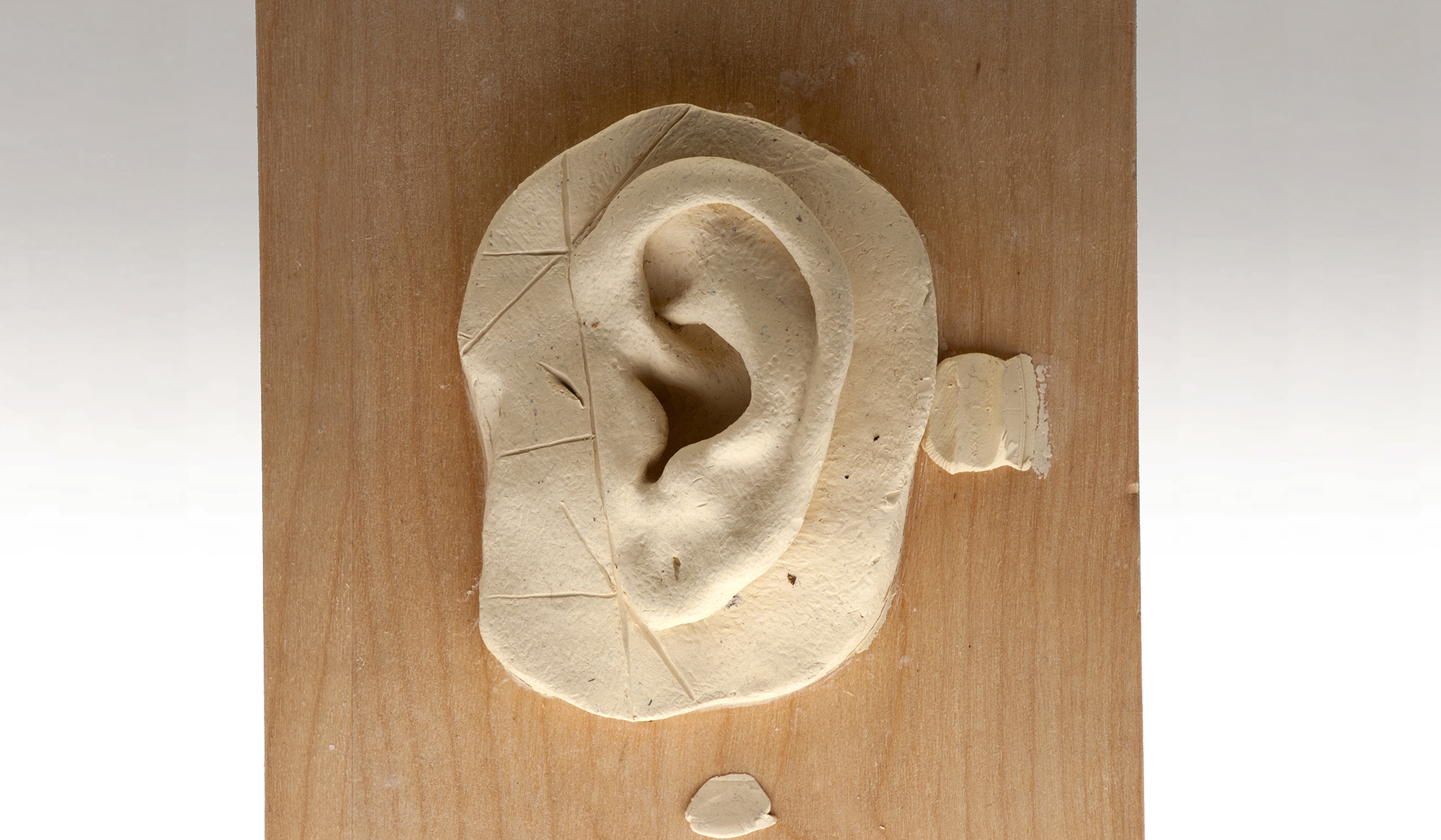
Now to a bit of equipment most of us have: ears. Specifically, just one of them. At the mixing down stage, I find it really useful to turn sideways to the speakers and hear the mix mostly through a single ear. It somehow condenses the track to the bare essentials. The subtlety and nuances are lost, so you focus on the important elements. I’m not advocating to finalize your mixdown this way, but every now and then to check back. It might not work for you, but I find it really helpful for getting focus in the mix.
One more thought about mixing down, as I know a lot of people get frustrated at this stage. Over the years, I’ve managed to cultivate an approach that really works for me. It’s hard to put in words, but I’ll try. Essentially it’s kind of an intuitive but detached attitude. So I’m listening but not really thinking too much. I’m feeling the sounds, letting my intuition guide my movements with the faders. Little nudges here and there. Going with the flow. Lots of muting and un-muting, using the ear (as above) and just generally being relaxed about it all. This is the best way for me.
Get a Hardware Mixer
So if you love a raw production sound and want to dabble in hardware, this would be my very first suggestion. Get yourself an inexpensive mixing desk. Something with decent EQ, like a Mackie or Soundcraft, easily attainable for less than £200 / $300 used. But not too slick or costly, because you’re going to overdrive the inputs and generally abuse it. eg. A Mackie 1604 is perfect.
Having a hardware mixer is boss! You can’t help but feel like Dr. Dre mixing down with real faders. But best of all, it’s the sound. It strips away that digital sheen, especially if you overdrive the signals. Likewise, the EQ just sounds so sweet in comparison to software. It’s hard to explain how, but it just sounds raw.
Of course, to use a mixer properly you’ll need a sound card to multitrack everything across the channels, but these don’t cost a lot these days; something with eight or 10 outputs is ideal. I use a Focusrite Saffire Pro 40
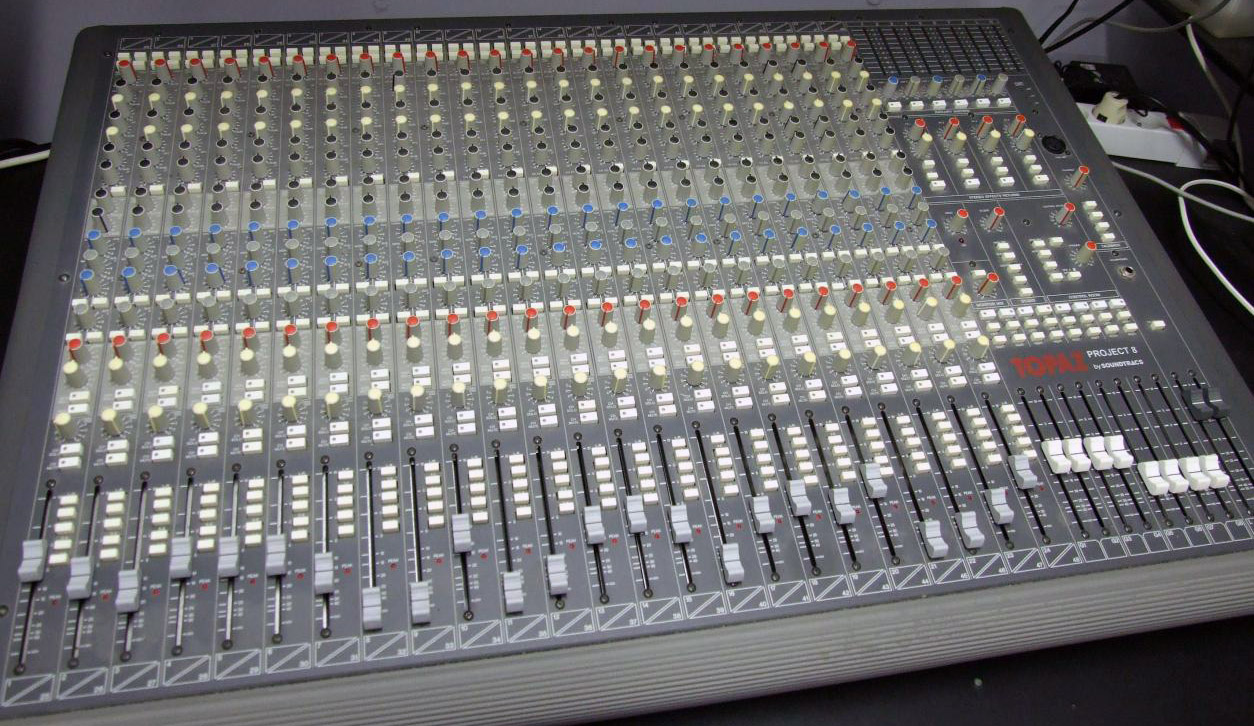
My workflow always ends with mixing down through my Soundtracs desk. I love this part. The track is complete, I’ve not heard it for weeks or months. Now I just focus on the sound and texture, pushing some elements into distortion, keeping others clean. Then sculpting everything with the desk EQ. I record the track live through the mixer and that recording is my master. No fiddling or tweaking with it on the computer, I keep it as far way from digital as possible.
Everything I’ve done since 2013 has been recorded this way. First I used a Soundcraft Spirit FX8, then more recently I’ve expanded to the Soundtracs Topaz 24-8.
Following the success of Misantropicalia on Hotflush earlier this year, Daniela Caldellas (aka Terr) is set to return to the label with a brand new track, “Midnight.” On the flip, “Outrun” (the original taken from that Misantropicalia EP) gets the remix treatment from Tuff City Kids (a.k.a Gerd Janson and Phillip Lauer).
Tracklisting:
01. Midnight 02. Outrun (Tuff City Kids Remix)
Ahead of the 12″s July 21 release, an ambient rework of “Midnight” is exclusively available to download via the WeTransfer button below.
As previously announced, the Perlon label will soon celebrate its 20th anniversary.
As part of its celebrations, the label will throw a 46-hour party in Berlin, running at Funkhaus from midnight on August 4 to 10pm on August 6, with the following lists of artists scheduled to play—both live and DJ.
The full lineup can be viewed below.
Akufen Baby Ford Binh Darren (Live) DBX (Live) Double Standards (Video) Fumiya Tanaka Half Hawaii (Live) International Anything (Live) James Dean Brown Jörg Franzmann (Video) Kalabrese Maayan Nidam feat. Julia König (Live) Margaret Dygas Markus Nicolai (Live) Melchior Productions Ltd (Live) Ricardo Villalobos Sammy Dee Soulphiction Spacetravel Wareika (Live) Zip
We’re offering up a pair of tickets to the event. For your chance to win, enter your full name and email information in the form below, and confirm your subscription to the list via email. Winners will be chosen on July 24, and contacted via the email provided. Terms and conditions apply.
Entries are no longer being accepted for this competition.
Terms and Conditions:
The promoter is, Perlon and agent, XLR8R.com whose registered office is at 837 Traction Ave #304, Los Angeles, CA 90013, USA.2. Employees of Perlon / XLR8R.com or their family members or anyone helping to set up the competition shall not be permitted to enter the competition.
There is no entry fee and no purchase necessary to enter this competition.
Closing date for entry will be Monday, July 24th 2017 at 11:59AM (PST). After this date, no further entries to the competition will be permitted.
No responsibility can be accepted for entries not received for whatever reason.
The rules of the competition and the prize for each winner are as follows: Only 1 entry per email address accepted. Must be 18 years of age or older to enter. Prize is for 2 tickets to Perlon’s 20th Anniversary party at Funkhaus, Berlin on August 4-6, 2017. One Winner per entry. Winner receives (2) tickets. (1) Winner will be chosen.
The promoter reserves the right to cancel or amend the competition and these terms and conditions without notice in the event of a catastrophe, war, civil or military disturbance, act of God or any actual or anticipated breach of any applicable law or regulation or any other event outside of the promoter’s control. Any changes to the competition will be notified to entrants as soon as possible by the promoter.
The promoter is not responsible for inaccurate prize details supplied to any entrant by any third party connected with this competition.
No cash alternative to the prizes will be offered. The prizes are not transferable. Prizes are subject to availability and we reserve the right to substitute any prize with another of equivalent value without giving notice.
Winners will be chosen at random from all valid entries received and verified by Promoter and or its agents.
The winner will be notified by email within 8 hours of the closing date. If the winner cannot be contacted or do not claim the prize within 1 day of notification, we reserve the right to withdraw the prize from the winner and pick a replacement winner.
The promoter will notify the winner when and where the prize can be collected.
The promoter’s decision in respect of all matters to do with the competition will be final and no correspondence will be entered into.
By entering this competition, an entrant is indicating his/her agreement to be bound by these terms and conditions.
The competition and these terms and conditions will be governed by US law and any disputes will be subject to the exclusive jurisdiction of the courts of US.
The winner agrees to the use of his/her name in any publicity material. Any personal data relating to the winner or any other entrants will be used solely in accordance with current US data protection legislation and will not be disclosed to a third party without the entrant’s prior consent.
Entries into the competition will automatically opt-in for XLR8R’s weekly email newsletter, The Lowdown, and any future events mailers. User may unsubscribe at anytime.
Entry into the competition will be deemed as acceptance of these terms and conditions.
This promotion is in no way sponsored, endorsed or administered by, or associated with, Facebook, Twitter or any other Social Network. You are providing your information to XLR8R.com and not to any other party. The information provided will be used in conjunction with the following Privacy Policy found at https://xlr8r.com/legal.
Later this month, Electronic duo Kalahara will drop their latest single, “Augustine,” via Black Echo Records.
The new track follows their debut single, “Wildfire,” with another stunning slice of melancholic pop. “Augustine” is the first piece of music the pair wrote together, a more stripped back and emotive affair than the previous outing. Alongside the original, Black Echo have enlisted a storming set of remixes from Bandulu Gang’s Boofy and Wu Yen (Hi5Ghost) and newcomer Art|Thft, who all twist the more mellow original into club territory.
Ahead of the release on July 21, you can stream Boofy’s bass-heavy rework via the player below.