
Artist Tips: Bonobo

Since the release of his acclaimed Black Sands album, Simon Green (a.k.a. Bonobo) has ridden a somewhat meteoric rise to the upper echelons of electronic music. This rise can mostly be contributed to his emotive, cinematic style and deft production artistry; it’s enticing pop music in the truest sense.

Although his stocks have risen considerably since Black Sands, Green’s music has maintained a logical stylistic progression rather than tipping too far over into the mainstream—listen to Black Sands, The North Borders, and his latest, Migration, for case in point; ironically, this linear progression is something Green’s latest album has drawn criticism for. Whichever way you look at it, however, Green’s consistency is never in question.

Filled with serene beauty and a slight dose of melancholia, Migration—released January 13 on label home Ninja Tune—is Green’s most sophisticated work yet, it’s a dreamlike collection of cuts that stir emotions and, at times, move the body. Like The North Borders before it, Migration features guest spots from a host of talented vocalists, this time Nick Murphy (a.k.a. Chet Faker), Hundred Waters’ Nicole Miglis, Rhye, and Innov Gnawa. As Bruce Tantum stated in his review of the album, it’s “an intricate, fine-tuned return to form, one that both soothes and thrills.”

With Migration now out in the world, XLR8R paid a visit to Green’s studio in Los Angeles to peel back the layers of the album and get the inside word on some of the techniques that led to its creation.
Offset Sample Start Positions

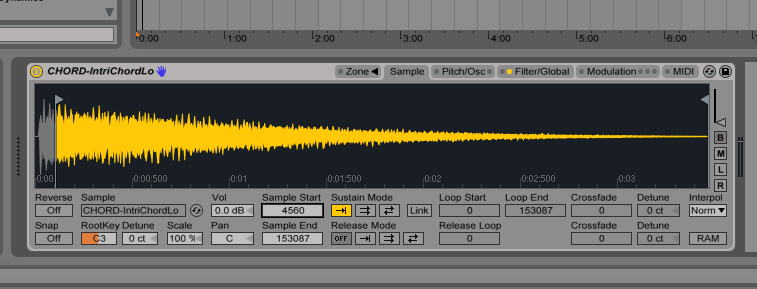
Offsetting the sample position every time the sample hits will create more random movement in short samples. One of the techniques that I first started with was offsetting the sample start position with an LFO. So if you had a hi-hat you wanted to have more movement, or if you wanted more of a glitch feel in a sample, put a Random LFO on the sample start field of the sample in Sampler—this means that every time the sample hits, the start point will shift to a random point on the sample to begin its playback. I started doing it on hi-hats but I realized you can do it on nearly anything and it gives much better variation and a more human feel to your loops. Once you start to dial in the controls of the LFO, you can really create some subtle yet interesting rhythms and movements.

CLICK PHOTO TO ENLARGE AND ENTER GALLERY

Follow Actions

Another way to create interesting ideas is to use follow actions. I would basically start with two channels: on one I would have a chopped up Rhodes with a bunch of different clips, and each clip would be a different note. I would set follow actions so that the clip would loop for five bars and then play a random clip from that channel next, which would then do the same. Then on the second channel, I would do the same thing but make the clips only loop for three bars. That way both channels are looping and changing randomly and going on indefinitely. You can select all the clips and change the follow actions for all the clips at once. So when I did this, I would create five minute renders of these melodic loops. I did three sections and bounced them out and then used it as something to improvise off. So I had John Hopkins come in and improvise to these sets of five-minute loops I had created. What I really like about this is how you have an Ableton algorithm and a pianist jamming and interacting with one another. This idea formed the basis of the title track of Migration.
PaulStretch

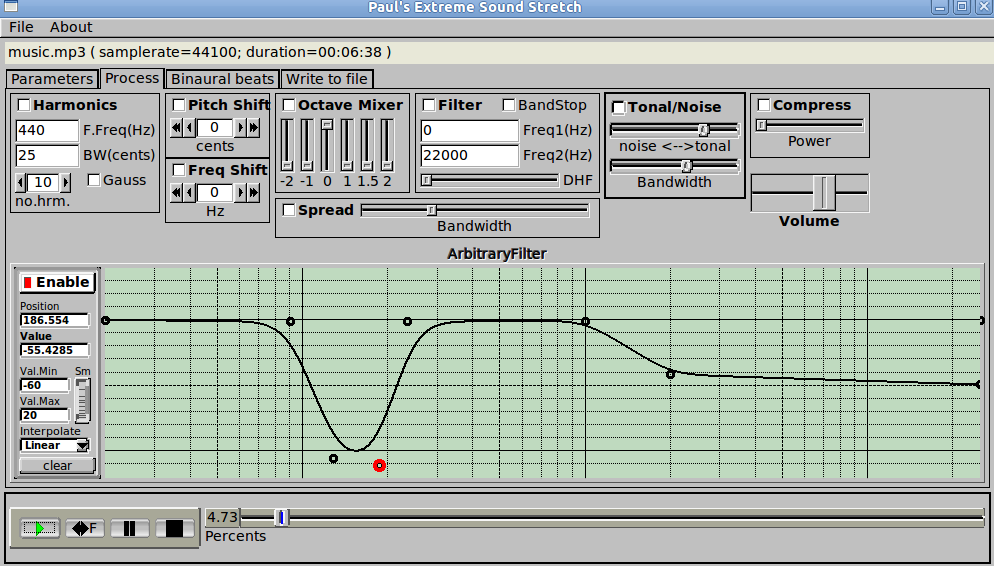
PaulStretch is a really out-there, standalone audio stretching engine. So with “Second Sun,” I took a portion of what I was working on and took it into PaulStretch and then bring it back into the track to sit low in the mix as a drone version of itself. It gives the track a good base and a haunting texture to it. I use the PaulStretch audio as a sound bed to further build the track from. It’s also a great tool to start your sets with, a palate cleanser for the dancefloor. Throw your first track into PaulStretch and it can be used to create a nice opening build up.
Effects Chains

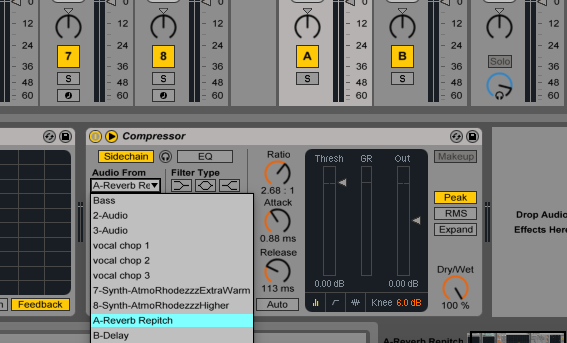
I’ve got a few return effects chains that I have built for my live set. One is a pitched, harmonic reverb chain. I start with a reverb, then the reverb goes into a driver, then a re-pitcher, and then I compress the whole thing to itself. So at the end of the chain, have a sidechain compressor and sidechain it to itself. So what happens is that the note or element will be allowed through clean for a split second before the reverb hits and comes back on itself.
Making Patches out of Found Sound

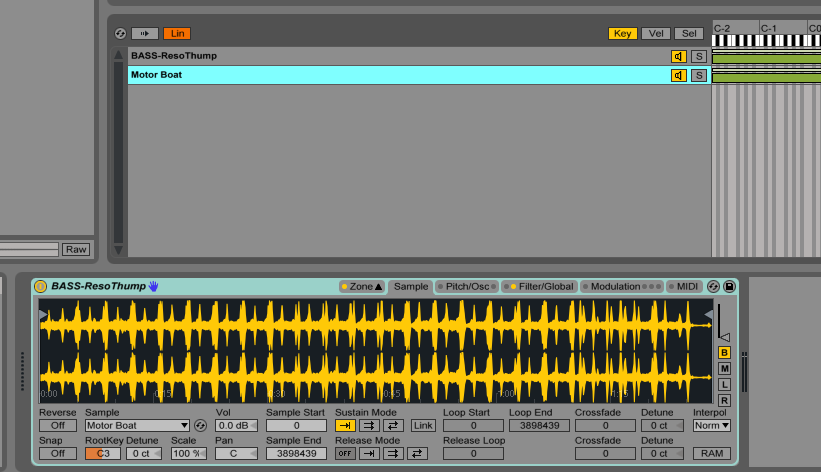
I record a lot of stuff on my phone when I’m out and about and regularly use the recordings in my tracks. For example, I was in New Orleans on one of those fan boats and noticed the really interesting texture and sound it was making. I recorded the fan and then layered it in a sampler to be the basis of a synth patch. It gives a nice alien-like sound and is an easy way to give your synth patches personality.
Vocal Treatments, Chops, and Edits

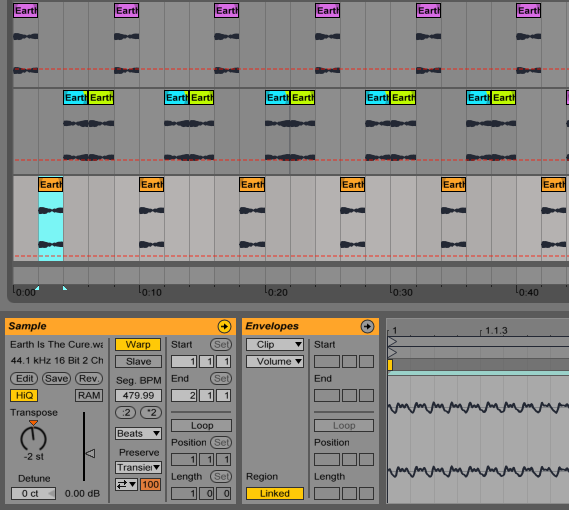
This is basically an exercise in layering. I always work with audio on the arrange page and with vocals, I like to chop up lines and take the syllables from different parts of the vocal line to create something a little more interesting. I normally start by messing around with one loop and see where it takes you. Pitch the chops up and down to create an interesting musicality to the loop. Keep building layers that work off each other in a call and answer.
Effects on Bass

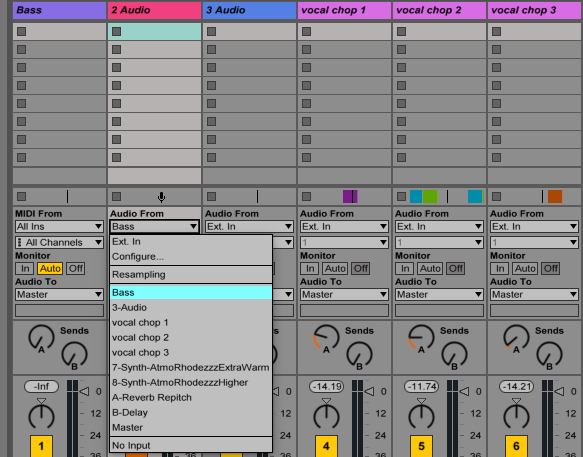
I often use a return channel to get some shape out of the bass. It’s a good way to split the frequencies of the bass so that the sub bass is clean and in mono and the higher end of the bass sound can be filtered off—have it on an audio channel and that’s where you can use effects. So start with your bass vst on one channel and then create an audio channel next to it with the Audio From input coming in from the bass vst channel. So on the audio channel roll off all the sub bass with a filter and you can then apply effects, automate the effects, and generally mess around with the bass without muddying the subs—you still have the body of the bass present but also a really interesting top end. You can use this effect on any sound with a low-end, or any sound in general—it’s a good way to split frequencies and effect just one aspect of a sound.


DVS1 Next Up in Ask the Experts; Send Him Your Questions Now

It’s likely that this month’s Ask the Experts will be a popular one. Zak Khutoretsky (a.k.a. DVS1), the artist responding to your submissions, has long been one of the most respected figures in modern techno, lauded for the artistry he brings to the DJ booth in a time where so many selectors favor practicality over musicality. The clearest example of these abilities that springs to mind came back in the winter of 2015 during a Mistress/Klockworks takeover at Berghain/Panorama Bar—where he currently holds a residency. Having performed a powerful and exemplary techno-focused set downstairs, he then explored the wider realms of his extensive 30,000-deep record collection to deliver one of the most enjoyable and stimulating house sets I’ve seen for many years. It was a fine performance by one of the world’s finest DJs.

Khutoretsky is, he says, “first and foremost” as DJ—a selector with great experience in the field, ranging from clubs all across Europe to many years throwing parties and playing records during the ’90s midwest rave scene. Away from the booth, however, Khutoretsky is also a skilled producer with a growing catalog of records on KlockworksTransmat, and his own HUSH, the label arm of his organization that also encompasses a sound company and a series of illegal parties. On January 31, he will release HUSH20, a double EP that will be the first material on the label since 2014’s HUSH03 EP. In addition to this, Khutoretsky also runs Mistress, a widely respected HUSH sub-label that “represents the pioneering home for versatile producers, sounds, and vibes which touch all corners of the dancefloor and beyond.”

Whether it be DJing, production or anything else, all questions should be sent to [email protected]; we’ll pass them along to DVS1 who will select his favorites, and in February we’ll publish the answers.

Eleonora ‘Seven Levels Of Heaven’

Later this week, on Friday to be exact, Stem Records will release its first record of the year, Eleonora‘s Thousand Thoughts Away EP.

Over the last few years, while collaborating in several jazz projects, Russian-born Berlin-based Eleonora has steadily carved an intriguing brand of emotive electronica. Here we see her join forces with Stem Records for her new EP, which is filled with broken rhythms, atmospheric guitar licks, and intricate sound design. The EP also arrives with remixes from Sei A and Will & Held, both who turn in murky reworks.

In the lead up to the release, you can download “Seven Levels Of Heaven,” the EP’s beautifully droney closing cut, via WeTransfer below.

Seven Levels Of Heaven

Into The Valley Expands 2017 Lineup

Into The Valley has added several names to its 2017 lineup.

It was announced last year that Music Goes Further, the team behind Into The Valley, would be expanding its interests, launching six new festivals over the course of the next few years. Into The Valley, which has jumped over to Estonia, has just revealed that it will host Ricardo Villalobos, Rhadoo, Kerri Chandler, and Helena Hauff, with 44 names still to be added.

Back in Sweden, Into The Factory has also had more names added to its lineup: Daniel Avery, Larry Heard, Juan Atkins, and Julia Govor. The event will be held at Stora Vika, an abandoned cement factory in the south of the country.

Into The Valley will take place June 29 – July 1, followed by Into The Factory on August 10 – 12. For more information and tickets, head to the Music Goes Further site.

Nina Kraviz Launches New Label, GALAXIID

Nina Kraviz is starting a new label.

GALAXIID is an offshoot of her well-establish трип imprint, dedicated to putting music out by experimental and avant-garde artists, with a preference for the psychedelic. It will also put out books from time to time. According to a press release, as is the case with трип, “GALAXIID will have a strong connection to art through its visual identity, with all the cover artworks drawn by psychedelic artists.”

So far, we know that the first couple of releases on GALAXIID will feature music by Biogen and Species Of Fishes. There are also plans in the pipeline to release compilations of Japanese and Russian psychedelia from the archives.

To celebrate the launch of the new venture, Kraviz will host a party at London’s recently established Printworks venue. Billed to perform are Dopplereffekt, Luke Vibert, 808 State, Bjarki, Aleksi Perälä and Russian live duo PTU.

The launch party will take place March 25, at the Printworks, London. Pre-order tickets here.

Premiere: Hear a New Track from Tim & Puma Mimi

On January 27, Tim & Puma Mimi—a Swiss-Japanese duo who describe themselves as “sushi served with Swiss chocolate for wasabi”—will drop their latest album, Der Die Das, via Mouthwatering Records.

The overtly eccentric group have been known to, among other things, use a cucumber to trigger their synthesisers to “prove how crazy triggering interface design could get,” as well as utilizing Skype during live shows to beam Puma Mimi up on a screen behind Tim to perform songs remotely from her Tokyo apartment. This quirkiness and natural tendency to explore out-there ideas also translates to their music, which is an invigorating mix of everything from dub to Japanese rap, twisted modular synth jams, and, quite literally, everything in between. To use a quote from the press release, it’s “as if Towa Tei and Lady Miss Kier of Deee-Lite ran into Giorgio Moroder at the thickest, craziest 90s rave,” then “all of them took copious amounts of mushrooms and turned into anime characters who just so happened to live in an 8-bit video game”; and to be honest, it’s a very apt description.

To give you a taste of their flavor, you can stream “Guest Book No.1,” a pop-infused cut with drunken rhythms and warped sound design, in full via the player above.

Premiere: Hear a New Track from Tim & Puma Mimi

On January 27, Tim & Puma Mimi—a Swiss-Japanese duo who describe themselves as “sushi served with Swiss chocolate for wasabi”—will drop their latest album, Der Die Das, via Mouthwatering Records.

The overtly eccentric group have been known to, among other things, use a cucumber to trigger their synthesisers to “prove how crazy triggering interface design could get,” as well as utilizing Skype during live shows to beam Puma Mimi up on a screen behind Tim to perform songs remotely from her Tokyo apartment. This quirkiness and natural tendency to explore out-there ideas also translates to their music, which is an invigorating mix of everything from dub to Japanese rap, twisted modular synth jams, and, quite literally, everything in between. To use a quote from the press release, it’s “as if Towa Tei and Lady Miss Kier of Deee-Lite ran into Giorgio Moroder at the thickest, craziest 90s rave,” then “all of them took copious amounts of mushrooms and turned into anime characters who just so happened to live in an 8-bit video game”; and to be honest, it’s a very apt description.

To give you a taste of their flavor, you can stream “Guest Book No.1,” a pop-infused cut with drunken rhythms and warped sound design, in full via the player above.

Kamikaze Space Programme Drops Foreboding Video

Sonic experimentalist Christopher Jarman (a.k.a. Kamikaze Space Programme) released Neighbourhood 002 via Neighbourhood Records back in December of last year.

The two-track EP focused on Jarman’s fascination with sound, this time manifesting itself via Eastern European Cold War radio signals—as well as providing ample dancefloor destruction. The EP finds inspiration in haunting sound from “encrypted shortwave radio used by spies for communication and espionage in the cold war era” and the Soviet government’s Duga 3 radar—which was used as a warning network for oncoming nuclear threats. Filled with foreboding undertones and relentless rhythms, it’s an EP of immense power and depth.

As a follow up to the EP’s release, the label has shared a dark video for a-side cut, “Numbers Station,” available to watch in full via the player below.

From Synth to Sync: NAMM 2017 Brings Music Gear Aplenty

NAMM 2017 has come and gone, amidst a series of rather torrential downpours in traditionally sunny Anaheim, California. Though there was perhaps less emphasis on throwback products and re-releases than we’ve seen in recent years, the show once again saw a great deal of focus on hardware, with plenty of both modular and outboard gear on display. We’ve gathered together some of the most interesting developments and products below.

Elektron Digitakt
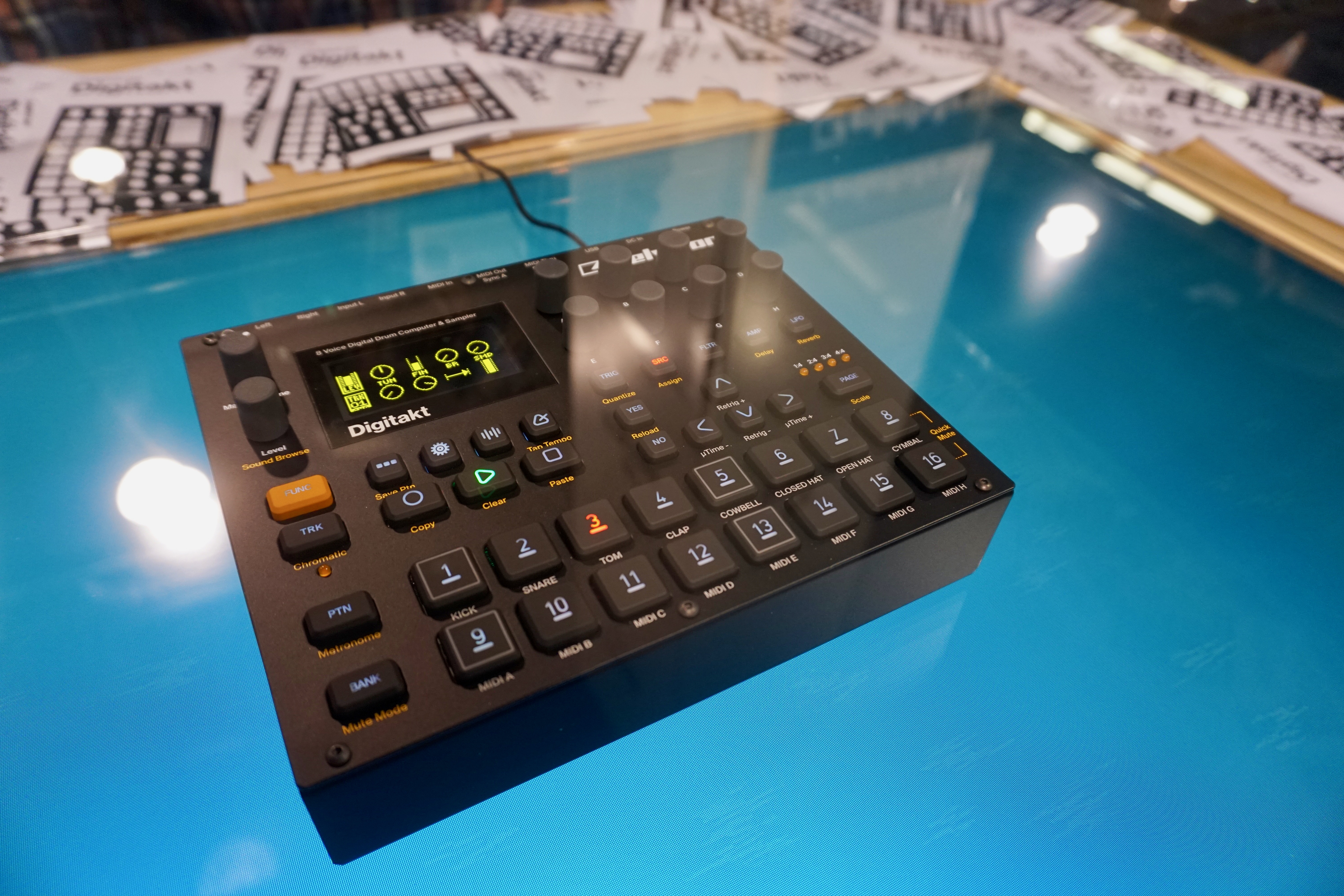
While it showed up in only a single, unfinished unit behind a protective glass case, it’s tough not to be excited about Elektron’s Digitakt. The newest from the Swedish manufacturer is an eight-track digital drum machine and sampler, and extremely capable one at that with its compact size, extremely beckoning back-lit buttons, and crisp OLED screen. It’s even got eight dedicated MIDI tracks (with Elektron’s tried-and-true sequencer onboard), meaning it can potentially serve as the hub for your other hardware machines as well. While we weren’t able to hear or use it, the device is expected to cost $650 when it launches in April.

CLICK A PHOTO TO ENLARGE AND ENTER GALLERY BROWSING

Teenage Engineering PO-32 Tonic
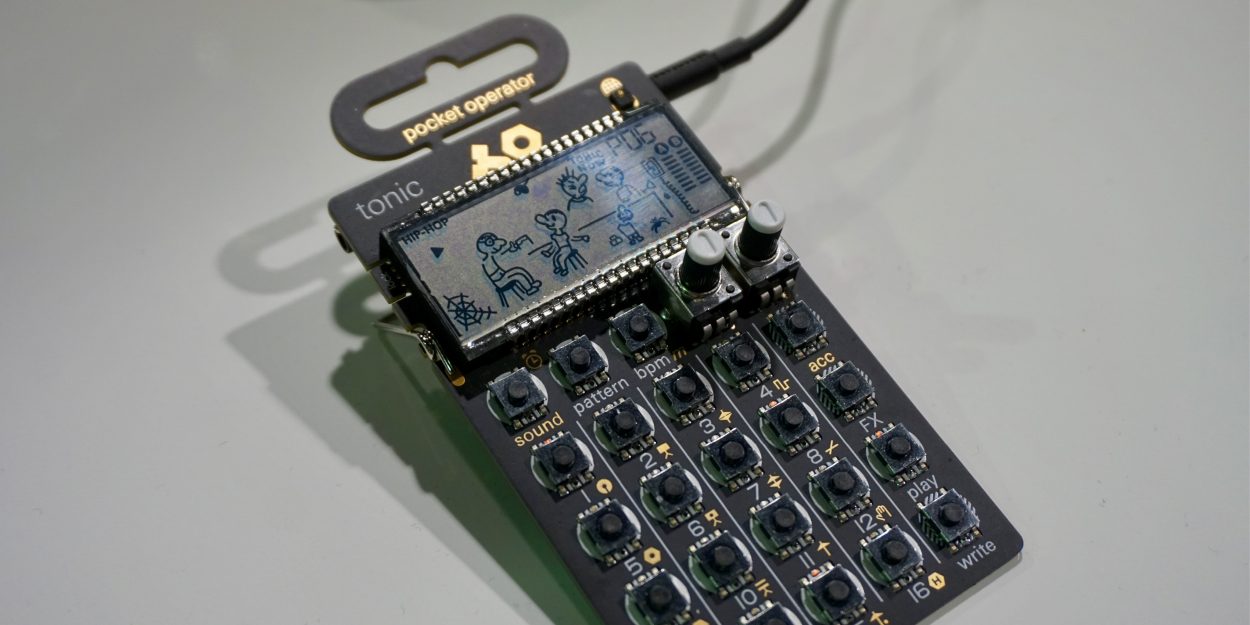
With the PO-32 Tonic, Teenage Engineering’s Pocket Operator line gets its most advanced member yet. The PO-32 features tight integration with Sonic Charge’s excellent MicroTonic plugin, and lets users transfer sounds and pattern sets over the air between their computer and the PO-32 using its onboard microphone. It accomplishes this through the same technology used by old modems (complete with data screeching), and the result feels like something akin to magic. The company also showed an updated prototype of its OP-Z synthesizer, which continues to thoroughly impress. Among other things, the device will allow users to program custom audio and video patches using a special iOS app, connect to DMX lighting and laser setups, and more—all in a device that fits in your jacket pocket. The OP-Z is expected to be released in September 2017.

Bitwig Studio 2
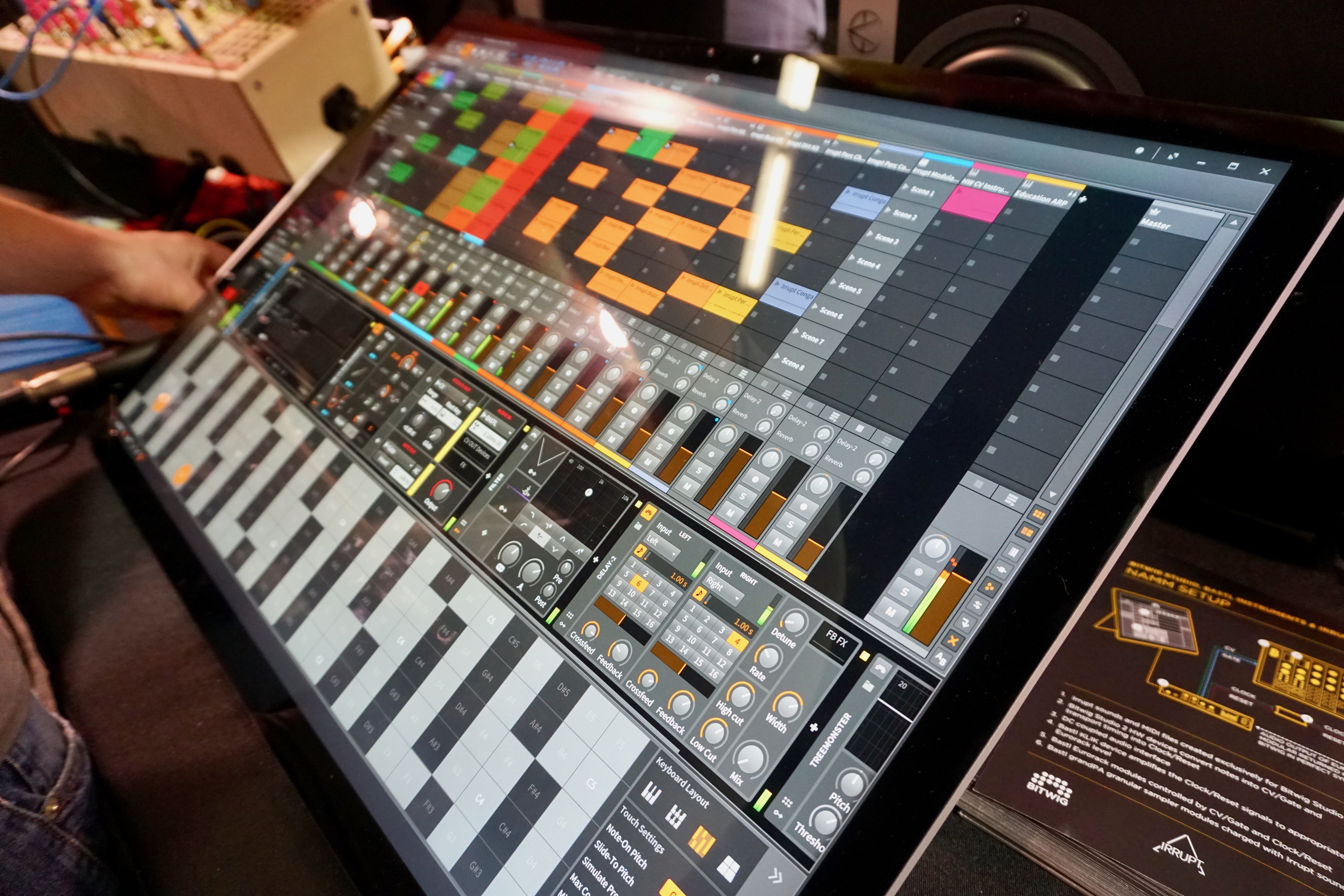
A surprise from the company attempting to give Ableton a run for its money, Bitwig Studio 2 brings an incredible amount of modulation power to the table. Redesigned from the ground up, there is now a host of new tools: effects chains are opportunities for infinite modulation via modulators, which are incredibly fun and easy to use. There’s a navigation toolbar that’s now fully customizable and results in a cleaner interface, as well as new hardware integration options: brand-new CV and MIDI devices, as well as integration with Bastl Instruments’ new Klik device for easily syncing your modular to your DAW. Bitwig Studio license holders can apply for a beta license here, and the expected release date for Bitwig Studio 2 is February 28, 2017.

Moog
Pulling a trick out of Patagonia’s Black Friday playbook, Moog used NAMM 2017 as an opportunity to show off precisely zero new products. Instead, the company used its space to celebrate some of the great musicians and music technology innovators we’ve lost in recent times, essentially transforming its rather large booth into a museum installation focused on the likes of Pauline Oliveros, Don Buchla, Keith Emerson, and Bernie Worrell. Show-goers were also able to enter into a draw to win Moog gear, by posting a photograph of a quote from one of the featured legends to social media. Amidst the commercial frenzy that is the NAMM show floor, Moog’s tasteful counterpoint served as a friendly zone for contemplation and inspiration.

Apple Logic and GarageBand

Apple’s big news from NAMM 2017 is that its music production ecosystem continues to grow and evolve, from iOS to MacOS. Perhaps most interesting is iCloud sync for projects, letting you open Logic projects on your iOS device, make edits, recordings, and additions, and then see them reflected back on your desktop machine running Logic, automatically. There’s now multi-take recording on GarageBand, as well as integration of Logic’s Alchemy synth. Apple has updated Logic with a new, flatter, cleaner UI, and the Touch Bar on the new MacBook Pro now lets you move through arrangements, access Smart Controls, and keyboard shortcuts, and even play instruments and drums. Logic’s mixing engine has been updated, as well, with a 64-bit summing engine and true stereo panning. Both updates are free and available now.

4MS Stereo Triggered Sampler and Tapographic Delay

While there were too many cool modules on display at this year’s show, 4MS unleashed a couple of beasts that were tough to ignore. Its Stereo Triggered Sampler has an onboard SD card slot for loading and saving samples, and stereo inputs for live sampling. Samples can be selected via knob or CV, and there are knobs for pitch, sample start point and length and a reverse button—essentially all of the parameters can be addressed via the patch points at the bottom, and it can be used as either a stereo unit or as two independent samplers which can also be synced to one another. The Tapographic Delay, meanwhile, is a mono in, stereo out multi-tap delay effect, supporting up to 32 taps. The buttons along the top of the module select presets, and the delays transitions between them; the pad responds to velocity, which can be assigned to VCA, filter and other parameters, while time, feedback, wet/dry, and modulation controls are on knobs and also available via CV.

Bastl Instruments KLIK
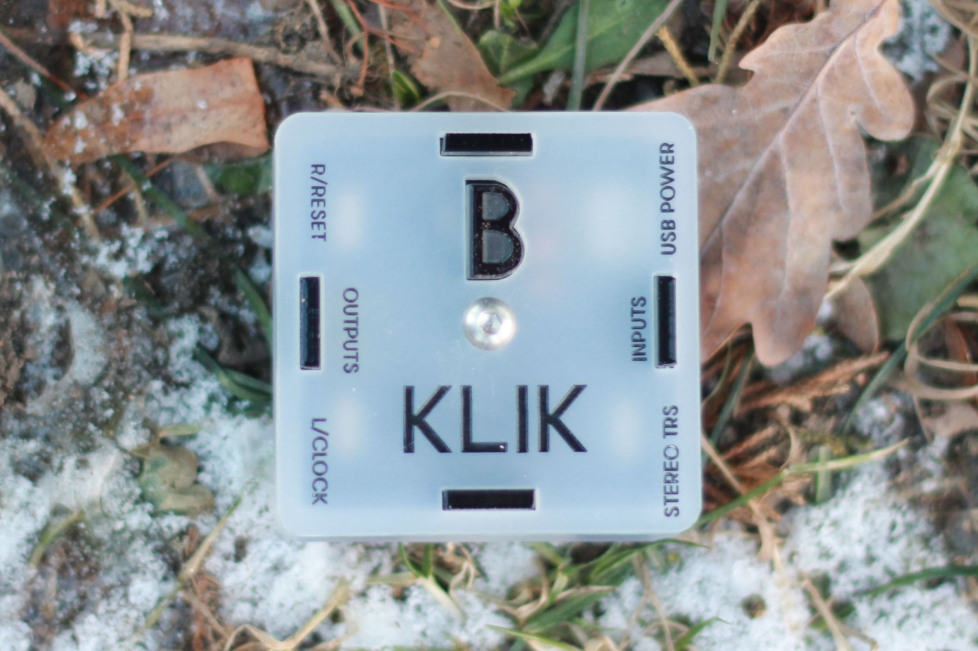
Bastl Instruments’ KLIK is a tiny sync device, enabling users to create solid analog sync signals between their computer and hardware synths. It’s old-school but effective, using audio tracks for synchronization purposes, and enabling the recording synths exactly on the grid while compensating for your sound card’s latency. You can even add groove to your clock. Bitwig 2.0 supports this device natively with a HW CLOCK device, but Ableton should work fine as well using a simple device that can be downloaded from the Bastl website. For around $50, this tiny device should be an extremely useful bit of glue for modular synthesists.

Akai MPC Live and MPC X
Akai returns to the production machine ring with two new MPC models: The MPC Live is the smaller of the two, with multi-colored LEDs, a seven-inch touchscreen where you can browse, edit and arrange, and 16GB onboard storage for samples (which can be expanded with a 2.5-inch SATA SSD/HDD). It even has a built-in battery, making this a truly portable production machine. For its part, the hefty MPC X features a 10-inch touchscreen, more controls, additional MIDI ports, as well as CV connections that allow the MPC X to control modular and legacy gear. Both the MPC Live and the MPC X will be available around March costing $1,199 and $1,999 respectively.

Pioneer TORAIZ AS-1
While the AS-1 is the first analog synthesizer from Pioneer, it’s actually a collaboration with Dave Smith Instruments, based on the well-known Prophet-6; in fact, the voice is exactly the same as the Prophet-6, with the same VCOs and filters. The AS-1 automatically syncs with Pioneer’s DJM mixer and CDJs, and the portable form factor and touchscreen keys are similar to those on Roland’s AIRA TB-3. Releases in March for $499.99.

Roman Flügel and Andrew Weatherall Remix Phil Kieran

Roman Flügel and Andrew Weatherall have remixed two cuts from Phil Kieran‘s recent album, titled Blinded By The Sun.

German DJ and producer Roman Flügel is one of the most revered names in the dance music spectrum. With his take on “No Life,” he has created a track that is powerful and also intricate. UK-born DJ and producer maestro Andrew Weatherall, on the other hand, remixes “Finds Love.”

Tracklisting:

01. Phil Kieran “No Life” (Roman Flugel Remix)
02. Phil Kieran “Find Love” (Andrew Weatherall Remix)

Blinded By The Sun Remixes Part 1 is scheduled for February 24 release.

Page 678 of 3781
1 676 677 678 679 680 3,781