Adesse Versions Creates One-Off Dubplate; Offers Up Limited Download

‘Love of the music should be the driving force…With that love, sampling can become a tribute; an expansion on ideas long forgotten.’ – Theo Parrish

How does one choose what to re-edit? Was it because the album art jumped out at you while digging through an obscure crate in some obscure place? Is it because the track is sentimental? Did the idea come to you in a dream? Maybe it’s just because the track has just the right amount of gaps to make it something worthwhile. For Adesse Versions (a.k.a Kevin Gorman), one of the world’s leaders in crafting tasty edits and using wondrous samples, all the above and more could be true. Despite this, sometimes the ideal track for a re-edit does not come from within, but from the outside.

Back in September, Adesse Versions asked his global network of fans to take part in a special dubplate competition by throwing out edit suggestions on his Facebook page. The person with the best submission is to receive a 100% exclusive dubplate of the edit, an idea that was born out of a desire to interact with his listeners and “poke some fun at the Discogs rarity thing.” After numerous suggestions, Gorman has chosen his winner and has decided to offer up a free download of the edit via XLR8R for a limited time.

The Winner: “Souvenir Glacé” by Testpattern

Suggested by Ahmed Belkhodja of Switzerland

Adesse Versions Re-Edit:

You can download Adesse Versions’ “Souvenir Glacé” below via WeTransfer.

Download ends on 07/16/16.

We caught up with Gorman to investigate his motivation behind the dubplate competition, his white label, and the current state of vinyl culture.

What brought about this idea to take edit suggestions?
“Basically, I’d run out of ideas for things to re-edit, then I realised I could just get people on Facebook to do all the hard work for me. Okay I’m joking…”

“I often end up chatting with other artists and music fans about the tracks they’d love to see remixed. Everyone has that ‘one record’ they’d love to hear updated. I’ve also read quite a few posts in forums listing forgotten gems. So with these in mind, it seemed an interesting idea. Also, it was a great opportunity to interact with people on Facebook. I have love/hate feelings about social media, so I’m all for doing something with a bit of substance like this. As opposed to just posting about myself eating a Filet-O-Fish.”

“At the same time, I’d seen my ADV white labels going for silly money on Discogs. So I thought it would be funny to do the rarest possible release on my label, with just one copy cut. I wouldn’t be surprised if some others claim they have it in their Discogs collection.”

What was it about “Souvenir Glacé” that caught your attention?
“For me it had the golden formula—simple and interesting melodies or vocals and little or no percussion. It also had a different vibe to the music I’d been sampling recently, which had been very 70s and dusty sounding. Glacé is much more eighties and synthesised, so I knew the end results would sound fresh and different. The lack of bassline was also a bonus, so I took inspiration from a 90s DnB classic and dropped that into the mix. This reggae style bass lent itself to some Smiley Culture style piano stabs too, this and a few 707 drums finished off the edit nicely.”

Was there a close second? Third?
“Yes, there were lots. Especially a Seu Jorge track and one by A.R. Rahman. I’m going to send both of these guys a copy of ADV1, the first Adesse Versions white label (and rarest one on Discogs). Of the others, there were so many good suggestions. The thread is a goldmine for producers like myself.”

Can you see yourself doing this again in the future?
“Yes definitely. Now that you guys have kindly spread the word, a follow-up might even be more interesting.”

What is it about white labels that you find appealing?
“I like the simplicity of them, the directness. However, I’ve only done white labels as Adesse Versions because of the sampled nature of the music. It was never because I worship white labels and all that guff. I don’t like these artists making completely original music and doing vinyl only limited runs. Having lived in Asia, it’s really frustrating when labels do this. It limits what original music you can buy. Sure it’s cool and everything to say ‘vinyl only,’ but what about people in South America or Africa? Or Australia and New Zealand? At the very least set up a Bandcamp page and share your music that way. White labels are for bootlegs, re-edits, heavily sampled material. As a platform for original music it’s a bit pretentious, people please enough!”

How do you think the inflation of records on Discogs (Like your ADV1 record) is affecting vinyl culture?
“I have mixed feelings about this. I understand that it’s frustrating for record buyers. However as an artist, it doesn’t do me any harm to have a rare record. I don’t really like people selling my white labels for big $$$, but I can’t stop them. Visual artists make limited edition prints and charge big bucks for them. Later on, these get even more expensive. At least in the music world you have an opportunity as a buyer, albeit limited, to pick up the records for $10 each.”

“I’m not going to lie, it’s flattering when somebody spends $100 on one of my records. But at the same time, I do feel guilty to the fans who can’t afford to buy something that has long sold out. As much as I don’t like the Discogs sharks, I also get annoyed by the vinyl diehards proclaiming that ‘all records should be no more than x amount.’ Like there is some kind of vinyl moral code that we should all adhere to! If I can accept that dealers totally unconnected to my music make a profit from it, then everybody else should be able to. Just follow the Facebook pages of artists you are into, set up Juno alerts etc and be first in line. If you miss out then move on, life can exist without that special record. Or even better, learn Ableton Live and start making your own edits.”

Infrastructure Facticity

Founded in 1998, Infrastructure New Yorkstands at the crossroads of almost two decades worth of techno history and progression. Launched by David Sumner (a.k.a Function) in 1998 after a number of releases under the essential Synewave imprint, Infrastructure served as a personal mission statement of sorts; an outlet that allowed him to flesh out his techno blueprints unrestrained.

Before joining the now-defunct Sandwell District collective alongsideRegis, Silent Servant, and Female, Sumner successfully managed to build a modest but fully self-sufficient discography on his own label. Following the imprint’s 2014 resurrection with Support from Ed Davenport (a.k.a. Inland), Sumner has made it clear that his unwavering vision and constructive hardheadedness remain intact. 

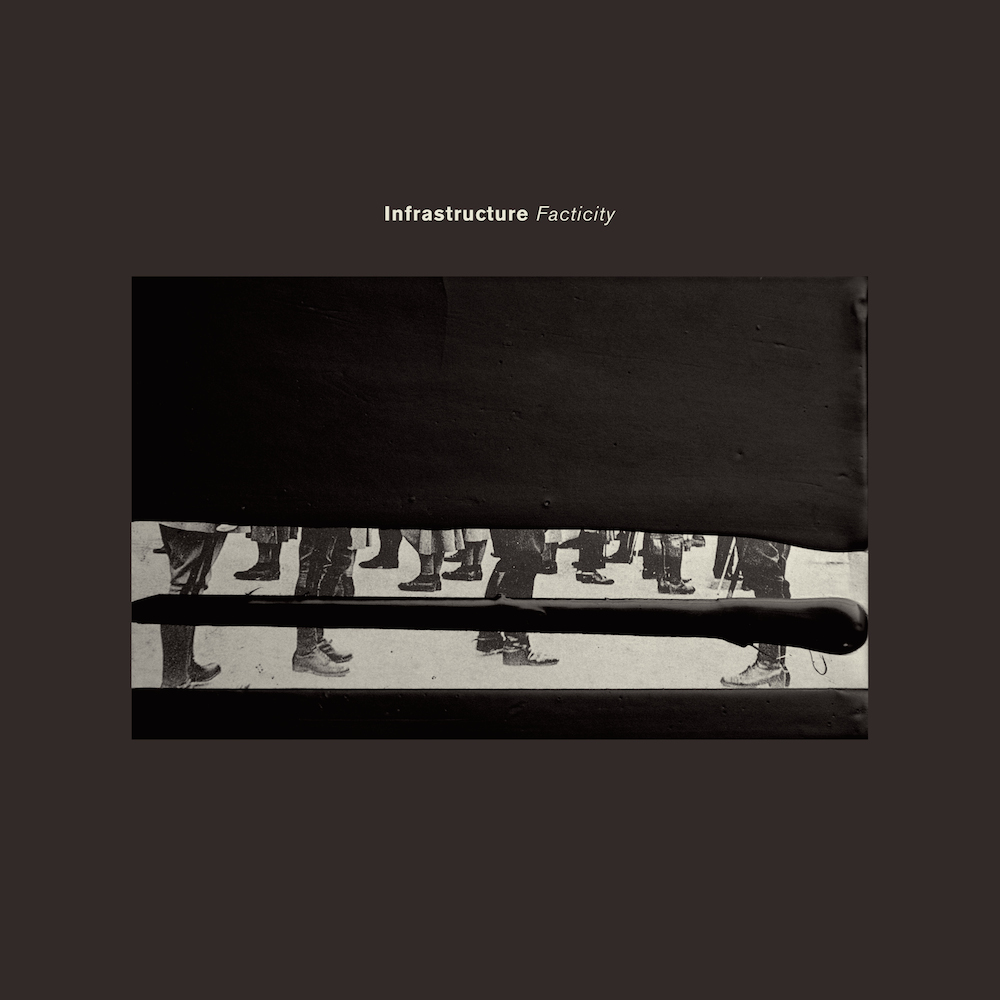
Facticity, a 15-track compilation that brings together new contributors and longtime friends, provides a moment of clarity in retrospect of the label’s achievements. As a cross section of Infrastructure’s own aspirations and as a contemporary survey of music from the intersecting techno, noise, and ambient family trees, the release is phenomenal. It operates on a versatile spectrum stylistically, indicative of Sumner’s own ventures in atmospheric, industrial-tinged work.

On one end, Inland joins a Cassegrain and Tin Man collaboration in delivering minimal, acid-dipped warehouse cuts. On the other, Silent Servant wields a wall of rough textures amidst a chilling ambient piece to give the collection a fitting end. In the middle, however, Rrose and Vatican Shadow lead the charge in supplying tracks that sound unassigned to either a club setting or lone headphone use by design. With only a tenuous connection to techno tropes, many such compositions give the whole grouping a uniquely multidimensional characteristic. Collectively, these hybrid pieces elevate the assemblage to a higher ground than most straightforward dance offerings aspire to.

Further, the compilation can’t be pigeonholed as an exercise in unchecked darkness. For all of the seemingly foreboding elements that hang over it—from the the bleak cover art to the widely publicized dissolution of Sandwell District—Facticity delivers refreshingly genuine glimpses of light. With a stage set by Campbell Irvine‘s delicate, etherial intro track, “Dislocation Is Only The Beginning,” Davenport and Sumner are careful not to hit listeners over the head with too much density and heaviness in a single dose. 

Despite a broad-based approach to song curation, Infrastructure’s latest is by no means an easy listen. As neither an immediately club-ready batch of tracks nor a full outing through more experimental electronic territories, Facticity requires a particularly conscientious and patient listener.

On the other end of this journey, however, lies a highly dynamic body of work that looks well beyond the dance floor to take stock on one of techno’s most fascinating trajectories.

Tracklisting: 

A1 Campbell Irvine – Dislocation Is Only The Beginning
A2 Vatican Shadow – Swords Over Paradise
B1 Rrose – Cephalon
B2 Cassegrain & Tin Man – Polyacid Blue
C1 Inland – Acidalia
C2 Post Scriptum – ISDAT
D1 Steve Bicknell – Passage Through Darkness
D2 Cleric – Concrete
E1 Blue Hour – Averting
E2 Function – Low Lights & Trick Mirrors
F1 Efdemin – Kassiber
F2 Post Scriptum – Donbelief
G Cassegrain & Tin Man – Open Sea
H1 Function/Inland – Colwyn Bay
H2 Silent Servant – End / Optimism

Infrastructure New York will release Facticity on June 17. Click here for pre-order.

Real Talk: Marquis Hawkes

Real Talk’ is a series of artist-penned essays that appear on XLR8R from time to time. 

Since his 2012 debut on Glasgow’s Dixon Avenue Basement Jams, the raw, ghetto influenced stylings of Marquis Hawkes have become very distinctive; however, we can’t say the same thing about the character of the man himself. Back in 2013, the Berlin-based producer featured in our Bubblin’ Up series, and made the point that you “almost say more by saying nothing these days.” All these years on, with a number of releases on the likes of Clone, Aus and Creme Organization to his name, he’s managed to maintain that elusive front, and we still can’t be all that clear on the man behind the music.

This year, he dropped his debut full length via Fabric’s in-house label Houndstooth. The album was inspired by his surroundings, when he had to move to an East Berlin social housing estate upon his wife falling pregnant (hence the release’s title). Comprising 12 previously unreleased tracks, it tells a story of the positive impact that period had on his music making and general life, and seeks to highlight that such schemes shouldn’t be viewed in a negative light. Social Housing even comes complete with artwork courtesy of Detroit’s Alan Oldham, an interpretation of their living conditions.

Following the album’s release, Hawkes has kindly weighed in on our Real Talk series, penning an essay on the matter of the ongoing battle between digital and vinyl DJs. Having been active in the music world for roughly two decades now (for many years prior to his debut release), touring the world’s club circuit and experiencing many a DJ booth, he strikes as the right man for the job. In light of his recent switch to digital DJing, perhaps he could even be the man to sway a few of the diehard turntablists out there.

There’s been a lot of debate recently surrounding the effect technological advances have had on the world of DJs and DJing. As a regularly touring DJ, I felt I wanted to share my own experiences, which have led to my own opinions and views on the subject to be formed. By no means do I feel my opinion is definitive; it’s just an opinion, but it is formed from being on the road, and having to DJ in often demanding circumstances.

I was a die-hard vinyl DJ for many many years, resistant to change, particularly as I’ve been a DJ for over 20 years now. We started out with vinyl because there was no way of playing any other format at a party. Back in the day, it was mostly two 1200s/1210, sometimes crappy belt drives if you were unlucky, often combined with a crappy mixer with no EQ on the channels—and you were lucky if the crossfader worked at all.

Later, I was listening closely to the ethos propagated by people like Theo Parrish, which I very much identified with at the time, that vinyl DJs would whoop the digital guys’ asses every time. But after a bit more time and experience as a touring DJ, I’ve come to my own perspective: I’ve decided that the issue is much deeper and more complex than that.

Within just a few months of my DJ career starting to take off, I began to notice that it was not uncommon for the vinyl turntable setups to be substandard, sometimes even to the point that it was impossible to play records, never mind put in any kind of respectable performance that properly represented my skills. In many of the bigger, more established and more professionally organized event locations, measures were taken to ensure that artists could play vinyl without problems: the equipment was checked regularly, and then repaired and replaced when needed; there would be a competent sound engineer on hand at all times, and there were always some fresh needles available should the ones on the tone arm become too worn for good sound reproduction. This setup would then be maintained to a sufficient degree to ensure that was was no chance that an over enthusiastic audience would cause the needles to jump, and there would be no issues resulting from these vibrations feeding back to the surfaces upon which the turntables positioned, causing massive out-of-key sub bass to emanate from the speakers.

But even the biggest DJs aren’t playing venues with such well maintained setups at every gig, and now even some of the more established locations are tending not to bother so much with maintaining turntables as it becomes increasingly rare that they are requested given that the majority of artists that are asking for two, three or four CDJ 2000s.

“With CD decks, the needle is never going to skip when you are cueing backwards and forwards over the first beat. Vibrations from the PA are never going to cause feedback, and a track is never going to skip just because the crowd got a bit too wild.”

For this reason I slowly started to record my records, copying the tracks across to USB sticks—and I also started buying new files here and there, initially just for “emergency situations” where the turntables were in an unworkable state. It was purely a precautionary measure.

But as I became more experienced and comfortable with using CD players—as I’ve never owned a pair, and still don’t to this day—I found the process of playing on them easier in a big, big way. With CD decks, the needle is never going to skip when you are cueing backwards and forwards over the first beat. Vibrations from the PA are never going to cause feedback, and a track is never going to skip just because the crowd gets a bit too wild. A skipping record is going to slow you down in the beat matching process, often meaning that a particular, crucial point where you might want to bring a record in might be missed. The challenge can be exciting sometimes, but downright disastrous in other situations, particularly when the majority of your audience isn’t going to understand the various challenges of playing vinyl.

A vinyl turntable needs to be serviced regularly. Particular attention must be paid to very, very subtle factors, such as a platter slightly losing time or speeding up, or even both. But even when that attention to detail is applied, it’s still a fact that it becomes impossible to maintain synchronisation of two pieces of music as accurately as a digital system of any kind could.

But here comes the rub: more and more often, the bar of beat matching prowess—at least in the ears of the average listener on the dancefloor—is being set by a majority of artists who are now using digital methods for DJing. It’s not really possible to compare an artist playing on a pair of Technics with someone playing on CDJs, or with a laptop with a controller because it’s not a level playing field.

After considering many of these themes at great length, both alone and with my contemporaries— and primarily for the reason of giving anyone who has shelled out cash to hear me play the best experienced possible—I have started to use CDJs more and more frequently. More recently, after a few sets with which I felt particularly unsatisfied, I took to leap over to using Pioneer’s Rekordbox.

I had been very resistant to it initially, mostly due to my own misunderstanding of what the software actually does. I had assumed that it changes the files in some way, much like Ableton Live’s “Warp” function time-stretches audio automatically to fit a grid. What I came to understand is that it does no such thing; rather it simply lays a grid over the music to where it thinks the main backing beat of the track lies, laying a line on each peak of louder signal, where the software thinks the “boom boom boom” is.

This process can quite often lead to a considerable amount of laborious work as you manually edit the grid to match the beat behind the track; this is especially true when the music is based around live recordings of instrumentation or recorded before digital sequencing was as tight as it is these days. But I found that after that hard work was done, a whole new world was opened because I could easily loop sections of a track, particularly if an intro was short—and it also made it easier to take part of an old funk track, for example, and lay a heavier beat over the top, or even just skip backwards and forward to different points in the track. It simply paved the way to interesting explorations of live remixing that I had never really imagined before. 

And this, for me, is where advances in technology can be a force for good, namely when said advances are being utilised to push beyond boundaries that simply would not be possible with vinyl.

Another, much deeper thing, that I have noted from this change [to digital formats] has been that when I record my records I actually have to listen to each track the whole way through. As a result, I often notice elements that I have never noticed before, meaning that I actually get to know my music better than I ever would have done had I continued playing only vinyl. Through the use of Rekordbox, I notice tempo anomalies that I could never have perceived by ear, which then, in turn, also improves my beat matching when I go back to playing vinyl.

I still play vinyl when I know the setup is going to be good and reliable, or when it’s specifically requested that I play a vinyl set, but it’s refreshing for me to bounce between the two formats from gig to gig, or even at the same event, especially during times where I might be playing two, three or even four gigs over the space of a weekend. It also means I can tailor what I carry with me to the restrictions of my means of travel, and the variety of events I might be playing over the course of a weekend.

“Playing vinyl, from a selection point of view, can definitely be more random and rewarding, but playing with digital formats gives a precision which is hard to match—and like all tools, it’s only right to find the one which fits the situation best.”

I think the debate around this whole subject has been polarized far too much, with the expectation that a DJ should only play one format, and then commit all of their loyalty to it. It’s worth remembering also that it’s a very personal choice, and that no music format is necessarily “better” than the other. Playing vinyl, from a selection point of view, can definitely be more random and rewarding, but playing with digital formats gives a precision which is hard to match—and like all tools, it’s up to the artist to decide which best fits any given situation.

Finally, let’s leave on this thought: it is possible to draw many parallels between advances in DJing technology and advances in music production technology. Much like the way it’s become easy to produce an apparently “competent” sounding track due to the availability of the tools required, it’s become much easier in recent times for anybody to string a few tracks together in a set. But now, more than ever, this places even more importance on track selection, knowing your music, and having the right ear to know which pieces of music best fit together, and which tracks are best for a certain situation.

Certainly, being a vinyl DJ from the beginning gives you a much broader experience to draw from, but I don’t think it necessarily should be a prerequisite to be a good DJ. And I don’t think it’s fair to simply blame the lack of creativity on the technological advances. In fact, these technological developments should be the platform that allows artists take it to the level; they should enable us to take bigger risks than we would usually take. This, of course, can be as simple as playing music that we wouldn’t normally because it’s arrangement makes it difficult to mix.

All things considered, I’ve decided that the important thing is not the tools in operation, but rather what is coming out of the speakers.

Lnrdcroy Preps EP for Mood Hut; Stream Snippets Here

Lnrdcroy will make his debut on Vancouver’s Mood Hut this June.

Having made waves with his 2014 debut album Much Less Normal on 1080p (which was subsequently reissued via Scottish imprint Firecracker), Lnrdcroy has since released a three-tracker on Unthank, and marked himself out as a favorite amongst fans of the Vancouver leftfield house sound. His first release of 2016 will be an EP of totally new material, dropping via Canadian staple Mood Hut.

Those with a keen eye will notice (as pointed out by Juno Download) that the release is MH011, which plugs the gap made in the label’s catalog by Disco Mantras’ MH012 earlier this year.

Ooze City is expected to drop in late June. Stream snippets from the EP below.

Tracklisting:
A1. Ooze City
B1. Aquabus (Plaza of Nations Dub)
B2. Kali Yuga

Adult Swim Unleashes New Single from Clark; Download Now

With four free tracks already online with much more to come, Adult Swim’s 2016 Singles Program is already turning out to be one of network’s best to date since it first launched in 2010. Offering up free and exclusive downloadable singles that are released weekly throughout the summer and fall, the annual program has already dished out tracks from VHOL, Dawn Richard, and footwork luminary DJ Paypal. This week’s single comes from UK electronic veteran Clark, whose track “Mirage Trooper” is a shattering, bass-infused tune that transitions into a valiant ambient piece at the four-minute mark.

The envelope-pushing network continues to create working relationships between like-minded musicians with a new cast of artists, which features Atlanta trap denizens Metro Boomin and Mike WiLL Made-It as well as LA beat scene pioneer Flying Lotus. Tracks will be reinforced by their uncanny ability to create idiosyncratic visuals through videos, commercials, and their signature “bumps.

Download the track “Mirage Trooper” here.

Adult Swim Singles Series 2016 Lineup:

Against Me!
Blanck Mass
Clark
D∆WN
Die Antwoord
DJ Paypal
Earl Sweatshirt/KNX
Elysia Crampton
Flying Lotus
HEALTH
Jenny Hval
Jlin
Kitty
Metro Boomin’
Mica Levi
Mike-Will Made It
Protomartyr
Rae Sremmurd
Run the Jewels
Ryan Hemsworth
Sannhet
Thelonius Martin ft. Joey Purp
Tim Hecker
VHÖL
Vince Staples

Lancelot “Lorikeets”

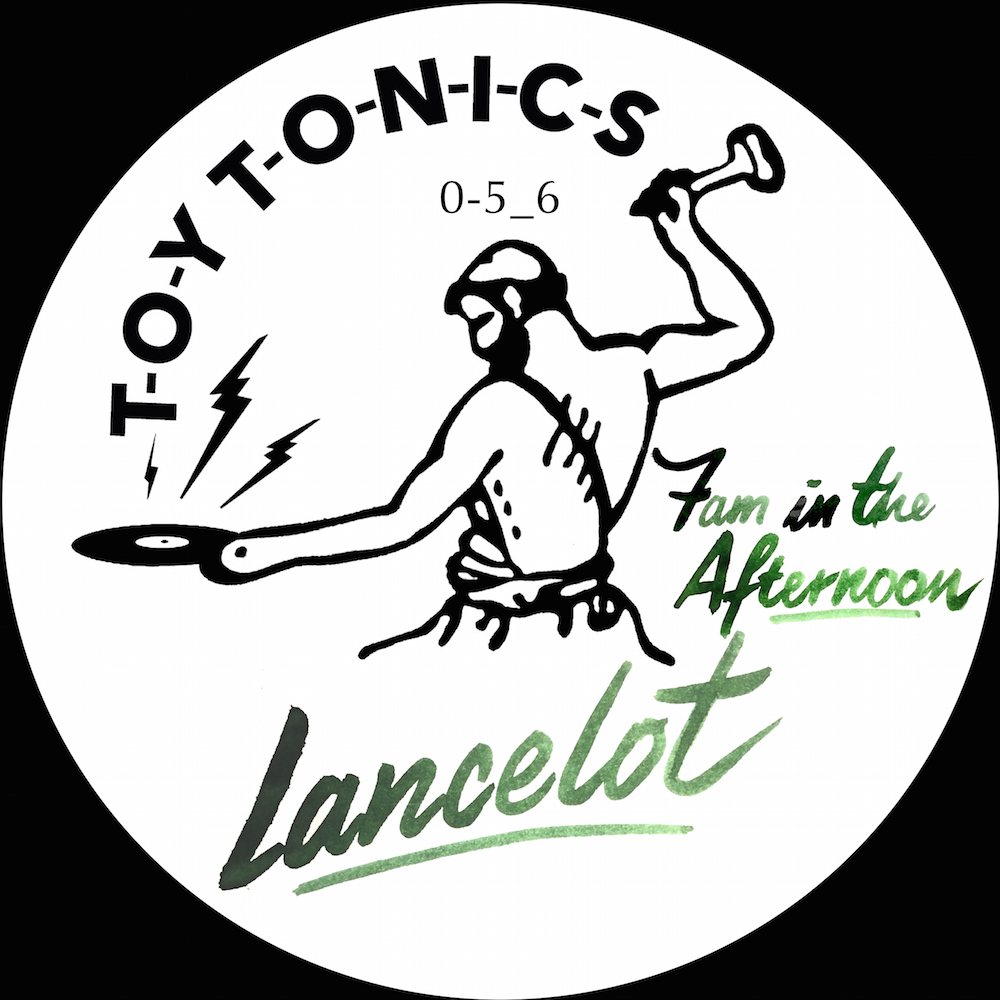
Hailing from the land down under, DJ-producer Lancelot has been on a meteoric rise over the past two years. Having most recently dropped his ‘He Said’ single on Waze & Odyssey’s W&O Street Tracks imprint, the artist has seen a brilliant amount of support from respected acts such as Bicep, Paul Woolfoord, Mr. G, and more. More tracks are on the way via Freerange, W&O Street Tracks, and Ninja Tunes’ Counter Records imprint this summer; but first, XLR8R is pleased to introduce the artist’s latest EP 7am In The Afternoon, scheduled for June 27 via Toy Tonics.

Ahead of this stunning EP, Lancelot has offered up the EP cut “Lorikeets” as today’s XLR8R download. Teeming with warm stereo delayed synths and noises from the forest, the dense and repetitive percussion of the track drives the big boned low ends towards an unblemished dancefloor vibe that will set the floor ablaze.

In addition to offering up a free download, Lancelot and Toy Tonics have given XLR8R the exclusive stream of the entire EP which can be streamed in full below.

You can download “Lorikeets” below via WeTransfer.

Premiere: Hear a Trippy Drum Workout from DJ Spider

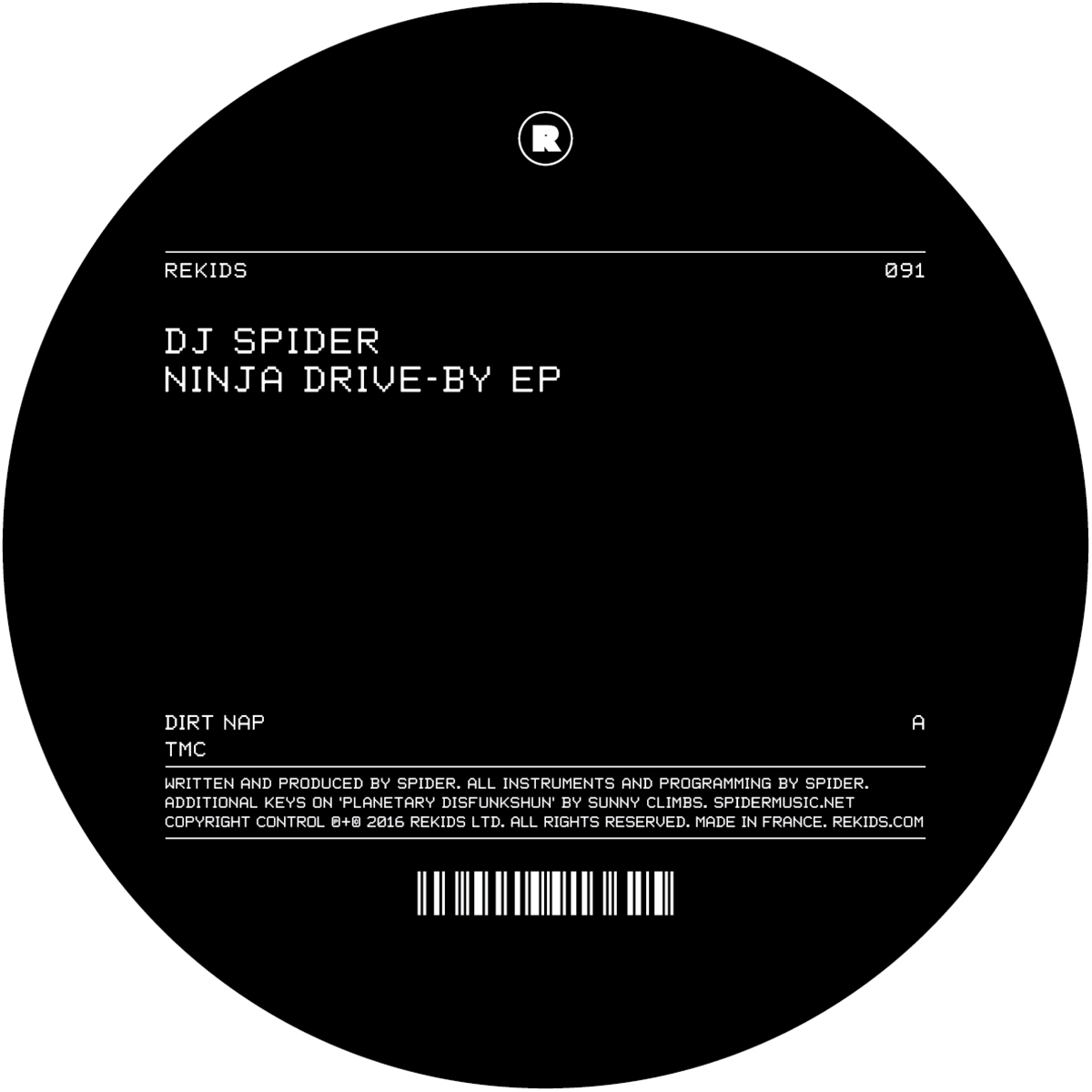
Ninja Dive-By will be the latest EP from New York techno stalwart DJ Spider.

Following on from releases on The Trilogy Tapes, BleeD, and KilleKill, the four-track EP will be DJ Spider’s debut for Matt Edwards’ (a.k.a. Radioslave) Rekids imprint and shows why so many hold him in such high regard as a producer. From chunky opening cut “Dirt Nap” to shadowy drum workout “TMC” and the slowed down synth-fest “Planetary DisFunkshun,” Ninja Dive-By shows the mind-blowing range that DJ Spider possesses. When it comes to functional dancefloor cuts, there aren’t many that do it better than DJ Spider and Rekids.

You can pre-order Ninja Drive-By here, with “TMC” streaming in full via the player above.

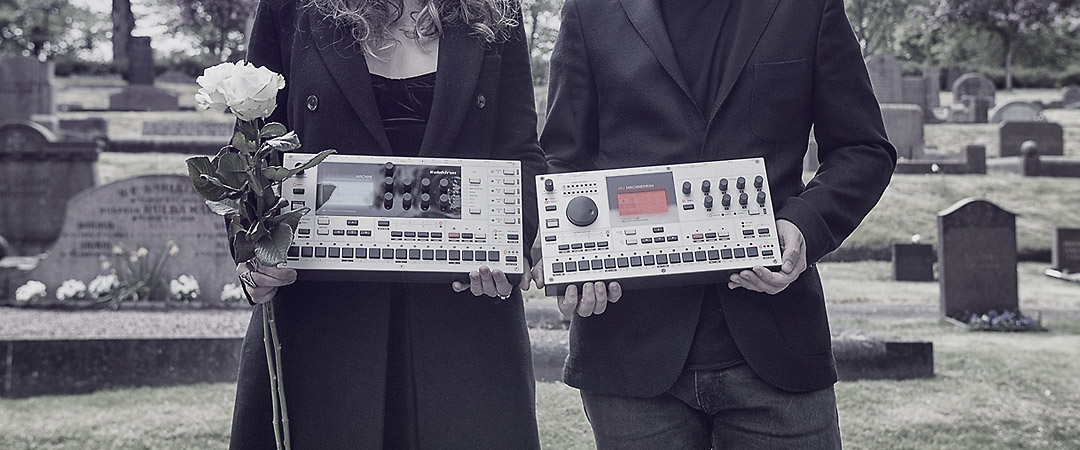
Elektron Says Farewell to the Machinedrum and Monomachine

Earlier today, the Sweden-based hardware company Elektron announced that it would no longer be manufacturing its legendary Machinedrum and Monomachine. Having been a staple of many a studio over the past 15 years, both machines are soon to join the ranks of widely sought-after pieces of discontinued gear such as the Roland TR-808, ASR-10, and the SP-404.

In a heartfelt farewell to two of its most groundbreaking peices of hardware, Elektron wrote:

“The original Machinedrum was introduced in 2001. The Monomachine in 2003. During the years both machines saw updates, both hardware and software, refining the already from the beginning very robust and truly unique sounding combo. Crispy, weird and gritty – Machinedrum beats and Monomachine soundscapes are instantly recognizable. They have soul.

But all good things must come to an end.

Now, fifteen years after the Machinedrum first saw the light of day, the last batch of these soon-to-be legendary machines has arrived. They will remain on sale in the Elektron webshop for a week. Then they are gone forever. So if you want to secure a piece of future electronic instrument history, act fast.

Thank you Machinedrum and Monomachine. You will always have a very special place in the Elektron heart.”

Purchase Elektron’s Machinedrum here.

Purchase Elektron’s Monomachine here.

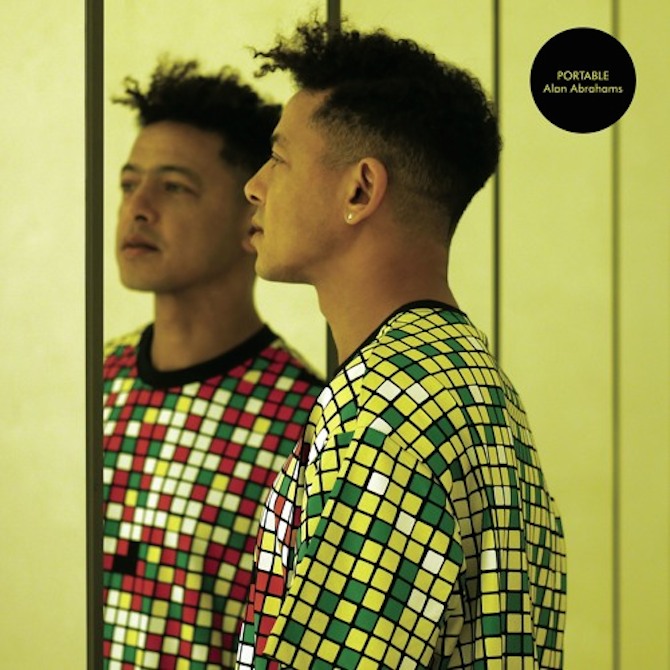
Portable Unveils Full Length on !K7; Stream Track Here

!K7 Records has shared details of the forthcoming release of Portable‘s next album, due out this August.

Having revealed that the South African born musician had signed to the !K7 imprint back in January, we can now confirm details for the upcoming release of Portable’s next full-length, which will drop via the Berlin-based label this summer. The 11 track release is his first since 2011’s Into Infinity (which dropped on Perlon), and takes its title from his real name—Alan Abrahams. So far, we know that it will feature collaborations with Knox Chandler, KinooAletchko & Johannes Schön, and is described by the label as his “most complete and personal statement yet.”

Alan Abrahams will hit stores on August 19, and can be pre-ordered here. Stream “Say It’s Going To Change” below.

Tracklisting:
01. “Your Warrior” feat. Kinoo, Aletchko & Johannes Schön
02. “Say It’s Going To Change”
03. “Closer” ft. Knox Chandler
04. “More Than”
05. “As For Me” feat. Kinoo & Aletchko
06. “Bondage”
07. “The Loneliness Of The Long Distance Drinker”
08. “Séraphin”
09. “The Year My Dreams Come True”
10. “This Frozen Lake” feat. Kinoo
11. “Standby”

Novation’s Launchpad for iOS Gets Robust Update

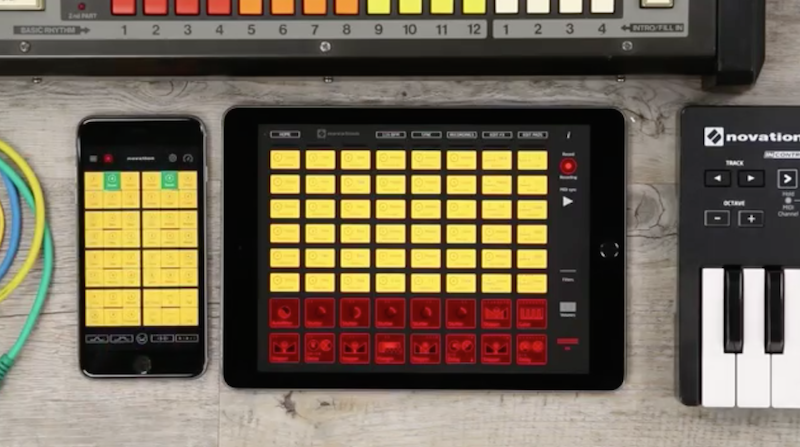
Launchpad—the innovative loop-based music software for iPhones & iPads—has been given a sizable facelift with the addition of numerous in-app features. As an intuitive mobile adaptation of their popular MIDI controllers of the same name, the app enables users of all skill levels to intuitively mix, create, and edit tracks. With increased tempo control, dedicated Ableton Link support, and an added ability to sync external hardware, the new updates further cement the app as one of the most competent on the market for mobile devices.

Update features:
-New real-time stretch audio engine – Change tempo while playing
-Ableton Link support – Jam in sync with your other apps, devices or laptop
-New tempo control – Show tempo with inc & dec, tap tempo and reset
-Updated effects – Now adapt intelligently as the tempo changes
-Share more easily – With ‘Open in’ to easily export your recordings
-A free update for all iPhone and iPad users

Other recent updates include:
-MIDI Sync Output – Sync external hardware using MIDI
-AudioShare Support – Import audio from the popular app
-Full view mode – Use both the mixer and pads at the same time
-Over 100 Soundpacks – Now available in the soundpack store
-Ninja Tune x Launchpad – Access to Artist Series Soundpacks
-Various bug updates

Download the revamped app here.

Page 820 of 3781
1 818 819 820 821 822 3,781