Q&A: Jori Hulkkonen

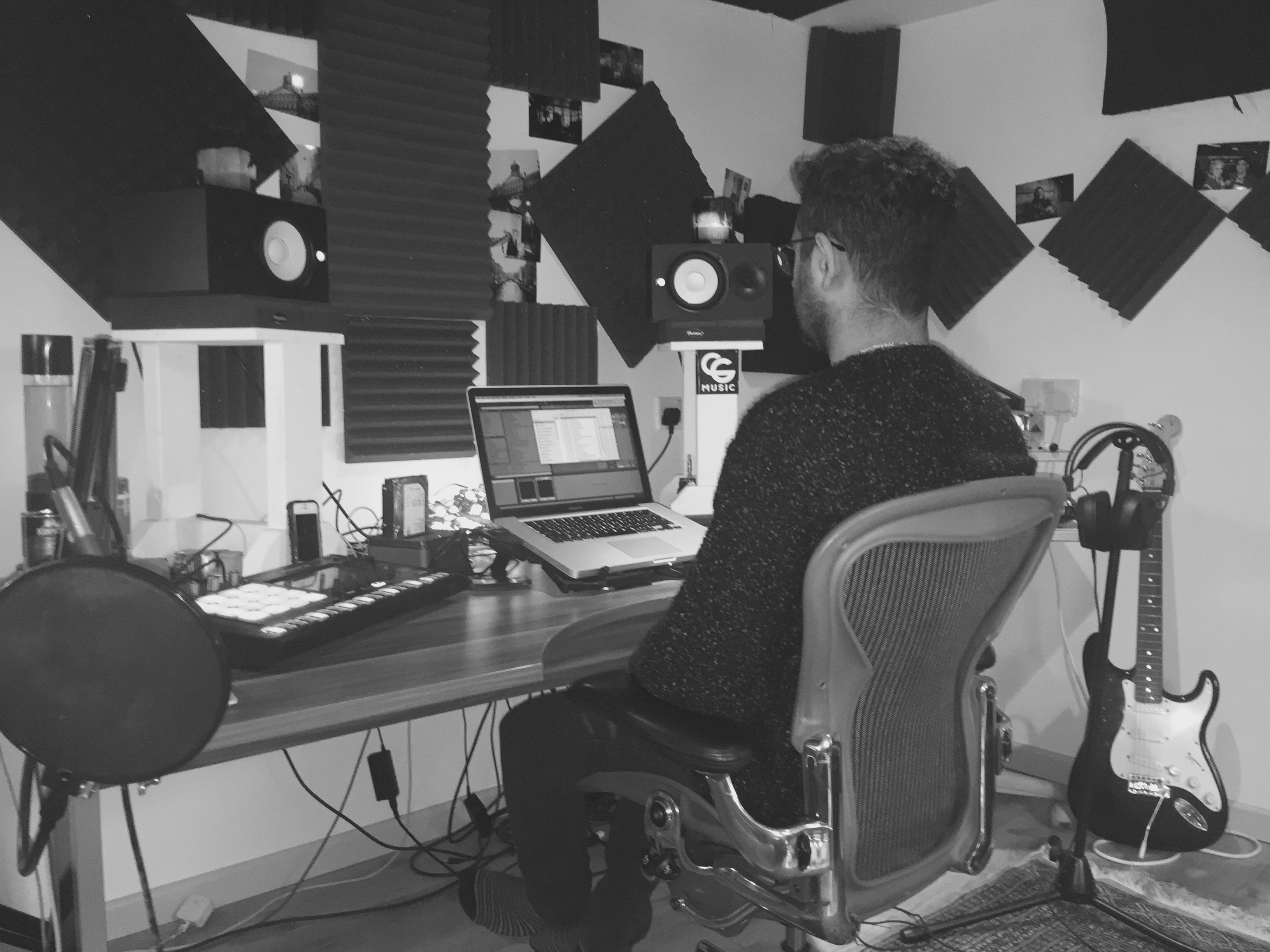
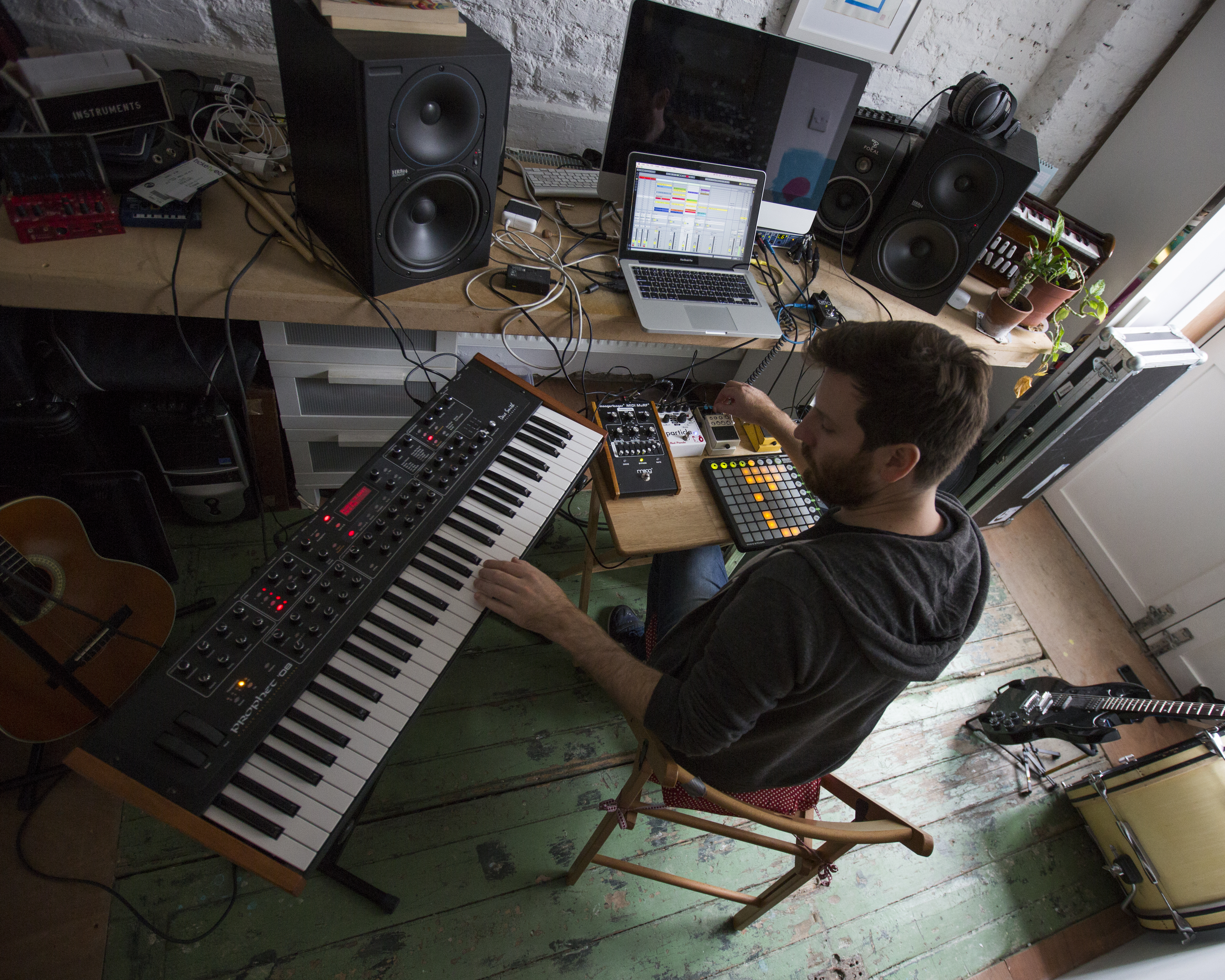
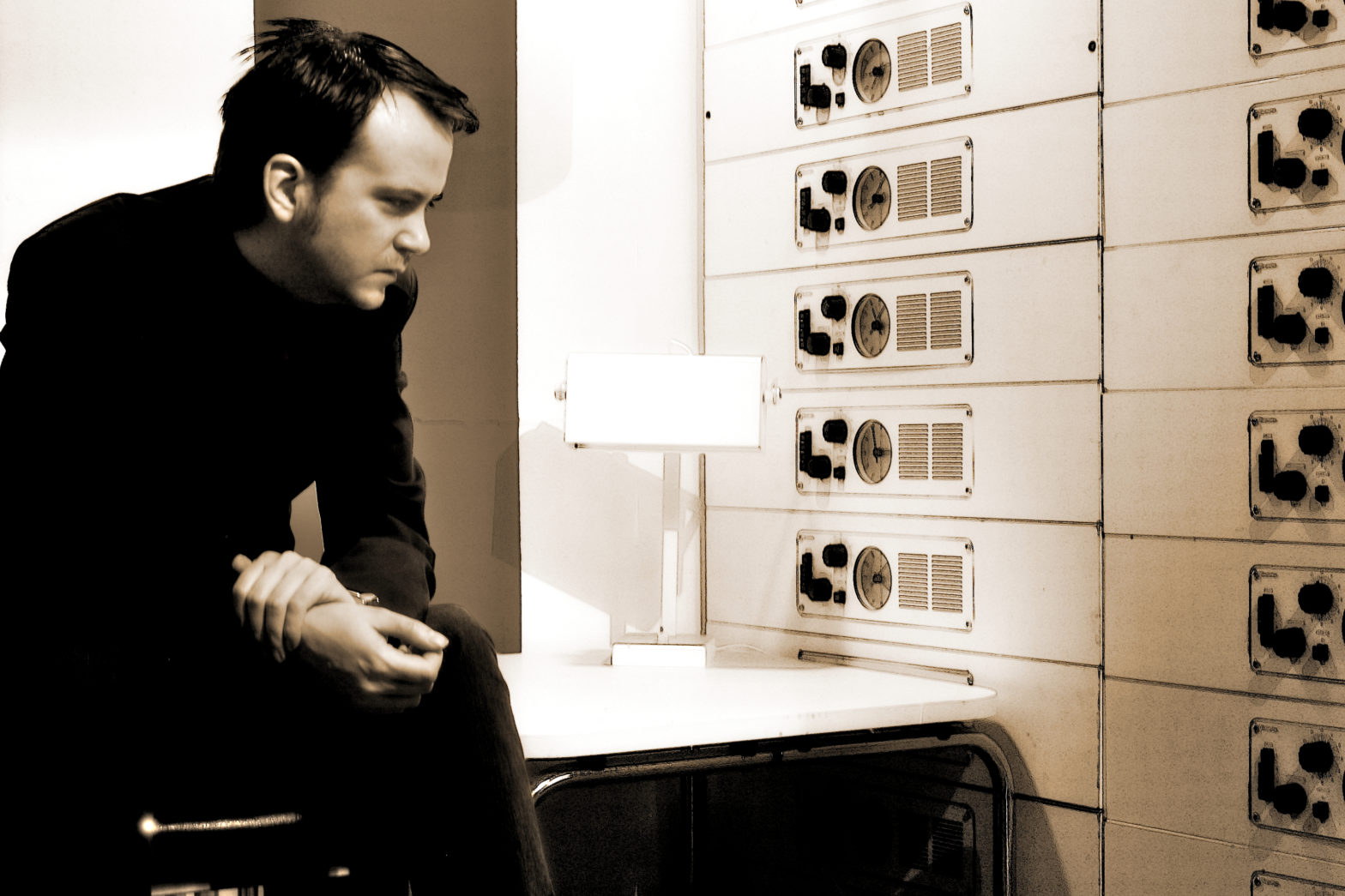
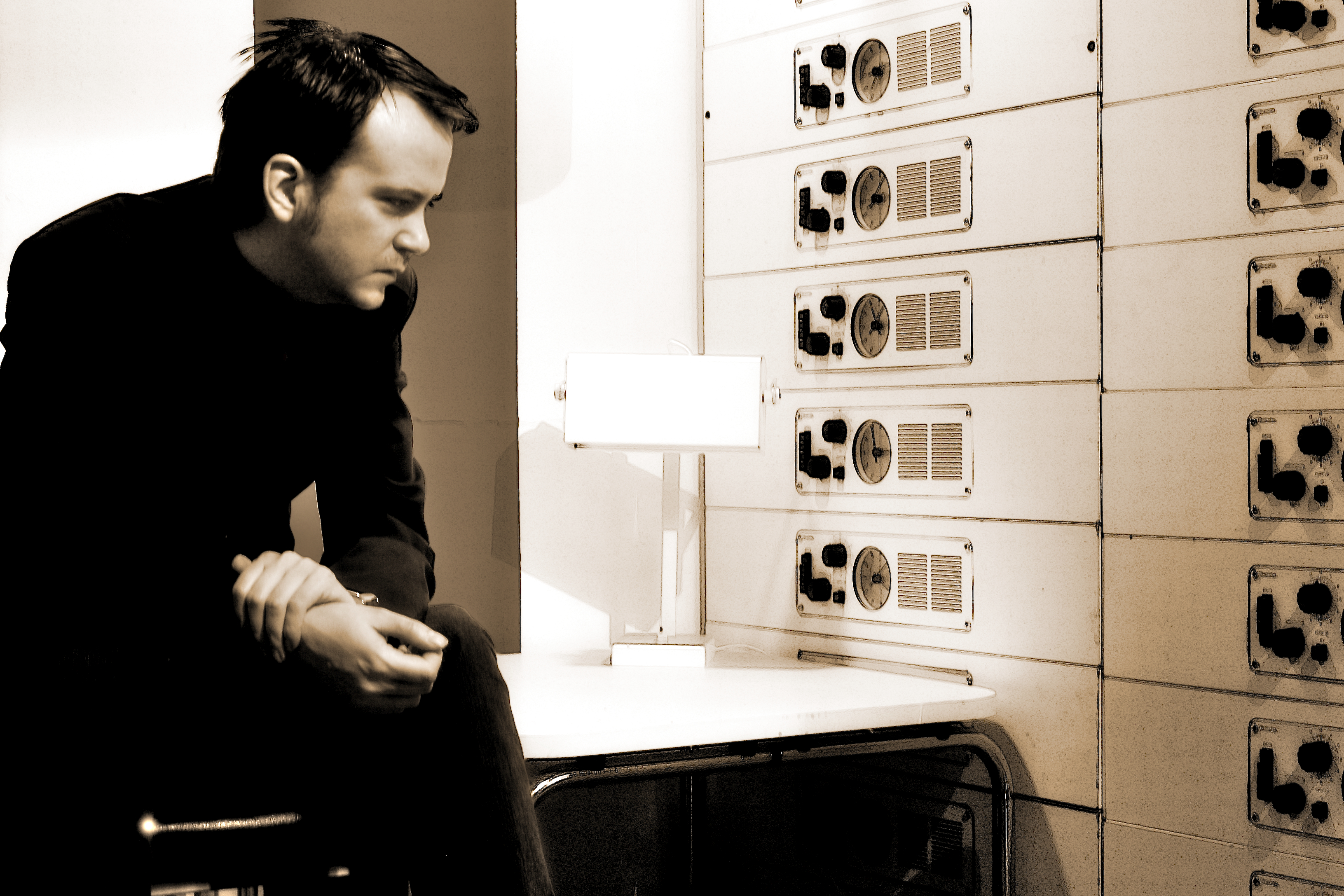
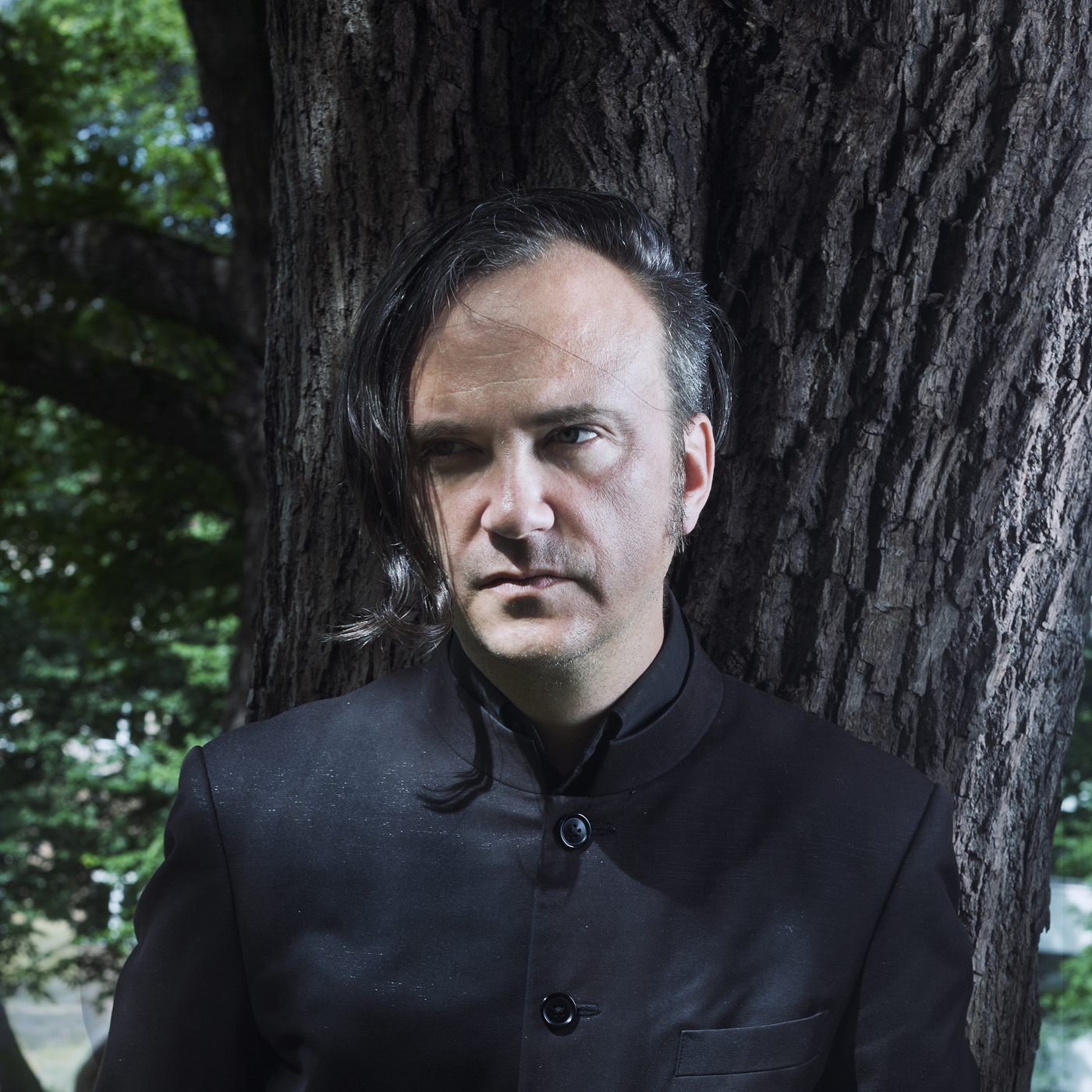
Finnish DJ-producer Jori Hulkkonen is a man of many hats. Ever since he started making music in 1988, Hulkkonen has produced, as a solo artist or in collaboration, under more than 20 different aliases, including Sin Cos Tan, Acid Symphony Orchestra and, most recently, Nuclear Winter Garden. As a DJ, he has been similarly prolific, having regularly played more than 100 gigs per year across the globe. Over recent years, however, Hulkkonen has made the conscious decision to limit his touring schedule in order to spend more time in the studio—an endeavor that has today seen him release Oh But I Am. The new album marks a return to the dancefloor following Nuclear Winter Garden’s self-titled release in March, and his first full-length under his own moniker in over half a decade. To mark the occasion, and to learn more about the inspirations behind the album, XLR8R sat down with Hulkkonen at his home studio in Kemi, Finland.
Reading your discography, it’s been a remarkable career ever since your debut 12-inch back in 1993. Did you ever anticipate success on this scale?
When I first started producing music in the late ‘80s, I wasn’t thinking about having a career as a musician. I didn’t really know anything about music at the time and it’s just been a steady learning process ever since. At some point you realize that people connect with the music you make and labels begin asking to release your tracks. Over time, things just gradually started to happen and some time in the late ’90s I had to go to university—but I realized I just didn’t have the time to focus on my studies and my music. I had to make a decision and I felt that if I didn’t follow music at that moment, then I would eventually regret it further down the line. I decided to follow it and now here I am, twenty years later.

“I am always trying to push myself as an artist by trying things that I didn’t think I could previously do. I would hate to realise in 10 years that I had been making the same records for the whole of my career.”

Do you believe that the fact that you’re a self-taught musician has helped you push the boundaries by encouraging you to experiment with sounds?
I think of myself as a music lover rather than a music maker. I have always been interested in hearing things that are as versatile as they can be—and I think this comes out through my music. With each of my releases, it’s important for me to do something that hasn’t been done before—something that either I haven’t been able to do or haven’t even thought about doing before. This can be something quite small that doesn’t even come across to the listener, or something quite avant-garde like the Acid Symphony Orchestra project. I am always trying to push myself as an artist by trying things that I didn’t think I could previously do. I would hate to realize in 10 years that I had been making the same records for the whole of my career.

You say that you must try something different with each record. What is the specific difference with Oh But I Am?
Firstly, I do all the vocals myself. Previously I have used vocals, but only by writing the demo and having someone else come and sing it. For me, it feels a lot more personal because when you have someone come and sing what you’ve done, then it’s a slightly different angle. Although it may be technically better, it feels like you lose something. Secondly, one of the points of this album was also not to write any lyrics. When we were recording, we maybe had this phrase or idea but we did the rest ad-lib. I was trying to adopt this old-fashioned approach to lyrics, like in early house records where the lyrics are about love and don’t go too deep.

Had this idea been in your head for quite a while?
In a way, yes. For the past three or four years, I have been working with so many projects with amazing vocalists, for example the EP with John Foxx, the album with the band Sin Cos Tan and also my work with Tiga. By working with all these people, it became a logical step for me to do a solo album based on house music.

Over the course of your career, you’ve released under more than 20 different monikers. Do you find that this variety is an important source of inspiration?
Definitely, and that is one of the key elements in my progression. Every record I do inspires me to try new things and I think that’s important. I have a lot of friends who have been doing this one project with one style of music for many years, but I would find that very boring. I am continually obsessed with making new stuff and trying new things. It means I can go in the studio and mess around while knowing that I am not restricted to one sound—and I really enjoy this artistic freedom because I can always find some sort of output for my work.

“When you’re never trendy then you never become untrendy. For the past twenty years, I have never been the big headliner and this means there is never really any pressure on me to maintain a certain status.”

One of the most interesting things about you is your longevity. Do you put this down to your desire to continually innovate?
I think it’s because I’ve never become that popular. When you’re never trendy, then you never become untrendy. For the past twenty years, I have never been the big headliner, and this means there is never really any pressure on me to maintain a certain status. I’ve seen it happen to lots of artists where they try so hard to maintain something that they achieved—and that pressure is not good for artistic creativity.

Moving on to the new album, it’s been five years since your last LP under your own name. Why the wait?
It wasn’t really intentional. I produced an album for Villa Nah in 2009 and I just clicked with lead singer Juho Paalosmaa, and we decided to set up Sin Cos Tan together. From there, it really took off and we ended up doing three albums in two years. It wasn’t really intentional, but I felt that Sin Cos Tan could be something worth investing it.

But switching back to focus on your own solo material was a conscious decision?
Yes. That came last year following the third Sin Cos Tan album. I thought that in 2015 I wanted to focus on my solo career.

Is there a story behind the Oh But I Am name?
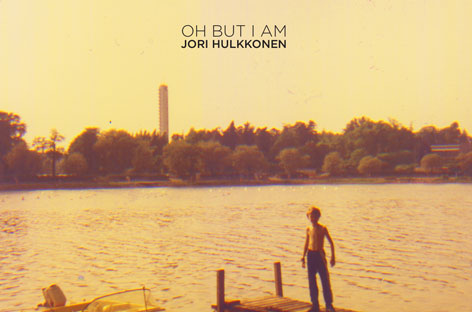
Actually the real story is so boring it’s not really worth telling. I keep writing things down constantly—mainly in the notepad that I carry around—and when I realized that it was the first album I’ve done under my real name in half a decade, I was surprised that it had been such a long a time. I then saw the artwork, which is a photo of me back in the ‘80s, and I wanted a title that was personal and funny. Oh But I Am just worked.
Oh But I Am is very different to the Nuclear Winter Garden album that you put out in March. Do you prefer producing for the dancefloor, or do you prefer producing the more ambient stuff?
That’s been a big question, all throughout my career—and it has always been the case that I try to find the balance. I come from the background of not going to clubs but listening to club music. For me, with club music the focus has always been on the word music rather than the word club. I didn’t really go clubbing until I began playing out myself—and so it has always felt that club music has been a reference rather than the main product. Obviously I have made some records that are made for DJs—and being a DJ has helped me do this—but even today I still have to consciously think whether I want to make something more dancefloor orientated or something more ambient.

So was it your intention to make Oh But I Am dancefloor orientated?
I always wanted the next Jori Hulkkonen album to be more dancefloor-friendly, especially my Sin Cos Tan work has been very pop-orientated over recent years. I felt that as a DJ, I wanted more of my own stuff that I could play.

How long did the new album take to produce?
When I start working on a new album, I always go back to old projects and see if there are any unused bits that I could use now. And there were a few sketches and chord structures that I took—but the main production started last September and ended around April this year. Some of the songs, mainly “Italian Love Affair” and “Ready Player One,” were based on sketches I had produced a little earlier for Sin Cos Tan, but I realised that I wanted this album to have some of the same new wave vibe.

Seven months is a fast turnaround.
That’s true, but it’s just how I have always worked. I think we did all of the Sin Cos Tan albums in the space of just three months. I am very quick in the studio, but I think that comes from experience. The main software I use is Cubase—and I have been using it for 25 years, so the workflow is very fast. I also have my own studio so I don’t get stuck in technical difficulties.

“I try to change the process every now and then just to keep myself fresh. Even just changing the gear in my studio—or even just moving a synth from one wall to another—helps me move forward with my sound.”

Have your production processes changed over time, and is this a source of inspiration?
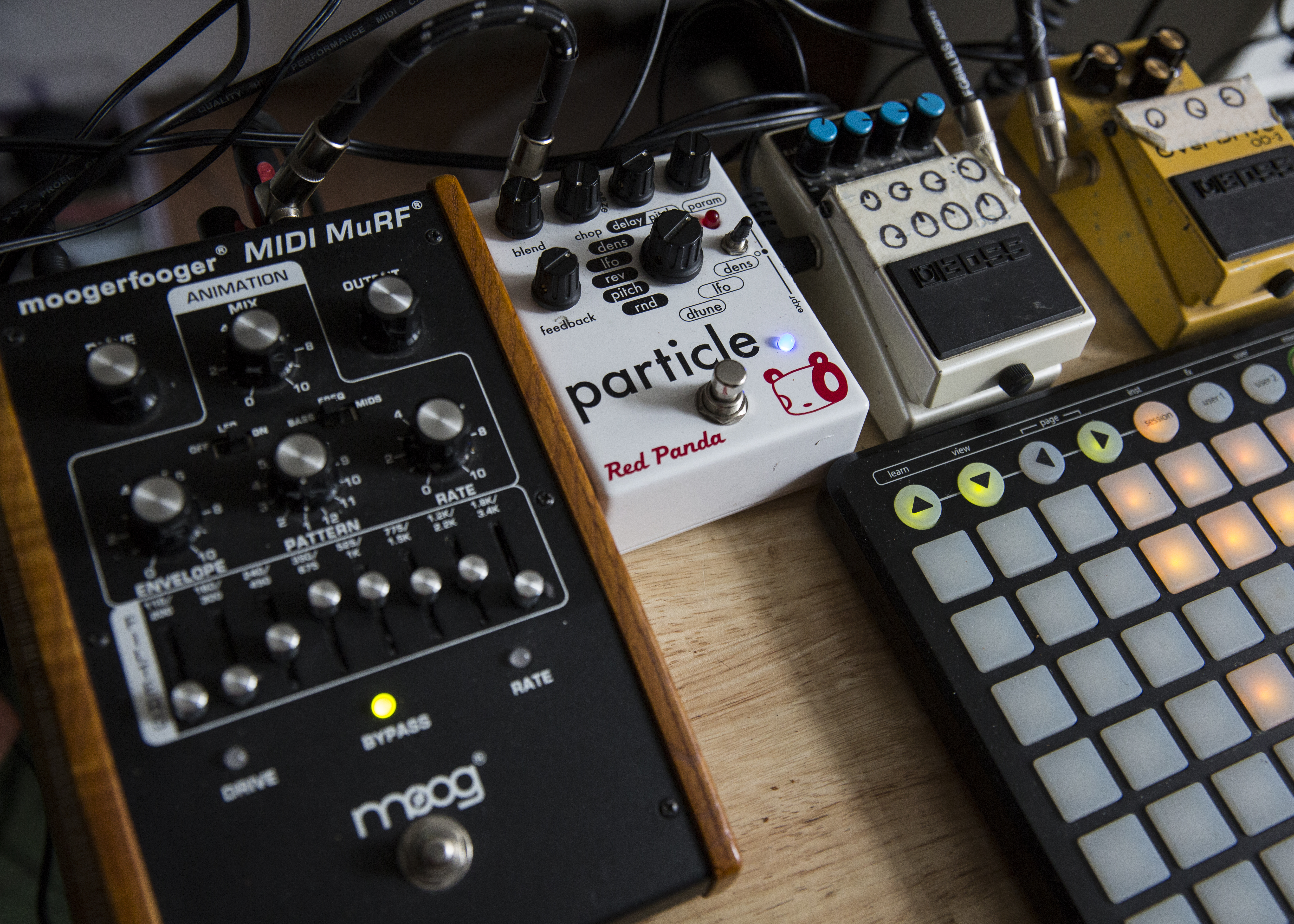
I try to change the process every now and then just to keep myself fresh. Even just changing the gear in my studio—or even just moving a synth from one wall to another—helps me move forward with my sound. It’s a continual process of having the software that I know inside out—that is like the brain—and then having all the hardware that I can work with without having to look at the computer, which allows me to improvise. In the 25 years that I’ve been making records, my processes have changed dramatically because of what I have learned and also due to the development of new technologies.

Would you say that most of your tracks are conceptualized prior to recording, or are they mostly just a result of spontaneous jamming?
It works both ways. There are some songs that I have written at home on the piano and recorded them on my phone before taking them to the studio. On the other hand, some tracks are just made when I begin messing around with a drum machine and have come up with a bassline and a hook, which then inspires me to come up with other ideas. Even if I don’t have any ideas, I come to the studio and turn on the equipment in the hope that something will come.
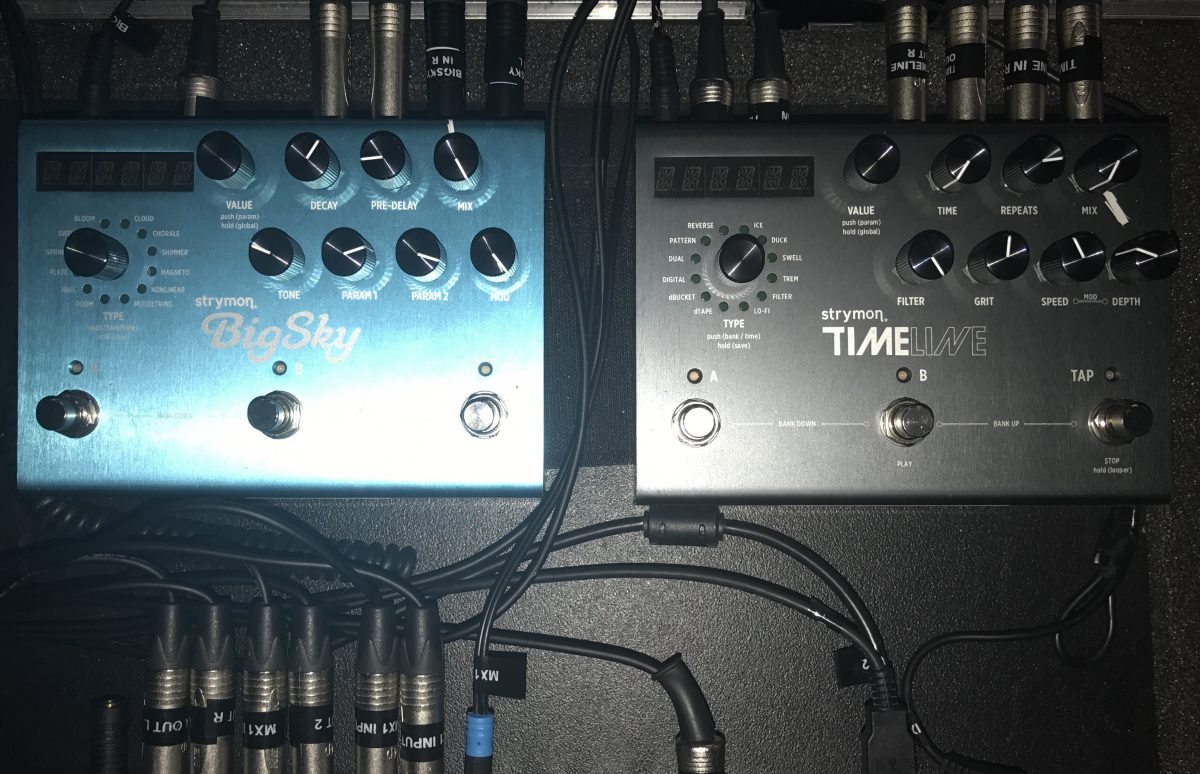
You’re obviously a big ambassador for hardware production, but has this always been the case?
When I started making music in 1988, that was the only option. You would have a computer that would be just a sequencer, but this would be used with synths and drum machines. You would have to improvise a lot to get the most out of the limited equipment that you had, and that was very good creatively because when you’re limited to what you can do you end of stretching your imagination. These days, with just one piece of software, you can do sonically anything you can think of—and it is very easy to become lazy which leads to a mediocre end result. This is something I try to keep in mind today, and I focus on a small number of key instruments and try to get the most out of them as possible—which I think creates something that you cannot get out of a software emulator.

And do the production processes change from track to track?
Yes. For example the last track on the album, “Exotica Memoirs,” was produced using this old organ in the studio next to mine. I really wanted to use that for one of the tracks and the idea was to sit down with it and produce a more pop-orientated sound, something akin to Metronomy. This was a very different approach to all the other tracks. On the other hand, “Cape Town People” was produced as a homage to the sound of 1995, which was a really important time in my career, and I wanted to get the sound of that time in that track. This was a very technical approach to production, something very different to having an organ and writing a song.

“One of my strengths, if I have any, is that I am good at taking a track to its final destination, and it’s not something I can say out loud because it’s very hard to determine. It’s more of an intuition.”

How do you know when a track is done?
I think it comes from trial and error. One of my strengths, if I have any, is that I am good at taking a track to its final destination, and it’s not something I can say out loud because it’s very hard to determine. It’s more of an intuition.

“If it’s 3am and I have an idea, there is no other option but to go to the studio and work on it.”

You’re known to spend over 10 hours a day in the studio—but does the production process go around the clock?
Yes, it’s a lifestyle. Whatever I am doing, even when I am jogging, I am always coming up with ideas and I will start humming it to record on my phone. If it’s 3am and I have an idea, there is no other option but to go to the studio and work on it.

What other musical projects have you got coming up?
I have a new EP with Sin Cos Tan next month, and we’ve also started working on our fourth album. We have the songs, but it doesn’t yet feel like an album, and so decided to choose three songs and do an EP of those. There is also a Jori Hulkkonen 12-inch coming out soon, which is two tracks from me and a remix. I am also working on some new ideas for the new Jori Hulkkonen album…because I don’t want it to be five years until the next one.

Tsunga “Hugo(‘s) Bo$$”

After recent, massive contributions to Black Acre’s and Trax Couture’s respective catalogues, Tsunga is back to flex its versatility and ferociousness yet again, this time courtesy of the forward-thinking Montreal-based electronic label Infinite Machine. On September 25, Tsunga released an EP lovingly dubbed Schlangbanger, an un-earthly record that is comprised of a clangorous, industrial cocktail of outlier musicianship and ordered chaos. The four track EP of deviant dance music finishes with the cut “Hugo(‘s) Bo$$,” that, while less streamlined for the dancefloor, still shows Tsunga’s manifold talents for composing acid, infused with electro and rave hardcore alike. The track has all the rave particles you’ve come to expect from a label like Infinite Machine, while also swirling around a nuclear reaction of heavy bass lines and spiraling hi-hats. You can pick up a copy of Schlangbanger by visiting the Infinite Machine Bandcamp page, and you can find out more about Tsunga by visiting him on Soundcloud.

Hugo(‘s) Bo$$

Various Artists Indian Summer: Volume Two

Those lazy, hazy days have come to an end, the sun bids farewell earlier every day, and there’s already a chill in the air. For many, fall is a wistful, romantically melancholy time of year, a season to wonder about what might have been if only you had spent the warmer months more wisely, and a time to shudder at thoughts of the impending gloom to come. (Disregard the above if you’re in southern climes. Wanna change places?) Anyway, it’s the perfect season for the Touch of Class label’s second Indian Summer compilation, a collection of tune that sum up the autumnal vibe, one that alternates between the congenial and the contemplative.

Indian Summer: Volume Two features tracks from some of Touch of Class’s core team (including Tone Of Arc, Signal Flow, Pattern Drama and Navid Izadi), along a string of cuts culled from upcoming projects and ringers—Thugfucker, Ataxia, Berkson & What, and Jonny Cruz’s new Ominous duo among them. As you might expect with such a wide swathe of artists, there’s lots of variety on tap—plenty of which would fit vaguely into the house template, but with a few outliers as well. And some within that second group are among the compilation’s best. Schnitz’s “Hermetic” is pure cosmic electro-funk, with Moog-ish synth lines and Joe Le Groove’s breathy, filtered vocal snippets propelled by drum-machine syncopation; Mavidip & Steinlausky’s “Eyeballin’” is a pseudo-sexy, low-slung R&B tune that treads the line between parody and honest homage; and “Get Back Down,” by KMLN (featuring Myron on vocals) nestles somewhere between slow-groove Prince (albeit a very minimalist Prince) and Ying Yang Twins’ “Wait (The Whisper Song)”

Most of the rest of Indian Summer: Volume Two follow a 4/4 groove, though none of them could exactly be considered peak-time material; these songs are as much about feeling as they are about dancing. There’s a dreamy, pensive ambience to most of them; fitting, given the season. There’s a nostalgic quality, too—none of these tracks are “old-school,” exactly, but there’s some of the same aura that house had in those fertile, late-’80s and early-’90s days, when producers were learning to inject more nuance, musicianship and soul into their machine-made music. (If you think about the vibier tunes on the New Generation label’s old DJ’s on Vinyl EPs, you’ll be close.) “The Force,” from Berkson & What, is a jazzy, low–bpm track boasting a bumping little bassline and gorgeous chords; Moon Unit’s “High on You” wraps its heavenly synth washes around a boogie-tinged rhythm; and “Passing the Lion,” by Tone of Arc, could be a future Balearic classic. The record’s final track, “Colours”—from the dream team of Signal Flow, Pattern Drama, Navid Izadi and Jonny Cruz—sums it all up: ten minutes of muted bliss, with feelings of hope mingling with a faint sense of loss, make for a gorgeous ending to a wonderful set.

NYC’s Kolekti crew celebrates the release of Indian Summer: Volume Two with a party on Saturday, October 3 featuring Metro Area, Wolf + Lamb, Pillow Talk, Tone of Arc, Pattern Drama, Signal Flow and more.

Premiere: Watch Henry Saiz and Psyk at Stay True Spain

Following on from Stay True Scotland—as well as stops in Mexico, Chile, Poland, Germany, South Africa, and Russia—Ballantine’s and Boiler Room have once again teamed up for the latest in the Stay True series, this time touching down in Barcelona, Spain.

The series aims, and succeeds, in seeking out and shining a light on authentic and inspiring scenes by pairing both emerging and established artists and throwing a damn good party. Stay True Spain took place last month with a stacked cast of Spanish artists including Henry Saiz, Psyk, Paco Osuna, Coyu, and UNER, and XLR8R is proud to premiere sets from Henry Saiz and Psyk, both of which you can stream in full below.

Henry Saiz Boiler Room & Ballantine’s Stay True…by brtvofficial

Psyk Boiler Room & Ballantine’s Stay True Spain…by brtvofficial

Max Loderbauer, Claudio Puntin, and Samuel Rohrer Return as Ambiq

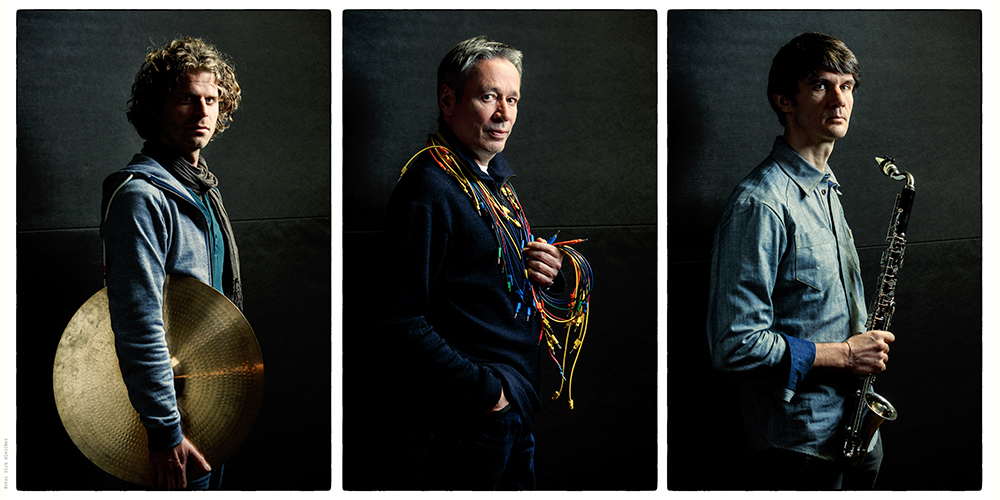
Ambiq—the Berlin instrumental trio made up of Max Loderbauer, Claudio Puntin, and Samuel Rohrer—will drop its second LP, Ambiq 2, on November 13 via Arjuna Music.

Ambiq 2 will feature Loderbauer on analog synthesizer and continuum fingerboard; Puntin on clarinets, mini mallets, and electronics; and Rohrer on drums, mini synth, and electronics. According to the accompanying press, the LP pulls from a “deep pool of influences that includes free improv, early electronic music and spaced-out dub,” with the trio becoming “more than the sum of its parts, a single organism with its own unique expressive vocabulary and perspective.”

Spread across 11 tracks, the LP will be released on 12″, CD, and digital formats.

In The Studio: Rival Consoles

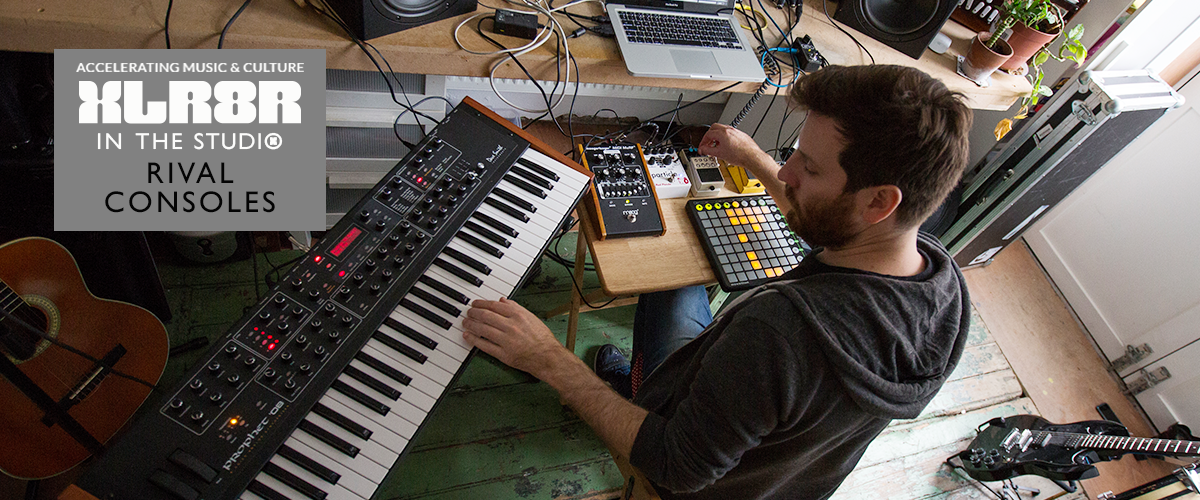
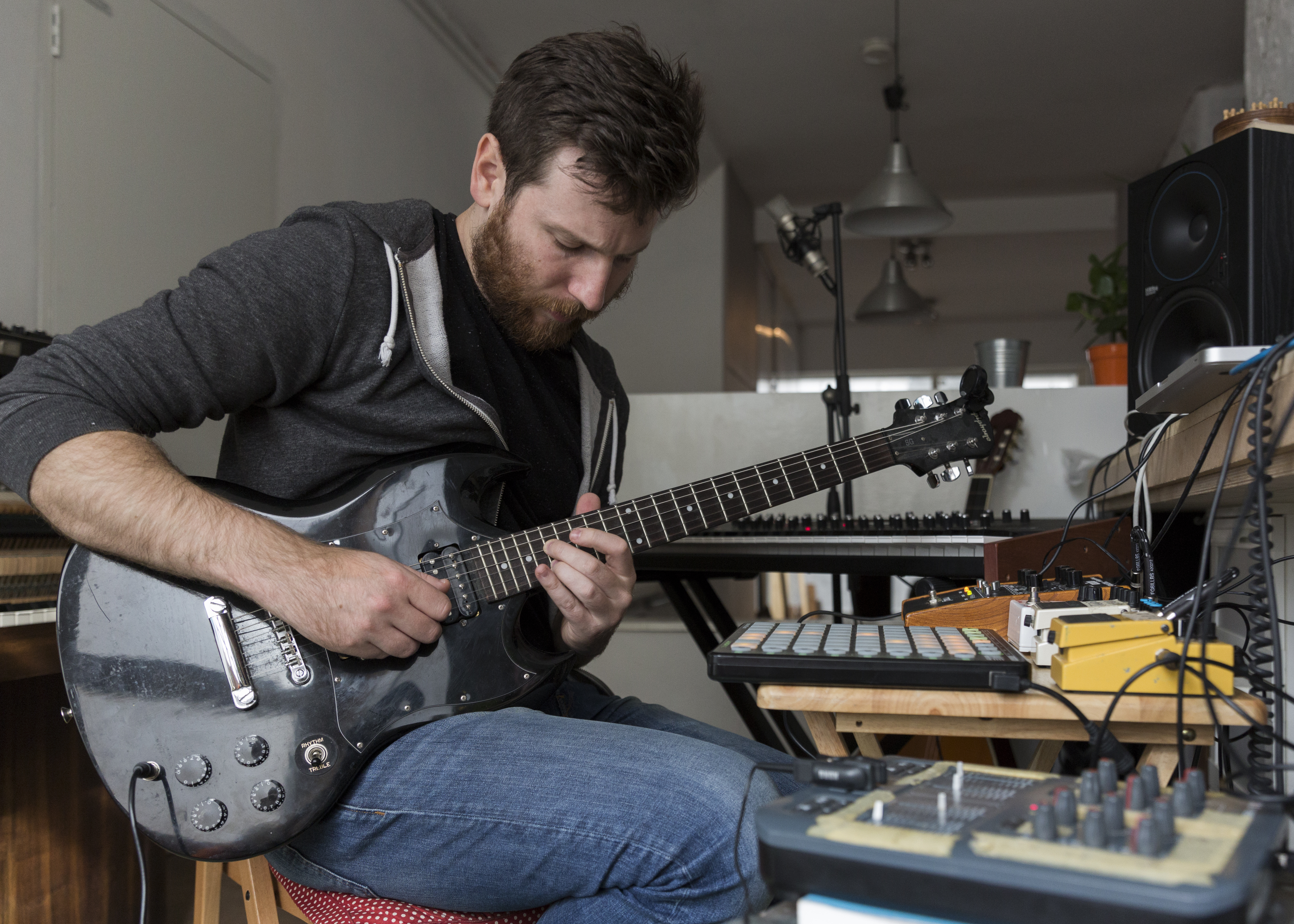
The London-based producer-cum-composer Ryan Lee West first came to XLR8R’s attention with 2007’s Vemeer EP. That release—his debut under his Aparatec alias—marked the start of the now-renowned Erased Tapes imprint, home of Nils Frahm and Ólafur Arnalds, to name a few. Since then, West has released two albums and a series of beautiful EPs under his new Rival Consoles moniker, most notably 2013’s Odyssey and 2014’s Sonne, both of which were critically acclaimed for their minimal-techno sound, and launched West into a wider global audience. Having seen West perform his bespoke audio-visual live set at this year’s Life and Death party in Barcelona—one of the finest daytime performances XLR8R has seen in many years—we decided to visit West in his South London analog-heavy studio to discuss the dynamic production processes behind Howl, his new album slated for an October 16 release. West also offered to include streams of isolated elements from each album track and detail the production processes and inspirations behind each one.

As an artist, it’s hard to define you. You’re much more than a producer. How do you introduce yourself?
I would call it songwriting with an electronic palette of sounds—that is probably the best short description of what I do. There are times when I am more of a producer and there are times when I am much more of a musician.

Have you always wanted to be a professional musician?
I have never wanted to make a career out of the music that I make; I have never tried to make money. You cannot force demand—my goal is simply to make better music as I go on and just learn more. And over the last couple of years it’s started to gather quite a lot of momentum, following the releases of my last two EPs: Odyssey and Sonne. I think that is because I have finally started to refine my practice—and if it now becomes more successful, then that’s great.

Has there ever been a temptation to tweak your sound to make it more commercially viable?
Not really. There must be something more to electronic music than the big paradigms that exist on a commercial level. It’s a very formulaic approach. When it comes to electronic music, there’s a whole lot of garbage out there—and I am talking hideous ideas. But I can’t stop thinking that there must be other approaches that must be just as popular—something that is away from this four-to-the-floor stuff. Once you start trying to make a sound loud, then you turn your back on thousands and thousands of sonic possibilities. One of the best things to do is to start a track with a really quiet, weak sound.

Your music has drifted from ambient drum & bass to more straight-up techno. Do you now feel that you’ve found your sound with the minimalist, emotional techno of Howl?
My sound is definitely becoming more certain of itself. I feel that I’m reaching point where I am just starting to achieve what I want with an electronic palette of sounds. I have gone through load of ideas— some of them interesting some of them not—and now it has reached the point where I can really do what I want to with the sounds.

So you’d say Odyssey and Sonne EPs were key moments in your career?
Yes. Odyssey gave me the confidence to do what I wanted to do with electronic sounds rather than something else. It’s so easy to be seduced by different techniques, but the success of these EPs gave me the belief that I should pursue the music that is personal to me, and not just make a club sound.

Were the production processes different?
Yes. The first two albums were mainly made with digital synths—but these two EPs, and Howl, were made with hardware. That’s not because I am an analog snob—it’s because I wanted a change and I need restraints. Everything is much more fragile because you don’t have the luxury of always being able to change things with computer editing. I don’t think digital production makes me work in the best way because it always sounds uncertain of itself, exploring too many gimmicks, etc.

Do you see all of your earlier works as stepping stones on the way to finding your current sound?
Yes. Some people do have this perfect discography where everything is amazing, either through luck or because they’re a genius—but I think for most people you have to allow failure in your work to get to a certain point. If someone is 18 now and looking to make the perfect record, I think that is quite damaging because it constrains creativity too much.

On reflection, does Howl capture your growth as a composer?
Definitely. But the interesting thing is that I don’t want to just continually refine things and make them really well-crafted to the point that they’re boring. I am a fan of sloppy things and rough things happening in music. I don’t want my compositions to be really immaculate, and so there is a fine line between having a mature composition and something that is just really boring. I think the growth as a composer comes from knowing how to express ideas with sounds.

Do you work on several tracks consecutively or do you normally finish one before starting another?
I am normally working on several tracks at any one given time. Sometimes I do spend a lot of time on one track—like I spent a lot of time on the opening track of “Howl.” I wasn’t necessarily changing it because I didn’t want it to sound over-labored—more just listening to it for huge amounts of hours to make sure that the overall momentum felt right. I don’t like to do too much when I am working on stuff; I like to just let it be what it is, and then I will go in and make adjustments. I think this is because you don’t fully understand the strengths and weaknesses of something when you are making it. It takes a certain amount of time to understand the composition, and then you can make the necessary adjustments. Only by giving it some time to breathe and working on other stuff can you come back with fresh eyes and become aware of a new weakness. It’s all about problem solving at the end of the day.

Where do the ideas for tracks come from?
Most of it comes from responding to stuff inside the studio. I am a very reactive person. Sometimes, though, it a very conceptual idea I have, such as “Recovery,” where I wanted to create the sense of time contracting and expanding over a pulse. I had this idea before I even made a sound.

“Some of the music that I abandon is very good—but there has to be a “specialness” to something that is happening within a track. There has to be more than one special moment to release it.”

When you are composing, how do you determine whether a sound is good or not?
I will listen to it for a month after I’ve composed it, and the test is whether it gives me new ideas or inspires me in some way. Some of the music that I abandon is very good—but there has to be a “specialness” to something that is happening within a track. There has to be more than one special moment to release it.

How do you know when a track is ready? Are you a perfectionist? 
Compared to the other people on the label, like Ólafur Arnaulds or Nils Frahm, I wouldn’t say so. I am normally quite happy to let go of something. The thing that I am most interested in is the overall composition. I don’t mind having moments in the track that could have been produced a little bit better as long as the overall idea is interesting.

You’ve spoken previously about adding more warmth to your compositions. Is this something you’ve take even further with Howl?
Yes. I am always trying to solve this problem. It’s very easy for synths to sound plastic and sterile—there is no real way to add more warmth to them. There are little tricks but it’s very difficult to make it sound natural—as opposed to recording a cello, which naturally sounds warm. I’ve tried to do so the same in Howl, but it’s challenging not to make it sound over-labored. Basically, I am always trying to overcome the weaknesses in my music and that’s just one example of it.

Sonne EP was named after the German word for sun because you wanted it to be warmer than Odyssey, the previous EP. Is there a similar story behind the name of each piece of your work?
There are reasons behind most of them. The title track of Sonne felt like the sun hitting my face and is hopeful. It’s really warming and powerful with these big major-minor chord progressions. The Odyssey EP, and the title track, are both very grandiose and so the name just worked. “Phillip” is named after Phillip K. Dick, the sci-fi writer, just because it evokes the emotions of his writing (paranoia etc). “Helios” is similarly about the sun and the solar system. The first half of the track is quite standardized, and then I disrupt this by allowing a fizzy, warming chord progression to emerge, like the sun appearing from behind something, but is in actual fact a variation on the opening theme—so while it seems abrupt, it is closely related.

And Howl—what’s the reason behind the name of the album?
The album is definitely more emotive than anything I’ve done before. There are lots of instances where it sounds like the synths are mourning. It feels like a release. In two of the tracks the synths are made from my voice, and this gives it this haunting, meandering set of tones. The album is filled with these moments, so I chose the name that best expressed what the music felt like.

How long did the album take to produce?
It took about a year—except there is one track, “Afterglow,” that I have been working on slowly for years. It just fitted perfectly into the album.

How do you feel it differs to your previous albums? 
It is much more emotional, with much more subtle, rendering sounds. Not everything is subtle—there are some up-front and bold moments but there is a more careful treatment of these sounds. I think I am trying to do more with less. With my last album I tried to do too much with each part, which is a sign of insecurity. Over the last two EPs, I’ve learned to slow things down and do something interesting with few ingredients. That’s perhaps the biggest difference between the new album and the previous two. That said, I think the approaches to melody and harmony are actually quite similar. I am sucker for emotive chords, and what you can achieve with them—which I think this is undervalued in a lot of electronic music.

_________________________

“Howl”
Howl started out as arpeggios of a single note, to create a driving rhythm, always pushing forward, with very rough home record percussion. But it started to really interest me when I began bending the pitch of dark, fuzzy tones over this. I think this synth has a really vocal like quality to it—almost mournful.

“Ghosting”
Here you can hear very subtle pads, before an eruption of me flicking through octaves as I play C Bm D C. I did this twice, once on the Microkorg and once on the Prophet 8. I love how it opens up the music, like going from a narrow image to IMAX. I think that is an important way to explore music.

“Afterglow”
I’ve used guitar with synth a few times. This particular sound on guitar is something I created on Helios—it’s an FFT plugin shifting octaves with delay—not too much effect, though! I love the way the guitar has a broken but sweet sound to it, and it works great with the dull pad sound from the Prophet 08. This kind of contrast is something that runs throughout the record.

“Pre”
I love pulses in music—especially electronic music. I don’t know if I always have or if it is some kind of Steve Reich/Riley influence. They just seem to achieve a lot with little room taken up. Anyway, here I created a very specific pulse, which gives the arpeggios something to harmonize with. It’s like a beacon, that keeps illuminating, and I love that in music.

“Walls”
This is purely influenced by seeing Colin Stetson live. I was just shocked by the absolute slabs of tone that were smashing through the air; it was incredible. I wanted to created a piece that had big monophonic tones like this, hence “walls”’ meaning “walls of sound.” It’s no way near as rich as Stetson, but I think I achieved something interested by combining it with very delicate ambient tones. Huge contrast in this piece!

“Low”
This track is just one repeating chord progression but with subtle harmonies throughout. Here you can hear a fragile melody playing and then I include the main tones, which make it clear what the chords are. Everything is monophonic, building up chords with mono lines is hard work but really powerful, because you listen more to the sound and aren’t so judgmental about chords theory.

“3 Laments”
This ambient improvisation is made up of a very noisy recording of my voice. I just sampled me singing a note and looped it in Ableton Sampler. The clip shows just the note I sang at original pitch, being looped as I hold down a note. This is pretty basic, but for some reason this was really special to me—it just sounds great to play with. I love how sad/mysterious it sounds.

“Morning Vox”
This clip shows some pulses I created: The first two are very open, and the second two are more closed (and this repeats)—even though this seems obvious to anyone, I was amazed how musical this was when I did it. It just has more meaning and really adds something. I’ve included the vocal synth and acoustic guitar, to show how it works with them.

“Looming”
I love trying to create atmosphere—here is the breakdown in the piece, playing the chords C Am E Em. It’s just three layers of different tones; they are not perfectly in time, because I like chords that are a little wonky in time. To me, this creates texture—and texture is often lacking in synths. All the synth tones are slightly bending out of tune and might have a slight rhythmic value to them as well, which makes the chords sound more alive and evolving, but without loads of complex automation/modulation.

______

All photos: Lenka Rayn H. Fine Art Photography 

Premiere: Watch a Colorful New Video from Phil Weeks & Peven Everett

House music purist Phil Weeks‘ forthcoming LP, Pimpin’ Ain’t Easy, will drop on his own Robsoul Recordings on October 23.

The Parisian house head follows up his previous three albums—2003’s Yeah I Like That, 2011’s Love Affair and 2012’s Raw Instrumental—with thirteen raw, hardware-driven house grooves on Pimpin’ Ain’t Easy. Joining Weeks on the album will be US house legends Peven Everett and Mike Dunn, with additional vocals from Yasmin.

The album’s first single, “Funky Music,” features Peven Everett and has received a hypercolor video befitting the track perfectly. It’s like a gritty version of the video for Michael Jackson’s “Billie Jean” after it’s been sprinkled with LSD and a healthy does of Weeks’ and Everett’s house magic.

You can watch the full clip for “Funky Music” below, with Pimpin’ Ain’t Easy available for pre-order here.

Competition: Win Two Tickets to Autechre in Los Angeles October 15

Goldenvoice presents Autechre with Cygnus and Rob Hall (dj) at the Fonda Theatre in Hollywood, California next Thursday October 15.

The event marks the duo’s first visit to Los Angeles in seven years, and XLR8R is offering readers one last chance to win two tickets.

Enter you email below for a chance to win. Terms and Conditions apply.

Winners will be notified Monday October 12.

[mc4wp_form id=”93156″]

[infobox title=”Terms and Conditions”]

  •  Winners will be chosen at random from all valid entries received and verified by XLR8R.
  • The winner will be notified by email within 2 days of the closing date. If the winner cannot be contacted or do not claim the prize within 2 days of notification, we reserve the right to withdraw the prize from the winner and pick a replacement winner.
  • XLR8R will notify the winner when and where the prize can be collected.
  • Entries into the competition will automatically opt-in email for XLR8R.com weekly email newsletter, The Lowdown. User may unsubscribe at anytime.
  • The rules of the competition and the prize for each winner are as follows: Only 1 entry per email address accepted Must be 18 years of age or older to enter Prize is for 2 tickets to Autechre at the Fonda Theatre in Hollywood, California, USA, on October 15th. Winning tickets are non-transferrable and cannot be sold. Valid ID must be presented. Prize does not include transportation or accommodations, entry only.

[/infobox]

Competition: Win Two Tickets to Doomtree in Los Angeles

Goldenvoice presents Doomtree at the El Rey in Los Angeles, California on Saturday October 17.

To enter for a chance to win the pair of tickets, enter your email below. Terms and Conditions apply.

Winners will be notified Wednesday October 14!

[mc4wp_form id=”103956″]

[infobox title=”Terms and Conditions”]

  •  Winners will be chosen at random from all valid entries received and verified by XLR8R.
  • The winner will be notified by email within 2 days of the closing date. If the winner cannot be contacted or do not claim the prize within 2 days of notification, we reserve the right to withdraw the prize from the winner and pick a replacement winner.
  • XLR8R will notify the winner when and where the prize can be collected.
  • Entries into the competition will automatically opt-in email for XLR8R.com weekly email newsletter, The Lowdown. User may unsubscribe at anytime.
  • The rules of the competition and the prize for each winner are as follows: Only 1 entry per email address accepted Must be 18 years of age or older to enter Prize is for 2 tickets to Doomtree at the El Rey in Los Angeles, CA on October 17th. Winning tickets are non-transferrable and cannot be sold. Valid ID must be presented. Prize does not include transportation or accommodations, entry only.

[/infobox]

Moog Music Announces Mother-32 Semi-Modular Synthesizer, Shares Video

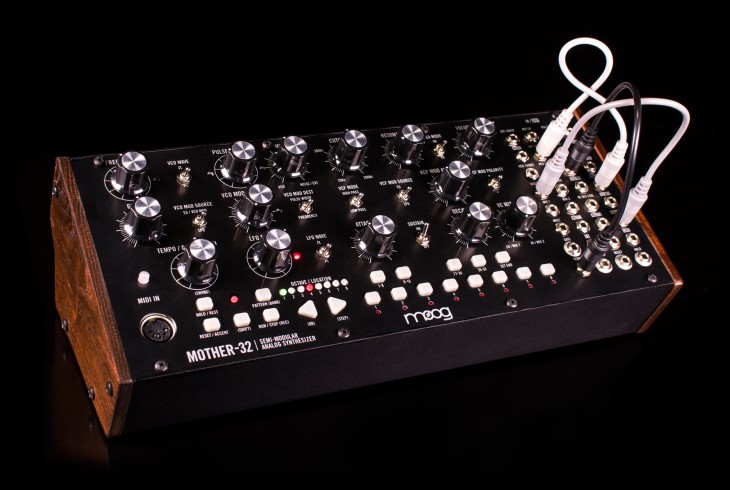
Today, Moog Music announced its first tabletop semi-modular synthesizer, the Mother-32.

The vintage-voiced analog synthesizer features a simple, easy-to-use one knob per-function style interface, a comprehensive voltage-controlled sequencer, and a 32-point analog patchbay. The semi-modular design means that no patching is required to create powerful sound, allowing users of any experience the ability to quickly make music. The patch bay includes an assignable CV output jack, MIDI to CV conversion, external audio input, a second voltage-controlled mixer, sync, and multiple unit expandability.

The unit’s sound—which is voiced by a powerful 10-octave analog oscillator with variable pulse width, and an analog white noise generator—is controlled by the 32-step, voltage controlled sequencer, or an external MIDI controller, and then travels through a Moog Ladder Filter with selectable low pass and high pass filter types.

The Mother-32 is available now for $599. You can check out more information on the unit here, with the official demo video below.

Page 987 of 3781
1 985 986 987 988 989 3,781