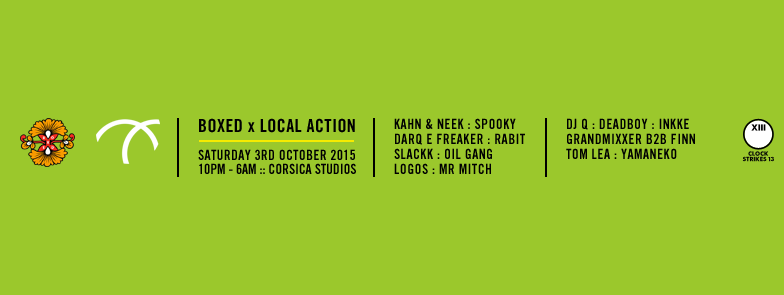
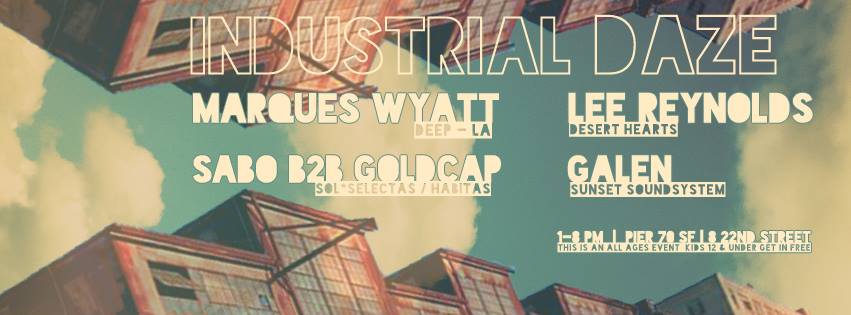
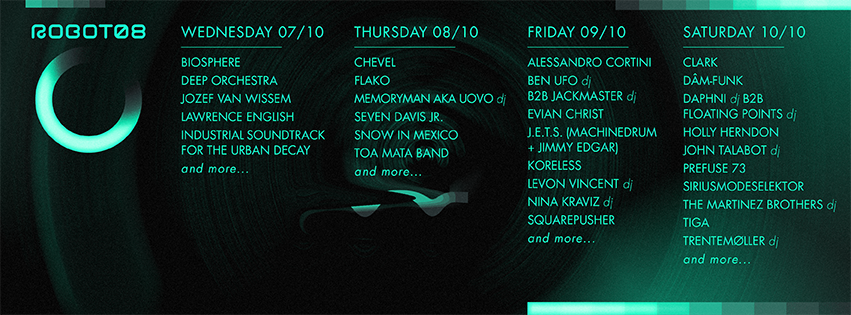
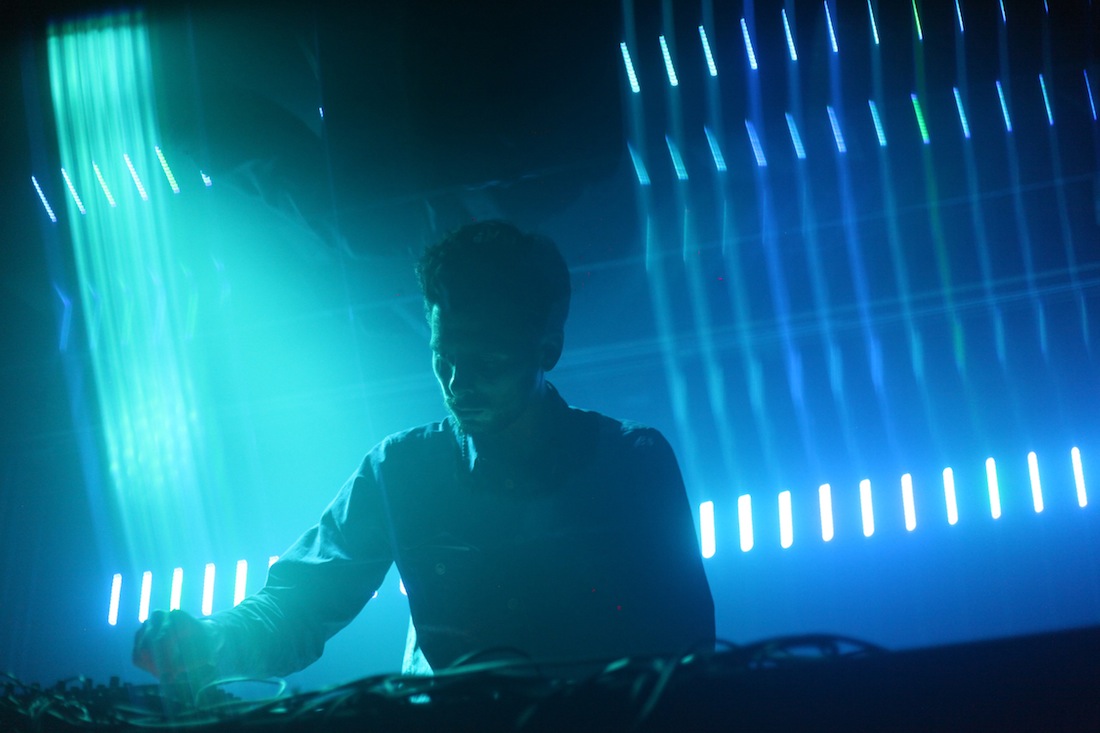
This week for our international event selections we have chosen the five year anniversary and closing event of San Francisco’s As You Like It, taking place on Saturday and featuring Michael Mayer, DBX (live), John Tejada, and a Giegling showcase in the second room; also on Saturday, three of The Hydra‘s favorite producers Levon Vincent, Move D, and Mr G (live) take over Studio Spaces E1 for Electric Minds in London; and finally kicking off next Wednesday in historic Bologna the eight edition of roBOt festival hosts over a 100 live sets, dj sets, screenings, digital installations, and workshops, with acts like Trentemoller, Biosphere, Ben UFO, and John Talabot.
We welcome our readers to submit events for weekly consideration. To find more events in your city or to submit a new event visit our events page.
When a friend tells you that something is the absolute best thing ever, you have to take it with a grain of salt. Perhaps the enthusiasm comes from self-interest (“Come to my party—it”ll be the most fun ever!”); maybe the fervor is a weird form of self-affirmation (“I just had the best meal ever, and it makes me so cool!); or, possibly, the person is just the over-excitable type, naturally prone to hyperbole. And “best” is subjective, anyway—who’s to say that Wayne’Swirled is better than Two Wild & Crazy Pies, anyway? (Though obviously, in this case, it’s the former.) So when multiple acquaintances returned from last summer’s premier edition of Sustain-Release—the weekend long mini-festival held at Camp Lakota, just outside the rural village of Wurtsboro in New York’s Catskills—we were a bit dubious. Sure, the 2014 gathering had a fab, progressive-leaning (in the good sense) lineup that included the likes of Rrose, Xosar, Blondes, Joey Anderson, Mike Servito and Jus-Ed—still, the assumption was that everyone was just on a bit of a post-festival buzz, and once reality set it, you’d start to hear about everything that was wrong with the weekend.
But that never happened, with the exception of a bit of grumbling about the occasional bout of chilly drizzle—and our curiosity was piqued, so on Friday, September 11, we made the two-hour trip to trip north from NYC with a shuttle-busload of (literally) happy campers for a weekend spent with the likes of Anthony Parasole, Bu-Mako Recording’s Jenifa Mayanja, Minimal Wave’s Veronica Vasicka, Galcher Lustwerk, the Black Madonna, Jamal “Hieroglyphic Being” Moss and Daniel “Ital” Martin-McCormick in their Interplanetary Prophets guise, and returning players like Servito and Jus-Ed. (Peruse the full line-up here.)
Great intentions count for a lot. Producer and visual artist Aurora Halal (the force behind Mutual Dreaming) and music journalist Zara Wladawsky (who doubles as the house and techno buyer at New York vinyl emporium Halcyon) are the co-creators of Sustain-Release—so who better to weigh in on the aims of the little festi…oh, wait, we’d better not call it that.
Halal: Festival culture is not something I’m influenced by or wanting to create. I’m inspired by what I’ve been working on with Mutual Dreaming, and by the Music Box,the Loft, Berghain, etc. S-R is really just a fully immersive, site-specific party, where nature plays as much a part as the music does.
Wladawsky: Definitely. I’d also call it a pure music experience, rooted in community and empowerment. Optimo, Süd Electronic and Freerotation were my biggest influences growing up and going out…they were all this and more. Hopefully it inspires people to take some of the positivity they experienced over the weekend and keep it with them in their daily life like my pivotal experiences at parties have.
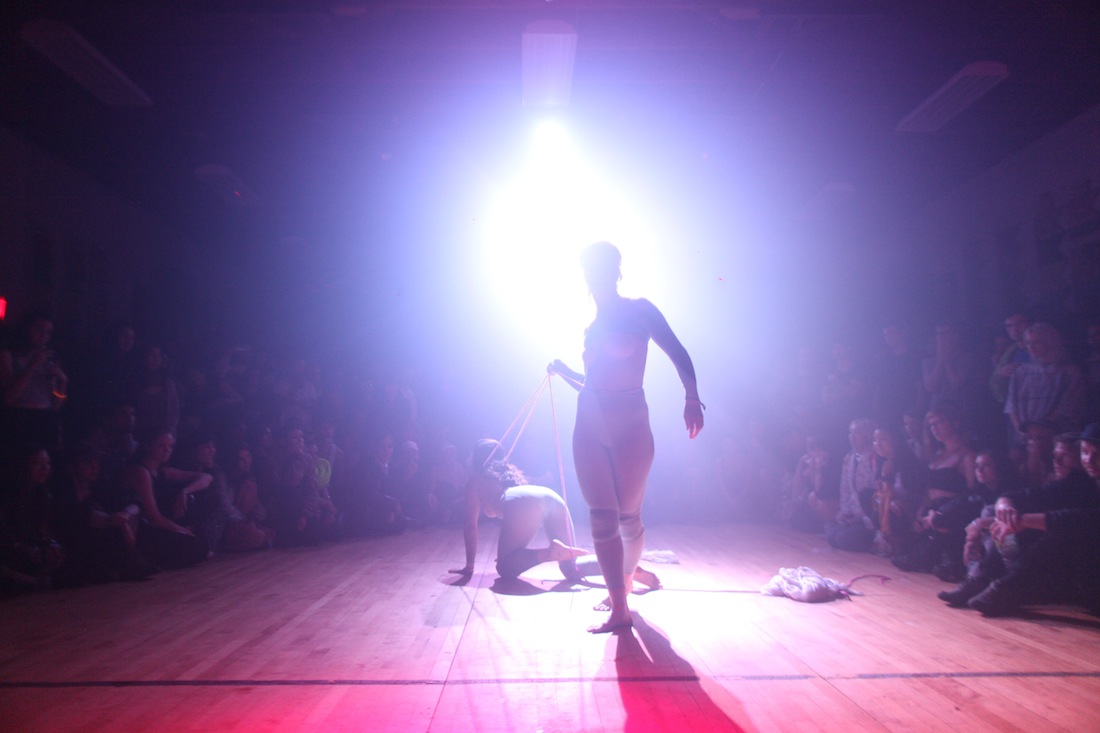
Both: For the two editions, we weren’t concerned with programming for draw. As a guideline, we book exactly what we want to hear/see, and that’s all that matters. However we included wider horizons this year, like the dub of Blazer Sound System, disco of Black Madonna, the twisted ambient of 51717 and eclecticism of Matt Werth, and included a peak time performance on the middle of the dancefloor by FlucT.
[Note: We’re not normally fans of performance-art/modern-dance interludes in the middle of a techno party…but FlucT were pretty amazing.]
Both: Friday’s main stage was a deep dive into warm grooves, Saturday main stage was a vortex of techno madness, and the Bossa stage was a platform for complementary experimental excursions all weekend. S-R’s Year 2 lineup was again envisioned as an American force to be reckoned with, focusing on and giving a platform to new movements here in the States, rather than tried and true or legacy acts. We also invited some of our favorite artists from further afield like Kassem Mosse and Paula Temple. At the end of day, we, as friends, naturally talk about music that we’re into when we hang out so it all falls together naturally. We take such pleasure in booking the artists and making the schedule as a two-day journey. Onwards, Year Three!
Smaller is better. Yes, some people actually do seem to prefer to be packed into a raging crowed of thousands, jostled this way and that as their lower extremities get soaked in beer and Red Bull—but we’re not among them. Neither, we suspect, are most of the people who attended Sustain-Release. Last year’s installment was limited to about 500 music lovers—we’d guess this year boasted a couple of hundred more invitees. And we say “invitees,” we mean it—attendance is pretty much limited to invited guests and their invited guests, which, if nothing else, assured Sustain-Release of a real friends-and-family vibe. Those who didn’t know each other soon did—and that includes the artists as well. There was none of the our-gang-versus-everyone-else mentality that can be inherent to large gatherings, and the DJs, small staff and crowd were in it together—at the risk of sounding hippy-dippy, it was all a bit peace-and-love. Which, considering most everyone there was from NYC—not exactly a “Kumbaya” kind of town—was kind of refreshing.
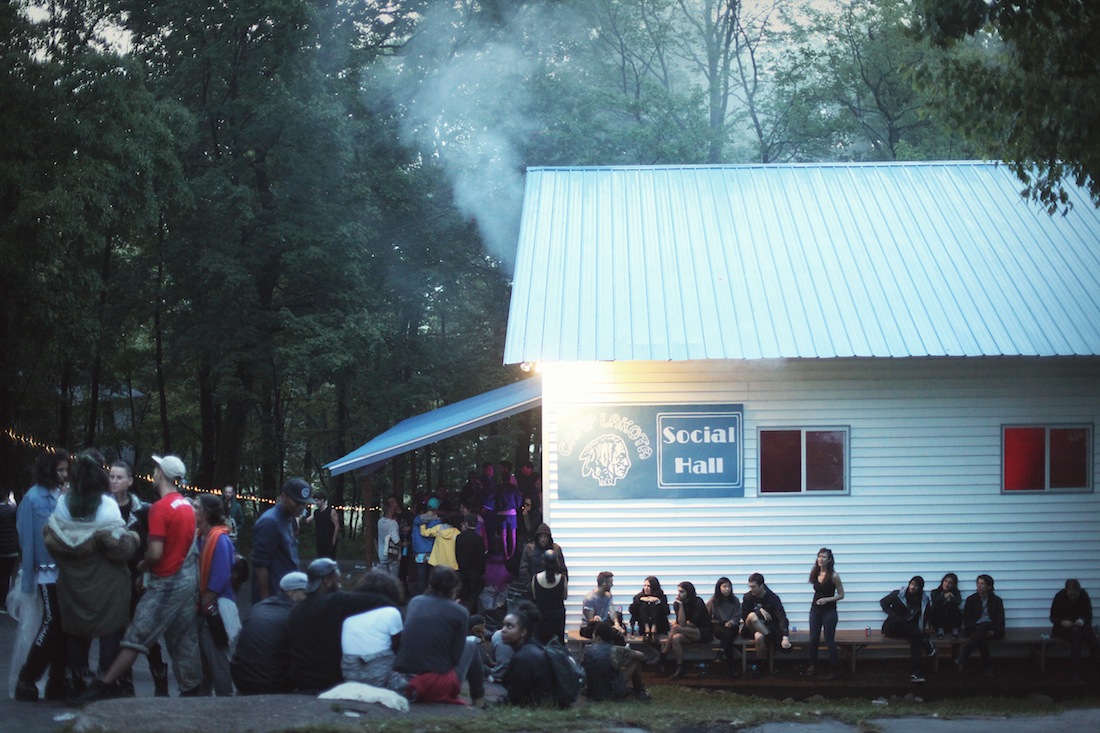
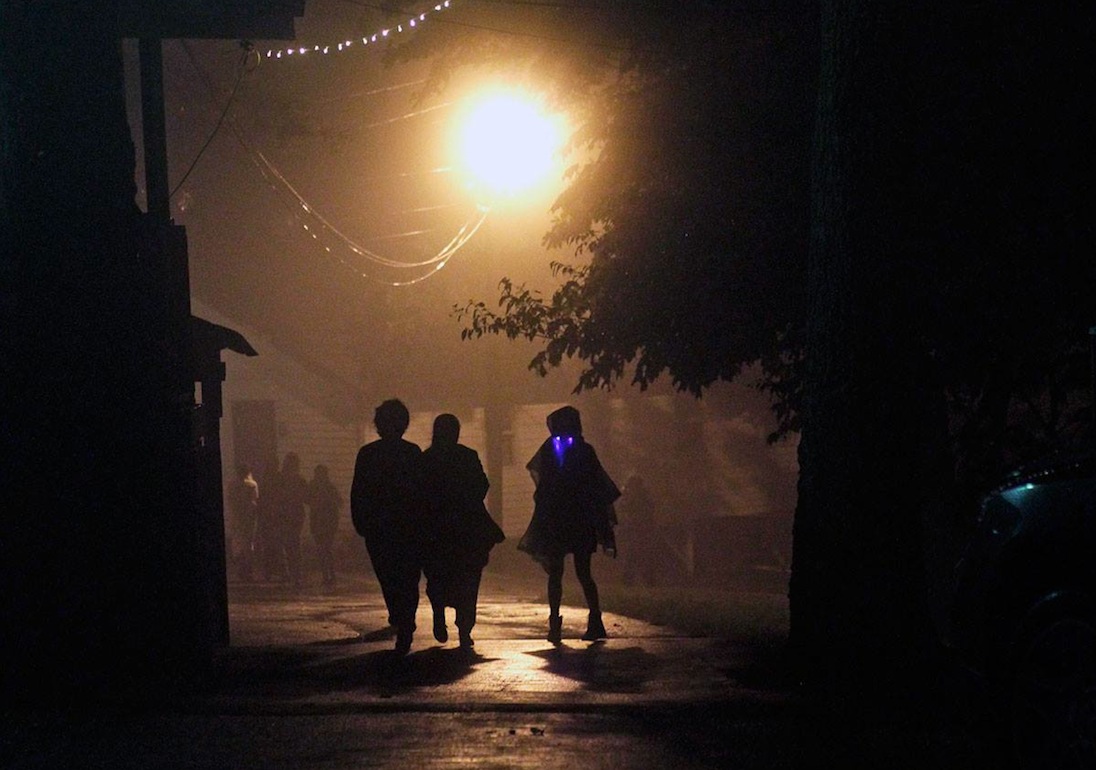
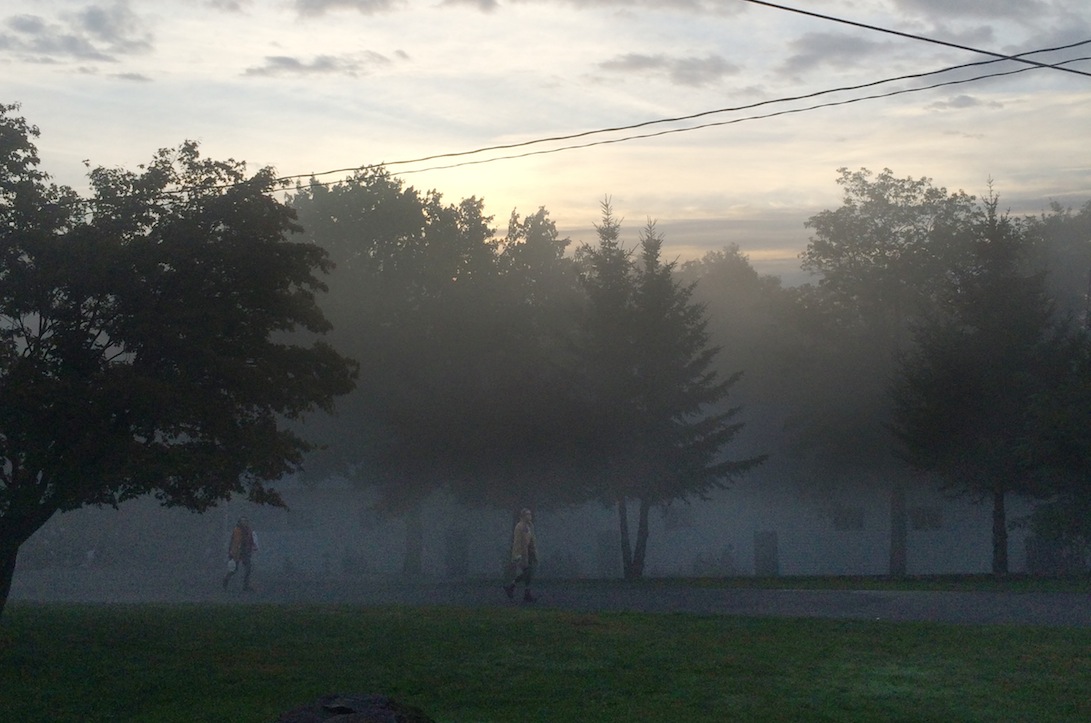
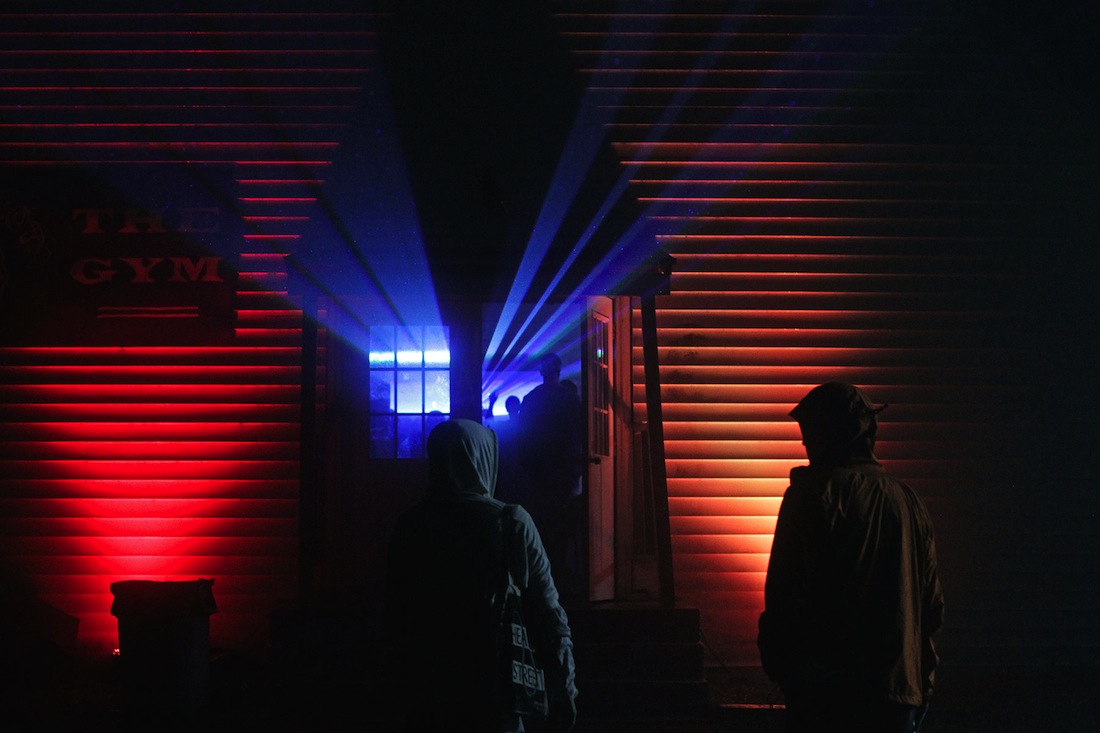
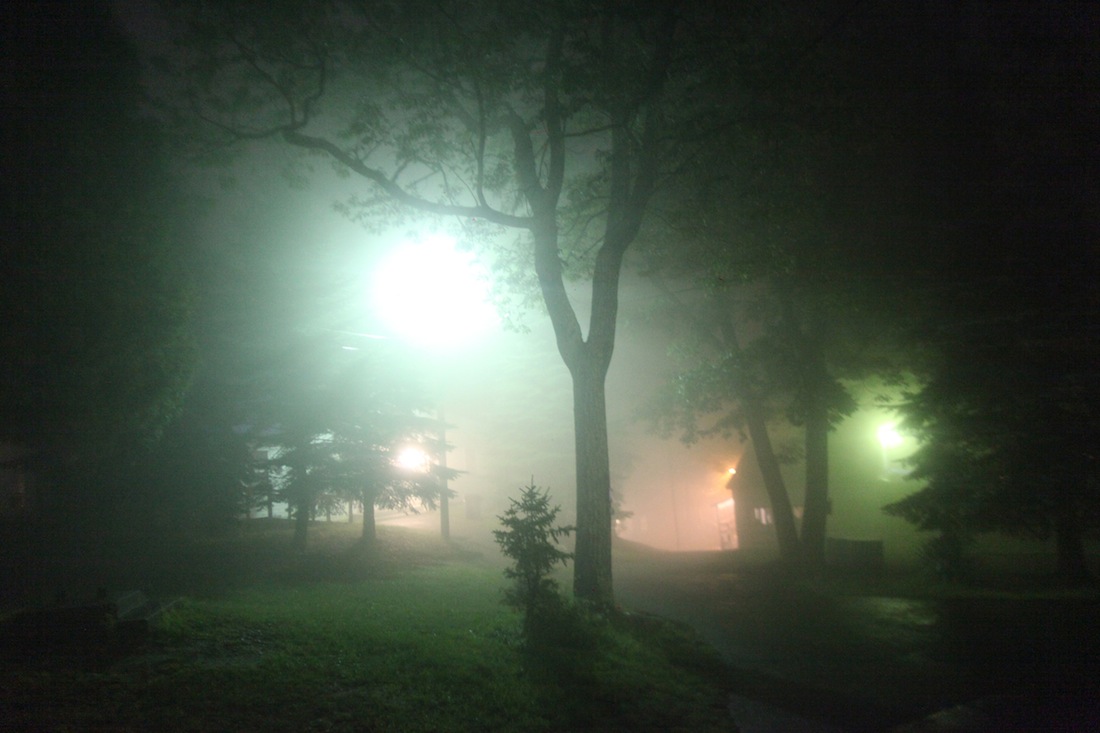
Holding a festival at a summer camp is a stroke of genius. Cabins! Trees! Tents! A pool! A lake! A basketball court! An amiably slow mess-hall staff! Camp Lakota is an actual, real-deal summer camp for most of the warmer months, and if you’ve ever spent time in one while in middle school…well, they haven’t changed much at all—it was a bit ramshackle, but utterly charming. Everybody’s sleeping quarters were within stumbling distance of each other, and the two stages—the main house-and-techno stage, which looked to be a gym-auditorium combination, and the smaller Bossa Nova Civic Club room, dedicated (with a few exceptions) to more experimental sounds—necessitated a mere five-minute jaunt through a wooded, fairy-light-illuminated pathway. “We didn’t intend on it being held at a summer camp,” Halal and Wladawsky admit, “but now we couldn’t imagine it any other way.” Neither can we.
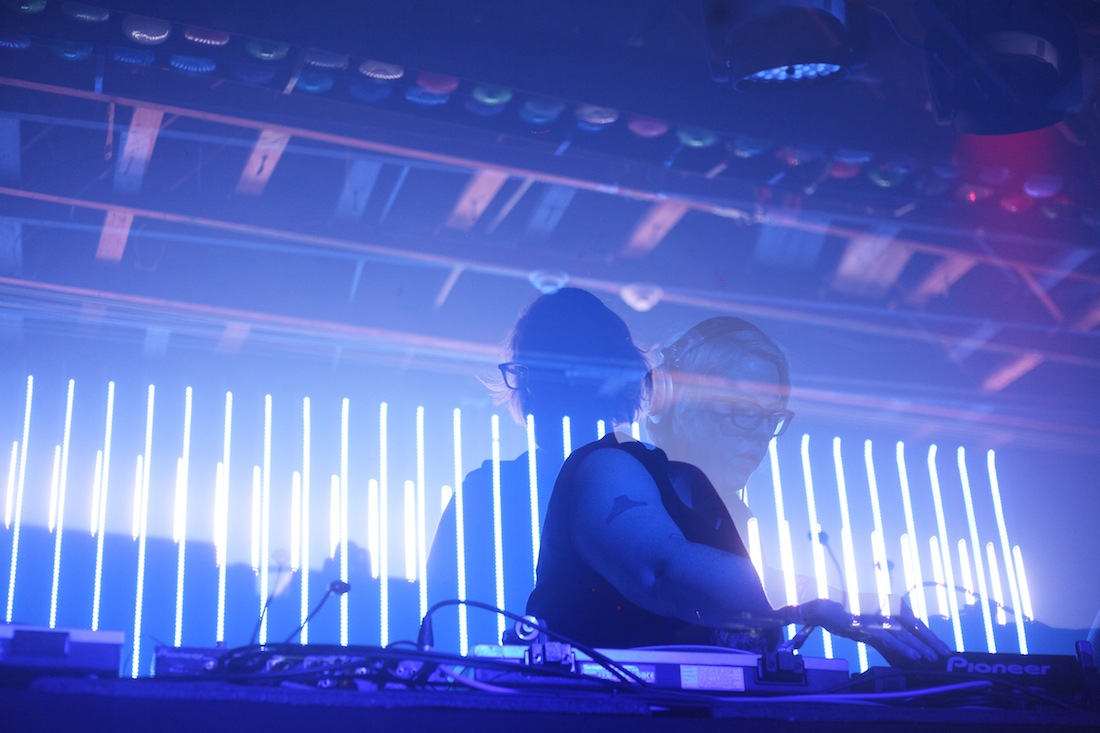
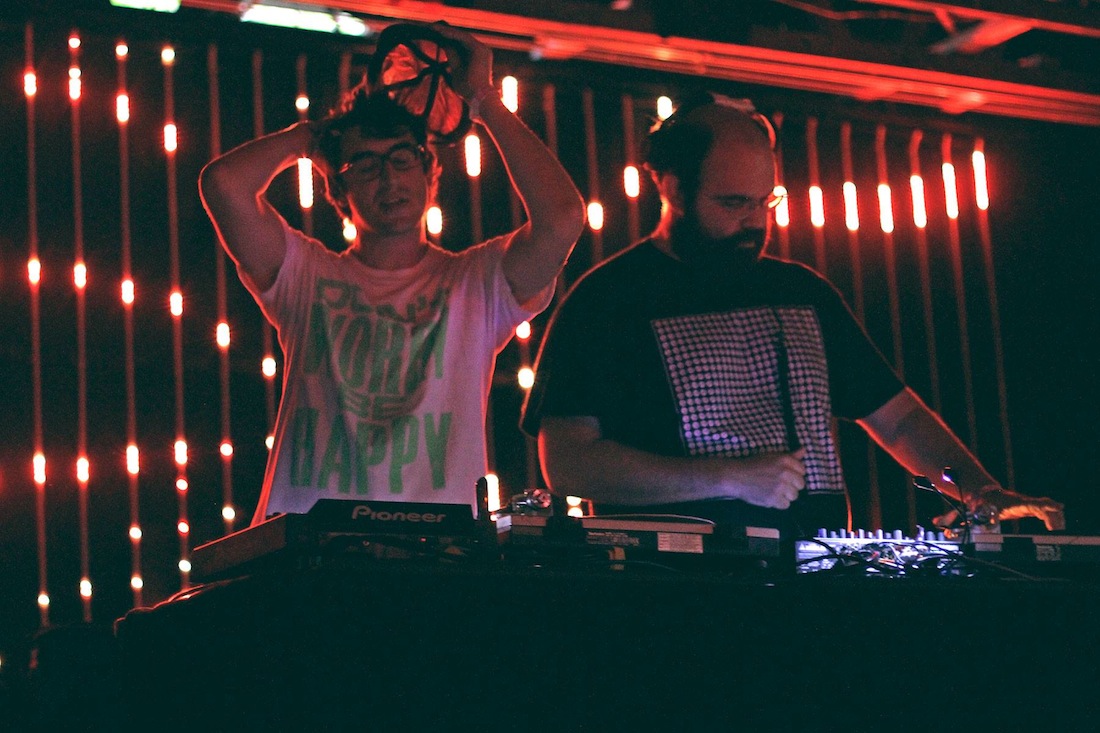
All the DJs and performers were great—but the Black Madonna and Mike Servito are at the top of their respective games. We’ve loved the Black Madonna and Mike Servito for a while now—both have long been considered “DJ’s DJs”—but judging by their respective sets at Sustain Release, the two have acquired clubland superpowers over the past year or so. Servito’s closing set in the Bossa Room was a big, bold and ballsy jackfest—and the Black Madonna? Well, anyone who can squeeze in versions of Devo’s “Jocko Homo,” Sylvester’s “”You Make Me Feel (Mighty Real)” and A Number Of Names’ “Sharevari” into a set is totally okay with us. Ms. Madonna herself has a theory about why both of the spinners have been so good lately: “I was playing a show in New York,” she says, “and a friend of mine said that he could tell I had been touring. I asked what he meant. He said it had sharpened me technically to such a degree that he could see and hear a big difference in the way I played over the course of a year. I never really thought about that, but when I saw Mike Servito play at Sustain, I knew exactly what my friend meant. Servito has always been amazing, but the pressure and repetition of touring is sharpening him like a knife. A very, very bad-ass knife.”
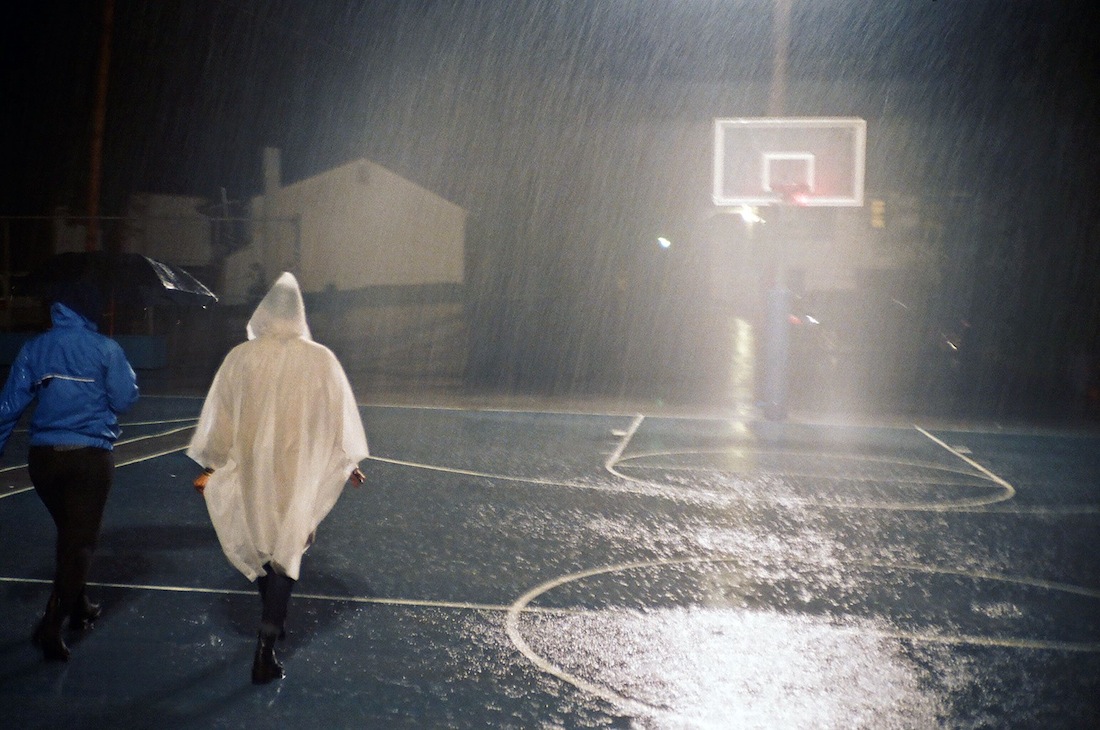
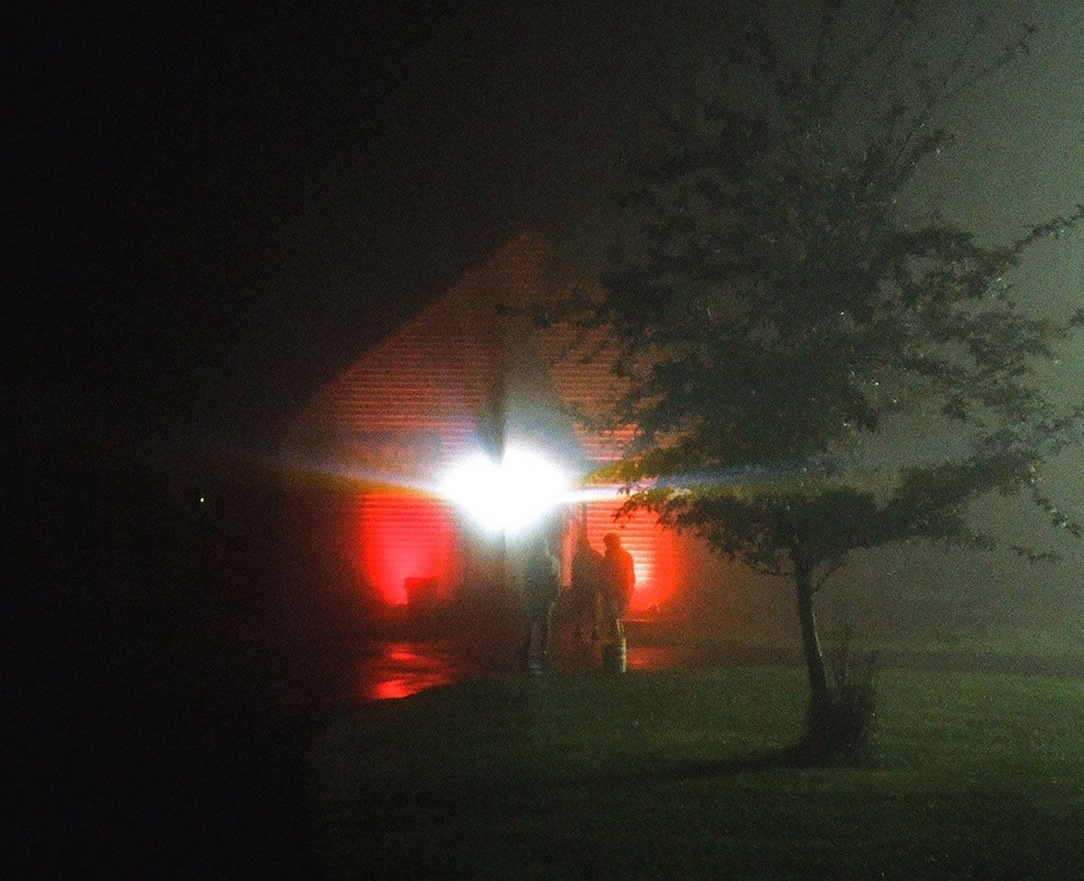
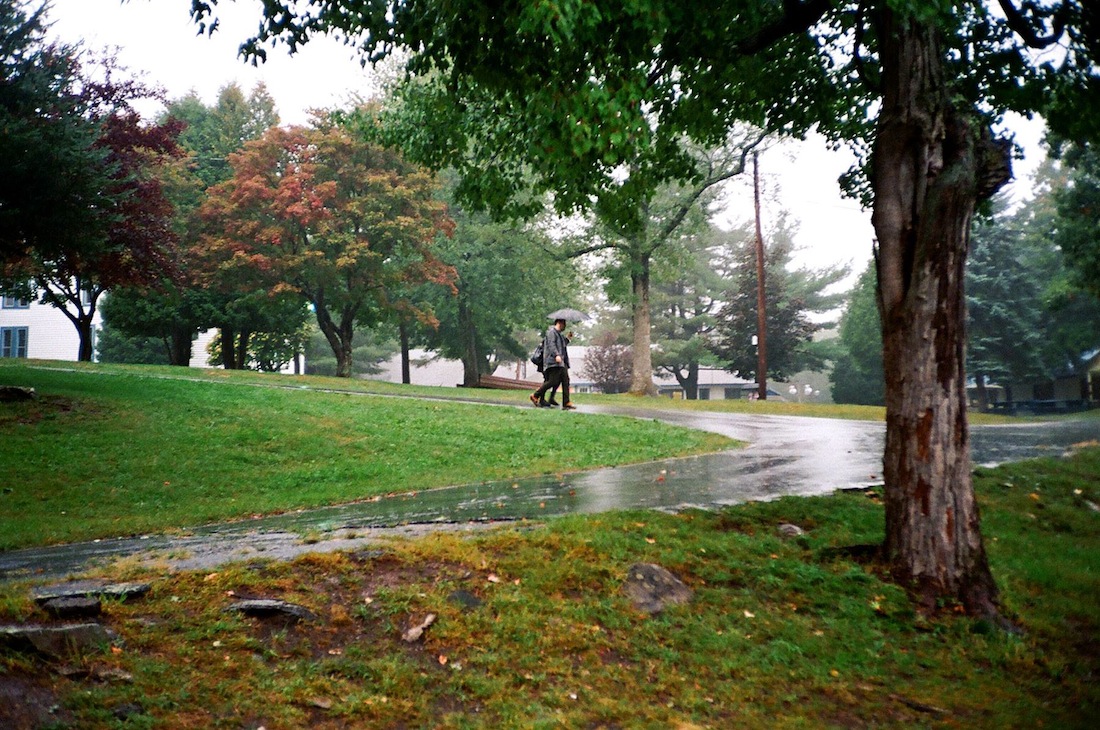
Rain and Sustain-Release don’t really mix. But the combination isn’t the end of the world, either. Saturday afternoon was slated to be spent in the great outdoors, with a basketball tournament, pool party (with Blazer Sound System, Beautiful Swimmers and RVNG‘s Matt Werth on the decks), and a lakeside billed as the main attractions. Mother Nature had different plans: What started as a gentle noon sprinkle quickly devolved into a full-scale downpour, which quickly put the kibosh on everyone’s open-air plans. The DJs did get to play, albeit within the darkened confines of the main room—and frankly, that was nowhere as fun as a poolside bash would have been, though it was nice to hear lots of dubbed-out reggae classics over the more-than-capable system.
But what might have been a disaster actually proved to be a great side effect: We (and a lot of other people) basically spent the day sloshing from cabin to tent to tent to cabin, socializing with old pals and making lots of new ones. It was a day of low-key, down-home fun, and was a great set-up to the night that followed. The rain continued well into the evening, which unfortunately meant a bit less traveling between the main stage and the Bossa room. We made the former our home base for the night, which meant we missed sets from the Long Count Cycle, Terekke, and Aurora Halal herself—along with what was, from all reports, a mind-boggling closing session from Galcher Lustwerk. On the plus side, we caught Gunnar Haslam, Veronica Vasicka, Paula Temple and Anthony Parasole (more on that below).
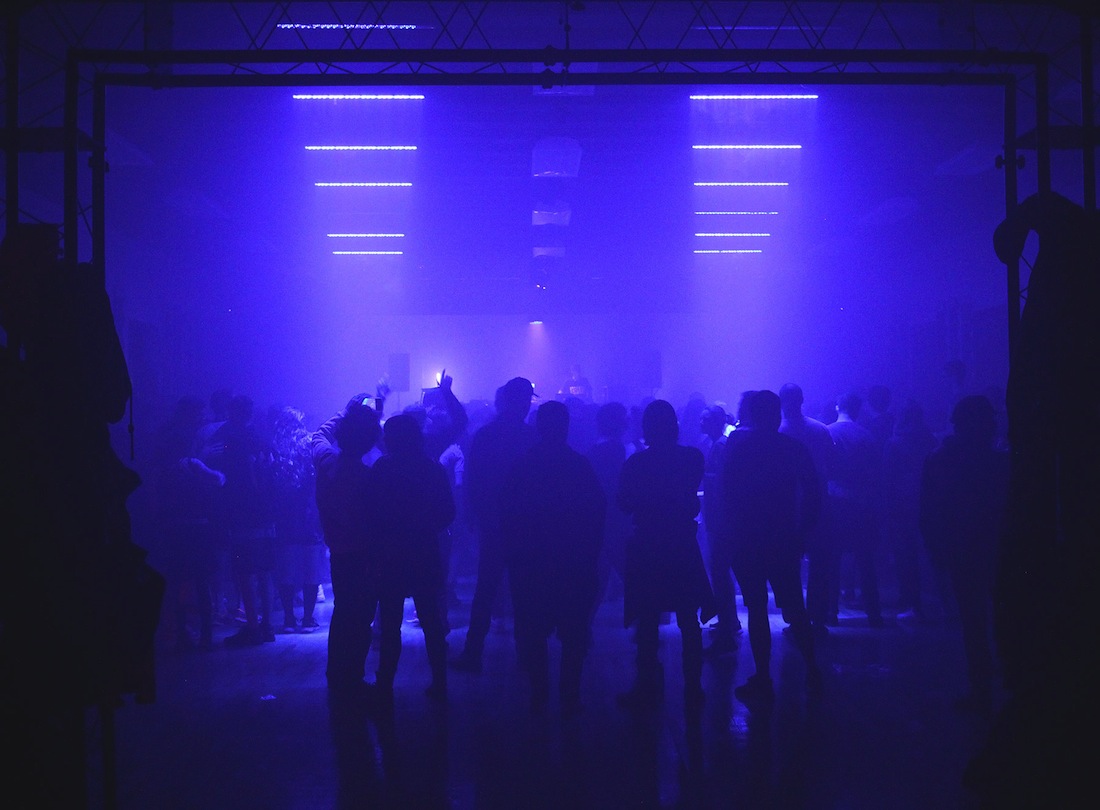
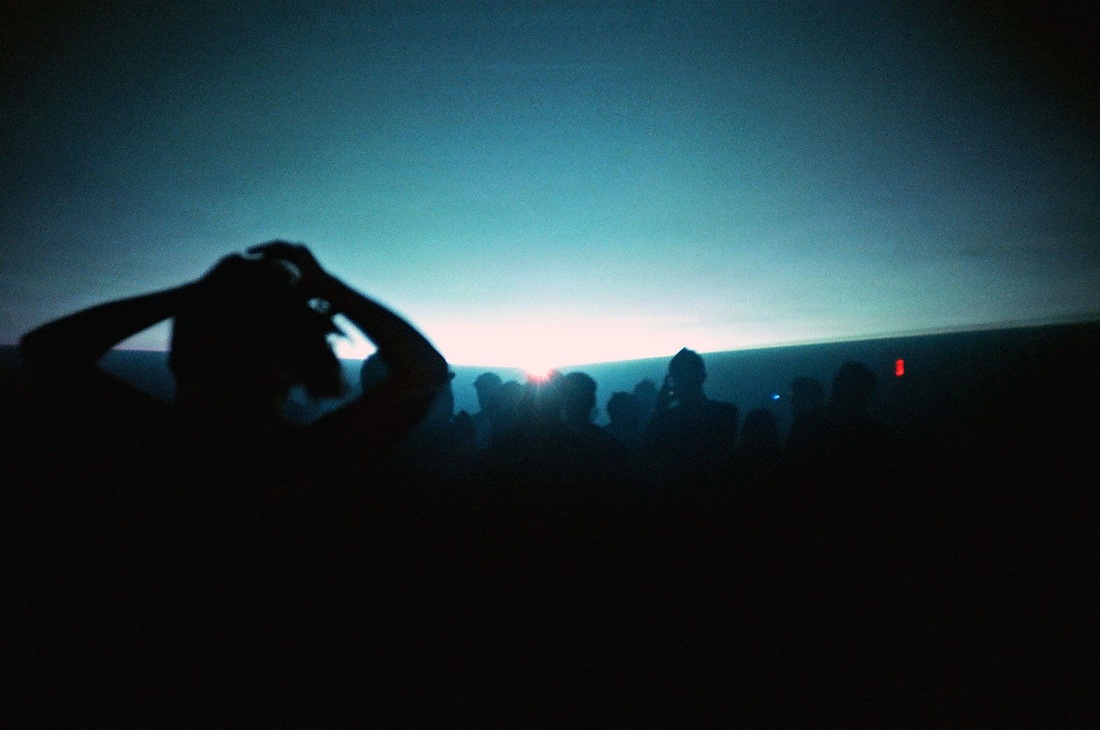
Hours of great techno can mess with your mind (in a good way). Admittedly, the long, lazy afternoon and the simple-yet-highly-effective lighting (courtesy of Nitemind) probably had something to do with this—but still, you can’t underestimate that power that music holds as a sensory-altering force. We missed Daniele Cosmo‘s opening set, but were surprised, pleasantly so, to find Gunnar Haslam laying down some rough-and-tumble techno upon our arrival—a much tougher sound than we expected from the artist, who we’ve always thought of as a more headphone-friendly kind of producer. (Not that there’s anything wrong with that!). Next came Vasicka, who’s always good for a bit of jacking fun, whether in her synthy Minimal Wave mode or more in line with the Chicago drum-machine attack of her Cititrax style—and on this occasion, we got a bit of each. Then the real fun began— Temple amazed with her set of intense, crunchy floor-manglers (it’s not for nothing that she gives her own songs names like “Deathvox” and “Monstro“); we missed her well-received set at this year’s Movement festival, but by all accounts, this one was just as majestic. And then it was time for Parasole, who was in full Parasole mode: track after track of driving rhythms, tough as nails but delivered with Brooklyn native’s deft touch. And those tracks were working their magic, as this reporter’s head was pleasantly swimming (though numerous rum and Club Mates might have played a role in that feeling).
Finally, as the sun broke through the clouds, Parasole switched gears: We remember St. Germain’s “Rose Rouge” and a remix of Blaze’s “Lovelee Dae” (we heard that classic a few times over the course of the weekend)—and finally, Prince, Radiohead and Frank Sinatra’s “Fly Me To The Moon.” (!) The rain had finally ended; the hardier souls among the remaining crowd repaired to the lake, while the less hardcore (i.e., this writer) staggered off to the cabin for a few hours of shuteye, waking up just in time for the bus back to Bushwick. The next few nights were filled with dreams of swirling music and wide smiles. Not to oversell things…but Sustain-Release was probably the best time we’ve had all summer.
We’ll be back next next year. Well, you would be back, too, wouldn’t you? But next time we’ll bring better rain boots with us.
Building on the success of the debut LP from Killawatt earlier in the year, Osiris Music has assigned three artists to rework three standout tracks from the album.
Having risen through the ranks of dubstep and UK bass music at an early age, Portsmouth-based producer Killawatt has established himself as a well respected and forward thinking artist within electronic music.
I advance of the EP’s October 26 release, XLR8R spoke with Killawatt (a.k.a.Matthew Watt) and Mønic (a.k.a. Simon Shreeve) to learn more about release, while the Mønic remix is available to stream in full below.
Matt, the new release émigré reworked, revisits cuts from your debut album émigré which was released in April this year. In the aftermath of the album, can you provide us with some thoughts on having released your first full length as well as on the album itself?
Having had a few months to reflect on LP, my initial, and somewhat surprising thought is that I actually quite like it. This is weird for me since I pretty much never end up really liking something I release. I think I was in a pretty good place creatively and I distinctly remember really enjoying the 18 months it took to finish it. As was said in the press release, there was no specific concept or storyline behind it, and it basically just became an exercise in experimentation with a bunch of new bits of hardware and software I acquired over the duration.
The new release holds three reworks of cuts from émigré by Mønic, Tommy Four Seven and Eomac. How did these artists come into the fold for the other two remixes?
Matt: I started talking to Tommy a while back and he wanted to involve me in his new T47 label / events and just support me in general. I just asked if he’d be up for a remix and he said that he was. It’s great to have something just a bit different from him too—that’s something we always look for on Osiris. it’s pretty trippy! I think Si just hit up Ian about a remix swap at some point too. I’ve been a massive fan of Ian’s work for a long time too so I’m super happy to have him on this release.
Simon, at the point of the formation of Osiris Music uk you were already an established artist. What was the motivation to start your own label?
At the time I felt pigeon-holed musically. I wanted to start a label which I could release any style of music I wanted, it really was an experiment which has lasted ten years. The label has given me complete freedom and has made me think outside of the box in terms of my own music and music we have signed.
What does the future hold for Osiris Music uk, for Mønic and for Killawatt?
Matt: Well I’ve literally just decided, while writing this, that I’m going to start my next album today so that’s the near future sorted for me.
Simon: Mainly keeping things positive and interesting for ourselves which in turn, I hope, will be reflected in the releases. In the short term we have signed a Bristol-based act called Dot Product who have just finished their album which is being mastered this week, which is due for release in March 2016.
In terms of Mønic, I will continue to work closely with Tresor and Osiris Music uk. There is also a collaboration project on the cards but it’s a little to early to speak about.
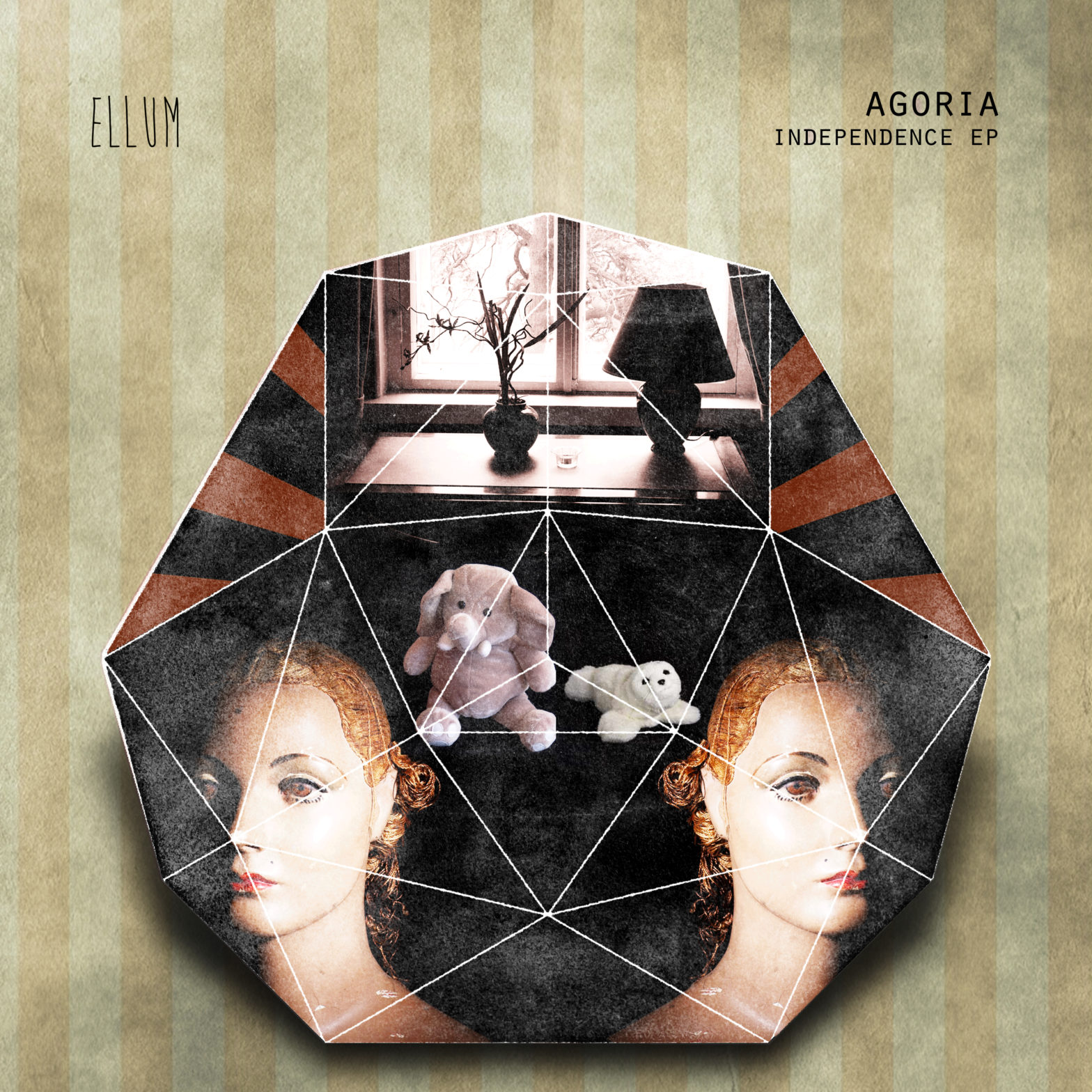
After sending “Scala” to Berlin, twirling his “Hélice” in London and colonising “Baptême” in Cologne, Agoria declares “Independence” in Barcelona.
An anthem that’s been a highlight of the summer for Maceo Plex and Agoria, the date of release for “Independence” has finally being fixed.
Agoria on “Independence”:
“Since I moved to Paris last year, I have had the chance to meet amazing artists including the Russian pianist Mikhail Rudy and the sound designer of the movie Gravity, Nicolas Becker. The three of us are animated by curiosity and the will of playing with our specific boundaries. I guess this is just the first step symbolizing our state of mind: Independence. When I met Eric [Maceo Plex] in Ibiza last year, we instantly connected, we both can play all kinds of music so I thought Ellum was the place to release it.”
Agoria’s debut release on Ellum is an equally sinister and experimental affair. Apocalyptic drum crescendos are broken up by warm synths tones and washed against baritone basslines on the title track.
Only 18 years old and hailing from the UK, the brisk, desultory, grime-infused sound of Iglooghost has been making some significant waves in the world of electronic music. Dynamo DJs and producers such as Mary Ann Hobbs, Kuthmah, and Flying Lotus—who has had a noticeable influence on his sound—have been playing his tracks as of late and this young-in has already begun to headline his own shows in London. The track “Saturn Rice,” which is being presented as an exclusive XLR8R download today, is a two-and-a-half minute, 170-bpm journey featuring an amalgam of splintering synth lines, swift percussion and a smooth saxophone sound that shepherds the track from start to finish. The track is a cut from Fly High Society’s Spacebus Vol. 1, which you can grab a copy of by going here.
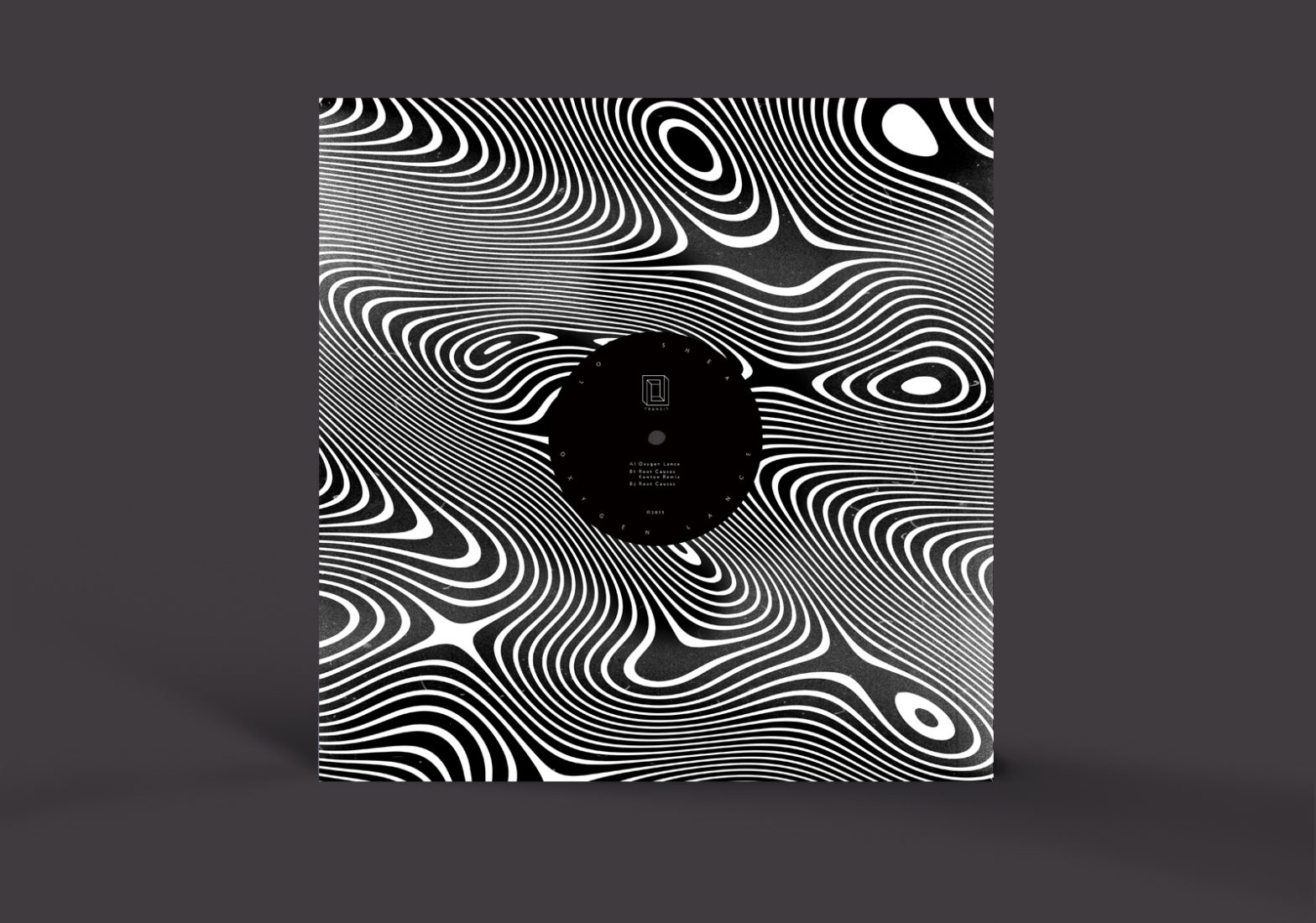
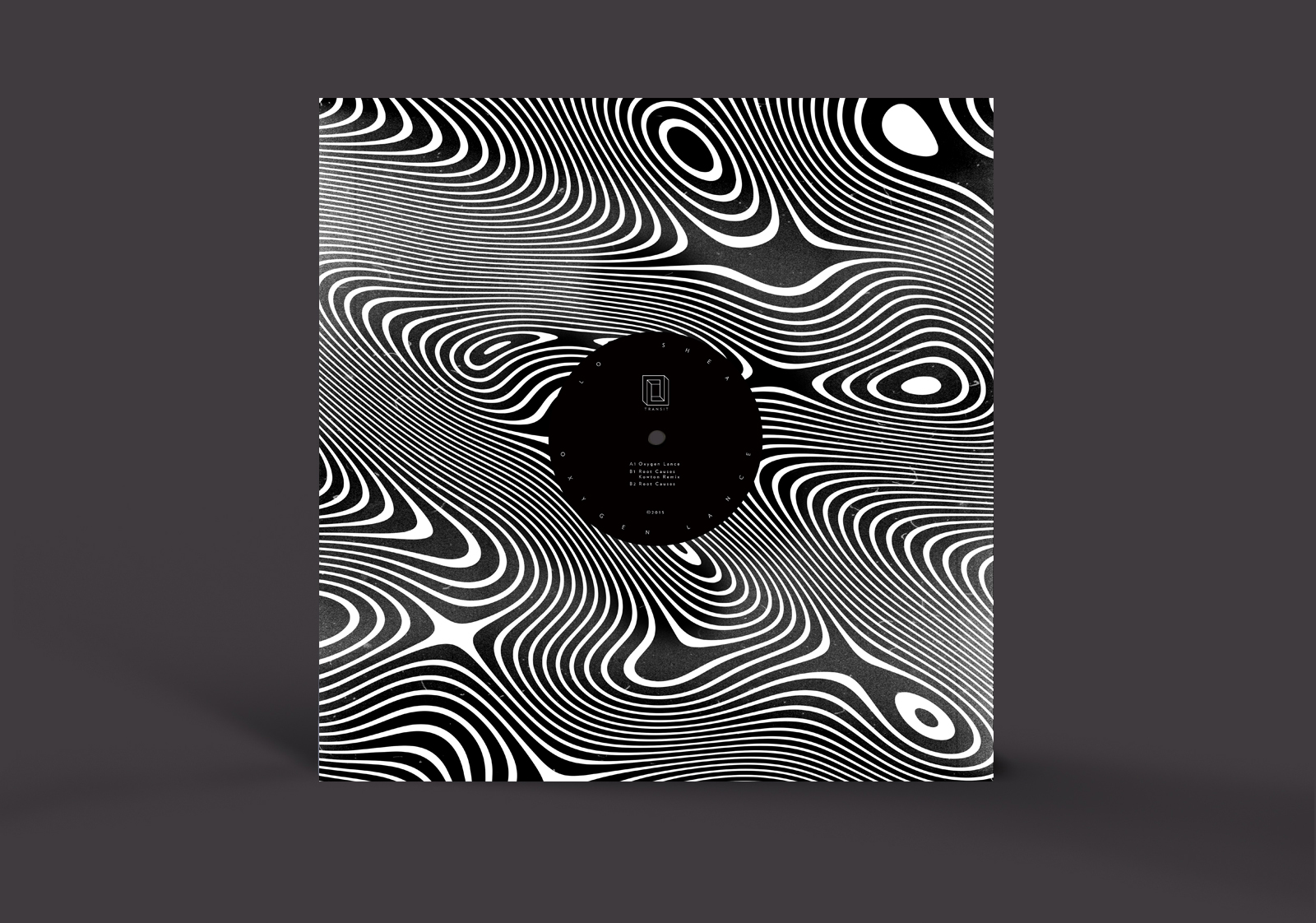
A driving force behind the burgeoning Sheffield house and techno scene, Hope Works curator, promoter, and resident DJ, Lo Shea, has fused his years of musical experience with a myriad of influences from throughout the city to create a unique sound. Following on from Lo Shea’s offerings on Secret Sundaze offshoot label SZE, and Never Learnt in 2015, this 12” for Transit sees him exploring a darker, more immersive brand of techno for his ‘Oxygen Lance’ EP.
The record features the title track on the A-side, and the B-side features the track “Root Causes,” along with a remix by UK producer and Livity Sound artist, Kowton. With his recent foray into more melodic territory in his ‘Glock And Roll’ EP for Whities, Kowton brings more of the same in his crunching interpretation of “Root Causes,” continuing the evolution of his signature UK-bass influenced sound. The sleeve artwork was created by Alex Sullivan, and the vinyl pressing is limited to 300 copies and housed in a matte printed sleeve.
You can pre-order your copy of “Oxygen Lance” by clicking here.
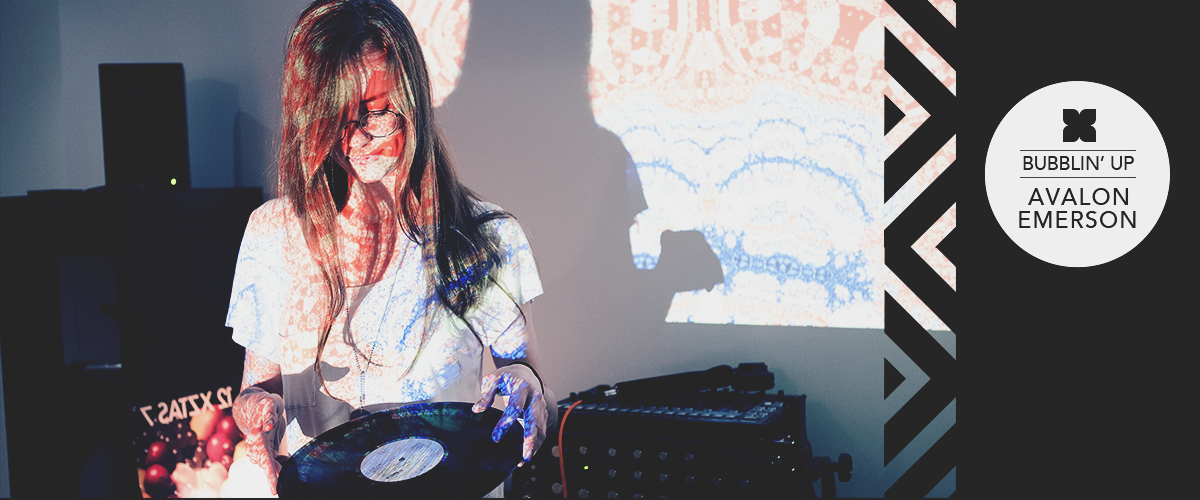
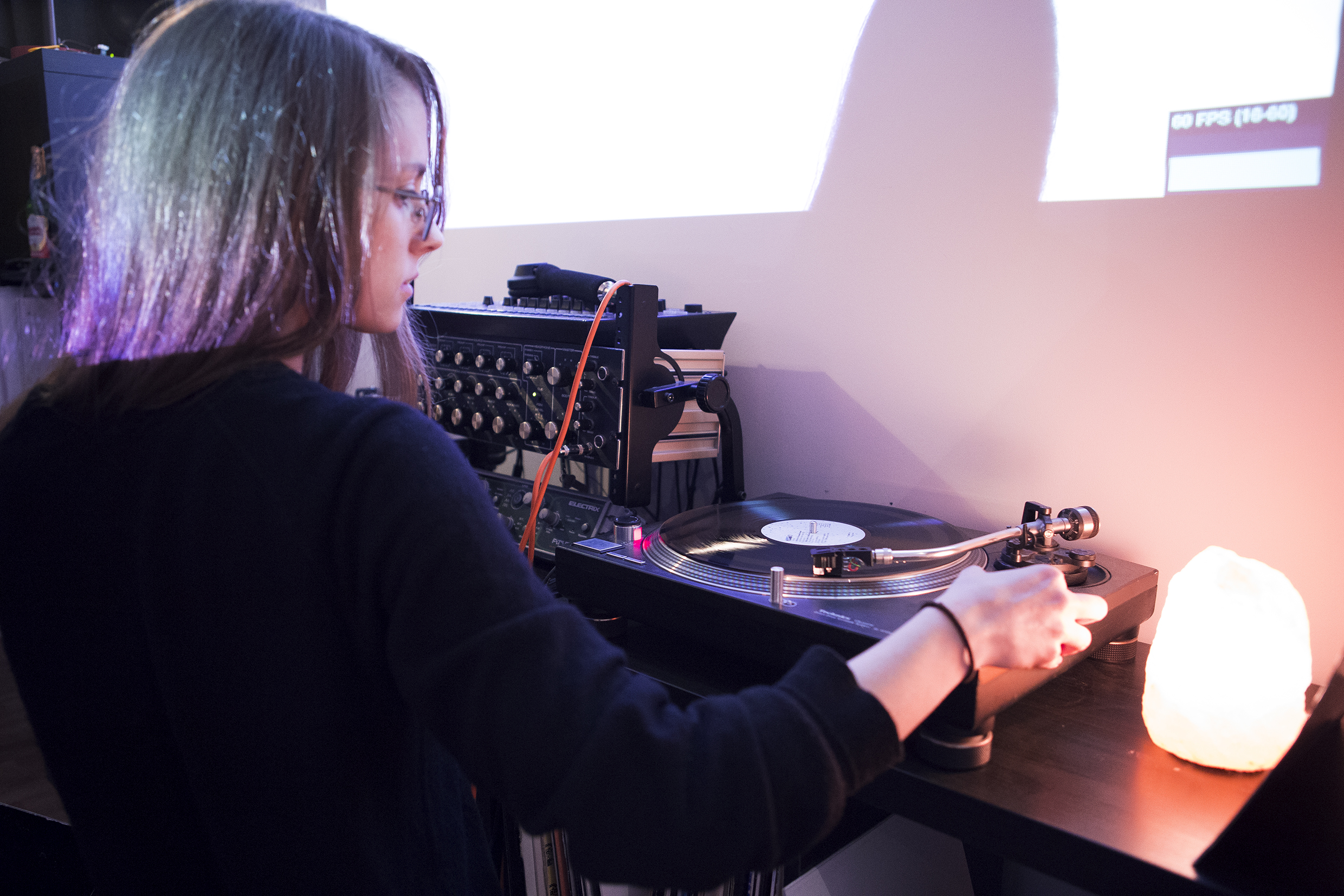
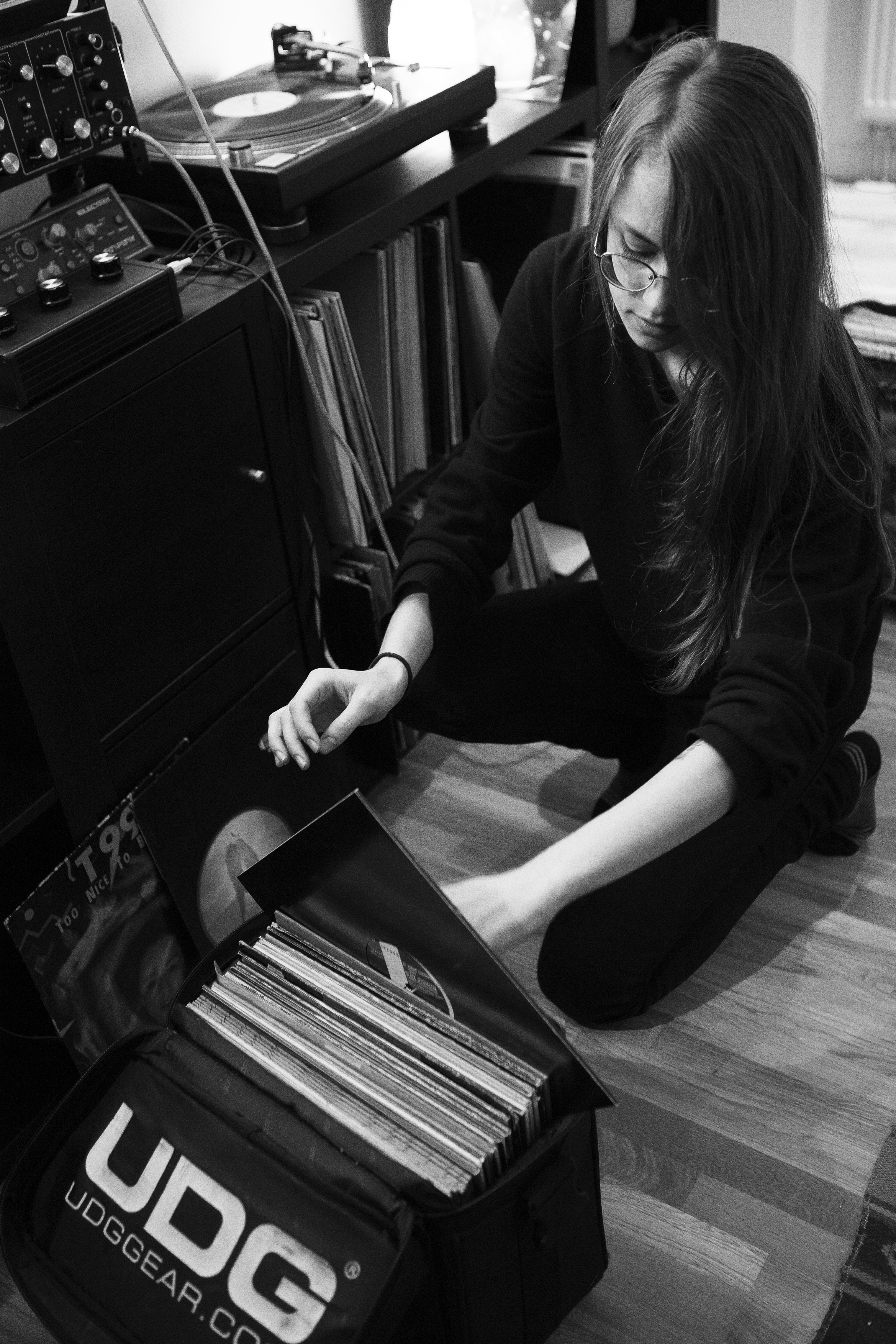
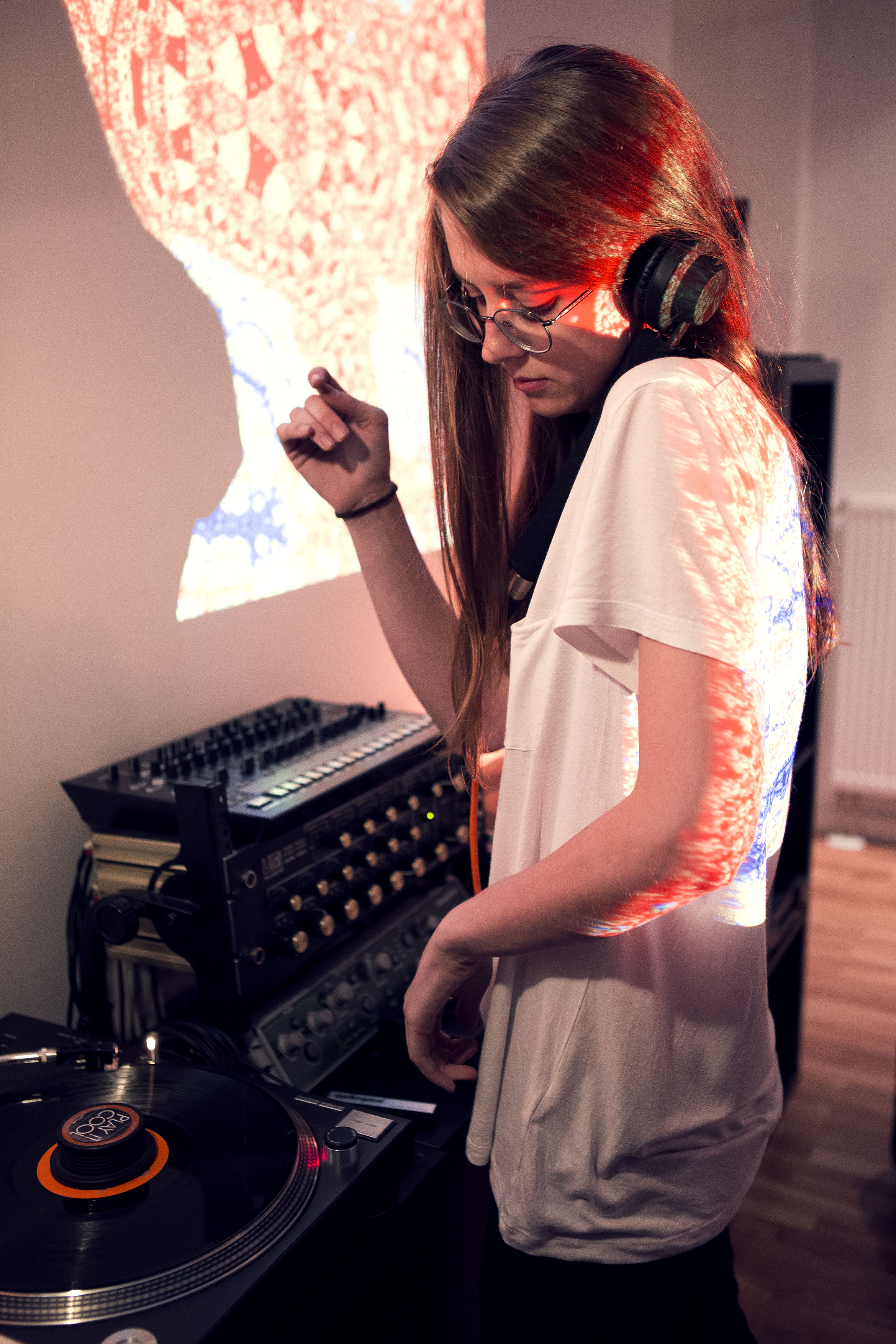
It’s a small world. As a 20-year-old, Avalon Emerson, the rising DJ-producer, was an intern at the former XLR8R HQ in San Francisco. Just last week, we sat down in her new base of operations, a beautiful modern apartment in the southern part of Berlin, to hear her story and to learn how she balances her musical endeavors with her full-time day job as a software developer.
It’s been a steady rise for Emerson, a journey that has taken her from Arizona—the place where she purchased her first pair of turntables—to San Francisco, where she began throwing monthly parties with her flat mates at their large warehouse-style flat. It was there, in 2009, that she first started DJing with any regularity—but the foundations for her success can be traced back to her earlier years where she began record collecting and recording in bands. Now, as her touring schedule continues to grow, it is becoming evident that Emerson possesses a rare maturity and natural ability to spot the emotional connection between records.
Outside of the DJ booth, she is also making a name for herself as a producer, following a string of self-releases via her personal Soundcloud page, as well as some physical EPs through small labels including Icee Hot, Spring Theory and Shtum—the latest of which dropped just last week via the latter Dresden-based imprint. Big things are expected to follow, namely more EPs and perhaps, in due course, an LP. But it’s clear that Emerson is not getting ahead of herself too quickly.
You’ve now been DJing for about six years, and producing for about four. Do you now feel that your profile as an artist is really starting to grow? I guess I’m fortunate enough that now I play more peak-time slots, instead of just opening for out-of-town DJs—so from a performance perspective, it’s a different kind of show and medium to play with. As far as my productions go, I still feel that I am exploring and learning what types of sounds and musical medium I like to create in. Turns out to be a lot! So far it doesn’t feel like my voice is tied to a specific sound or genre. I make what I like—and I think it still ends up sounding like me, whether or not it makes it harder for promoters to be able to put me into a genre box.
When you do go into the studio, are you able to produce the sound that you have in your head? Sure! I feel I can do that quite well. Often I will already have an idea of what I want to do—maybe I’ll have a melody, rhythm or sound I want to kick around with, or I’ll be obsessed with a record from my childhood or something where I really like the abstracted idea or technique—and I will try to explore that idea in the studio by doing it my way. Like I was listening to a lot of Propaganda and Anne Clark for a bit, so I decided to make my own spoken word vocals over a dance track. There are so many different areas to explore with production—I am definitely not bored yet!
“I really like DJing—when it’s good it’s the absolute best feeling on earth, and when it’s bad it’s horrible and gets stuck in your head for a week. But with production, it’s still something that I just feel like I have to do to stay sane.”
Your DJing dates back to 2009 when you moved to San Francisco, but your first physical production was released in 2014, via Icee Hot. How do you think you’ll balance the two going forward? I really like DJing—when it’s good it’s the absolute best feeling on earth, and when it bad it’s horrible and gets stuck in your head for a week. But with production, it’s still something that I just feel like I have to do to stay sane. I still love releasing something into the wild and seeing how people respond to it, whether it be my friends, peer producers, critics, or total strangers on the internet—so I think DJing is fun, but I kind of see more opportunities to grow and explore in actually producing the music.
When you step onto stage for a set, do you still feel nervous, or has that feeling passed? The shaky legs kind of thing has stopped happening, though I still get a mental sort of performance anxiety. I bet that doesn’t ever completely go away.
Like when you played at Panorama Bar recently? That was probably the most intense DJ-performance pressure I’ve ever felt. I was doing the closing slot, just after KiNK‘s live set—who can work a crowd like literally nobody else I’ve ever seen—and it was shoulder to shoulder packed by the time he played his last tune. Once I got through my first few tracks, I sort of realized that I’ve done this sort of thing before, and I’ve even been in the crowd quite a lot at Panorama bar. By the time I was a couple hours in, I saw from the DJ’s point of view why so many people think it’s the best club on earth. I ended up playing for five hours, and not to get too gushy, but the whole thing was magic.
Are you very critical with yourself, both with your productions and your sets? Yes, both. If five people come up to me after a set and tell me that it was a great show, and then one of my friends said I could have had a cleaner transition here or there, then it’s easy for me to think “Oh fuck.” It’s honestly kind of a big deal, and I know that as a performance artist, it’s not going to go perfectly every time— but at the same time, I am kind of a perfectionist in a lot of other areas of my life, and I need to learn to let go a little bit and enjoy the journey of learning.
Does this mean that you throw away a lot of sketches or loops? Yes—but I hope I am at the point where I can recognize that something is worth saving, even if it’s the wrong song for that experimental long-tail compression on a hi-hat reverb.
Away from music, you also work as a software developer. How do you balance the two? Do you anticipate that music will eventually take over? I don’t know. As an unwilling citizen in these late-capitalist times, I have to make money. I code. I find that if you are not 100-percent relying on your art for the food on your table and the rent, then it is still an enjoyable release—and it also offers you some creative freedom because you don’t have to take every gig that comes around and you don’t have to do every remix. Of course, the balance can sometimes be really hectic—like when an EP comes around and you do a lot of press, or sometimes you have four weekends in a row where you’re out of town, and then on Monday you go into the office and argue on Git-hub about semicolons or something. It’s a constant struggle to find balance, but I still feel extremely fortunate to have two fulfilling ways to spend my time on this earth.
“I find that if you are not 100-percent relying on your art for the food on your table and the rent, then it is still an enjoyable release—and it also offers you some creative freedom because you don’t have to take every gig that comes around and you don’t have to do every remix.”
It sounds quitting the day job is a long way off, in your head at least? It’s not necessarily the goal right now. When music becomes the day job, you also get the baggage that comes with it. Art is supposed to be the thing that you love to do, and that you don’t do for anyone else. I don’t release music that I don’t like. Ideally, I would love to get to a point where I’ve built up a momentum and have a studio where I can lock myself away during the week, then play gigs on the weekends—but that’s not where I am right now.”
How do you balance the time? Is it software development in the day and then music around that? It’s a Monday through Friday thing with the coding, then I work on music before, after or on weekends around that. But I’m finding that if I have a finite window in which to be creative, then it’s sometimes advantageous for the creative process, because you don’t have infinite amounts of time to bullshit around. I have to formulate my ideas and get them down as fast as I can. I’m obsessed with streamlining by workflow in Ableton so that I’m efficient when I sit down in the studio. I have multiple templates, and my samples have a pretty OCD-level organizational hierarchy.
“I can’t help but connect with music emotionally. When you do that, you build a library of musical gems that you can sprinkle around a party.”
You began DJing properly in 2009—but when did you actually learn the basic skills? I bought turntables in college in Arizona. But for me, DJing isn’t about beatmatching—it’s about picking music to play,and identifying emotions that certain tracks give off and that people catch onto, and then pairing them with other songs that compliment that emotion. In that sense, I guess I’ve been practising forever. It came very naturally to me—I can’t help but connect with music emotionally. When you do that, you build a library of musical gems that you can sprinkle around a party. That’s just something that I love to do and will explore for a long time.
What was behind the move from Arizona to San Francisco in 2009? I was born there, though I grew up in Arizona. After a tech internship halfway through college, I stayed. Haven’t regretted the drop-out quite explicitly yet.
But was last year’s move to Berlin motivated by a desire to push your music? Yes. That one was motivated by music! I found myself less identifying with what the city had become, and I decided to explore the music more, which would have been really hard to do with my job at the time. My day job now is a bit more flexible—I can work remotely every once in a while and can leave early on a Friday if I have to fly out to a gig.
Moving back to San Francisco, that was when you lived in a warehouse and began throwing parties? It was more of a big shared house—I mean, we didn’t shower in the kitchen or whatever! It was full of people from all over the world, and I loved being around so many different cultures, especially coming from Arizona which is sometimes quite homogeneous.
How regularly did you throw these parties? Not so often—once every few months. There was always a theme and we would put together a special flyer, and make a little Google form where you’d have to sign up. If you weren’t on the list then you couldn’t get in. Pay at the door, open bar, everyone in the house contributed, and the vibe was always awesome. In fact, just last summer, the only wedding I’ve ever DJed at was for my two friends who I met in the warehouse—a girl from Paris and a guy from Bavaria who live in Berlin now.
So even at this time, you weren’t DJing very frequently? No. We were just having fun building the party and the community of people. DJing was just a part of this—but it was never a means to becoming a DJ. I never had the mindset that I was going to practise, gain a certain number of points in this skill set to climb the ladder. It just sort of happened. My friend, Matthew, who was the one who taught me how to really blend records, and I would play these parties, so that’s where I learned to DJ and program for a whole night. That’s how the love for producing took over, mainly through editing tracks. When I reached 21, and got to DJ in clubs—like a “real DJ”— finally—I learned how much it sucked having to play bullshit 45 minute sets where my friends had to pay twelve dollars for a drink.
How active are you with collecting records today? I play a fair amount of vinyl, and I work right next to Hard Wax, which is dangerous—which is also kind of close to the Record Loft, which is even more dangerous. I am also obviously on Discogs quite a lot. I left a bunch of records in San Francisco, and every time I go back I try to bring a little crew of twelves back with me. But at the same time, I don’t want to be too much of a hoarder. These little plastic plates are just ethereal beings, passing in and out of our lives. Eventually they’ll all get a Club Mate spilled on them, dish on a hot CDJ, or suddenly become something someone wants to pay a hundred dollars for.
“I don’t want to be part of this commodity-party noise-filler sort of scene, where it doesn’t matter what kind of sound is coming out of the speakers as long as the club sells bottles.”
Can you remember your first international gig? Yep—it was in Vancouver. My sister came with me. I only really started touring internationally when I moved to Berlin, and that was a time following my first release in 2014—I signed up with both European and North American booking agencies. By the time I had come to Berlin, I had a two month tour planned for when I returned to the States. That was the first time that I had the kind of crazy schedule where you play Thursday through Sunday and go directly from the club to the airport sort of thing. That was a glimpse into how the future life could possibly be—and that was part of the realisation that I’ve got to keep in mind what I want from life in general, and balance how I want to share my art because it’s an extremely personal thing too. I don’t want to be part of this commodity-party noise-filler sort of scene where it doesn’t matter what kind of sound is coming out of the speakers, as long as the club sells bottles.
So are you very selective with the gigs that you play, as a result of that? I think I am still learning this, but I’m pretty open-minded when it comes to taking on shows. I kind of know what I don’t want with gigs, but I still take a lot of gigs just to see what is going on. I haven’t played a lot of festivals, and I’ve had a good time at most of my gigs. Some of the best gigs are in non-major cities—like Freiburg or Calgary—but places like New York or London can actually be pretty tough.
You’re first release, “Warm Up Love,” was uploaded onto your Soundcloud in 2012. Your sound has changed considerably since then—was that intentional? No—that’s just how it goes. If I try to consciously make something then it always ends up sub-par, and I will never really do anything with it. That’s why I find it pretty hard to do remixes, where you have a sonic box in which the product must fit.
Did production seem like a natural step, to support your DJing? Not really—it was sort of the other way around. I’ve been making music for a really long time, from pedal-board noise or dreamy guitar folk when I was young to now. I’ve been pretty tight with computers since day one, so I’d have the torrent of some multitrack program, and invite my friends into my bedroom to record—with my bed leaned up against the wall—experimenting with microphone placement on their 200-dollar drum kit. It’s always been this thing that I enjoy doing as a creative release, along with feeding my technical desire to learn programs and new synths and techniques. The whole world of sound engineering is extremely interesting to me.
Are you completely self-taught? I think you can learn just about anything on the Internet—and being around people doing cool things also lets you pick up stuff from them too. But I don’t think anyone is totally self-taught. When I was first interning at XLR8R, I met Christopher Willits, who makes gorgeous ambient music. He works with Overlap Studios in the East Bay with Ryan Kleeman. I’ve gone over there many times to work on mixing down a track or something, and have learned a lot about both the hyper-technical side of the studio, and about life as a professional in this industry.
You’re first physical release was in 2013 via the Icee Hot imprint. How did that come about? It’s kinda funny. I was already sort of going to release “Pressure” as part of a compilation for another label, when I heard Ryan—Ghosts on Tape—play a set at Public Works where he dropped his brand-new track, “No Guestlist.” I loved it, and so I emailed him asking him for it—but felt the need to reciprocate so I gave him some of my new stuff. When I sent him “Pressure”, Shawn and the other Icee Hot guys convinced me to do a whole twelve with them.
And then how did “Quoi” come about? They asked if I had anything else so I sent them “Quoi” and they liked that one too! It was pretty quick actually.
“The first time I realized that a piece of music that I’ve done exists in some sort of physical form that could hang around on this earth after I die was pretty crazy.”
That must have been a nice moment. Definitely. The first time I realized that a piece of music that I’ve done exists in some sort of physical form that could hang around on this earth after I die was pretty crazy.
Has an LP crossed your mind yet? Yes. An album is definitely something I would like to do—but it has to be the right time. I don’t want to it to be a random hegemony of dancefloor tracks. To me, the LP format is best expressed in single idea, from one period of time. I’ll do it when I create this extra magical day of the week or when I don’t have to code 40 hours a week.
Do you have a particular goal in mind or vision of where you want to be further down the line? An LP and a live show, could be really rewarding. I won’t stop DJing, of course. I think I have different ideas of where I want to explore as far as artistic identity and career go, but I don’t have one clear goal in mind yet—I don’t see anyone else’s career that I want to model myself after necessarily. Who even knows what the music economy will look like in ten years? I’m just going to keep doing my thing and see where it takes me.
All photos: Jill Bettendorff, jillbettendorff.photography
Schmutz—a duo made up of Irish producers Conor MacParland and Kristian Woods—released its Transgender EP on vinyl on September 14 via Omnidisc, with digital set to land on October 5.
Born from a renowned party series in Northern Ireland—which has hosted house and techno heavyweights such as Midland, Hunee, Leon Vynehall, and John Talabot—Schmutz released its first 12″ on Gerd’s 4LUX label last year to great acclaim.
Spread across three tracks, Transgender is a raw, analog-driven techno EP splattered with 909s, 808s, and Juno 106 magic. It’s late-night club music that is altogether warm, alien, and dance inducing.
You can stream the slamming title cut via the player before, with the EP available for purchase here.
Few people are synonymous with their record labels in the same way as Ron Morelli. His brainchild, Long Island Electrical Systems (L.I.E.S.) has been home to the grainy house and techno that’s become synonymous with New York electronic music in the past few years, and heavily draws from Ron’s punk aesthetic and background. He is relentlessly loyal to his artists, and his commitment to a singular artistic vision for his label has been the backbone of L.I.E.S. Having an old-school New Yorker personality, he is either incurably driven or prickly, depending on where you stand. Before he ran L.I.E.S. full-time, he was working at the East Village’s legendary A-1 record store—but as much as he is associated with NYC, Morelli moved to Paris after becoming fed up with a city that showed almost no resemblance to the New York he grew up with.
Ron’s only departure from L.I.E.S. has been his output on Dominick Ferrow’s Hospital Productions label, where he’s just released his latest LP, A Gathering Together. His records increasingly rely on found samples and droning ambience, as opposed to the driving rhythms that L.I.E.S. has become known for. A Gathering Together marks his most ambient-tinged effort yet, with most tracks lacking the sort of rhythmic structure one would associate with the sound he’s helped cultivate; his characteristically dark and gritty sound, however, is still there. Although it doesn’t seem intended for DJ sets in the same way that his earlier releases were—it’s a significant departure in style and structure—sonically speaking, the album still manages to feel very much like the man who made it.
With your name so synonymous with the L.I.E.S. record label, can you talk about the decision to put your LPs out on Hospital? A couple of years ago, Dom had asked me to do a record for his label, thus I made it my business to finish music I had been working on with a set deadline and present it to him. I enjoy working with Dom and I feel Hospital is actually a perfect fit for my music, as the label is consistently full of surprises, pushing the limits and is without restrictions on any end.
Is part of it to give yourself some distance from always working on L.I.E.S.? If I were to give myself deadlines to put out my music on my own label the music would most likely never come out.
How did your move from New York to Paris affect the way L.I.E.S. operates? Being in Europe and constantly being on the road gives the label a physically human visibility that couldn’t have achieved staying in New York. Unfortunately, the U.S. doesn’t have the infrastructure where one can be on the road every weekend all year. If you’re lucky, you can tour the States once a year. Thus being on the road overseas with other artists on the label makes our presence felt with a much stronger resonance then if we were kicking around the same places in NYC.
Has the move changed the way that you work, or the way you make music? The move has not changed the way I work or how I make music. The m.o. remains the same as day one.
Was there anything that changed in the way you produced this album as opposed to the last record? Recording equipment, process, etc? This was the first time I used a heavy dose of samples and combined them with outboard electronics. I also used the samples in an unconventional manner at points; processing them, looping, then resampling again before recording certain parts.
You’re known for having a very raw and unprocessed approach with your own records. Could you talk about the mixing on this album and how you went about it? The album was presented in a cohesive manner, there were nine tracks with no “extras” so it was what it was. There was no dropping one track to add another or anything like that. It was presented in its final format, thus making it a fully focused effort. I went into my friend’s studio for the final mixdown to get all the levels correct, as well as to get it sonically right for maximum punishment.
“Stress is everywhere, in all different forms: mental, physical, emotional, societal.”
In the past you’ve described your material as stress music. How does that play out on A Gathering Together? Stress is everywhere, in all different forms: mental, physical, emotional, societal.… Whether it’s the simple impatience of waiting on line to pay for groceries, being stuck in traffic, or having to pay the government their due taxes, I take it for what it is. The energy can be used in many ways—positive and negative.
There’s a sense of dread or anxiety on most of the tracks. Could you talk about that? I would say that’s inaccurate. If anything, I think this album pushes and pulls emotions rather than focus on something as singular as “dread” or “anxiety”. There is a beginning, middle and end; there is rising action and a resolve. So I would tend to say it’s more full spectrum than dwelling in one place or another; it’s constantly moving.
Can you talk about the relationship between the music you make and the records you release on L.I.E.S.? They are unrelated, and not influenced or affected by each other. They are clearly separate entities which do no overlap or inform each other. I just happen to be a guy who runs a record label and also makes music—like thousands of others out there.
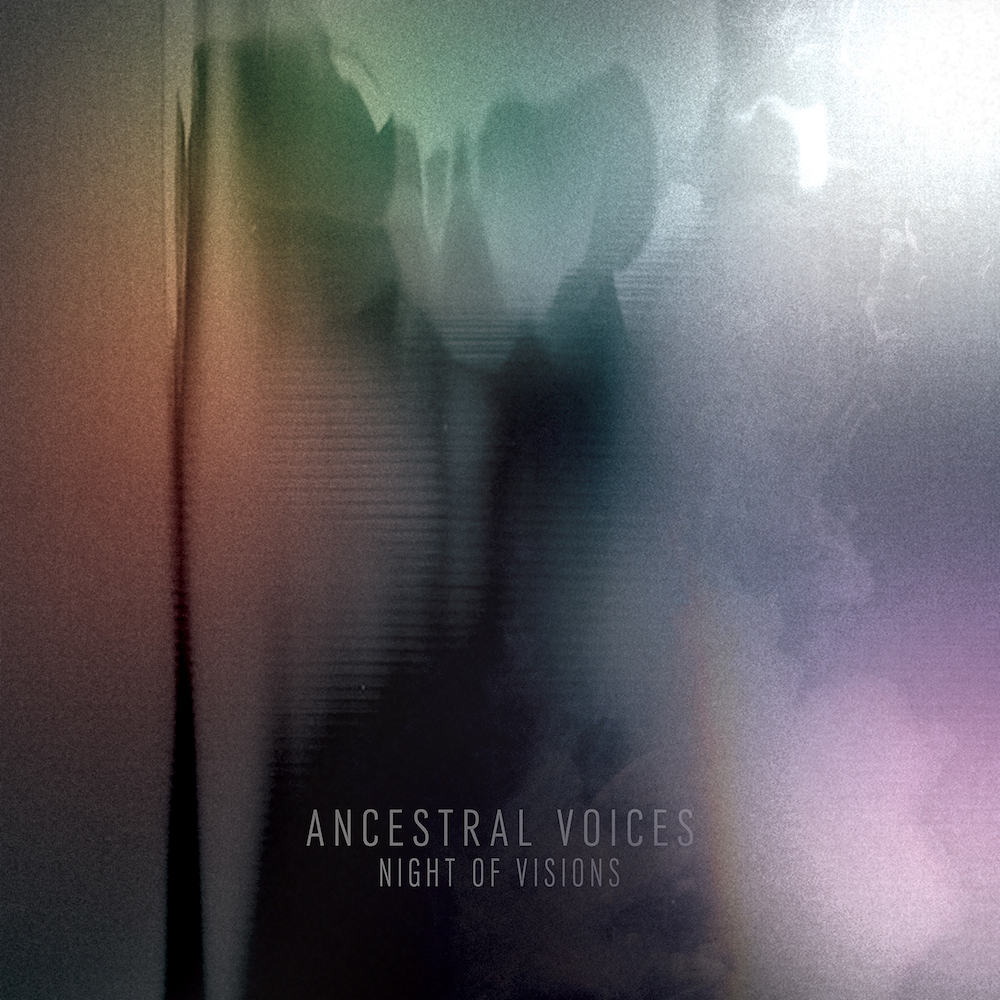
Ancestral Voices is the new project from Liam Blackburn / Akkord, on Samurai Music Group‘s more experimental sub-label Samurai Horo. The birth of the project represents a new path for the established and highly respected producer.
Inevitably a new approach to creating music has developed into a new identity. Stripping back an already unique creative process proved a challenge that has paid off, and Blackburn’s evolving sound has no immediate sonic comparison. With distinct resonances of his musical heritage flowing through a more mature filter, there is a mystical atmosphere that resounds through the LP.
October 30 will see the release of an EP sampler including two exclusive tracks that are not included on the LP/CD, which is then scheduled for November 27 release.