Session Victim is in a good spot. The duo’s recent LP, See You When You Get There—released earlier in 2015 on Delusions of Grandeur—has been a slow-burn hit, with its “Stick Together” finding its way into the dead center of Seth Troxler’s wildly anticipated installment of the DJ-Kicks series. Hauke Freer and Matthias Reiling’s classic house-, disco-, and funk-infused sound has a timeless feel that seems to translate to even casual listeners, and they pride themselves on their authentic live shows. They are, for all intents and purposes, that increasingly rare format in dance music: a “band.” The pair’s latest EP, amusingly titled Two Man House Band, arrives strictly on vinyl only on Retreat. So vibrant and rhythmic is Session Victim’s music, it would be difficult to listen to the vast majority, if not all, of it, and not get the urge to dance—and this three-tracker brings their sound even more fully to the dance floor.
First up, “Summer Games” offers up MCDE-esque drums underneath a decidedly melancholy and somewhat Balaeric string and guitar arrangement, one that sounds deeply satisfying on a grey September morning—never mind at say, sundown at Dekmantel. The track elicits the sort of mass moment it was likely designed to reflect; nonetheless, the live elements present in Session Victim’s sound tend to avoid bludgeoning the listener with contrived emotion. Next, “Black Cream” offers a smooth warm-up, coming to life slowly and demonstrating the pair’s ability to weave complex ideas into accessible rhythms. With shades of broken beat and jazz licks, this sort of record could, in less experienced hands—but Session Victim pull it off.
Finally, “Findelhorn” finishes off the EP in a style more reminiscent of member Matthias Reiling’s recent, excellent work on Giegling. It’s notably less immediate and a comparatively downtempo sign-off—but it still maintains their loose, starry sound, before finishing off with a psychedelic flute solo that toes the line between absorbing and slightly silly. If there are any detractors of a team as innately likeable as Session Victim, Two Man House Band is unlikely to win them over—but when you’re this smart at delivering good times, only a fool wouldn’t want to keep them coming.
Scheduled for an late-afternoon phone interview with Stefan Betke, the veteran creator of rustling, rippling electronic dub better known as Pole, XLR8R is having trouble getting through. The call keeps going straight to the voicemail of his in-demand day-job endeavor, Scape Mastering. When we finally do connect, Betke’s in a jovial mode: “Ah, the famous German Telekom!” he says with feigned exasperation, before bursting out in a laugh. “Sorry about that.” He then holds forth on the virtues of old-fashioned analog phones versus newfangled digital communication—which, in a way, is an apt place to start with Betke, as the aural world he creates has both one foot in the past, and the other in the here-and-now. His dub-heavy, highly textured music, deliberately paced and full of stretched sinew, hint at ancient, arcane rituals; his flair for sound design and penchant for gentle abstraction, however, give his tracks a thoroughly modern edge. (Elements of that sound design, perhaps, also speak to an ambivalent relationship with modern technology: Famously taking his pseudonym from a busted Waldorf 4-Pole filter, there’s plenty of frazzled-out crackle inherent in his music.) Betke’s just put out Wald, his first full album since 2007’s Steingarten—and it’s perhaps his most intimate and contemplative work yet. Featuring three reworked in-studio mixes of cuts previously released on his Waldgeschichten series of EP and a sextet of new tracks, Wald‘s a peaceful and warm collection of song—it’s a welcoming, beguiling record, despite that crackle and the occasional shard of distortion. It’s also a plain old great sounding set, proof of his years spent toiling in the mastering business.
Though you’ve been releasing EPs on an occasional basis, is is your first full album in eight years. Why did it take so long for Wald to appear? There is no real reason for that. Between Steingarten and now, we closed down the ~scape label, which actually was a big amount of work—and also in the few years after Steingarten, I was doing a lot of live shows and traveling a lot. When I finally found time to record new music, I didn’t really like what I was composing; it was in the same vein as Steingarten was, and I didn’t feel like it was bringing anything new to my music. I realized that if I just repeat myself, then it’s not really worth doing. It took me quite a while to figure out what I have to throw out of my vocabulary, and what I can bring into it. I had to figure out my next step, and figure out where I wanted to end up. I wanted to somehow continue my development, without losing the history. And it took quite a while before I found the answer to that.
It must be difficult process when you have such a distinctive sound, to discover a way to avoid repeating yourself without losing the core of your music. And Wald does sound like Pole, though arguably a warmer and more inviting version of Pole. I would totally agree.
The press release for Wald states the production of the album was proceeded by a series of long walks in the woods. Do you think the inspiration you got from those walks might account for the album’s soothing feel? Well, not from a mystical point of view. I wasn’t in the forest finding little witches and dwarves or whatever, with them telling me what to do. [laughs] It’s more like an image for me. The forest—the architectural structure of it—gives me the opportunity to remember the sounds that I hear. It’s the same as what can happen in big streets in New York or Berlin. I can remember a sound if I take a photo of that structure when I hear that sound; I can look at that photo in the studio and remember what it was like, what I heard.
“The production allows for a little bit more space between things; it allows distortion; and it feels a little less clean.”
The reason why it might sound warmer is that—even though it’s still very clean and precise—when you compare it to the Steingarten album, I think it’s perhaps a little bit less sound-designed. The production allows for a little bit more space between things; it allows distortion; and it feels a little less clean. I left more of the midrange frequencies in there, and I played the chords a bit lower than I usually do. Usually, I’ll use a C1 or C2, and here we are with a C0 or something. Everything is pushed more toward the low-end frequencies, and that naturally makes it warmer.
Do you think that’s the feature that might differentiate Wald your previous work? Everything else follows the same idea as usual—how I put it together, the dub influence, the mastering and everything. But I added this element of more bass, more warmth, more guitar-type distortion.
There are guitars in there? I call it guitar, but it’s not guitar—its synthesizers modified in the computer. And that’s inspired by a lot of things. I listen to Dr. John records a lot, for instance, or Keith Hudson’s early stuff. They all use guitar distortion in a certain way, and even when you listen to music nowadays—like Ben Frost or Tim Hecker—that same thing is there. But I hope that the way that I use it disconnects it from its influences. I wanted something that would be a reminder of those elements, but so disconnected that it’s its own thing.
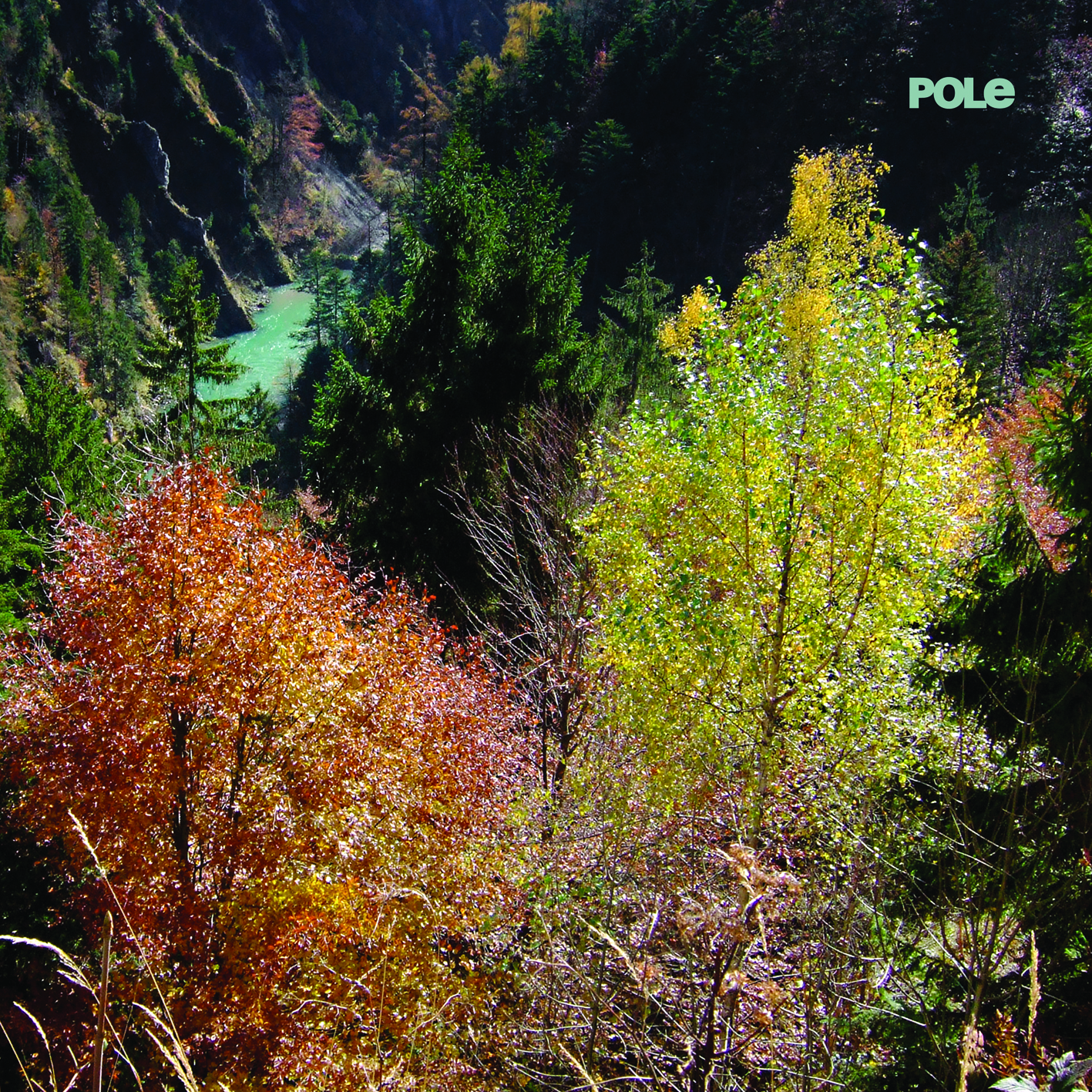
The photo on Wald’s cover is gorgeous. Where is that? I took that photo on a walk in the mountains between Austria and Italy, on this very old path for smugglers who brought illegally killed deer and all that to sell in Italy. This was before the first World War. It’s now kind of a touristy place, with signs saying things like “Here they killed this guy or that guy.” [laughs] We were walking through there, and when I got to the top of the mountain and looked down to the valley, and I was like, fuck…that’s beautiful. So I took a photo—and that’s the cover!
The tracks are all named for things that you might have seen in your woodland travels: A käfer is a beetle, for instance, and an eichelhäher is a kind of bird. Does the music have any relation to those song titles? Some correspond quite a bit, and some do less. Like “Kautz”: The music is kind of what really happened. I tried to transcribe what I heard into the music; I don’t know if it works, but that was the idea. The track starts with this mellow feel and nice bassline, kind of cool and relaxed—and then toward the end, there comes this distorted guitar-like sound, and then it stops abruptly. Boom! And that’s the way it happened. I was walking in the forest close to Berlin, and I was recording with a field mike. It was so quiet—it was amazing—and I was hearing my footsteps and all these little things around me, and all these elements…left and right, up and down, vertical and horizontal. And all of a sudden, a chainsaw started! They were cutting trees. Suddenly, all the animals flew away and the whole atmosphere changed. I took a photo exactly at that moment to capture it, and then when I looked at it later I could remember this break in the atmosphere. And I think the track does that as well—at least, I tried
The album is divided up into three acts of three songs each. Was there reason that you split it up that way? The reason is connected to the A/V show that MFO [Marcel Weber] and I developed for the live presentation. We’ve already done it a couple of times, at MUTEK, at CTM Festival and some other places. We were thinking about how to connect the returning elements within the music into an A/V show that correspond to those elements. Marcel really liked the ideas of the kinds of circles and repetitions that return every year within the forest. We decided the best way to represent that circle was to divide everything into three acts, and I combined the tracks within those acts in a way that I thought was relatively narrative per each act—an intro, a climax and a fade-out. And then you go to the next scene; there’s a break in between, but that next scene follows in a logical way. They’re all connected, but the break is like a way of saying “please wake up!” [laughs] Like it’s an opera, it’s time for the next chapter of the story.
You’ve said in previous interviews that you weren’t all that well versed in dub music before you started producing as Pole. I still find that hard to believe, considering how adept you are at the sound. It’s true! It’s really true! Of course, I was aware of it. I used to listen to a lot of the Clash, and also I was hearing Bob Marley and the more commercial end of it. But I was never that deeply into the music until I started working at Dubplates & Mastering, where I was introduced to the really interesting things. I know nobody believes me—but it is really true!
Speaking of mastering, is that still keeping you busy? Yes—with the revival of vinyl, more than ever. It’s insane! Well, not insane, but beautiful. Vinyl is such a nice format. We’re booked up totally, and we work at it seven days a week, doing all kinds of interesting music. I still have a lot of fun doing it. I love it.
Since the release of Clockwork Atom on Leisure System, named one of Bleep’s best of 2014, Rob Clouth has opened for experimental heavyweights Jon Hopkins and Squarepusher and played Leisure System parties at Berghain and Dimensions Festival. Next up for Rob is a limited-press release on Leisure System that includes four new tracks and special edition artwork behind an acrylic glass.
Inspired by the dance floor but not beholden to its demands, Hidden Structures is thirty minutes of mind-melting sonic explorations, fusing entrancing melodies with blistering percussion. The EP is a wholly self-contained journey, with waves of kinetic pleasure unveiled within the spacious sound design.
The physical release of Hidden Structures is a special edition, 18 x 18 cm artwork limited to 50 pieces which will consist of a high resolution photographic print on Alu-Dibond behind transparent acrylic glass. All purchases include a download code for the release. You can find out more about upcoming releases on Leisure System by visiting their website. Pick up your copy of Hidden Structures now by visiting the Leisure System Bandcamp page.
Through their extolled and extensive DJ-Kicks series that has included the likes of Seth Troxler, John Talabot and Nina Kraviz, !K7 have provided a platform for some of the world’s most lauded DJs to showcase their own productions, as well as those of their peers. Alongside this has come a series of twelves on which the label package up material originally showcased within the mix series and bolster it with a selection of remixes hand picked by the compiling artist.
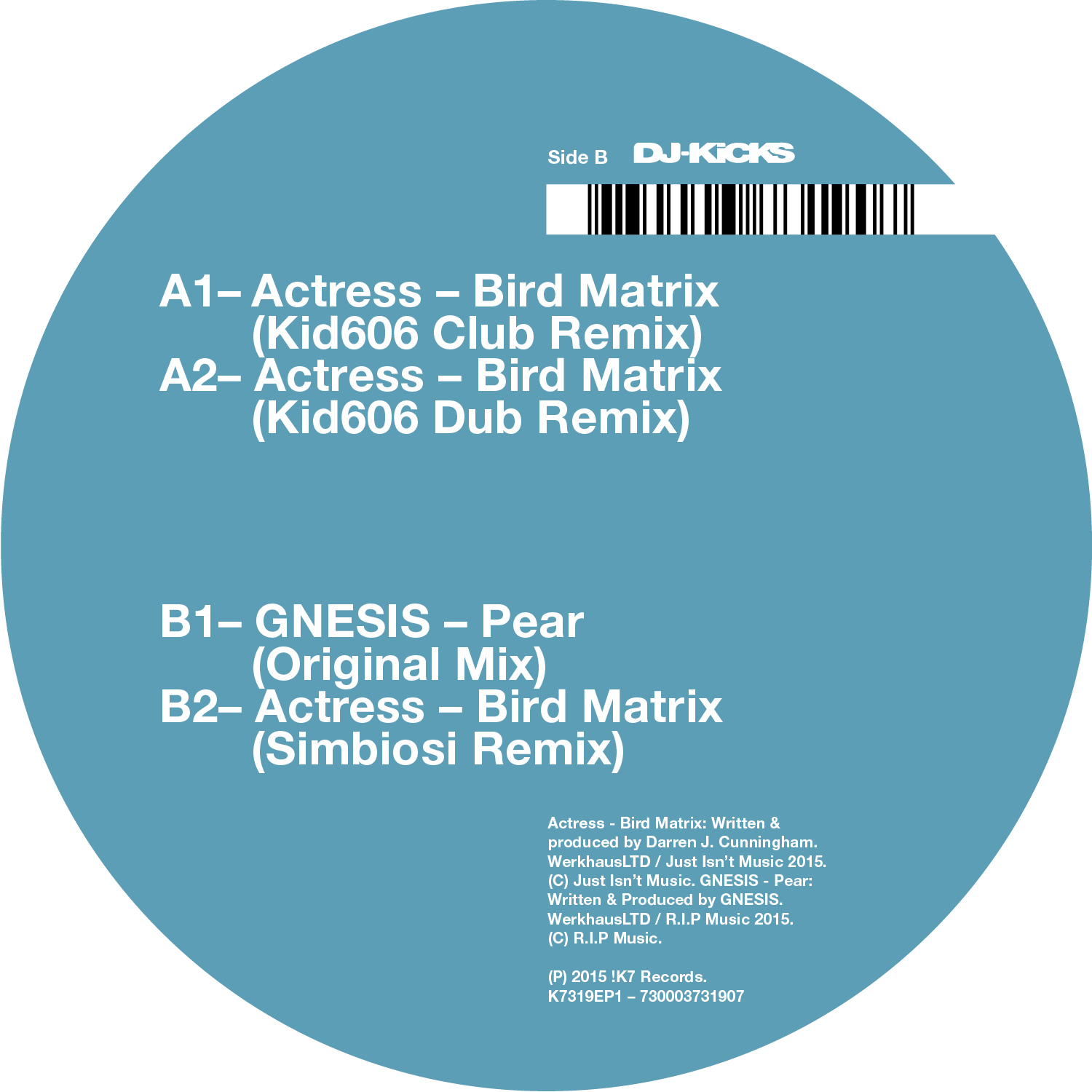
In the follow up to Jabru & Joel Culpepper and Will Saul & Komon’s split twelve which included remixes from Appleblim and Zed Bias, comes a remix package of Actress’ “Bird Matrix”, track 19 of his resolute contribution to the DJ-Kicks series that was originally released back in May of 2015. Enlisted on remix duties are LA-based Kid606 and Simbiosi and also included in the package is another exclusive from the original mix, the ornate and unusual “Pear” from GNESIS.
The Bird Matrix (Remixes)/Pear EP is scheduled for October 30 release.
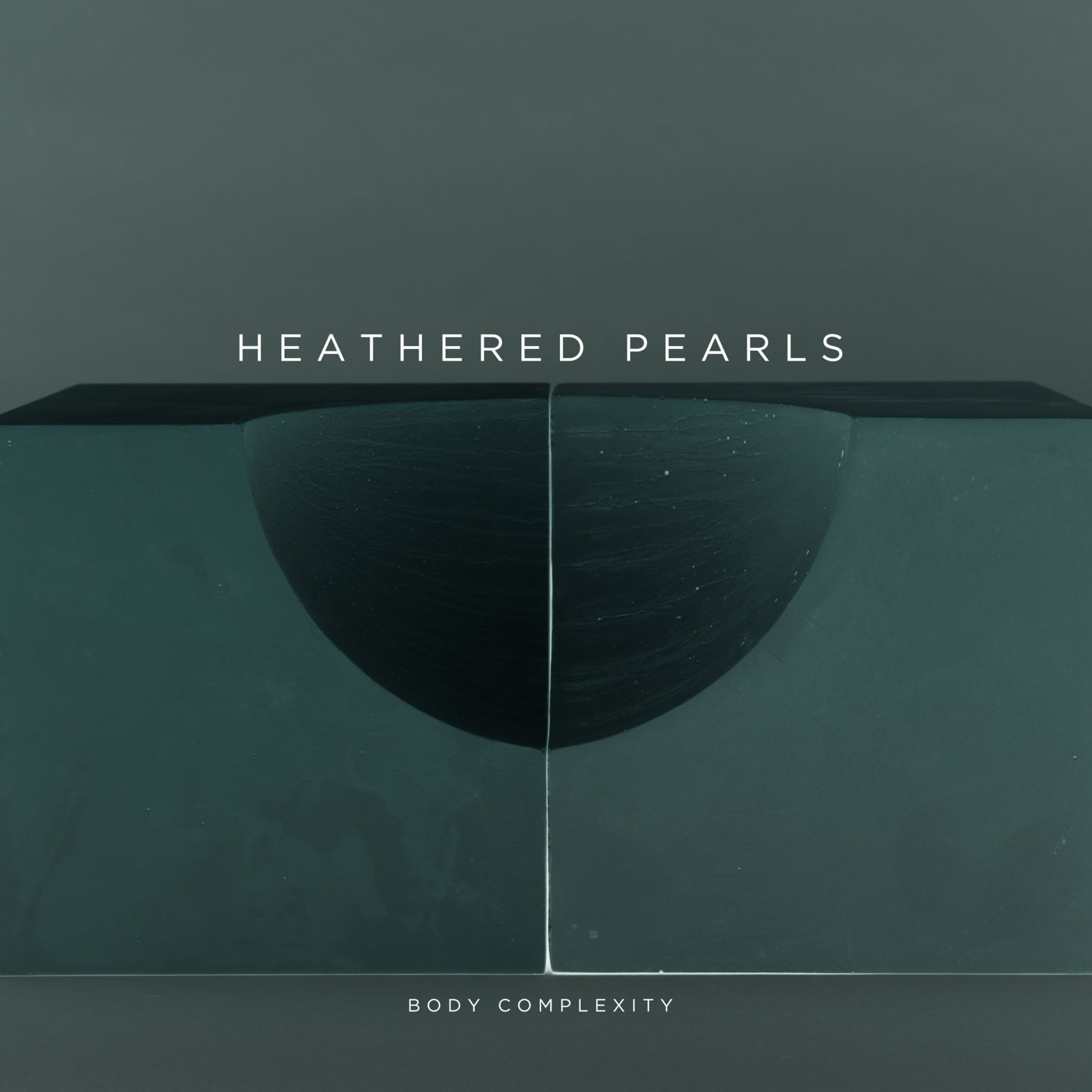
Body Complex, the latest record from Heathered Pearls, isn’t so much an album as it is a travelog. Each of its 10 spacious songs evokes a specific place. “The album is about re-imagining structural shapes that could be buildings, but they’re uninhabitable,” he says. “It’s about moving those sculptures past the point of realism into something else.” Reality gets pushed even further on Body Complexity, a new remix EP featuring songs from the album re-worked by Lord RAJA and Physical Therapy.
Physical Therapy, known for his Allergy Season label and residency on Berlin Community Radio, turns in two remixes of “Interior Architecture Structure,” both of which reconfigure the track’s base of blinking electronics and moody atmospherics in different ways. And Ghostly label-mate Lord RAJA takes the softly-pooling “Perfume Catalog” into a whole different genre by delivering a heady and menacing beat rendition.
Body Complexity is scheduled for October 16 release.
There’s no dearth of grid-based MIDI controllers on the market for music producers these days. At the high end is the Monome Grid, which is both thoroughly customizable and artisanal as heck; alongside it sits Ableton Push, which (unsurprisingly) sports the deepest-in-class workflow integration with Ableton Live. Also extremely popular is Novation’s ever-broadening line of Launchpad controllers, which have been around since nearly the dawn of the software they best compliment. The Launchpad Pro is Novation’s most feature-packed, heavy-duty entry to date—with not only RGB color feedback, but also velocity sensitive pads, much-improved build quality, tighter integration with Ableton Live and a lot more flexibility than most of its competitors.
How It Looks The Launchpad Pro is definitely a more substantial piece of kit than any Launchpad before it, with a rubberized orange base and solid black chassis that feels built to last. At less than 10” x 10”, it’s also much smaller (and lighter) than a Push, though a bit larger than the Launchpad S. There’s no display, but rather two extra rows set of buttons to add more functionality. There are also hardware MIDI I/O adapter ports, which can be used to control external hardware directly from the Launchpad, or function as a MIDI interface for a computer. The aforementioned RGB LED buttons feel good and, importantly, are velocity-sensitive.
How It Works The new rows of buttons—stretching down the left edge and across the bottom of the Launchpad Pro—provide more tools for user to sink their fingers into. These let you delete, double, duplicate, quantize and record clips at the press of a button. Duplicating clips is a one-touch affair as well, letting you build upon existing loops without looking at your computer. There are also dedicated undo, redo and metronome buttons.
There’s also one-button access to volume—simply hold the Volume button and tap from lowest to highest on the track(s) you desire, with no switching to a mixing mode required. While it’s certainly not as precise as using a knob or fader, Novation has smartly designed something called Fader Glide (which also applies to pans and sends, which have their own dedicated buttons as well). Essentially, this mixing responds to velocity: hit the desired volume level hard and you’ll punch to it immediately, or tap it softly for a slow fade up or down. It’s a smart design touch, and helps wring the most out of the device’s minimal, highly streamlined interface.
There are still modes, including Session (for clip triggering), Note (for playing instruments), Device (for effects), and the normal User mode. Plenty of smart touches—hold the “Stop Clip” button, for instance, and a row of buttons along the bottom of the grid light up red, letting you stop all clips on individual tracks—make the Launchpad Pro learning curve a gentle one
The Launchpad also boasts something the Push doesn’t: the ability to operate in standalone mode (using its included power adapter) and with external hardware, effectively making it a grid controller for any synth or drum machine you’ve got. It’s USB class-compliant, meaning that it works with other devices and operating systems (iOS, Raspberry Pi). And going one further, Novation has even released a customizable firmware for the device as open source code on GitHub. This means that with a bit of handy work, you (or others in the Launchpad community) can make and share new applications for the Launchpad Pro as a standalone device. Light shows, step sequencers, arpeggiators and more can be built and written directly to the device, which is an exciting prospect indeed.
The Bottom Line For those looking for a quality, grid-based MIDI controller, the Launchpad Pro is a portable, well-built option that sits in a comfortable sweet spot between its higher-end (Push, Monome) and lower-end (Launchpad S, Akai’s APC line) competitors. And while it’s solid as-is for standard-use cases (particularly with Ableton Live), Novation’s open mentality around the device is potentially the mightiest trick up its sleeve.
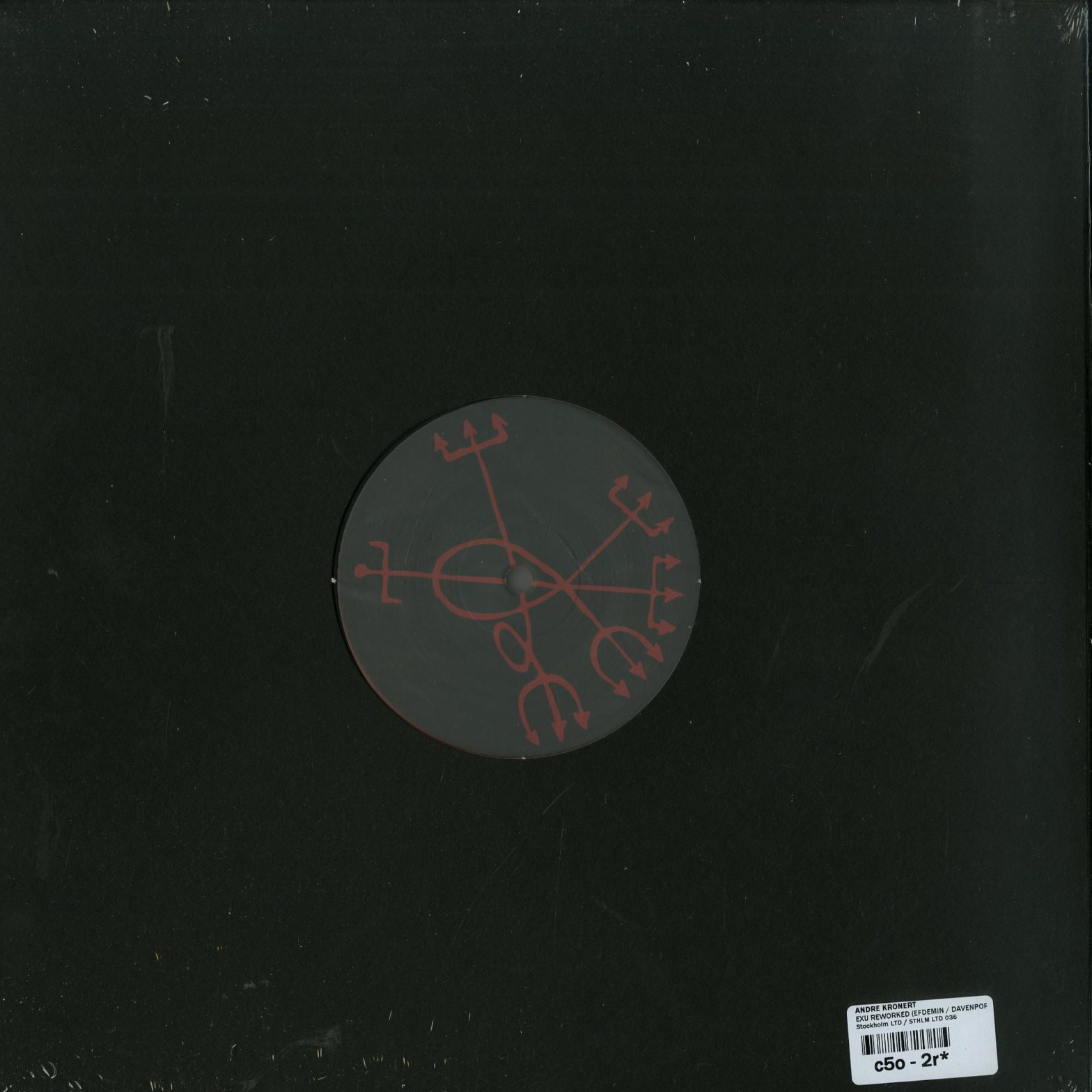
One of the most reputable techno labels around, Stockholm LTD, is set to release EXU Reworked, a six-track remix EP from Andre Kronert that features some of the more superior underground techno producers out there today.
XLR8R is pleased to bring you an exclusive cut from this devastating and ominous album, “Into the Zone (Efdemin Remix),” which is available for streaming below. Active and intricate, the track dips into a deep, dark ravine of rhythm and power that throws you into a club-like mentality with no time to waste. Featuring other remixes from artists such as Ed Davenport, Peder Mannerfelt, label manager Pär Grindvik and Juan Sanchez, this is a remix album that you don’t want to miss.
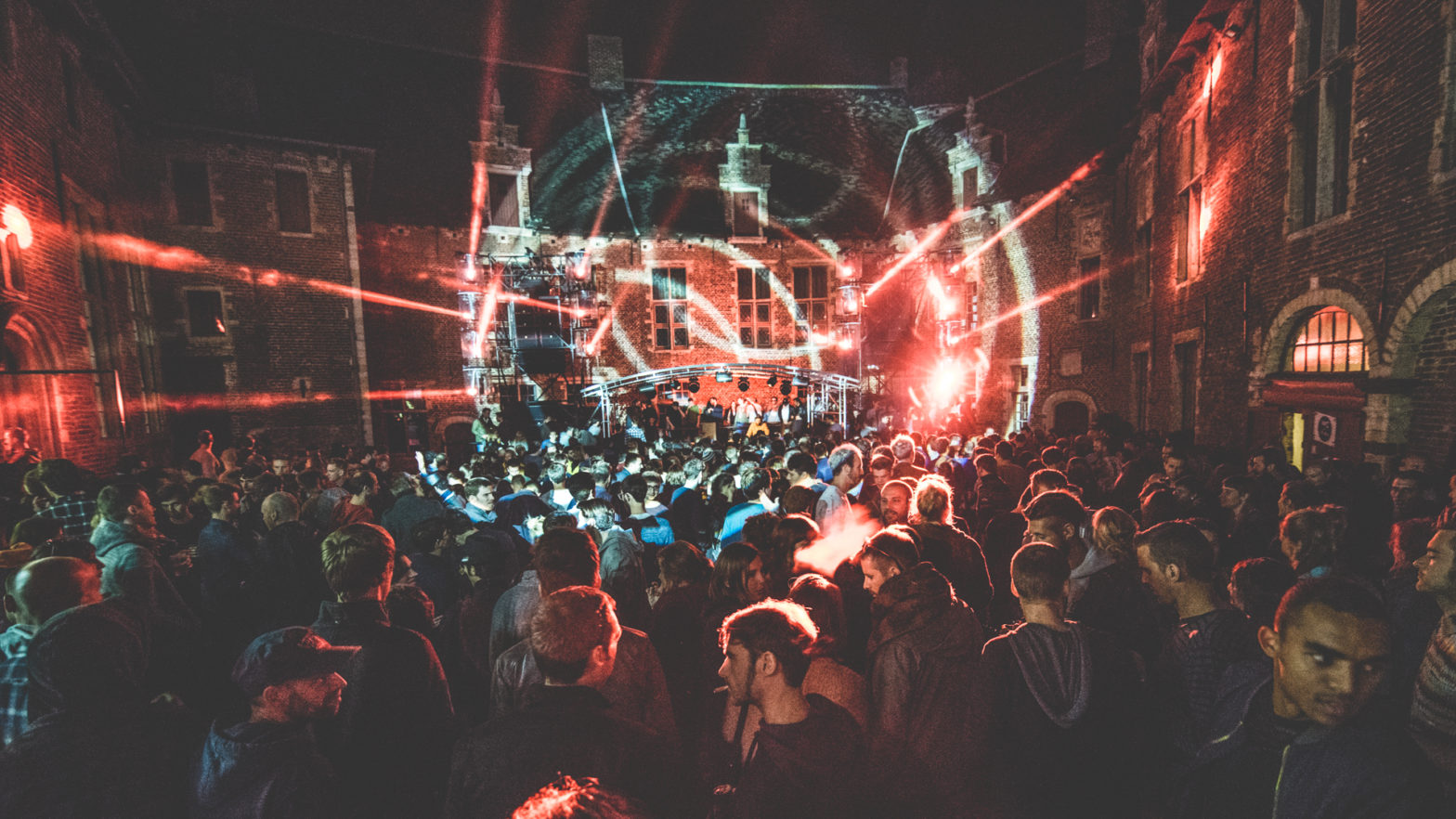
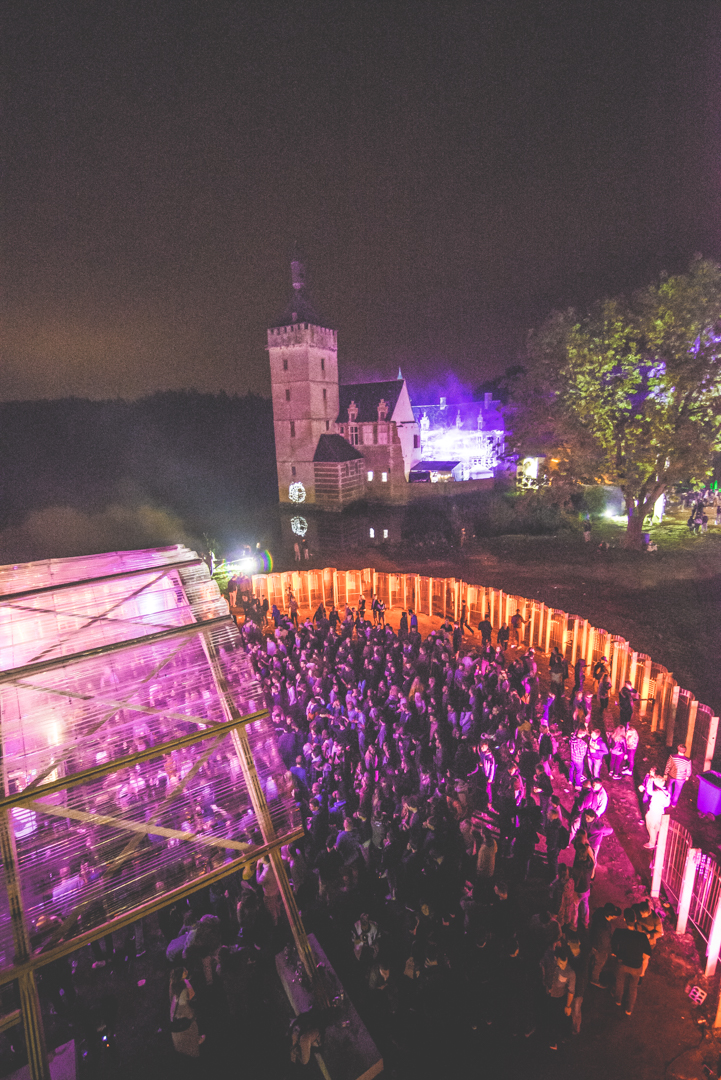
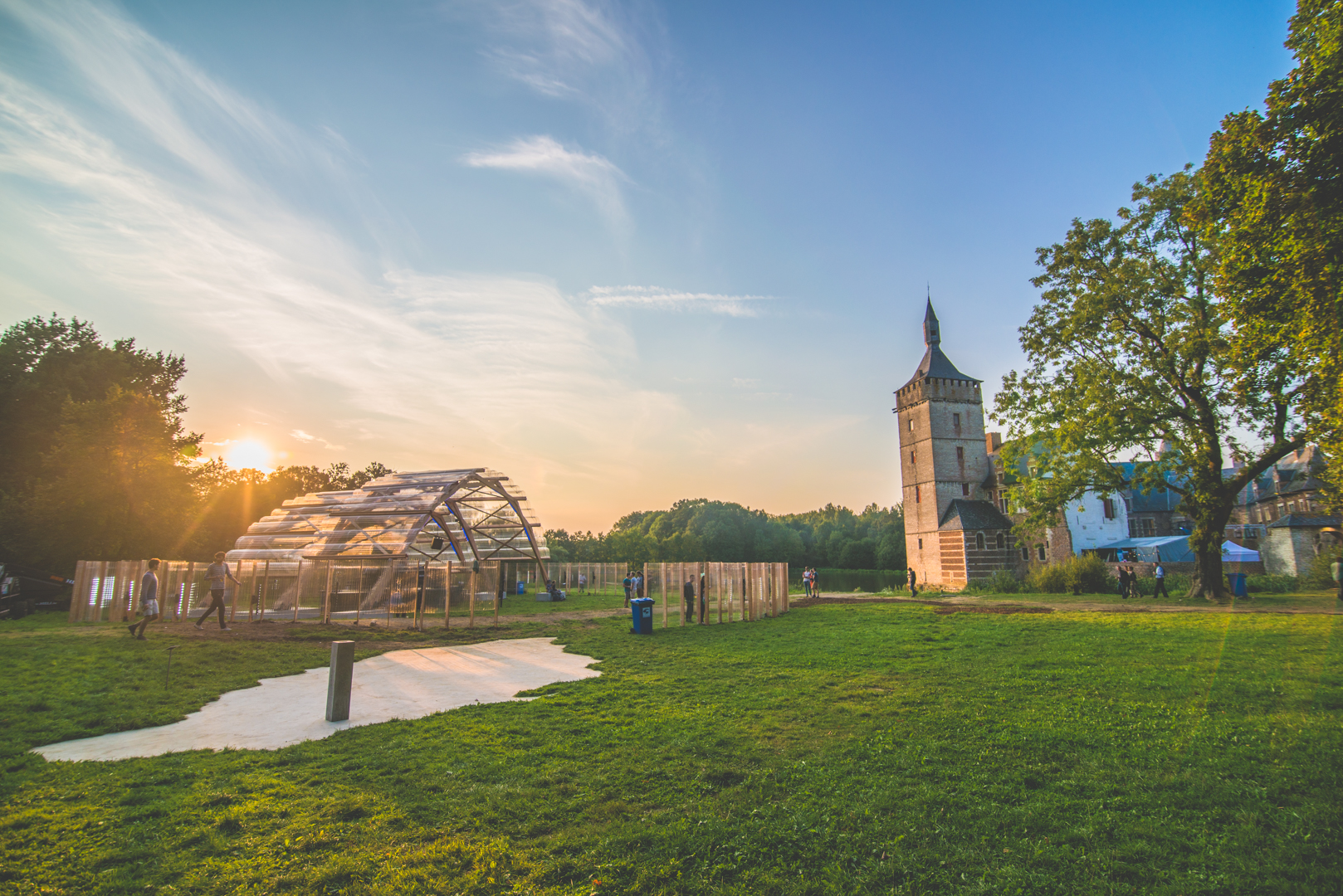
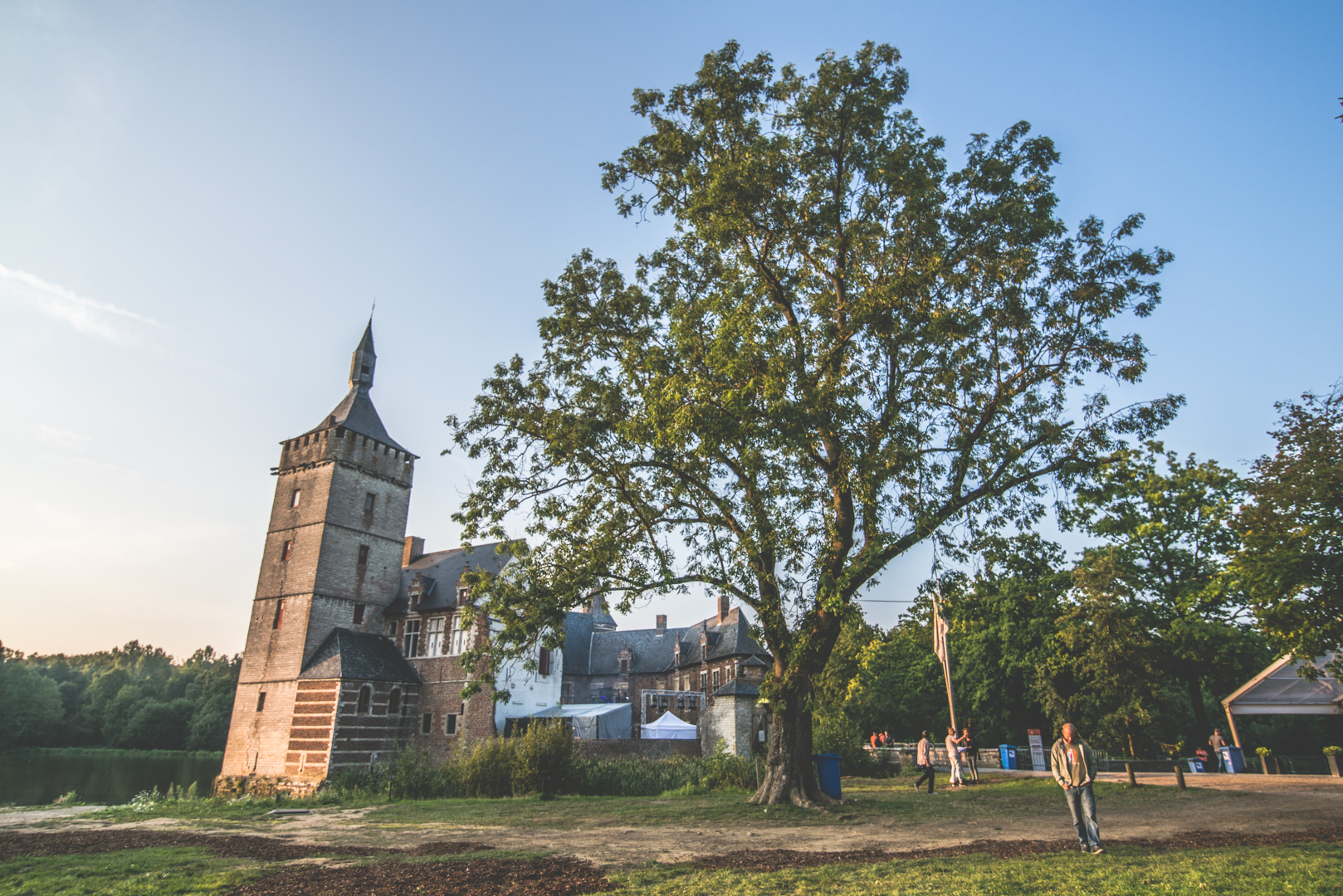
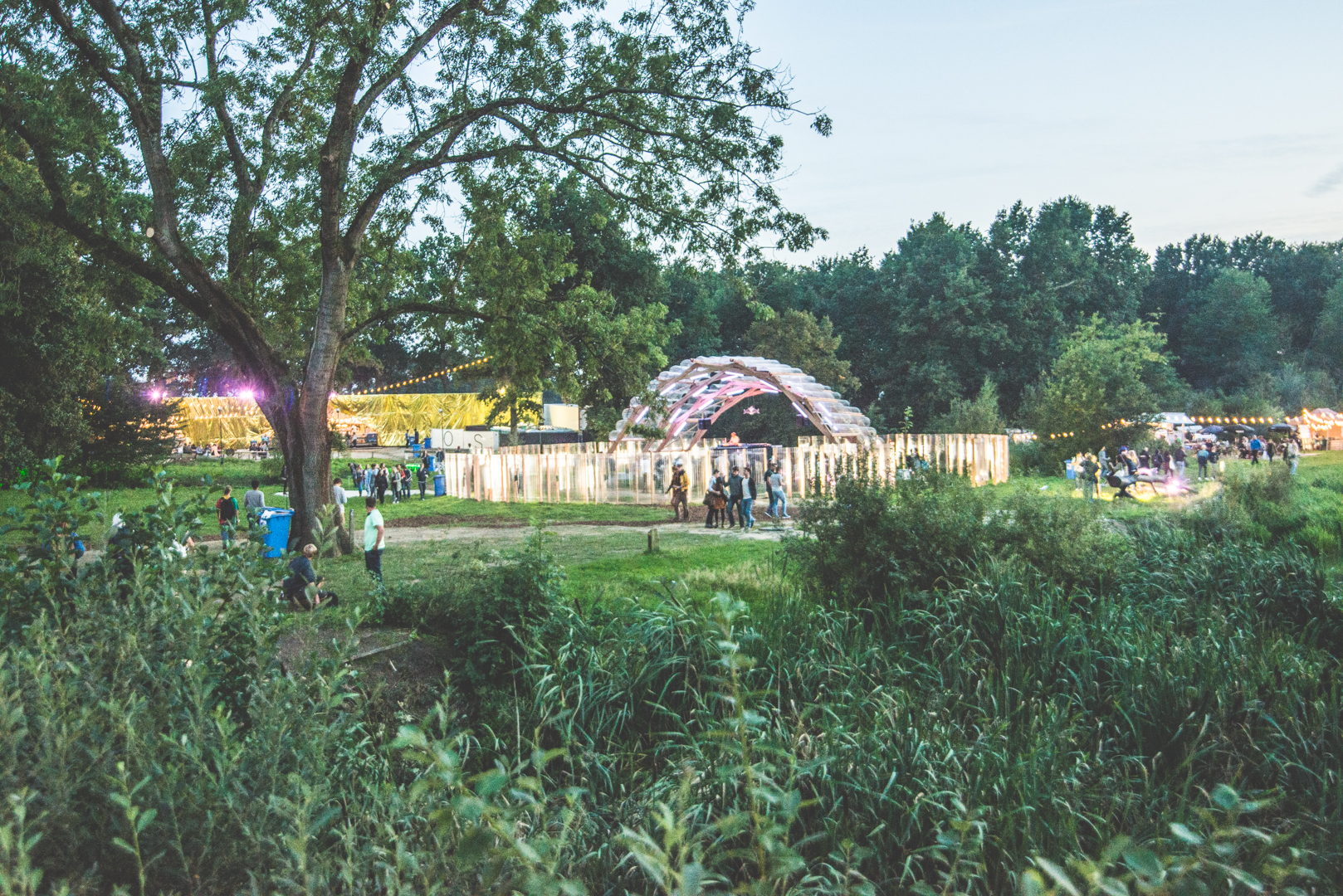
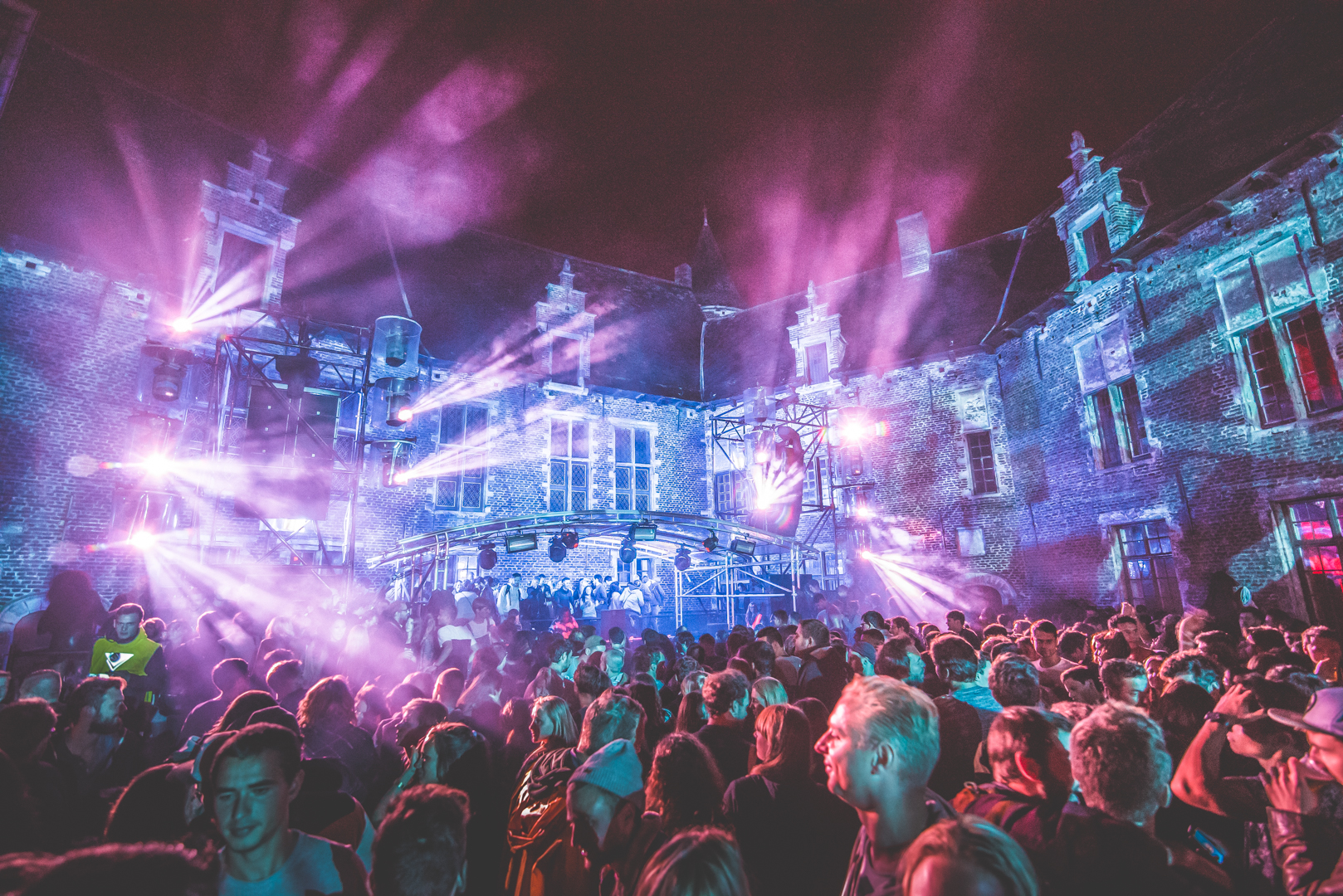
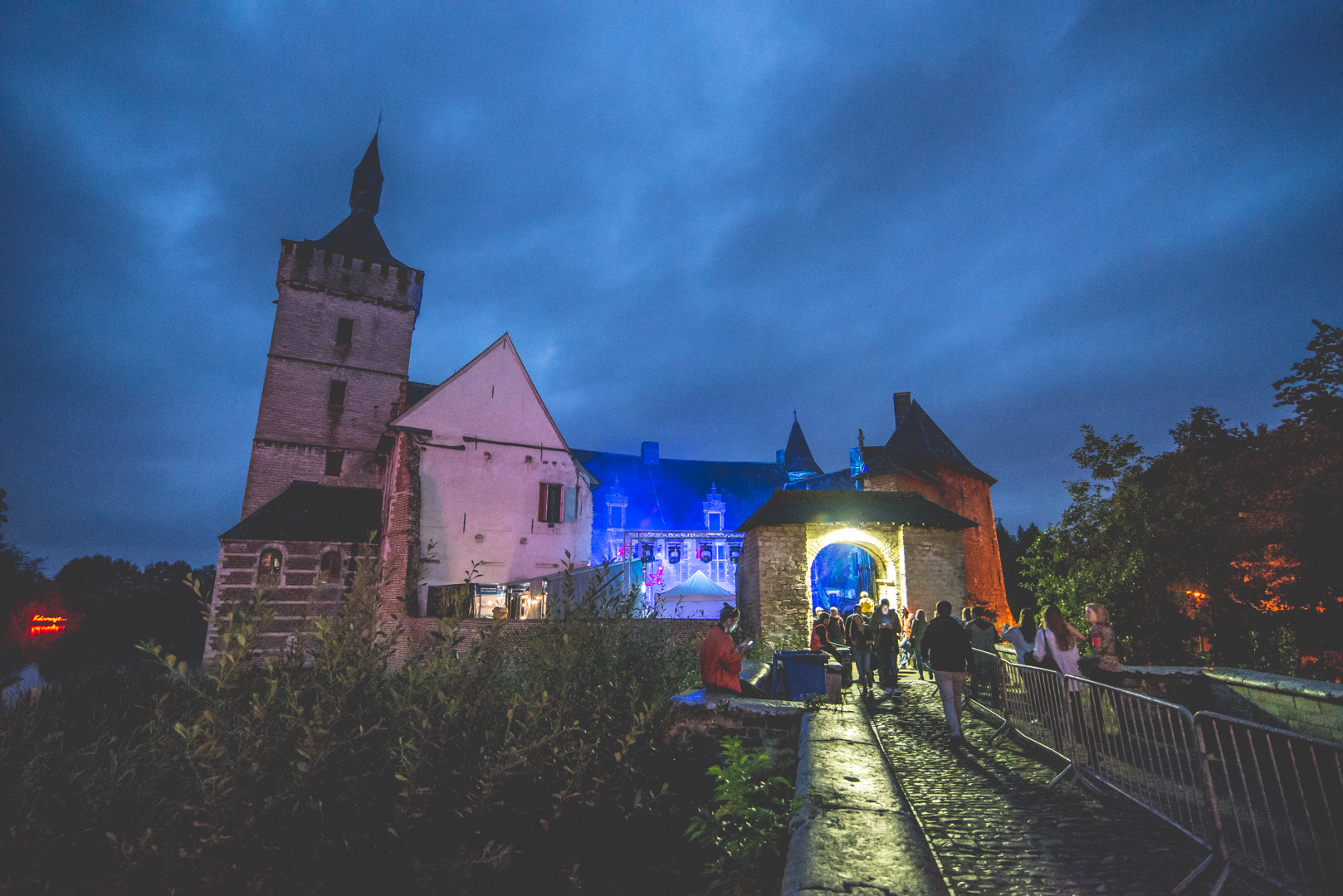
Championing a “diverse and broad” spectrum of both art and music, Horst, now in it’s second year, is one of the final festivals of the summer and occupies a gratifying and ambitious space. While Horst is far from the only festival to supplement a selection of DJs with visual accompaniment, a night or two at the grounds of a 15th-century castle, deep within the rolling Belgian countryside, proved to be a relatively involving experience far different from the Instagram-friendly sculptures and brash installations found at larger events.
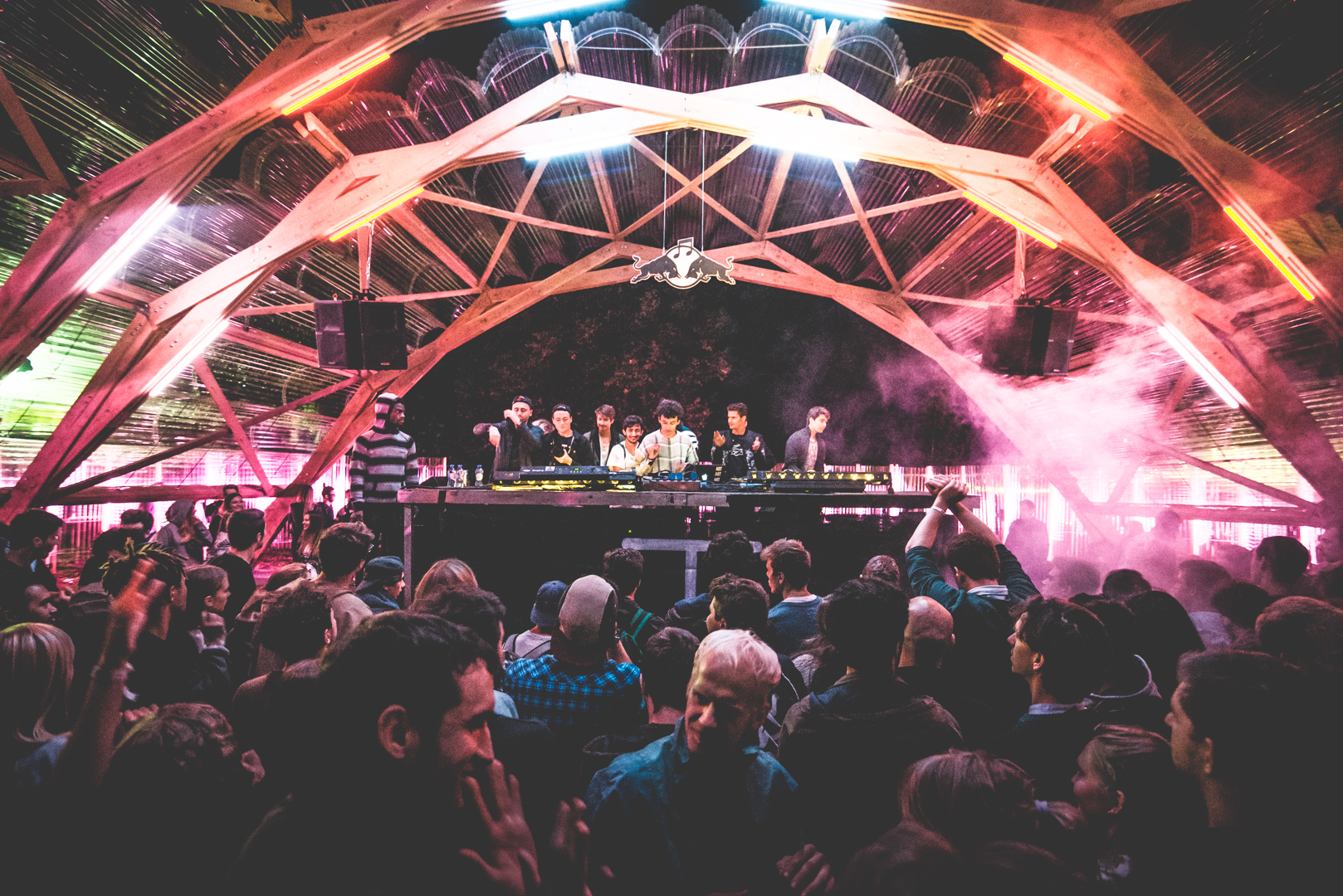
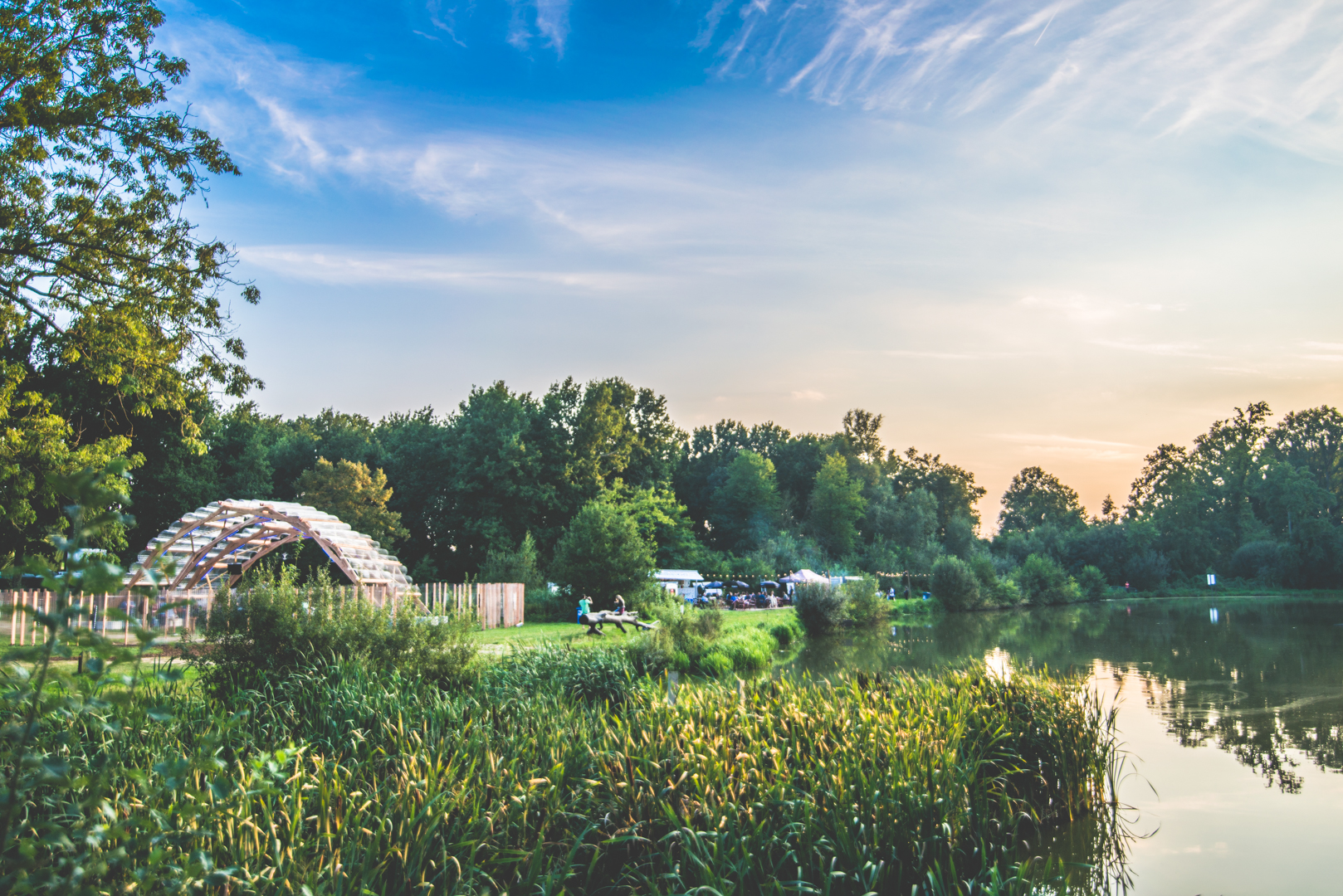
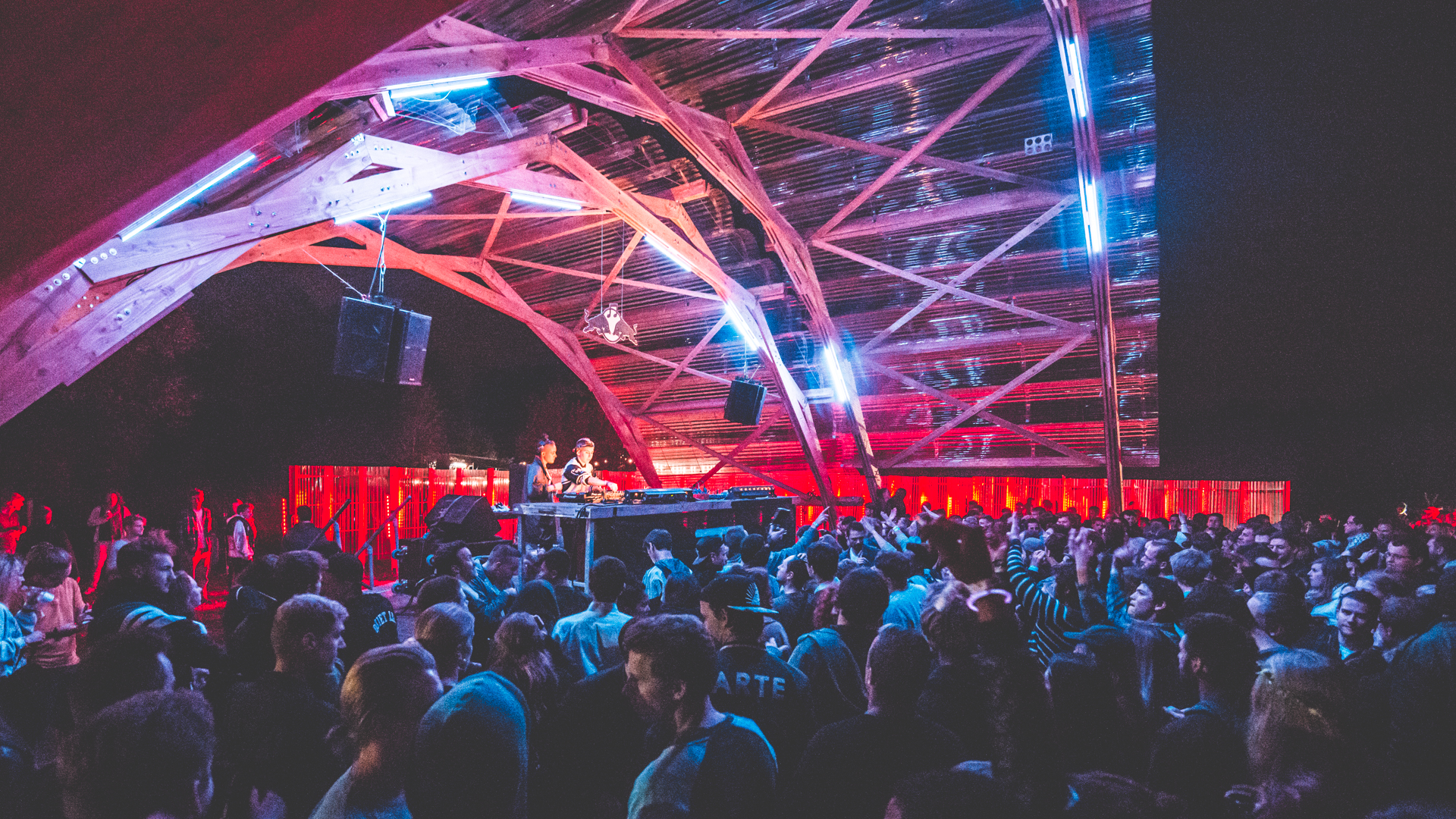
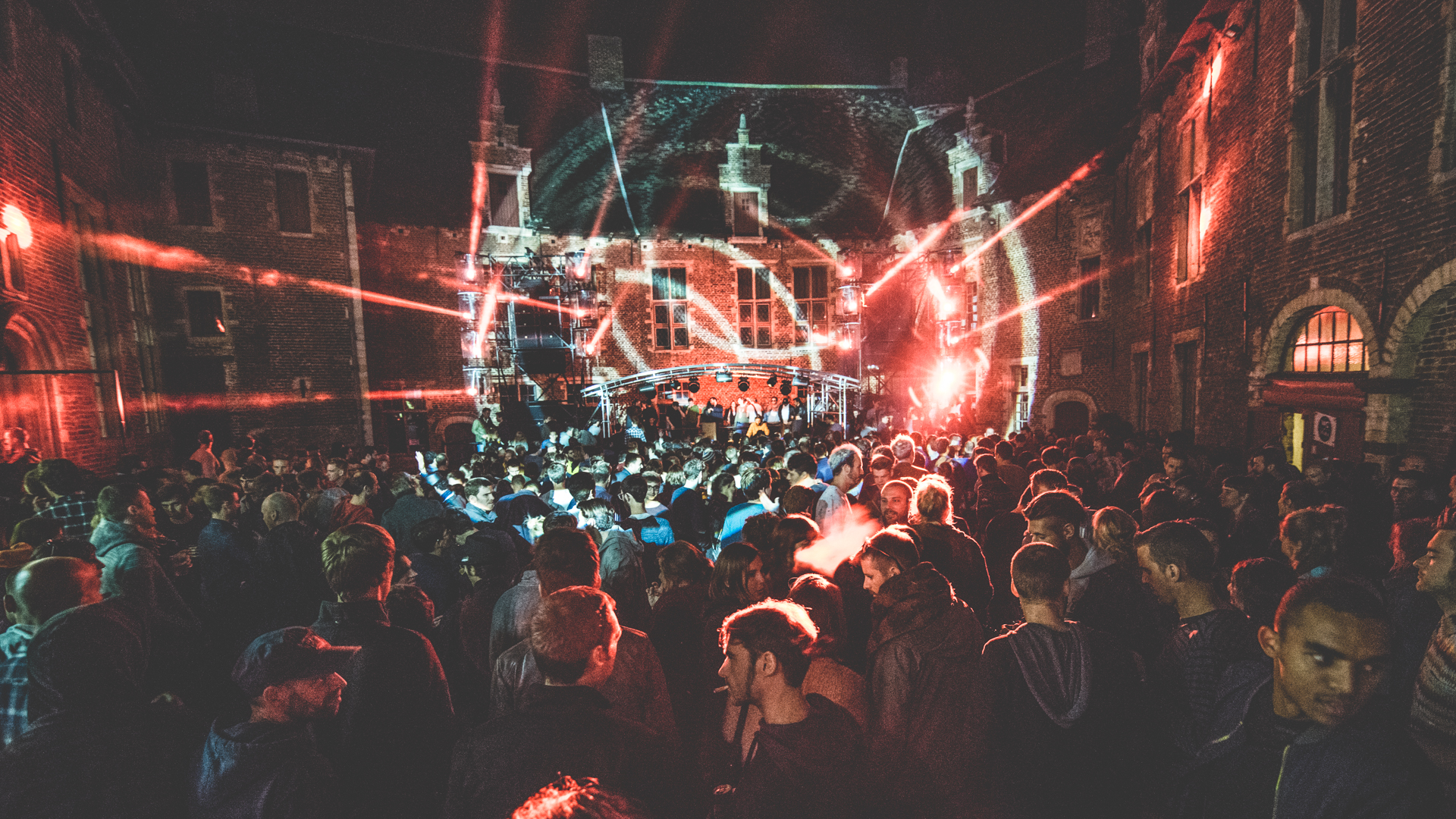
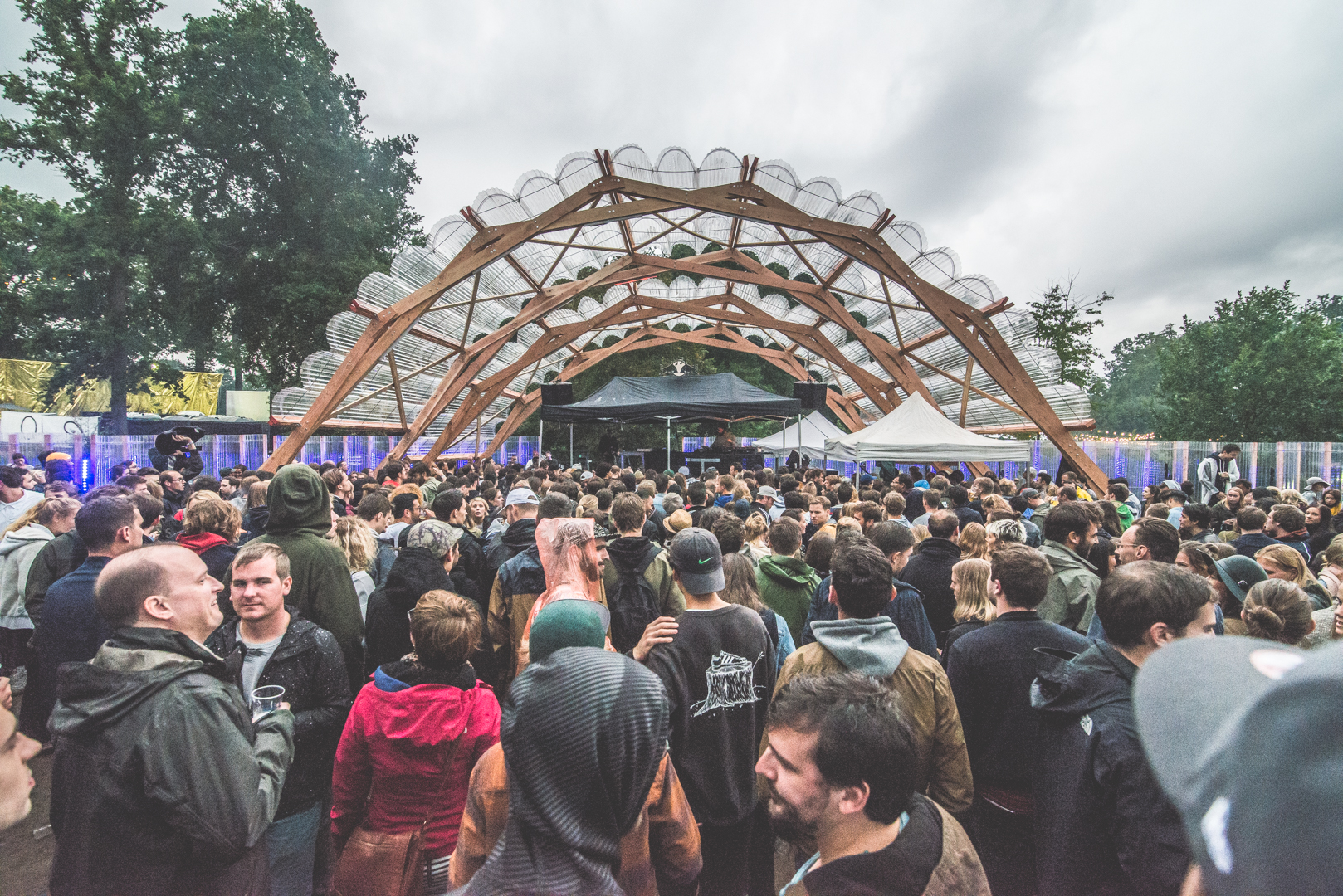
With just two stages on offer, the festival excels in quality, not quantity. This year’s Red Bull Music Academy stage was specially designed for its lakeside location by pioneering architectural duo Robbrecht and Daem, and its contemporary design acutely complemented both the understated rural setting and the drinks brand’s typical slickness. If you’re more used to partying in a rented circus big top, and the idea of hiring an architecture firm to contribute to a rave seems somewhat indulgent, consider that the main-stage program takes place in the heritage-protected courtyard of the castle itself. Larger festivals might operate a one-in-one out system at their most popular stages. At Horst, you only need to cross a moat.
The Castle stage played host to the festival’s largely house-oriented contingent of DJs, and while the programming might not have been the most daring on the circuit, it was certainly satisfying to hear a series of Panorama Bar-friendly sets beneath the starry sky. And while Innershades‘ acid-flecked, Belgian rave sound has its place, it was Palms Trax who truly got things moving on a lighter note, despite foregoing his live set owing to unfortunate technical difficulties. Running Back founder Gerd Janson rolled out a typically pumping performance for Friday’s headline slot, flirting seamlessly between infectious, tracky house and more obscure disco, leaving Job Jobse to conclude the party, further making his case as a truly gifted and inviting selector. Although never less than friendly, Horst’s overall crowd was arguably more reserved than you might expect for a rural rave-up. Yet Jobse managed to leave the involved crew in front of the decks literally screaming for more, with a particularly enthusiastic girl so desperate for the Belgian equivalent of one more tune, she attempted to make her own final selection on the CDJs.
The RBMA stage dealt with the more bass-heavy fare—and it proved just as popular, if not more, than it’s more 4/4–oriented neighbor just a few hundred feet away. It must be said that despite the convenience of passing between two distinct genres within a minute on foot, there was no irritating sound bleed, no sudden death of atmosphere, and no chronic volume reductions. The headline DJ acts here—Benji B, DJ EZ—got the crowd bouncing with ease, but took few risks despite their crate-digging reputations. Oneman, perhaps inspired by the strength of the U.K. grime and bass scene, was much more versatile on the Saturday, even getting away with a prime slice of Jamiroquai once he had the crowd perfectly on side. Throwing Snow and Romare played contrasting, but equally excellent, live sets on each night, with the latter’s powerful and infectious sample work proving just as addictive on the spot as on record.
While Friday was solely an evening affair, Saturday offeringsbegan mid-afternoon, and felt busier in spite of a persistent drizzle. Classy and inviting in his choices, Midland slowly but surely coaxed the hungover campers and the weekend warriors into the action, and was joined in the courtyard by sets from Hashman Deejay, San Soda, Jeremy Underground, and a seemingly telekinetic set from Tama Sumo, along with her wife and frequent DJ sparring partner, Lakuti.
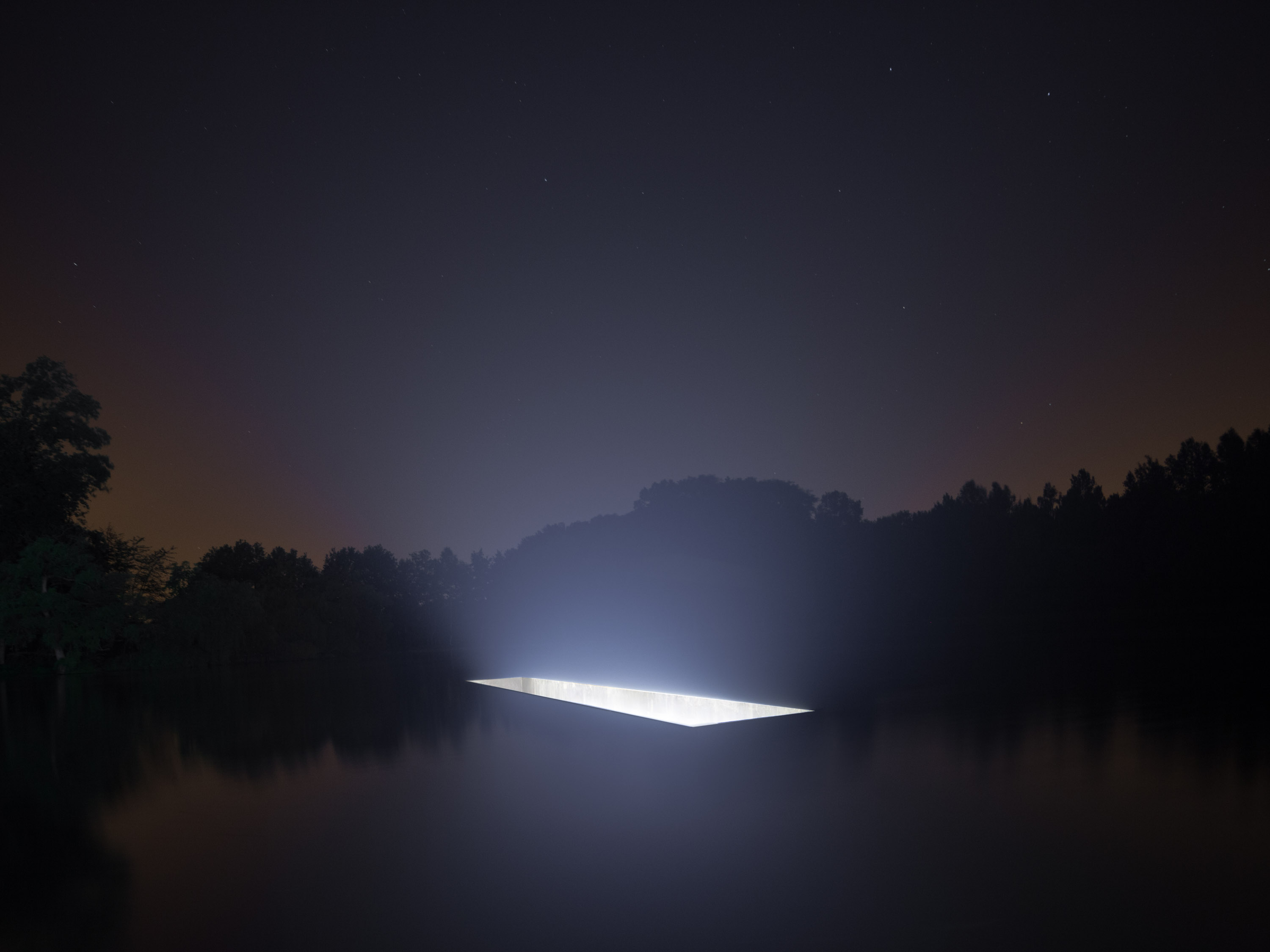
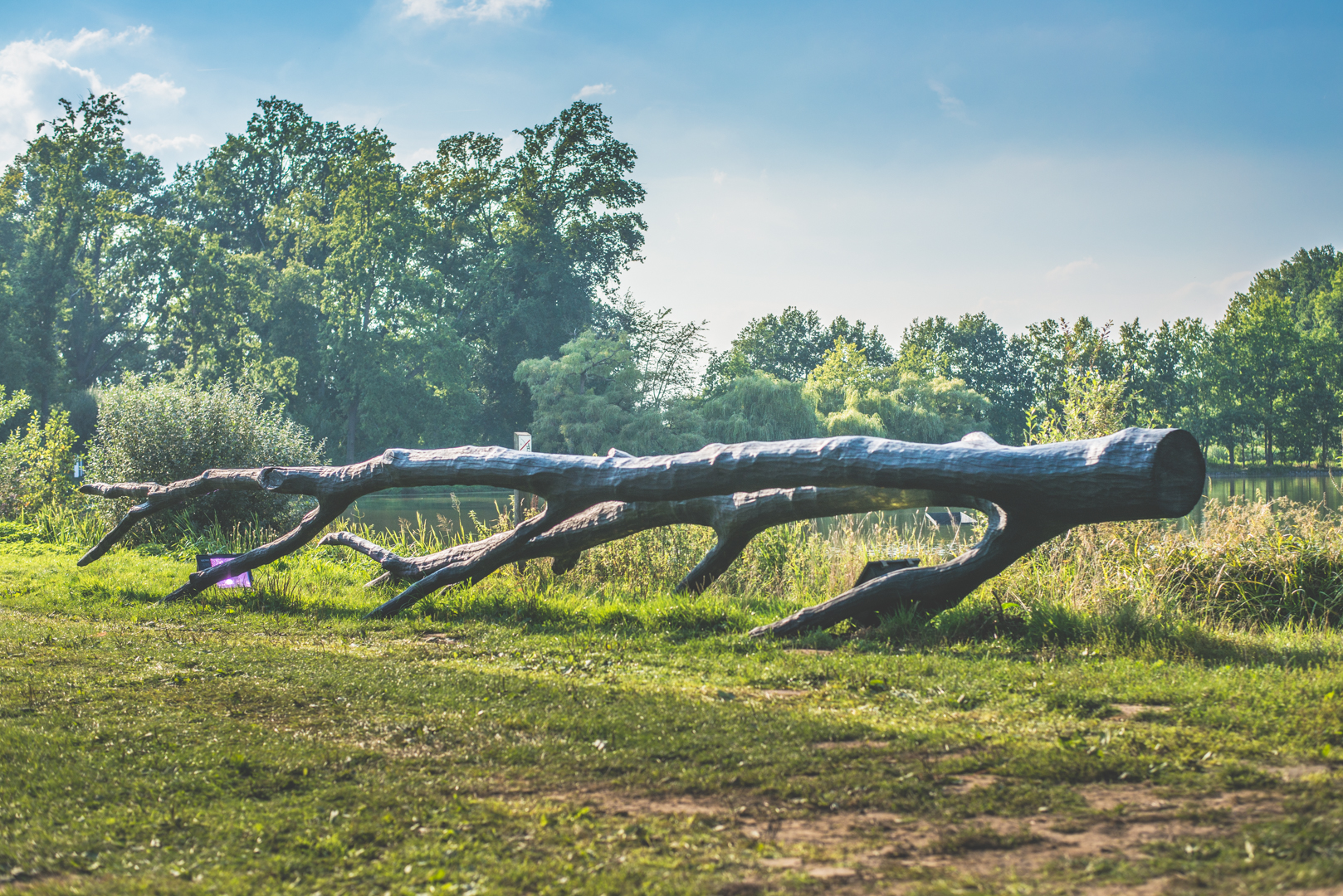
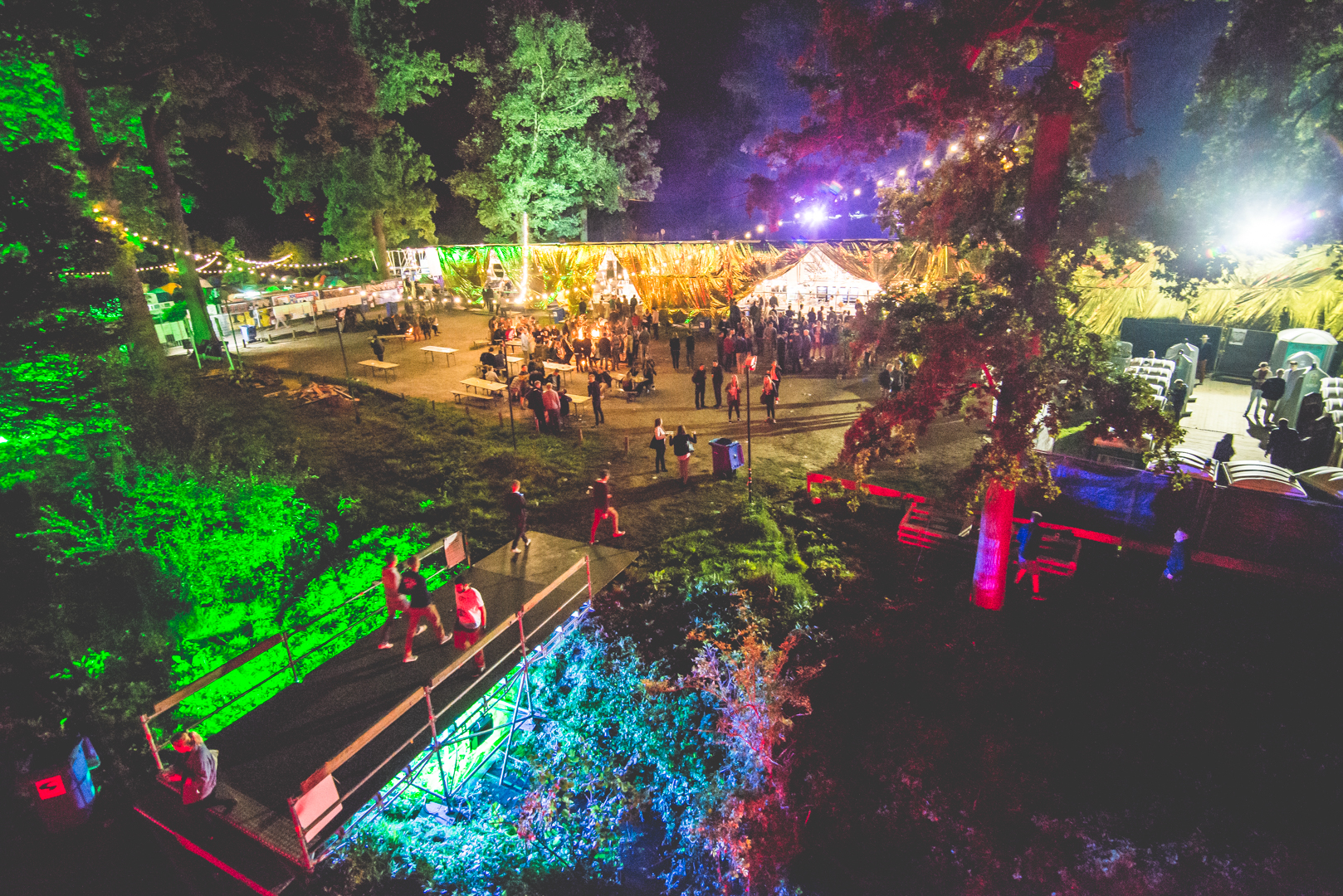
By this time, the crowd had started to explore the site and its installations, and by night, each had its own remarkable character, with light seemingly a unifying theme. Many had understandably taken advantage of the site’s unique waterside location. Particularly impressive was Karel Burssens’ and Jereon Verrecht’s 88888, a incision deep in the lake that, in the dark, was filled with blinding light to create effect of a watery grave. Just as eye opening but more playful was Lux@580nM, essentially a street lamp suddenly transplanted into the water.
But within the castle itself, it was Christopher Gabriel and Arnoult Huskamp’s Children Of The Light that understandably received the most attention. The work of the pair will be familiar to anyone who saw Darkside’s recent tour (they designed its huge mirror feature), and their Horst installation shared a similar aesthetic but offered a different purpose. In a room filled with smoke, super-bright LED lights were hung from a huge circular frame, rotating slowly in the haze, and as the house and techno soundtrack drifts in from outside, dozens of ravers stood transfixed, occasionally running their arm through the middle as if it were some science-fiction portal.
“I think we live in a very interesting time in the way that, now, I think you can live far way away from where things happen, as everything travels so easily; images, music, fragments”, explains Arnout Van Vaerenbergh, one half of Gijs Van Vaerenbergh, the artistic duo who curated this year’s lineup of installations and will continue to do so for the next three years. “It travels so fast, and you can reach so far. And you can also travel yourself quite easily. And Horst is so far from the city center that when you do something here, it’s important. And you won’t believe it when you’re here next week, or the week before, nobody would expect this to happen.”
Van Vaerenbergh is not joking when he says that Horst is “far from the city center”. More accurately, it’s a 30-minute bus ride from Leuven (best known for Stella Artois), itself the same distance by train from Brussels. Both of these trips, however, can be made easily, with Horst running a regular shuttle service to Leuven and back again throughout the event. Horst’s largely local audience are also incredibly polite, with the event as a whole largely grooving, rather than utterly popping off as it might at more established and less specialist Belgian events such as Pukkelpop.
With only Red Bull showcasing commercial sponsorship, and being so deep within Belgium’s rural landscape, Horst feels like genuine escapism, especially for the several hundred who choose to camp on site. Nothing at Horst was under thought, and those tired of larger festivals will appreciate the level of detail, and an overall remit that’s more creative than commercial. The contemporary festival is perhaps one of the few modern examples of regular youth collectivism, and if the irresistible kick of the sound system is the initial draw, and without losing a sense of fun, Horst instead engages it’s audience without a bindi, a head dress or a morphsuit in sight.
“For us, we’re very clear,” Gijs further elaborates. “Our work is art, but it can stand on itself. And when it’s in the form of a stage, for example, it’s supporting something else and it can be very good but it’s not art. And we want to have this artistic part, to have it autonomous. And if you have a few chemical elements, they can work together, and you can soften them and blend them and they can co-exist as two entities. We have a lot of people who might not see the art, but we have a lot of young people who are so interested, because Horst is different from all the other festivals.”
Heard at Horst:
Paul Woolford “MDMA” Gerd Janson wheeled out the massive kick on this tune, unbeknownst to Job Jobse, who reached for it again an hour later. The crowd went mad on both occasions.
No Smoke “International Smoke Signal” Obscure, new groove classic played by San Soda (of course) on Saturday evening, had every DJ in the vicinity scrambling for their Discogs app.
Romare “Love Song” Had even the more reserved portions of the crowd at the RMBA stage unashamedly bouncing during his live set.
When choosing to commemorate a moment, most people will settle for a photo—likely a poorly framed Instagram shared in a hurry to say “I’m here now and having fun!” But Cameron Palmer, the London musician known as Swindle, doesn’t really take photos. When he landed in Cape Town two years ago for an overnight show to promote his Long Live The Jazz album, he was so taken aback by the beauty of the coastal town and the people he met there that he cancelled his return flight and stayed to make music. “I found myself in places I knew I might not have the chance to go back to. Certain vibes I was never gonna get at home. I wanted to document me being there,” the 28-year-old explains as he relaxes in the shade of a Brooklyn backyard on a hot August afternoon. “This music is something for me to listen back to and remember.”
The track Palmer created in Cape Town, “Find You” (featuring local vocalist Nonku Phiri), was more than just a reminder of a time and place. It was the first step towards a new album he didn’t know he would be making. This September, two years after his eureka moment, Peace, Love & Music is being released via the Butterz label. The album documents Swindle’s relentless touring over the past few years, his desire to make music that does “the old thing a new way,” and his dedication to remaining honest.
Palmer grew up in the south London suburb of Croydon, raised on a diet of funk and electronic music. He began collecting records at age ten and DJing at 12. Jungle was an early love—but by the time Palmer ventured into clubs or raves, the music had changed and no longer attracted him. Instead, it was grime that he gravitated towards, a new London music that would define both his generation and the mood of the country in a decade of depression and social anxiety. It was a bit ironic, too, as Croydon is perhaps best known today as the home of dubstep, rather than grime. “I wasn’t so attached to the dubstep movement,” he explains. “I felt like I was on my own down there. So I’d go out east and check out the Butterz crew, before it was a thing. Terror Danjah also helped me out a lot. I’d go to a studio in Greenwich and link up with grime MCs.”
In 2007, Palmer self-released the The 140 Mixtape, a collection of grime tracks featuring MCs such as NoLay, Big Narstie and Ghetto. Three years later, he made his official debut via Planet Mu, and in 2011 he put out his first release on Butterz, the grime-minded label, collective and club night founded by DJs Elijah and Skilliam that Palmer had been involved with since the start. Recognition from the dubstep scene came in 2013 when Deep Medi, the label founded by scene pioneer Mala, released Long Live The Jazz, an ambitious and intoxicating mixture of Palmer’s childhood love of funk and fusion with the gritty edge and rumbling low end of grime and dubstep. The LP was a collision of aesthetics and eras, a meeting of the old and the new that defines Palmer’s work. It also helped put him on the road for more than two years as a solo DJ, keys player for the Mala In Cuba live show, and as the leader of his own band.
Across its sixteen tracks, Peace, Love & Music acts as a collection of musical postcards from Palmer’s extensive travels. The album references cities and parties, in both name and content, that have made an impact on him: Tokyo, Los Angeles, South Africa, Shanghai, the Philippines, Amsterdam, Glasgow and Denver. It plays out like a tour would for Palmer, ending back in London where JME jumps on “Mad Ting” for a few choice bars, over a riddim that comes across like a big band clashing FruityLoops.
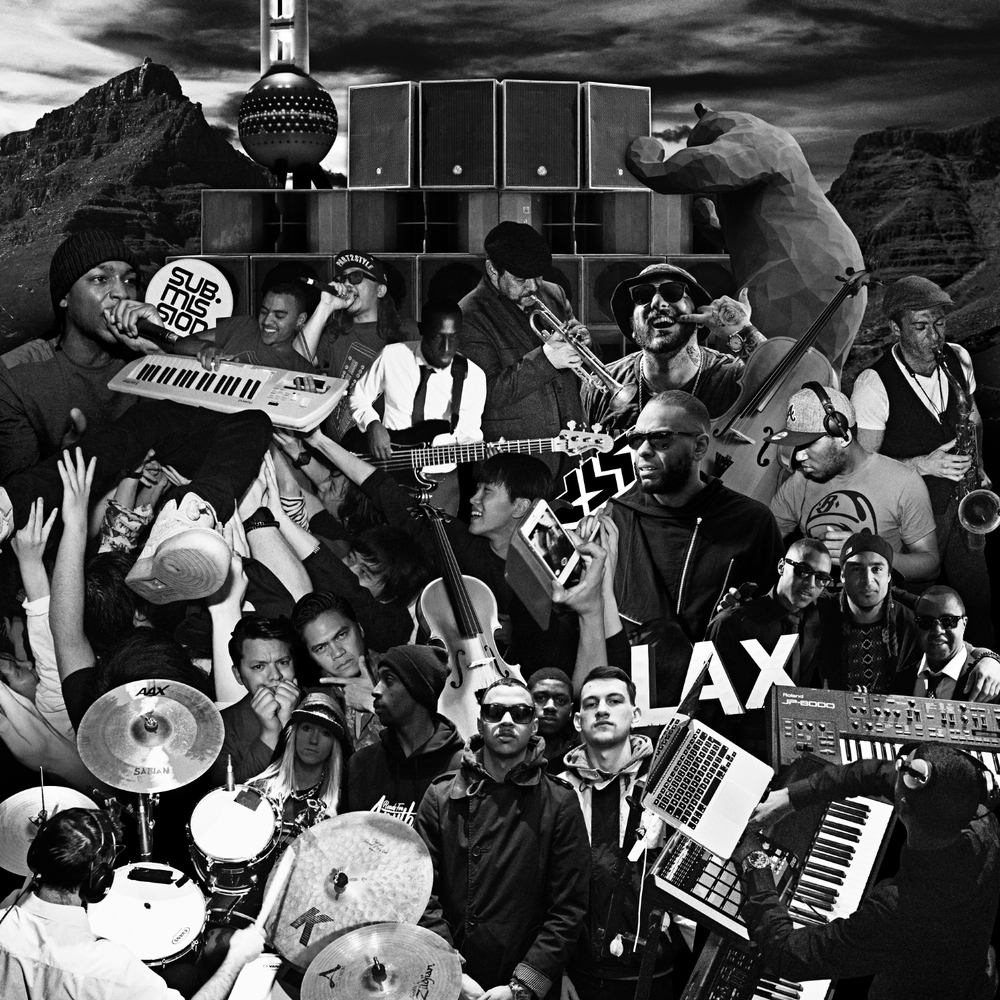
Palmer’s two favorite American cities are represented on the album early on. The second track, “London To L.A.,” is dedicated to the city of angels and features the vocals of Ash Riser. It was LA’s affinity for funk that first attracted Palmer, and last year he made it a temporary home for a few months in winter. Most recently he was surprised to see the crowd recite grime bars at a local party, word for word. Next is Denver, with a dedication to the local Sub.Mission party and the Cervantes venue. The song opens on a recording of Palmer telling the crowd that he “only made this for Denver” and until the album came out, no one but those in attendance at Sub.Mission have ever heard the music.
Each track on Peace, Love & Music that’s named for a destination was created with a similar process and intent, twisting the concept of exclusive productions. “Tokyo” was written on his return from a first trip to the Japanese capital in 2013. A week later he went back, to play keys for the Mala In Cuba live show, and tested an early version of the song while DJing the longstanding DBS party. In 2014, he again returned and captured crowd noises and words from Japanese DJ Nisi-P, with whom he had first toured the country. Once home, he added a chorus of horns to give the song a finishing touch.
More than simply providing a document of Palmer’s personal experiences, and allowing everyone to hear the music, Peace, Love & Music also acts as a connection between the members of the global bass diaspora Palmer has bonded with over the years. “Now DBS in Tokyo can check for Sub.Mission, and vice versa,” he explains before admitting that this was a calculated move. “You go to all these places and realize that no matter how different people are, the intent is always the same.”
It’s conventional wisdom that artists today make their money from touring. Aside from the generalization that of that statement, such precepts also ignore that the road isn’t always the best place from which to create. Artists need releases to tour—but can’t always write new material while touring. It can be difficult to channel bursts of creativity into something meaningful when you’re constantly moving and staying up late to work. For those who create largely within the limitless digital space of a laptop, writing on the road might be an option, but that’s not how Palmer operates. “I need volume and keyboards,” he affirms in his south London accent.
“The minute you lie about music, it will punish you for that”
Half of Peace, Love & Music was written on the road, and Palmer went about solving the problem of creativity-in-transit the only way he knew how to: He asked where the nearest studio he could use was. In Cape Town that meant sessions at the local Red Bull studio, while in places like the Philippines the approach led him to some unexpected places. “Someone said there’s an old man in the mountains I could go record with in a bamboo studio, with all bamboo instruments.” The result is “Malasimbo,” a laid-back composition propelled by wooden percussion and the singing of Hilarius Dauag. “I couldn’t have planned that. The guy I made it with doesn’t even have a phone. It’s completely honest. The collaborations in this album are in no way contrived. It’s all people I came across.”
Honesty is something Palmer comes back to regularly during conversations. He talks about being honest with music, that the number one rule is to never lie with it. Later on, he states that “the minute you lie about music, it will punish you for that”—and he says it all with a conviction that’s infectious. Instead of faking the funk, Palmer has found his own niche, best described by his motto “do the old thing a new way.” He blends the softness of strings and horn arrangements, composed with help from his band members, with the blunt edges of bass and beats. It’s the perfect synthesis of funk and grime, the two genres he loves. He’s quick to point out that they share a similar etymology: “You don’t get closer than that in a way.” Palmer is now so comfortable with his approach that he may never again use synthesized instruments, even if it’s only for his own satisfaction. “A lot of people ask me where my samples come from, but I don’t sample. The musicians just play,” he explains.
Palmer’s approach brings to mind the work of contemporaries like Flying Lotus, who first began to add musicians to his beats with 2010’s Cosmogramma—or even Kendrick Lamar’s latest album, crafted by jazz kids from LA and making use of classical arrangements to augment the power of the songs. In the worlds of electronic and dance music, people like Palmer remain the exception rather than the rule, despite the fact that many trained musicians hide behind the beats blasting onto dancefloors worldwide. Palmer attributes the situation to a lack of role models, or perhaps to people still seeing the two—instruments and computers—as different. There’s also an inherent difficulty and monetary costs associated with taking such a route, something that Palmer knows only too well. He takes a hit on every live show with his band, choosing to sacrifice profit for artistic integrity as a form of long term investment.
For the past five years, Butterz have championed their own strain of London club music with over twenty releases from a range of local artists, regular parties at home and extensive touring. Their approach respects the artistic individuality that makes the best grime special, while promoting a collective mindset that has sometimes been missing from the music. The decision to finally take the jump with a full-length album was one that founder Elijah didn’t want to rush. “This album feels like all the things we wished we could do when we first met in 2009,” he explains by e-mail. “Traveling the world, meeting other musicians and bringing them together on a project like this.” Palmer, for his part, has been integral in the presentation and roll-out of the album, handling videos, artwork and a promotional plan that sees him touring across the Americas in the two months leading to the release.
“I wanted do to the album on my own,” Palmer admits. “Doing it with Butterz gives me that freedom. They’re not doing this for the money, they’re doing it to make sure I can do it.” After five years of touring and releases on various labels, to issue Peace, Love & Music via Butterz feels like the only logical move for Palmer. “After all of this, I go back home.”
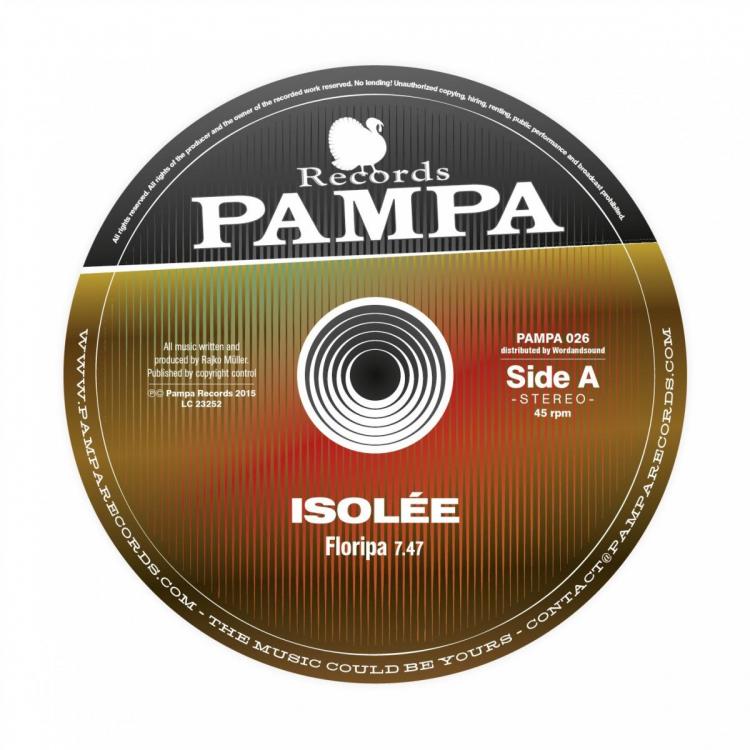
Shape-shifting house chameleon Isolée returns to Pampa with a slice of emotional, deep and…well, at times, slightly sad house music—its bluer than the sea itself and draped in melancholy, while still retaining enough groove to keep the faith, boasting light skip and swing aplenty. At least that’s the tone at the start of the title track, with its soft pace and yearning tone radiating through light top-line melodies and descending melodic bass chimes, all while beats twist and turn uncomfortably in the background. Just when you thought you couldn’t go any further down that deep rabbit hole, you do—before being brought back to earth on the drop, as snapping beats and shuffling percussion lift the spirits of the track.
The spirits are moved even further with the tremendous b-side, “Favouride,” with the tempo, pitch and jack lifted to a more actively upbeat groove. A deep sub-bass burns deeply, while bell percussion takes the lead; the drop brings in sublime kick drum, the groove then intensifying every 16 bars before leaping into the unknown around the two and a half minute mark.
He’s an undisputed—yet somehow elusive—champion of house music and its many facets, and Isolée’s latest entry in the Pampa hall of fame will probably have you hitting repeat a fair few times.