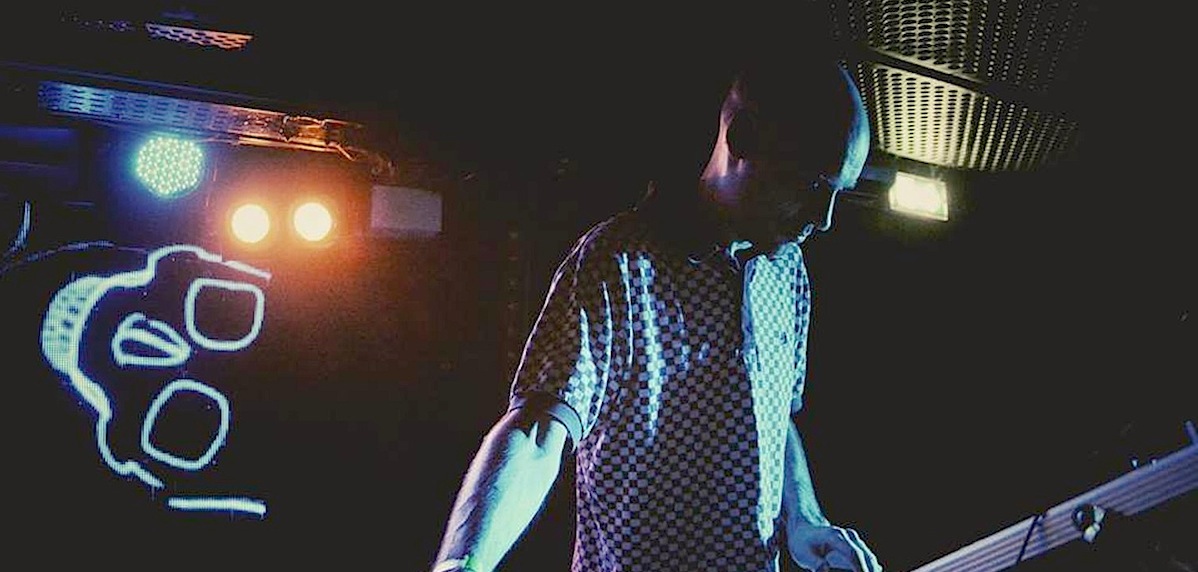
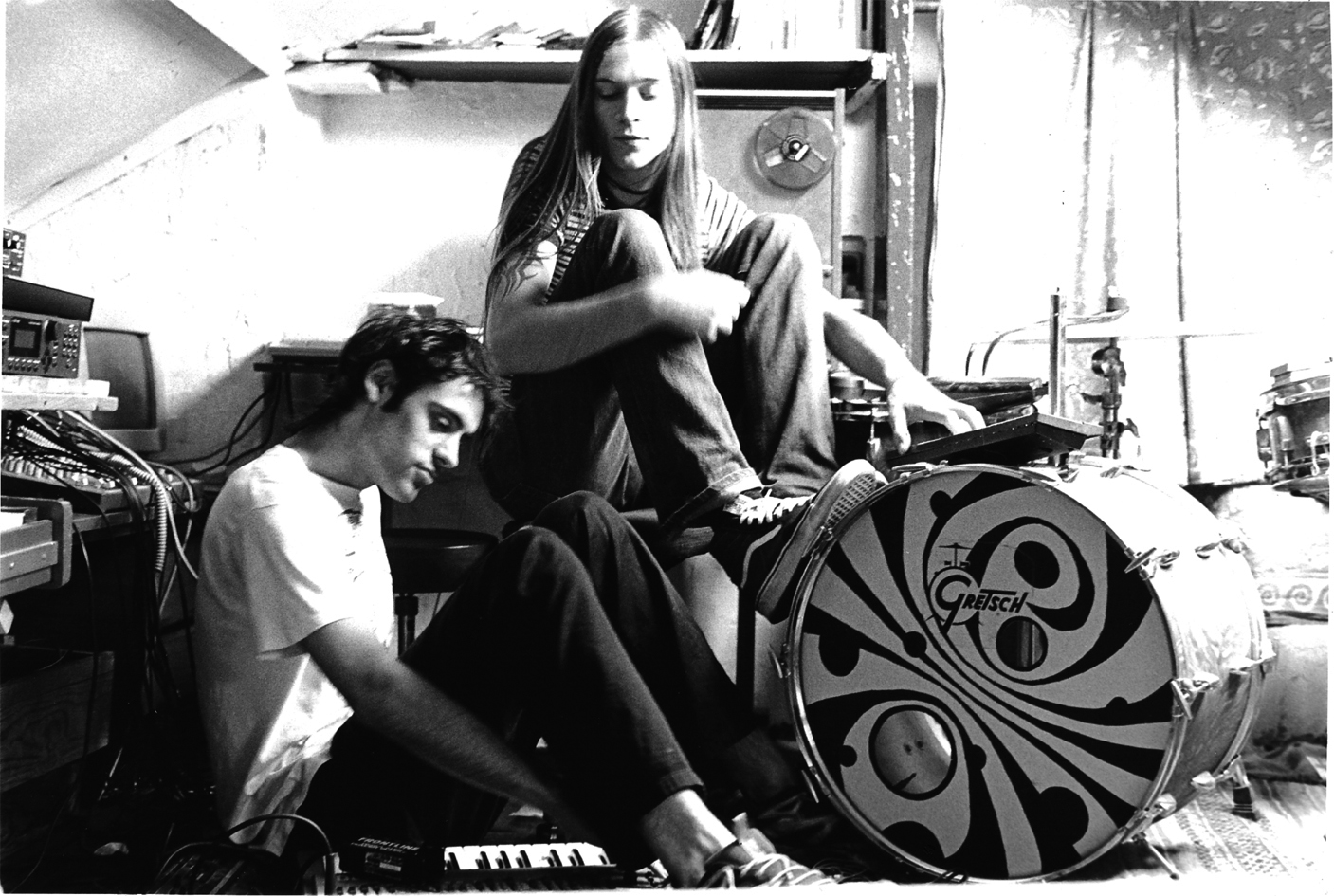
Spires is a new collaborative project between Phil Kieran and newcomer Koichi—who, although unknown to some, has been involved in the techno scene, DJing and producing, since the early 2000s. Spires released its debut EP at the end of last month on Phil Kieran Recordings, finding the pair meeting in the middle between Kieran’s mastery of analog synths and outboard processing, and Koichi’s darker UK techno influence and use of field recordings. In support of the release, XLR8R has been handed a dub version of warehouse ready EP cut “Spires.” The deep and dark cut has all the hallmarks of both artists, with slicing drum-machine percussion, haunting textures, and a devilishly grumbling low end front and centre. The dub version of “Spires” can be picked up for free below, with the EP available for purchase here.
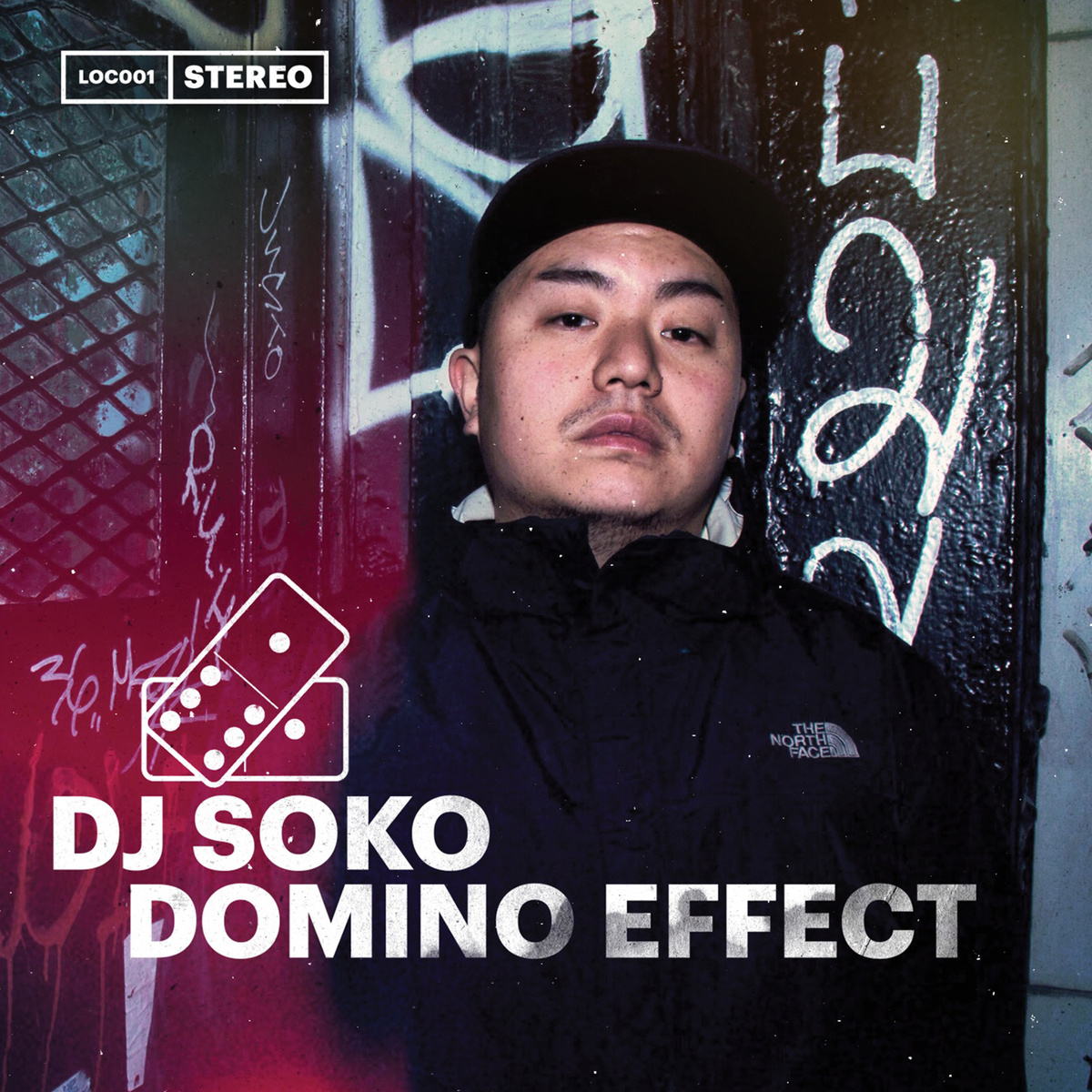
Detroit’s own DJ Soko is done preparing for the release of his next album, Domino Effect, and the collection will be released on vinyl on August 21 via the online record store Fat Beats, and digitally on Soko’s own Bandcamp page.
DJ Soko is still relatively young, but the artist has already found unique ways to pair up with the influences of his craft. Soko’s skills and willingness to pair MCs with the perfect production for them to shine on is never clearer than on his debut project. The album was entirely curated by DJ Soko, featuring his signature scratches and noteworthy MCs and producer pairings including Guilty Simpson, Apollo Brown, Finale, Noveliss—from Clear Soul Forces—and Journalist 103. The single “Kyle Reese” was produced by Seattle’s own Def Dee, and features Simpson‘s signature gritty Michigan sound.
You can pre-order the red 12″ vinyl from the Fat Beats website by clicking here, and you can cop the digital version and get a free song when you pre-order by clicking here.
It’s notoriously difficult to write an accurate history on the rise of any music scene, even a localized, tightly focused one—particularly if it has its roots in pre-smartphone, pre-nonstop-documentation days. It ends up being a pick-and-choose sort of game, with legions of personal tales, alternate attributions and conflicting information that can make Rashomon seem like a simple revenge flick. Even the familiar origin stories, like that of Detroit techno, come in multiple versions. And that kind of complexity is as inherent in the history of footwork—the raw, highly syncopated, 160-bpm, sample-heavy form of electronic music that inhabits a vibrating dimension between abstraction and precision—as it is in any other.
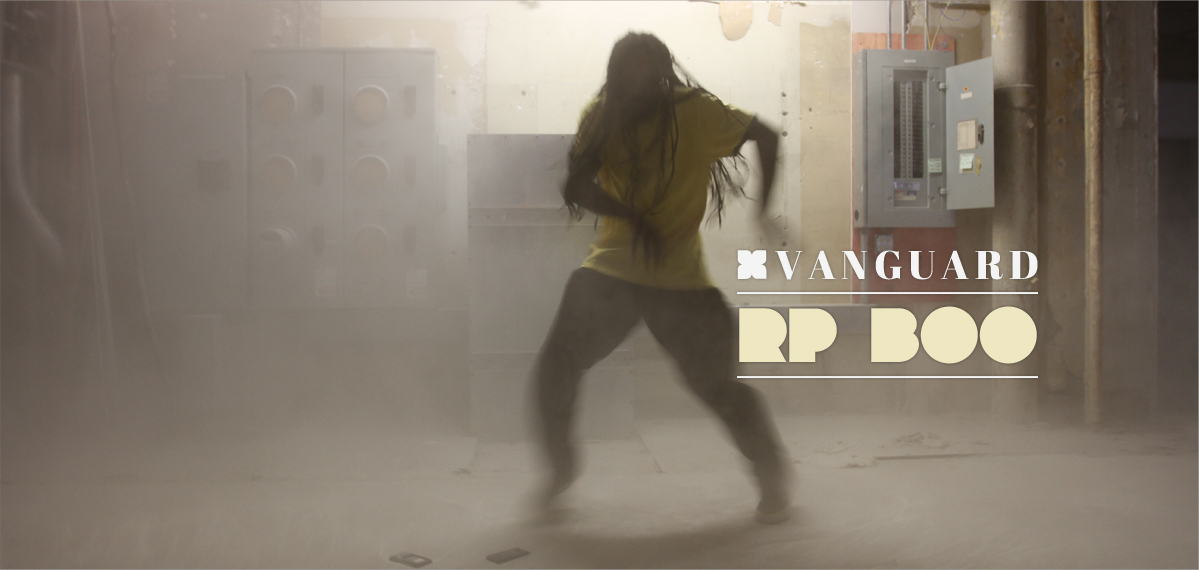
But there are a few things we can say about footwork with certainty. It comes from Chicago, born and bred in that city’s dance-battle world; it’s the main branch of an evolutionary tree that’s arisen from ghetto house and juke roots; recent years have seen the sound find international favor, despite its inherent weirdness (it can be pretty rhythmically out–there at times); and Kavain Space, the DJ and producer better known as RP Boo, is at the music’s epicenter.
Plenty of others can claim a role in footwork’s development—DJ Deeon, DJ Spinn, DJ Milton, DJ Clent, Traxman and the late, much-missed DJ Rashad among them—but Space is generally considered to be the sound’s prime mover, the man who, more than any other, molded, baked, and crystallized the sound into what it is today. A dancer who hooked up with the House-O-Matic crew in the ’90s, he gravitated toward DJing and quickly rose through the Windy City ranks; producing followed, as it often does, and Space used his knowledge of what dancers crave to create a series of evolutionary, revolutionary tracks like 1997’s Old Dirty Bastard–sampling “Baby Come On.” It was a cut that wasn’t even credited to Space that started bringing him fans outside Chicago: “11-47-99” (a.k.a. the Godzilla track), produced for, and originally credited to, his comrade-in-arms DJ Slugo. Like most footwork cuts at the time, it was originally released as a white label—and the ominous, skittering tune was perhaps the genre’s biggest tune yet.
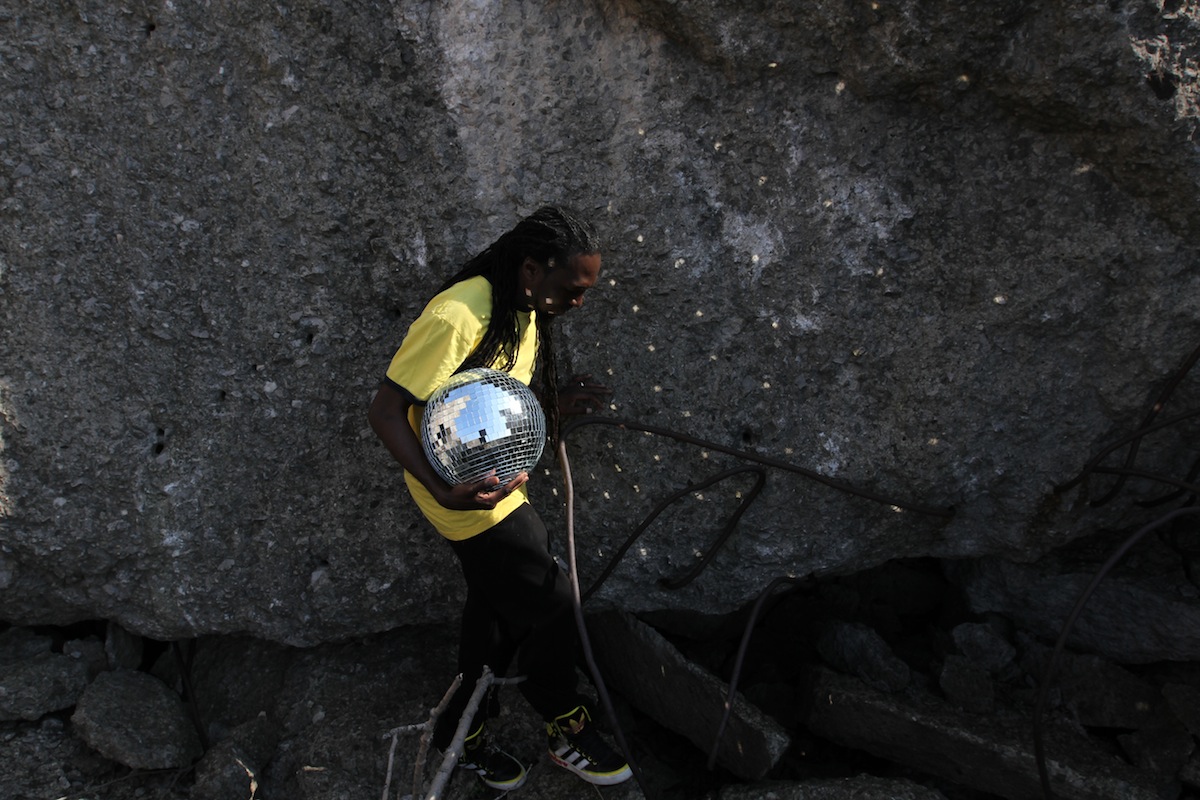
Still, it wasn’t until 2007, when he released the influential Dude Off 59th Street mixtape, that Space really began to attract worldwide attention. Word of the sound reached Planet Mu’s Mike Paradinas—a collection of Space’s tracks, 2013’s rapturously received Legacy was the result, followed a year later by the Classics Vol. 1 EP. Now, Space and Planet Mu have released Fingers, Bank Pads & Shoe Prints—and it’s a stunner, brimming with songs both skeletal and celebratory, and sounding like little else out there. Speaking over Skype as he chilled between gigs in his Chicago home, the enthusiastic Space seemed both surprised and thankful at what life—and footwork—have brought his way.
We’ll start with the most basic of questions: RP stands for Record Player, right? Yeah! And when I was a young guy, I asked my uncle, “Where did Boo come from?” He said, “It’s because you were the darkest grandchild of the family, so it was like “boo” as in Caspar the Ghost. I was like, okay, I’m good with that! Also, my father’s nickname is Yogi, because he liked Yogi Bear—and my name kind of relates to his sidekick, Boo-Boo. So it all fits!
Speaking of your father, is it really true that he used to play bass with Prince? He was traveling through Minnesota and met Prince before he started playing with him. Once I asked him, “How did you actually get that gig?” It turned out he was doing some other project in Minnesota, and somebody asked him to try out for Prince’s band, and of course he said he would. So he played for Prince for like two hours and half hours. Finally, Prince asked him to play “Purple Rain”—and after he played it, Prince just said, “You know, you’re officially in now.” And he stayed with Prince for around five years. This was around the NPG days.
So you have quite a bit of a musical heritage, and are sort of following in your father’s footsteps. Yes, that’s what it is.
“Discover who you are, and just play. You never know how it’s gonna end up.”
And you are certainly doing it well. Most people credit you with being the guy, or certainly one of the guys, who invented footwork. Do you feel you can take credit for that? Maybe, but I never saw it coming. And when it did happen, it took my years to understand it. When it came about, I looked at my journey, and who it was I was doing parties for, and what they had contributed, and looked back at the dancers, and I can see where footwork started brewing. I have to say, though—it really was like, hey, we’re just doing a party, and the kids are doing their thing. But around 2004 or 2005, there was a guy here in Chicago who had a show called Wala Cam, and he used to show kids footworking at parties. I was watching it and realized, that’s nothing new that they’re doing—this guy’s just taking it to a whole other level! A lot of the tracks they were playing were actually a lot of my own tracks. When I finally got to meet this guy, I realized that he was in my seventh-grade class! When I started telling him what I had been doing, and he started doing his research, that’s when it kind of started. People started telling me, “Wow, we’re finding out a lot about you!” They started finding out about House-O-Matic and all that. They would say, “That sound backtracks to everything you’ve had done, so I guess nobody else could have done it. You’ve been the one who kept it going.” I was just thinking, this is just what I do every day! I was making tracks; I was able to play tracks at places most people couldn’t go. Promoters would go to me, “We know you got the good tracks! We know you got the heat! You’ve got to play!” So I was able to go all over Chicago and play all these new tracks, and it was growing from there. People were going, “You gotta hear RP Boo—he’s got that new heat.” And after that started happening, everything was happening—everything was history.
And it’s still happening—more than ever, I would guess. I’m still in shock that I was part of making this grow. It’s still unbelievable. I catch myself saying, “Why me?” I just didn’t want to see any kind of dance music die out, so I was making and playing this stuff, sharing what I had learned over the years. I was just expressing my inner side through my music, in the only way I know how. My father’s told me, “You have a lot of wisdom, and you have a lot of heart. That’s what makes you stand out. That’s why I tell people, “Discover who you are, and just play. You never know how it’s gonna end up.”
“I realized that it was now my turn to actually be the one to construct and orchestrate these battles, and I fell in love with it.”
But how did it end up being footwork, specifically? I don’t really know! But genres are always going to be remade. Music’s unlimited.
What were you originally playing when you first started DJing? I was playing house, and I loved old-school, New York–style hip-hop. I still love it! But I was playing some party once, and he said, “Don’t play rap tonight—play all tracks.” That’s when Dance Mania was still going strong. So I played for five hours—strong, because I had the music to play. And after I was done playing, I was never asked again to play any rap. That night is what helped me become who I am today. That’s the night that I started playing as me, I think—just playing the tracks as myself.
Footwork is centered on the world of dancing and battles. For those who aren’t that familiar, can you describe that scene a bit? Let me tell you how I first came into that. I was going to a party that House-O-Matic was doing, and Deeon and Milton were spinning that night. As I walked in, this one guy was telling me about these dancers: “This is so-and-so, that’s so-and-so.” This was my first time to see off-the-stage dancing like that—groups of friends, circles, and people jumping into the circles, like, “Hey, check this move out!” I was like, wow! And I wasn’t even paying attention to the actual footwork part—that was the bonus that came later. I was paying attention to the body movements, the whips, the spins, the straddling like you’re riding a horse, moving your arms back and forth. I thought it was real nice. So time goes by, and I had been thinking that I want take this to a different level; I want to join House-O-Matic. Later on…I can remember it was a Wednesday, I think around 1993, and I came into House-O-Matic. I had a mixtape, and I presented it to the president, saying, “I’m a dancer, but I’m also a DJ”. He was like, “Cool,” and started playing the tape. This girl comes in and says, “Man, that’s a nice tape! Did Deeon or Milton do that?” And he said, “No—we have a new member!” And by the next week, I started getting calls saying, “Can you do a party for us?” The first party was okay. The second party was kinda duh. Then came the third party, which was gonna be the bigger event. I’m playing, and I’m seeing multiple circles. I realized that it was now my turn to actually be the one to construct and orchestrate these battles, and I fell in love with it.
How did you first hook up with Slugo? That was a couple of years later. I actually met Slugo and DJ Clent the same day. Slugo was talking to Clent and Milton: “Who is this guy up there? Can I spin?” They were like, “No, that’s DJ Boo; he’s the promoter’s main DJ.” He didn’t know who I was, but he soon saw that my skills were just mad; I was the person who you just could not knock off. But my man Slugo and I eventually became real cool. We became good friends. And I had actually already gained all the footworkers that I could as a DJ, and there was nothing else to do—so that’s around when I started learning how to make tracks. A lot of us were deejaying, and the battles were already there, so that was the next step.
Were you calling what you were spinning footwork at that point? Let me see—that would have been about 2002 or 2003, after that Waxmaster “let me see your footwork” track came out. That’s when it started to become gradually started to become footwork. And after MySpace came around and word started getting out, everybody was like [snaps his fingers]—“Oh, that’s Chicago footwork!”
There’s this great quote from you from the Fingers, Bank Pads & Shoe Prints press release: “Footworkers need fuel—and they often say, ‘Only you can get us to battle like that.'” Oh, I know how to get ‘em! [laughs] I can take them to another level. And now I’m taking it from Chicago to the world. And whatever happens with footwork…it might not be in Chicago—it might be in Japan, it might be in the U.K., or it might be in California. I don’t know, but I know what I’m looking for. I mean, Chicago will always have it, but people myself, DJ Spinn, Traxman…we’re out traveling and taking it beyond Chicago. So we’ll see what happens next.
Speaking of traveling, is it true that you had never played outside the U.S. before you played the Unsound Festival in Poland in 2013? That was the first time! I loved doing Unsound, and I will always be grateful to them.
A lot of people credit that gig as the one that brought footwork to a truly international audience—at least in part through your impromptu dancing at the gig. Yeah, it was. I said to myself, I’m gonna give them something. I’m get to the show, I crank up, and then it just hit me: “Now’s my time!” I came around the booth, and I just started doing what I need to do. Everyone was like, “What has just happened?” I gave them a show, and they were finally able to see it for themselves. And that was it, and that’s what started to bring it worldwide. You know, people have seen footwork through YouTube or whatever, but I’m like, I’m able bodied—why not really show them? So I do that almost every show.
To make the kind of music that you make, do you think it’s important to be a dancer? Being a dancer enhances it, for sure. But at this point, it’s been my life for a long time, so I can produce it knowing what I know. That’s a gift that I have. Rashad was another person who was able to do it.
Were you close with him? Me and Rashad were real close! Of everybody in Chicago that we could talk about—and that includes DJ Slugo—we knew each other the best. But it’s sad—we both became international, but we never got a chance to play internationally together before he passed away. I think he looked at me like his power pack—someone who could help him refuel. And he was the same for me. We definitely would have done something together on this grand stage—there was no animosity between us at all. It was like, “I got you now, RP!” “Okay, Rashad!”
“The important thing is that every track is gonna tell a story; every track is gonna be totally different; every track has its own meaning.”
Your career stretched for years before you put out your first album—and now your second one is out less than two years later. Were you hard at work producing that whole time? Yeah, but really, I had a lot of tracks put aside from before, so there are tracks produced from all different times. When Mike [Paradinas, head of Planet Mu] started picking and choosing tracks for Legacy, they were tracks that went all the way back. But there were just so many! And if the question is, were these tracks done after Legacy? Some were done before, some were at the same time—and there’s some new stuff as well. I told Mike, don’t ask me what year it was done—just put it out there! It doesn’t matter. To the listener’s ears, it’s all new. But the important thing is that every track is gonna tell a story; every track is gonna be totally different; every track has its own meaning. The only important thing is to be relevant.
Are there any tracks that are particularly relevant to your own experience? “Let’s Dance Again” is one. I was missing seeing people dance in Chicago; I missed seeing people feeling free to move how they want to move. I didn’t really want that one to be a real battle-style song—I just wanted it to be a dance song. The battles at House-O-Matic? That all came from people just grooving and shaking their bodies. So that one means a lot, and so does “Your Choice.” That one’s all about the funky groove. I couldn’t really do what I wanted to with the sample on that one, but the concept is all about just keeping the groove.
How do you decide what to sample? There’s that one track that samples a famous opera, for instance.… “Sleepy!” I had that a long time before I even thought about it. Really, it’s all about what will help me be able to tell my stories. And I want to do things that are totally different, and I’ll get ideas from anywhere—cartoons, TV shows, wherever. You just have to keep your ears open, and if you find something that you think will help you tell a story, that’s great. But you don’t need a sample to tell a story. You can do it all kinds of ways.
And you’re doing it through footwork. You know, I never was really paying attention to what was happening—but we were creating history. And we’re still making history today. It’s taken me a while to look at all this for what it really is. I’m doing something to leave behind; I’m representing all of this. I’m very thankful for this album—but there’s still work to be done, and I can’t stop. There’s still a story to be told.
Kicking off the weekend early on Friday morning (Thursday night), Berlin-based record label and promoter Leisure System celebrates its 7th year and 25th party at Berghain and Panorama Bar with artists like KiNK, Daniel Avery, Perc, and Nathan Fake, while over on the US side in Chicago Ninja Tune artist Machinedrum takes over Smart Bar alongside DJ Earl x DJ Taye with guests.
Saturday marks the premier of RY X and Âme’s Frank Wiedemann’s co-curated festival Sacred Ground, which will take place roughly 100 km outside of Berlin in a scenic open-air farm land. Performances are set to include Howling, Adam Freeland, RY X, Âme, and many more. In London, Fabric boasts a groove-filled night with Cobblestone Jazz (live), D’Julz, The Mole and Frank & Tony, while Los Angelenos can enjoy a Bunker showcase with Mike Servito and Derek Plaslaiko put on by relative newbie night Club Time.
Wrapping up the weekend, over in New York on Sunday Verboten presents Zeitgeist at Sea, a sunset boat cruise featuring Berlin based UK producer George FitzGerald. And if you’re on the west coast Side Show Sundays in San Francisco is hosting a day party featuring Poker Flat’s Jay Tripwire alongside fest organizers Rachel Torro and Ramona.
Plenty more to choose from, have a look below and we here at XLR8R wish you a fun music-filled weekend.
In the summer of 2014, doomy electronic veterans Stuart Argabright (a.k.a. Black Rain) and Nino Pedone (a.k.a. Shapednoise) teamed up in Nino’s studio in Berlin to generate a bunch of supermassive bulbs of noise, whose chaotic energy is constantly reshaped by nonlinear broken beats.
Out of those studio sessions, four new tracks have been recorded, and will now be released on the Apophis EP via Cosmo Rhythmatic on August 20. The release will see three original tracks, as well as a remix of the song “Interceptor” by Demdike Stare’s Miles Whittaker, who easily deconstructed the inorganic rhythmic force of the original track through mutated jungle tropes, turning its anxious feel into a rioting piece of post dystopian hardcore. In this sense, the four tracks contained in Black Rain & Shapednoise’s Apophis EP felt like an embracement of fear as a destructive form of communion.
You can listen to a song by Black Rain below, and you can find out more about Apophis by clicking here.
Black Rain & Shapednoise Apophis Release Date: Label: August 20th 2015 Cosmo Rhythmatic Format: Catalogue Number: 12” / Digital CR02 Tracklisting: A1 / Metal Home A2 / Autonomous Lethality B1 / Interceptor (Miles Ramen Reshape) B2 / Interceptor
Piknic Electronik has unveiled its second wave of programming headed up by ex-Instra:mental member Boddika, Numbers label co-founder Jackmaster, Lunice and The Celestics (featuring Kaytranada and brother Louie P), DJ Three, Francesca Lombardo, and Kompakt label boss Michael Mayer.
The world renowned summer party series will also feature a host of local artists and crews for its August and September editions, including Misstress Barbara, Samouraïs des Jungles Urbaines, Oasis, and Ghottitout.
For more information, including the full schedule, head over to the Piknic Electronik website.
Released today, The Opposite is a short documentary by filmmaker Ramez Silyan exploring Ben Zimmerman’s musical experiments with the Tandy DeskMate—which have since been released as The Baltika Years by the highly regarded Software imprint.
Pulled together from a collection of recordings made by Zimmerman between 1992 and 2002, The Baltika Years is an absorbing journey made all the more fascinating by Silyan’s brilliant portrait.
You can watch The Opposite in full below, with The Baltika Years available here.
Following on from previous releases on respected labels such as Brownswood and Mindset, the young Bristol artist steps up for Losing Suki with three cuts of his trademark deep and atmospheric sound. Opening with the feel-good dub house of “Playin’,” the EP moves onto the low-slung title track, “Red Wine Lips,” with its swinging rhythm and buried synth lines, before stripped back cut “Lay” rounds things out with a thumping kick drum and swirling pads.
Ahead of the full release, you can stream “Playin'” in full below.
Last week, German record label Audiolith released the sixth volume of its Stiff Little Spinners series. The five-track package spans quite a wide sonic spectrum, taking in deep house, darker slow jams, and more broken beat cuts without sounding disjointed. In support of the release, XLR8R has been offered Gimmix & Zorro’s “Oveile,” an R&B influenced house cut with a highly infectious good vibe; which can be downloaded for free below. In addition, Audiolith and XLR8R are giving away a copy of Stiff Little Spinners Vol. 6. All you have to do is enter your email below and we will randomly draw a winner in a weeks time. Terms and conditions can be found below.
The promoter is, Audiolith and agent, XLR8R.com whose registered office is at 837 Traction Ave #304, Los Angeles, CA 90013, USA.2. Employees of Audiolith / XLR8R.com or their family members or anyone else connected in any way with the competition or helping to set up the competition shall not be permitted to enter the competition.
There is no entry fee and no purchase necessary to enter this competition.
Closing date for entry will be Tuesday July 14, 2015 at 11:59PM (PST). After this date the no further entries to the competition will be permitted.
No responsibility can be accepted for entries not received for whatever reason.
The rules of the competition and the prize for each winner are as follows: Only 1 entry per email address accepted Must be 18 years of age or older to enter Prize is for 1 ‘Stiff Little Spinners Vol. 6’ record.
The promoter reserves the right to cancel or amend the competition and these terms and conditions without notice in the event of a catastrophe, war, civil or military disturbance, act of God or any actual or anticipated breach of any applicable law or regulation or any other event outside of the promoter’s control. Any changes to the competition will be notified to entrants as soon as possible by the promoter.
The promoter is not responsible for inaccurate prize details supplied to any entrant by any third party connected with this competition.
No cash alternative to the prizes will be offered. The prizes are not transferable. Prizes are subject to availability and we reserve the right to substitute any prize with another of equivalent value without giving notice.
Winners will be chosen at random from all valid entries received and verified by Promoter and or its agents.
The winner will be notified by email within 2 days of the closing date. If the winner cannot be contacted or do not claim the prize within 2 days of notification, we reserve the right to withdraw the prize from the winner and pick a replacement winner.
The promoter will notify the winner when and where the prize can be collected.
The promoter’s decision in respect of all matters to do with the competition will be final and no correspondence will be entered into.
By entering this competition, an entrant is indicating his/her agreement to be bound by these terms and conditions.
The competition and these terms and conditions will be governed by English law and any disputes will be subject to the exclusive jurisdiction of the courts of US.
The winner agrees to the use of his/her name in any publicity material. Any personal data relating to the winner or any other entrants will be used solely in accordance with current US data protection legislation and will not be disclosed to a third party without the entrant’s prior consent.
Entries into the competition will automatically opt-in email for XLR8R.com weekly email newsletter, The Lowdown. User may unsubscribe at anytime.
Entry into the competition will be deemed as acceptance of these terms and conditions.
This promotion is in no way sponsored, endorsed or administered by, or associated with, Facebook, Twitter or any other Social Network. You are providing your information to XLR8R.com and not to any other party. The information provided will be used in conjunction with the following Privacy Policy found at https://xlr8r.com/legal.
Kruton, Binary Chaffinch, Chrome Hoof,Invincible Scum, Zirkon and Booze: Milo Smee’s lengthy discography reflects a man with a penchant for a comical pseudonym. Now producing under the Bintus alias, a reference to an exotic-food shop located near to his studio, Smee’s latest project is Power Vacuum, a small vinyl-focused imprint with a name that can traced back to a toilet re-installation at Golden Gate, the Berlin nightclub.
“I was looking for a label name for a long time,” recalls Smee. “And the manager explained that the work was only being done now because the other two managers were on holiday, which gave him the authority do it without their consent. He called it a “power vacuum”—and it just sounded great, mainly because in his accent the v sounded like a w!
Despite those humble beginnings, Power Vacuum has quickly evolved into a widely-respected imprint, acclaimed for its acid-fueled techno releases and supported publicly by the likes of Surgeon, Ben UFO and Blawan. A clear symbol of the label’s growing stature, Power Vacuum’s latest EP comes from Cylob (a.k.a. Chris Jeffs), the legendary Berlin-based producer who also contributed a track to the label’s Vectors 2 compilation. Following the EP’s June 23 release, XLR8R sat down with Smee to hear the story behind Power Vacuum, reflect on its success and learn more about the Cylob release.
“I am definitely surprised by Power Vacuum’s progress,” says Smee, smiling—though he’s noticeably reluctant to label the project a success. “I have always had this inkling that I wanted to start a label, but it was never the right time. And then when I left my project Chrome Hoof in 2011, I suddenly had loads more time on my hands. It was mainly because I want music that I can use in my DJing and, at least initially, it was also a platform to give me creative freedom for the new Bintus material that I had just started doing.”
That may be true—but it’s also clear that the motivations behind Smee’s latest project are far more complex than just a desire for new music for his sets. As he elaborates on his lengthy back story, it’s clear that Smee has long possessed a love for all things musical, an obsession that can be traced back to his earliest years as a child growing up on the River Blackwater in Essex.
“Although I began producing in 1995, when I look back at all the things that happened before that, I feel like there was no other option besides music,” Smee says, before pausing to reflect. Taking a sip of his water, he explains how boredom caused him to spend hours jamming with his next-door neighbor on the antique drum set that his uncle left at his parent’s house. “I didn’t have much to do [besides play music] so I used to just go round to my neighbor’s house and mess around on his synthesizers. I think that was a massive thing, because subconsciously the seed was planted. I think that is probably why I am doing what I am doing now.”
“The seat was still warm so Suzi Quatro’s residual bottom heat transferred into my own—and it was a nice thing.”
With an interest in music technology firmly established, Smee’s exploration continued when he met the rocker Suzi Quatro and Mark Summers (of house act Quartz fame) during a three-week school work experience program at a local recording studio. “That, for me, was big turning point in wanting to do music seriously,” recalls Smee. “All I wanted to do was make music. There was absolutely nothing else that I wanted to do,” he continues, trying to mask a grin as he explains how he met Quatro. “We met in the corridor as I was going to the toilet—which was in an outhouse and it was a cold November. The seat was still warm so Suzi Quatro’s residual bottom heat transferred into my own—and it was a nice thing. Normally I would say that sort of thing is weird and unpleasant—but because it was her, it felt quite nice to be honest!”
It’s this kind of infatuation that has formed the basis for Smee’s career, leading him to take a Design and Media Arts course to “avoid specializing in one discipline,” dropping out just one year later, and then to decline a promising job opportunity with Sony Music in the hope that a small record deal—one that he believed was a done deal—would eventually lead to greener pastures. “I missed out on that job for a record deal that didn’t really exist,” he says. “As a 23 year old, I didn’t even read the bloody contract—I just wanted to sign the deal and be a musician. Of course, my mind boggles as to where I could be now [if I had gone to Sony]. I’ve no doubt I could be in a pretty sweet job—but I don’t kick myself because I made the right decision at the time.”
“Even to this day, it amazes me that you can plug a wire into a hole, and you don’t know what sound is going to come out.”
And since then, Smee has satisfied his musical cravings with a string of production aliases, starting with Kruton in 1995 and then Kactus, a heavy-metal collaboration with his youngest brother, in 1996. “For three years I was on the dole so I had a lot of time to work on it,” he says. “Looking back, it was a golden time in terms of how much time I spent making music in my attic.. It gave me immense pleasure experimenting with these sounds by combining frequencies and rhythms. Even to this day, it amazes me that you can plug a wire into a hole, and you don’t know what sound is going to come out. It is so infinitely variable that I could happily live 20 lifetimes doing that and still never feel even nearly satisfied.”
Kactus’ first release came out in 1997, coinciding with “Turnip in the Mist,” Smee’s first electro/breaks release under the Kruton moniker. While Kactus quickly evolved into Chrome Hoof with the addition of further members, close friend Mark Broom continued to release Kruton material via his Unexplored Beats (a.k.a. UXB) and Pure Plastic imprints, including one—”Smallfish Pa.track2″ off 2001’s Granular PlateauxEP—featuring an Autechre remix. “I don’t know how it [the Autechre remix] came about, but it was amazing,” say Smee. “Some of the stuff Mark was putting out was absolutely ridiculous—it wasn’t structured or anything.”
Despite that kind of career highlight, there is a sense that Smee may have spread his focus too thinly. Outside of Kactus/Chrome Hoof and Kruton, Smee also released under a number of other monikers—including Binary Chaffinch, an alias reserved for his softer, more disco works, like 2007’s “False Energy“. While Smee’s tenure in Chrome Hoof ended in early 2011 following a successful European tour, and Kruton has remained dormant following a string of releases on Dissident in 2007 and 2008, Smee now releases more dance-orientated music under the Bintus name and plays drums in an instrumental band called Clean & Jerk. “Maybe I should focus on just one thing, but too many unexecuted ideas in these different genres wont allow me, and I don’t want to stop that,” says Smee.
For now, however, focus remains on Power Vacuum. Running a label doesn’t come naturally to Smee, and he can only draw experience from when he self-released a Chrome Hoof single in 2000, and from working closely with the Pure Plastic and Unexplored Beats labels. “I’m not a great organizer or hustler, and I still struggle with the whole concept of social media, but I do think I have a fairly strong idea about the music selection,” Smee explains. “I’ve seen things come and go, and hope to now have reasonable defenses from the relentless hype outlets—and this critical aspect has certainly helped me a lot.”
“It’s too much work to spend time thinking about how to present it in a slick or professional way, as that implies certain standards should be met—and there’s enough of that already.”
Power Vacuum’s notoriously witty press releases are motivated by Smee’s animosity towards PR’s fondness for adjectives, and the emphatically boisterous logo and rough techno output is a reflection of the label head himself. Almost by accident, Smee has stumbled upon a successful formula that has facilitated the creation of a strong brand identity in an already oversaturated market. “It wasn’t planned,” he says. “I’m just trying to be honest in an attempt to present to people music I find interesting and workable, like most people running a label. I do think this humorous side is important to Power Vacuum, and I understand people could see this as me trying to be weird or whatever, but that’s not it. It’s just the way my mind works. This is always the way I have done things, and that extends into the music, too—doing things with audio which are silly or amusing. I don’t expect everyone to like it, and I am sure that people will see it as pathetic and childish, but I get a lot of pleasure out of being pathetic and childish. I just don’t think about it too much. It’s too much work to spend time thinking about how to present it in a slick or professional way, as that implies certain standards should be met—and there’s enough of that already.”
Smee’s keen to point out that while the image of the label today was far from premeditated, he has long held a very specific vision regarding the music itself. “I was looking for this tough sound to remind me of all the techno I used to love in 1991, but also slightly twisted,” he says. “The visual identity of Power Vacuum is so strong because of my mate Fergus created this loud logo—and this identity has informed the music, in some ways.”
As demonstrated by “Corrosion Control,” Smee’s first release under the Bintus moniker, the label today focuses on three old-school blueprints, Smee says: “Rough techno, electro and acid house. I know I want music that can be played in clubs. But in my own head, I’m moving away from the rolling techno jams, even though that’s pretty unbeatable on the floor. For example, the Cylob EP is a lot more crafted and composed. It has a lot of structure with some beautifully melodic content.” The seven-track release will inevitably impact the profile of the label; considered to be one of the finest electro pioneers to emerge in the past 20 years, Cylob’s decision to release his first vinyl EP for over a decade on Power Vacuum is a mark of the label’s progress.
Here’s how it came about: After being connected through a mutual friend, Smee wrote to Cylob asking for a track and reassuring him about his own bad experiences with labels. “He then sent me about 170 sketches—and I listened to them all for a couple of weeks, making notes and really thinking about them in as scientific a way as I can get,” Smee says. “He is a master, flexing his analog modular set-up, and there was some exceptional rhythm and melody work. But I fear people are going to miss the brilliance of this release, because its very rich and irregular—and you need time to digest it, which people don’t have much of.”
Smee has no intention of ending his personal musical exploration anytime soon. Loose plans are already in place to begin a new series on a Power Vacuum sister label as another vehicle for Smee to discover new musical realms, while he also intends to further examine the crossover between live instruments and electronics. On top of this, Smee also points out that his work as Bintus will continue, and hints at the possibility of some unreleased Kruton material.
It is clear that music has always been an entirely personal venture for Smee, one that he has pursued for nobody but himself. Despite the challenges, he remains undeterred and wonderfully enthusiastic, clearly excited by the Cylob release and his other impending projects—and his love for music is as strong as when he first discovered the drum kit in his parent’s house over three decades ago.