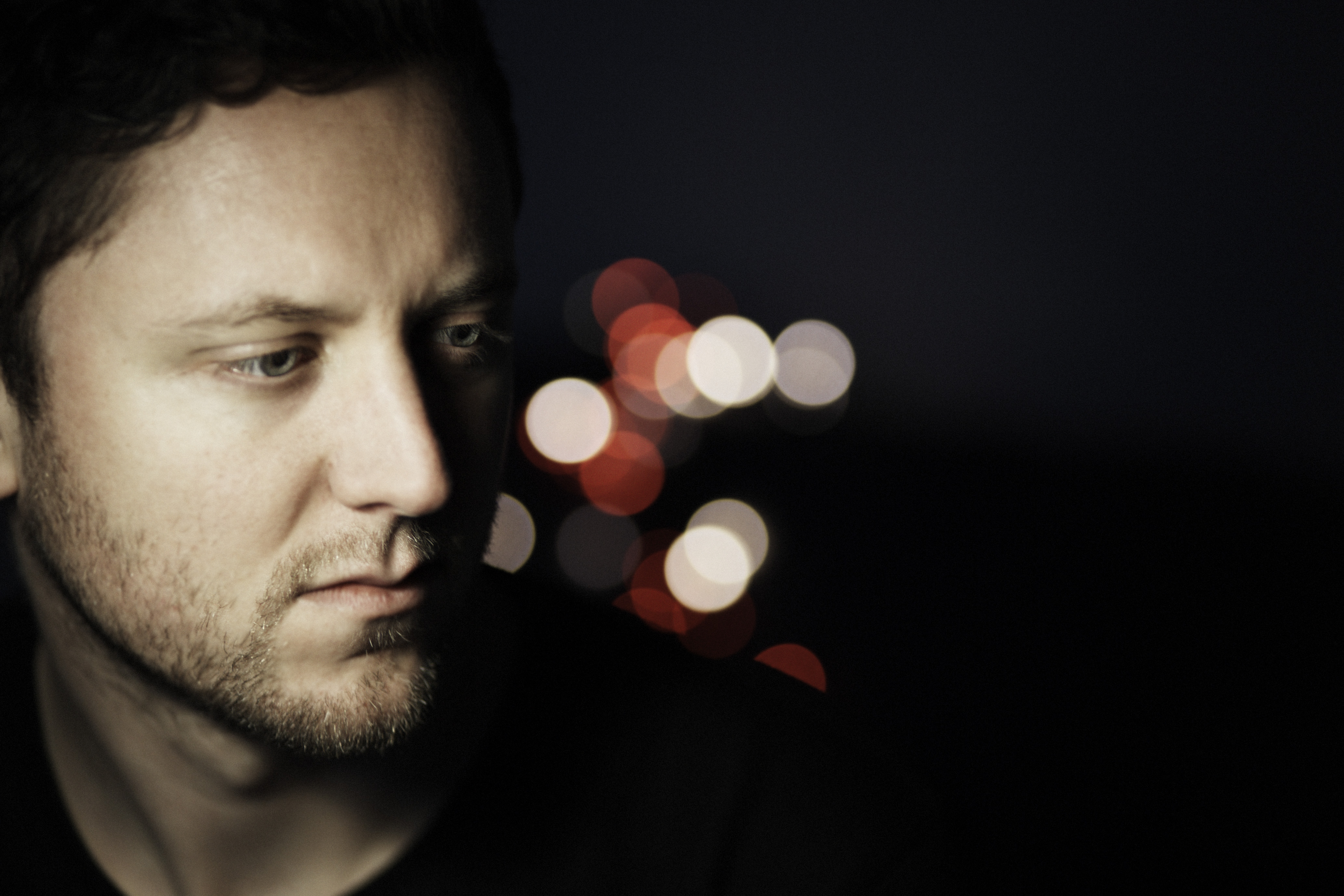
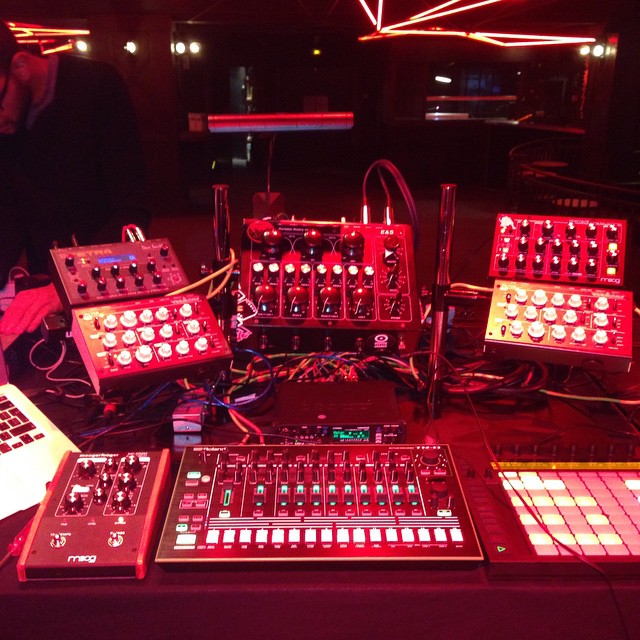
Ross Tones (a.k.a Throwing Snow) will return to Fabric’s label arm, Houndstooth, on April 6 with the release of his single Lumen. Following on from last year’s brilliant LP Mosaic, Lumen will be the first in a series of three, two-track digital releases for the London based label, with a deluxe packaged 12″ dropping at the end of the year. The title track was debuted on Four Tet and Jamie xx’s recent Essential Mix and is a shimming cut filled with broken beats and a soaring melody.
You can pre-order Lumen here, with a full stream provided below of both tracks.
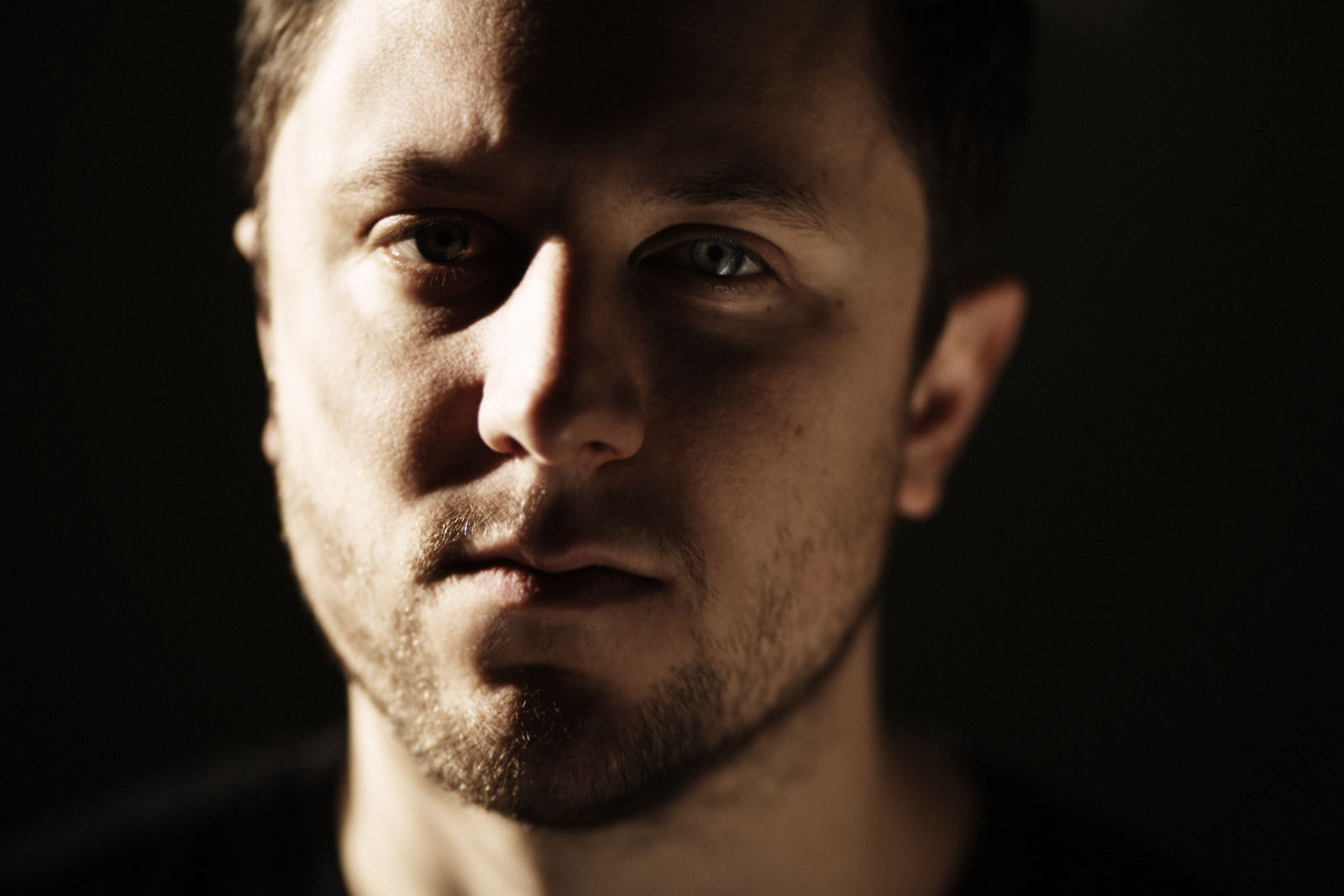
The last time we heard from Michael Haddon was in 2013 as a 19 year old music student and one half of the now defunct Cassetteworks. In that time, Haddon had been quite prolific on the music front, although until now, none of it has seen the light of day. His old Cassetteworks sparring partner, John Howes runs the Cong Burn Waves label and was recently sent a zip file from Haddon titled ‘Archive Of Possibilities’. The zip served as a document of his creative output during that time and will now form the release Auricular Palimpsest. We’ve been gifted “Polyhistor,” a gritty cut from the release which slowly unfolds from the static filled beginnings into a more graceful strut; topped with twisting pads and muted toms. Auricular Palimpsest will see release April 6 and can be pre-ordered here, with “Polyhistor” available for free below.
The British DJ and producer George FitzGerald began working on his debut LP while spending time on Ibiza during the summer of 2013—but the album, Fading Love, isn’t exactly a celebration of the White Island’s party-time pleasures. “I do love Ibiza, and it’s very nice to go out there,” the soft-spoken artist tells XLR8R while he chows down on a late breakfast in New York’s Lower East Side, a few days before a headlining gig at Brooklyn’s Verboten. “But the studio I was working in was right on the strip, and you’d walk out the studio door and see all this neon and everything. You’re right in the middle of it. Sometimes I’d be like, what am I doing here? I started thinking back to when I was doing my first record; I thought of it as a counterpoint to the cheesy end of things. I wanted to go back to a feeling of not being a part of that.”
In that, he’s succeeded. Far from the excess of Ibiza, Fading Love, coming out April 28th on Domino imprint Double Six, is an emotive, intimate album, hinting at feelings of loss and sadness. Much in the vein of its previously released single, the yearning “Full Circle,” (featuring vocals from Boxed In’s Oli Bayston), the album is drenched in melody, rich in arrangement and imbued with an unmistakable hint of heartache. It’s the culmination of a career arc that’s seen FitzGerald, who’s currently based in Berlin, go from minimal-minded house-meets-dubstep, through hook-filled club anthems, to the new album’s heartfelt, personal songwriting and sumptuous production. That’s quite an evolution, considering FitzGerald’s first productions only hit the shops a half-decade ago, but it’s a progression that’s come about gracefully. And in case you were wondering, the dude still knows how to take care of the dancefloor—his Verboten set was killer.
1. Where are you from? I’m was raised in northwest London, in the suburbs, and I was born in a place called Watford. People who know that word know it from the Watford Gap, which is where the north of England apparently starts. That’s not where Watford actually is, but it’s still about as much of a claim to fame as Watford has. It’s a complete nothing, a suburban kind of town.
2. Did you have any musical training as a kid? I had piano lessons, but the more important thing was that I had an older brother who was a DJ, and I inherited his decks and some of his drum & bass records. I started collecting records when I was about 12 or 13.
3. Was drum & bass your first love? No, that was just what my brother was into. I never really got drum & bass, really. At that point in London, you were either into drum & bass or garage—you couldn’t do both—and I was really into garage. I was at the age where garage was huge in the U.K.—well, in London, at least. At that point, it wasn’t really outside of London; it did later, when it went pop. I did love to mix with drum & bass records, which probably was one of the best ways to learn how to mix properly.
4. When you started going to clubs, were they mostly garage clubs? I really wanted to go to those clubs, but I was still too young, and I would only occasionally be able to get into them. I had braces and a fake I.D. I was this very obviously dorky teenager, and at the time, one of the big things about the garage scene was that people dressed up: no hoodies, no trainers, nice shirts, that kind of thing. That made me even more obviously out of place.
5. At that age, did you have any dreams to become a club DJ and music producer? No, no, no, no! [laughs] DJing was just something to do. At one point, I started DJing for friends, for these little parties. But after a while, that started to lose its luster. I was starting to get annoyed that I was playing other people’s music; I didn’t feel like I was really contributing much. I stopped DJing for a couple of years, in my early 20s. I actually first moved to Berlin around the mid ’00s for a while, and then I really started to get back into it, and started producing.
6. What it still garage that was inspiring you then? Not, not at all—by then, garage had died a terrible death. In my late teens, I was into scratch DJing quite a bit; then it was grime, and that quickly developed into a fascination with dubstep. Grime and dubstep sort of occupied the same space for a while in London. You could hear the two at the same raves. If you asked the people who were doing things at [much-missed London club] Plastic People, which is where dubstep really started, half of them came from grime. But after a while, a lot of the people who were into the darker garage stuff started coming ever to dubstep; around the end of that time was when I started making music. I was also discovering techno.
7. This was during the late ’00s, when the dubstep-techno crossover movement was in full force in London, right? Yeah, and really, the kind of dubstep that was coming out then was not dissimilar to the first few tracks I made. I didn’t really know that much about production back then. I knew enough to put something together, I guess—but I look back and realize how little I really knew.
8. What was your studio set-up back then? It was all on the computer—a MacBook with Ableton on it. That’s basically still what I use; you can make things that sound amazing with Ableton or Logic. You just really have to know how to use it, and you need a few ideas. I know I just said that I didn’t know what I was doing at first, and those early tracks were a bit rough around the edges, but there were some okay ideas in there. A lot of the music I enjoy is like that. I kind of think that if you have too much gear, it actually gets in the way of good ideas.
If I’m just making house with sampled R&B vocals, how would anywhere know where I was coming from?
9. Your music has changed quite a bit since those early releases, and it feels if as if you’ve been heading towards the deeper, more emotive vibe of Fading Love for a while now. Has it been a natural evolution, or have you been consciously aiming for this sound? I’m not sure it was really conscious. In the early days, I kind of felt the music I was making was a bit of a stylistic statement about the way that things were evolving with dubstep, postdubstep, and house. Then, at some point, I stopped caring about that. But I think the album is a return to that; I think I really cared about the style, and thought a lot about whether what I was doing was in any way fresh. Just before I started writing the album, I had gotten myself into a bit of a cul-de-sac. I think a lot of U.K. music had gone into a cul-de-sac; it seemed like a lot of it was rehashed ’90s house. I did a couple of songs in that style, and thought it was kind of interesting to be doing that, but I didn’t really feel like I could do anything more with it, so it wasn’t that interesting for me to be making it. If I’m just making house with sampled R&B vocals, how would anywhere know where I was coming from?
10. Your music often has a dreamy, romantic aura, throughout your career but particularly on the new album. Are you a dreamy, romantic guy? Ha! I don’t know about that, but I’ve always aimed for something that’s euphoric, but in a melancholy way. That’s the kind of music I like to listen to, and that’s the kind of music I like making. I don’t like DJ tools. But because of the way some of my records sound, I think it’s quite hard to slot them neatly into a lot of sets; they don’t fit that neatly into the usual house or techno set. I tend not to make neat intros, one and a half minute outros, and all that—but that’s the music that I enjoy making.
11. So will there be DJ-friendly mixes of Fading Loves songs? Uh…I’m not sure, really. I guess I should get around to doing some extended mixes!
12. Fading Love comes across as a coherent album, rather than just a series of singles. As somebody who was a singles artist up till now, was that difficult to accomplish? Yes, a little. The whole focus, from the way the studio was set up—including the new stuff I bought to make the album–was geared toward making it sound cohesive. This is my body of work, not just a collection of tracks. I actually spent loads of time working on the beginnings and ends of the tracks so that they run into each other cohesively, and thinking about what keys they are in and that sort of thing. I also spent a lot of time thinking about the order of tracks. I mean, I know that many people pick and choose what they buy off the album instead of buying it as an entity, but it’s still important to me that if people want to go to track one to track ten, it will flow.
I think that, with this album, I’m moving away from club music.
13. Do you think you are still making music for clubs, or are you aiming for something else? I think that, with this album, I’m moving away from club music. It’s not really a chill-out album…but it’s not really a club album, either. I don’t think I’m ever going to really leave club music—I still do like writing it—but I do feel like I’m moving in two different directions right now, so I’ll probably start using an alias when I do it. But you know, I think of the club as an idea rather than a physical entity nowadays, anyway. With things like Boiler Room and all the streaming things, there’s a whole set of people who don’t go to clubs, or have never even been to a club, but listen to the music. And you can hear that in a lot of the music that’s being made nowadays. Like with that whole PC Music thing—it’s no longer about actually being in the club, hearing the music in the club and dancing to it. The music just hints at the motif. In my own way, I’m kind of doing the same thing now.
14. You’re releasing Fading Love on Domino’s Double Six imprint. Was that mainly to reach a wider audience than you have in the past? I wouldn’t say it wasn’t to reach more people. [laughs] I couldn’t picture myself signing with a major, and I felt like this was about as big a label as I would have been comfortable with, as far as having lots of freedom goes. And they’ve certainly allowed me that freedom. But it mainly had to do with stepping away from what I had done before. It’s a move away from releasing on an electronic music label; it’s more of an indie label, though they do have some electronic stuff. I don’t want to be a DJ forever. I want to be working as a producer, working with other people and producing other artists.
16. You mentioned the album’s melancholy vibe earlier, and that vibe—along with the lyrical content and the album’s title—hint at a lost relationship. Does that stem from something that’s happened to you? It’s a breakup album, really. It sort of documents the disintegration of a relationship. I was traveling a lot and away a lot, and it kind of charts the feeling of that time.
17. Was it cathartic for you to make this record? Yeah, it was. But I should add that the name of the album has another meaning as well. It’s about me losing interest in the club environment to some degree. Music for clubs is often either melodramatically happy or melodramatically said, and as I said, I was interested in doing something that said a little bit more about my life.
18. You’ve enlisted Lawrence Hart and Oli Bayston on vocals to help you convey these feelings. Is the first time you’ve used actual live singing, rather than samples, on your own music? It is. I never approached anyone myself to sing on the album, though. Ryan McCann, the guy who signed me and does the A&R, knew I was looking for a bit of a change in direction, and he suggested that I work with these guys. He gets the credit. And it just clicked instantly with those guys. I’m hoping to be working with them a lot more in the future; we’re really on the same wavelength. I quite like the fact that they are both kind of indie-band guys, and I do electronic music, and we kind of meet in the middle.
19. Speaking of vocalists, were people surprised when that record you did with Katy B came out last year? Yeah, they were! [laughs] Katy B’s people asked me to do it. She reminds me of the old U.K. garage–style vocalists—she has this girl-next door kind of vibe—and that kind of helped. I wanted to write something without my George FitzGerald hat on, so I was thinking, “What does a Katy B track sound like?” Or at least my take on that. It’s not the thing that I would put on my album, but I’m actually quite pleased on the track. That’s the fun of producing for other people; it kind of takes you outside of yourself in a way. I really enjoyed the process.
20. You’re on the road a lot. We all know touring can be a drag, but what’s the best part about it? It’s the actually moment when you’re on. All the stuff around it, all the noise—hotels, travel, having to do this and that—can sometimes get you down. But when you stand behind the decks—the moment people stop bothering you and let you do your thing—that’s the most free moment that you can have.
It’s no secret that Vancouver collective-turned-imprint Mood Hut is an XLR8R favorite (it topped our list of 2014’s best labels), and today, previews for a new release from founding members Pender Street Steppers cropped up on the label’s SoundCloud. Jack J and Liam Butler debuted in 2013 with the sought-after Life in the Zone cassette, followed by a couple of 12″s on PPU and Mood Hut. The a-side to their forthcoming single, “The Glass City,” first showed up on the pair’s Resident Advisor podcast back in January, and, like “Golden Garden” on the flip, features the MPC-drum grooves and lush synths of the Steppers’ lo-fi, mellow house.
While an exact release date has yet to be announced, the arrival of “The Glass City” b/w “Golden Garden” is forecast for April, and clips for both tracks can be streamed below.
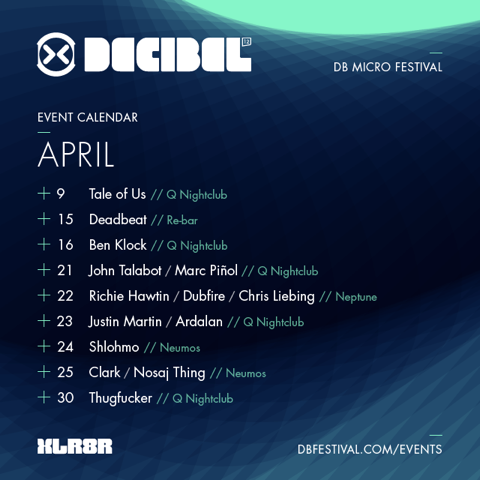
We love Seattle—mostly as it brings to mind Decibel Festival, the Emerald City‘s annual September gathering which we continue to support through the years thanks to its fine curation of quality electronic-music performance, visual art and new media. This year’s Decibel lineup is yet to be announced, but if past years are any indication, it will be fab. In the meantime, the fest’s organizers aren’t just waiting around—they’re kicking things off with 2015 Micro dB Festival, a series of events designed to both welcome the spring and to pique interest in this fall’s edition main event. Micro dB will consist of 25 artists playing at nine separate shows, held at four premier venues around Seattle from April 9th through April 30th. XLR8R is honored to be partnering with the Decibel crew in this venture, and if you check out the Micro dB schedule—which features everyone from Richie Hawtin, Ben Klock, and Chris Liebing, to Tale of Us, Thugfucker and John Talabot, through to Shlohmo, Clark and Deadbeat—you’ll see why. Tickets and more info are available here.
IMS Engage will return to Los Angeles for it’s third consecutive year on April 15, taking place at the W Hotel, Hollywood. The summit focuses on pairing icons and innovators from the worlds of finance, technology, music, and media, to address the ever growing influence of electronic music.
One of the first conversation pairings announced included Detroit born, techno trailblazer, Seth Troxler in conversation with hip-hop icon and Public Enemy co-founder, Chuck D. The pairing of these two outspoken artists is sure to spark some intelligent, engaging, and without a doubt, humorous debate. Troxler, who famously called Steve Aoki a c*nt at the 2014 IMS in Ibiza, never holds back and will be an exciting pairing with the hip-hop icon, “I am truly honored to be given a chance to sit down in conversation at IMS LA with Chuck D, one of the true pioneers, innovators and rebels of the hip-hop movement,” said Troxler. “Back in the day artists like Chuck D had the balls and vision to thrust hip hop into the political domain and form a bridge between music and politics that I personally feel very strongly about. It’s going to be an interesting debate and I look forward to seeing my Dad Sherman sitting front-row as he’s a huge Public Enemy fan!”
After it’s previous two years, IMS Engage has emerged as a key event in the North American music industry calendar with this years summit increasing to 350 delegates. Tickets are starting at $220 and are available from the IMS website here.
Although he has been releasing music since 2004, Graeme Clark (a.k.a The Revenge) only this week released his debut album, Love That Will Not Die, via his own Roar Groove imprint. It shows an artist at the top of his game, masterfully bringing together his love of disco and slowed-down house to beautiful effect. In support of the album Clark has debuted an all new, totally live set up which will be part of the Love That Will Not Die tour.
The tour touched down at Badaboum, Paris two weeks ago, where the below live set was recorded. “I’ve DJ’d at Badaboum a couple of times before and it’s always been a great vibe – but this was my first live show outside of the UK and I was a bit more on edge just because there was a lot more to go wrong!” Clark says, “The live show is only an hour long, but it consumes much more attention and energy from me as there are so many elements to deal with. It’s like a skydive or something, once you let go you need to focus and relax at the same time – to feel the moment as it happens otherwise you miss the full experience. It makes it really special when the crowd feel that too and I think this recording reflects some of that energy.”
The official album launch party for Love That Will Not Die will take place tomorrow in Glasgow at Sub Club’s temporary ‘Sub Hub,’ where Clark will be doing a short live performance and a Q & A. You can check out the exclusive premiere of the live set recorded at Badaboum below, with his upcoming live tour dates.
We here at XLR8R are excited to be partnering with Nuits Sonores, the annual music-and-arts festival held yearly in France’s second city, Lyon. And why shouldn’t we be excited? After all, the gathering has been one of Europe’s most interesting, thought-provoking and plain-old fun soirees for 13 years now. Nuits Sonores has a heavy focus on visual and digital culture; to that end, there are a variety of arts-oriented activities spread across its five days (and nights) and multiple, city-wide, venues. But as you would expect from a fest with a name that translates as night sounds, the self-described “cross-disciplinary panorama of creativity” has so many fab DJs and brilliant artist that the mind boggles: Âme, Ben Klock, Carl Craig, Goldie, Marcel Dettmann, Moodymann, John Talabot, Jon Hopkins, Laurent Garnier, Nils Frahm, Shackleton, the Orb, Voices From The Lake—that’s just a small sampling of the sonic pleasure that await. Luckily, we can look forward to an upcoming XLR8R / Nuits Sonorespodcast collaboration as we count down. This year’s installment runs from May 13 through 17— we recommend you pick up your ticket tout suite.
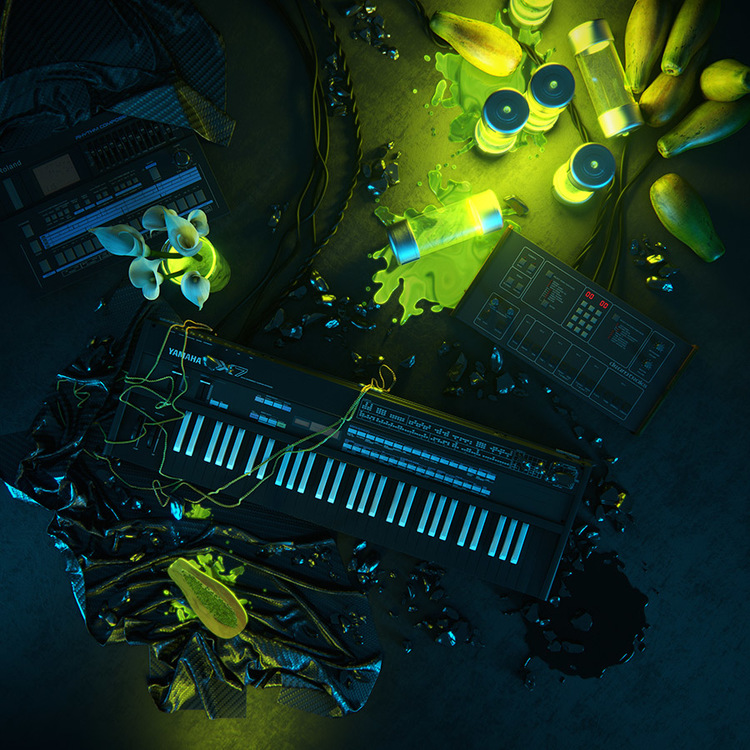
Bok Bok has just announced the music video for his latest single “Papaya Lipgloss” with composer and keyboardist, Sweyn Jupiter. The video is by visual artist and fellow Night Slugs cohort, Nic Hamilton and is a hyperreal interpretation of the track. You can check the video below, along with Bok Bok’s upcoming tour dates.
Daniele Antezza is best known for his work as one part of experimental techno duo, Dadub, and as co-founder of the Artefacts Mastering Studio, who master most of the Stroboscopic Artefacts releases, among many others. Antezza will now be releasing his an LP from his Inner8 moniker, which, up until now had been a private nickname for his “experimental anarchist sounds”. The 12 track album will come out via the newly formed Undogmatisch label, which Antezza runs alongside long-time collaborators Mirco Magnani (aka T.C.O) & Valentina Bardazzi.
The new album, as expected, is a journey into the nether regions of sound and experimentalism and one with both esoteric and exoteric qualities. You can listen to one of the cuts, “The Irony Of Karma (Part 2),” below.