Tireless Dutch producer Legowelt has revealed plans to issue a new EP via DJ Haus’ Unknown to the Unknown label in the coming weeks. Appropriately titled Cosmic Space, the four-track effort will see Legowelt exploring the brand of space-age (and, yes, at times cosmic) dancefloor music the noted synth specialist has often traded in over the years.
Ahead of Cosmic Space‘s release in the coming weeks (the label says to expect the record to drop “soon”), a full stream of Legowelt’s latest outing can be heard below, where a new video for EP cut “Immensity of Cosmic Space” has also been included.
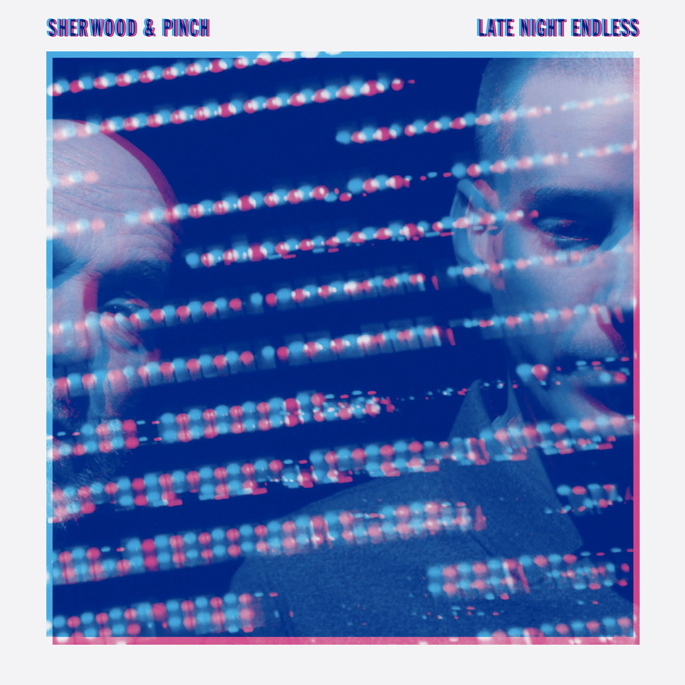
Earlier this winter, news surfaced that UK labels On-U and Tectonic would be teaming up to release the debut collaborative full-length from legendary dub producer Sherwood and Tectonics head and dubstep stalwart Pinch. While Late Night Endless isn’t officially due out until next week, the album has now been made available to stream in full. Described as “a collision of the (pun intended) tectonic plates of international soundsystem culture,” the two producers’ newest collaborative effort follows from a pair of previously issued 12″s and is said to link the discursive strands of “post-punk, jungle, dubstep, almighty reggae, techno, Jamaica, Ramsgate, and Bristol” all together.
Late Night Endless lands on February 9; in the meantime, the album’s 10 original tracks can be heard below.
After sharing two new singles in 2014 (“Simple Love” and “Rhythm of Auld,” each of which are said to come from the man’s imminent full-length release), Julio Bashmore has now made his first move of 2015, today sharing a full stream of a new single entitled “Kong.”
A silky dancefloor effort, “Kong” features a vocalist by the name of Bixby, who laces the full-bodied, chord-fueled track with harmonized layers of effortless soul. Expected to be included on Bashmore’s forthcoming debut LP (which is set to arrive sometime later this year via the man’s own Broadwalk label), the Bristol artist’s newest production can be streamed in full below.
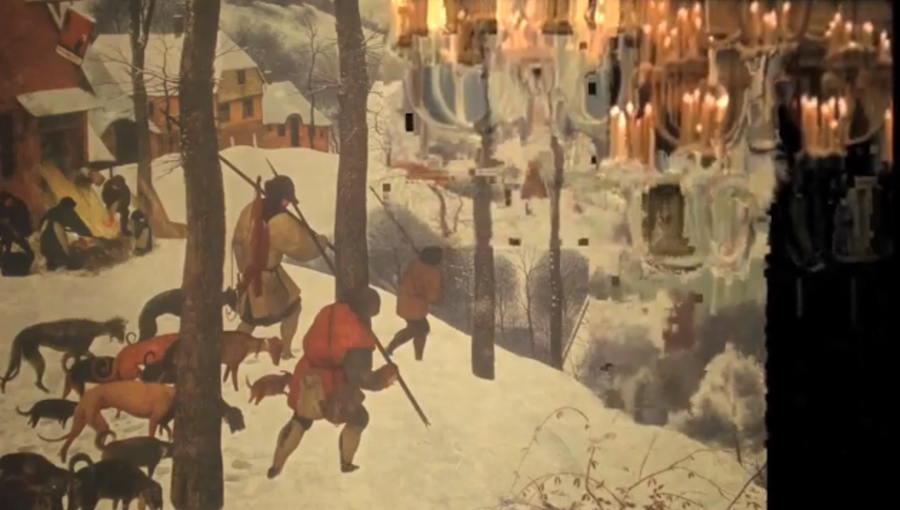
Torn Hawk has shared the latest visual component to his recent album for Mexican Summer, Let’s Cry and Do Pushups at the Same Time. The artist and producer born Luke Wyatt’s (who recently walked XLR8R through his favorite Dire Straits songs as part of our Hi-Five series) latest effort sees him using his signature cut-ups of VHS material—which he has coined “video mulch”—to accompany recent LP cut “There Was a Time.” The video features Bruegel’s painting “Hunters in the Snow,” which reportedly used to hang (in print form) in Wyatt’s childhood room, where he created the video.
Wyatt’s new video for “There Was a Time” can be watched below, while his recent visual effort for LP cut “Bad Deadlift” (which premiered earlier this month) can be found here.
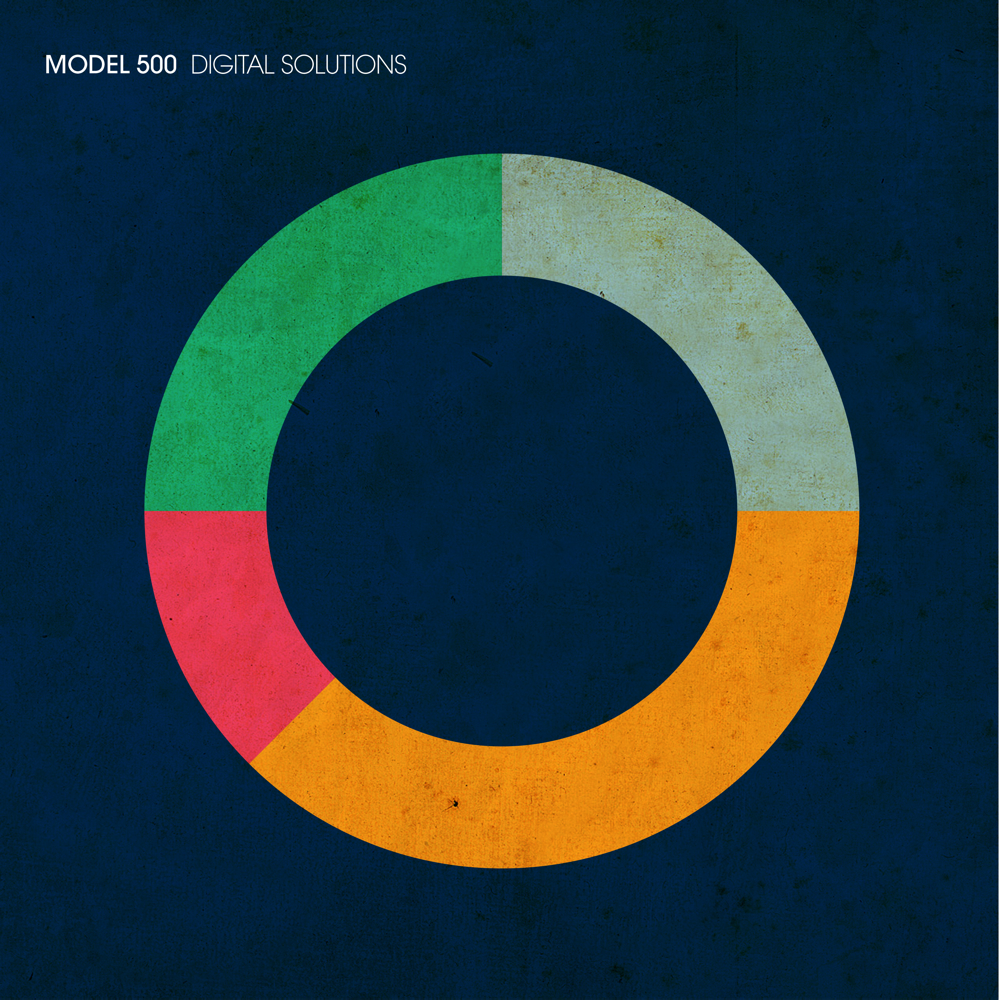
The name Model 500, even when wrested from its context as a legendary pillar of electronic music in Detroit, prompts an inescapable comparison to a car. Juan Atkins‘ automotive alias is 30 years old now, and, like the silhouette of the saloon that the pseudonym evokes, it has become more iconic over time. A lot of artists who make music for more than three decades tend to shift with the tide as the years roll on, but the Model 500 sound hasn’t changed all that much. As a result, it’s become something of a design classic—something that’s so distinctive, most people wouldn’t dare copy it. The music is instantly recognizable, too: prickly melodies found on songs such as “No UFO’s” and “The Chase” skitter and dart on top of superheated snares, hi-hats, and many other small but distinguishable pieces. Its chassis is techno and electro, but the moving parts under the hood are pure funk. Most of Atkins’ records are also notable—never moreso than now—for their sparing use of bass. Model 500 is, in every sense, a high-end machine.
There’s a song on Model 500’s latest album, Digital Solutions—which features additional production from Mike Banks of Underground Resistance—that puts this last aspect into stark relief. “Encounter” is, essentially, a dubstep record without the bass—in fact, it’s been completely scooped out, and replaced with a gaseous modular facsimile of that unmistakable “womp-womp-womp” sound. It’s an unusual track, and recognizably Model 500-ish only for its spindly keys and sharp acid accents. However, it’s by no means the only tune-up to Atkins’ formula on Digital Solutions. “Storm” is remarkably smoothed-down slice of techno that sounds more like a Hard Wax white label than a Metroplex 12″ (Digital Solutions, incidentally, is the first Model 500 album Atkins has released via his Metroplex label), while “Groove,” which follows immediately after, has a guitar solo. These are incremental, but noticeable, advances on Atkins’ tried-and-tested template.
Do these deviations work? By disgorging it of its low-end frequencies, “Encounter”—if it is intended as a Model 500 take on dubstep—seems to misunderstand the basic principle behind what makes the genre enjoyable. Elsewhere, however, Digital Solutions absorbs its aesthetic updates with ease, refreshing Atkins’ signature electro sounds in the process. “Hi NRG,” the album’s first track, pulls off the neat trick of sounding both generously proportioned and streamlined: processed human voice chords swell in the midsection; junky metal percussion loosely clicks and clacks, mimicking a bongo drum; digital harpsichord notes skip lightly over the top; and a keyboard funk solo oozes through the gaps. Like “Storm,” it’s a techno record that packs a punch, but the delivery is marked by finesse.
Still, a lot of Digital Solutions echoes classic Model 500 material. “Standing in Tomorrow”‘s sweeping synths and compressed vocoder vocal are customary Metroplex sounds, but they glow with a newfound affluence (amplified perhaps by a more elaborate studio set-up than the ’80s and ’90s allowed); “Control,” which first appeared on an R&S EP in 2012, is much the same, and it buttresses Digital Solutions nicely. Elsewhere, some of the album’s most charming moments are found in its more barren synth-and-snare stretches. “Electric Night”‘s milieu of soft nocturnal bleeps and Atkins’ deadpan delivery resembles the ambling atmosphere—but not the downcast mood—of The Other People Place’s Lifestyles of the Laptop Cafe. Made of little more than a rubbery oscillating bassline, a few dribbling bleeps, and Atkins’ intoning of the song title, “Digital Solutions” is engineered in the same way. Even for an album of electronic music, the track’s strange onomatopoeic burps and clicks have a particularly synthetic sheen to them.
Atkins and other Detroit pioneers ensured their place in the electronic music canon years ago, but these sort of comebacks often put notions of legacy and “flawless catalogs” at risk. Despite that, Digital Solutions is worthy of its place in the Model 500 discography. The fact that the LP even exists—and that people are excited to hear it—reinforces the music’s enduring power, even if the record largely sets aside aspirations to be innovative. The future Atkins once envisioned more than three decades ago is now here; Digital Solutions is a welcome reminder of that.
Later this month, Oknai will issue the High Tide Remixesd EP, a follow-up to the Slovenian producer’s debut album that arrived in June of last year. Amongst the five beatmakers selected to rework cuts from Okani’s High Tide LP is Russian producer and former XLR8R podcast contributor Pixelord. Taking on “Cloud Forest,” the Moscow-based artist completely reshapes Okani’s track into a much darker affair, one propelled by pumping 808 kicks and bursts of neon-colored arpeggios. Set to feature additional remixes from Free the Robots, Borka, Some1Else, and Moz, Oknai’s High Tide Remixed EP will see a vinyl and digital release on February 23 via the rx:tx label. Before then, Pixelord’s contribution to the effort can be downloaded below.
Newcomer Privacy will debut on Luca Lozano’s Klasse label with his first EP of 2015. Set for release midway through this month, Command Pattern finds the Australian-born, Berlin-based producer trading in spacey Detroit electro with widescreen pads and classic drum-machine rhythms. The EP follows from one previous outing on London-based label Lobster Theremin and includes five original tracks; notably, b-side cut “System Voice” is treated to a remix by Golden Pudel’s Helena Hauff, who recently detailed a forthcoming full-length cassette release for Handmade Birds. Ahead of Command Pattern‘s official release, EP previews can be streamed below.
For the past several years, the name Egyptrixx (a.k.a. David Psutka) has been closely associated with the Night Slugs camp (after all, the UK label did provide a home for his first two albums, ‘Bible Eyes’ and ‘A/B Til Infinity’), but the Toronto producer has always operated on something of an island. Although he certainly shared some aesthetic traits with his Night Slugs brethren, Psutka’s constructions always stood just a bit apart from those of the tightly knit (and largely London-based) crew, and presented a hybridized style that married the sonic palette of grime to a highly architectural brand of techno. He’s continued with that vision on his third album, ‘Transfer of Energy [Feelings of Power],’ which drops next week via Psutka’s newly launched Halocline Trance imprint. Between the new LP and his growing production workload with other artists, we know that Psutka has spent a lot of time in the studio as of late, so we asked him to share a few of the techniques that he’s picked up along the way.
Over the last few years, I’ve been working quite a bit as a studio producer with other artists, and I think the essence of the work is preparation and troubleshooting—having clear ideas and quickly dealing with problems as they come up, so work is fluid and artists feel good about their performances. Working on my own stuff isn’t much different. Here are some strategies I use when working on records.
Refine ideas outside of the studio.
There is some silent work to be done on any record—decisions about concept, atmosphere, sequencing, lyrics, production/engineering techniques, etc.—and I like to do as much of it outside of the studio as possible so I have a clear understanding of the project and can work quickly without much second-guessing. Also, I find it basically impossible to come up with good ideas while staring at a computer screen; it’s such a paralysis device. I prefer airplanes, subways, bars, libraries, whatever… I’ll usually sketch out most of a track before I start any kind of recording.
Studios are totally fun places, but they’re full of things that can dilute or distract your original idea: cool gear, interesting people, technical problems, drugs/booze, etc. It’s good to do as much work as possible on a song before you start recording and arranging. The ideas will probably drift a little (or a lot), but I think it’s good to understand your intention before you start.
Parameters are an artist’s best friend. Cheap, intuitive computer programs like Ableton and Logic are awesome and totally positive for music—anyone who tries to tell you otherwise is probably an asshole. However, the biggest challenge when working with DAWs, VSTs, and sample packs is to not get distracted. There is basically an infinite number of options at every juncture, and scrolling endlessly through sample pack folders is a total nightmare. I like to figure out a sound palette before starting on a record. If you have access, working with hardware is another good way to narrow your options and focus your process.
I also think it’s important to make decisions about general atmosphere and basic production techniques in advance so that when you get tired or frustrated, you can refer back and keep things rolling forward.
[quote align=”none”]Cheap, intuitive computer programs like Ableton and Logic are awesome and totally positive for music—anyone who tries to tell you otherwise is probably an asshole.[/quote]
Avoid fatigue.
Any song or record is essentially a series of forks in the road; there are dozens, hundreds, thousands of small decisions to be made, and as a songwriter or producer, you’re constantly having to decide “left or right.” It can be exhausting. Fatigue is an absolute killer in the studio and once it sets in and your ears get tired, the day is done. Minimizing and managing fatigue is totally crucial. I like a rigid schedule with lots of breaks and I try to step out of the studio before I get loopy. If I stay fresh, I’ll work longer and get more done over the course of a day. Take breaks; go do emails, read something, go outside, eat, whatever. Make sure you’re purposeful and have energy when working—don’t overdose on work. Four to five hours of good, productive studio time is better than 12 hours of drudgery.
It’s an especially important thing to keep in mind in 2015 because most artists—even rich, famous ones—do some amount of self-production or mixing. This means having to listen to your tracks more and potentially getting sick of them. Know when to walk away and get the hell out of the studio!
Write with the wrong instrument. If you have access to instruments and are stuck on a part—or if you’re just looking for a fun writing trick—try writing with the wrong instrument. Play a synth line on a guitar, a vocal melody on a piano, a percussion bit on a bass guitar, whatever. There’s nothing revelatory here, it’s just a silly little trick that can sometimes be useful and produce an interesting result.
When working with vocalists, I like to throw problematic vocal lines into MIDI piano roll and tweak them there—I’ve definitely gotten out of a few jams with this one.
Also, I think I saw Machinedrum mention once that he taps his parts out on a table while he’s writing—I think this is clever and basically the same idea. Understand the parts independently of the gear or instrument (or your relative ability to play them).
[quote align=”none”]Studios are totally fun places, but they’re full of things that can dilute or distract your original idea.[/quote]
Embrace non-musical ideas.
There is a lot of value in non-musical ideas. I spend a lot of time trolling non-musical arenas like movies, industrial design, and obsolete architecture for things I can lift and bring back to music. This process has basically become the mission statement for the Egyptrixx project and definitely comes in handy with others. The ideas might relate to texture, arrangement, concept, structure… whatever really. It’s a nice way to generate new ideas and can clarify your understanding of your material.
For example, I’ve always loved Donald Judd’s compositional decision to use crude, industrial materials—concrete and steel—in his work as some kind of celebration or acknowledgement of America’s ascension though industrialization. He made high art with massive slabs of low, ugly material. I love this idea and have tried—with debatable success—to bring it into a few songs.
Fledgling Berlin imprint Ressort will issue its next EP on February 9 in the form of the four-track Hidden Documents EP from label co-head Ekserd (pictured above). Serving as a bonus track to the effort is “Wons,” a collaboration between Ekserd and fellow Berlin producer Array Access. Where Ekserd’s original productions (and additional remixes from Svreca and I/Y) on Hidden Documents are more pounding techno affairs, “Wons” is a bit more of a subdued outing, one which wraps glacial pads and spiraling melodies around a crisp rhythmic structure. “Wons” can be downloaded below, where a preview stream of Ekserd’s upcoming Hidden Documents EP has also been included.
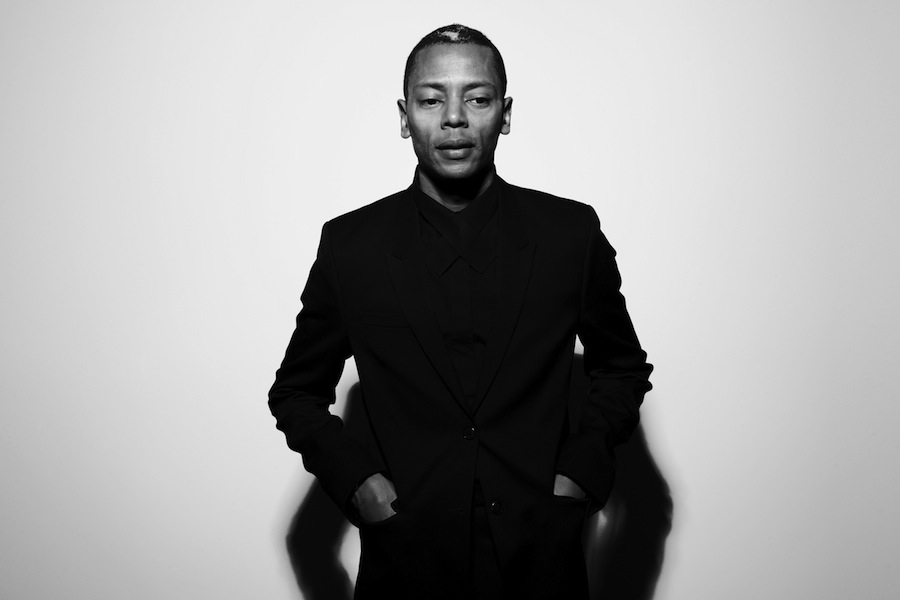
Amsterdam’s Dekmantel Festival—which has quickly become an XLR8Rfavorite—has unveiled the first wave of acts set to appear at this year’s third edition. Taking place July 30 through August 2 at Amsterdamse Bos, the initial line-up includes major names such as Jeff Mills (pictured above), Dixon, Ben Klock, Marcel Dettmann, Nina Kraviz, Ricardo Villalobos, John Talabot, Silent Servant, Floating Points, and Four Tet, and local talents Antal, Tom Trago, and Cinnaman, among others. Live sets will be presented by Clark, Robert Hood, Juan Atkins (as Model 500), Squarepusher, Carl Craig, Shed, and more.
New this year is the introduction of Amsterdam’s Muziekgebouw venue, where Autechre and Manuel Göttsching will open festival proceedings, and a night program at Melkweg to be confirmed later this month. Information on ticketing and passes is available here via the Dekmantel website, and the complete list of artists billed thus far can be found here. Additions to the line-up (expected to number around 150 acts in total) will be released in the forthcoming months.




![Transfer of Energy [Feelings of Power]](https://xlr8r.com/wp-content/uploads/2019/06/egypt_artwork.jpg)