Throughout the week, a whole lot of material gets posted here on XLR8R. And while we know—and love—that some hardcore readers will eagerly pour over every single news story, interview, podcast, video, and MP3 download that appears on the site, we also realize that for most people, it’s impossible to see everything, which means that some quality XLR8R content is likely to get missed in the hustle and bustle of everyone’s daily lives. In the interest of making it easier for everyone to catch up, every Friday we present The Lowdown, a weekly wrap-up of the top 10 tidbits from our site.
1. Next week, Detroit techno pioneer Juan Atkins will be releasing a new album under his Model 500 guise. In the meantime, the LP is streaming in full exclusively on XLR8R.
2. The latest XLR8R podcast is a diverse session assembled by Brooklyn native and Berghain/Output resident DJ Anthony Parasole.
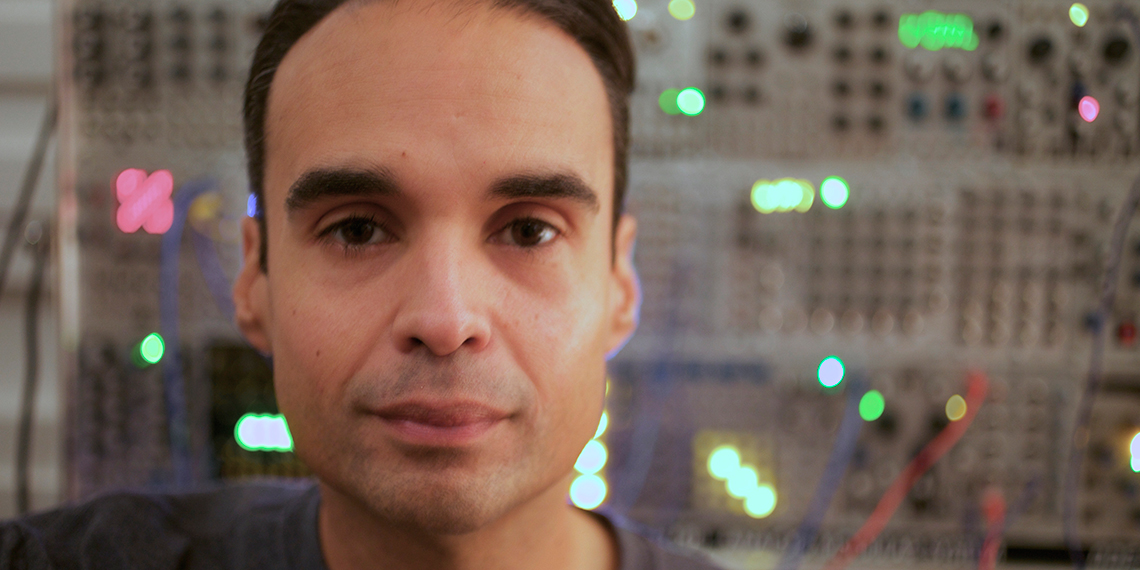
3. Nina Kraviz (pictured above) released her entry in the vaunted DJ-Kicks mix series this week, and readers flocked to read our official review.
4. Warp mainstay Clark gave away a free EP of remixes called Winter Boots (Part 1).
7. After visiting the annual NAMM show in Anaheim last week, our official round-up of the gear expo included a breakdown of 16 things that caught our eye this year.
8. Former Red Hot Chili Peppers guitarist John Frusciante surprised everyone with the news that he would soon be releasing an acid-based album under the name Trickfinger.
9. A new edition of our 20 Questions series popped up this week with legendary director and composer John Carpenter.
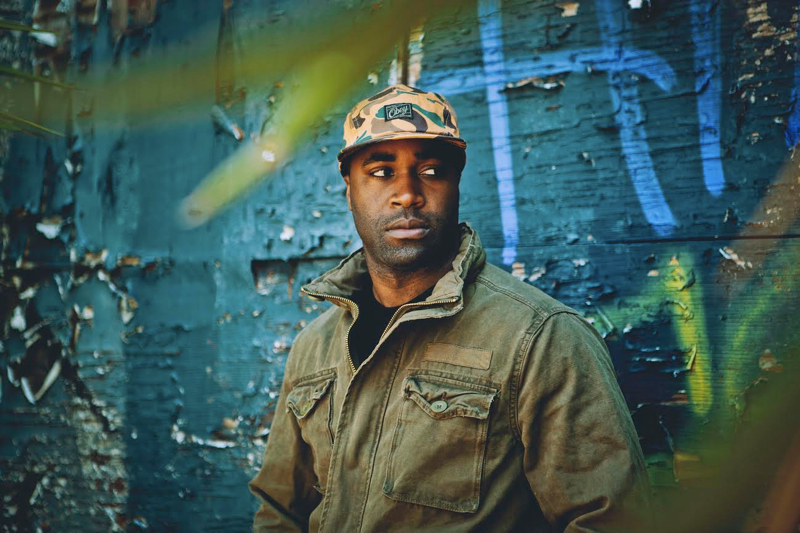
10. The most popular tune in our Downloads section this week came from Toronto duo Èbony, whose “Sunshine” combines the futurist perspective of Detroit techno and the soulful melodies of Yoruba house.
An expanded version of the The Lowdown is also available via a weekly email newsletter. Those interested in an even more in-depth round-up of XLR8R content should sign up by entering their email address below.
Brooklyn producer Octo Octa—who currently has an EP in the works for Gerd Janson’s Running Back label—has been tapped to deliver the latest mix in the Ghostly label’s ongoing GhostlyCast series. Serving as its 56th installment, Octo Octa’s GhostlyCast contribution covers 10 tracks in just under 50 minutes, with plenty of bouncing piano chords and soul-infused dancefloor grooves included throughout. The man’s new mix can be streamed and downloaded in full below, where the set’s complete tracklist has also been included.
1. Aaron “Fit “Siegel Feat L’Renee – Tonite (Detroit Mix) 2. The Deep – Love Your Brother 3. Ele Ferrer- I’ll Make U Happy Baby (X-tended Club Mix) 4. I:Cube – Piano in Paradise 5. Levon Vincent – Late Night Jam 6. DJ Dozia – Pop Culture 7. Kresy – Do You Enjoy 8. Ralphi Rosario feat. Xavier Gold – You Used to Hold Me 9. High Powered Boys – Udon (Julio Bashmore Sax Dub) 10. Cajmere feat. Dajae – Brighter Days (Underground Goodies Mix)
A staple of the Kranky label’s roster, Vancouver sound sculptor Loscil has released a new three-track EP as a means to help raise funds for his friends whose daughter was recently diagnosed with Ewing’s Sarcoma, a form of bone cancer. Titled for Greta, the digital record consists of three dense, elongated compositions that dive into the sort of immaculately textured sonic atmospheres Loscil has crafted throughout his career.
All proceeds from the record will go directly to support Greta’s family in this challenging time. The full for Greta EP is streaming below and can be purchased here.
Jeff Mills has revealed plans to release his original score to Fritz Lang’s 1929 sciene-fiction film Woman in the Moon as a three-CD album next month. Originally commissioned in 2011 for the Fritz Lang Film Retrospective event for Cinemathèque Français in Paris, Mills has gone on to perform the score live a handful of times over the years, with the project having made it US debut in San Francisco earlier this month. “The soundtrack I’ve created is definitely grave, structurally spatial and ubiquitous,” Mills states in a press release. “Fritz Lang’s characters are well-established and perfectly groomed people who are looking for something more, something bigger. The musical transitions range from light to dark—in order to highlight the contrast that persisted between extreme ideas that are triumphant in their objection and materialization to the economic vision of venture capitalist to the shadows of a dark underworld and organized crime.”
Mills’ Woman in the Moon score will see its official release via the longtime producer/DJ’s own Axis label on February 6, with its 32 separate compositions spread across three CDs; an official tracklist has not been shared at this time.
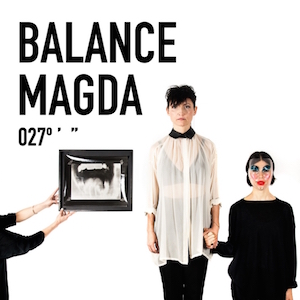
Techno veteran and Items & Things co-head Magda has been lined up for Balance 27, the latest mix in the ongoing series from Melbourne’s noted Balance Music operation. As Resident Advisor reports, the release will be a two-disc proposition, a format that Magda has used to explore experimental sounds (Dinos Chapman, Errorsmith, and Shackleton all feature on CD1) as well as the kind of floor-orientated cuts that might be heard in one of the seasoned DJ’s club sets (DVS1, Marc Houle, Seth Troxler, and Magda herself make appearances on CD2).
Ahead of the February 27 release of Balance 27, Magda will play four dates across Australia. We’ve included the details of those below, along with the forthcoming mix’s artwork and complete tracklist.
CD1 1. Tomas More – Gold, Grey & Dun*** 2. Dinos Chapman – Alltid 3. Jahiliyya Fields – Turned on Type 4. Tase – Comeback 5. NYMA & Carreno is LB – Solaria*** 6. Gregory Fleckner Quintet – How Much Would Conkers Cost? 7. Farben: presents James Din A4 – Please Excuse my Face 8. Rework – Traubenzucker 9. Odd Soul – Capitoul 10. Hauntologists – Shakes 11. Luc Ringeisen – Beat Design 12. Wishmountain – Crisps 13. Cornerbred – Riding High 14. Odei – Radius Head 15. #.19.21.3.11.21.20 – B1 16. Brett Johnson – Big Drunk Caterpillar 17. CV30X – 2×4 18. Nicholas Desamory feat. Lucile Desamory – The Truth 19. Kaitaro – Magic Channel 20. Rotorik – Verschollen In Der Unendlichkeit 21. Errorsmith – Make or Break 22. Shackleton – Cast the Die 23. Andrew Pekler – Pitch Class Spy Glass
CD2 1. Andrew Pekler – Dizzy Spells of Summer 2. Minor Science – The Beckoner 3. The Mole & Hreno – Things are Heating Up in the Grizzly Maze 4. Murat Tepeli – P.S.A. (Play Stop Acid) 5. Marc Houle – Techletoes 6. Alliv Sobol – Toz 11 7. Tomas More – Who’s in Charge (Melodic Version) 8. Rework – In a Dance 9. Stefny Winter – I Needed That 10. XDB – Indywa 11. Seth Troxler – Evangelon (Jonson & Siminski remix) 12. Magda – Trailerfork 13. Trus’me – It’s Slow (Truncate Raw Mix Part 1) 14. Samuli Kemppi – Wrong Turn 15. Etcher – They Are Us 16. T.B. Arthur – 1 (B1) 17. Marcel Dettmann – Apron (PAS Tubed mix 2) 18. DVS1 – Black Russian 19. Lester Fitzpatrick – Tone Control 20. Magda – Scrumps 21. Birdsmakingmachine – Icaros 22. Sandman – Machines Like This 23. Gabriel Ferreira – Fold 24. Tom Trago – Fall Down on Me 25. Transllusion – Walking With Clouds 26. Obergman – Holometer
Magda Tour Dates: February 13 Geisha, Perth February 14 The Liberty Social, Melbourne February 20 The TBC Club, Brisbane February 21 Seadeck, Sydney
The next LP scheduled to arrive via Daddy Kev’s Alpha Pup outpost is Illusion Fracture, a 14-track effort from Oakland-based beatmaker Ruff Draft. Ahead of its release, the Bay Area producer has passed along “Messages,” the record’s introspective closing cut. Built atop a fractured beat, “Messages” comes laced with smoky piano samples that fill the space between the production’s loose hats and wood-like claps, before being joined by waves of buzzing synths and a full-bodied bassline that drags just behind the beat. In the end, “Messages” is the kind of stony head-nodder one imagines will nicely wrap up the artist’s forthcoming collection of new productions, which includes collaborations with Mr. Carmack and Elusive in its run. “Messages” can be downloaded below before the rest of Ruff Draft’s Illusion Fracture LP lands on February 10.
Up to now, Midlands-born producer Laurence Blake has labored under the alias Citizen, swiftly making a solid name for himself crafting full-fat, retro-futurist house nuggets. Word reaches us today, though, that his forthcoming EP, BE, will find Blake reverting to a (very slightly) different moniker: Citizenn. The reason for the name change isn’t entirely clear—a press release claims it is “a nod to his maturing sound and harder-edged approach to production,” though one suspects there may be a bit more to it than that. Whatever the reasons though, the good news is that BE is vintage Citizen/Citizenn, with expansive, airy electronics rolling over soulful, classic-house vocals courtesy of SYF (of Azari & III fame).
The title track from Citizenn’s new EP is currently streaming via the player below before 2020Vision releases BE in vinyl form on February 9, with a digital release to follow on February 23 (the digital package will also include an additional bonus remix from Ralph Lawson).
1. Be 2. Be (Warehouse Dub Vocal) 3. Be (Hercules & Love Affair Remix)
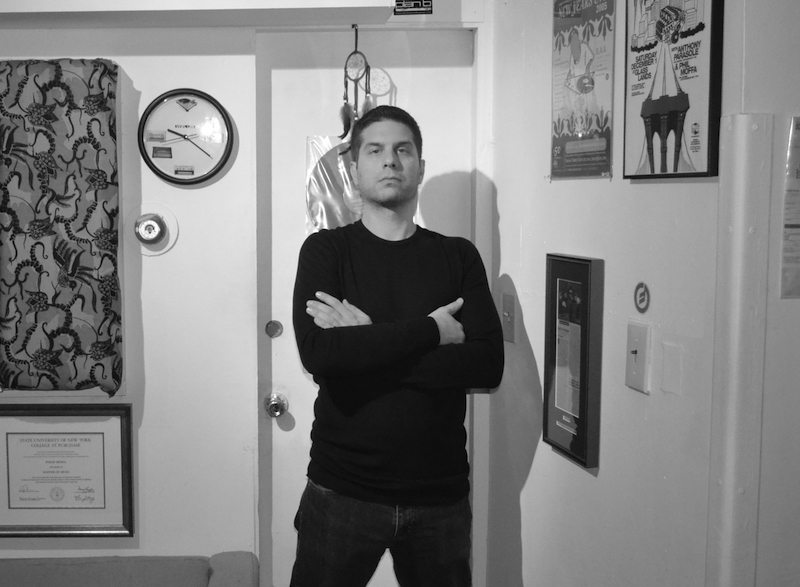
NYC producers DJ Spider, Phil Moffa (pictured above), and Brendon Moeller have been collaborating on some new music lately, and the resulting productions have been put together on the second release for The Martinez Bros‘ Cuttin’ Headz imprint. The three artists have given their joint project the name Destination Void, and considering the dark, warehouse-ready techno of their debut Between Worlds EP, that seems just as appropriate a name as any. Out now in vinyl form, clips of all three tracks from the collaborative project’s new record can be streamed via the player below.
Of the three artists featured in Destination Void, Moffa has been particularly active on XLR8R lately, being spotlighted in our 10 Artists to Watch in 2015 list during the course of our recent Bubblin’ Up Week, while also dropping off a free download of his new remix for Vancouver outfit Humans in our Downloads section a few days back.
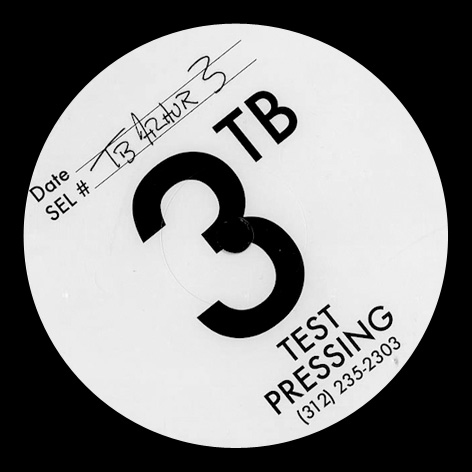
TB Arthur is, allegedly, a producer from Chicago who made a series of test pressings in the ’90s that, until last year, had been taking up shelf space in a warehouse. Three four-track 12″s bearing the artist’s scribbled name, a phone number, and not much else have surfaced in recent months, which is about as much as anyone can say for sure about a producer whose backstory is so short on detail. Putting that aside for now, these records are remarkable for a few reasons. Each EP contains a quartet of raw, fibrous house tools made with a contemporary polish that belies their supposed origin, and 3 follows in that mold. Most of these records could be described as acid house of some sort, but the music’s thick 303 squelches are a bit more fastidious and well-mannered than the average Trax throwback.
“A1” seems at first to be typical of TB Arthur’s surly, heads-down vibe, but its spiking whistle and snaking waves of acid afford it a lightness that complements its block percussion and wah-wah riff. It sounds scrupulously machine-like: amid the skiffing hi-hats and warbling acid lines, factory noises and pneumatic whooshes slide this way and that. There’s a little bit more dust on “A2,” which emits a similar palette of industrial noises, but, like “A1,” it manages to strike a satisfying balance between brow-creasing steeliness and fleet-footed reverie. Among its most intriguing elements are its detuned skin percussion, which lapses in and out of time like a fitfully manned spinning top, and a cavernous knock that echoes through the iron chains and concrete walls that seem to reinforce the track.
The b-side of 3 mirrors TB Arthur’s meticulous touch. “B1” submerges factory-forged pings, clicks, and thuds in gloopy 303s—the track’s acid lines take command of proceedings quite a bit more than they do on most other TB Arthur excursions. On “B2,” this same instrument oscillates in sharp bursts amid ricocheting tambourines and snare fills, which, though it’s the EP’s most excitable record, falls a bit short of the standards set by the preceding three. TB Arthur’s music makes its surest strides at a languid pace—”B2″ certainly moves up the gears, but it doesn’t set the heart racing.
An EP as well crafted and assured as this leaves a few questions that are, for the moment, unlikely to get straight answers. How many cloth ears did this record come across before it found itself in the ass end of a warehouse? Why did it take two decades to get this stuff out? And there’s another question, of course—why the coyness? Still, since we can’t know the motivations behind the manner of this release, it’s maybe best to give its creator the benefit of the doubt. To borrow a well-worn phrase, TB Arthur lets the music do the talking, but it’ll be interesting to see how he or she adds to the conversation from here.
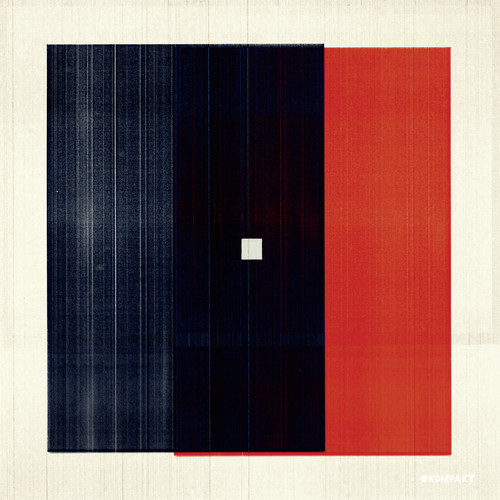
John Tejada knows techno. In truth, the LA-based producer knows a lot more than that, as he’s been releasing music since the mid ’90s, but techno is essentially his calling card. Though he continues to oversee and contribute to his own Palette label, Tejada has also found a home at Kompakt, and the stalwart German imprint will be issuing his latest LP, Signs Under Test, next week. Over the years, we’ve spoken with Tejada on several occasions, exploring numerous facets of his music and artistry, so this time, we decided to switch things up and let our readers have a chance to pepper him with questions. As always happens with our monthly Ask the Experts series, the XLR8R audience sent in queries, and Tejada has selected his favorites to answer. In the process of responding, he’s covered a lot of ground—much of it technical—but has also found time to touch upon his relationship with Detroit, the importance of compressors, and exactly what’s required to make a good techno track.
How did you make the Detroit connection and how much did that help you? Mike
When I started Palette Recordings in the fall of 1996, one of the US distribution companies was Seventh City in Detroit, which was owned by Daniel Bell. When I had test pressings of Palette #1, I phoned them up and was speaking to a guy named Theo Parrish (a lot less known at the time) who ordered a couple boxes. I believe it was after the second Palette or so that I would finally speak to Daniel on the phone from time to time, and eventually, he asked if I had some music around—The Blue Dawn EP was released pretty soon after. I really believe this first record of mine on Seventh City and Daniel’s support gave me validation in the Detroit scene, which wasn’t so easy for non-resident artists, not to mention being part of an amazing roster of Seventh City artists. With the world watching Detroit, this definitely let me reach the ears of people worldwide.
Do you mix down your own tracks and do you feel that producers have a lot to lose by not focusing on this aspect of production? Thomas
I work on my songs from start to finish. In my experience, I feel most producers I know focus on [the mixdown] sometimes even more than the music. It’s an interesting question because this is the part of the process myself and a lot of friends sort of dread. The reason is, you get so attached to the sound of sounds you’ve created that it’s hard to see them from a distance and make the proper changes resulting in a mix that could be better. This is also the reason why it’s beneficial to have someone else master your music instead of doing it all yourself. (When available, I feel like a mixdown can also benefit from another set of ears.) Some mastering engineers offer stem mastering, which is when you send over four or five stereo-bussed groups and let the mastering engineer put them together, which may end up giving the track some new dynamic or space the artist may not have heard. In the bigger music world of rock and pop, historically there would be writers, producers, mixing engineers, and mastering engineers. It traditionally wasn’t the duty of music makers to take care of all these processes, but the way things have progressed, more and more people do everything themselves. This is a positive as well, since it’s made it possible for people to release finished-sounding music, but I find it takes a lot of practice to do everything yourself successfully. While I feel it is worth studying all aspects of production and being proficient in all the steps required to finish a piece of music, I also think a second pair of ears you trust can be really valuable in the process.
What’s the real importance of a compressor? Some dance producers say it is the most important thing, others say that in dance music there is no need for compressors, as dance tracks don’t have much difference in volume. In my little experience, compressors are good for sidechaining or creating some effects using fast attack, etc. But it hasn’t helped much to create “big” beats; distortion plug-ins actually seem better suited to beef up a beat. So, I still have doubts about the compressor. Please give a little class about it. If possible, I would like to know your methods to make the different instrument sound layers sound separate, and if it is necessary for a dance track have a 3-D aspect. Eduardo
First off, I feel its worth mentioning that everyone is going to have a different opinion on this and it’s really up to taste. If it sounds good to you, go with it! But having said that, here are some tips which I’ve learned along the way that help me make the right decision depending on the issue.
Like you point out, traditionally a compressor is mostly helpful with voice or acoustic instruments that have a large range in volume by raising quiet parts and controlling the loud parts. Now exactly as you say, when you have an electronic instrument or sample, unless you’ve done some accidental velocities (which are easier to fix by adjusting those rather than compressing), the volume is going to be steady, in which case the compressor becomes more of a sound design tool rather than a volume tool. At times, it can be used, for example, in a bassline, where one note sounds apparently louder, but again, in this case I would first try to notch out that frequency with a good parametric EQ. You can reference the Bob Katz scale of notes to find the offending note to notch out. EQs like DMG’s Equilibrium have this built in and most have a graphic analyzer built in to find the offending notes/frequencies.
Another use now is using the attack and decay as an enveloper for the sound. This is helpful on kicks and basslines and probably my biggest use if I do reach for a compressor. Hardware compressors and now many software emulations add harmonics, which give the sound some color or character, so that can be a different sound design tool for thickening. However, be aware that throwing these on tons of tracks can add up to an unnecessary build up of harmonic content, ruining a mix.
Compressors can also seem to clean up a muddy signal. The compressor seemingly smoothes out these areas because they are probably the loudest. When attenuated by a compressor, the energy of these frequencies gets turned down, making a bad low end sound appear a bit more balanced, but again, I would use the EQ first before I reach for the compressor, as it may be more beneficial to notch out the offending frequencies rather than introduce the character of a compressor, possibly sacrificing transients.
The sidechaining effect you mention is the most dramatic example of using a compressor as a sound design tool and has made plenty of classic tracks shine. Nowadays, plug-ins like volume shaper can also do this type of thing without introducing too much pumping or changing the frequency balance of the signals you are applying the sidechain to. It depends what sounds better, but even drawing in volume automation on a bus and copying to every measure can be a good alternative.
So after all that, to answer your question, the compressor has many possible uses in modern dance music. In my opinion, it’s more useful as a sound design tool, but there are many possible applications for this. It is definitely a tool to have in your arsenal and to study and get to know, but I would give equal importance to learning what you can do with a good parametric EQ, as it may be a better problem solver in many cases.
The 3-D aspect I believe comes from giving each instrument in the mix its own place. Notching out frequencies and choosing what frequency range certain instruments are going to fit in will help quite a bit to give you a clear image of your mixdown. When tracks all pile into the same frequency range, that is where all the problems happen. You can think of it like an orchestra. Each section of the orchestra fits into a different frequency range. So when creating electronic music, it’s beneficial to fill the stage with different instruments that sound good together rather than a bunch that all sound more or less the same in the same frequency range. Also, referencing productions you like and paying attention to where the elements really sit might surprise you.
What are your production methods in the pre-production stage? Do you have any mixing tips you can give us? Cream Theruler
Usually, I’m building all my sounds from the ground up in the production stage. Even simple kicks I never end up using again, just because there are small adjustments (like tuning) that end up fitting the sound to the song better. I also play an acoustic drum kit and these also need to be tuned up to fit the style of music or the piece being played, so for electronic sounds, I feel the same is true and I try to make the sounds fit the key of the song and other sounds.
I noodle with synths quite a bit to get my initial idea happening. Generally, I’m using hardware instruments, simply because I enjoy those rather than an emulation of those. These days, I’m getting back into doing something I haven’t done in about 20 years, which is just making loads of little sounds and sampling them to build something with, instead of capturing large stems. I’ve realized with long stems it becomes harder for me to do anything with them. A lot of older tracks I really like just do really creative things with lots of samples. I’ve always had something against just sampling bits of gear (instead of recording long tracks of each synth), but now, I’m remembering how fun it is. So in general, my pre-production just consists of creating lots of sounds for the piece I’m going to make.
As for mixing tips, something I am still working very hard on is filtering out the frequencies I don’t need so that the mix has room to breathe. The easiest start is to use a high-pass filter to filter out the lows and some highs (with a low-pass) you may not need. That has helped me a lot to get some more clarity out of the mix. I’ve also started to rely on a good pair of headphones to help reference the bass frequencies, as my room and most rooms are not perfect acoustic listening spaces, so this has also helped me quite a bit recently. The last thing to mention would be to find a second pair of ears you trust, which could just be a mastering engineer. Sometimes they can also tip you to a problem in the mix and you can go back and fix it before final mastering happens. This can be a lot more beneficial than having the mastering engineer try to fix it.
I also try to reference other music I like the sound of and practice listening to what is actually happening. I find that what I remember the track sounding like and what it actually sounds like can be quite different. Tracks in my memory that sound absolutely huge may have a really understated element to give the track some room, but in my memory of it, all sounds are massive. So using other people’s works as a reference can give you some creative ideas on how to put it all together.
What soundcard/interface are you using and what is your weapon of choice regarding analog to digital conversion and vice versa, especially when it comes to accuracy and quality? Tim
I’m using a UAD Apollo interface, which offers me a lot of options and nice routing, which is working well for my workflow. With converters, however, the sky is the limit. It seems you really get what you pay for and there’s a reason the price keeps going up and up and up. I’ve demoed some higher-end converters here, and there is surely something to be said for [using them]. However, in the end, it’s more about the music making and ideas; something well put together is going to be just as great with a more entry-level conversion system.
What do you think makes a good techno track? I’m curious what your opinions are on this since you have been making music for so long and have seen many styles/artists come and go. Peter
I feel there are certain fundamentals at the core of a good techno track. The classics seem to share a certain frequency balance and energy. I also tend to be quite amazed by the simpler tracks rather than the dense ones. For me, this is the most difficult thing to master. Most classic tracks I love have just a couple of elements going on, but the way it was done is just absolutely magical.