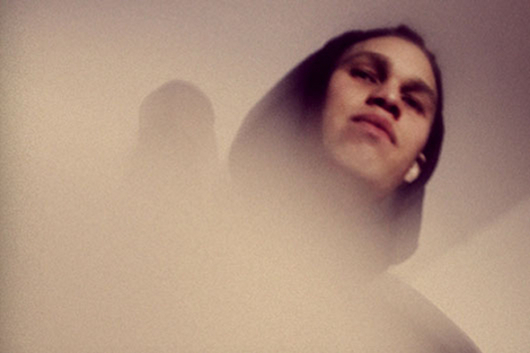
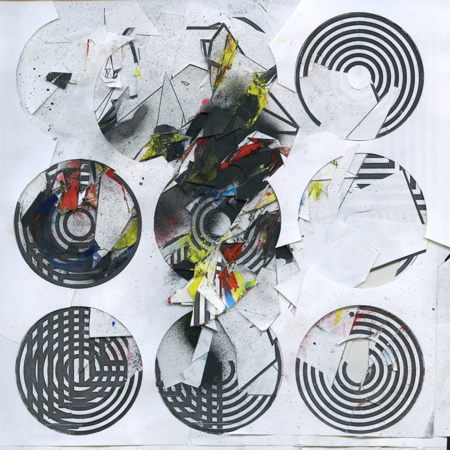
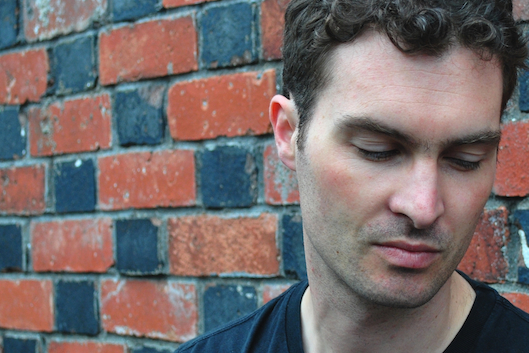
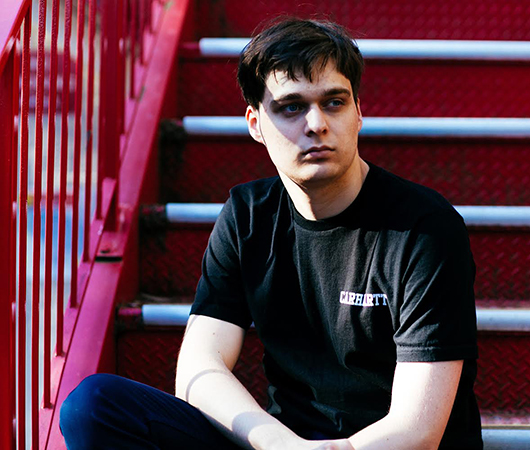
LA producer Delroy Edwards has returned with a new EP for retailer-turned-imprint Gene’s Liquor. Out today, Can U Get With finds Edwards moving away from the abstracted and increasingly noisy techno that’s characterized recent output under his own name and DJ Punisher alias; this latest offering revisits earlier styles of cut-up, sample-heavy house inspired by Dance Mania (whose catalog we know he’s familiar with based off Edwards’ 2013 Boiler Room session).
The title track for Can U Get With is currently streaming in full below, where we’ve also included the record’s complete tracklist.
A1 Can U Get With It A2 Always (Edit*) B1 Untitled
With a decade-plus of records to his name, Dutch techno producer Steve Rachmad (a.k.a. Sterac) is set to follow an excellent EP for Klockworks with a new record for Delsin next week. Backed with remixes from Mike Dehnert, Anthony Parasole (in collaboration with Phil Moffa), and emerging German producer VRIL, the forthcoming effort can now be streamed in full on XLR8R.
Originally released this summer as a limited white label single, Rachmad’s “The Hypnoticus” production—here appearing in its “The Hypnoticus II” form—is a lean and focused piece of techno, one that follows the various stages of a pumping synth loop and precise percussion throughout its six-minute run. Despite its efficient build, the tune appears to have more than enough to offer its remixers, with VRIL (a Giegling affiliate who has released on Delsin in the past) reshaping the track into a more twisted piece of techno, while both Berlin mainstay Mike Dehnert and the Stateside pair of Parasole and Hoffa work “The Hypnoticus” into more pounding, sci-fi affairs.
Set to see its official release on December 8 via Delsin, Sterac’s The Hypnoticus (Remixes) EP can be streamed in its entirety below.
Bristol mainstay Peverelist has delivered a mini-LP for Bass Clef’s Magic and Dreams imprint. The Livity Sound member and Punch Drunk label co-head’s 12,000 Seconds is part of a newly conceived series by the same name, which lays out a basic framework for its releases. Participating artists given the same set of eight track times—0:06, 0:23, 1:11, 2:37, 3:03, 3:14, 4:20, and 6:06—and are then free to do whatever they want, as long as they stick to the time perimeters. (It turns out the math actually adds up to 12,060 seconds, but the series title has stuck as, Bass Clef says, “a reminder of my infallibility.”)
Peverelist’s contribution to the 12,000 Seconds project is due to see a cassette release on December 5, with Stateside experimentalist Ashley Paul’s version on the b-side. A second 12,000 Seconds split cassette from leftfield UK acts Vi and Hacker Farm is due out on the same day. While digital versions for all four efforts are already available, Peverelist’s “Caught a Glimpse” and “Kinetics” can be streamed in full below, along with a complete tracklist.
01. Introduction 02. Caught a Glimpse 03. In a Spin 04. Kinetics 05. A Brief Transmission 06. Silvers 07. OK Run It 08. Until the Next Time
‘Real Talk’ is a series of artist-penned essays that appears on XLR8R from time to time. Our latest installment comes from Australian producer Dro Carey (a.k.a. Eugene Ward), who also produces as Tuff Sherm. This week, Ward is releasing the ‘Club Injury Handbook’ EP, his first outing for the Greco-Roman label, which prompted us to want to hear a bit more from the young beatmaker. When presented with the opportunity of penning something for ‘Real Talk,’ he jumped at the opportunity, and elected to address a topic that most artists shy away from: mental illness. It’s something Ward has dealt with (sometimes quite publicly) for a long time, but now, after two years in remission, he wanted to detail his experience of balancing treatment for his depressive and anxiety disorders with the intensive requirements of being an emerging artist in a musical landscape driven by social media presence.
When I cancelled my debut Australian tour back in early 2012, I released a public apology that attempted to detail what had transpired to cause the cancellation and, in an effort to be as transparent as possible, I indicated that I was still severely unwell when it came to my mental health, and that I had tried to set a goal and rise to the occasion for the sake of a passion—music—but had jumped the gun in terms of what I could accomplish and where I was in terms of therapy, medication, and techniques for the management of my conditions (major depressive disorder and anxiety disorder).
One of the most frequent questions I’ve been asked since then—whether in press interviews or by friends—has been: ‘Why tell everyone?’ Not in a critical way—no one represented any doubts about the sincerity of what I had declared—but rather out of an honest sense of curiosity. When you are an artist or a public figure of any kind, at any level, you get to moderate the level of detail known about your private life. And when it comes to something like mental illness, there are probably many artists who would rather keep these personal details completely private. And, in general, fans, press, and followers all accept this—everyone acknowledges the need for a certain level of privacy. You are permitted to provide completely general comments when you are in a position like I was, where the two identities (public and private) have collided and you are required to address what has occurred in some way. So the question remains: if there is something raw and difficult happening, why invite the attention of an audience who you are, quite separately, trying to entertain with your work?
Back when that tour cancellation went down, I wasn’t thinking of myself as any kind of public figure. The entire notion of having a public image that you can engineer to reflect only what you wish to reflect was completely absent from my mind. At that moment, my foremost concern was towards the people who would be missing out and there really wasn’t any decision-making. I had to address it head-on, because it was my opinion that shying away from the full story would have been pretty well unsatisfactory—in terms of basic logistic understanding on the part of fans and observers—and, additionally, it would have repeated a pattern of concealment that in the past had been extremely detrimental as far as taking the correct steps towards treatment in my teenage years.
This would mark a turning point in how I addressed this part of my life in public. I had previously touched on the topic of my depression in a smattering of interviews following my earliest music releases. I would like to now appraise my approach back then—pre-tour issue—as being, in general, quite irresponsible. I am not going to single out particular interviews or responses. I’ll restrict this to a general commentary.
I participated in interviews that exist as part of a broad ecosystem that we might call—objectively and without any attached venom—a game. The music game. The dance music game. The underground/esoteric/no repress dance music game. Whatever it is, you can be sure that this ecosystem will promptly appraise someone relevant, or more importantly, someone latently relevant, and we live in a time now where—facilitated by the internet—young people can be directly approached by these websites and magazines without any kind of manager or other person to familiarize them with the process (because they have been approached so early in their careers). As a young guy without any awareness of this game, or perhaps even awareness of the entire goal or premise of an interview, I was anxious about my responses to interview questions in those early days.
They were totally standard questions. How did I start producing? Why did I start producing? What clubs did I frequent? What did I think of the scene in Sydney? And, suddenly, laying in front of me I had a convenient truth, a catch-all explanation that would avoid naming the “wrong” names, that would be an alibi for (perceived) unpaid dues, that would be a neat summary for any naivety that might have leaked through in other responses. “I have been severely depressed through the majority of my teenage years.” Done—I had taken something that was both completely true and yet, at the same time, appropriated it as an easy solution for the difficult questions.
In hindsight, it seems strange to feel any pressure at all about how to answer interview questions. But this is the power of the overwhelming and irrational fear that comes with being prone to anxiety, which would have come into effect at that time at the thought of having my work and profile scrutinized. It wasn’t a malicious or exploitative usage of my status as a depressed person (and for instance, it is completely true that my mental state would have prevented, in some ways, access to participating in a ‘scene’); however, as I said, I do maintain that it was irresponsible to reference to mental state, and I say this because it was not presented it in its true context of something that made me vulnerable in the present. And that is where the 2012 tour cancellation comes in. The one positive outcome of what transpired is that there I was, having to detail this part of my life, no longer in order to selectively suit something else, but in an honest presentation of ongoing vulnerability, and in such a way that I would hopefully emphasize the importance of coming forward and acknowledging that I needed further help.
While I did not consciously factor in at the time that it was important from an external, advocacy-driven perspective to release a statement about my mental health, this has subsequently been an issue that I have strong feelings about. I maintain that it should remain the choice of the artist about what they wish to divulge; however, conversely, being open about these issues—provided it is in an appropriate and substantial way—does contribute to diminishing the impact of social stigma concerning mental health. There remains a genuine and pervasive social stigma attached to mental illness of all kinds. Huge strides have been made in working against the manifestations of this stigma, but it is still extremely active in Australian society, and I am confident in saying that this would likely be the case in every other nation too. I would like to delve into this idea because the details are pertinent as to why I think it was ultimately an important and good thing to be upfront about my status as a person who has experienced depression and anxiety.
It is worth clarifying what stigmatization is in the context of mental health, because I think there are dominant public perceptions of this concept that basically allow attitudes to take a few steps forward while simultaneously committing perpetuation of stigma. Experiencing mental illness doesn’t simply place you into a socially discredited position; it operates on specific levels that go beyond something as broad as societal exclusion. It operates on everyone you come into contact with and it is extremely easy for anybody to, on the one hand, be aware that ‘I need to treat this person normally,’ and, on the other hand, slip into behavior that reinforces particular aspects of stigma. The Six Dimensions of Stigma by Jones et al (1984)1 are useful for examining the different components of the experience of both the stigmatized and those that they come into contact with. The dimensions are:
Concealable: extent to which others can see the stigma
Course of the mark: whether the stigma’s prominence increases, decreases, or remains consistent over time Disruptiveness: the degree to which the stigma and/or others’ reaction to it impede social interactions Aesthetics: the subset of others’ reactions to the stigma comprising reactions that are positive/approving or negative/disapproving but represent estimations of qualities other than the stigmatized person’s inherent worth or dignity Origin: whether others think the stigma is present at birth, accidental, or deliberate
Peril: the danger that others perceive (whether accurately or inaccurately) the stigma to pose to them
In my experience, it has been the “Disruptiveness” dimension of stigma that has caused great difficulty and consternation, both in personal and professional relationships. It was my first instinct to more readily supply disclosure of my mental illness to friends, while in professional contexts, I had an overpowering motivation to avoid it all together (e.g. When discussing upcoming shows, records, etc. For some context here: it would be quite common for many musicians, when touching base with a label, to say, “Haven’t got the new track done, been knocked out by the flu” or “Busy with the day job,” etc.—whereas I never explained what was going on and it was only after seeing interviews with me published that the people I had been dealing with became aware of the ongoing difficulties surrounding my mental health).
Why was this? Why did I refrain from letting go of the single most important piece of information concerning my availability? I think that there’s an insidious relationship between depression and stigma where the very condition virulently cultivates your sense of being an outsider and—completely putting aside real, tangible stigma—you’re frequently constructing outside judgment and persecution for yourself. At the time, I felt that to indicate those problems to a record label would indicate significant personal weakness, and beyond that context, to indicate them to any employer or professional contact would—despite whatever recent improvements might have occurred or what the present status of those disorders might have been—characterize me as unreliable or erratic, prior to any hard evidence or indicators of that happening for the project at hand.
Though these assumptions were ultimately incorrect in my case (and paranoid and pessimistic), there are some reasonable foundations for those reservations about identifying as a depressed person in professional contexts. The aesthetics of the depressed are often built up in overwhelmingly negative ways, and this relates to the general stereotype of people with mental illness as being significantly prone to disruption. As such, these people are frequently marked in a way that stretches beyond examination of their specific condition or past fulfillment of tasks, and instead taps into deep-seated associations with historical, general “madness.” For a sufferer to bring up the issue and actively use a diagnostic label remains, despite so much ground having been gained with regards to removing stigma, something that at least prickles at the listener’s perception of the person.
I was fortunate to receive an outpouring of support from the promoters of the 2012 tour, who were naturally flabbergasted and irritated at the initial news (as anyone is in the face of a late-notice cancellation), but upon hearing the background of what was going on were sympathetic and in some cases went above and beyond, turning the replacement events into fundraisers for the Australian depression and anxiety support company beyondblue. I additionally received messages from people I was working with at labels, as well as from other musicians, all indicating that they were sorry to hear I had been unwell and that they hoped I was doing better. It was an affirming moment to have had my limitations exposed, to have the ongoing toll of my disorders on display, but to then receive so much support and understanding in return. It further confirmed that I hadn’t been approaching the topic of my mental health in the best way in those past interviews, because those responses had failed to illustrate it as an ongoing issue and, by virtue of being somewhat insubstantial and buried hints, were never picked up on by those around me (professionally or socially) anywhere to the same extent as the apology for the tour cancellation.
Following the tour cancellation, I greatly increased the frequency of my Cognitive Behavioral Therapy sessions and reviewed my medication. Over time, thanks to the CBT, I was able to better deal with unforeseen issues at shows—ranging from the technical to the commercial—that might trigger anxiety. By the time Astral People had its first birthday in September of 2012, I was completely free of anxiety, and, propped up by such a supportive local team of artists and friends, I was also able to feel optimistic and stable in my mood in the lead-up to the event. (Not being the headline artist additionally lowered the sense of pressure—I went on before Ryan Hemsworth.) It was a huge breakthrough for me and marked a turning point as far as overcoming anxiety about live performance.
I felt compelled to address this, a genuinely significant and emotional moment for me, through a post on the Dro Carey Facebook page the next day. It made sense—it would be accessible to everyone involved in making it such a successful night and would communicate just how much I got out of it artistically and personally. The post compared where I had been just a couple of years prior—isolated and with very little ongoing social support and interaction—to feeling like a part of a music scene and having the encouragement of friends, peers, and fans.
The other side of this equation, of that update on my mental health and how it shapes and is shaped by my practice as an artist, are the metrics of social media. That post remains, head-and-shoulders, no contest, without a doubt, the absolute most “successful” update to ever come from the Dro Carey Facebook page. So, since then, I’ve found myself wary of delving into this side of my life, in terms of updates on how I’ve been doing. Doing so would risk placing my experiences into a strange continuum of frequently reductive journalism that seems to exist in order to find an issue to be made into content, and compress the problem, solution, and usually a neat moral all into a single post-friendly sentence. In these circumstances, what began as authentic and personally important disclosure would become an exercise in branding and publicity. In my mind at least, it became difficult to separate the delivery of the information from the transaction of engagement, which has become foundational to the profitability of both Facebook and Twitter. At what point would that additionally become apparent to the fan or follower? The desire of not wanting to test that boundary of good taste was ultimately stronger than the desire to provide an update.
In addition to this wariness of the commodity-forming power of social media, I was worried about potentially overpowering my natural personality and identity, which does not hinge on, nor begin and end with these issues, and I was also wary of potentially overpowering the purpose(s) of my creative work, which might sometimes involve or explore these issues but again, should not be totally defined by them. (This whole dimension brings to mind the second t-shirt featured in this Achewood comic strip by Chris Onstad). Finally, assuming I had been able to find some way of communicating that did not tap into the compulsory marketing aesthetic of social media, and did not overbearingly paint my portrait as a person defined by my health issues, I was also wary of simply overloading. At the end of the day, even after making the decision to ‘go public,’ I feel it is incumbent on me to limit the extent that I publically report this information, pare it down just to when it is interacting with my public work (either positively or negatively), because people have their own problems and the last thing that they need is a live stream of my mood. Though there was a fairly straightforward trajectory for the management of my anxiety, my depression has been a far more up-and-down issue—as sufferers will no doubt be aware, its fluctuation is tiresome in its persistence—and there would likely be a threshold for when ongoing public detail was no longer insightful or positive in its impact.
It was only when XLR8R approached me for this extended feature, where I was given complete free choice of topic with no guidelines—with no angle other than ‘write about something you would like to write about’—that I felt like I had found the right time and the appropriate format to not only update people on where I am at now after those earlier statements, but to detail my observations in such a way as to hopefully give useful advice to anyone in a similar situation.
To artists who do not know whether they wish to put out information about their mental health, and for young people navigating any kind of career where they need to have strong online visibility, where personal “blogging” or otherwise is required of them, my advice is not a simple yes or no answer (though yes, you should definitely at least be telling somebody in the real world how you feel). The point to take away is that I did it and nothing bad happened. In fact, it allowed me to truly settle into my path as an artist, it allowed me to keep people informed, and, most importantly, it allowed me the space to pull back, to identify exactly what it was about what I was trying to achieve that was provoking my existing disorders, get the assistance that I needed, and return to the game.
1 Jones E, Farina A, Hastorf A, Markus H, Miller D, Scott R. (1984), Social stigma: The psychology of marked relationships., New York: Freeman, ISBN 978-0716715924
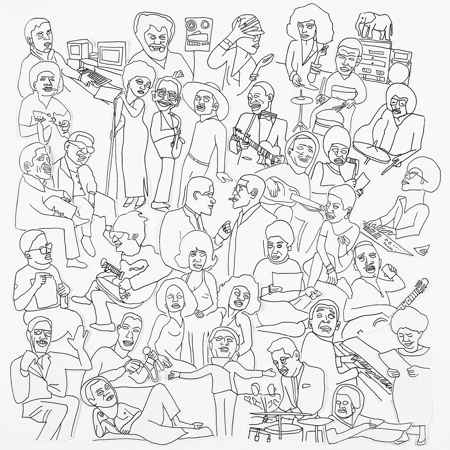
With the release of his Roots EP via Ninja Tune today, the label has quickly followed Romare‘s newest effort up with news of the London producer’s forthcoming debut LP, which will arrive in February of next year. Entitled Projections, Romare’s first full-length album is set to offer 11 productions which culminate into a “heady mix of homage and fresh approach, a statement from a young artist unafraid to revel in his influences, and confident in his own originality,” according to the Ninja Tune website. The upcoming record is said to partially serve as an homage to “elements of American/African culture in the USA,” a subject which Romare studied academically. Furthermore, the artist’s chosen alias is said to take its cue from Romare Bearden, a well-known collage artist whose techniques and fascination with Black America the London beatmaker in some ways aims to repurpose within the realm of electronic production.
Described as “Voodoo Ray reworked by DJ Shadow… its drumming littered with infectious swing, its samples illuminating and attention-gripping, its atmosphere pronounced and consistent, and its riffs and hooks heavy,” Romare’s debut LP will see its official release on February 23 via Ninja Tune. In the meantime, a trailer for the album has been included below along with the record’s complete tracklist and a full stream of “Roots,” the title track of Romare’s new EP which will also appear on his forthcoming full-length effort.
1. Nina’s Charm 2. Work Song 3. Motherless Child 4. Ray’s Foot 5. Roots 6. Jimmy’s Lament 7. Lover Man 8. Rainbow 9. Prison Blues 10. The Drifter 11. La Petite Mort
Nicolas Jaar (pictured above) and Chicago house veteran DJ Slugo have combined forces for “Ghetto,” an eight-minute track which is said to have been inspired by “recent events.” Appearing on the SoundCloud page of Jaar’s Other People label (through which DJ Slugo released his King of Ghetto House EP earlier this year), “Ghetto” sees Jaar piecing together a warm, slow-sweeping house production, on top of which DJ Slugo delivers a spoken-word oration on life in the ghetto.
Though there is no word yet if or when Jaar’s and Slugo’s collaboration may see an official release, the pair’s new collaborative track can be streamed in full below. Furthermore, DJ Slugo’s contribution to our Trainwreck feature series can be read here.
Glasgow’s LuckyMe label—home to artists such as Jacques Greene and Claude Speeed, among others—today launches its annual advent calendar, which plans to give away a new track every day until December 25. An end-of-the-year tradition now in its sixth year, the digital advent calendar begins its run of “rarities, alternate versions, and brand new exclusives that span the sound of the LuckyMe family” with a lush ambient excursion from Edinburgh-based artist Sevendeaths. The producer’s new cut can be downloaded in full here, where the rest of LuckyMe’s string of free tracks will appear throughout the month of December.
The Berceuse Heroique imprint (which was highlighted as part of our recent Labels We Love feature series) has revealed plans to launch a new sub-label, Ancient Monarchy, with a two-track 12″ from Bristol producer Rhythmic Theory serving as its inaugural outing. The sub-label’s forthcoming first release is described by the label as “some raw UK shit” and “a return to the AWOL days with a fresh attitude,” with its two tracks focusing on icy textures and subterranean rhythmic structure.
Rhythmic Theory’s 12″ for Ancient Monarchy is expected to arrive soon, and is set to be followed by Gramrcy’s Ruffian EP, which will serve as the Berceuse Heroique sub-label’s second release and come backed with remixes from Hodge and Bruce. In the meantime, Rhythmic Theory’s contribution to the new label can be streamed in full below.
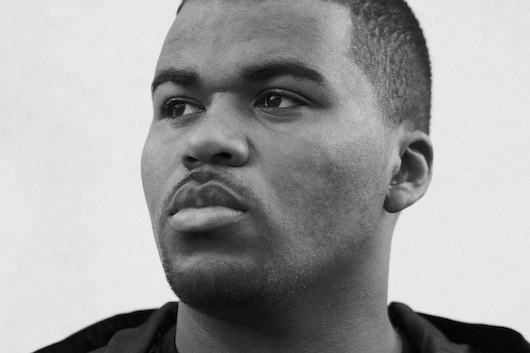
Today, Ninja Tune affiliate Dorian Concept and instrumental grime producer Mr. Mitch (pictured above) have both delivered new mixes for stream and download.
To start, Dorian Concept (given name Oliver Johnson) has delivered the latest installment of Resident Advisor’s ongoing podcast series. Arriving not long after the release of Joined Ends, his first full-length outing in four years, the mix features a number of the Austrian producer’s own songs alongside selections from influential artists such as Dimlite, Letherette, Ryuichi Sakamoto, and Oval. “It looks unusual on paper but makes total sense in execution,” RA’s accompanying write-up notes. “Part of that comes down to extra effort: Johnson colors between the transitions with synths, turning the mix into a sort of hybridized live/DJ set.” Johnson’s recording can be downloaded here, where a full tracklist for the mix can also be found.
Next up, Mr. Mitch—who heads the Gobstopper label and co-founded London’s Boxed club night—has mixed the most recent podcast for FACT. Arriving on the same day as the release of Parallel Memories, his debut LP for Planet Mu, the mix is said to mine a quieter side of grime, with contemporary producers like Rabit, Strict Face, and Sharp Veins featured alongside classic grime acts such as Mizz Beats and Ruff Sqwad. Clocking in at just over 45 minutes, the mix can be streamed and downloaded below, where we’ve also included a complete tracklist.
Sharp Veins – Dark Green Water The Beach Boys – California Girls (Mr. Mitch Peace Edit) Moleskin – Grand Ballet Strict Face – Into Stone Mr. Mitch – Denial Rabit – Sun God Iglew – Cymatism Crayzee Banditt – Leaving Mr. Mitch – Oh Mizz Beats – Saw It Coming Arianna Grande – Be My Baby (Cashmere Cat Devil Mix) Mr. Mitch – Pipe Dreams Iglew – Sleep Lighter VIP Teyana Taylor – Maybe (ft Yo Gotti & Pusha T) Tom E Vercetti – A Matter of Perspective Rapid – Pied Piper Mr. Mitch – Intense Faces Strict Face – Skyway Condo Dorian Concept – Tried Now Tired Mr. Mitch – The Night
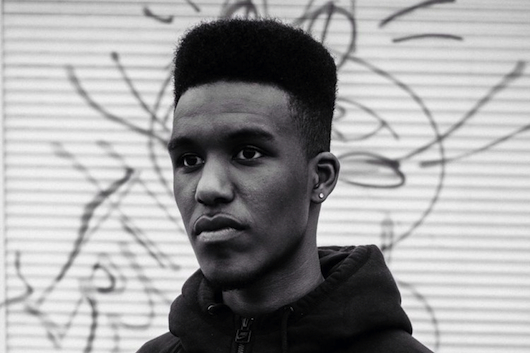
London producer and recent RBMA grad Mumdance and grime MC Novelist (pictured above) have shared news of a forthcoming release on longstanding UK label XL. Set for release in early 2015, the duo’s 1 Sec EP will comprise vocal and instrumental versions of original tracks “Shook” and “1 Sec.” The two artists first joined up earlier this year on Mumdance’s Take Time EP for Rinse; their live performance of the record’s title track for Resident Advisor’s RA Sessions series can be revisited here.
1 Sec is due out on January 20, and the EP’s complete tracklist is on view below, where opening cut “Shook” can also be heard in full. (via RA)