Belgium’s Hiele is a producer who prides himself on crafting unidentifiable hybrid structures within the realm of electronic music. Opening the man’s forthcoming Essential Oils LP for Ekster (out on March 14), “Say” is one such track, stitching together sections of jazz-inflected beat work with traces of IDM precision and skweee’s playfulness. To his credit, Hiele is able to make sense of it all, and what emerges is a sharp image of the Antwerp producer’s everything-but-the-kitchen-sink production approach. In addition to offering “Say,” Hiele has also passed along a video for LP track “Elephant Seals,” which can be watched after the jump.
The relentless team of music-obsessed individuals at Red Bull Music Academy only just unveiled its first feature-length documentary yesterday, arriving one month after enrollment for 2014’s upcoming school sessions in Tokyo was opened. Not content to sit on their laurels, the RBMA event planners have shared yet another piece of enticing news, the brand is preparing to launch an annual festival in New York later this year. The music and art event series aims to follow in the footsteps of the RBMA-presented concerts and lectures which featured the likes of Four Tet, Flying Lotus, Brian Eno, James Murphy, and Giorgio Moroder during last year’s classes in New York, and is scheduled to kick off sometime in May. Though little other information is currently available on RBMA’s festival plans, more announcements are said to be on the way in the coming weeks.
Once affiliated with Visionist’s Lost Codes label, “new grime” up-and-comer Sd Laika (a.k.a. Peter Runge) announced earlier this year that he would be working with Tri Angle to issue his next release, and the details of that forthcoming record have now arrived. That’s Harakari is an 11-track album which will stand as Runge’s first full-length, following his Unknown Vectors EP from 2012, and is said to feel as if “it’s constantly at odds with itself, as meditative and claustrophobic elements clash for some kind of dominance.” Sd Laika will unleash his “brash and provocative” LP on April 28, but before then, its tracklist and artwork can be perused below, where a full stream of lead track “Meshes” can also be found.
1. Peace 2. Great God Pan 3. Gutter Vibrations 4. I Don’t 5. Meshes 6. Remote Heaven 7. You Were Wrong 8. Don’t Know 9. Peaking 10. It’s Ritual 11. Percressing
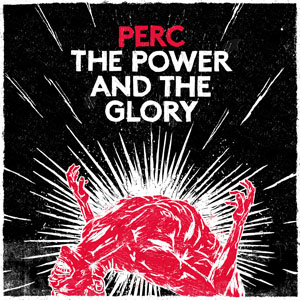
A recurring point of interest in the press releases, interviews, and promotional efforts leading up to the release of The Power and the Glory—the second LP from veteran English producer Ali Wells’ (a.k.a. Perc)—has been the album’s intentional political thread. The record’s title could easily be taken to represent the driving force behind political ladder climbers, and track titles like “David & George” (references to British Prime Minister David Cameron and George Osborne, head of the country’s economic affairs) and “Bleeding Colours” can certainly lend themselves to political interpretation. However, despite these inclinations, The Power and the Glory is not some kind of a call to arms or a “protest” album of any sort; instead, the blistering, 10-track effort seems to be more about Wells internalizing his own frustration, whether it’s with self-serving political systems or the current rise of cookie-cutter dance music in the UK and beyond.
Some cuts on The Power and the Glory express this frustration more obviously than others. The record’s two opening efforts, “Rotting Sound” and “Speek,” force their guest vocalists—Dan Chandler of London outfit Dethscalator and Nik Colk Void of Factory Floor, respectively—to each push through menacing sheets of distortion and walloping machine rhythms. While Chandler elects to scream, Colk Void conversely uses a monotone delivery bathed in FX processing. Still, the metaphor remains the same: in the modern age, one has to push through a lot of noise to be heard. When Chandler resurfaces towards the end of the album on “Take Your Body Off” (one of the LP’s more club-appropriate efforts), his words are largely still incomprehensible, but they aren’t quite as buried beneath sonic detritus. Appearing only in the track’s second half, his occasional screams instead use the momentum of the production’s monstrous pulses and factory-burnt soundscapes as platforms to push his voice further. In doing so, “Take Your Body Off” serves as a smart contrast to “Rotting Sound” and stands as a clear indication that—much like he did on his lauded debut LP, Wicker and Steel—Wells has crafted his latest album as a complete piece of work, not merely a collection of individual songs.
The aforementioned “David & George” shows Wells’ political ambitions most transparently. It’s a four-plus-minute exercise full of maddening percussion, shape-shifting distortion, and evil, cackling laughter, and these elements combine to offer a darkly slanted interpretation of what it’s like to be on the receiving end of the decisions being made by policy makers like David Cameron and George Osborne. From a musical perspective, the track is a challenging listen, but as a conceptual statement, there’s little question that “David & George” succeeds in its aims.
Truthfully, this tendency rings true for much of The Power and the Glory, as the record’s implied mission statement is frequently seen to a logical end, but from a purely listening standpoint, the music is not easy to digest. However, this feels entirely by design. Across the album’s 10 tracks, Perc lands himself in a number of sonic landscapes—”Rotting Sound” and “Bleeding Colours” use unconventional structures and employ harsh tones; “Lurch” digs deep into half-time techno abstraction; “Horse Gum” and “A Living End” wallow in unsettling ambience. Two productions in particular, “Galloper” and “Dumpster,” even reach out to DJs, giving them a bit of heavy-handed techno that’s easier to swallow than the majority of the record. This eagerness to explore various tempos and structures seems to embody Wells’ frustration with the fit-to-form feel that characterizes so much of dance music. If that world is so concerned with staying within defined lines (perhaps in order to ensure commercial success), Wells is just as eager to jump around, between, and outside of UK techno’s perceived boundaries. Fortunately, his production chops are more than capable of helping listeners to make these leaps with him, and although the flow can be jarring, one never gets the sense that Perc intended it to be any other way.
The Power and the Glory is an impressive effort, one where its creator uses his frustrations with the powers that be as raw fuel, rather than simply regurgitating his ire in an obvious fashion. It’s not the easiest path to take, but Wells’ choices do nothing to detract from the LP’s, ahem, power. When it comes to pushing the sonic and conceptual limits of techno, Perc is largely operating in a class by himself.
Nearly 30 years after its inception, pioneering Chicago house label Dance Mania is finally receiving the accolades it deserves. Launched in 1985, Dance Mania was operated by Ray Barney, a Chicago music industry heavyweight who grew up in music and inherited his family business (Barney’s Records, a record distribution company and local retail chain that attracted touring soul artists and working DJs alike). Operating the label out of the company’s existing business infrastructure, Barney went on to release approximately 300 Dance Mania records; looking back now, there’s little question that the label spawned numerous bonafide classics, played a part in many legendary artists’ careers, and essentially created the ghetto house genre. Even so, Dance Mania’s eventual reach and influence wasn’t apparent to anyone involved at the time; Barney claims the imprint was “just making records for DJs.” He adds, “Nothing was manufactured. Everything was genuine. We didn’t do anything to look good.”
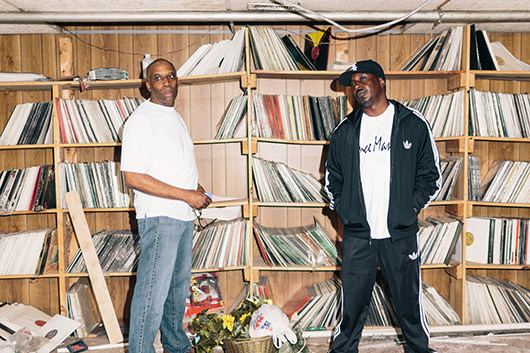
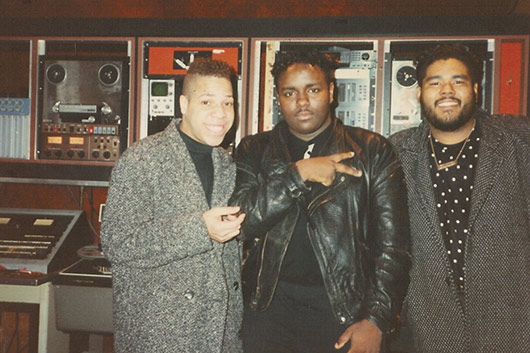
Ray Barney and Parris Mitchell
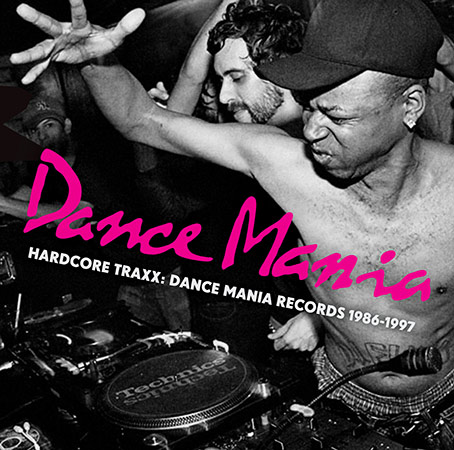
According to Barney, when Dance Mania was active in the ’80s and ’90s, it was considered, even at its height, to only be the third most important label in the hierarchy of Chicago house, trailing behind Trax and D.J. International. However, that standing has undoubtedly changed over the years, thanks in part to the records themselves (and their continued relevance), the DJs playing them, and even the numerous Dance Mania documentaries—including one by eventual Zombieland director Ruben Fleischer—that surfaced after the label ceased operations in 2001. In the years that followed, a sustained passion for Dance Mania prompted several failed attempts to re-open the label’s doors, but it was only last year that Barney got the imprint properly back in business. More importantly, he did so with a simple intent—to get the records, many of which had become extremely hard to find, to the people, and to get the artists paid for their work. It’s no secret amongst DJs that the prices for Dance Mania vinyl have skyrocketed in the last five years, with both classics and obscurities frequently commanding more than $100 in the second-hand marketplace. Barney cites this phenomenon as a motivating factor, explaining, “The biggest thing is that the artists aren’t seeing anything for the records being [sold] at these prices.” As such, the first round of official vinyl reissues hit stores in late 2013, and now, Dance Mania has come together with the !K7 and Strut labels to assemble Hardcore Traxx: Dance Mania Records 1986-1997, a two-disc compilation representing the bulk of the label’s initial run.
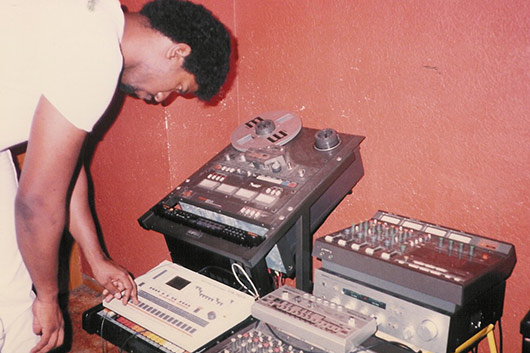
The first disc fittingly begins with “7 Ways,” a slice of classic Chicago house from legendary producer Marshall Jefferson, operating as Hercules, one of his lesser known monikers. After jacking through another ’80s cut (Victor Romeo’s “Love Will Find a Way”), the compilation lands on the anthemic pulse of “House Nation” from the aptly named House Master Boyz. From there, the music dives into late ’80s/early ’90s deep house cuts from Vincent Floyd, Mike Dunn, Da Posse, and Paul Johnson (who appears here as part of the group Club Style), all of bear a striking resemblance to the mid-’90s output of New York’s Strictly Rhythm label. Toward the end of the disc are some of the most musical tracks of Dance Mania’s catalog; they fittingly come from Parris Mitchell (under the aliases Victor Romeo and Rhythm II Rhythm), who first developed his chops as a funk and soul musician while playing disco sessions and touring with R&B groups such as Club Nouveau. As he explains, “I was making house records from a musician’s perspective.”
Marshall Jefferson, 1988 (Photo by Rachael Cain)
If the first half of Hardcore Traxx is intended to showcase the label’s classic house cuts, the second disc largely highlights the label’s mid-to-late ’90s sound, which essentially focused on pumping house of all flavors. Whether it was acid, ghetto, deep, or something else, the tunes were being turned out by the likes of DJ Funk, DJ Deeon, Traxmen, Jammin Gerald, and countless others. The selection of songs here is interesting, as it ranges from obviously necessary cuts like Paul Johnson’s “Feel My MF Bass” to classics like Traxmen & Eric Martin’s “Hit It from the Back,” but also throws in a few seemingly random tracks, like the rarely heard deep techno of Tim Harper’s “Toxic Waste.” DJ Deeon is actually represented with two tracks, the first being “The Bomb,” which showcases his charismatic rapping, while the second is a more unlikely choice, the acid workout “Hypnosis.” This kind of juxtaposition is unusual, but it also highlights what is frequently overlooked about the Dance Mania label, the era, and the DJs who championed these records—it wasn’t just acid, or just ghetto house, or just anything. Sure, Dance Mania released jacking house, but it also served up ghetto house, techno, deep house, and, basically, whatever the artists wanted. Someone like DJ Funk might be thought of now as a master of ghetto house club bombs, but he also made acid tracks and stripped-back hard house. “Let Me Bang” might be DJ Deeon’s biggest anthem, but he also produced sample-based disco house and tracky techno. Simply put, Barney trusted the artists to know what would deliver on the dancefloor, and when considering the legacy of Dance Mania, it’s important to recognize that there was real diversity, not only in terms of the records, but also the DJs and the crowds that supported them.
Regardless of this fact, many people still consider Dance Mania to be the ghetto house label, but Barney sees it as so much more. “The selection on the compilation represents the label,” he says. “It had different phases, and ghetto house was just one of the phases. It evolved.” He’s also quick to say that he “had no idea the music would be received the way it is today” and at the time, he “didn’t think we were doing anything groundbreaking.” Barney also neglects to mention the trust and mentorship he offered the artists recording for the label, but Mitchell (who recorded for Dance Mania under several aliases) cites this as a key factor in its success and evolution. “The label was an open, creative environment,” he says. “You could bring [Ray] a record and he wouldn’t listen to it. He would just take it to get mastered.” According to Mitchell, that sort of trust was rare, and something he truly appreciated. “I was lucky. I actually had people that believed in me.”
Da Posse, 1987 (Photo by Rachael Cain)
Dozens of artists released on Dance Mania over the years, but when looking over the names featured on Hardcore Traxx and through the label’s extensive discography, it quickly becomes apparent that the label’s roster really did include a who’s who of early Chicago house. Contributors included Jesse Saunders, the man who many consider to be the originator of house, Farley “Jackmaster” Funk, Lil Louis, Marshall Jefferson, Mike Dunn, DJ Pierre, Armando, DJ Rush, Glenn Underground, Paul Johnson, Steve Poindexter, Stacy Kidd, and other, more obscure names that hover just below the surface.
At the same time, while Hardcore Traxx makes it clear that Dance Mania’s early records are certainly noteworthy, the imprint rarely gets much credit as a “classic” house label and its ’90s anthems generally grab most of the attention. After all, Dance Mania’s middle and later periods introduced the Midwest, and later the world, to DJ Funk, DJ Deeon, Jammin’ Gerald, Gant-Man, DJ Milton, DJ Slugo, DJ Nehpets, and DJ Clent—the top names of what came to be known as ghetto house, and later evolved into what is now footwork and juke. Parris Mitchell was one of the few artists that produced records in both eras of Dance Mania, and according to him, “the younger generation of Dance Mania are [the artists] who really made the label popular—the records were more consistent and they were fun to play.”
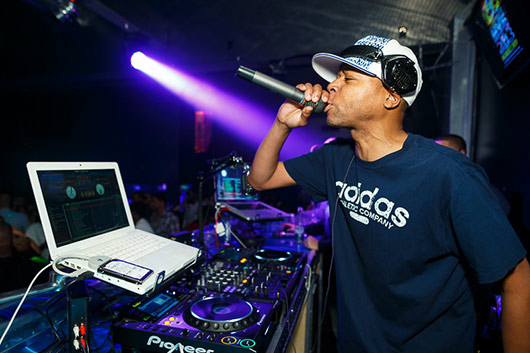
DJ Funk
This notion still holds true today, as Dance Mania’s ghetto house-era records are the ones most likely to be heard in a club in 2014; a wide spectrum of artists, including Robert Hood, Nina Kraviz, Ikonika, and most of the Night Slugs camp, has been known to blend Dance Mania records into the mix. Furthermore, it’s telling that even though these tunes were made on low-tech equipment, and the records themselves are notorious for their poor sound quality, the tracks continue to sound incredibly fresh, which is likely why their influence hasn’t waned over the years. Fans of the label often point out that Daft Punk’s early work was clearly inspired by Dance Mania; the legendary French duo even credited some of the label’s artists on the Homework classic “Teachers.” More recently, Kraviz made a tribute in the form of “Ghetto Kraviz,” one of Jam City’s first offerings to pick up steam was a rework of DJ Deeon’s “Let Me Bang,” and L-Vis 1990 just enlisted Jammin Gerald to contribute to his new Dance System EP. Truth be told, many of these modern productions lack the sort of rawness that characterized Dance Mania’s heyday, but they’ve all demonstrated some genuine dancefloor potency nonetheless.
If there’s any fault to find with Hardcore Traxx, it’s that there isn’t more of it. While the curation does an excellent job showcasing more than 11 years of releases with just 24 songs, it’s hard not to mention so many other tracks that could have—and perhaps should have—been featured. Surprisingly, some of the biggest songs released by Dance Mania, including cuts that truly defined the ghetto house genre, simply aren’t included. Examples include DJ Deeon’s “The Freaks” (amongst many of his other songs, under multiple aliases), Jammin Gerald’s “Biggie Trax” and “Work Dat Shit,” and DJ Nehpets’ “Lay It Down.” That said, even if several more double-disc Dance Mania collections were released, it’s unlikely that the label’s vault of classics would be completely exhausted. As such, we can only hope that Hardcore Traxx is just the first of many Dance Mania compilations to come.
Following a prolific year, industrious Scottish producer and founder of the Echodub and Cut labels DFRNT (a.k.a Alex Cowles, pictured above) already kicked-off 2014 with his free “Dark Blue” single, and is now following it up with a remix of Parjo01‘s “Shadows Dub” cut. Taken from the UK artist’s recently released Shadows EP for Club Soda, the cheery tune fuses layers of flitting and cascading vocals with faint claps that fluidly melt into densely interwoven bass patterns, all of which is complemented by supple waves of aquatic synths.
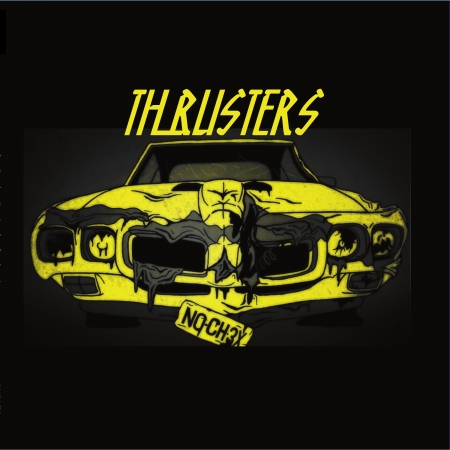
Next week, UK producer Nochexxx will add to his solid, if quietly assembled, discography with his proper debut LP, Thrusters. Before the record’s 11 cuts of twisted electronics see their official release via the RAMP label, they can all be heard now exclusively on XLR8R.
With a download of album track “Vapor Cruz” and Thrusters accompanying animated mini-movie (which is well worth a watch) serving as our initial tastes of the man’s long-player debut up to this point, Thrusters appears no less confounding in its full version. Across his album’s run, Nochexxx shows a keen ability to twist and turn the productions in unconventional directions, melding enigmatic rhythms with quirky synth work and unsettled basslines—the resulting 11 tracks are as engrossing as they are unpredictable. Before Thrusters sees its official release on February 24, the full album can be streamed below.
NYC-based DJ/producer Brenmar is rarely away from XLR8R‘s publishing schedule for too long, dropping all sorts of free mixes, sharing horror stories for our Trainwreck feature series, and teasing whatever new project he has in the works. Now, the party-starting music maker has just unleashed a brand-new mixtape with the clever title of High End Times Vol. 1, and is giving it away for practically nothing. For the price of an email address, Brenmar’s latest offering of R&B- and rap-infused dancefloor music can be downloaded here; if anyone needs a taste of what to expect from High End Times Vol. 1, look no further than the stream of “Medusa (feat. Rush Davis)” below.
After Chicago-based hardware specialist Thug Entrancer dropped his debut LP Death After Life via Software just last week, East Coast up-and-comer The Range has delivered a softer take on the churning techno of album cut “Death After Life I.” The remix begins with a minimal rhythm and subtle bassline, but as it trails along, The Range’s penchant for complex breakbeats begins to surface, and is enchantingly accented by thundering low-end intertwined with robust synths. The catchy “Death After Life I (The Range Remix)” can be streamed via the player below.
Treat Me Right, the third full-length from Trus’me, was one of our favorite releases of 2013, so it’s been exciting to see the UK producer follow it up with a series of remix 12″s in recent months. Back in December, LP cut “Somebody” was reworked by Mosca, and next week, a new remix record with efforts from Swedish duo Skudge and French producer Marcelus will see the light of day. Ahead of that, both tracks are streaming here on XLR8R. The 12″ (artwork above) will officially be released on February 24 via Trus’me’s own Prime Numbers label, and finds Skudge taking on “Moonlight Kiss” while Marcelus tackles “Hindsight.” Both tunes are streaming in full below.