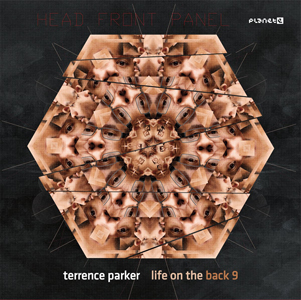
Legendary Detroit DJ/producer Terrence Parker has been keeping XLR8R on its toes quite a bit this year—releasing a new remix EP, wowing us at his hometown’s annual Movement festival, and delivering a classic XLR8R podcast. And the hardworking artist is now set to kick off 2014 in style, with a brand-new LP ready to drop via Carl Craig’s Planet-E label. Life on the Back 9 is a 12-track record which serves as Parker’s third solo full-length, and follows roughly 17 years after his last LP, Detroit After Dark. As Resident Advisor reports, the title comes from something the artist’s father once told him: “Terrence, if you think of your life as a game of golf, perhaps the front 9 did not go as you had liked. But don’t give up because you still have the back 9.” Before it drops on January 27, Life on the Back 9‘s artwork and tracklist can be found below.
01. Finally (Baby Be Mine) 02. Night Light 03. Saved Forever 04. God He Is 05. Spiritual Warfare 06. The Friend I Lost 07. Hiding In Your Love 08. Selah Interlude 09. My Virtuous Woman 10. Open Up Your Spirit 11. Pentecost 12. The Back 9
Now in its fourth edition, the annual advent calendar from Glasgow label LuckyMe has returned with 25 days of unreleased edits, demos, and rarities from its entire roster. Each day in December leading up to Christmas, the label will debut another freely downloadable cut on its homepage—so far, The Blessings’ “Spiritual America” and a VIP edit of DJ Paypal’s “Shake” have already been released. Taken as a whole, LuckyMe has designed the 25-track sequence to be enjoyed as a compilation. The daily-updated calendar can be found here, and a streams of the first two freebies can be heard below.
Our return from the long holiday weekend has already brought exciting news to the XLR8R office: Iconic Hyperdub artist Burial will issue a new EP before the year is over. As one might expect, the details of this forthcoming record are especially scarce at the moment, but we do know that Burial’s new release will contain three tracks and will be roughly 28-minutes long—we’re sensing a sort of trend here. The title and tracklist of Burial’s latest have not yet been divulged, but will nonetheless be made available on digital formats on December 14, with the vinyl and CD arriving on December 16.
Every year, XLR8R posts something in the vicinity of 1,000 tracks for free download. It’s a practice that, though once common, seems to be nearing extinction among music blogs and websites as a whole, which makes it almost a point of pride for us to strive to continually bring new, exciting, and, most of all, free music to our readership on a daily basis. Some of the tunes in our Downloads section are ridiculously obscure, some of them are surprisingly mainstream, and others actually come from some of our favorite artists. But regardless of their origins, each free download has an equal opportunity to climb the popularity chart, and every once in a while, we like to give some extra shine to the most exceptional of the bunch. Now that December has arrived and the end of 2013 is just around the corner, it’s once again time for us to kick off our annual Best of the Year coverage, and we’re starting things off this week with our list of the top 100 downloads to hit XLR8R during the past year.
We’ve split up our Top Downloads of 2013 list into five parts this year, as we’ll work our way up from 100 to the single most popular track of 2013 in increments of 20 and cap it all off with a ZIP file for everyone to download the whole bunch for free. Track streams and links to download and read about each individual song are included below, where we get the ball rolling with numbers 100 through 81.
It’s safe to say that no one could have predicted exactly how huge “Jack”—Breach‘s sharp-edged house bouncer and a track originally released on a one-off EP for Claude VonStroke’s Dirtybird label—was going to be, especially not the creator himself, Ben Westbeech. By the end of the summer though, the sleek, sex-charged tune had become one of 2013’s most ubiquitous cuts, finding its way into an increasing amount of DJ crates and festival sets as it was picked up by a major label, given a proper video treatment (the clip currently boasts well over five million views), and broke into the top 10 of the UK singles chart. Even considering its massive success, “Jack” still represents only one small part of Breach’s music, which in turn is only one of the latest chapters in the career of Ben Westbeech, a decade-long veteran of UK dance music with a long list of projects to his name. Now, in the post-“Jack” era, Westbeech appears to be left with the tall task of reconciling his newfound commercial success with the underground credibility he previously spent years accruing, or at least figuring out if he should really be concerned with maintaining either one.
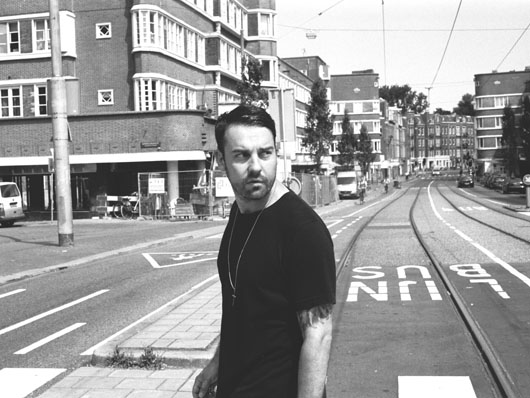
“Everyone has just been saying ‘post-Jack.’ Fucking hell, it’s not the Bible,” Westbeech laughs, perhaps somewhat annoyed, during a Skype call from his current residence in Amsterdam, where he’s been for the past eight months. In truth, he has fair reason to be annoyed with his musical trajectory being divided into such simple, before-and-after terms. A Hertfordshire native, Westbeech has ostensibly pursued music his whole life, receiving a scholarship to attend a music school in England at a young age; while there, he studied classical cello, singing, and piano, and also began to build his DJ chops around the age of 12. Despite this early start, his production career didn’t begin until years later once he’d moved to Bristol, an essential city for UK dance music that Westbeech had fetishized as a teenage connoisseur of drum & bass and early hardcore. “I saw a BBC documentary on drum & bass when I was about 14, so I was heavily into jungle by that point,” he explains. “I just remember seeing [Bristol producer] DJ Die on it, and thinking, ‘Wow, that guy is my hero,’ and then, five or six years later, meeting up and working with him.” Dropping out of university after a year, Westbeech headed towards Bristol with plans to become a drum & bass producer—which he did with some success, most notably under the production handle Lean—but unintentionally found himself working mostly as a vocalist, eventually issuing his debut LP under his given name, a 15-track neo-soul expedition entitled Welcome to the Best Years of Your Life, via Giles Peterson’s Brownswood label in 2007.
Truth be told, prior to 2013, one could have easily made the argument that Westbeech’s work as a vocalist was still his main project. His most recent full-length under any guise was 2011’s There’s More to Life Than This, a pop-flecked, house-rooted album for Strictly Rhythm that showcased his rich, soulful crooning atop an array of tracks favoring soulful and catchy grooves over most anything else. In addition, even in the midst of his current success as Breach this year, the “featuring Ben Westbeech” tag has not been such an uncommon sight, as his vocals have graced a number of high-profile tunes, including Deetron’s “Rhythm” and Tom Trago’s “True Friends.” Still, Westbeech admits that singing has never entirely been where his heart is. “I never wanted to be a singer, I just never wanted to do it,” he explains. “I like it, but my head is set in producing at the moment. It’s fun to be able to do both though, and have some success as a singer. It’s nice to know I still got it in me,” he laughs off before concluding, “Who knows, the next Breach record might be ‘Breach featuring Ben Westbeech,’ you know?”
Between his early years in Bristol and his current residence in Amsterdam, Ben Westbeech spent six formidable years in London, a time he talks about with a glint of nostalgia, which helps explain his plans to return to the city early next year. “I had a studio over in Brick Lane and people would come and see me and it would be like a hub [for producers]. I was right next to Rinse as well, so anyone coming through there could just come to the studio, say hello, have a few beers or whatever, and just roll it out and have fun,” he explains. “It was a good atmosphere to make music in.” While there, Westbeech juggled a number of projects and collaborations, and in 2010, he began his work as Breach with “Fatherless,” a tribal-infused bit of heavyweight UK funky. “I wanted to make a dubstep-house tune with that one,” he tells of the debut Breach release. “I never really got into dubstep, but I’d hear bits that I liked—stuff like the early records on Tempa, and I’d go to FWD, that was wicked—but I was always still making house. For me, I just wanted to try something new and have a bit of fun.” As it turned out, “Fatherless” would become one of 2010’s biggest underground club anthems, a tune which tapped into the then-congealing “UK bass” sound and cemented Westbeech as more than just a talented vocalist and soul-crazed songwriter. But with the build-up to and release of his sophomore album as Ben Westbeech and the additional complications of recording-contract restrictions, the Breach project lay dormant most of 2011 (save for a remix here and there) before being resurrected in early 2012 with “You Won’t Find Love Again”—a sumptuously bass-leaning, R&B-streaked house tune that inaugurated Westbeech’s own Naked Naked label. Dropping all the dubstep-indebted trappings of “Fatherless” in exchange for a heavy-handed take on house, a new era of Breach was born.
By the time we begin to talk about “Jack,” Westbeech is about finished with the “massive spliff” he lit at the beginning of our conversation, and, when the subject comes up, he sounds equal parts dismissive, nonchalant, and proud of the tune’s success. “It’s really surprising, and really, it was overwhelming a bit. It has changed my life,” he tells before half-jokingly adding, “I don’t know if it’s for the better or the worse.” In the months leading up to the tune’s release, Breach already appeared to be well on its way to becoming a high-profile name in UK club music; the project was steadily on the rise with its own brand of sophisticated UK house, one marked by an emphasis on bass weight and a taste for collaborations that found Breach delivering EPs alongside Midland and Dark Sky. Meanwhile, Westbeech and Claude VonStroke met up for dinner in London, an occasion Westbeach used to tell the Dirtybird label head he had a track that would be perfect for the imprint. VonStroke liked the tune, “Let’s Get Hot,” and asked Westbeech to come up with something “even more sexual” to serve as a b-side. Ten days later, a two-minute clip of “Jack” appeared in VonStroke’s inbox, of which he made an extended edit to play out that very night at Manchester’s Warehouse Project. Eventually, Westbeech reworked the tune to somewhat mimic the edit, and “Jack” was real. Becoming the a-side of the single and seeing an original release in March via Dirtybird, the track quickly took off, gaining steam in less mainstream circles before, two months after its release, being picked up by Atlantic for a wider release. “It was so out of the blue, no one could believe it,” Westbeech recalls. “We were just getting these offers that were going up and up and I was just like, ‘Fuck me, what the fuck is happening?’ Every day, I’d wake up and my manager would call me and we’d just be laughing on the phone asking ourselves, ‘What the hell is going on?'”
Like any artist who has existed in the underground before suddenly surging into the charts, Breach has not been immune to “sellout” talk and those claiming he’s traded in his street cred to pander to a wider audience. Although he certainly isn’t above dropping phrases like, “I don’t give a fuck if someone thinks I sold out,” during the course of our conversation, Westbeech really shrugs off his detractors more than curses them. “I made ‘Jack’ as a b-side for an underground release, then everyone just started playing it. It became a sort of ubiquitous record, and then when it got signed [to Atlantic], everyone was like, ‘Oh fucking hell, what a sellout.’ But I’m just sitting here laughing. Just go and have a look at my history and stuff, and know I didn’t make this just to get into the charts.” After a pause, he adds, “People should be happy for you when you find some success, not complaining that you went commercial.” Still, he does acknowledge that “Jack”—and “Let’s Got Hot,” for that matter—are a little bit outside of his usual cannon (though, somewhat ironically, it is Westbeech’s own vocals that have been mangled and processed into the sticky, layered hook on “Jack”). “It’s funny how music works—you can work your whole life towards a certain goal, and then get in through some completely unexpected backdoor, and that’s just the irony of the music business. It’s a strange beast in a lot of ways. And it’s hilarious.”
In the wake of its surprise hit, the Breach project is left to inhabit a somewhat undefined region between the mainstream world that has gobbled up “Jack,” and the underground sphere that has supported him since “Fatherless.” At the moment, Westbeech appears to be operating with one foot in each camp. His new single, “Everything You Never Had,” seems primed to reach out to his new fans, although Westbeech explains that the track was actually well in the works before “Jack” hit. Focusing on a smoky vocal contribution from Andreya Triana, the rolling house tune employs a healthy share of hooks atop its faintly pensive chord progression. At the very least, the single certainly has a fine-tuned machine behind it, having garnered substantial radio play in the UK and a full-on video before officially seeing a release last month.
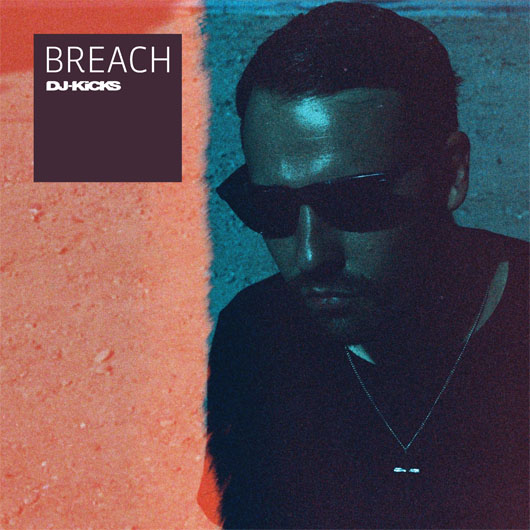
On the other side of the coin, one will find Breach’s recent contribution to !K7‘s DJ-Kicks series, which dropped just last week. The 15-track mix comes more aligned with the sound Breach has cultivated over the past few years than any place he may be headed in the future, as it balances more classic fare from Inner City, Dopplereffekt, and Winx with the deeper ends of contemporary, UK-leaning house with cuts from Redinho, Detroit Swindle, Pedestrian, and Iron Galaxy, among others. In some ways, Westbeech sees the mix as a timestamp of where his head was then, having moved to Amsterdam “to get a new musical perspective” a few months prior to beginning work on the CD. “A lot of building the mix was going hunting for vinyl in and around Amsterdam and trying to find records that I really cared about,” he explains. “It’s kind of a snippet of your life, and you really have to look at it like that because it’s a physical piece of art, not just another podcast.”
Being commissioned to do the mix shortly after the rise of “Jack,” Westbeech laughs about the fact that his life was a bit hectic around the time he was putting his DJ-Kicks together. “I was so busy at the time and knackered—just fucked from gigs and trying to finish remixes, finish my next single. So when my manager presented it to me as something that was now or never, I was like, ‘Fuck it, it’s time to go,'” he says, upbeat about the whole thing. But maybe that’s just the thing about Ben Westbeech—he seems to have made most of his career decisions with a sort of when-opportunity-knocks approach, and while the results might not be the most consistent, when they hit, they can make a big impact. “I’ve just got a really short attention span, so I have to do a lot of different things at the same time to keep my brain from just standing still,” Westbeech surmises as the root of his ability to juggle so many projects at once.
With what has been the most profoundly game-changing year of his career almost in the rearview, it’s worth noting that Westbeech seems nowhere near slowing down. For Breach, the near future holds a slew of new material, including an EP for Will Saul’s Aus imprint, and planned collaborations with Tiga and another underground-turned-chart-rising UK producer who we’re told it is better not to name quite yet. Westbeech’s Naked Naked label also plans to kick into gear early next year with an EP from Lorca, which Westbeech says lays out where the imprint will be heading next year; he describes its sound as “a little deeper and less banging.” Furthermore, Westbeech talks about eventually wanting to work as a producer on a full album for a band, citing Andrew Weatherall’s role behind the boards on Primal Scream’s 1991 LP Screamadelica as a benchmark in his musical upbringing. In the end, Westbeech proves to be neither a producer in search of crossover hits or an unflinching underground maven, but rather, a bit of everything—vocalist, producer, remixer, label head; moving into the future, it’ll be interesting to see which doors he opens, particularly as the opportunities continue to come knocking in this post-“Jack” era.
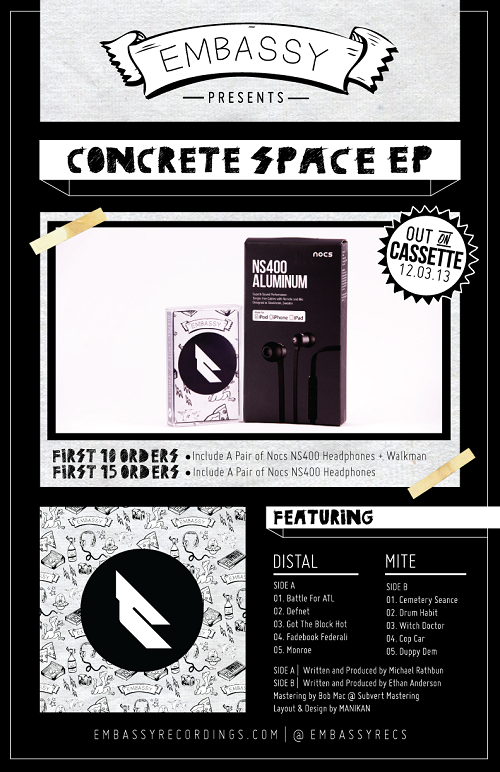
Ahead of Distal‘a and Mite‘s forthcoming split-cassette, Concrete Space (out on December 3), the latter Atlantan producer’s “Witch Doctor” tune has been sent over as a preview. The unwieldy dance track crashes in with knocking beats, wobbling pads, and a motoric rimshot pattern, tumbling around a plushy bassline and steady claps. Along with the release, Distal and Mite have teamed up with West Coast design company Nocs to give away 15 high-end headphones with the first 15 orders of Concrete Space, as well as 10 cassette players for the first 10 buyers. Info for the sweepstakes can be found after the jump.
As far as bass music goes, one would be hard pressed to find a more accessible producer than Synkro (a.k.a. Joe McBride). The Manchester producer’s last solo release was called Acceptance and bore the implications of the title out in swooning, heartbroken melodies and the blush of nylon-string guitars and detailed, inventive drum programming. McBride has shown that he’s also capable of the steeliest techno vibes as one half of Akkord—his collaborative project with fellow Manchester resident Indigo (a.k.a. Liam Blackburn)—without giving up the core accessibility and inventiveness that define his approach. Techno—of the scrappy, metallic variety—is in vogue thanks to labels like L.I.E.S., but Akkord’s take is unique. Although the duo gets a lot of mileage out of fractured, jagged samples for its drum hits, the vibe here is more Consumed/Closer-era Plastikman than, say, Unit Moebius, with tracks patiently coalescing around towering rhythmic riffs. There are no real melodies to speak of, and yet Akkord is an especially articulate album, one that offers a series of wintry industrial scenes that fade into each other with growing urgency. If this is techno, it’s the genre at its least monolithic. At every turn, Akkord pushes against the grain of the 4/4 grid, laying heavy swing over the otherwise straightforward stomp of “3dOS” or flirting with 2562/Demdike Stare territory on the eerie fourth-world invocation “Smoke Circle.”
Indeed, Akkord falls much closer to Shackleton’s music—with its yawning subs and skin-crawling polyrhythms—than Blawan and Pariah’s more hardcore-minded throwbacks, but a single point of reference is hardly enough to encompass what Akkord is accomplishing. The affect here is undeniably techno; this is body music for cerebral paranoiacs, regardless of the genres it draws on to get there. The feeling of broken glass and construction dust abounds, conjuring the seismic convulsions and textural preoccupations of SHXCXCHCXSH’s STRGTHS album from earlier in the year, yet things never fall into a lock step. “Conveyor” is the most traditional thing on offer, but there’s far more going on below the waist than is usually the case with tracks centered around deep-frying a kick-drum sound until it bursts open at the seams. “Hex_ad” is a sonic orgy that skirts IDM territory; it’s neck-snapping bleep techno facing off with drum programming that’s detailed enough—yet much too coherent—to pass far one of Autechre’s logarithmic experiments. “Channel Drift” is an object lesson in what makes Akkord feel not merely of the present, but somewhat prophetic; despite its gun-cocking sounds and a snare that’s more like a trash-can lid, there’s a smoothness to the syncopation of the kick drums that underscores the sturdy coherence of the music, even as the sound design gets especially visceral. In comparison to Paul Woolford’s Special Request project, Akkord only allows its jungle influences to enter into the picture under deep cover, but they’re equally important to creating music that is both physically and conceptually overwhelming.
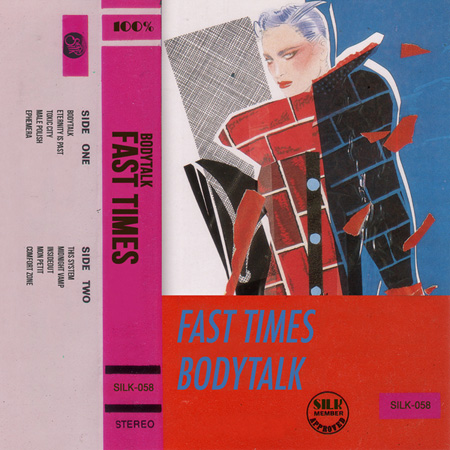
Newcomer Jorge Day has logged time behind a synth in the Plastic Flowers band and dabbled in production work, but his new project, Fast Times, is the culmination of a year spent traveling and crafting his own demos. “Comfort Zone,” pulled from his recently released Bodytalk cassette for retro-minded LA label 100% Silk, rides a dusty, drum-machine groove as swelling chords and a bouncy bass riff join the mix and a light-hearted synth melody floats above it all in a haze of reverb. Though Day’s track might not necessarily set dancefloors ablaze, it will, as its name implies, bring comfort to those seeking some analog warmth during the long winter nights.
Having previously gained a little bit of attention for his “DMT Usher” single, which saw release last year via Samurai Music, the New Zealand-based Fis (a.k.a. Olly Peryman) has retreated further from his already idiosyncratic vision of drum & bass with his recent Homologous EP for Void Coms and Preparations, his debut release for Tri Angle. The four-track EP presents listeners with some seriously murky skeletal sketches of tunes, which bear only a passing resemblance to the sort of drum & bass that most people are familiar with. Defined by abstract textures, a unique rhythmic sensibility, and deep, ominous bass, the Preparations EP is a release with an eerie, claustrophobic intensity.
Opener “Magister Nuns” begins the proceedings on an appropriately abstracted note, deploying sound-collage techniques that slowly evolve towards crunched, brutally compressed electronics. The track has a masterful sense of dynamics, feeling restrained throughout but still becoming increasingly pressurized as it unfolds. The previously mentioned “DMT Usher,” which has become something of a niche classic, reappears here too. The track deserves all the plaudits it has received, especially because of its loping, off-kilter beat and ridiculous use of sidechain compression. Preparations‘ final two tracks veer closer towards something that is recognizably drum & bass, although Peryman unsurprisingly offers a very strange interpretation of the genre. “Mildew Swoosh” utilizes insectoid breakbeats, which sound thin and positively sinister next to the track’s sweeping bassline. “CE Visions” exhibits a similarly wrecked sensibility, deploying heavy, engulfing waves of noise that are slowly overcome by the pitter-patter of rapid-fire breaks as the track goes on.
In interviews, Peryman has talked about the impact of his New Zealand home on his music, noting the colonial trickle-down of influences from the UK, which are then twisted into something darker and even a little bit morbid. This is in full effect on Preparations, which has uncanny echoes of drum & bass and jungle—particularly when it comes to effects and EQ’ing—but also exudes a uniqueness that could only have been borne out of isolation.
As London DJ/producer/label boss Bob Bhamra (a.k.a. West Norwood Cassette Library) leads up to the release of his 8 Track Cartridge EP for Hypercolour early next month, the man has been sharing free tunes and sizable previews of the music set to drop. The latest of his offerings is a brand-new mix which finds Bhamra giving an aural history lesson of house music spanning from 1988 to present day, and we thought this would be an ideal way to cap off our holiday week before we return to our regular posting schedule on Monday, December 2.
With just as many tunes in its tracklist as years, West Norwood Cassette Library’s podcast for Dummy touches on vintage cuts and modern classics from all permutations of the house spectrum—tunes produced by the likes of Hardhouse, Acid Junkies, The Rhythm Project, Mood II Swing, Cajmere, Kerri Chandler, Karizma, Terrence Parker, and Blawan—over the course of 75 minutes. The whole thing can be streamed and downloaded for free below, where its chronological tracklist can also be found; a quick Q&A between Dummy and Bhamara can be read here.
1988 . HARDHOUSE . Check This Out (Easy Street) 1989 . PRECIOUS . In Motion (Definition of a Track) (Big Beat) 1990 . THE PRINCE & THE WIZARD . The Wiz is a Genius (City Limits) 1991 . COCO, STEEL & LOVEBOMB . Feel It (Warp) 1992 . ACID JUNKIES . Sector 9 (Djax Up Beats) 1993 . THE RHYTHM PROJECT . I’ll Be Lovin U (Strictly Rhythm) 1994 . JAHKEY B & DJ JAYMZ . Gods of the Underworld (Realm 1) (Empire State) 1995 . CHUGGLES . I Remember Dance (Prescription) 1996 . MOOD II SWING . Ohh (Groove On) 1997 . RAMSEY & CO . Love Call (Restless Soul Remix) (BBE) 1998 . DEMON . Elektra (Poumtchack) 1999 . E-DANCER . The Move (KMS) 2000 . GINTARE . Trancenavigation (Todd Edwards Remix) (Parlophone) 2001 . THE UNDERGROUND CULTURE TOURIST . Satisfy Me (Classic) 2002 . Q-BURN’S ABSTRACT MESSAGE . Innocent (King Britt Remix) (NRK) 2003 . MODELER . Getts Down (Dubsided) 2004 . CAJMERE . House-Werk (Relief) 2005 . AME . Basic Track (Innervisions) 2006 . KERRI CHANDLER . Phuck This Cowbell (Max Trax) 2007 . KARIZMA . The Damn Thing (R2) 2008 . SESSION VICTIM . No Friends (Real Soon) 2009 . DAN ELECTRO . Let Them Come (Soulab) 2010 . JILT VAN MOORST . Oops (Caravan) 2011 . TERRENCE PARKER . Let Your Love Show (T Parker Music Works) 2012 . BLAWAN . 6 To 6 Lick (Black Sun) 2013 . PLASTIC SOUL . Mint Imperial (WNCL)