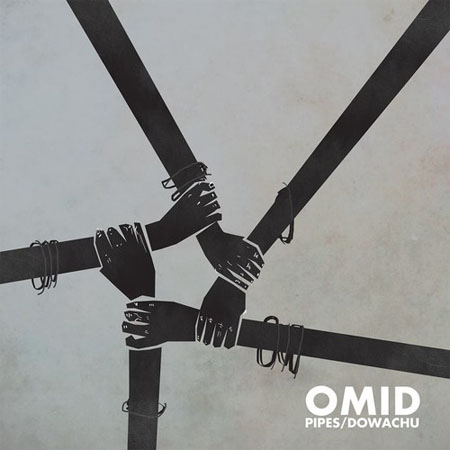
Hailing from Dublin, Omid Ghaedi (or simply Omid) has delivered a pair of new tracks via First Second, a fellow Irish outfit intent on highlighting the country’s up-and-coming underground talent through its digitial releases. From the sound of “Pipes,” Omid certainly has the chops to rise out of the local scene, with the lead track of his digi-single balancing a machinist shuffle with detuned bell chords, bubbling electronics, and tasteful touches of R&B vocals. Omid’s new offering—which also comes with a remix from fellow Irishman Nocturn—can be nabbed as a “name-your-price” download on Bandcamp.
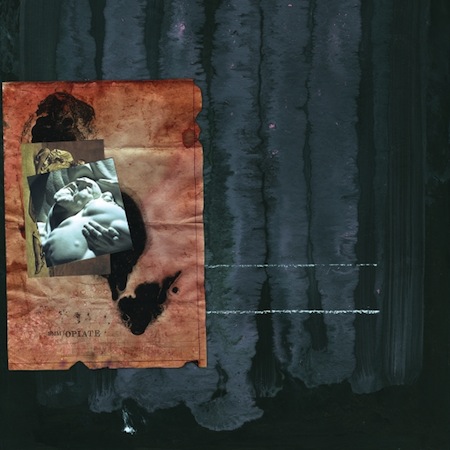
Ann Arbor’s Ghostly label—an imprint we featured as part of last week’s Labels We Love series—first announced the follow-up to its 2011 compilation, SMM: Context, back in August. Now, the atmospheric series’ upcoming second edition, SMM: Opiate, is available to stream in full. Originally conceived by Ghostly label founder Sam Valenti IV as a way to highlight ambient music with warm, organic leanings, the new edition to the SMM collection attempts to deliver a cinematic, thoughtful narrative in its lean 45-minute run, while featuring contributions from artists who reside in Berlin, Tokyo, Brooklyn, and Norway. Streaming in full on Spin, each of the nine contributing artists on the compilation were asked to introduce and provide more context to their piece. The compilation’s full stream can be heard here; SMM: Opiate will see an official release on October 28.
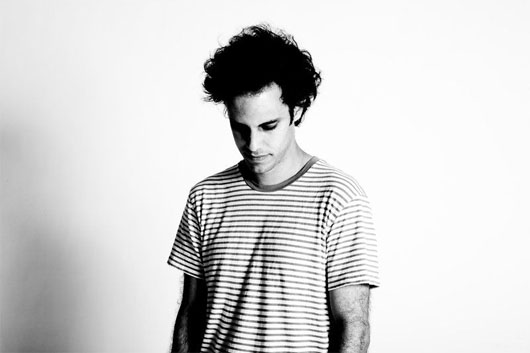
After unveiling his Beautiful Rewind LP earlier this month, Four Tet has shared a new remix of album track “Kool FM” from stateside gritty-techno auteur Container. Apparently set to appear on a forthcoming companion 12″ for Beautiful Rewind, Container’s remix hardly resembles Four Tet’s original, exchanging the breaks and woozy sonics of “Kool FM” for a more rolling and distorted take on the track. Container’s overdriven, take-no-prisoners remix can be streamed in full below.
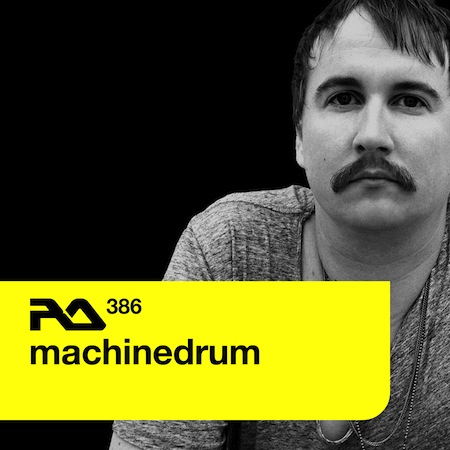
Without a doubt, Travis Stewart’s Machinedrum project is having a banner year. Stewart’s most recent full-length, Vapor City, has been steadily racking up acclaim, and the Berlin-based producer successfully debuted the album’s accompanying live show at this year’s Decibel Festival just a few weeks ago (our review of which can be read here). Now, Machinedrum has been chosen to deliver the latest installment of Resident Advisor‘s podcast series. The new, hour-long mix finds Stewart continuing to combine his jungle, drum & bass, and footwork influences into a seamless amalgamation that is increasingly his own. Describing the mix to RA, Stewart commented that it represented “the Njord District of Vapor City… where the rich get richer and the poor get poorer, rising and falling daily.” The podcast can be streamed and downloaded in full here, where the tracklist and a short interview with Machinedrum can also be found.
The fifth volume in Anthony Collins‘ ongoing Exhibit singles series for his own Natural History imprint is set to drop in the coming weeks, bringing the luscious house roller “Little Dip” along with it. Serving as the forthcoming Exhibit E‘s b-side cut, “Little Dip” is a patient, seven-plus-minute voyage into expansive house. Tucked underneath a finely assembled procession of dusty hats and crisp snares, Collins fits a glassy chord progression and loaded sub-bass, which give the tune a constant, lurching momentum enhanced only by the occasional melodic and hand-percussion flourishes.
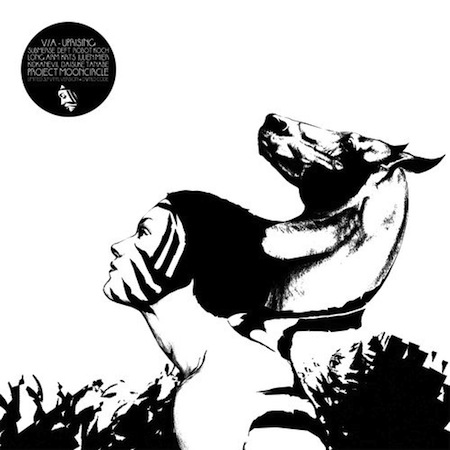
After being chosen as one of our readers’ top five favorite labels just last week, the Berlin-founded Project: Mooncircle imprint is readying a new, 33-track compilation, Uprising, set to drop next month. Showcasing work from what the label describes as “a pack of wild stallions all trying to break from the herd,” the compilation appears to focus on lesser-known talents who have not released material with the label before, though some familiar names such as Robot Koch, Deft, and Julien Mier do appear on the tracklist. The official release (out on November 1) will debut as a limited, three-LP set with purple vinyl and silkscreened, handmade artwork. A curated sampling of Uprising and the compilation’s full tracklist are included below. (via Resident Advisor)
01 IIIII (Five Eyes) – Humdrum 02 KRTS – Bonehead 03 Sieren – Escape 04 my.head – Counting 05 FiJi & Long Arm – Reunion 06 Kidkanevil & Daisuke Tanabe – Wanju 07 Hanami – Ribbons 08 Julien Mier – Everything Is Illuminated 09 Deft – Maybes 10 submerse – Glazed 11 opti – Springs 12 Den5hion – Piel de Leopardo 13 Tom Day & Monsoonsiren – Elegiac 14 Tendts – After The Bliss 15 Thriftworks – Die gracefully feat. DH the Mythicalifornian 16 PYUR x Rain Dog – Walk Away 17 Daixie – Huxley 18 Fau&Deam – Franz Deam Re-edit 19 Jean du Voyage – Rise & Appears feat. Djéla & Pierre Harmegnies 20 Robot Koch – Heads Up 21 Robert Valsinger – Pip Till 22 Blossom – The Longest Journey 23 Neema – Goodbye 24 Tomika – Fall In Springtime 25 How Green – Flat Faced 26 Drogtech – Around The Corner 27 Bruises – Charcoal 28 Night Logic – Unkleness 29 Deep Shoq – Lights Down 30 Stèv – Paint Me Like The Sky 31 Cass. – Jet Stream feat. Anna Marjamäki 32 Vitrion – Elevators 33 MockSun – In Visions
The end of this year’s festival season is finally in sight, and while XLR8R is undoubtedly looking forward to a bit of a break as 2013 winds down, there are still a few more quality events on our calendar. Last week, we hopped on a plane to the Netherlands to check out the annual Amsterdam Dance Event, more commonly known as ADE. Having attended ADE last year and the year before, we had a good idea what to expect, but there was really no way to properly prepare ourselves for five days and nights that were absolutely teeming with activity. After perusing the daunting schedule, we braced ourselves, dove in, and did our best to experience the cream of the ADE crop. We didn’t see everything—or even come close—but we did see a lot, and jotted down some notes about the bits of ADE that were truly memorable.
Dekmantel party at MC Theater, Friday night (photo by Eva de Korte)
ADE is still a big, highly commercial event.
ADE is not a festival, at least not in the most commonly understood meaning of the word. There is a festival element to it, but it’s honestly more of a music-industry conference. Spearheaded by Dutch mechanical-rights organizations (the people who collect royalties, publishing, etc.), it’s best imagined as an Amsterdam-based, electronic-music-focused counterpart to events like SXSW in Austin or Winter Music Conference in Miami. As such, ADE is a place where booking agents, artist managers, festival organizers, event promoters, talent buyers, brand managers, online retailers, distributors, gear developers, journalists, and other people looking to “do business” flock to each year. On the one hand, this makes ADE a very productive locale for those looking to network, and the organizers do program an entire series of lectures, workshops, and panel discussions each year, many of which are interesting for some segment of the attendees.
At the same time, the high concentration of industry people undoubtedly sucks some of the potential fun and spontaneity out of the week. After all, industry types (ourselves included) are notoriously jaded, the sort of people who’ve been to countless festivals, refer to artists by their first names, and absolutely refuse to wait in line at a club. Given that, audiences at ADE 2013 did lack some of the wide-eyed excitement and enthusiasm we’ve seen at other festivals this year. Moreover, an event with such a large focus on the “business” of electronic music is bound to skew towards commercial endeavors and mass appeal. As such, big-room house and techno (not to mention the dreaded “EDM”) was certainly a big part of the overall equation at ADE. This wasn’t a new development, as these commercial sounds have long been a main focus of ADE. Furthermore, this kind of orientation makes sense; who else besides people that are actually making money (or at least are hoping to do so) are going to shell out the cash to travel to Amsterdam and hobnob with like-minded industry folks for days at a time?
Julio Bashmore at Colors party at Trouw, Wednesday night (photo by de fotomeisjes)
Seeing everything we wanted to see at ADE was literally impossible. Making hard choices quickly became a part of the daily routine.
For those in search of an event that’s purely about the music, especially sounds that are more leftfield or underground, the above description of ADE may seem like a giant red flag and plenty of reason not to attend. We certainly understand the impulse; in truth, there were several years that XLR8R completely passed on attending—or even mentioning—ADE, as we saw the event as an enterprise that was far too commercial to fit in with our editorial focus. Perhaps we weren’t the only ones, as the past few years have seen the organizers making a concerted effort to widen the ADE tent, so to speak. Little by little, more credible artists, labels, and promoters have been brought into the mix, and ADE has now reached a point where it’s entirely possible to see nothing but stacked line-ups of top-flight acts each and every night. That’s not to say that the bland commercial stuff has gone away—it hasn’t. On any given night at ADE, there were at least 15 or 20 different events happening throughout the city. Granted, 80% of those were terrible, but that still left multiple quality options—and some incredibly tough decisions to make.
Young Marco at Dekmantel party at MC Theater, Friday night (photo by Eva de Korte)
In a way, the situation was absurd. For instance, on Friday night, we popped into the Numbers party for a few hours, but ultimately decided to leave—and miss sets from the likes of Rustie, Jackmaster, Martyn, and Benji B—so that we could head across town to the Dekmantel party. While there, we saw Hessle Audio (Ben UFO, Pearson Sound, and Pangaea), Omar-S, Ron Morelli, Steve Summers, and Anthony Naples, but we felt bad because that meant missing the Clone x Delsin x Rush Hour blowout at Trouw, which featured the debut of Tom Trago’s new live show, along with about 10 other acts we would have liked to see. These kinds of scenarios were happening all week long; in short, there was an embarrassment of riches on hand at ADE, which ultimately meant that the list of quality acts we didn’t manage to see could have easily filled an incredible festival line-up on their own.
In the end though, this abundance of options was ADE’s biggest strength. The event has now arrived at a point where it’s absolutely massive and extends into many of electronic music’s most underground corners. As such, attendees are free to have whatever kind of experience they want to have. Unlike many festivals, which generally present a strict regimen and force those in attendance to follow a certain path (or one of a few paths), ADE offered up an almost infinite menu. To be honest, even after a week in Amsterdam, we managed to essentially avoid all the mainstream dreck. Our nights were spent in excellent clubs with excellent music, and our only real lament was that we couldn’t be in multiple places at the same time.
Cinnaman at Colors party at Trouw, Wednesday night (photo by de fotomeisjes)
Amsterdam is CUTE.
As with any festival, the host city played a major role at ADE, and Amsterdam was definitely a huge point in the event’s favor. Quite frankly, it’s hard to imagine a scenario in which someone could visit Amsterdam and not be charmed by their surroundings. The vintage architecture and the canals alone give the city a unique feel; one local described it as “the biggest village in Europe,” and it’s hard to argue with that notion. Particularly for American visitors (like us), coming to Amsterdam felt very “European,” for lack of a better word. (There aren’t many places in the US where tourists can be overheard asking, “So, if we bike along the canal, there’s an old windmill we can look at?”)
Amsterdam may be the capital of the Netherlands and one of Europe’s most important cities, but somehow, the place has retained a sort of antique vibe that helped make it an incredibly welcoming host city (even with all the rain, which was essentially a constant threat throughout the week). And while it wasn’t exactly sleepy—the streets, particularly around the center, were often stuffed with pedestrians and throngs of people on bicycles—there was something laid-back about the overall atmosphere. As such, the city was almost a perfect antidote to the insanity of ADE’s nighttime regimen. After staying out until the wee hours every night, there was something refreshing about cruising around Amsterdam during the daytime; it was clean, it was orderly, people were friendly (and essentially all spoke near-perfect English), and there were countless little side streets to explore, many of them littered with shops and cafes.
Resident Advisor party at Trouw, Saturday night (photo by de fotomeisjes)
Trouw is a special place.
In truth, Amsterdam has a lot of clubs, many of which are quite good. There aren’t many cities that could handle the sheer volume of events presented by ADE, but Amsterdam seemed to bear the load with ease, and it was rare that we walked into a club and were put off by the venue, the sound, the crowd, or really anything. Granted, we were being selective with our choices, but Amsterdam should be commended for its commitment to quality clubbing experiences.
At the same time, of all the clubs that we visited throughout the week, Trouw stood head and shoulders above the rest. Simply put, it’s one of the best clubs on the planet, and it’s astounding that its reputation hasn’t yet reached a level of acclaim that’s on par with some of the club’s counterparts in Berlin and London. Club founder Olaf Boswijk—who handles the bookings and also DJs on occasion—has built something truly special, which is why we found ourselves returning to Trouw night after night; even when we didn’t go, we wished that we had. (One Trow-related event that we missed was particularly notable; on Friday, the club programmed an evening at Concertgbouw, which is generally regarded as one of the finest concert halls in the world. The place is usually home to classical performances, but on Friday, it played host to Nicolas Jaar’s Darkside project, Henrik Schwarz—who played with an orchestra—and one of Trouw’s residents, Patrice Baumel.)
Resident Advisor party at Trouw, Saturday night (photo by de fotomeisjes)
It’s difficult to pinpoint exactly what makes a club great, but Trouw is one of those venues that was clearly designed with both the DJ and the music lover in mind. Situated in a former newspaper printing facility, the club has a raw, industrial feel, particularly in its gritty lower level. (A side room on that level also contained a special audio-visual installation by Mark Fell.) The club’s soundsystems are absolutely ace, especially upstairs in the main room, a place that’s also notable for the location of its DJ booth, which is on the floor and always winds up surrounded by dancers; there’s actually a stage behind the booth, which allows for partygoers to dance the night away while facing the enormous room. While we were there, the atmosphere was relaxed (but fun), the crowd was knowledgeable, and Trouw’s resident DJs were often just as good as the headliners. Names like Sandrien, Cinnaman, Job Jobse, and Nuno Dos Santos may not carry as far as some of the week’s headliners, but they all delivered top-notch sets to an appreciative crowd.
Beyond that, Trouw’s strength is in its curation. It’s not a huge place, but it is big (the capacity is around 1200 people); nevertheless, it’s not programmed like a giant room. Throughout ADE, Trouw rolled out one quality night after another, from Colors presenting Julio Bashmore, Kowton, and Funkineven to the aforementioned Clone x Delsin x Rush Hour blowout. On Saturday night, there was a Resident Advisor event with DJ Sprinkles, Motor City Drum Ensemble, Peter Van Hoesen, and others; even better, the party didn’t end on Sunday morning. Trouw has a 24-hour license, and elected to stay open all the way until Monday, bringing in the likes of John Talabot, Mano Le Tough, DVS1, Hunee, San Soda, and others to close out its final day at ADE. Given that, we had a hard time staying away.
Âme at Innervisions party at Trouw, Thursday night (photo by de fotomeisjes)
Amsterdam’s late-night food scene is, well, pretty much nonexistent.
Admittedly, we’re running the risk of sounding like gluttonous Americans here (especially since we also mentioned this last year), but it was basically impossible to eat—or do anything, really—in Amsterdam late at night. As much as we enjoyed the city’s small-town charms, that enjoyment did not extend to the fact that almost nothing was open after midnight or so. If we had been operating on a normal schedule, this wouldn’t have been as much of an issue, but during ADE, we were generally leaving the club around five or six in the morning. Perhaps things are different in Holland, but we’re generally accustomed to the long-standing tradition of eating some food—even terrible food—after a long night of partying. But apart from some frightening automat options in the most touristy part of the center, Amsterdam was closed for business once we hit the streets in the early-morning hours. Restaurants, cafes, and even small mom-and-pop markets were all shuttered. The Dutch clearly love to party, but it felt like they were missing this one ingredient. That said, we also couldn’t help but notice that obesity didn’t appear to be much of an issue amongst the Amsterdam populace… perhaps they’re on to something.
Ron Morelli at Dekmantel party at MC Theater, Friday night (photo by Rene Passet via DJ Broadcast)
Dekmantel continues to be on a roll.
It was less than two months ago that XLR8R attended the inaugural Dekmantel Festival, which we pretty much loved. (Our review has all the details as to why.) Apparently, the aftermath of throwing a festival has done nothing to slow down this Amsterdam-based crew, as Dekmantel hosted four separate nights at ADE, all of which boasted quality line-ups. And though we didn’t the love cavernous MC Theater (or the adjacent North Sea Jazz Club) where the Dekmantel parties went down, the crew undoubtedly did its best to dress up the relatively drab space with lights, lazers, and installations. We actually only made it to Dekmantel on Friday night, and although the venue was seriously stuffed with people—particularly in the main room, which also had soggy indoor/outdoor carpeting on the floor—there was no arguing with the quality of the music.
We caught Joy Orbison and the Hessle Audio guys in the main room, and they were all quite good, but the real vibes were happening in the other spaces. The MC Theater’s second room is where Steve Summers (who performed live) and Ron Morelli represented L.I.E.S. for much of the night. (They were originally scheduled to be joined by Delory Edwards, but he cancelled and was replace by Amsterdam’s own Young Marco. In truth, the room was a bit oddly located, to the point where many partygoers didn’t even realize it was there, but those who found it were treated to excellent sound, along with innovative—and often raw—house music from Summers and Morelli. Similarly good was the North Sea Jazz Club, where Omar-S served up his deliciously soulful brand of house and techno for more than three hours before Anthony Naples stepped in with a percussion-heavy mix of off-kilter house rhythms. From the instant we arrived to the moment we left, good music was in abundance at Dekmantel, and based on the caliber of the line-ups the crew presented throughout the week, it seems like that was the norm. There are very few promoters at work these days who have such a keen ear for music and a willingness/ability to assemble such high concentrations of talent; Dekmantel is on to something, and ADE only affirmed that this is a crew that’s worth keeping an eye on in the months and years ahead.
Funkineven at Colors party at Trouw, Wednesday night (photo by de fotomeisjes)
We need to see Funkineven again.
UK producer Funkineven played a lengthy set while opening up the main room at Trouw on Wednesday night. Unfortunately, we were only able to catch the last 45 minutes or so. Still, even within that limited timeframe, it became clear that he was doing something unique. Pulling together bits of electro, techno, and house while employing a whole lot of acid, there was something delightfully odd, even unhinged, about the music he presented. Funkineven’s production work is certainly something that exists on an island of its own—especially within the context of the current UK landscape—so it wasn’t entirely surprising that his DJ stylings would follow a similarly individual path. By the time he wrapped up around 1 a.m., we still weren’t sure exactly what it was about Funkineven that was so compelling, but we were certain of one thing—we wanted more of it.
Omar-S at Dekmantel party at North Sea Jazz Club, Friday night (photo by Eva de Korte)
Spencer is severely underrated.
Even amongst regular XLR8R readers, we’re guessing that Spencer isn’t necessarily a familiar name. That’s not for a lack of activity on his part; he’s one of the founders of the Numbers label, co-hosts the crew’s radio show on Rinse FM, and is a staple of the European DJ circuit. Perhaps it’s simply that he hasn’t released any music that he doesn’t get as much attention as many of his label compatriots, or that most people can only process one Numbers guy—Jackmaster—who “only” DJs. Regardless of the reasons why, we’re convinced that Spencer deserves a lot more accolades, especially after seeing his set at the Numbers party on Friday night at ADE.
The party was at Paradiso, and Spencer was tasked with spinning for a main room that was taking its time to fill up. (Side note: he was also playing at the same time as Swamp81’s Mickey Pearce, who was smashing it upstairs with a distinctly dark and drummy mix of tunes.) Staring down a big, half-full room is a daunting task for any DJ, but Spencer is one of those artists who can easily adapt his set to any situation. That’s not to say that he doesn’t follow his own vision—his sets (including his session at ADE) invariably include some combination of disco, house, techno, and boogie—but his first instinct is to play in service of the party, and he did an excellent job both warming up the floor and building things to a crescendo (the dancefloor was packed by the end of his set) before Rustie took over the proceedings. It’s interesting that Jackmaster is the Numbers DJ often hailed as most capable of “rocking a party,” usually with some reference to his predilection for mixing in pop hits with more underground electronic fare. Based on our observations, Spencer is just as likely to create a celebratory vibe, only he does it without employing songs that someone’s mom might know. That’s not meant as a critique of Jackmaster, who’s clearly a massively talented DJ. We just feel like it’s time to shine the light a bit brighter on Spencer’s particular skill set.
Dixon at Innervisions party at Trouw, Thursday night (photo by de fotomeisjes)
Innervisions likes power ballads.
On Thursday night, Trouw was taken over by Germany’s Innervisions crew, who assembled an impressive line-up in both rooms. Downstairs, we watched a special techno set from Running Back boss Gerd Janson, a surprisingly trancey—albeit enjoyable—live set from Recondite, and another special techno set by Âme. Upstairs, Culoe De Song‘s polished, melody-infused take on South African house was lots of fun and absolutely lit up the dancefloor.
On the other hand, many of the selections from Dixon, who closed out the night and was eventually joined in the booth by Âme, generally sound like, well, power ballads. That may seem ridiculous, but the description is an apt one. Over time, Dixon’s and Âme’s sets seem to have increasingly veered toward a highly melodic, vocal-driven brand of dance music that veers dangerously close to commercial trance. These guys may come from a celebrated techno lineage, but on Thursday night, big breakdowns, catchy melodies, and formulaic arrangements seemed to dominate the proceedings, along with a whole lot of very questionable vocals. Normally, we have no problem with vocals, but the Innervisions heads pulled out tune after tune with the sort of smooth, overproduced, and overwrought voices that one might hear in a plaintively saccharine, adult-contemporary radio ballad. In short, the music was full of grand gestures, but it ultimately didn’t have much in the way of soul. It may have all been well presented and the crowd undeniably ate it up, but to our ears, the cheese factor was fully in the red.
Culoe De Song at Innervisions party at Trouw, Thursday night (photo by de fotomeisjes)
Motor City Drum Ensemble and DJ Sprinkles put on a clinic on Saturday night.
We already mentioned that Resident Advisor teamed up with Trouw for an ADE party on Saturday night, and while the entire evening was filled with stellar sounds—including nice techno sets upstairs from Sandrien and Peter Van Hoesen—we had a very hard time pulling ourselves away from the downstairs room once Motor City Drum Ensemble took over the decks around 1 a.m. The German artist’s DJ sets have been a bit up and down over the years, but his ADE appearance found him completely comfortable and totally in control. The guy is clearly a digger, and relied upon his deep crates to string together rich and soulful bits of disco and house in a notably compelling fashion. The room’s dancefloor definitely reached its peak on his watch, and it was interesting to see Motor City Drum Ensemble occasionally slip in some banging house cuts and ratchet up the energy level before returning to deeper tunes. His set rolled along in waves, rising and falling naturally behind his on-point mixing and intuitive track selection.
In truth, Motor City Drum Ensemble might have been the best thing we saw all week—if he wasn’t immediately followed by DJ Sprinkles, who was absolutely masterful. Although Sprinkles inherited a very lively dancefloor from MCDE, he (we’re going to refer to Sprinkles as “he,” although it could go either way) only bothered to maintain that energy level for a few tracks before delving into his signature deep-house sounds. Knowing that there were three hours to experiment with, he spent most of the first two hours thoroughly cooling out the room, unfurling deep, dubby, and subtly melodic tunes that were both drenched in soul and enticingly rhythmic enough to keep the floor moving. Most of the tunes were rather lengthy, yet Sprinkles kept things interesting by using some sort of filter device, which sounded great and allowed him to essentially warp and transform the songs at will. Hearing him work in this fashion felt totally refreshing, and we would have been happy to continue blissfully melting right along with him, but Sprinkles suddenly changed course around 5 a.m. During his final hour, he indulged in some fiery bits of diva and vogue house, which brought up the drums—and the energy level—in a hurry and provided a triumphant sort of climax before he chilled things out one last time. It’s very rare that three hours of a single DJ doesn’t feel like enough, but Sprinkles was just insanely good at ADE; when we think about this year’s event, there’s little question that his set will be the one we remember most.
DJ Sprinkles at Resident Advisor party at Trouw, Saturday night (photo by de fotomeisjes)
Trouw’s closing party ended the week on the highest on high notes.
Even after spending a whole lot of time at Trouw throughout ADE, we couldn’t keep ourselves from one last go-round on Sunday night. And though we had spent a solid portion of Sunday recuperating from our revelry with Motor City Drum Ensemble and DJ Sprinkles, once we returned to Trouw around 9 p.m., it didn’t take long to remember that the party had never actually stopped from the night before. As such, the club was in full swing when we walked through the doors, and one of our favorites, John Talabot, had just begun his set. Quite frankly, we’re running out of ways to describe how much we love Talabot, so perhaps it’s enough to simply say that he was excellent. The man is a total pro behind the decks, and his mastery of tunes that are both sonically deep and totally appropriate for a big-room setting was once again a sight to behold. It certainly helped that there was a palatable positive vibe in the air; even after a long week of ADE partying, the crowd was absolutely rapturous, and even broke into wild cheers when a sudden power outage cut the music for a couple of minutes in the middle of Talabot’s set.
The booth was handed over to Trouw resident Job Jobse around midnight, who capably maintained the vibe—and drew plenty of cheers—while serving up a steady stream of soaring, melody-driven house cuts. The main room’s final guest was Mano Le Tough, who elected to dive extra deep and stitch together a series of spacey, synth-heavy cuts and mellow out the floor for awhile. Around 4 a.m., he began to pick up the pace and appeared to be working toward an eventual peak, but an early flight back to the US beckoned and we had to take our leave. Still, we walked outside with little doubt that Trouw’s crowded dancefloors would soldier on without us and bring ADE to a close in the best way possible.
We took a cursory glimpse into the prismatic world of Texan producer Botany (a.k.a. Spencer Stephenson) a few months ago with his kaleidoscopic track “Anchor.” Now, Stephenson has given us another peak into his upcoming full-length, the curiously titled Lava Diviner (Truestory), before it arrives on October 29 from Western Vinyl. “Quatic” plays in the same waters that “Anchor” rested in, tucking an old-school boom-bap beat inside a psychedelic tapestry of vibrant arpeggios and shimmering sheets of background noise. The tune’s varied textures are said to have come from an array of soundmakers—”aging desktop computers, samplers, guitars, bells, flutes, tape recorders, turntables, violin playing roommates”—and this plethora of source material keeps “Quatic” from tumbling too far down its rabbit hole.
Outside certain circles of disco aficiandos, dance-music history buffs, and curious electronic-music connoisseurs, San Francisco producer Patrick Cowley may not be celebrated as the electronic-music pioneer he undoubedtly was. Though he’s perhaps best known for his involvement in disco queen Sylvester’s biggesthits, Cowley is also credited with first developing the hi-NRG sound that defined San Francisco’s gay-disco scene of the late ’70s and early ’80s. That scene was eventually ravaged by the AIDS epidemic, of which Cowley sadly was an early victim, passing away in 1982 before the disease even had a proper name. School Daze collects 11 of Cowley’s tracks retrieved from forgotten reels in the storage space of Fox Studios—a prominent gay-porn studio of the time—resurrecting productions that might have otherwise been lost forever, and ultimately demonstrating a depth to the visionary producer’s craft that may have gone undocumented if these recordings hadn’t resurfaced.
Besides “Zygote,” School Daze‘s light, opening space-disco odyssey, there is little to be heard on this reissue that directly resembles Patrick Cowley’s supercharged signature sound. Rather, the album’s other 10 tracks see the late producer wielding his penchant for cosmic synthwork as a means to explore a number of unclassifiable hybrids, more often veering into electronic abstraction than anything that could be called dance music. Early on, “Mocking Dreambird” takes a star-kissed jaunt through sparkling arpeggiators with a tweaked lead and a slightly bopping drum-machine rhythm pointing the way. “Nightcrawler” wraps what initially appears to be a harrowing bassline within a blanket of sublime atmospheres and analog melodies that barely seem to acknowledge that the other elements are even there (the tune’s closing minute even adds a nice, if unexpected, rhythmic component as well). Cowley’s efforts included in this collection are not “songs” in the traditional sense—there are no verses, choruses, etc.—but rather self-sustaining explorations upon sonic themes. Throughout School Daze, Cowley often relies on two or three looping elements to serve as the base of his productions, and then builds on top of them with an almost stream-of-consciousness approach to stacking astral melodies and quirky synth FX. The results are abstract but still playful, and somewhat simple in their compositional makeup. Still, the tracks are not lacking or monotonous, even when cuts like the majestically cosmic “Seven Sacred Pools” or the darkly space-aged “Primordial Landscape” reach well beyond the 10-minute mark. One of the album’s most charming—and perfectly titled—efforts, “Journey Home,” remains worthwhile for a full 14 minutes, using the track’s didgeridoo-like bass synth and a drum machine’s steady chug as the bed for a constantly morphing cluster of druggy synth melodies to rest atop.
Even considering the faint layer of tape-hiss which covers School Daze, this collection sounds remarkably relevant in the current electronic-music landscape. Perhaps it is a sign of how responsible Cowley is for the building blocks of various genres that one can almost hear the echoes of Emeralds’ Does It Look Like I’m Here or even Actress’ R.I.P. in certain sections of the album. In the end, School Daze proves that while much of Cowley’s more dancefloor-oriented work may sound more obviously time-stamped, he was truly a forward-thinking artist and a producer who was well ahead of his time. The fact that two small labels spent years seeking out the tapes of Cowley’s gay-porn soundtracks—and then decided to press them onto vinyl—is really just the icing on the cake.
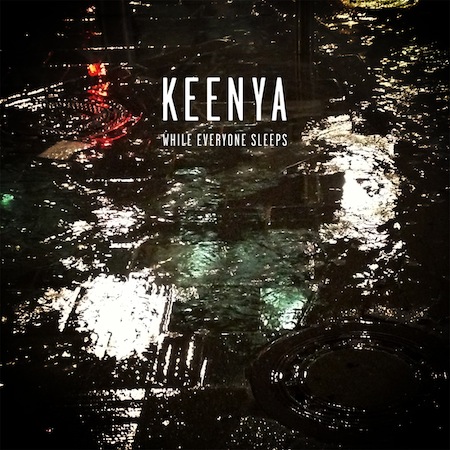
Half of UK production outfit Ghosting Season, Thomas Ragsdale’s solo alias Winter Son has remixed the “Behind Doors” single from Keenya’s forthcoming EP for Hush Hush. This “Helpless Room” version of the track turns its brand of late-night R&B into a kind of destroyed techno, a notable shift away from Ghosting Season’s more subdued sound. With toms, claps, and rimshots skittering about its steady tempo, “Behind Doors (Winter Son’s Helpless Room Remix)” feels uneasy and quick-paced. Oscillating pads warble around like a sluggish acid lick, sloppily smearing from side to side as Ragsdale’s rhythm gradually settles into a half-time trudge.