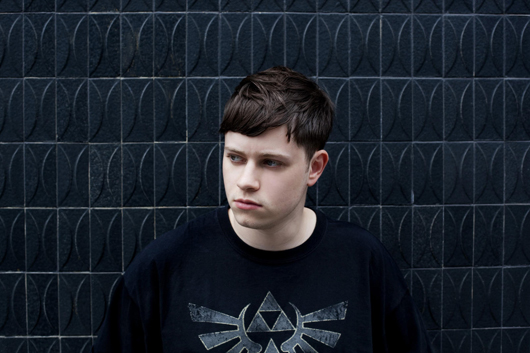
Breakout Glaswegian beatmaker Rustie kicks off his North American tour tonight in Santa Barbra, CA, and has decided to mark the occasion by giving away a never-before-heard remix. “Trouble on My Mind (Rustie Remix)” is a busy and blown-out version of icy rapper Pusha T’s 2011 single with Tyler, the Creator, one which jumps between rubbery synthlines, smoothed-out slap bass, and the occasional fiery guitar lead—basically, everything we’ve come to love about the Scottish producer. The song can be streamed and downloaded for free below, where Rustie’s upcoming tour dates can also be found.
Oct 22nd – Santa Barbara @ Velvet Jones Oct 23rd – Boston @ Middle East Oct 24th – Denver @ Larimer Lounge Oct 25th – Asheville @ Mountain Oasis Festival Oct 26th – Miami @ Bardot Dec 15th – Los Angeles @ Lure Dec 17th – Seattle @ Neumos Dec 18th – Portland @ Rotture Dec 19th – Vancouver @ Electric Owl Dec 20th – Chicago @ The MID Dec 21st – Toronto @ Wrongbar Dec 22nd – Austin @ Empire Space
As we approach a full two years since the release of John Talabot‘s outstanding ƒIN LP, fans are understandably more and more curious to hear what the Spanish artist has been writing in the meantime. We know he has his own installment of the DJ-Kicks mix album series on the way next week, which means that—as always—a new song will appear in the tracklist. And today, we get a chance to hear that brand-new cut. John Talabot’s latest is called “Without You,” and was apparently written “while traveling in Europe and finished in Barcelona in July ’13.” It’s an expectedly mysterious and understated production that rides a softly motorik rhythm through its spacious atmospheres. A “reduced mix version” of the song can be streamed below before !K7 drops its next DJ-Kicks on November 12.
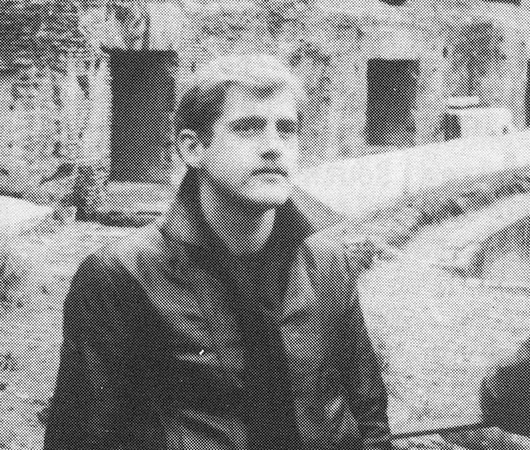
Along with Arthur Russell, Patrick Cowley (1950-1982) is considered one of the “lost masters” of underground gay electronic music who passed away due to AIDS at a very young age. Rediscovered by a new generation of electronic musicmakers at a time when homosexuality isn’t considered quite so icky, Cowley’s production work, unabashedly gay aesthetic, and pioneering studio experimentation are finally getting their due.
Cowley’s disco and hi-NRG hits ruled sweaty, man-hungry, chaps-wriggling dancefloors in the late 1970s and early ’80s, but his wide-ranging instincts also touched on punk, proto-new wave, and even what would later become influential Italo disco and early house sounds. On what would have been Cowley’s 63rd birthday, October 19, enterprising San Francisco label Dark Entries released School Daze, a two-disc set showcasing Cowley’s music from early ’80s Fox Studio gay-porn flicks School Daze and Muscle Up.
School Daze
As a compilation of Cowley tracks composed between 1973 and 1981, School Daze spans his early, heady ambient-experimental work to his, er, climactic hi-NRG output. Moreover, the album serves as a great introduction to the man’s achievement, lacking only examples of his natural talent with singers and organic instrumentation. It’s an often space-jazzy, deep-and-wiggy ride through the netherworlds of animal lust, with 11 tracks like “Pagan Rhythms,” “Zygote,” and “Seven Sacred Pools” setting the “out there” cosmic tone. Those excellently produced soundscapes, with grunting overdubs, work sublimely with the films’ feathered-hair and shaved-pecs man-on-man action. School Daze also has the distinction of being the first gay-porn soundtrack to be streamed on NPR, which must be some sort of community affirmation, right?
For those coming to Cowley for the first time, here are a few juicy pointers on what you need to know.
Cowley was an East Coast transplant who moved to San Francisco and started tinkering with electronic music. Cowley was born in Buffalo, New York and took a very early interest in music. He played the drums in several local bands before moving to San Francisco when he was 21. At that point, he was already gleaning musical inspiration from electronic-music pioneers as diverse as Wendy Carlos and Giorgio Moroder. During his studies at City College of San Francisco, he used the school’s electronic equipment to synthesize these influences into a project called the Electronic Music Lab. While drifting from advertising-like jingles into more experimental styles, he also modified and built his own analog equipment, which he combined with classic instrumentation to produce what would eventually come to be known as the “San Francisco sound.”
Even Sylvester took notice of Cowley’s talents. Cowley’s growing reputation as a local electronic wiz kid began attracting major up-and-coming disco acts. One of these acts was Sylvester, a former member of notorious acid-dropping SF performance troupe the Cockettes, who had maintained a glamorous, androgynous persona to go with his soaring falsetto voice. In 1978, Cowley began polishing, remixing, and producing Sylvester tracks that went on to become disco staples, including “(You Make Me Feel) Mighty Real” and “Dance Disco Heat.” Those were big chart hits, but Cowley really gained widespread dancefloor fame under his own name with an 18-minute remix of Donna Summer’s “I Feel Love.” That remix, needless to say, expanded the possibilities of the dance remix to a radical extreme.
Cowley was a key figure in the early ’80s hi-NRG scene. After disco reached peak mainstream saturation in 1979, the sound began to take a bouncier, more frenetic turn on underground gay dancefloors. Hi-NRG pumped through the bathhouses and gay bars of San Francisco and beyond, driven by unabashedly homocentric Cowley compositions like “Menergy” and “Megatron Man.” In 1981, Cowley teamed up with engineer and producer Marty Blecman to launch Megatone Records. Megatone became emblematic of the hi-NRG sound, releasing records like Sylvester’s “Do You Wanna Funk” and “Don’t Stop” and Paul Parker’s “Right on Target.” Cowley continued to compose under his own name as well, turning out the tropical-disco number “Get a Little” and the Megatron Man and Mind Warp albums.
Cowley also dabbled in new wave. During his disco journey, Cowley took some fruitful detours with vocalist Jorge Socarras. The duo recorded a batch of edgy songs from 1975 to 1979 as Catholic, which leaned towards a ripe, aggressive, Krautrock-meets-punk aesthetic without completely abandoning the electronics. (“Robot Children” is the indelible classic from this period.) In 1980, Cowley also produced darker synth-pop outfit Indoor Life, also with Socarras on vocals, that became a seminal, sinuous minimal-wave act, often described as a new-wave Roxy Music. Socarras says of his work with Cowley, “Patrick Cowley articulated and codified a musical vernacular from which electronica continues to draw from today in many of its permutations.” Cowley’s second solo album, Mind Warp, also took a more new-wave, dystopian tone. Mind Warp was recorded while Cowley was beginning to succumb to AIDS, and he died soon after it was completed.
The Cowley revival has been underway for nearly a decade. In 2004, the revival of Cowley’s name and sound on San Francisco’s gay dancefloors began in earnest. DJ Bus Station John started Tubesteak Connection, a Cowley-heavy weekly party in the city’s gritty Tenderloin area that aimed to revive the spirit of the gay bathhouse disco era—it was one of the first parties to impose a no-cell-phone rule—a period previously considered taboo by many gay men still emotionally scarred by AIDS. Inspired by Bus Station John, generation-spanning DJ collective Honey Soundsystem (which includes Dark Entries label honcho Josh Cheon) researched the legacy of Megatone Records—which had held on until 1992 and released numerous house and techno records—and discovered a treasure trove of unreleased and overlooked Cowley tracks. The members of Honey began staging elaborate, séance-like nightlife tributes in the late 2000s, reissues of Indoor Life tracks and a Catholic compilation appeared, and, now, here’s School Daze, a kind of holy grail—not just for excited vintage gay-porn completists, but hot-and-heavy electronic enthusiasts as well.
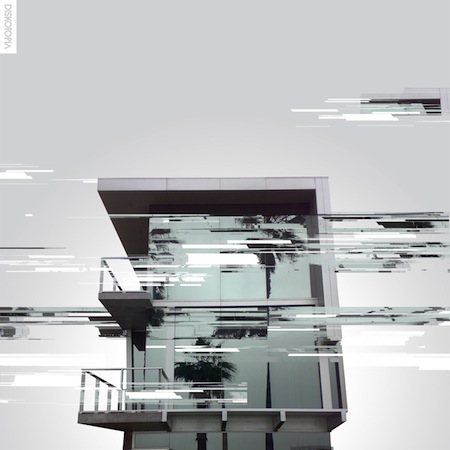
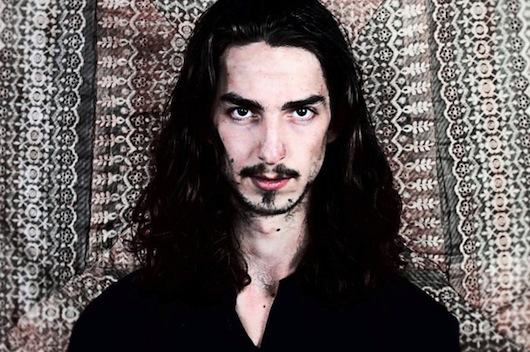
Currently based in New Jersey, BD1982 (a.k.a. Brian Durr) has lived in Queens, Philadelphia, Yokohama, and Kyoto over the years, and his productions seem to pull from a similarly disparate set of influences, incorporating everything from dancehall, techno, and ’90s rap to many of the more contemporary, bass-heavy styles. In advance of the producer’s forthcoming Casings EP—out on October 28 via Durr’s own Diskotopia label—we have “Writuals,” a spastic cut which harnesses a shattered-glass sample as the focal point to its skittish pace, leaving evergreen 808 rim shots to slink in the background. Once a set of finessed, disembodied pads flow into the mix, the energetic “Writuals” finds a peculiar cohesion and emotional depth which it rides into its closing moments. In addition to this download, Durr has also passed along a sampler of the upcoming Casings EP which can be streamed after the jump.
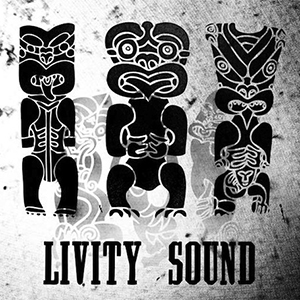
First of all, Livity Sound’s eponymous debut album is actually an extensive compilation of the Bristol trio’s previously released efforts (some more recent than others), which spans nearly two hours. Because those sides were generally aimed at peaktime DJ sets, there isn’t any concession to the album-oriented listener here, other than a bit of attention paid to sequencing. At the same time, although Kowton, Peverelist, and Asusu all use similar palettes, there is enough variation between them to appeal to wide swaths of listeners. The tracks here are either solo cuts or collaborations between two of the members; none features all three, though a solid recent Boiler Room appearance proved that they can in fact ably perform as a unit. Essentially, Livity Sound is a compilation with a lot of range, and one that really hammers home the high level the trio has been performing at over the last few years.
What really links the producers’ palettes is a shared passion for skeletal, upfront percussion, minimal melodic touches that harken back to jungle and hardcore, and booming low ends that are only truly discernible when sufficient volume and some sort of subwoofer have been applied. Still, it’s not especially easy to figure out why such immediate, straight-out-of-the-box music is so innovative. After all, there are scads of producers (plenty of whom used to be involved, like Livity Sound, with UK bass music) releasing “raw jams,” while laptop-free live PA sets are particularly in vogue. The trio may not spend a lot of time polishing off the rough edges, but these tracks have a lot in common with the UK’s dance-music lineage, certainly as much or more than they do with house from Chicago or techno from Detroit or Berlin. Take Kowton, who is probably the bluntest of the three. His tracks (of which there are only two here, discounting his collaborations) may often fall in the bpm range of house, but the urgent, streaky synth strings that jab out from the bulbous swing on “More Games” are full of grime’s violence. Likewise, Peverelist’s complex rhythms feel more like sampler-made jungle than the drum-machine workouts they actually are, as his tracks are fleet and full of instinctive swerve. More than practically any other post-dubstep outlet (save for Hessle Audio), Livity Sound has bridged underlying dub pressure and swaggering rhythmic gymnastics with a to-the-point techno aesthetic. There are few, if any, misfires here, but fans will surely end up picking favorites. Newer track “End Point,” by Pev & Kowton, is one of the crew’s most anthemic tunes yet, with its pointillist blips and tumbling drums enveloped in soaring dusky pads. Asusu may be less popular than his counterparts, but his contributions here are just as vital, with the dreamy nightdrives of “Sister” and “Rendering” coming across like a Bristolian alternative to Juan Atkins. The list really goes on, from the crazed tabla workouts on Pev & Kowton’s “Vapours” to the snaky synth percolation and furious drum rolls on Pev’s deeply subby “Aztec Chant.” As much as Livity Sound has something for everyone, there’s no denying how carefully defined a sound these three have honed.
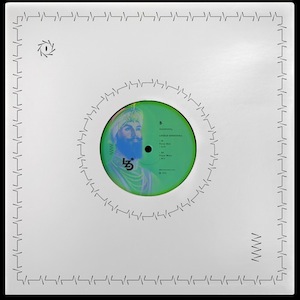
Netherlands-based expat Xosar will inaugurate the Brussels-based Ensemble label with a new EP next month. Entitled Retreat 2 Rapture, the four-track effort will mark Xosar’s third solo effort of the year, it’s four tracks launching the label arm of the Belgian Ensemble party curated by Gratts and Kong. Along with three new productions from the rising, hardware-wielding Xosar, a new remix from San Soda (operating under the name “Xan Xoda”) will also grace the tracklist. No exact release date has been shared for Retreat 2 Rapture, but the EP is expected to drop sometime next month. In the meantime, its artwork and full tracklist are included below. (via Resident Advisor)
Ahead of the October 21 release of Olaf Stuut‘s Siren EP via Applescal’s Atomnation label, we’re treated to “Suty,” a cut of digitized mood music filled out with chipped dreamscapes and skipping grooves. The producer pushes brash field recordings through his mix as a growling synth expands and claws at plaintive piano flourishes. All the while, “Suty” keeps trotting forward, collecting sonic particles and floating them into orbit just before its suttering breakdown.
Laszlo Dancehall’s debut EP, Gave Up, seemed unjustly overlooked in most quarters when it was released in May of this year. The collaboration between rising UK house denizen Leon Vynehall and comparative veteran Christian Sibthorpe (best known for his work as A1 Bassline and who recently began releasing tunes as Christian Piers) might not have seemed all that different from the garage-inflected house that’s been blowing up in the UK all year, but it stood out from the waves of ostensibly similar music with its messy, infectious rhythms and hazy production. And, much like Vynehall’s own recently released Open EP, Laszlo Dancehall’s LZD II delivers a serviceable three-track selection of wonky, synth-driven garage house, with its most interesting moments being its most abstract and experimental.
As was the case with Gave Up, LZD II has been released via George FitzGerald’s ManMakeMusic label, and the EP’s first track, “Whip What,” has the kind of snappy, big-room shuffle that the label is justly acclaimed for. Underpinned by a sturdy 4/4, and featuring a kinetic organ line alongside plenty of old-school piano flourishes, the tune has a lot in common on the surface with the house/garage hybrids being turned out the likes of Bicep, Citizen, and FitzGerald himself. Unlike these producers though, Laszlo Dancehall has a subtly lopsided approach, one which treats its busy, intricate rhythms as a set of interlocking parts, perfectly balancing texture and groove. If “Whip What” is the most successful iteration of this formula on the EP, “Fatty Que” feels a little too, well, formulaic. Recalling classic piano house with its sturdy organ line and busy rhythms, the track meanders and ultimately lacks a compelling sense of its own dynamics. More interesting is the final number, “Flute Worx,” which scales back the prior tracks’ peak-time energy and instead offers moody, deconstructed analog house that wouldn’t sound out of place on the L.I.E.S. label. Laszlo Dancehall is one of the most interesting entities in the UK’s current revivalist strand of house, a trend that unfortunately veers towards monotony far too often. LZD II isn’t entirely immune from this, but the record shows a promising tendency to push boundaries exactly where they need to be pushed.
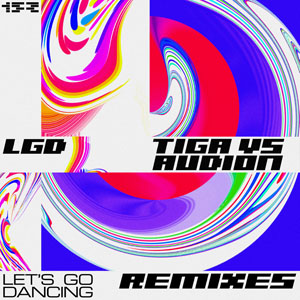
“Let’s Go Dancing,” the collaborative effort between Tiga and Matthew Dear’s Audion alias, first appeared last month as an elongated, fun-loving jaunt through percussive techno. Now, a crew of top-shelf producers—including Maya Jane Coles (pictured above) and Breach—have been enlisted to rework the effort for the forthcoming Let’s Go Dancing Remixes EP. Set to appear via Tiga’s own Turbo label next month, the upcoming effort finds Coles delivering two separate remixes while Breach, Hamburg producer/DJ Solomun, and Turbo affiliate joeFarr each contribute their own spin on the tune. Let’s Go Dancing Remixes will see an official release on November 10, but in the meantime, the EP’s artwork and tracklist are included below.
01 Let’s Go Dancing 02 Let’s Go Dancing (Solomun Remix) 03 Let’s Go Dancing (Maya Jane Coles Dancing In The Dark Remix) 04 Let’s Go Dancing (Breach Remix) 05 Let’s Go Dancing (joeFarr Remix) 06 Let’s Go Dancing (Maya Jane Coles Dancing In The Deep Remix)
On the heels of his Drown Out LP for Anticon, veteran LA producer—and recent XLR8Rpodcast contributor—Daedelus has unveiled a new video for album track “Tiptoes.” Beginning as an exercise in three-dimensional shape building, the video turns into a purple-tinged voyage led by a sparkling lead character who travels through forests, rivers, and the likes during his quest. In the end, the video (directed by one Michael Wingate) is as quirky and psychedelic as any visuals soundtracked by a Daedelus track should be.