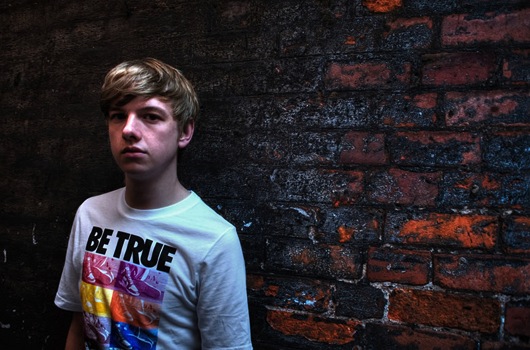
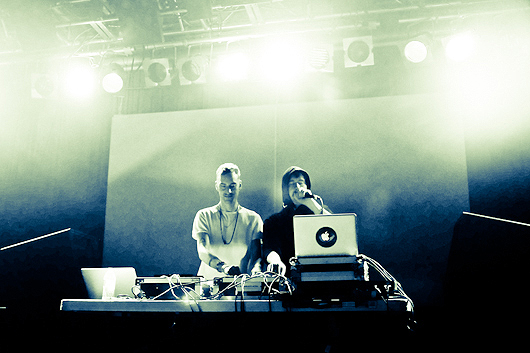
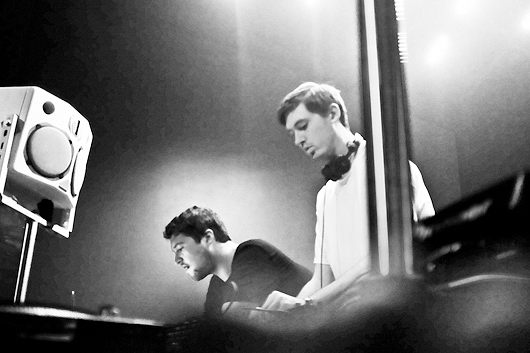
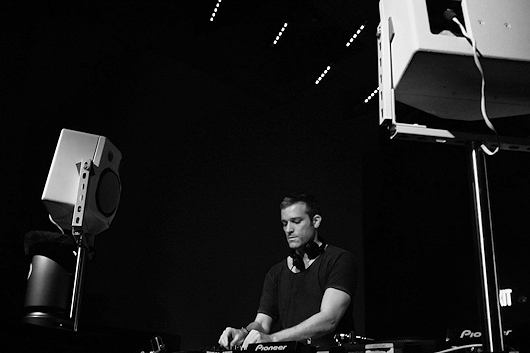
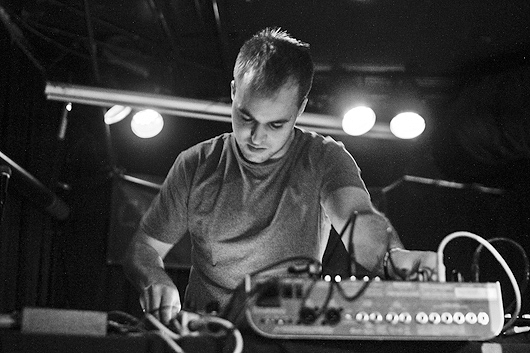
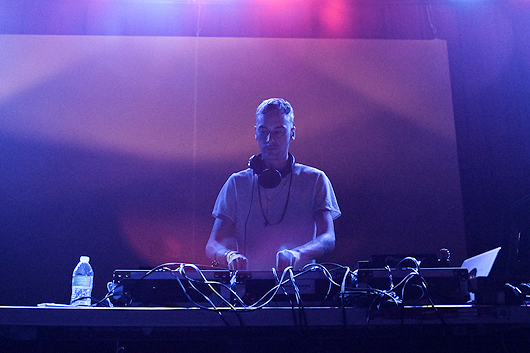
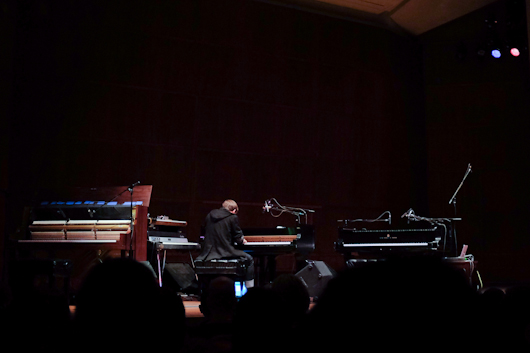
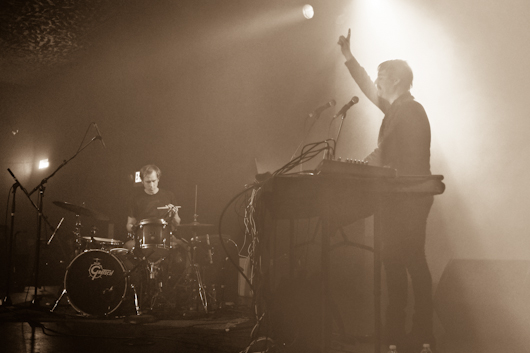
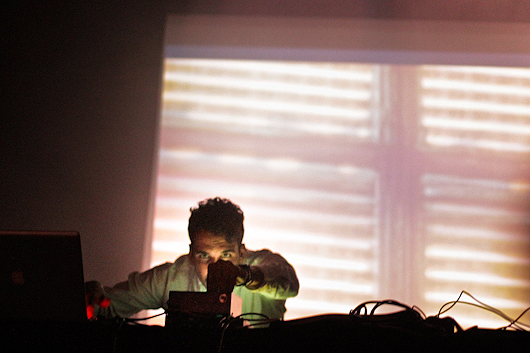
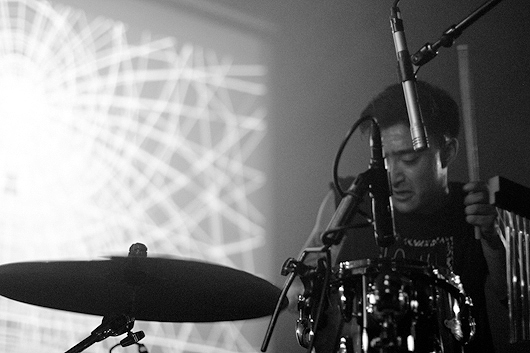
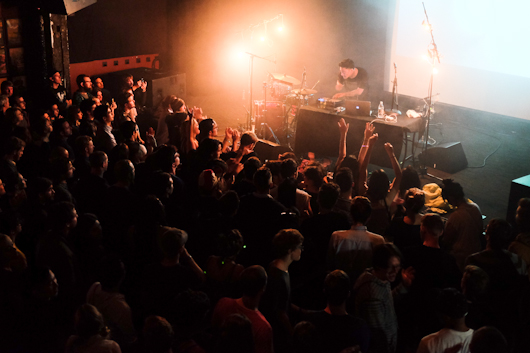
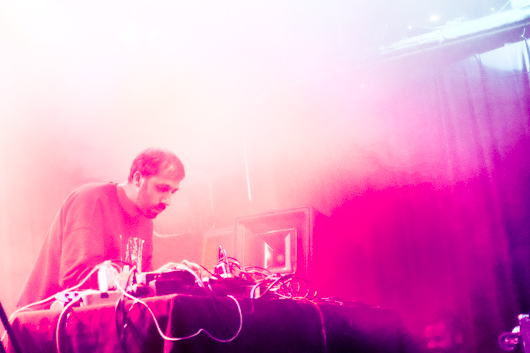
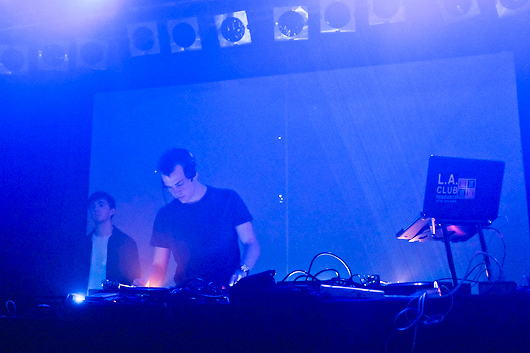
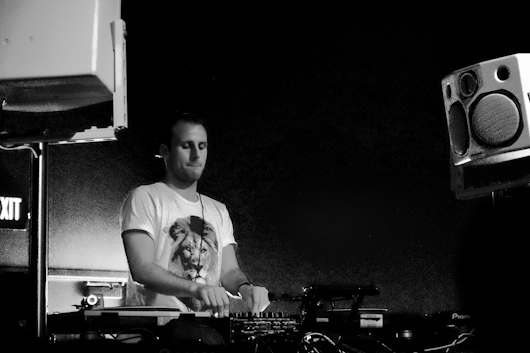
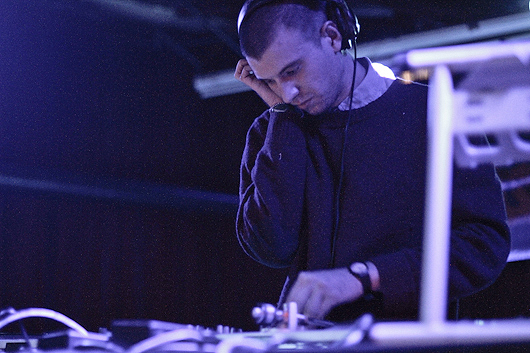
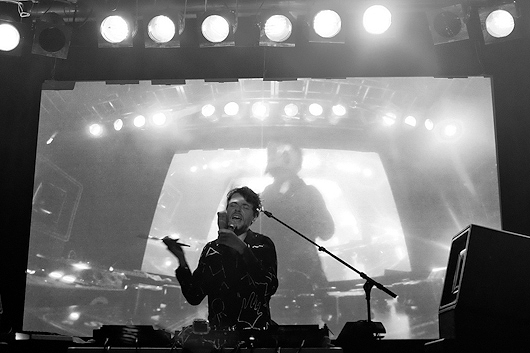
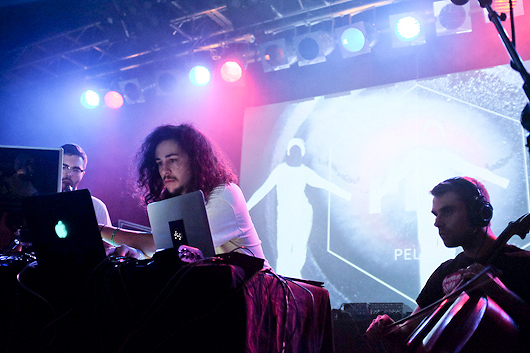
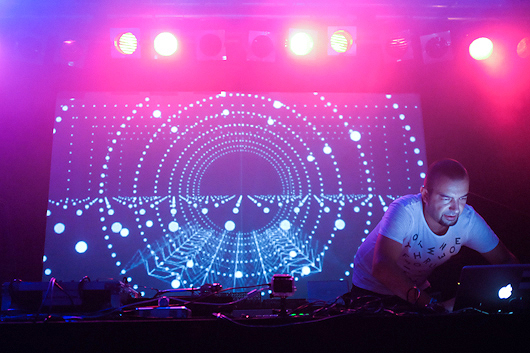
Bristol producer Materia‘s Atlas EP was the Slime label’s first foray into physical releases when it was released back in May, and both parties will follow that record with an EP of remixes on October 7. Ahead of that occasion, Materia has shared a free download of one of Atlas:Remixed‘s six tracks, “Otherland (Submerse Remix).” Rain droplets and synth percolations create the foundation of the deeply effecting production by Submerse (pictured above), a base which is encircled by piercing pitched vocals and hazy soundscapes. Ultimately, filtered bells and pressurized bass grooves consume the emotionally heavy track, but not before it’s allowed to drudge through its nearly three-minute runtime.
As unlikely a pair as they may seem, Strategy (a.k.a. Paul Dickow) and Peverelist (a.k.a. Tom Ford) can both trace substantial portions of their respective catalogs back to dub and Jamaican music. This influence forms the backbone of “Return from the Stars,” Dickow’s latest 12″ (which features a remix from Ford on the flip), and first for Bristol label Idle Hands. The two pieces here take classically Jamaican elements and shape them into dancefloor forms—just don’t call either one dub techno.
Dickow’s title track opens with rustling percussion and a speedy kick, and quickly inserts a rubbery, curvaceous, up-and-down bassline. It’s the entrance of ghostly, watery organ chords and wailing melodica that really gives the piece its tropical legs, though. Where so many dance-music interpretations of these elements seep into soggy lethargy, Dickow’s light touch keeps his track spritely. On his remix, Ford offers a subtler interpretation, with a swung rhythmic bump taking center stage. The producer infuses it with thick subs, which are especially highlighted by an abrupt drop near the end, and he splices bits of melodica and Radiophonic whirs and burbles throughout. As with so many of Ford’s productions, it really begins to make sense when cranked up, or heard in context of a mix, as there are few attributes for the casual listener to really grasp hold of. It is not as rhythmically dense as some of his major works, but it nevertheless provides a suitable reflection of Dickow’s blueprint.
The brute force of London techno duo Dense & Pika will be on display once more, when the pair’s third EP for Scuba’s Hotflush label drops next month. Colt finds the pair experimenting with an expanded palette of sounds—the title track employs a warm piano figure that hints at a newfound sensitivity, whereas “Black Deep” and “Vomee” push dense percussive workouts and dubby stabs into the foreground. “Airless (Live)” closes out the EP in a frenzied, one-take rave-up, employing live percussionists, woodwinds, and a host of modular synthesizers. Dense & Pika’s Colt EP is set for release on October 28, but in the meantime, can be previewed below.
A1 – Colt A2 – Black Deep B1 – Vomee B2 – Airless (Live)
Back in July, longstanding Chicago house DJ/producer Tevo Howard announced a forthcoming album under the name Sequence Report. Now, with less than a week left until that record drops, Howard has made the upcoming Secromance LP available to stream in full. Under his own name, Howard is mostly known for cooking up quality house tunes sprinkled with old-school flavor, but as Sequence Report, Howard is fixated on a cold electro sound full of vocoders, Kraftwerk-ian melodies, and long lines of synth arpeggios. As it turns out, the style fits Howard well, and XLR8R readers can hear it for themselves via the player below, where Sequence Report’s full LP can be streamed before it’s officially released tomorrow via the producer’s eponymous Tevo Howard Recordings label.
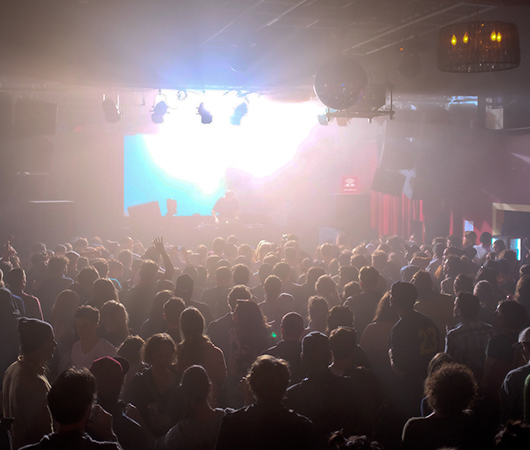
Admittedly, XLR8R headed into the 2013 edition of Seattle’s annual Decibel festival with a bit of apprehension. Although we’ve long supported the festival and love the idea of a forward-thinking, multi-night, club-based festival within our own borders, our Decibel experience last year was a bit of a mixed bag. It didn’t help matters that although this year marked the festival’s tenth installment, the 2013 line-up was not only smaller than last year’s, but also appeared to be a bit lacking in “wow” artists. Nevertheless, we’ve been attending Decibel for a long time, so we elected to once again make the trek into the Pacific Northwest and check out the festivities, and after five days and nights in the Emerald City, we were happy to realize that our worries were essentially for naught. In short, Decibel 2013 was a real return to form, and demonstrated why the festival is one of the most exciting large-scale electronic-music events in the United States. Granted, it wasn’t perfect—no festival is—but the positives outweighed the negatives to such a degree that it simply made more sense to focus on what we liked and ignore what we didn’t—or at least try to. Given that, we’ve put together a list of 13 reasons that this year’s Decibel was one to remember.
JETS
Decibel clearly learned from its past mistakes.
Over the past few years, Decibel’s organizers have made it abundantly clear that running this sort of festival—at least in the United States—is not a lucrative venture. As such, Decibel relies heavily on volunteers, and while the involvement of so many impassioned individuals is refreshing, the absence of professionals in key positions has occasionally detracted from the festival, particularly in recent years as Decibel has grown and sought to expand its reach. Last year, there were some serious organization issues; shows were running behind, requested equipment for artists wasn’t always making it to the venue, last-minute changes to the schedule weren’t being properly disseminated to the public, and the list went on and on. In contrast, Decibel 2013 ran incredibly smoothly. Apart from a few technical hiccups—many of them at Neumos, which seemed oddly unprepared for hosting multiple electronic acts and running after-hours events—the festival’s numerous showcases generally took place as planned and without incident.
This improvement can most likely be traced back to the fact that Decibel clearly narrowed its focus in 2013. Past years featured more guests, more venues, and effectively more of just about everything; this sounded great on paper, but it was also a major factor in the festival’s organizational struggles. Basically, Decibel didn’t have the capacity to operate on such a large scale. This year though, things felt different. By cutting back on some of the events and reducing the overall scope of the festival, Decibel saw its difficulties decrease significantly. Shows ran on time, artists got what they needed, most of the showcases were well attended, and the festival generally went off without any catastrophic hitches. This ultimately improved the Decibel 2013 experience for everyone, whether they were working at, performing, or merely attending the festival.
Ben UFO
Not even Seattle being, well, Seattle could dampen our spirits.
Don’t get us wrong. Seattle is unquestionably a nice city. It’s green, it’s clean, and it’s relatively peaceful. Folks are generally laid back and open minded. The food is good. On the whole, it’s often a remarkably pleasant place to be. That being said, Seattle wasn’t particularly hospitable during Decibel 2013. Most notably, the weather was not great. Seattle is of course known for its rainy climate, and the festival’s final few days found the city solidly living up to that reputation. The skies were grey, the wind was blowing, and being outside for any extended period was basically an unpleasant experience. On a practical level, this made things more difficult for Decibel. For instance, an outdoor party on Saturday afternoon was moved to an indoor space (Re-Bar) at the last minute. (Despite the change, the party was reportedly still packed.) The effect of the weather on attendees was perhaps even more pronounced, as moving between venues, which the festival generally designed to only involve a quick walk, suddenly required trudging through the rain or hopping in a cab.
On another note entirely, Seattle once again failed to come off as a particularly “cool” place. We commented last year how the city occasionally appears to be stuck in the ’90s, and that mentality didn’t appear to have changed much over the past 12 months. Make no mistake—by US standards, Decibel is an incredibly forward event; however, being at the festival rarely felt like taking a stroll on the cutting edge. A lot of that had to do with the crowd, which, in proper West Coast fashion, included a heavy contingent of aging former ravers. We don’t mean to appear shallow, but the general motif was an odd cross of tech-industry business casual (lots of fleece, windbreakers, and boot-cut jeans), grunge leftovers, and fashion cues seemingly inspired by the movie Waterworld. Although the music was undoubtedly the most important thing at Decibel, it was striking how the Seattle crowds came across as almost aggressively unfashionable. When traveling from out of town for a festival, particularly one focused on underground electronic music, most attendees want to feel like they’re mingling with a hip, in-the-know group of people. Instead of that, we often found ourselves in a sea of geeky diehards and goofy Burning Man castoffs.
Dusky
Nevertheless, even with the shitty weather and the unusually high concentration of stupid little hats and utility belts, we had a truly enjoyable time at Decibel 2013. Of course, much of that could be attributed to the performances, which were almost uniformly good to excellent. Although Decibel’s organizers didn’t pack this year’s line-up with star power, they were smart to focus on artists who could be counted upon to deliver a quality show. During our five nights in Seattle, we saw a lot of artists step on stage or into the DJ booth, and it’s hard to recall even a single one that was a total dud. Furthermore, the festival simply felt busy. Maybe it was due to there being fewer showcase options to choose from, or perhaps the rain prevented festivalgoers from bouncing between venues too much, but the shows were generally full, and the crowds showed up in good spirits, ready to party. The festival’s after-hours events—one of last year’s biggest weaknesses—were particularly good, as people stayed and danced until the wee hours, even after the alcohol was turned off each night at 2 a.m. There was a genuine sense of enthusiasm in the air at Decibel, and we’d be lying if we said that we didn’t get caught up in it.
Ben Klock
Ben Klock got things started on the right foot.
Decibel’s opening night featured a number of “name” acts spread around the city. Peter Hook and the Light shared a bill with Adult. at Showbox at the Market. Over at The Crocodile, a Hyperdub showcase was happening with Ikonika, DJ Spinn, and label boss Kode9. However, the night’s top honors undoubtedly went to German DJ/producer Ben Klock, who delivered a lengthy set at Q. Demonstrating why he’s one of Berghain‘s most celebrated residents, Klock weaved together a booming procession of taut techno cuts and took advantage of Q’s much-talked-about Funktion-One soundsystem. Despite playing on a Wednesday, Klock kept the dancefloor moving well past 2 a.m., as he smartly segued into housier fare as the night wore on and kept dancers glued to the dancefloor.
Vessel
Vessel was just as good as we had hoped he would be.
Anyone who read XLR8R‘s year-end round-ups last December likely noticed that we had a special fondness for Vessel, particularly following the release of his excellent debut LP, Order of Noise. Since then, we’ve been anxiously awaiting the Bristol producer’s arrival on American shores, which is why we were elated to learn that he would be performing at our very own Decibel showcase. Performing live at the punky, rough-around-the-edges Chop Suey, Vessel shared the bill with Tri Angle labelmate Evian Christ—who headlined the show with a abrasive session of noise-laden instrumental hip-hop—and the fast-rising Huerco S.—who put together an all-vinyl set of adventurous, albeit classically inspired house and techno. (Full disclosure: our editor Shawn Reynaldo, who also wrote this piece, was the night’s opening DJ.) It was a solid night of music, but Vessel’s set was undoubtedly the highlight. Only a year has passed since the release of Order of Noise, but his music has grown by leaps and bounds since then. Over the course of 45 minutes that seemed to fly by, Vessel mashed together elements of techno, noise, dubstep, drum & bass, and more. What resulted was an unclassifiable—albeit highly compelling—set that, while steeped in the low-end-heavy tradition of his hometown, offered an incredibly forward vision in which genre signifiers are all but irrelevant and sound design is just as important as creating something for the dancefloor.
Jimmy Edgar
Jimmy Edgar was a whole lot of fun.
After beginning 2013 in a relatively quiet fashion, Jimmy Edgar has been coming on strong in recent months, and that swell of activity included a busy night at this year’s Decibel. After dropping into Seattle on Thursday evening, Edgar was billed for two performances at the Leisure System after-hours showcase, which took place at Neumos. Though pre-show chatter was more strongly focused on the appearance of JETS, his collaborative project with Machinedrum, it was Edgar’s solo DJ set—which kicked off the party at 2 a.m.—that really got the dancefloor moving. The Berlin-based artist has spent a lot of time on the road and behind the decks this year, and it’s clearly paid off, as he piloted a session that combined classic, drum-machine-heavy house, techno, and electro with newer cuts, many of which were taken from his new Ultramajic imprint. Simply put, the music was raw, loose, and fun. In Edgar’s hands, raunchy ghetto tunes made just as much sense as a slice of diva-driven pop-house; judging by the joyous response to his set, it appeared that the Decibel crowd agreed with him.
Nils Frahm
Nils Frahm continued to charm us with his piano theatrics.
Earlier this year, XLR8R attended the annual MUTEK festival in Montreal (our review is here), which was unquestionably one of 2013’s best events. Our time there was filled with highlights, but one of the most memorable was seeing Germany’s Nils Frahm work his magic with the piano. As it turns out, we weren’t the only ones impressed by the performance, as Decibel’s organizers—who also hosted Frahm last year—decided to bring him out once again, this time as part of an Erased Tapes showcase for the festival’s Optical series of A/V events. The Friday-evening show was actually headlined by Ólafur Arnalds, and while the Icelandic composer’s set—in which he crafted emotive, Sigur Ros-esque sounds with the help of a violinist, a cellist, and his iPad—was good, Frahm was the real treat. In fairness, his performance was probably a notch below the ones we witnessed at MUTEK, but the music was still superb. Simply put, Frahm is a sort of piano virtuoso, and his complex, classically inspired pieces were incredibly moving—we witnessed more than a few members of the crowd wiping their eyes throughout the set. It also helped that the soft-spoken composer delivered some charming bits of dialogue between songs and exuded a genuine air of humility; he repeatedly thanked the audience for coming and bowed deeply at the end of his performance. And though our favorite tunes were the ones which found Frahm incorporating subtle electronic elements into his compositions, we really couldn’t complain about any aspect of the show.
Machinedrum
Machinedrum rode a wave of excitement and anticipation into Seattle—and delivered the goods.
Just a few days before the release of his new LP, Machinedrum descended upon Seattle in a major way. Like his frequent partner-in-crime Jimmy Edgar, Machinedrum was tapped to give two separate performances. The first was with JETS on Thursday night, but the real anticipation swirled around his Friday-night appearance at Showbox at the Market for the What the Festival showcase. It was there that he was scheduled to debut his long-awaited Vapor City Live show, which is set to feverishly tour the globe over the next few months. The club was packed when he took the stage (along with live collaborator Lane Barrington, who set up behind a full drumkit) at 11 p.m., and the next 80 minutes found him recreating the entire Vapor City album. Machinedrum was positioned behind his own gear rig, but he actually spent a fair amount of the performance singing (admittedly, the vocals were usually heavily reverbed or processed in some other fashion) and/or playing guitar. The potential for disaster was certainly high, but the whole thing worked, and worked well. The set struck a nice balance, coming across like a proper concert yet still delivering music that was suitable for the dancefloor. As expected, the bass was heavy—very heavy—and Machinedrum’s hyperactive beats were at the forefront, but the more “live” elements definitely contributed to the show’s overall appeal. In truth, the only real problem was that the visuals—which were looking quite stellar—unexpectedly cut out about 15 minutes into the set. It was a minor hiccup, albeit one that did little to derail the show, which on the whole seemed like an awfully good start to the next phase of Machinedrum’s musical journey.
Dauwd
The Ghostly label had a strong showing at Decibel 2013, and demonstrated why it’s one of the top electronic labels on the planet right now.
The Ghostly label is in the midst of another impressive year, which made the imprint’s sold-out Friday night showcase at The Crocodile an especially ebullient affair. Though the party included an appearance by Brooklyn duo Beacon (who we missed) and a typically solid performance by Seattle veteran Lusine, the standout sets came from the evening’s opener, Dauwd, and its headliner, Shigeto. XLR8R featured Dauwd in our Bubblin’ Up series back in February, just before the release of his Heat Division EP, but the UK producer has maintained a relatively low profile since then, only popping up to issue a few remixes. Granted, it’s possible he’s been staying out of the spotlight in order to focus on making music; his live set at Decibel was full of sounds we didn’t recognize, but the lack of familiarity didn’t lessen anyone’s enjoyment of the tunes. Although Dauwd’s performance could have used a bit more energy—he was on stage with just a laptop and a MIDI controller—his textured, melodic brand of house was not only pleasing to the ear, but also something that sounded like a natural fit with the sounds that Ghostly (or perhaps its sister label Spectral Sound) built its reputation upon.
Shigeto
Shigeto, on the other hand, served up something completely different. Taking the stage with a more complex array that included an Ableton set-up, a full drumkit, and some other percussive pieces, the young producer nicely capitalized on the momentum of his recent No Better Time Than Now LP while delivering a thoroughly engaging live show. It’s widely known that Shigeto is a highly skilled drummer, but live drums don’t have the best track record when it comes to electronic music, and it would have been easy to imagine their inclusion here devolving into some sort of masturbatory exercise. Thankfully, Shigeto knew better, and during his set at Decibel, the live drums were not only a nice addition—they were absolutely essential to the show’s success, adding a level of richness and, yes, realness that is often lacking when similarly minded producers perform live. In short, his drumming never stepped to the forefront and never came off like a novelty; instead, it provided a sort of structural backbone, one which allowed his various melodies and synthesized bits to do the emotional heavy lifting. Over the course of an hour, he combined elements of hip-hop, jazz, and leftfield electronic music into a potent brew, and demonstrated why he’s being hailed as one of the few “beat scene” acts who’s capable of taking the music to the next level.
Gold Panda
Oddly enough, Gold Panda—one of Ghostly’s biggest artists—wasn’t actually a part of the official Ghostly showcase on Friday. The UK producer is in the midst of a routed North American tour, which meant that his Decibel appearance was pushed until Saturday, when he headlined the “Shine On” showcase at Neumos. Gold Panda is another act who has been on the road a lot this year, particularly following the release of his sophomore LP, Half of Where You Live. Watching him perform at Decibel, it was clear that all of his stage time had paid off; perched confidently behind his trusted MPC and assorted pieces of gear, his music sounded great. There has always been a sort of twee quality to Gold Panda’s work, and that was still part of the mix, but even his older tracks came across as rich, multilayered, and fully realized efforts. When his initial set came to a close around 1:30 a.m., the crowd erupted with adulation, and he didn’t even manage to get offstage before he was compelled to step back behind his rig and launch into a lengthy encore, which was equally well received.
Ben UFO and Pearson Sound at the Hessle Audio showcase
Hessle Audio sounded as innovative and essential as ever.
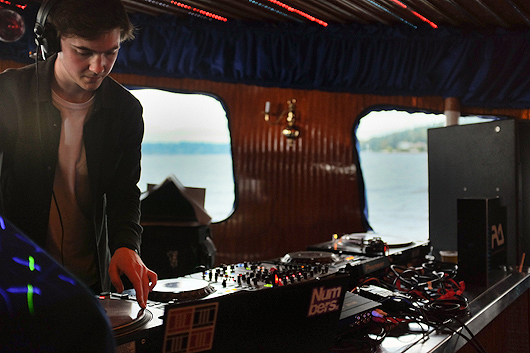
Ben UFO had himself a busy Friday at Decibel. Fresh off the plane from Los Angeles, he hopped aboard the Resident Advisor boat party, which also featured a set from fun-loving Swede Axel Boman. (Things got especially good toward the end of the party when the two began playing back to back.) It made for a fun afternoon, but the real focus of Ben UFO’s Decibel experience came later, when he joined his Hessle Audio compatriots Pearson Sound and Pangaea for an after-hours showcase at Neumos that found the trio trading off behind the decks until 7 a.m. Although a series of technical problems and a woefully unprepared door staff delayed the start of the party for nearly an hour—which was a major bummer given that it was raining while throngs of people were stuck waiting outside—once we found our way into the club, the music was uniformly excellent.
Over the past year, a sort of a narrative has formed around Hessle Audio, one that highlights how the three founders are slowly drifting away from one another, musically speaking. While their various solo efforts do seem to indicate that there may be some truth to that notion, the Hessle Audio showcase at Decibel found the trio undeniably on the same page. Of all the labels that rose to prominence amidst the excitement surrounding so-called post-dubstep, Hessle Audio has arguably come out the best. Where other imprints have seen a sort of post-hype slump—at least in terms of the dance-music community’s level of interest—the Hessle camp continues to be regarded as a bastion of inventive production and forward sounds. Through its discography, its founders’ DJ sets around the globe, and even its weekly show on Rinse FM, Hessle Audio has come to represent a sort of musical nexus that combines the UK’s experimental and innovative impulses with a reverence for the best of electronic music’s history, whether it’s old-school house and techno or classic garage, grime, and drum & bass. Without question, this is a lofty status for any label or DJ collective to maintain, but Hessle Audio’s performance at Decibel found its members bearing the weight with ease. Although the DJs never stayed in one genre or style for too long, their selections shared an unmistakable connective thread, one that favored dark themes, sharp tones, and, of course, hard-hitting bass. In truth, it was all a bit punishing, but even after standing in the rain for an hour, we were happy to hop on the dancefloor and take it.
Midland
Midland showed us why he deserves a lot more respect.
Saturday night’s “Home Bass” showcase at Q was absolutely rammed. The night began with a solid, house-leaning DJ set from Seattle’s own J.Alvarez (who also produces more electro-oriented fare as 214), and was headlined by UK duo Dusky, which kept the stuffed dancefloor jumping with its selection of well-produced (if a bit formulaic) big-room cuts. However, our ears were the most taken with the selections provided by Midland. Although the London DJ/producer is often lumped in with the current wave of UK artists who came out of the post-dubstep/bass-music mold and are now making house music, anyone who has seen him spin has likely come to the conclusion that Midland is not pushing a tepid brand of “house lite.” Granted, his set at Decibel wasn’t necessarily pushing the envelope; Midland did rely heavily on relatively straightforward house tunes (with some occasional forays into techno), but examining through his work the lens of genre alone would ignore the fact that the music—and his DJing—was quite good. Today’s electronic-music climate often confuses outright weirdness and a willingness to experiment with actual quality, but Midland showed that there is still plenty of merit in simply picking solid tunes and assembling an effective DJ set. This is not to say that Midland played it safe—he didn’t. He’s simply staked out a sort of middle ground between big-room conventionalism and being weird for its own sake.
Huerco S.
Kyle Hall was stellar.
After seeing Kyle Hall play on Saturday night at Decibel, it’s safe to say that he should no longer be referred to as an “up and coming” artist. Though he has long been hailed as the face of Detroit’s new generation of producers and DJs, Hall has now spent several years in the spotlight, during which time he’s DJed all around the world, built his own Wild Oats imprint, and effectively established himself as one of the Motor City’s most talented and exiting acts, irrespective of his age. Hall kicked off the Mixmag after-hours showcase at Q, which also included sets from Chicago veteran Derrick Carter and Seattle staple Pezzner. Over the course of his 90-minute set, he was all over the musical map, alternately delving into house, acid, techno, and disco without losing the floor. Watching him perform, a couple of things became abundantly clear. The first won’t surprise anyone familiar with his productions—particularly his collaborative work with Funkineven as FunkinEvil and his debut album, The Boat Party, from earlier this year—but Hall has developed a real taste for raw, lo-fi sounds. Throughout the night, his selections were often built upon wet drum samples, unpolished rhythms, and ragged melodies. Secondly, Hall has arrived at a point where he can confidently play just about anything. By continuing to refine his craft and expand his vision as a DJ over the years, he’s learned to spin with a genuine sense of freedom. That freedom was on full display at Decibel on Saturday night, and helps explain why Hall’s set was one of the festival’s highlights.
Matias Aguayo
Matias Aguayo kept things light and once again demonstrated that there’s no other artist quite like him.
While we’re weren’t able to attend every Decibel showcase, we nonetheless feel confident in stating that no performance elicited a higher concentration of smiles amongst Decibel attendees than that of Matias Aguayo. The Chilean-born, Cologne-reared, and Berlin-based producer was part of the Kompakt after-hours showcase on Saturday night at Neumos, and while the night also featured appearances by fellow veterans John Tejada and Thomas Fehlmann, there was little question that Augayo stole the show. Though he wasn’t able to perform a proper live set along the lines of what he detailed in our From Studio to Stage feature a few months back, he still put together a sort of hybrid session that often found him singing or playing live percussion over his DJ selections. Aguayo released a new LP, The Visitor, earlier this year, and while that record had its charms, it really didn’t do justice to the magic that he is capable of creating in the live setting. During his Decibel set, Aguayo was so light and carefree that those in the audience couldn’t help themselves from getting caught up in the spirit, even as the artist took sudden left turns into cumbia, tribal guarachero, and other Latin rhythms. Adding to the spectacle was the loose, almost DIY vibe that permeated the show; from time to time, Aguayo dabbles in sound palettes influenced by post-punk skronk and vintage electro, and the incorporation of those elements gave his Decibel show an enticingly ramshackle feel. Admittedly, it was all a bit rough around the edges, particularly once Aguayo began looping his own voice in earnest, but it’s doubtful that polish and precision were at the top of his priority list. More than anything, he was concerned with fun, and although it’s safe to say that everyone there thoroughly enjoyed themselves, it ultimately felt like no one had a better time than Aguayo himself.
Archie Pelago
Decibel’s final day didn’t ease off the throttle one bit.
After four nights full of activity and quality music, it would have been easy for Decibel organizers to take it easy on the festival’s final day, but Sunday’s schedule was on par with the rest of the week. The afternoon began with a High & Tight boat party—which we unfortunately didn’t attend—that featured additional DJ sets from Matias Aguayo and Kyle Hall. During the early evening, the festival’s final Optical session included a stunning audio-visual performance by UK duo Raime. Although the dinner-theater-esque setting at The Triple Door was a bit unusual, Raime was absolutely incredible, delivering an ominous, bass-heavy assault that resembled an exercise in sound design as much as it did anything suited for a dancefloor. The pair’s visuals, which consisted of a series of slow-motion, cinematic clips that often focused on the human form—were also quite powerful.
Kink
As night descended upon Seattle, we were left with a tough choice, as Nosaj Thing, Lorn, and Teebs were playing at The Crocodile while Q’s Decibel finale featured Art Department, Mano Le Tough, and Maxxi Soundystem. Ultimately though, we elected to check out Neumos, which played host to the “From Disco to Disco” showcase. Brooklyn trio Archie Pelago came on early, and quickly demonstrated why folks in their hometown can’t stop raving about the group’s live show. Combining jazzy improvisation with a modern house sensibility, the outfit gradually ratcheted up the energy over the course of its set and built some genuinely satisfying grooves in the process. Up next was Romanian producer Kink, who immediately ramped up the energy level, both with his massive, melody-driven tunes and his theatrical use of unusual MIDI controllers. The fun quotient skyrocketed with Kink at the controls, and that vibe continued when Tiger & Woods took over the proceedings. The duo’s bouncy, disco-flavored edits were like catnip for the floor, as the audience reveled in the pair’s thick, rounded basslines and funky synth indulgences. It was a wonderful way to wrap up our Decibel experience, and though we considered sticking around for the headlining set from Aeroplane, we had our own plane to catch in the morning and elected to call it a night.
Luke Brown under his Les Level moniker has shared a new track lifted from his forthcoming House of Need EP for 100% Silk (out tomorrow). A heavyweight house cut, “House of Need (Dirty Dub)” is misty and sensual, baking in body heat and frolicking in sweaty bliss; sustained keyboard tones modulate around root notes, brassy synths interject between busy percussion, and muscular kicks push the track towards a breathless close.
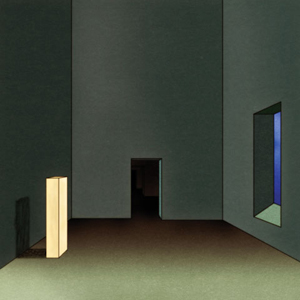
Albums like R Plus Seven are dangerous. It’s the kind of record that is unexpectedly original enough to enthrall and disrupt listeners in equal measure. Had it come from more obscure origins, it could very well have been deemed “difficult” and left to the graces of adventurous collectors scouring the Experimental section for years to come. Granted, Oneohtrix Point Never has never been a run-of-the-mill producer—2011’s unprecedented Replica, the captivating Returnal, and three-disc precursor Rifts all bore the idiosyncratic nuances and reckless abandon of a creator who apparently views and understands music differently than most other artists. But his latest LP distills all of that previous work into one manic, exhilarating, disorienting, sublime, frustrating, joyful, and singular experience. R Plus Seven at once references the freeform nature of ambient music, musique concrete’s stream of consciousness expressionism, and the methods of postmodern classical composers like Philip Glass and Steve Reich, though it’s more fitting to say the album operates in a reality all its own.
It would be unwise to look at R Plus Seven under a microscope. Even if the 10 tracks which make up its 43-plus minutes are so painstakingly detailed and finely rendered that they beg to be dissected, listeners will find few answers inside the disparate parts that coalesce into the existential terror of “Still Life” or the quiet introspection of “Along.” Oneohtrix Point Never’s latest opus is an exploration of illogical juxtapositions, an orchestration of musical fragments, and a place where astral beauty and the dread of the unknown are meant to simultaneously confront their differences and coexist. In so many words, Brooklyn artist Daniel Lopatin has explained that he’s interested in revealing how “totally out of control and chaotic” we actually are within a life we believe to be “efficient and perfect.” To that point, brute chaos interjecting perceived perfection is a common occurrence throughout R Plus Seven; however, if the album’s most prevalent overarching theme could be named in one word, it would be “disconnection.”
Essentially, Lopatin is a composer who is primarily interested in the possibilities of splicing together synthetic instruments, subliminal frequencies, and the inherent uncanniness of everyday sounds. He’s less interested in guiding his alien orchestras to a finessed crescendo than he is prone to hard cutting each melodic phrase, scrambling and twisting each rhythmic pattern, and running every chance of emotional catharsis into a strategically placed oblivion. On pieces like “Americans” and “Zebra,” something close to “traditional” songwriting and composition is frequently borrowed, but never used for very long. Cyclical patterns of new agey pan flutes, pianos, and harpsichords consistently prove Lopatin to be a virtuoso with form and melody, and his trademarked synth drifts are as stunning as ever. But all moments of familiarity are fleeting for the most part, serving largely as a counterpoint to more effectively highlight the utter pandemonium wreaking havoc within the music.
These kinds of ideas and techniques feed into the disconnections at work on the surface of R Plus Seven, but the theme goes deeper. Underneath the music’s jilted and bewildering structures, certain mental and conceptual disconnections are at the heart of the LP. For instance: The most commonly used sound across R Plus Seven is the human voice. It rampantly appears—singing, hiccuping, speaking, gasping, groaning, etc.—in all 10 of the tracks, but not a single syllable or vocal tone is “real,” so to speak. Whether sampled or synthesized, every voice—which, it should be noted, is the most organic musical instrument there is—was altered or constructed in some digital fashion, never once performed or recorded “live” for these compositions. There’s something subtly dissociative about listening to appropriated voices for nearly an hour, and Oneohtrix Point Never knows it.
The architecture of Lopatin’s LP is also built on a disconnected foundation. Bookending its mangled, eight-track center are two uncharacteristically linear songs, “Boring Angel” and “Chrome Country,” both of which rely heavily on massive church organs and choirs to reach their climaxes, as if they’re ushering us in and out of a holy place. True to form, Oneohtrix Point Never abruptly cuts off the rising organ melody at the end of his opener, an indication that we’ve crossed the threshold. And we practically never hear the sound again (it appears only once during a brief moment in the hyperactive “Problem Areas”) until the transcendent coda which sends off “Chrome Country,” wrapping up R Plus Seven in a bold and rapturous display of heavenly organ music. It’s the closest Lopatin allows his record to come to wide-eyed, unadulterated emotion, and plays out like a moment of collective absolution.
For all of its turbulence and dislocations, R Plus Seven is an astounding thing to behold, a perfectly imperfect and downright breathtaking masterpiece. It firmly establishes—or, more likely, reinforces—its creator’s status as a peerless artist. Fitting and admirable comparisons could be made to fellow neo-classical composer Tyondai Braxton, as well as Warp’s first inimitable innovator, Aphex Twin, but there’s still a quality to Oneohtrix Point Never that defies any direct classification. To borrow a trusty metaphor, Lopatin has mastered the task of fitting a square peg in a round hole. He doesn’t accomplish this by shaving off the edges of the peg or expanding the hole’s circumference—his trick is to move the playing field entirely. In Lopatin’s universe of fractured chronologies and impossible physics, the square peg was always meant to fit in the round hole. This is the place where R Plus Seven exists, and the best part about existing in a world of imperceptible logic is that there is no such thing as right or wrong.
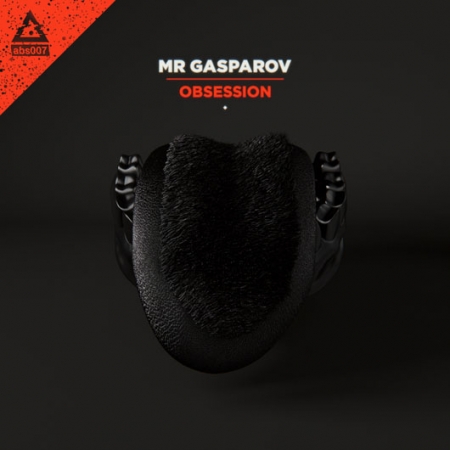
Obsession is the latest release to come from the hands of Mr. Gasparov, a Barcelona-based DJ/producer who has been working under the radar for years. Taken from that forthcoming EP, “Playtime” is, well, a playful little production. A bouncing bassline and slightly skittering beat move the track forward while side-chained chords and a small army of percolating melodies bend around the track’s rhythmic core. Between the laughing children samples and buoyant, funk-infused synth twists, it’s clear that “Playtime” is a tune that values fun over dark seriousness. The rest of Mr. Gasparov’s Obsession EP will be available as a free download from the Abstractor label beginning tomorrow.
Throughout the week, a whole lot of material gets posted here on XLR8R. And while we know—and love—that some hardcore readers will eagerly pour over every single news story, interview, podcast, video, and MP3 download that appears on the site, we also realize that for most people, it’s impossible to see everything, which means that some quality XLR8R content is likely to get missed in the hustle and bustle of everyone’s daily lives. In the interest of making it easier for everyone to catch up, every Friday we present The Lowdown, a weekly wrap-up of the top 10 tidbits from our site.
1. The latest XLR8R podcast came courtesy of Huerco S. (pictured above), a Kansas-born producer who recently relocated to Brooklyn and also released his debut album, Colonial Patterns, this week.
2. With Machinedrum’s new Vapor City full-length finally seeing the light of day next week, excitement surrounding the album is at a fever pitch. Contributing to that fervor was the release of a new video for LP cut “Gunshotta.”
3. Videogame fanatics around the globe are still reveling in the recent release of GTA V, and it’s safe to say that a small sliver of their excitement stems from all of the music featured in the game’s virtual radio stations. One station is actually curated by none other than Flying Lotus, and its playlist includes “Crystals,” a brand-new track from Jersey beatmaker Clams Casino. The tune is available for free download.
4. Jon Hopkins’ Immunity LP has been one of 2013’s most celebrated electronic albums, and the praise kept coming this week when the UK producer unveiled a new video for an alternate version of album cut “Breathe This Air.”
5. This week’s contest offered XLR8R readers the chance to win a Minx M5 soundsystem from Cambridge Audio. Enter now before it’s too late.
6. UK duo Karenn announced an upcoming European tour, and sweetened the news by giving away WAV files of SHEWORKS001, the pair’s 2011 debut on its own Works the Long Nights imprint.
7. LA beatmaker Nosaj Thing quietly dropped a remix 12″ this week, and the record found Detroit stalwart Kyle Hall reworking the Toro Y Moi-featuring “Try.” The track is currently streaming online.
8. Urulu will soon be embarking upon a North American tour, and the LA producer elected to help spread the word by giving away “Shoe Laces,” a galloping house jam with rubbery pads, a nimble drum pattern, and fluctuating textures.
9. Our latest B2B feature found us chatting with UK producers Leon Vynehall and A1 Bassline, who discussed their collaborative Laszlo Dancehall project and the state of the Brighton music scene.
10. London producer EVM128 will soon be dropping a new EP, Make Me Feel, via the Somethinksoundslabel. Ahead of its release, the imprint elected to give away a Palace remix of the title track as a free download. They also sent along a stream of the entire six-track EP, so we went ahead and posted that too.
An expanded version of the The Lowdown is also available via a weekly email newsletter. Those interested in an even more in-depth round-up of XLR8R content, including a complete listing of all the free downloads we’ve offered in the past seven days, should sign up by entering their email address below.
Unveiled just today, “Peppermint” is the latest bubbling tune to arrive from Bristol’s premier house export, Julio Bashmore. The effervescent dancefloor jam is apparently lifted from the DJ/producer’s as-yet-unannounced debut album, and features a sultry vocal hook from UK songstress Jessie Ware, who is certainly no stranger to working with Julio Bashmore. “Peppermint” can be heard in its entirety via the player below.