PAN to Release New LP from Dalglish

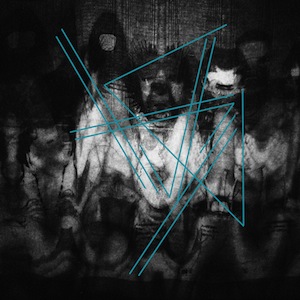
Bill Kouligas’ PAN label has announced a new album from Berlin artist Chris Douglas (known primarly for his work as O.S.T.), producer under his Dalglish alias. Entitled Niaiw Ot Vile, the 10-track LP is dedicated to Douglas’ late friend and Isolate founder Wai Cheng. Having been involved in electronic music since his teens—working with Underground Resistance‘s Miles Banks and Drexicya‘s James Stinson—Douglas is in a prime position to release what should be a dissective and exploratory record. Described by the label as “complex and cavernous,” the music is said to “[marry] the freedom and tonal breadth of electroacoustic composition with percussive patterns disjointed to the point of collapse.” Niaiw Ot Vile is set for release on November 8, but before then, the artwork (done by Bill Kouligas and Kathryn Politis) and tracklist can be viewed below.

A1. Venpin
A2. Noscrlu
A3. Viochlm
A4. Out_Kutzk
B1. Ciaradh
B2. Donsfe
B3. Seit Nuin
B4. Sclunt
B5. Mothlitz
B6. Oidhche

San Proper to Inaugurate New Label with EP; Preview It Now

Known for his flamboyant brand of house music, Amsterdam DJ/producer San Proper has announced that he will soon kick off his own label with the release of a brand-new EP. Called Proper’s Cult, the label was named after the artist’s club night and will operate as a sub-label of Rush Hour. The four-track The Culture EP will mark its inaugural release, and is said to find Proper exploring his idiosyncratic approach to house further, continuing to combine live instrumentation, hardware productions, and his strange, free-flowing vocals. The Culture is scheduled to drop later this month, but in the meantime, its tracklist and artwork can be found below, while clips of each track can be heard here.

1. Wicked Bushes
2. Thirty Bucks
3. Sirene
4. Hitch House

Native Instruments Introduces Maschine Studio and 2.0 Software

Native Instruments appears ready to push its flagship Maschine production center into new territory with the introduction of the forthcoming, reimagined Maschine Studio and enhanced 2.0 software. The Maschine Studio seems to take a Maschine-on-steroids approach to its configuration, maintaining the revered features of the original unit while adding two new full-color, high-definition displays, a comprehensive edit section with multi-purpose jog wheel, and an overall larger and more robust design. Along with these more visual and physical enhancements, the Mashcine Studio will also come with Maschine’s 2.0 software, which brings an upgraded audio engine, a mixer window, five new drum-synths, and a “plug-in strip” to Maschine’s dedicated program. While the Studio will come with 2.0, existing users with the original Maschine and Maschine Micro units will be able to update their software (for a price) come November. The Maschine Studio is expected to hit stores on November 1 for a street price of around $999. In the meantime, NI’s demo video for the upcoming piece of gear can be watched below; more info is available here.

Theo Parrish Remixes Mala on New 12″; Hear It Now

Brownswood is set to release a 12″ for “Como Como”—a cut lifted from Mala‘s 2012 record Mala in Cuba—as a limited-edition 10″, pairing it with an incredibly astral remix by iconic Detroit house artist Theo Parrish (pictured above).As one half of Digital Mystikz, Mala has essentially helped forge the landscape of dubstep, and the excellent Mala in Cuba saw the bass-inclined producer shifting gears and exploring the use of live musicians in its titular location. Parrish’s remix of “Como Como” expands on that, featuring ethereal and haunting loops of vocal and instrumental fragments. He essentially twists his production into a ghost of Cuban music, rather than the sort of celebration that Mala had initially created. “Como Como (Theo Parrish Remix)” can be heard below, and the 10″ will be available for purchase on October 21.

Velvet Tux “Creole”

Chasing Toulouse—a just-launched label from London, ushering in its roster with free digital releases spread out over the coming months—has announced its foray into dance music with “Creole,” a lustrous cut of UK house from London upstarts Velvet Tux. Subtle, pestering synths ebb and flow as a rich kick drum and spotless, delayed chords lead into the focal section’s tilted, galloping rhythms. An unnamed female vocalist lends her sensual Spanish whispers to relax the track even further into a late-night lounge setting. The rest of Chasing Toulouse’s inaugural offering is now available over on SoundCloud.

Creole

Listen to Daniel Avery’s Debut LP ‘Drone Logic’

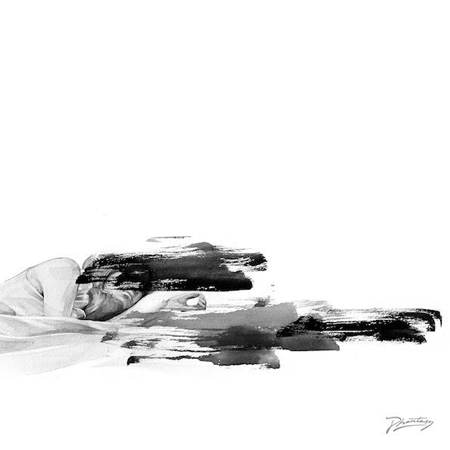
London acid enthusiast Daniel Avery has quickly made a name for himself over the past couple of years—churning out a distinctive strain of dark and rigidly funky house music for a handful of different labels, and even issuing an installment of Fabric’s Fabriclive mix series. And yet the prolific DJ/producer has yet to drop his debut full-length, Drone Logic, though that is set to change early next week. Ahead of that album appearing on October 7 via Phantasy, we can now stream all 12 of its tracks. Courtesy of Pitchfork Advance, Avery’s dense and winding LP is available to listen to in full, here.

Five Minutes with Jimmy Edgar at Decibel 2013

XLR8R had a very busy weekend in Seattle at the city’s annual Decibel festival—those looking for a thorough rundown of the festivities are advised to check out our review—but amidst all the activity and quality music, we wanted to take the time to chat with a couple of our favorite artists. Jimmy Edgar is someone we’ve been following for a long time, and after seeing the Detroit-reared, Berlin-based artist do his thing at multiple festivals this year, we figured that we should take the opportunity to properly sit down with the man and discuss his various musical endeavors, including his JETS collaboration with Machinedrum and his recently launched Ultramajic imprint. The conversation was quick—after all, Edgar was tapped to play two sets in a single night at Decibel and didn’t have much in the way of free time—but he still managed to shed some light on the origins of Ultramajic, share some his future plans for the label, and tell us how he balances his numerous projects.

XLR8R: These days you’re dividing time between your own solo stuff and your work with JETS. Is it difficult to divvy up the creative process?
Jimmy Edgar: Basically, [Machinedrum (a.k.a. Travis Stewart) and I] fit JETS in whenever we can. Last year, we were traveling a lot together, and on our days off we would go into the studio if we had a chance. Travis and I are both approaching JETS like any time we get, we have to [work on] it. Travis is always like, “You know, we’re not going to see each other for this long, we have to do it then.” He’s been really good at sort of prodding that situation.

Other than that, I can work on my own stuff on my own. When I’m at home, I definitely shut my phone off for creative time.

How do you feel like your own music is different from what you’re doing with JETS?
I feel like it’s completely different. I always think that when Travis and I are working together, we’re sort of channeling each other’s music and trying to subtly impress each other, in a way. We’ve always had this thing where we really like each other’s music, but we’re also kind of competitive. I think it creates this weird tension in the studio.

The funny part is that a lot of reviews that were first coming out for JETS were saying, “Jimmy did this and Travis did this,” and normally they were completely opposite [from who actually made what]. It’s really interesting how we were always trying to do each other’s tricks on the tracks.

You’ve started your own label, Ultramajic. Where does the name come from?
Pilar [Zeta] and I were watching a film about Majestic 12. We really liked how the spelling had a “j” in it, and she mentioned how it was sort of like how I spelled Majenta. [Ultramajic] sort of formed from that.

I also think that the artwork that we were doing with the Majenta series on Hotflush was sort of the vibe that we’re trying to channel a bit now with Ultramajic. So it’s all kind of aligned.

Is Ultramajic just your label, or is it you and Machinedrum together? It seems unclear.
Yeah, it is unclear. On paper, it’s just mine. [laughs] I’m financially backing it, so I guess you could say it’s mine. But I definitely wanted Travis involved and he’s been really involved in the A&R side of it. He’s definitely been a good creative partner in the process.

Only a few months have passed since the label was first announced, but it seems like the releases are coming really quickly. Is that a pace you plan to keep up?
I’m hoping. Right now, we have several releases that are being finished. One is my collaboration with Sophie. Another is Danny Daze‘s record, which is just about to be finished. It’s a bit weird to talk about it before [the records are released].

Ultramajic is definitely a priority for me because of my unhappiness in the music industry. [The idea is to combine] this really cool visual element with music that we want to release, whenever we want to release it. Working with other labels is just so much time and planning. Just being in control of [the process] feels better. Whether it does well or not, this is definitely something that we can afford to lose our asses on, which feels really good to say. Hopefully it does do well, but at this point, it doesn’t really matter.

And you’re going to be doing vinyl for all of the releases?
Yes. So far, all three releases have been full-color vinyl, and that’s part of the reason why it’s a bit hard to make it work. I think in the future we’ll start to scale back on that. We’re planning on doing a couple of white labels. Vinyl is definitely not a priority for me, because I don’t play vinyl anymore. To be honest, I really don’t care to support vinyl. I think it’s kind of dead. I don’t like carrying vinyl, and I don’t see why anyone would want to. I really love seeing our artwork in that packaging form, but I just feel it’s time to move on from [the format].

But with that said, I think it’s also cool that we’re [doing vinyl] and we’re able to print off whatever, 1000 copies. They’ve all been selling. The first one sold out really quickly and the second one I think will sell out as well. We’ll definitely continue that as long as it does okay.

You have your own new EP, Mercurio, coming out on Ultramajic in November. What are your plans after that?
I don’t know really. I’ve been sort of just continuing my remix frontier. I’ve been working on one for Claude VonStroke, and Art Department, and just continuing that. I’m really concentrating on dance and club music because I’ve been DJing all year, so that’s the only thing that’s inspiring me. But I’ve also been making the complete opposite, which is this really nice ambient music and just sort of meditation music.

I don’t know. [What I will do] all depends on if I find it worthwhile to make another album. I don’t know if it really makes sense. I think the album format is also kind of dying. It’s been nice just doing singles. I think a lot of people’s albums have a lot of filler tracks, so it’s the difference of me putting an album together of all really good tracks, or just releasing them as singles. That brings up another situation: do you release a bunch of singles and then just put them all together with some bonus tracks for press? That’s also an option, but it just seems kinds of dirty. Who cares about that except journalists?

Podcast 315: Oneohtrix Point Never

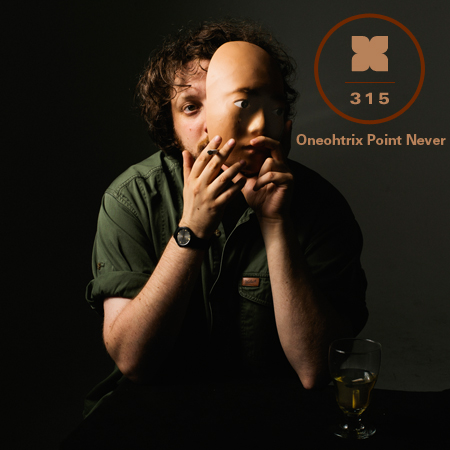
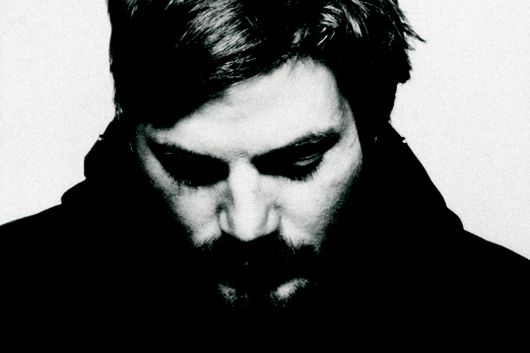
Describing the work of Oneohtrix Point Never (a.k.a. Dan Lopatin) is no simple task. While the Brooklyn-based producer initially made his name with a series of trippily drifting synthscapes, recent years have found him consistently expanding his artistic vision, to the point where describing his “sound” is all but impossible. Today finds Lopatin releasing the excellent R Plus Seven, his latest full-length and first for the storied Warp imprint. Though his synth wizardry is still part of the equation, the LP further solidifies Oneohtrix Point Never as an experimental force, an artist who’s taken stock of musical history and is unafraid to assemble challenging and highly conceptual worlds of sound. That’s why we were so excited at the prospect of Lopatin putting together an exclusive mix for the XLR8R podcast series; there was little doubt that he would craft something that was both engagingly detailed and stunningly off the wall. Glancing at the tracklist, there’s little question that Lopatin put a ton of time into the mix, as the podcast not only runs for nearly two hours, it also spans multiple decades, genres, and continents. As it unfurls, Lopatin flashes a unique ability to connect the dots between seemingly disparate points of the musical universe, and often does so with a genuine sense of humor, which makes the listening experience all the more enjoyable. (For instance, the artwork below is something that Lopatin insisted we include with the mix.) R Plus Seven is a real triumph, but Lopatin’s podcast is a similarly accomplished effort, not to mention a collection of music that’s absolutely enthralling in its own right.

01 Meredith Monk “Cluster 2” (ECM New Series) > Mark Leckey “Fiorucci Made Me Hardcore (Edit)” (Death of Rave) > GZA “Shadowboxin'” (Geffen)
02 Paul Lansky “Notjustmoreidlechatter”
03 Jefferson Airplane “Today” (RCA Victor)
04 Kenji Kawai “Virtual Crime” (BMG Victor)
05 Aksak Maboul “Scratch Holiday” (Made to Measure)
06 The Game “See No Evil” (Interscope) > Ben Frost “Untitled Transient (Edit)” (Bedroom Community)
07 Taylor Deupree “Snow/Sand (Edit)” (12K) > Julia Holter “Running Through My Eyes (Edit)” (Domino) > Three 6 Mafia “Charging These Hoes” (Relativity)
08 Forgemasters “Track With No Name” (Warp)
09 NY House’n Authority “Apt 2A” (Nu Groove)
10 Kraftwerk “Sex Object” (EMI)
11 Scott Johnson “Involuntary Song #2” (Nonesuch)
12 F.U.S.E. “Nitedrive” (Wax Trax!) > Coil “Rosa Decidua” (Eskaton) > Global Communication “12 18” (Dedicated) > Mark Leckey “3 Minute Wonder (Channel 4 video excerpt)” > Lazy Smoke “Under Skys” (Jackpot)
13 Robert Hood “Minus” (Tresor)
14 Yasuaki Shimizu “Bridgestone 2” (Crammed Discs)
15 Ariel Pink “Mature Themes” (4AD)
16 Koopsta Knicca “Now I’m Hi (Pt. 2)” (D.Evil)
17 Judee Sill “Abracadabra” (Asylum)
18 Morton Feldman “Rothko Chapel 3” (Hänssler Classic) > Severed Heads “Hemet” (Sevcom) > Wendy Carlos “Title Music From A Clockwork Orange (from Henry Purcell’s ‘Music for the Funeral of Queen Mary, Z. 860’)” (Columbia)
19 Benjamin Lew “Les Traces d’Un Pont” (Crammed Discs) > SND “00018 Old End Ng” (Mille Plateaux) > Cocteau Twins “Cherry-Coloured Funk” (4AD)
20 Geinoh Yamashirogumi “Catastrophe” (Invitation)
21 Ayhun “OAR003-B” (Oni Ayhun) > Future Sound of London “Bird Wings” (Virgin)
22 Autechre “Piezo” (Warp)
23 Kanye West “Bound 2 (Edit)” (Def Jam) > Mark Leckey “Fiorucci Made Me Hardcore (Edit)” (Death of Rave)

Download MP3
Download M4A (iTunes enhanced)
Subscribe to Podcast (RSS)

XLR8R_Podcast_Oneohtrix_Point_Never_2013_10_01

Air Max ’97 “Apercu”

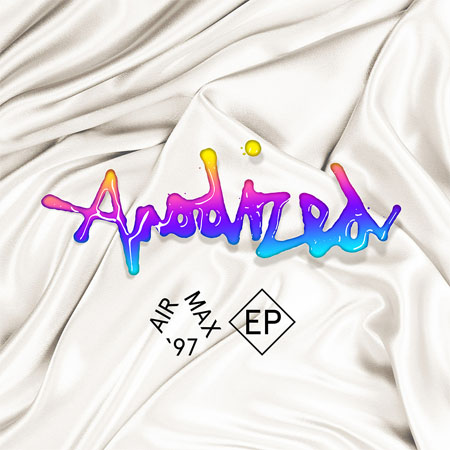
Today, Melbourne upstart Air Max ’97 self-released his new Anodized EP, a five-track record full of sharp club music. Opening cut “Apercu” serves as a fine example of the budding artist’s talents. Built around a constantly revolving array of hard-edged percussion, the tune does not need much to get its point across, keeping the various rhythms pulsing while brief spurts of ghostly melodies and gradual synth washes add a tasteful amount of musical texture. Air Max ’97’s full Anodized EP is available as a name-your-own-price download over on Bandcamp.

Apercu

Apercu

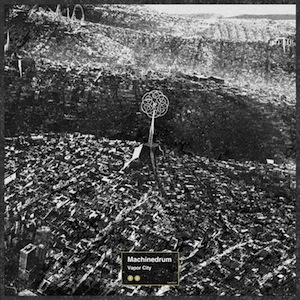
Machinedrum Vapor City

It’s always a relief when an album comes packaged with a concept, but the strength of the music allows us to immediately set it aside. Machinedrum‘s follow-up to 2011’s universally lauded Room(s) purports to map the different districts of a megalopolis the Berlin-based producer encountered in his dreams. Granted, this isn’t something that one would ever get from listening to the album itself; nevertheless, it’s a sleek and unified collection of tracks that finds Machinedrum hitting his stride by bearing down on what he does best: writing tunes that yoke the frenetic drum energy of footwork to airy, drawn-out melodies. If the LP is indeed the soundtrack to the city of the title, there are a lot of broken hearts in Vapor City.

Machinedrum has toyed with concepts to great effect before. His JETS project with Jimmy Edgar covered a dizzying amount of stylistic terrain, and the pair’s FACT mix exploited that playfulness by presenting itself as a polyglot pirate-radio transmission. Vapor City doesn’t sport the same cracks or restlessness. It zones in on the tipping point that drum & bass found many years ago, where the physical intensity of the music gave way to more traditionally musical concerns. Travis Stewart hasn’t gone full LTJ Bukem yet, though. The rhythmic inventiveness of the slouching and slapping “Don’t 1 2 Lose U” finds an easy, vibrant balance between the thrust of its warm bass currents on the one hand and its pooling synth pads and sadly chirping flutes on the other. It’s a very effective means of keeping the album’s momentum up, even while it continually crosses emotionally fraught terrain. When that cumulative tension dies down on the closest thing we’ve heard to a ballad from Machinedrum, “U Still Lie,” it’s particularly satisfying to wallow in those vibes.

On “Center Your Love,” Machinedrum goes in like Synkro with chromatic strums of nylon-stringed guitar over a blocky beat and an out-of-context, processed vocal phrase, but neon synths bleed in from the edges. Dazed touches like this keep Vapor City from leaning too heavily on sentiment for its emotional impact. Every “musical” signifier thrown into the mix allows Stewart to take chances elsewhere, evoking the obvious and quickly dodging the consequences. Two years after Rooms(s), the musical world has caught up to the influences which made that album a unique amalgam; it’s now commonplace for artists to employ beats that seem much busier than they really are and the ghostly afterimage of R&B. It’s easy to imagine a guy in a five-panel cap performing Room(s)-esque music with exaggerated, b-boy flourishes on his MIDI controller, but it’s now hard to mistake that style of production as something other than a really intentional labor, or even an act of outright mimicry. Perhaps that’s why Vapor City is so successful; it’s a different, and more unique effort. Moreover, the LP doesn’t look outside of itself to the same extent that its predecessor did. Maybe it’s in this way that the album is like a city—it’s self-sustaining and bounded, even if these are only convenient fictions for its inhabitants.

Page 1556 of 3781
1 1,554 1,555 1,556 1,557 1,558 3,781