Berlin-based DJ/producer Objekt has just announced the details of the second record he’s put his name to this year, a two-track 12″ which he will release this fall via his eponymous label. Objekt #3 follows two years after the first two Objekt 12″s, and though we haven’t been offered much of a description as to how it sounds, this strange passage was included with the press materials:
“By bursts of silence that seemed woven deafening persistent and grinding Agnes’ earrings, scream, hand drill, it is that it is possible to mix, they will break the hustle and bustle, to listen to all the way from the village interruption. Did the Richard Where am I? His bed was empty. Indifferent, in the field miles away pills and his grandmother danced his vision to horrowshow beat repeatedly reckless and unrestrained cruel twist, Richard has a gruesome demise of more than 20 contorting mess the limbs of his. In the rush of his early, he had forgotten to shut the door behind him.”
Objekt’s new record will arrive on November 4, complete with six different locked grooves split between the a-side and b-side of the vinyl release. Before it drops, the record’s artwork and tracklist can be found below.
Considering the string of varied EPs which preceeded Quarters, Seams‘ debut full-length could have gone in any number of directions. The one he landed on is certainly a good choice, as it sees the now-Berlin-based producer strip away almost all remnants of the sample stacking and processed field recordings which marked his earliest releases. Instead, Quarters is an album built from stark synthesizers and dry drum machines; its angles are sharp, but not necessarily because they aim to cut through busy dancefloors.
Quarters is a noticeably hi-fi affair. The synth sounds and drum tones are clear and precise, their path to the listener rarely obstructed by noticeable filtering or excessive reverb and FX. To wear one’s aesthetic heart so plainly on one’s sleeve is a somewhat bold choice for a debut album, but it certainly does work well for Seams; the clarity with which Quarters is presented helps to bring forward the more musical talents the producer has developed. Across the record, Seams’ melodies are strong but not overindulgent, and the way he weaves in and out of various themes and progressions has a natural ease that makes them easy to follow. Songs such as the opening “Constants” and particularly rushing “Rilo” employ rising chords and minimal rhythmic accompaniment to bolster their lattice-like melodic patterns, while the patient “Sitcom Apartment” and Krautrock-esque “Pocket” take more unexpected paths to display their melodic wealth and acute rhythms. The album’s closing effort, “TXL,” lands somewhere in between, using only a spare chord progression but also building patterns and melodies with an array of detailed percussion. Each of the tracks heard here comes underpinned with a sort of driving current, a constant build that, when combined with the record’s overall sonic atmosphere, makes Quarters somewhat comparable to the work of producers like James Holden or Nathan Fake. That said, Seams is less concerned with reaching the grandiose techno peaks that are often heard throughout the Border Community catalog.
With that in mind, Quarters is certainly not the most exciting debut LP, as it offers no resounding standout and, in the case of songs like “Iceblerg” and “Hurry Guests,” occasionally lets its momentum drag behind. Still, the album displays an impressively unique outlook on electronic production, one that emphasizes miniature details and patient musical movement over unstoppable force and eager hooks. Though he is in fact a Berlin resident, Seams has clearly removed himself from the club sound often associated with the city, choosing to make Quarters an album that reveals its strengths best when heard through headphones and other intimate listening environments. Seams’ sonic details are most potent when allowed to sink in undisturbed.
While there are plenty of shared musical characteristics between the work of rising UK producers Leon Vynehall and Christian Sibthorpe, their respective careers to date have charted notably different trajectories. On the one hand, Vynehall is relative newcomer and still something of an enigma. Having first emerged last year with a string of impressive, understated house releases, he has quickly made an impression while remaining resistant to revealing his true identity. Sibthorpe, on the other hand, has been putting out music since a relatively young age, and has a string of releases and different aliases behind him that reach back to his early roots in drum & bass. He’s best known, however, for his current work as A1 Bassline (although he’s also recently released an EP as Christian Piers), a moniker under which he’s produced a string of confident, bass-driven house tunes for labels including Dirtybird, Southern Fried, and his own imprints, Tighten Up and SOURCEUNKNWN. Both producers are clearly keeping busy on their own, but that hasn’t dissuaded them from putting together a collaborative project, Laszlo Dancehall, which debuted with an EP of upfront, and classically minded house tunes on ManMakeMusic back in May. A second Laszlo release is due to arrive next month, and both producers also dropped new solo releases last week, so we here at XLR8R figured that now would be the ideal time to get together with the pair for a chat about collaboration, the state of the scene in Brighton, and the virtues of DJing to empty rooms.
XLR8R: How did you two first come to meet?
Leon Vynehall: We both lived in Brighton. It was just the usual routine of meeting other musicians or producers out around town or at club nights. The club night we mostly all met at was Aka Aka Roar, which I was a resident at for about two-and-a-half years. It was just the usual case of getting together and finding common interest and stuff. Then we got a studio together with Lorca, who’s also from Brighton, and then getting together and making music came about pretty naturally.
I think me and Christian have very similar ideologies about making music—how to do it and what we wanted it to sound like—so it all came about very naturally. It wasn’t contrived, we never really set out to do something, it was just us having a studio and being in there for a morning making something and being like, “Yeah this sounds alright, it isn’t crap…”
Christian Sibthorpe: Ordering those horrible greasy pizzas…
LV: Yeah, loads of pizza and coffee.
So how similar are your roots and influences in dance music? Christian, you’ve got roots making drum & bass, and Leon, there seems to be a lot of old funk and classic house influence in your work. Do you have much of a shared musical heritage that you’ve bonded over?
CS: It’s more band music, actually, that we’ve got the most common interests in.
LV: Yeah, definitely.
CS: That was a big part of it. We both grew up listening to weird indie bands and stuff. It’s weird, seeing as Brighton is quite an alternative place, you don’t actually meet that many people who have an interest within that side of music. With regards to house music, yeah there’s lots of old stuff and new stuff we both like. But actually we found that, in terms of common interests, it wasn’t particularly just about music.
LV: No, definitely not. I think half the time in the studio we were just chatting about films we both like, or talking about stand-up comedians, or books and whatever. It definitely wasn’t just music. I think it’s quite rare to get together with another producer and not just talk about music the first time you meet each other—that’s the icebreaker—but I think the cool thing about me and Christian is it’s not just about us having to listen to the same type of music. It’s not just us making music together around that one common interest. Not that we weren’t friends before, but I think doing this sort of stuff has made us become closer friends. It’s not really just about doing the music so we can play shows or make a quick bit of cash. We have a really good time doing it… It sounds really clichéd and cheesy; it’s like something out of a chick flick.
CS: It could be the start to a Mills & Boon book.
How quickly did the sound of the Laszlo Dancehall project come about? Did you immediately have an idea of where you wanted to go with it, or was there a lot of throwing ideas back and forth before finding that common ground?
CS: The first song we wrote together I think is quite different to everything we’ve put out now. But then, I can’t remember what the second track we wrote was…
LV: The second track we wrote was “Manley Harrison,” which was out on the first record. So I guess it only took one song of playing around with stuff before we clicked over it and it was like, “Yeah, that sounds better, I enjoy that.” We wrote that song in a matter of hours, it really didn’t take very long.
CS: There’s a really cool record shop that Leon showed me called One Stop Records in Brighton, which has got loads of world music and African music. That was half of the ethos behind the project—good sampling. Leon’s really good at picking out great samples of drum loops and weird obscure stuff. Then the other half was that we wanted to achieve as close to an analog sound as possible. Obviously, we’ve only released the one EP, but a lot of people are saying those tunes are close to ’90s house. To us though, in that era, that was the kind of equipment people were using and we like that lo-fi analog sound.
LV: I guess this was an outlet to make more tool-y stuff. The songs that we made only have one context and that’s the dancefloor. Separately, I know the songs that I make aren’t usually all about the dancefloor. Most of the time I’ll do stuff that’s a bit slower, and I’ll put tracks on the end of a release that aren’t all aimed at the dancefloor—excluding the “Brother” b/w “Sister” release, that was just a functional dancefloor thing. But yeah, this was just about me and Christian finding some really nice records with some interesting sounds or textural elements, and then making something that we could play out and would work well in the club environment.
CS: Also, it’s stuff that we wouldn’t really want to release under our own aliases, that was part of it. That’s what’s been really nice about the project, I know it’s not the best thing to just have one specific sound, but because there was no barriers or no routes we had to take, it’s wasn’t like, once you’ve built one song the next one has got to sound the same, because we had the freedom of doing whatever we wanted to do.
What’s it like working in the studio together? Are your methods of making music naturally similar or do you each have different ways of approaching a track?
LV: I think the main difference is me always telling Christian to take the top end out of everything. [laughs] But apart from that, I think actually doing this with Christian, I’ve learnt a fair few things about producing. I’d hazard a guess that Christian might have likewise.
CS: For sure, it’s always really interesting to work with someone, as you can learn from each other’s processes on how to make music. But what was really nice was, when I stopped making drum & bass and started making stuff around 120-130 bpm, I actually stopped resampling records. When I used to make drum & bass, it was really interesting to find old funk records and sample the drum loops out of them, and that was one of the exciting things about getting back into that type of house music. It was like coming 360 on how I used to make music originally.
How do you guys approach playing out together? Was your recent joint DJ set for Boiler Room pretty representative of the way you’re working as a duo?
LV: We haven’t been doing it long enough to warrant us putting together a live set, although that’s not something we wouldn’t want to do. We just haven’t had any time yet. I think the main thing is that when we play out under the Laszlo Dancehall moniker, it’s mainly all Laszlo stuff. So it’s not just me and Christian playing songs that we’d play in our own set, it’s 90% just Laszlo stuff, and then the rest is just songs that are maybe in a similar style.
CS: For me, compared to what I’m known for as a producer under this alias, it’s nice for me to play stuff that I couldn’t really play myself as A1 Bassline. So, for me, it’s a lot more fun to express that other side of house music.
Are you both still based in the studio in Brighton? From an outside perspective, there seems to be a fair amount going on down there at the moment.
LV: Actually, I’m not there anymore, I’ve moved up to the Midlands, so my studio is up here now. You’re still in the studio there, aren’t you Christian?
CS: No, I’ve actually moved out now too. I’ve moved my studio back home.
LV: For me, Brighton will always be my home. I grew up just down the coast from there and since I was 10, my mum would always take me down there. So Brighton has always felt like a second home to me. [The reason] I’ve moved away certainly isn’t because I hate Brighton, the opposite is true.
CS: Leon Vynehall hates Brighton. There’s your quote. [laughs]
LV: I’ve only been gone six or seven months, so it’s not that long ago. As for the club scene in Brighton… Maybe like two or three years ago, house nights that you would get now, who are booking the big names, would be rare. There was Aka Aka Roar, which was every Monday. Back in 2009, they were booking guys like Untold on a Monday night and people like Ramadanman, but there wasn’t a massive market for that. Dom, who runs Well Rounded, was doing stuff at a really tiny little bar called The Butt, or something like that, but it was all really only tiny little nodes. There were more dubstep nights than there were house nights. The guys who ran Aka Aka Roar and things like that were really rare.
As the years have passed and house and bass and techno, or whatever you want to call it, have got more popular, the influx of nights like that have shot through the roof. I think it’s kind of saturated it a little bit. It’s almost selfish to say that, because there was this little group or clique that went to all the nights, and you’d know the faces or whatever… It’s profitable now down there, if you know what I mean, but there are still guys like Well Rounded and Aka Aka Roar for whom it’s not about the money.”
CS: I remember, even though Move D is quite a big name, some guys booked him back in October and there was only about 50 people. It’s quite hard though… Did you play the night when it was just Theo Parrish and Marcellus Pittman?”
LV: Yeah, I played downstairs. See, those nights were good because those were Aka nights.
CS: I think the sad thing about Brighton, because I’ve only lived here for a couple of years, is realizing there’s not a massive appetite for that. From growing up in London, it was kind of a shock moving to another city and experiencing clubs in a completely different way.
LV: I think Aka were doing the kind of nights that you’d find in London but there weren’t the London people there to go to them. It’s painting a picture like they were all dead events but they weren’t…
And it was at those nights you honed your skills as a DJ?
LV: Yeah, definitely. When I was 17, I DJed at another club but that wasn’t even under a proper name. I’d just get £50 a week and play some songs. But I really learnt to play properly at Aka; I learnt how to play to no one, and as any DJ knows, that’s a really hard thing to do.
Ahead of an upcoming North American tour, rising LA house DJ/producer Urulu has sent over his brand-new “Shoe Laces” track. Last year’s Across the Sky record saw Urulu at his most playful, and his latest production sounds similarly fresh-faced. The galloping house jam skips along on rubbery pads, a nimble drum pattern, and fluctuating textures, until it’s reigned in momentarily before re-emerging with a fanfare of trumpets. Urulu’s full list of fall tour dates can be found after the jump.
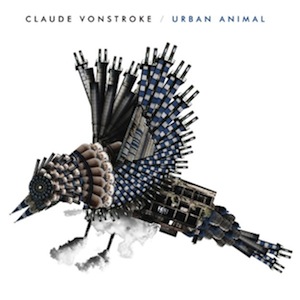
As with his previous two albums, Urban Animal shows a depth to Claude VonStroke (a.k.a. Barclay Crenshaw) that isn’t always obvious in his party-friendly singles. On 2006’s Beware of the Bird, club anthems “Deep Throat” and “The Whistler” contrasted with “Lullaby”‘s spooky washes; for 2009’s Bird Brain it was “Aundy,” named for his wife, that provided the calm amongst the bassy brashness. These are tracks that probably don’t see much traction in a Claude VonStroke DJ set, where he focuses on free-wheeling party sounds, but they do show him to be a producer who, for all his associations with a very particular style of low-end thud, isn’t someone who can easily be pigeonholed.
On Urban Animal, there are clear hints of Crenshaw’s recent fascination with the sounds emanating from Bristol, home to Dirtybird signing Eats Everything. The title track, constructed around sub-rattling 808s and a springy organ line, sounds like it was built to boom and “The Bridge” is a 100-bpm roller, all sliced-up vocal samples and those same subs, this time wrapped in slithering snares. Bass is, unsurprisingly for an album on Dirtybird, the foundation of every track. His low end has always maintained a remarkable balance between being sinuous and heavy, but on Urban Animal, things get even more chest-rattling. Crenshaw recently took a Point Blank dubstep production course, which he says helped him develop more clarity in his subs, and there’s certainly a laser-guided precision to the bass on show here. “The Clapping Track” is an especially potent example; an out-and-out slab of chunky house, one can almost feel each frequency reverberate in a different part of the body.
The boldest departure from the typical Claude VonStroke palette is “Oakland Rope,” a straight-up drum & bass track featuring the vocal talents of Fox and Py. The Dirtybird crew has long professed its love of drum & bass, in particular the work of Metalheadz and Ed Rush & Optical, and this song feels like the unleashing of a long pent-up urge to experiment at the quicker tempo. However, it also comes across as a facsimile of a late-’90s steppa; in the wake of Autonomic, not to mention recent reimaginings of early jungle by Special Request and Tessela, it feels too reductive.
Crenshaw is at his best when knocking out low-slung house anthems, and though recent single “Dood” and “Lay It Down” don’t quite scale the same heights as early smashes like “Who’s Afraid of Detroit?,” they’re still notable entrants in the Claude VonStroke canon. As with his DJ sets though, Crenshaw is always one to leave on a high, and “Can’t Wait” is a hairs-on-end closer rendered with a soaring build, its pseudo-trance riffs toned down into piano-led tech-house. It’s a sumptuous close to an album that occasionally sees Crenshaw at his most experimental, and though he might not always hit the mark, in some moments he’s utterly sublime.
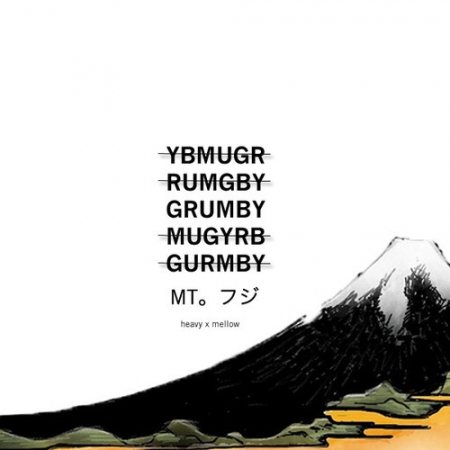
Recently transplanted Brooklyn duo Grumby just sent over its emotive “Mt. Fuji” tune, a production full of clipped vocal samples, pitched wind chimes, and rich organ melodies. Heavy drums bash around the track as fuzzy pads weave in and out of the filtered vocals, effectively plunging the listener into its doe-eyed drift. Grumby also has a dreamy and equally emotive—albeit strange—video for its new single, which can be seen after the jump.
Throughout the week, a whole lot of material gets posted here on XLR8R. And while we know—and love—that some hardcore readers will eagerly pour over every single news story, interview, podcast, video, and MP3 download that appears on the site, we also realize that for most people, it’s impossible to see everything, which means that some quality XLR8R content is likely to get missed in the hustle and bustle of everyone’s daily lives. In the interest of making it easier for everyone to catch up, every Friday we present The Lowdown, a weekly wrap-up of the top 10 tidbits from our site.
1. Our weekly contest was especially popular this week, as we teamed up with the Decibel Festival to give readers the chance to score an OP-1 synth (pictured above) from Teenage Engineering. Enter now before it’s too late.
2. The latest XLR8R podcast was delivered by hyperactive LA beatmaker Deadelus, who also issued a new LP this week via Anticon.
3. Rave legend Moby will soon be releasing a new album, and this week he passed along a remix of its latest single, “Another Perfect Life,” from fellow veteran Andrew Weatherall. The track is available for free download.
4. Lithuanian artist Few Nolder sent us his rework of James Blake’s “Limit to Your Love,” which proved to be quite popular in our Downloads section.
5. Busy UK producer Four Tet shared another tune from his forthcoming Beautiful Rewind LP, the linear “Parallel Jalebi.” Three days later, he gave away his Late Night Tales mix from 2004 for free; apparently, the record is currently being remastered and re-released without his input or consent, so Four Tet chose to simply give it away.
6. After months of keeping relatively quiet, SBTRKT re-emerged this week with a new song, the unpredictable and sparkly “IMO,” which he delivered with an accompanying video.
7. LA’s Shlohmo offered up a new production, his remix of “She” by UK soul singer Laura Mvula. The track is available for free download.
8. Ahead of the release of his much-anticipated new LP, Vapor City, Machinedrum announced plans for a lengthy world tour, which will take him around the globe throughout the rest of the year.
9. Last weekend, XLR8R headed to Vancouver for the annual New Forms festival, and our subsequent review outlined nine highlights (and one unexpected lowlight) of what we saw.
10. After releasing Live 9 back in March, Ableton followed it up this week with the program’s first update, Live 9.1.
An expanded version of the The Lowdown is also available via a weekly email newsletter. Those interested in an even more in-depth round-up of XLR8R content, including a complete listing of all the free downloads we’ve offered in the past seven days, should sign up by entering their email address below.
Stateside techno veteran DVS1 has announced that he will launch his Mistress label next month, with the imprint’s inaguaral offering set to come from German producer Borrowed Identity. Serving as a sublabel to DVS1’s existing (but not all that active) HUSH operation, Mistress promises to showcase “house, techno and everything in between.” And while the imprint’s output will be focused on vinyl—as is the case of Borrowed Identity’s forthcoming 12″—anyone who purchases a record and emails the label with a picture of themselves holding that record will receive a free download code for the EP and a digital bonus track. Before the label’s appropriately titled inaugural release drops on October 14, Mistress 01‘s four tracks can be previewed via the player below. (via Resident Advisor)
Stockholm-based DJ/producer Axel Boman has announced that his debut full-length will soon be released via his own Studio Barnhus label. Known for his singular and off-kilter take on house music, Boman took a particularly experimental slant when creating his first LP, Family Vacation. The DJ/producer says he turned “a vast collection of ideas and sketches” taken from his computer into music that a friend describes as “weird Jamaican space disco.” Before Family Vacation drops on November 11, its tracklist can be found below. (via Resident Advisor)
01. Can’t Find It 02. Kings & Emperors 03. Fantastic Piano 04. Dance All Night 05. No Sweden 06. Let’s Get Nervous 07. Hello 08. Son Of A Plumber 09. Barcelona 10. Animal Lovers 11. New Krau Era 12. No! No! No! No! 13. Bottoms Up
Following on the heels of the pair’s recent The Light Comes EP for Turbo sub-label Twin Turbo (which can still be streamed in full here), Belgian duo GoldFFinch has given us an exclusive new mix which explores the ever-blurring lines between sleek techno and heavy-hitting house. Pulling tunes from the likes of Midland, Addison Groove, Boddika, Claude VonStroke, and even Odd Future affiliate Hodgy Beats—along with GoldFFinch’s own productions—the outfit’s hour-plus DJ set keeps its sights on bass-heavy grooves, occasionally indulging in sweeps of intergallactic sonics and allowing tasteful vocal chops to creep into the mix. GoldFFinch’s Turbo Promo Mix can be streamed and downloaded via the player below, where we’ve also included its complete tracklist.
Kyko – Mornin Love Midland – Checkbob Sully – Let You GoldFFinch – Ward Off New York Transit Authority – Swarm Addison Groove – Forgiven Trusta – Better Days Hodgy Beats – Karateman Maison Sky – Mode Julio Bashmore & Kowton – Mirror Song (Techno Remix) GoldFFinch – The Light Comes Claude VonStroke – Can’t Wait Deadboy – U Cheated GoldFFinch – don’t watch u doh ? Boddika – Steam Gingy & Bordello – All Day GoldFFinch – feather Dusky – Careless Skudge – Irie Phaseone – It’s Not Forever