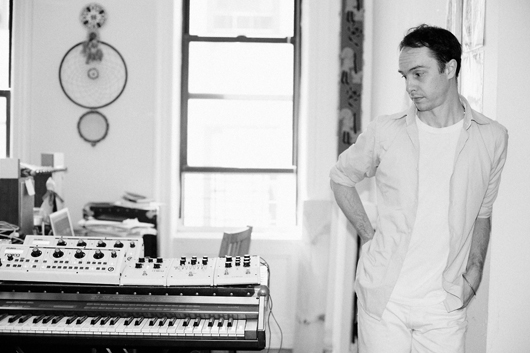
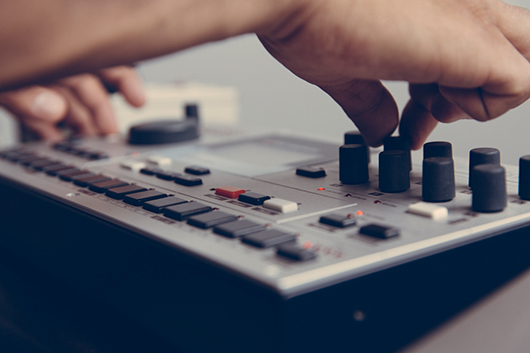
NYC synth wizard and DFA stalwart Gavin Russom recently took part in a Brian Eno-inspired EP commissioned by Self-Titled Magazine, for which producers could only use Moog gear to create a brand-new track. Along with Laurel Halo and Brenmar, Russom was given one of Eno’s famed Oblique Strategy cards and set loose in his studio. Now, video has surfaced of Russom detailing his creative process, including how he used Moog’s analog gear to build his driving track “In Our Streets.” The short piece, filmed by Crystal Ark cohort Viva Ruiz, shows how Russom routes a hi-hat pattern from his MPC 2000 through Moog’s MIDI-Murf and Ring Modulator pedals to create a dynamic and changing percussion element. He also pairs a Yamaha DX-7 FM synth with two Moog Slim Phattys to create a layered lead that evolves throughout the duration of the track. The entire video, as well as a free download of Russom’s track, can be checked out here, courtesy of Synthtopia.
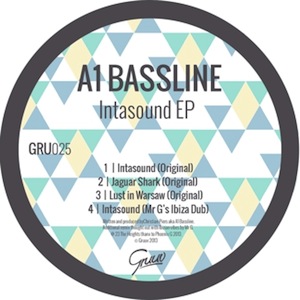
Emerging UK producer A1 Bassline has announced a new four-track EP, set for release next month via the Gruuv imprint. Called Intasound, the release features a remix from veteran London house producer Mr. G, and, according to the press release, is said to showcase “the producer’s ability to craft distinctive records out of classic elements.” It’s the artist born Christian Sibthorpe’s first release this year as A1 Bassline, although he’s been active recently as Christian Piers, releasing the Clocked Decay EP for his own SourceUnknwn label and collaborating with Leon Vynehall as Laszlo Dancehall. The Intasound EP will be available from September 16, but before then, its artwork and tracklist can be viewed below.
Experimental techno producers Ventress and Shifted have been carefully curating their Avian label for a few years, primarily focusing on the dark, brooding side of techno. But the pair’s interest in experimental sounds rendered the need for a different outlet, and thus they created Mira, a sub-label focused on 10″ releases skewed towards industrial and drone-influenced tracks. Ventress is inaugurating his output for the label under the new moniker Worn, and it’s a fitting name for his “See Through” bonus track, which sees the producer loosely dragging a sludgy beat through the mud. A muted kick is the only steadfast element in the mix, as high-pitched echoes and low rumbles weave in and out, leaving the listener with a very palpable sense of anxiety.
Less than a week after making his recent Boiler Room set available to stream in full, Jacques Greene has dropped a couple of brand-new edits of two recent Ciara tracks—”Body Party” and “Sorry”—offering them to fans as a free download. The Montreal DJ/producer has a pretty good track record with R&B edits—his version of Kelly Rowland’s “Motivation” played a large part in building his profile back in 2011—and these two tracks seamlessly integrate Ciara’s vocals with Jacques Greene’s own spacious, skittering brand of house. “Body Party” and “Sorry” can be streamed in the players below, or downloaded here.
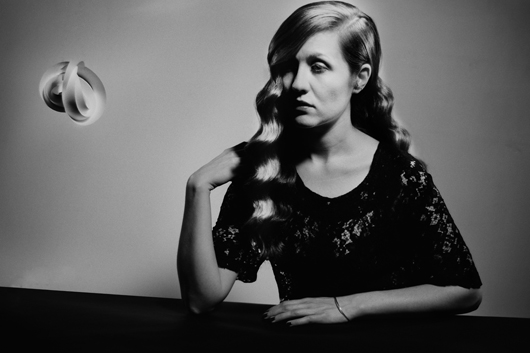
Canadian singer/producer Jessy Lanza is the latest artist to make their way onto Kode9‘s increasingly diverse Hyperdub label. As we announced back in June, her debut album, Pull My Hair Back, which features co-writing and co-production credits from Jeremy Greenspan of Junior Boys, will be released next month; before then, we’ve been treated to an exclusive premiere of a mix put together by Lanza. This 14-track set provides a pretty succinct roadmap of what to expect when Pull My Hair Back drops on September 17, and features plenty of R&B alongside all manner of current bass sounds—including tracks from DJ Rashad, Kode9, Egyptrixx, Shlohmo’s collaboration with Jeremih, Actress, and Aaliyah. Lanza’s album looks set to make a notable impact with its hybrid brand of icy electronic pop, but until then, her brand-new mix can be streamed and downloaded via the player below, where the tracklist can also be found.
Ghost Town DJ’s “Boo” Bambounou “Brawl” 702 “You Don’t Know” Shlohmo feat. Jeremih “Bo Peep” French Fries feat. Bambounou “Hugz” Kode9 “Uh” Kirko Bangz “Drank In My Cup” Aux 88 “Direct Drive” Legowelt “Elementz of Houz Music (Actress remix)” The Other People Place “Let Me Be Me” Omarion “O” Egyptrixx “Adult” Mykki Blanco “Haze.Boogie.Life” DJ Rashad and DJ Manny “Way I Feel” Aaliyah “4 Page Letter”
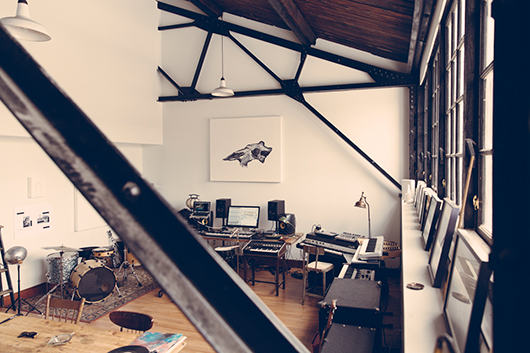
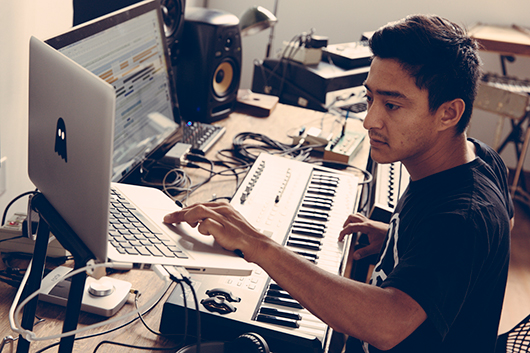
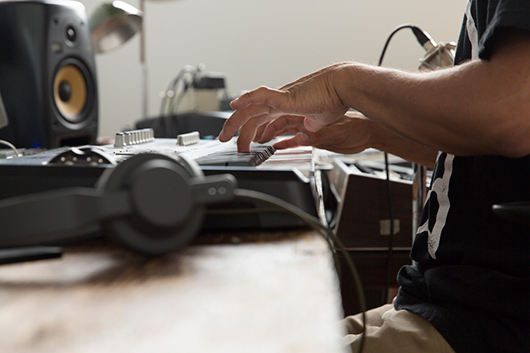
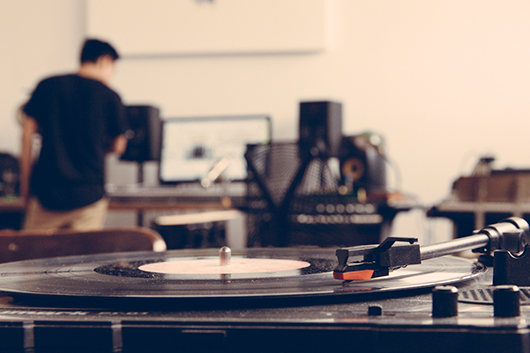
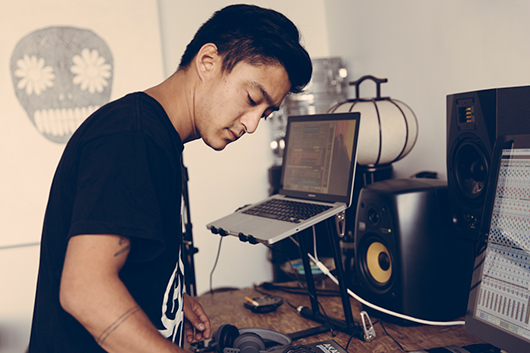
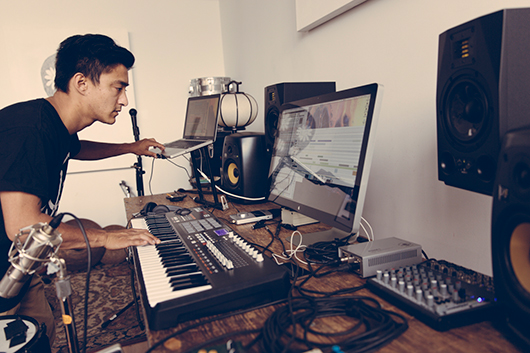
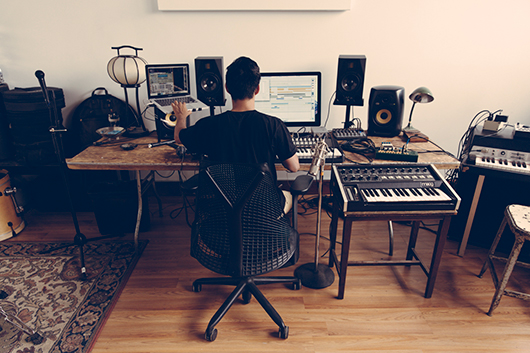
In three short years, Michigan native Zach Saginaw (a.k.a. Shigeto) has made grand steps to evolve his craft as both a producer and a live performer. On his forthcoming third full-length, No Better Time Than Now, Saginaw has graciously expanded the sound palette heard in his earlier bedroom-born beats, offering a much more organic sonic landscape in the process. His newest compositions find interlocking layers of real-world percussion meeting rich, bluesy keys and entrancing flashes of Shigeto himself behind the drumkit—a place, as anyone who has seen him live knows, where Saginaw’s talent really shines. With our aural curiosity piqued, XLR8R made the trek to the man’s window-filled loft studio in the Rivertown neighborhood of Detroit to discuss his production methods; during our chat, we also learned about the two-week period that yielded the core of Shigeto’s new record and his initial apprehension about using real drums in his electronic productions.
XLR8R: How long have you been in this space? Shigeto: I moved in about a year ago.
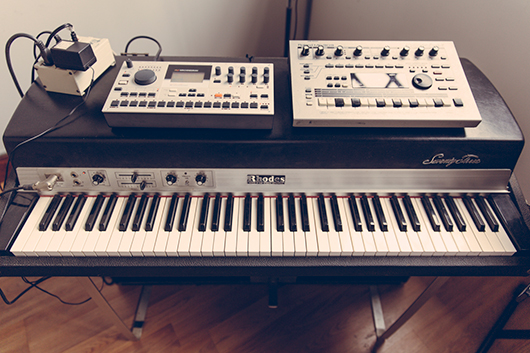
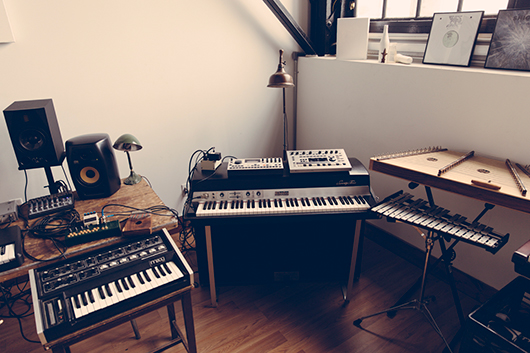
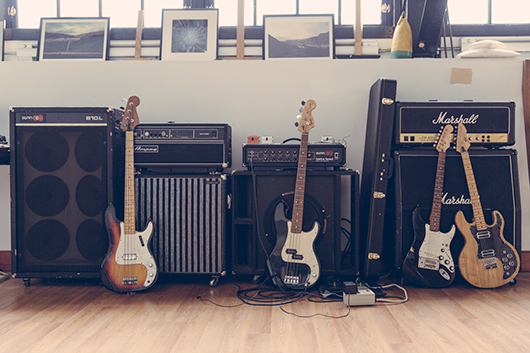
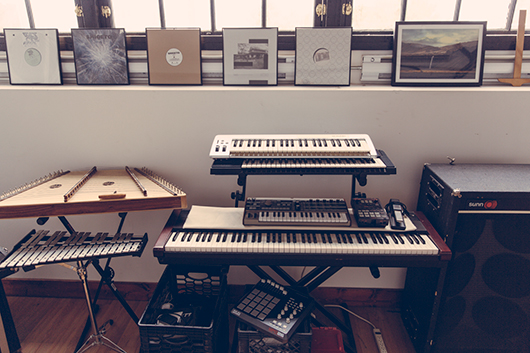
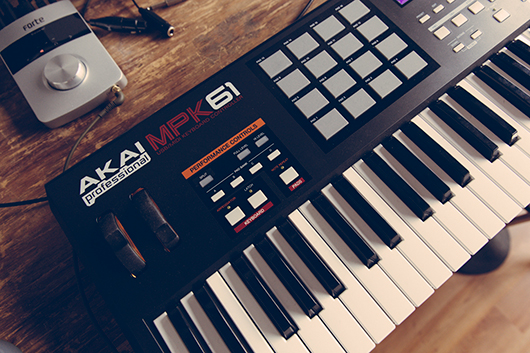
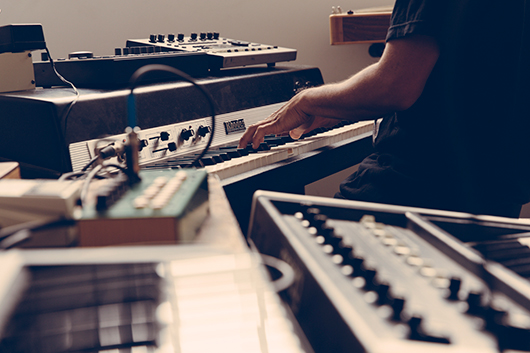
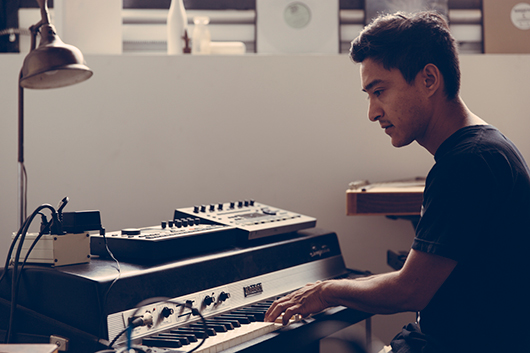
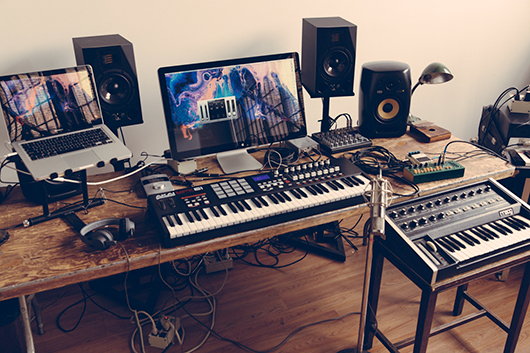
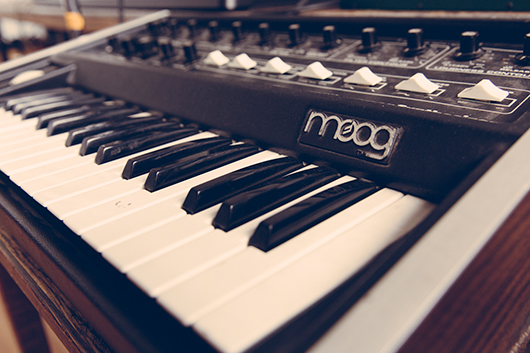
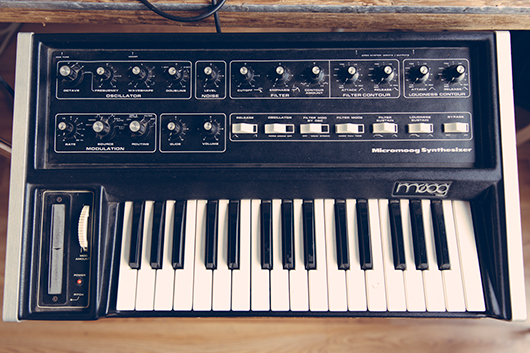
Did you have most of this equipment before moving here or has the size of this room allowed you to get a lot more pieces? A bit of both, actually. I had the main components—the Rhodes [electric piano], my drums, the Micromoog [synthesizer], and the Critter & Guitari pocket-piano synths and some other smaller stuff. Over time, I started collecting more things and bought my first drum machine, the Machinedrum. Also, because I share the studio with my brother and he has his bands, we just started accumulating gear, because it is such a nice space, so other musicians that we knew would leave their stuff here and come in and rehearse. It’s really nice; I get to benefit from everyone else using the space too.
Is most of the gear you use in there the more electronic-oriented pieces like the keyboards and such, or do you also utilize the guitars and amps as well? I play with them a bit, but most of the amps and guitars are actually my brother’s.
How do you go about dividing your time in the space with the other bands and musicians that use it? Are there set times when you are in there? My brother Ben actually works at a cafe full time, so I can be in here—and I am in here—all the time. I wake up, I get a coffee, and then I’m here. So really just two days a week, for a few hours, is when he is using the space.
Is there maybe even something nice to the fact that you’re forced to take that time off every week? Yes, it actually is. It gives me time to think and remember things like, “Oh wait, I should probably eat!” [laughs]
When you say you are working every day, are you always building towards a particular project or are you mostly just experimenting and trying out ideas? Yeah, I’m not always making music for an album, but I try to say to myself that I will spend at least six hours working on music every day. And what’s actually nice is that there is no wifi in here, and we’ve kept it that way on purpose so that we don’t get distracted.
When you started doing the Shigeto project, were you just working out of a bedroom or did you have a space where you had your drums and some gear? I was definitely bedroom all the way. The first album, Full Circle, was made almost completely with Reason and without any live audio. All of the samples were coming from a shitty little Tascam digital recorder or, sometimes, my iPhone. It was quite “ghetto fabulous.” [laughs]
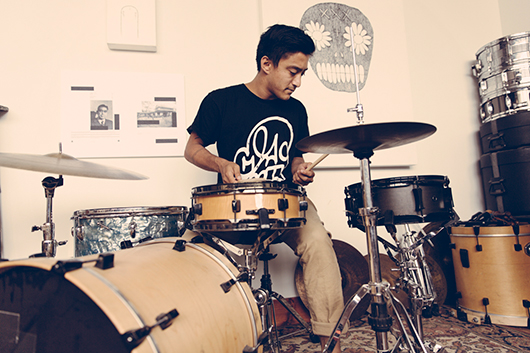
What were the reasons you wanted to get out of the bedroom and into a space like this? So many reasons. First, I had never been able to have my drums in my workspace, and they are my main instrument. Living in New York and in London, there was neither the space or the acceptance of my neighbors to be able to play drums there. So, one of my major reasons for moving to Detroit was to actually have a place where I could create, be as loud as I wanted, and do it anytime I wanted. Also, I come from a jazz background, so playing things live has always been much more comfortable [for me] then meticulous programming. I obviously like both, and you need both to make the kind of music we make, but I wanted to have an actual rehearsal-space environment so that I could sit at the Rhodes or the drums and actually play and record them without having to always set something new up—not just mic my snare and record the snare, then mic the kick and record the kick. It’s made everything a lot more real, a lot more immediate, and a lot more live.
Do you find that with having everything always plugged in and ready to go, that you are making more music as a result? Oh yeah. It makes it so if you have an idea, in 30 seconds you can record it. In my Brooklyn bedroom, you had to unplug something and move something over something and shift something next to something—and that was just to get started. [laughs]
And by the time you’re done, you’ve lost the idea. Exactly. There were definitely times where I’d be like, “Oh shit, I just forgot what I was doing.” [laughs]
Is there a particular instrument or sound or process that you usually start songs with in this space? I usually just start with picking sounds, not necessarily with any musical idea in mind, but just finding different sounds that I think are nice together. I usually use the word “palette”—I just kind of pick paint. Then I create maybe two to five different ideas that are all completely different, but only using those same sounds. Then I’ll end up liking one or two of those ideas, and will start trying to turn them into something. But it usually is just sounds that start the process for me, whether it’s a field recording or some sort of sample I have buried away—I’ll maybe just get five or six things going and then start from there. Funny enough, I used to always start with the drums, and now they are, for the most part, one of the last things I add. I kind of get a vibe that I like from a track, and then I start to think about what it needs rhythmically—almost working backwards, but I like it.
Even though they are the strongest instrument for you to play, they aren’t necessarily what first drives a track? Yeah, it’s just what I’ve been doing the longest, and I feel I can say the most and express myself the best with them. In a way, I think that translates better live. It can be hard to have it translate in the recordings like I want it to. I’m still working that out. I have so much I want to learn about actual recording that I can’t always get the sonic quality I want. A lot of times, my drums are really compressed, and it sounds good, but it’s just one sound. I want to be able to expand on that.
You had mentioned earlier that you were predominantly using Reason to produce when you started out. Is that still your main production software? I guess technically I started on GarageBand, but that lasted about a month, then I got Reason 2.0 and it just went from there. There was a period where I wanted to start using Pro Tools and Ableton—which I do use a fair amount, but only for live shows—and it just got to the point where the output needed to be there, and Reason is what I’m most comfortable on, so it is what I can work the fastest with. The only thing I didn’t really like at first is that you couldn’t record audio into Reason. I didn’t mind that you were limited to Reason’s software and that you couldn’t use VSTs, because the limitations it has forces you to work in weird ways, maybe even ways you’re not necessarily supposed to, and I liked that. The only thing that was making me want to move on to a different program was the fact that you couldn’t record live audio into it, but when they came out with Reason 6 and put it all together, I thought, “This is great!” It allowed me to continue to work on what I was comfortable with.
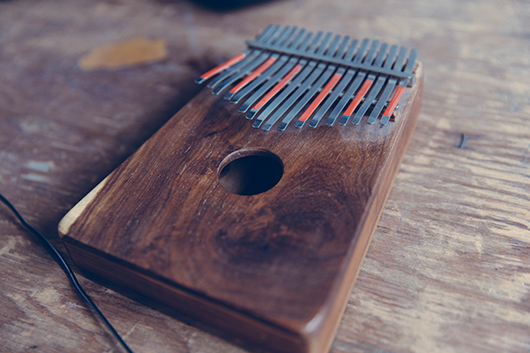
With the new LP, how much of the record is actually acoustic, real-world audio versus sounds that started inside the computer? I would say most of the record is real-world audio. Even stuff like the synths come from hardware—it’s not something like the Maelstrom or the Subtractor [in Reason]. I use the Critter and Guitari pocket piano on almost every track, almost all the basslines were done on the Micromoog, the Rhodes appears on most of the tracks, the kalimba is a recurring sound, all the percussion comes from my own instruments and drums or weird field-recorded keys, chains, scrapes, and stuff like that. Then, I mix those [rhythm parts] in with a lot of classic stuff, whether it’s a 909 or an 808. I use a lot less stock sounds and much more just a collage of external audio.
Its sounds like the Micromoog was used for many of the lead sounds and ambient synth sections on the album as well. It’s definitely [used for] a lot of the leads. On the track “Perfect Crime,” almost every synth on there is the Micromoog—just overdub upon overdub upon overdub. Obviously, the Moog is monophonic, so I would basically figure out what chords I wanted to play and then figure out the easiest way to make them into lines, just simple one-note lines. A lot of the noise and hiss on the record is from the Moog too.
Were the limits of that instrument ever frustrating? Only being able to play one note at a time and having to constantly be tuning and such? The Micromoog is the fucking worst at staying in tune—you’re always tweaking that thing until it’s in tune and then you’re like, “Oh my god, record!” [laughs] But the warmth it has just can’t really be recreated. Even the fact that it’s so temperamental can be good—you’ll be playing a line and then all of a sudden it’ll buzz or completely fuck something up, but usually when I listen back, I love those moments. You can find some magic in those mistakes.
Did getting away from stock sounds and “inside the box” elements become more important to you as you started producing more? For me, a lot of what makes electronic producers stick out is the sounds that they use. I think eventually those sounds can then become genre-defining things; something like side-chain compression, it becomes something you almost expect to hear. A cool story for me is that I was playing Dabrye (Tadd Mullinix) a lot of the songs on the album a while ago, and he said to me, “Man, this sounds great, but why do you have to compress it so much? Why do have to just squash the shit out of it? That’s what a volume knob is for, if you want it louder, you can just turn it up.” I didn’t necessarily agree with him 100 percent, but what he said made me think. I think if you’re compressing a sound that much, it’s to bring life to something that you feel doesn’t have enough; you want to boost it. I started to think back to albums like [Dabrye’s] One/Three or those early Boards of Canada records, and the tracks on there aren’t [overly] compressed, their masters aren’t squashed—they are actually lower in volume, but then when you turn them up you hear everything, everything has space. For this album, I was really influenced by that conversation, and I wanted to record tracks that were more like a band. I wanted to play the bassline, and the drums, and mix it all together, and I decided I wasn’t going to brickwall compress it—I was going to actually try to have songs whose waveforms don’t just look like a big, fat rectangle but have peaks and valleys and little city skylines. That was the goal of using live audio—I wanted to make an electronic-music album that was recorded like a band, just because I’m so much more comfortable sitting down at an instrument and jamming out on it, and composing from there. The whole album itself is geared towards letting the audio have its space.
When you say you’re jamming, are you playing songs through from beginning to end, almost playing live as if you were a member of a band? There are a lot of takes that made it to the album that are just one take from beginning to end, just to keep that live feel. I wanted it to groove enough so that you maybe couldn’t necessarily tell if it was a loop or not. I’m not perfect though, so there are plenty of parts that are just sections of playing that I picked the bit I really liked from, shifted it a little bit, and then looped it. It’s always a combination. If it was all one-take tracks, then it kind of would just be a band almost. [laughs]
Was this record completed at a faster rate than your others then? It was weird. The title of the record [No Better Time Than Now] is kind of how I made it. I had started three tracks while I was living in New York, and they were the first tracks for the new album. Then I moved back to Detroit, and started working on stuff, but it just wasn’t really flowing. Not to get too into it, but I ended a very long relationship of mine, and literally went right to the studio, and in two weeks had the album done. It was very much like, “There is no better time than now to finish this fucking album.” Before that, it was really only 30 percent done, and I had no real idea of how I was going to finish it, then I just went in real hard. Lineage was a very long, thought-out process, and my first album was made from years of making tracks with no album in mind, just three years of making tons of beats. But with this one, I said to myself, “I’m going to write this album and I’m going to finish it now!” I think because of the recording process, it just worked that way, by making it easy for me to keep going—the fact that I didn’t have to leave the studio or have any neighbors complaining or, at that moment, didn’t have a girlfriend—it was just like go! I was sleeping there, forgetting to eat, and all those sorts of things. It was good though. I like the way the process worked.
Do you have a complex mixdown process? It sounds like you are running a lot of tracks in these sessions. Most of these sessions are probably 10 to 20 tracks, but some of them are very minimal. “Ritual Howl” is quite minimal. “Silver Lining” I made in a couple of hours. It was one of those tracks that felt right, and it’s literally a Wurlitzer [electric piano] sample of me playing from years ago, which I put into the NN-XT sampler in Reason and played back at different speeds using the MIDI keyboard. Then I added a kick, a rimshot, a cymbal, one synth, the Moog bassline, and then my voice. Something like “Detroit Pt.1” or “Ringleader” or “Perfect Crime” though, those tracks had a whole lot of stuff going on.
And then you would mix down all these tracks at the end, or are you constantly mixing as you go along? I used to wait to just tweak at the end—I just wanted to make the songs and then make them sound good—but I’ve found the end result is much better if you have a track sounding the way you want every step of the way. But another different thing about this album is that it was the first time I ever rendered stems out of Reason and actually mixed it it in Pro Tools.
Did you do that yourself or did you take it to an outside studio? I went to a studio in Detroit called High Bias Recording, run by a good friend of mine named Chris Koltay. This actually links back to the “band” idea for the record, because Chris never works with electronic music; he usually works with rock bands—like dirty Detroit punk bands and Krautrock, all sorts of stuff. He had always talked to me about doing something with him if I was ever into the idea, and I just thought, “Well, let’s see what it sounds like.” At first we just mixed one track, and it was awesome. It was exactly what I needed for the album. I used to have this ego thing like, “I’m a producer. I’m going to do everything from the beginning to the end and this is how it is.” But you know, most every professional—from the beginning of the electronic-music industry—has made their music and gone to someone else, not to do it all for them, but to have those final touches it needs to sound the best it can. That’s basically what I did. I didn’t want to mix and master the album in Reason; I wanted to treat the tracks with the respect they deserved and to be able to hear every little thing the way I wanted to. We didn’t change a lot with the mixdowns, we just got rid of those frequencies that were getting in the way of shit. It just sounds a bit cleaner—not even in terms of the actual sounds themselves, but in the way they all lay together. It just made the most sense to me to do that because it was recorded in a way that I really felt needed the kind of attention you get in a professional studio.
Was it a long process to mix in that way? No, we did it in about eight hours. The songs were pretty much how I wanted them before, but we just wanted to create a universal template that made sense sonically; to make sure that nothing was too brash or too much in your face throughout the record. It was not a long, tedious process by any means.
Is that an approach to mixing that you think you’ll carry on with future productions? Oh yeah. I think it represents the music in a better and more mature way, and I’m not somebody who is afraid to take the help. I think the end result is great, and I still feel it’s my music.
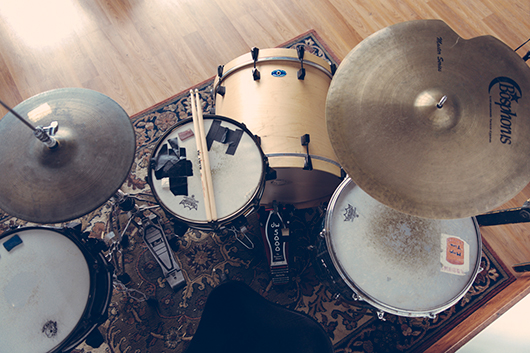
Looking back, were there any big lessons you learned in producing this record or anything that surprised you when you listened back to the final product? I think I was really afraid to introduce live drums [into the recordings]. All my drums were recorded with one condenser mic in this large room, hence the large amount of compression. I felt bringing them into the tracks was my biggest worry and the biggest risk I took personally, especially because I knew they wouldn’t translate the same way they do live. But I’m really happy with the results because I think it helped make this the most honest album I’ve made. I think it’s the most free of whatever noise or hype that my mind takes in—whether it’s conscious or subconscious—and I think deciding that I was going to record this stuff and not just program it was the biggest step for me. I had always been chopping up audio and putting my own samples into the MPC and getting the cut-off, hip-hop sort of sound, and this new stuff is not like that. I like that, but I was afraid at first. I’m sure some people will say, “Wow, there’s not a single ‘beat’ on here.” I was worried about that, but this is where I want to be. This is what I want to be making.
Swedish producer Julien H Mulder‘s latest release, the Enkel Strukur EP, excels at creating messy techno soundscapes which bring to mind the work of Detroit icon Jeff Mills. The release is said to have been recorded using only analog equipment, a fact evident in EP track “Dold Maskin”‘s raw, off-the-cuff sound. The eight-minute tune barely lets up with its oscillating bassline and tumbling snares, and makes for an industrial, apocalyptic atmosphere. The other two tracks from Enkel Strukur will be available as a free download on September 9, courtesy of the Midnight Shift label.
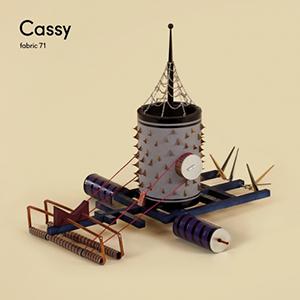
Movement is a given when it comes to mixes, but momentum is rare. Most of us could cobble together a handful of aesthetically consistent tracks, let Traktor sync the beats, and end up with an hour of material that’s no more or less memorable than average. This holds for commercial as well as free releases; despite their creators’ best intentions, a considerable number of mixes don’t really do much beyond refreshing the DJ’s brand. Judging by the rarity with which it happens, it must be staggeringly difficult to accomplish the underlying, straightforward goal of a mix: collecting tracks in a way that makes listeners want to dance no matter where they are or what their particular stylistic niche is. As listeners, we can tell almost instantly if a mix has that current, some tingling sensation that draws us along and puts conscious thoughts in the backseat. This is the kind of easy joy that Cassy Britton sustains throughout Fabric 71.
This is not a surprising development for Cassy. Her talent is widely appreciated; at the moment, she has residencies in top-tier clubs in Berlin, Paris, Amsterdam, and New York. Her reputation is built on a kind of nonpartisan dedication to basic but elusive pleasures, and the consistency with which she hits the major pleasure centers is exactly what she’s built her career as a DJ, producer, and label head on. She doesn’t overthink her entry into the London club’s mix series—foamy melodies emerge one after the other, ebullient ride cymbals mark time, and kicks leave aftershocks without being hard or inflexible. Overall, there’s an earthy, sun-soaked feeling of well-being that one might associate with Ibiza—one of the places the nomadic artist currently resides—if one can put aside their cynicism about foam parties and the like.
Not much happens, in the narrative sense, across the mix’s length. Cassy’s role is mostly to nurture the protean vibe established by the first track—”Tune In” by Arttu, featuring the earth-mother realness of Diamondancer’s vocals—which sets the tone for the 16 others to follow. In this sense, it’s a linear mix. And yet, once the listener has heard a big track like Benjamin Damage’s “010x” or a deeper cut like Losoul’s “Brain of Glass” in this context, the unmixed originals sound slightly gray. That’s a sure metric of a DJ’s effectiveness—if trainspotting and tracklists are the furthest thing from listeners’ minds, if what’s happening in the monent conquers every other consideration. Regardless of who produced them, Cassy’s selections have an remarkably distinct purpose in the DJ’s hands. Every track—from a Pachanga Boys remix of John Talabot to Emptyset—snaps so perfectly into place in Fabric 71‘s succession of blissed-out moments that it seems superfluous to even name them as distinct entities. DJ Sprinkles pulled off a similar feat with Where Dancefloors Stand Still earlier this year. It’s a simple mandate, putting things that sound good together on the way to making something lengthy that sounds even better. Through a combination of technical skill, unjaded ears, and crystal-clear intention, Cassy has assembled something special with Fabric 71.
Emerging Leeds producer Liston got our attention with a couple of flickering, garage-influenced tunes earlier this year—namely, “All On You” and “Yan See.” Now, the artist has released a new six-track EP with London label XVI, called Sleeper. Taken from the new record, “Something New” is a prime example of subtle beatcraft, and features a shimmering, organic bed of sound on top of which a vocal sample intones—in a way that’s optimistic and sinister at the same time—”but what have you tried lately?” The rest of Sleeper, which is out now, can be streamed after the jump.
Casual fans of electronic music might only know Romanthony from his Auto-Tuned vocal on Daft Punk’s “One More Time,” but the man otherwise known as Anthony Moore was a significant and prolific producer in his own right. His beats were funky, quirky, and propulsive, and his vocals could capture both a shrieking instability and a gospel purity, all delivered with a preacher’s passion and fervor. Though these six remixes of “Ministry of Love,” one of Romanthony’s most overtly spiritual tracks, were commissioned before his recent passing, they are all clearly reverent of the late producer and highlight the minute variations that can be wrought from his focused songcraft.
Andre Crom‘s remix fractures the vocal, letting the organ spread casually and muffling the song’s more hyperactive elements. Romanthony’s voice floats wonderfully in an endless loop, and the track overall has a restrained ebb and flow. Ejeca‘s garage influences are obvious on his take—particularly in the way he chops and reshapes the vocal—and he chooses to highlight the seriousness of the original’s spoken-word interlude, leaving blank space beneath the sermon until it morphs into joyous piano house. Glasgow Underground label head Kevin McKay‘s “90’s Re-Edit” doesn’t stray too far from the source material, leaving the iconic organ burble front and center and spitting the incendiary sermon over elongated guitar squeals in the outro.
McKay’s other remix fares better, pitching down the synth so it rattles around a disruptive low end. When Romanthony promises “I got over the devil,” his monotone insistence and a lurking acid line makes it sound like he’s just barely escaped. For McKay’s third remix on the package, a collaboration with the Glaswegian Mirrors, the brightest elements are obscured while the kick degrades underneath ricocheting synth flourishes. A pitched-down vocal makes Romanthony anonymous and also adds a dubby sense of menace. Finally, Andrés‘ “Extended Disco Mix” brightens the mood, employing sparkling strings and a wandering bassline that never moves too far from the insistent groove. It’s a charming effort; unfortunately it’s also the shortest remix on the release.