UK grime firebrand Wiley took to Twitter today to announce he will release a new album in February of next year, and to unveil its tracklist. The 16-song LP is called The Ascent, and features appearances from the likes of Kano, Far East Movement, Skepta, and something called “7 Grime MCs.” Though, as the label manager of the Wiley-affiliated Big Dada imprint already pointed out, it’s entirely possible none of this information is set in stone. In any case, you can take a look at the supposed tracklist, along with the video for The Ascent‘s club-specific lead single “Can You Hear Me? (Ayayaya),” below. (via RWD)
1. Ascent Intro 2. Chainsaw Ft. A-List 3. SkillZone Pt 2 Ft. “7 Grime MCs” 4. Heatwave Ft. Ms D 5. Hands In The Air Ft. Chip & Tulisa 6. Walking Through Fire 7. Stay Here 8. First Class Ft. Kano 9. Reload The Music Ft. Ms D 10. Common Ground Ft. Ryan Keen 11. Loving Every Minute Ft. Far East Movement 12. Lights On Ft. Angel 13. My Heart Ft. Emeli Sandé 14. Can You Hear Me? (Ayayaya) Ft. Skepta, JME & Ms D 15. Drink My Pain Away Ft. Stacy Barthe 16. Ninja
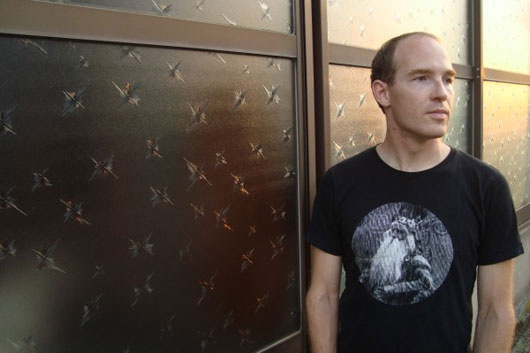
In 2010, Caribou released Swim, a dense, deeply infectious album that took Canadian songwriter Dan Snaith’s intricate pop sound in a considerably more club-oriented direction. Unbeknownst to many, however, this time marked a schism of sorts in Snaith’s music. By the time of Swim‘s release, he had already quietly begun working under another name: Daphni, an even more expressly dance-oriented permutation of his musical psyche. Since then, he’s accumulated a wide-ranging array of tracks under this name, both released and unreleased, several of which have now collected on a full-length album called Jiaolong. Before it dropped this week on the Merge label, Snaith spoke with XLR8R over the phone from his London home, where he was preparing for a series of full-band Caribou live dates opening for Radiohead. Spliced into the schedule are some Daphni DJ sets, allowing his musical guises to exist rather neatly in parallel to each other—his endeavors as, alternately, a meticulous composer and an impulsive DJ/producer are, as Snaith makes clear, by no means dueling interests.
That said, while Snaith’s new persona may not be 100 percent wholly distinct and separate from Caribou—it is, after all, the same person making the songs—Daphni effectively splits up his musical identity, rendering the overall picture more complex yet also more compelling and complete. The name Daphni was chosen not only for its femininity, but also for its earthy, organic quality: daphni is the Greek word for bay leaf, an ingredient widely used for adding flavor to stews and soups. It’s a name that serves as a mission statement of sorts: much like the music itself, it references ideas not often explored in dance music, its earnest, rough-hewn form flying in the face of what Snaith characterizes as, “the really macho trend in dance music.”
Snaith’s interest in dance music extends back to the early days of his music listening, but his passion was rekindled most notably around 2008, when he and longtime friend Kieran Hebden of (a.k.a. Four Tet) began frequenting London club Plastic People. A particularly momentous night at that club, explains Snaith, was a Theo Parrish DJ set they attended after seeing Liquid Liquid play a live gig. “We walked in and he was playing a Liquid Liquid record,” he recalls. “The records Theo played that night were just amazing—they were so diverse and came from such a wide range of influences and sounds. A lot of them were quite deconstructed… [his set] reawakened me to the idea that there’s quite a lot of space within dance music to do interesting things.”
Compounding this reawakening was the fact that Snaith and Hebden themselves began to DJ at Plastic People. They would use these nights to test out tracks they were working on, integrating newly recorded original material into their sets. Much of the new material workshopped at this time would end up on Caribou’s Swim and Four Tet’s There Is Love in You, a similarly club-inspired record that came out that same year. “Bowls,” a song that ultimately ended up appearing on Swim, was one particular track Snaith tried out in this context, and it surprised him how much it made sense in that setting. “It doesn’t adhere to the arrangement ideas of a lot of the dance music I was playing it along next to,” he explains, saying that it left him wondering, “Is this a Caribou record or isn’t this a Caribou record?”
The names Caribou and Daphni, and the sound that Snaith associates with each, have recently come to assume more defined roles in his mind, but for quite some time, the line between these two recording identities was rather blurry and indistinct. In the process of making what would become Swim, he felt that there was some kind of shift happening in terms of his aesthetic preoccupations. “I felt like some of the songs could be Caribou music, and that’s the stuff that ended up on Swim,” he explains. “But there was also some stuff that seemed even more aimed at the dancefloor, distinct from the Caribou stuff.”
The Daphni moniker first appeared on a remix Snaith did of Cortney Tidwell’s “Watusii” back in 2009. “I really wanted to do something very club-oriented for that remix,” he says. “It seemed like as good an opportunity as any to test drive this new idea and try it out on a very low profile. Swim hadn’t even come out yet, so people were definitely not expecting that kind of thing from me.”
“Ye Ye,” the insistent centerpiece of Jiaolong and the first of its tracks to see release, was debuted at a much later Plastic People night alongside a new Four Tet track, “Pinnacles” (which now features on the latest Four Tet release, Pink). These songs went over so well on the dancefloor that the two of them decided to put out a split 12-inch with those tracks through Hebden’s Text label. “The next day, they were sent off to the pressing plant,” explains Snaith. “Within a few weeks, they were in shops, and we just printed off a few copies and they were gone.” The fuss-free efficiency of this release inspired Snaith to start his own label, Jiaolong (sharing its name with the album), which he launched last year with the release of a Daphni 12-inch. (He’s now releasing records by a few of his close friends as well, including Les Sins, a more dance-oriented project from Toro Y Moi’s Chaz Bundick, and a solo release by Jeremy Greenspan of Junior Boys, whom Snaith grew up with.)
Even speedier than the efficient release process has been the recording of the actual songs. Whereas Caribou tracks require a long period of time to take their intricate shape, all the Daphni tracks on Jiaolong were made in a single afternoon each, giving Snaith fresh fodder for live DJ sets. “I’d be preparing for a DJ set, and I’d think, ‘Oh man, I really want to have another track to play.’ I’d start working on a track, and would have to finish it by the end of the afternoon because I’d be getting on a flight to go somewhere and play that evening.”
The spontaneity of the equipment, working process, and release process associated with Daphni has proved an enjoyable counterpoint to Caribou. “There was no publicity on these [Daphni] records at all,” says Snaith. “I made the music, printed it up, and it went to shops, and then it went out of print, and that was it… It appeals to me as a record buyer and a record collector—this thing that’s there, you gotta grab it and it goes away again.”
Daphni’s fleet-footed immediacy has much to do with Snaith’s modular synthesizer, a piece of equipment he assembled himself that’s figured heavily in these tracks. A modular synthesizer can be personalized to the nth degree, and in the right hands, can make for some amazing sounds that aren’t easy to obtain with a store-bought synth. Getting the same sound twice, however, is quite difficult, which means taking what it gives, running with it, and seeing where it all goes. “It doesn’t allow you the possibility of going back and second guessing yourself,” Snaith explains. “You have to commit to the take—that’s gonna be it.” The result is “really quick, spontaneous music—it’s really tactile.” The synthesizer’s fickle nature means these tracks would be incredibly difficult to reproduce live, but with their impulsive feel, the songs lend the impression that they’re being produced right as the listener is hearing them.
With Caribou, says Snaith, he “spend[s] much more time finessing all the details and thinking about what the overall structure is going to be.” Furthermore, the most obvious thing that separates the two projects is that, on Caribou records, Snaith sings, and with Daphni, he does not. Granted, Caribou is not particularly about his voice; as Snaith explains it, Caribou is “about composition, writing songs, and the kind of harmonic and melodic content of what’s going on.”
Before becoming Caribou, his initial releases as Manitoba were dense, beat-driven clusters of splintered melody, easy on the ears yet tightly constructed and fully engaging. On later records like 2003’s Up in Flames and 2007’s Andorra, his sound took on a more psychedelic, overtly melodic air. Daphni, on the other hand, is considerably more raw and off the cuff. There’s no established formula, but each track establishes and toys with what Snaith sees as, “a real kind of collision of some sample or old recording, some textural thing, up against, say, a bassline from a modular synth.”
Nevertheless, what ties together Jiaolong is not so much this collision or the dancefloor-ready premise of the project—it’s the warm, tumbling, freewheeling feeling of it all. Five of the tracks have previously been released, while the remaining four come from the numerous tracks he’s amassed and subsequently sorted through. “It really surprised me how much the music sat together as a kind of coherent thing,” he says. Some tracks are sample based, but several don’t contain any kind of sample at all. “Light,” for instance, uses a surprisingly authentic-sounding software flute alongside drum machines and synthesizers in a track that feels improvised yet keenly attuned to what will keep people dancing. As Snaith points out, “it still has that idea of a collision of an electronic instrument with an acoustic instrument.” Tucked away on the LP’s second half is “Ahora,” another album highlight, which shows a darker, more contemplative side of Daphni. Above a faint, whistling melodic sample or bit of instrumentation (it’s hard to say which), a hissing house beat and synthesizers combine for a luminous slow burn that belies its speedy origins.
In addition to original Daphni tracks and remixes, Snaith has also released two Daphni Edits 12-inches on the Resista label, reconfiguring cuts by African and New Zealand groups, as well as Malian disco edit for the Sofrito label. An especially notable Daphni track in this vein is his remix of a track called “Ne Noya” by Togolese band Cos-Ber-Zam. The original track features on the only record the band ever released—a 7-inch from 1973. Snaith came across the track on a compilation entitled Afro-Beat Airways – West African Shock Waves. Analog Africa, which released the compilation in 2010, is a label that Snaith holds in high regard not only for its taste, but also for its insistence on getting consent from the original artists. Until Snaith came along with his remix proposition, the imprint had turned down every sample request it had ever received. An exception was made and Snaith was given permission to go ahead, but nobody knew who owned the publishing anymore, so it his effort had to be released as a remix rather than a new track that simply sampled the song. “It’s actually quite nice,” says Snaith, “because it draws attention back to the original music.” The remix, which is included on Jiaolong and is easily one of its most engaging tracks, takes one particular rhythm-and-vocal repetition from the song, and loops it into a hypnotic, fascinating dialogue with a bubbly modular synth.
On the whole, Jiaolong is an altogether surprising collection of tracks, offering music that’s soulful and light, yet rougher and often more urgent than Caribou’s more introspective bent. It’s appropriate, then, that Snaith cites dance music’s “potential to surprise” as his favorite characteristic of this musical realm. “Certainly a lot of dance music is predictable,” he explains, “but there’s absolutely nothing to say that you can’t completely change the palette of instruments that you’re using halfway through the song, or have a completely ambient section in the middle of the song.”
That lack of rules also extends to the realm of performance, as Snaith has no intention of developing a live rendering of Daphni; however, he does intend to continue to DJing alongside his ongoing Caribou songwriting efforts. He’s already made significant headway on a new Caribou record, and as long as he continues to DJ, he foresees a continuing need for new Daphni tunes. Regardless of whether Snaith is performing as a DJ or live band, he says, “I’ll want to play music that people haven’t heard.”
Daniel Guijarro (a.k.a. Headbirds) released a free EP yesterday, called The Holy Look, which uniquely encompasses tropical bass, UK funky, and hints of dubstep. A powerful and evolving bassline drives the Barcelonian’s “Hungry Winds” production with help from the lively beat work, while scattered vocals and wild synth jabs wander through different octaves and filters without losing total control. And if this one does the trick for you, make sure to listen to and download the remainder of Headbirds’ three-track EP after the jump.
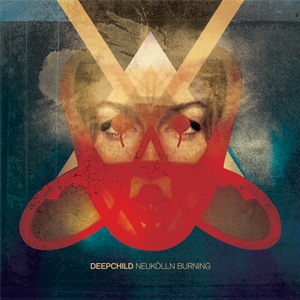
Departure? Departure to where? If these questions were ever raised following the release of Rick Bull’s (a.k.a. Deepchild) last LP, Departure, they’ll certainly be answered by Neukölln Burning, his latest. Separated by a five-year gap, the space between the two albums saw the producer leave his native Australia for the comparatively colder climate of Berlin. Yet beyond just physical relocation, it seems as though a personal journey has been taken as well. Shifting away from the tech-house sonic design of Departure, Bull’s latest feels like an attempt to convey a very specific moment in time, along with the feelings, people, and spaces involved.
That moment, or period rather, is a particularly dark passage in Bull’s life. He’s said that the record was recorded in the dead of winter while tapering down from a life spent on anti-depressants. Violent mood swings, panic attacks, and a feeling of grasping at sobriety intermingle with the ghostly passage of both space and time he experienced as a travelling DJ. It’s all connected by a pervasive heaviness, the characteristic density that defines much of the techno from the German capital.
Much like the city it evokes, it’s a network of almost non-linear moments of happening buffered by areas of stillness. Even the more driving songs get across a sense of concentrated activity in a larger unfilled space. Immediately, with “Bleeding Down the Night,” we’re introduced to a contrast between a mournful, pitched-down soul sample weaving around a corridor of driving techno, itself punctuated with a contorted twisting of circuitry. Echoes of the damp environments of old UK dubstep soak into the mostly beatless “Chicago Train,” the record’s first interlude, an acoustic collage of mumbled conversations and used dishes. This is the same kind of meditative headspace that would prompt Bull to write such musings (on his website) as, “Some days I behold things which give me such pause—the deep knowing that the world spirals so chaotically, unpredictably through eons of small stories which could be sung forever.” His music takes these spirals and coils them around a central element, narratives rubbing up against each other in a mess of smeared voices. This quality of the album might be best heard through “Doves in Michigan,” a work that juxtaposes an insect-like machine buzz with a vague American political commentary that’s so scratchy it sounds as though it’s being surfed on a television in a motel room next door.
It’s not all abstract though; in fact, most of the record’s hour-long run is spent in a hypnotized state, driving through mental vistas of serotonin-deprived techno. Lead single “Riyadh” sounds like one of the record’s more ambient experiments set to a simplistic but banging rhythm—it’s almost entirely driven by noodling arrays of perky color. Here, like the rest of the album, a haunted voice runs through the length of the song, almost chasing the listener through winding corridors. The same goes for “The One I Used to Call Home,” a pulsating drift aboard white noise that recalls numbing hours spent inhabiting the nooks and crevices of 24-hour nightlife with jet lag in tow.
Intensity of emotional transference is what causes Bull’s record to succeed so well. Listening, one can’t help but feel as though they’ve been given the opportunity to experience an extremely intimate moment through the eyes of another. That itself is a worthy goal for an artist of any medium, but that Bull does it so well here is inspiring. And it’s the clarity of the image transmitted by sound, as well as the way in which the resolution sharpens with each listen, that makes Neukölln Burning so good.
The energy of a yellow, low-hanging moon, glittering sparklers, and champagne-drunk friends frockling along the beach are among the vibes eminating from the Santa Cruz electronic scene. Rex Solway (a.k.a. Mist Glider) hails from that coastal region and lives up to those expectations. On “Just Us,” a cut from the producer’s forthcoming free album, The Pyroclastic Flow, ocean waves roll over a somewhat off-kilter melody, pitch-shifted vocal fragments, and a decidedly laid-back beat. Before the rest of Mist Glider’s LP drops on October 25, Solway will also release a compilation called Vicissitunes Volume 1 on October 11 via his new “visual-audio label” Sleepy Beach.
Looking something like a mix between Gummo and This is England, this piece for young London producer A1 Bassline is easily one of the coolest and strangest videos we’ve seen in a while. Director TOMISOKREALLY presents a sort of stream-of-consciousness portrait of delinquent youth throughout the nooks and crannies of South England, and eventually delves into some violent imagery that’s entirely relatable while verging on surreal. The deep grooves and filtered synths of DJ/producer Christian Sibthorpe’s “Breakaway” (out now via Pets Recordings) play out over the gritty VHS footage—offering yet another reason why this video is so hypnotically captivating.
Longstanding producer Ulrich Schnauss has announced that his fourth album, A Long Way to Fall, will be released in early 2013 via Domino (in North America), with his own Scripted Realities imprint handling the rest of the world. Featured here, the LP’s title track is a delicate tune featuring a mellow, twangy melody that weaves itself into an atmosphere of gentle voices, airy synth pads, and subdued drum work. According to a press release, A Long Way to Fall is a departure from Schnauss’ usual offerings, as he explains, “Throughout the last decade, I recorded three albums that were trying to translate the early ’90s shoegaze aesthetic into an electronic context. After finishing the last album, Goodbye, I felt a need for a change of direction.” We certainly hear that change on “A Long Way to Fall,” but thankfully, the artist’s indelible knack for sweeping soundscapes and emotive melodies remains intact.
LA DJ/producer Low Limit (of Lazer Sword) has compiled a collection of tunes for his city’s Innovative Leisure label, which is said to “illustrate the diversity of North American artists, bonded by, if anything, an appreciation for both old and new incarnations of dance music.” Entitled Ouroboros, the compilation features the two producers who make up Sepalcure, Machinedrum and Braille, LA’s Sweatson Klank, fellow SoCal artist Anenon, San Francisco DJ/producer Ghosts on Tape, North Carolina duo Clicks & Whistles, and a handful of others. Innovative Leisure will release the 10-track Ouroboros Presented By Low Limit on November 27, but you can check out the tracklist before then, below. (via FACT)
At the end of this month, the man behind this year’s excellent Mala in Cuba LP, UK dubstep mainstay Mala, will embark on a brief tour of his home continent. With stops in Krakow, Turin, London, and more, the DJ/producer will hit six locations between October 20 and December 1, taking his soundsystem-specific brand of music along with him. You can check out the full (albeit short) list of Mala’s performances below.
Oct 20 // Krakow, Unsound Festival Oct 27 // Turin, C2C Festival Preview Nov 17 // London, Electric Brixton Nov 24 // Amsterdam, MC Theatre Nov 30 // Brussels, VK* Dec 01 // Utrecht, Le Guess Who Festival
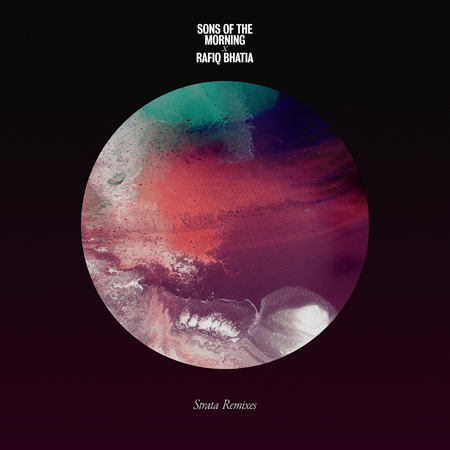
Although Sons of the Morning, the collaborative project between veteran beatmaker Prefuse 73 and relative newcomer Teebs, played the Boiler Room over the summer, the duo has yet to actually release any material. Today, that all changes, because we have the first leak from the pair’s inaugural record. The duo teamed up to remix the Strata EP by Brooklyn-based composer and guitarist Rafiq Bhatia; “IV,” a brief track that whirs and falters for a bit before collapsing into a melodic boom-bap, is one of four productions releasing soon via Rest Assured as part of Sons of the Morning’s Strata Remixes EP.