“Cyanotype Cities” is a cut taken from Montreal-based producer Rafael Bucio’s new EP as Seapoint. The lively dancefloor tune features a syncopated bassline that jumps and plummets around a prominent sample of soulful vocal melodies, with lush piano chords glowing underneath Seapoint’s bustling rhythms. It all brings to mind one of our top 20 downloads of September, Teezy & Kixnare’s “’91,” as the artists all seem to be working with a style that combines modernized synths with classic ’90s sounds. Bucio dropped his Nautical Days EP just yesterday via French imprint B.YRSLF; you can stream it after the jump.
The five tracks on SFV Acid‘s Neighborhood Archives EP come in various shades of chill. There’s a woozy march of shimmering synth pads and blunted drum programming on “Ashland Slumber,” a post-stoned daze of reverberating keys on “Seaside Cruisin’ Tribe,” and a some wonky, lullaby-like house on “Bean Criteria.” In this way, the LA-based producer’s style revels in nuance; every song glides or bobs along with a pervasive sense of calm, but each reveals a familiar, although slightly different, gradient of aloof and easygoing beauty.
The two tracks on the record titled “As Is” demonstrate the producer’s discerning ability to make tracks that may be very similar, but are also distinctly different from one another. SFV Acid’s first take is punchier, with an adroit and syncopated rhythm underlying the sputtering of his 303s. Both versions of “As Is” share the dreamlike trance of breezily wafting synth chords, but the second seems more toned down, shifting the focus toward the low end and centering the track around deeper, croaking sounds as opposed to the waggling, forget-me-not spunk of the former’s sticky acid melodies.
Acid plays a major role on Neighborhood Archives, but the EP runs the risk of pulling too heavily from that sound palette. SFV Acid appears to be particularly enamored with acid house’s squishy 303s, as the producer uses burbling synth sounds on nearly every track. At times, the Neighborhood Archives EP is like a love letter to the sounds of days past; as such, the record could possibly come off as stale, particularly to listeners who are already familiar with the styles he’s drawing upon.
Thankfully though, the degree to which SFV Acid replicates old sounds doesn’t take away from the EP’s delightful ability to soothe and invigorate. Tracks like “Seaside Cruisin’ Tribe” twinkle with the pretty, sparkly synths and cloudy pads reminiscent of ’90s techno and house tunes in the lineage of Theo Parrish. Watery pads flutter dreamily overhead as the song’s angular beat motors on, boosting the energy and driving the production through a wandering four-minute journey. It’s a prime example of how SFV Acid tweaks his tracks with an astute attention to detail, ultimately lending him the ability to zoom in and linger on the subtleties of laid-back moods.
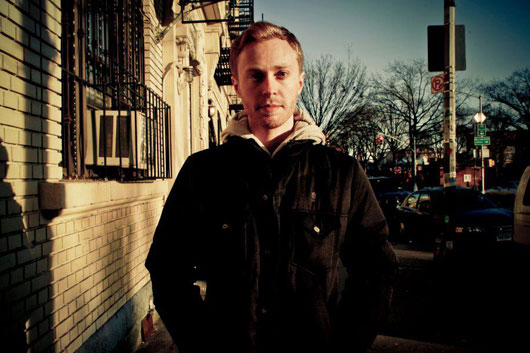
Yesterday, we reported that the UK-based DJ/production duo Ill Blu has an EP in the works for MadTech, and today we get a remix of one of its tunes from London up-and-comer Thefft (pictured above), a brutal and stomping rework of “Omar.” The growing vocal sample (which, incidentally, comes from The Wire character who gives the tune its name) and heavily bouncing 808 tones are a good deal darker than “Switch,” the breezy and clicking Thefft tune Oneman included in his recent Fabriclive 64 compilation. Thefft’s remix arrives before Ill Blu’s three original productions become available for purchase via Beatport next week.
We’ve heard rumors that Travis Stewart (a.k.a. Machinedrum, who recently appeared in our In The Studio series) teamed up with fellow Berlin-based producer Jimmy Edgar, whose “Sex Drive” remix by Jon Convex we premiered yesterday, to form a collaborative side project called Jets, and today we get our first taste of the pair’s new music. Before Jets’ self-titled, debut EP drops via Leisure System on October 29, you can view that record’s tracklist and listen to “Lock Lock Key,” a tune that blends Edgar’s electro-funk proclivities with Stewart’s brand of busy drum work, below.
A1. In Her City A2. Sin Love With You B1. Mue B2. Lock Lock Key
New York producer FaltyDL, who recently shared a horror story from the road with us for our Trainwreck series, announced today that his third full-length record, called Hardcourage, will arrive next year, courtesy of Ninja Tune. What’s more, it will be preceded by a picture-disc 12″ for lead single “Straight & Arrow,” which includes a remix from none other than Four Tet; you can hear both tracks now. Below, you can stream “Straight & Arrow (Four Tet Remix)” before it drops digitally on November 5 (vinyl arrives on November 13), alongside reworks from the likes of Gold Panda and Mike Q. You can listen to FaltyDL’s original production over on Pitchfork.
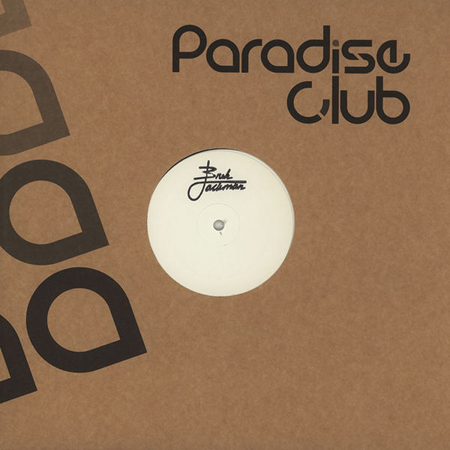
British DJ/producer Hackman has combined forces with fellow artist Jabru to form Bruh Jackman, whose first single dropped today. Called “Of the Sun,” the project’s new track is a subdued, techno-leaning production that subsists on a lulling vibes and predominantely vintage-sounding instrumentation, and arrives today as part of the first release from nascent label Paradise Club. You can watch the video for Bruh Jackman’s new single, as well as hear clips of the other tracks featured on the brand-new 12″—including a cut from label mates Juno Sutton & MTD and a solo production from Jabru—below.
As we hurtle towards the final quarter of 2012, it’s once again time to pause and take stock of the past month. We are, of course, referring to the top 20 most downloaded tracks published on XLR8R throughout September—the list of which includes music from the likes of LV, Eskmo, Jessie Ware (pictured above), Benjamin Damage, and Tycho, among others, and can be found after the jump.
This week, the Midnight Shift label will unleash its inaugural release, a split EP by Toronto resident Basic Soul Unit (a.k.a. Stuart Li) and Singapore’s Eddie Niguel titled The First Shift (artwork above). The pair’s record doesn’t drop until October 4, but in advance of that release, we’re treated to a bonus cut from Niguel. “This Isst It” balances intensity with dreamy gloss as it rides a tight, arpeggiated melody over gliding synths. Its rising and falling tides create a spiralling hypnotic energy that propels the tune for over seven minutes.
The UK duo of Joe Andrews and Tom Halstead (a.k.a. Raime) has announced that its first debut album, entitled Quarter Turns Over a Living Line, will arrive next month via Blackest Ever Black. The seven-track record follows a few EPs and 12″s by the drone-techno outfit, some of which date back to 2010, and will reportedly feature an array of live instrumentation—including guitar, strings, and percussion. Before Quarter Turns Over a Living Line drops on November 19, Raime will embark on a series of tour dates, including sets at London’s Ether Festival and Poland’s Unsound Festival, all of which you can check out below. You can also check out the artwork and tracklist for Raime’s forthcoming LP, as well as listen to album cut “Soil and Colts,” below. (via FACT)
1. Passed Over Trail 2. The Last Foundry 3. Soil And Colts
XLR8R Couldn't find the embed function for type: "soundcloud" and source: "<embed allowscriptaccess="always" height="81" src="https://player.soundcloud.com/player.swf?url=http%3A%2F%2Fapi.soundcloud.com%2Ftracks%2F61925880" type="application/x-shockwave-flash" width="100%">".
4. Exist In The Repeat Of Practice 5. The Walker In Blast And Bottle 6. Your Cast Will Tire 7. The Dimming Of Road And Rights
Oct. 13 – Ether Festival at Purcell Room, London SOLD OUT (w/ Mount Kimbie, Ekoclef, Airhead) Oct. 13 – Blackest Ever Black at Corsica Studios, London, (DJ set) (w/ Vatican Shadow, Cut Hands, Source Direct) Oct. 20 – Unsound Festival, Krakow, SOLD OUT (w/ aTelecine. Ben Frost) Oct. 26 – Berghain, Berlin (w/ oOoOO, Evian Christ, Vessel) Nov. 3 – Arnolfini, Bristol (w/ Emptyset) Nov. 7 – Kunsthal Charlottenborg, Copenhagen (w/ Joachim Koester) Nov. 9 – Sudpol, Lucerne (w/ Black Rain) Nov. 10 – Palace, St. Gallen (w/ Andy Stott)
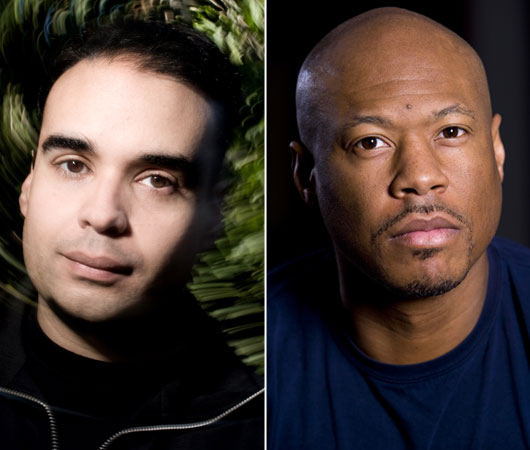
Yesterday, we featured Part One of our extended conversation with Robert Hood and John Tejada—two verteran producers who have recently added new full-lengths to their accomplished discographies. In the second chapter of our three-part conversation, we discuss their perspective on the American techno legacy and each man’s approach for their respective new albums.
XLR8R: Given that both of you have seen a lot of the rises and falls of techno in America, what do you make of the US’ techno legacy? Do you think your music has been better received overseas than in your own country?
John Tejada: On the West Coast when I started out, there was a big scene but it wasn’t the same thing that I was into. I would be really hungry though, and I’d go to the record shops and pick up magazines and all that. It was a shame, because there was so much domestic music I didn’t find out about until much later because people were just ordering imports. You’d see a lot of stuff on R&S, which was cool because they were picking up on Detroit artists and labels, but at some point, you would realize it was all being made in the States—that was a big realization. I guess the point I’m making is that US artists weren’t readily available here. You’d see big Detroit releases come through as an import once a European label had licensed it. That was how I was exposed to some of those seminal releases, and I think it took a really long time for people to start getting and supporting domestic music.
Robert Hood: I can remember back when Detroit was progressive and people got it. As far as Detroit embracing electronic sounds, I can remember right before Mojo went off the air, he was embracing techno and house so much more, it was starting to become a phenomenon. But radio programmers weren’t sure how this would fit into their programming. You don’t just go and play A Guy Called Gerald in the middle of a top-40 set that includes Mariah Carey and Luther Vandross. Aside from that, you had the sub-culture, places like the Music Institute and the UN that played underground house music. You had DJs like Ray Berry and Terrence Parker, who used to play a lot of the social club parties and spin these austere imports along with Detroit, Chicago, and New York stuff to a few hundred people. Then the scene began to split—the gangster types listened to nothing but Too Short and NWA, and the preppies listened to house music and techno from Metroplex and Transmat. So, as hip-hop became more prominent on the radio, techno went further underground. And then artists started going to Europe and becoming more and more successful and playing to more and more people. As artists, we should have not just gone to Europe to play to people that appreciated the music, but we should have tried to cultivate our own backyard as well. That drive for success was fine, but at the same time, you have to take care of your scene, take care of your home. But what’s done is done.
XLR8R: Robert, you live in Alabama now, but would you say that Detroit still plays a role in your music? Your new record was inspired in part by a documentary about the city, right?
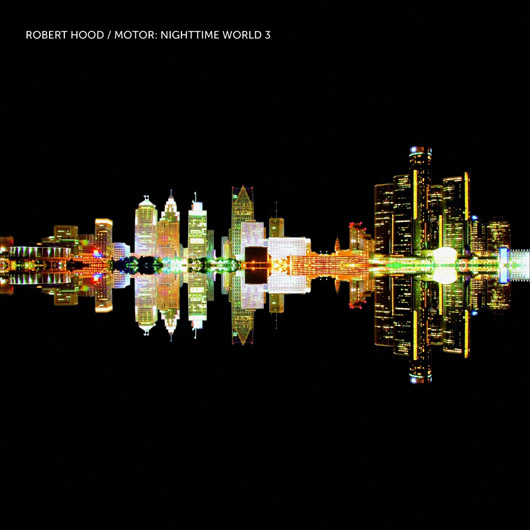
RH: The album was inspired by a documentary called Requiem for Detroit. It talks about black people coming from places like Alabama and heading to Detroit in search of a better life working in the auto industry and the adversities and racism they faced along the way, as well as the decay—the social decay, the economic decay, the unemployment—that Detroit has faced and is still facing. I no longer live in Detroit, but I am Detroit. I could live on the East Coast or the West Coast, I could live in Europe or I could live on the moon, but I’m still Detroit. It’s still in me. Those streets raised me and the experiences I had there shaped me. My grandfather worked for Chrysler, my father-in-law worked for General Motors, my step-father worked for Cadillac, and the Motown sound and all of that shaped me growing up on the streets of Detroit—dealing with racism, dealing with gangs, dealing with unemployment, racist cops, and just trying to survive. So that feeling of facing adversity and facing challenges, and overcoming those adversities all plays a part in the album.
XLR8R Couldn't find the embed function for type: "vimeo" and source: "<iframe src="http://player.vimeo.com/video/10554065?byline=0&portrait=0" width="530" height="299" frameborder="0" webkitallowfullscreen="" mozallowfullscreen="" allowfullscreen=""></iframe>".
XLR8R: And John, what was your process in approaching your newest album?
JT: Usually, when I’m working on a full-length, it starts to come together by accident. I’ll have a more intense flow of creativity and I’ll end up with a handful of ideas or finished songs that sort of accumulated and follow the same theme. And when that happens, I kind of click on and realize I’ve got something that could turn into a full-length. I’ll experiment with things to see if I can continue in that direction, and if that works out, I’m on my way to doing another album.
XLR8R: And how do you identify one of these themes?
JT: It’s a little bit hard to put into words, but they all just sort of fit together. One is a continuation of another, but maybe a different type of rhythm. Then it just starts to feel like a complete idea, and I try to see if I can make more songs work in the same realm, while still varying in style and feel.
XLR8R: Was your process for your album similar, Robert, in the sense that you experimented until you found a theme? Or were there specific images and such from the film that led you to make the tracks?
RH: The dialogue in the movie as the interviewer talked to different people about their experiences growing up in Detroit and the politics of Detroit, as well as the pictures I have in my head about Detroit and about the world, about mankind, about how people treat one another—all of those play a part in the music. And I guess for me, it’s all about: “What am I trying to say? What am I trying to do? Am I trying to get people to dance or think about something, or am I trying to take the listener to another place?” I do experiment, and a lot of times, I will start with the drums and build everything around them. That decides how everything will go and as I’m building, I’ll think about, “What is this saying?” or “Where is this taking me?” Once it begins to materialize and as the clay begins to take shape, I try to see what is coming to life here and what direction it’s heading in. Once I develop a better idea, the whole paragraph starts to form into a book—chapter by chapter—and the story starts to form. That’s how I work.
Click here for part one of B2B: Robert Hood and John Tejada. The final conclusion will be published tomorrow.