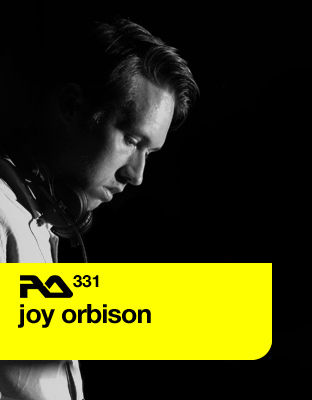
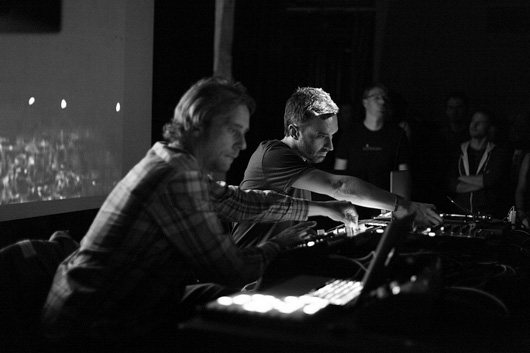
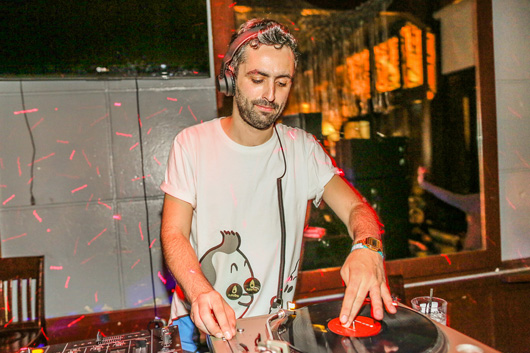
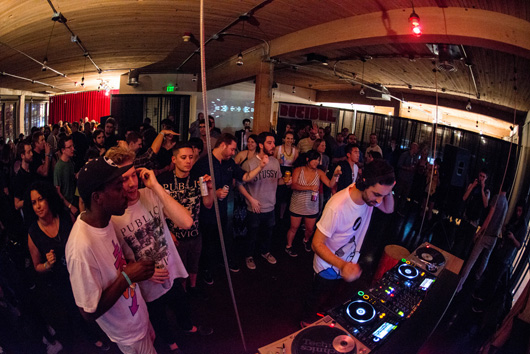
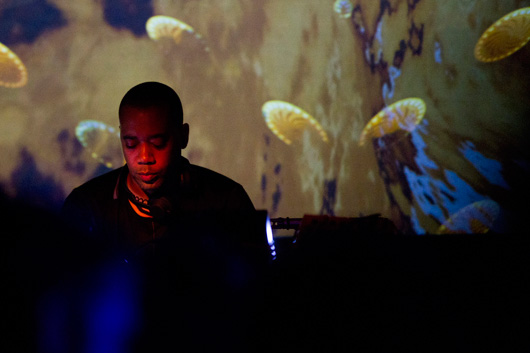
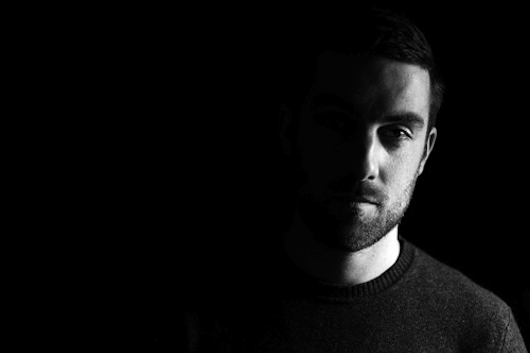
UK bass firestarter Joy Orbison (a.k.a. Peter O’Grady) rings in the new week today by dropping a rare mix for Resident Advisor. The podcast showcases a typical Joy O set at his Manchester club night meandyou, which apparently includes healthy servings of garage, house, R&B, and techno influences. O’Grady moves seamlessly between the sounds, picking through tunes by the likes Jeremih, Norman Nodge, and Groove Chronicles with surgical precision. Although there’s no official tracklist for the podcast, you can head over here to check it out for yourself.
Canadian artist Dan Snaith is best known as the man behind the excellent Caribou project, but the producer also make lush and rubbery house under the name Daphni. We’ve known about his forthcoming debut LP with that moniker, called JIAOLONG, for some time now (we’ve even heard some of its music), so we’re excited to finally get a chance to listen to the whole record today. Over on Resident Advisor, you can stream Snaith’s nine-track album before it drops early next week via his own label, also called JIAOLONG.
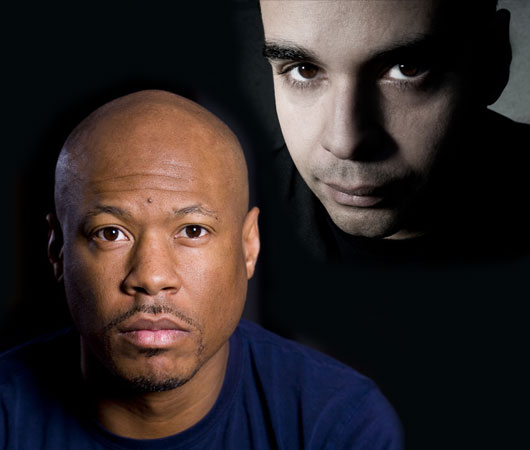
Robert Hood and John Tejada are veteran producers in the truest sense of the term, having separately witnessed, survived, and—in some cases—led through the various ebbs and flows of techno’s last decade-and-a-half. Last month, both artists individually unveiled their latest statements, with Hood issuing the third installment of his Nighttime World series (the last of which appeared on his own M-Plant label over 12 years ago) and Tejada offering his second full-length release for the renowned Kompakt label, The Predicting Machine. While they may come from different schools and slightly different generations of techno lineage, Hood and Tejada found much in common when we brought them together for a special conversation, and in the first part of our B2B session, the two men revealed a glimpse of electronic music’s early spirit while discussing how they’ve continued to find inspiration for all these years.
XLR8R: Both of you have been producing and DJing for well over a decade now; is the inspiration to create still the same as it was when you first started?
Robert Hood: In the beginning, it was pretty much my love for techno, my love for house music, my love for music, period. Now, there’s still love for music—for just triggering a sound—but I’m driven more by the Holy Spirit. It’s a spiritual connection that drives me. Whereas before, I thought it was for my self fulfillment, it’s more of a God mission for me than anything else now. It’s a mission to reach out to people and this techno music is just a vehicle, a catalyst. It’s an area that allows me to reach people that maybe are not hearing the message, or attending church, or reading the Bible. So that’s my main objective now, to spread the gospel through electric wires.
XLR8R: When do you think that change in your focus occurred?
RH: Probably 2002, around the time the first DEMF jumped off. I realized that my own ego and what I was driven by had to be redirected, and I realized it wasn’t about me, it was about a higher purpose.
John Tejada: I think, like Robert, in the beginning, the way things influenced you was different. We didn’t have social media and all these sorts of instant things, and you would go to the record store to meet up with people or find out about new music from magazines. There weren’t all these websites and everything, so there was a different kind of pace and tempo to the way you’d get the information. I remember also being so influenced by the sounds—everything was so new, and I don’t know if we can ever experience that again. Those were definitely very special moments when you heard something literally for the first time. A friend of mine references a time when I was really young and gave him some music and told him, “You’ve got to check this out, this will change your life.” He thought, “Well, I’m sure it’s good, but it’s not going to change my life!” But now, telling the story, he says that the music I gave him did actually change his life. The music really had that strong of an impact for all of us that loved it. I’m impressed by what Robert just said [about his spirituality]—it’s really quite amazing—and while I might be on a different journey myself, I find the constant need to search. I’m always craving to hear that new thing, and I can’t help but create constantly and get this sort of energy out of me. It’s just something within my soul that has to happen whether I can help it or not.
XLR8R: What was it like to hear those inspiring sounds for the first time? Are there specific songs or artists that come to mind?
JT: For myself, I was in LA and I really got into all this through hip-hop culture. We had a great radio station called KDAY which had some interesting DJs, and a big part of that scene was more electronic/experimental sounds—which nowadays people have come to call electro or whatever. As time went on, you started hearing things in the mix like Model 500’s “No UFOs,” Art of Noise; stuff that wasn’t technically part of hip-hop but was still part of the same culture. I was always more drawn to the electronic/experimental side and as that part of the culture developed, I just followed those influences more.
RH: I had a similar experience with hip-hop. I can remember the first time I heard “It’s Like That” by Run DMC. That changed my life, changed my world, changed how I thought about music. I grew up with the idea that music had to have an intro, a verse, a chorus, a bridge—the typical structure of a song. But “It’s Like That” broke that down completely, and it was completely stripped down and minimized, and just so raw and in your face. For me, that was my first idea of “minimal.” Like John was saying, looking for that sound or that groove or that beat that will change the world, that will really shift planets, it’s a constant drive. Looking back to the days of “The Wizard” Jeff Mills, the days of the Electrifying Mojo, and this Detroit culture that I come from, coming up on Parliament Funkadelic, Bootsy Collins, The Specials, Falco, Phil Collins, Genesis, Derrick May’s original radio show (called Electric Crazy People)—all these sorts of sounds and rhythms—that’s what shaped me as an artist and a musician. I can remember being in high school, me and Anthony Shakir would trade records back and forth and talk about these strange, obscure records that we found or what we heard on the radio. Those days are just kind of lost and gone, and we’ve been programmed. Like John was saying, that constant need, that tiny voice in our soul, in our spirit, is what guides us to keep to going, to search for that particular feeling that’s going to satisfy ourselves, that harkens back to those days but also takes it forward into the future at the same time.
JT: I also had quite an epiphany with the first Run DMC album, and that song in particular. I was in fifth grade and I had that cassette and I would bring my radio to school and I wore that thing out, every single track. “Jam Master Jay”—I still don’t know what’s going on in that song. I was drawn to that record because of “Rock Box,” that was my intro. I moved to the States when I was eight, in ’82, and I immediately discovered Led Zeppelin and all these kinds of things, and when I heard “Rock Box,” that was it—I was into hip-hop and all the Arthur Baker productions and all the stuff I’d never heard before. That Run DMC tape, for a good half year, was never turned off. [laughs]
RH: ‘Til this day, I still get chills when I hear “Rock Box” because it’s just so hard, so in your face, so stark. And it’s pure. I can remember when I first laid eyes on Run DMC, I thought, “What kind of name is that for a band? Run DMC? What is that?” And then I skipped school one day to go down to see them play a free concert at Hart Plaza in Detroit, where they have DEMF now, and I went down there to see who Run DMC was and what this was all about. Jam Master Jay was behind the turntables, and there were these two guys on stage with these hats, Adidas suits, and no laces in their Adidas—I was just mesmerized. It was like punk rock. It was hip-hop before it was hip-hop. To me, it was everything that embodied music. It was incredible. I don’t know if there will ever be anything like that, because people are copying each other in a cookie-cutter pattern now.
JT: Right, it’s a bit paint by numbers—that’s the negative side of it. It does give everybody the opportunity to do it though. I definitely agree with Robert, that there were those first moments that will never happen again. And I was going to add also that Larry Smith did all this stuff you don’t hear about a lot. You’ll still hear about Rick Rubin and different people like that, but Smith did that Run DMC record and the Whodini albums, and they were totally different. For me, Whodini’s Escape was an equally complete shock, and to know now [that] the same guy did those is really impressive.
Part two of B2B: Robert Hood and John Tejada can be found here.
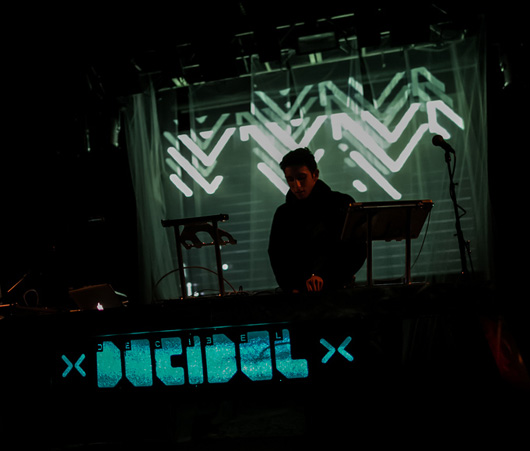
Last week, XLR8R hopped on a plane to Seattle to check out the city’s annual Decibel Festival. Admittedly, we were pretty excited to partake in the festivities; after all, we did just dedicate an entire series of content to the long-running festival. With nearly 200 artists on the bill, there was a lot of to see over the five days and nights of Decibel, and it wasn’t all just DJs playing banging beats in dark nightclubs—although, yes, there was plenty of that. However, there were also concerts, A/V showcases, boat parties, after-hours events, panel discussions, gear workshops, and more. Without question, the 2012 edition of Decibel was the festival’s most ambitious to date; that said, there were times that the festival’s organization cleary chafed under the weight of that ambition. Nonetheless, it’s hard to fault the Decibel team for reaching a bit beyond its grasp, particularly when so much of the festival was innovative and decidedly unfocused on the mainstream (even the electronic mainstream). More importantly, most of the week’s events—the nighttime showcases in particular—were downright fun.
LOVED: Andy Stott
When one is at a multi-day music festival like Decibel, a lot of small talk is involved. As the days wear on, attendees end up running into familiar faces—both old friends and new ones made during the course of the festival—and inevitably, the conversation shifts to something along the lines of, “What did you like this week?” For us, the answer was simple: Andy Stott. The UK producer performed live on Thursday night at the Modern Love showcase, and flat-out floored the dark basement confines of Melrose Market Studios. Positioned atop an impressive bill that also featured Demdike Stare—who was also excellent—Stott piloted an hour-long journey that began with murky dub techno, worked its way through chugging rhythmic exercises, and peaked with his use of what sounded like classic hardcore and rave drum patterns that had been slowed to a more manageable tempo���without sacrificing any of their euphoric impact. Stott and the Modern Love crew aren’t known for making music that’s particularly “fun,” but they kept the dancefloor buzzing on this night, even as logistical problems meant that the entire affair was running nearly an hour behind schedule. Nonetheless, the show was a clear festival highlight, and Andy Stott led the charge.
Demdike Stare at Modern Love showcase (by Vitamin Dee)
LIKED: FaltyDL
Brooklyn beatmaker FaltyDL headlined the Global Selektors 1 showcase on the festival’s first night, and pieced together a set of melody-infused, garage-leaning sounds that was just about perfect. (Maybe even a little too perfect, as he DJed with Ableton; as such, it lacked some of the rough-around-the-edges charm and, yes, the element of danger that often colors more traditional, or even Serato-based DJ sets.) Performing for an enthusiastic crowd at the city’s seasoned Re-Bar, FaltyDL pulled out bits of house, techno, and garage, all of which leaned heavily on organic sounds and off-kilter drum patterns. The tunes were excellent, but even more impressive was his ability to maintain the room’s vibe without delving into obvious cuts or even upping the music’s energy level significantly. One might say FaltyDL was playing a “mature” set, but that’s not meant as a condescending remark. Building a dancefloor without opening the throttle all the way is no simple task, yet he did exactly that.
NEEDED WORK: The Do-Over
Make no mistake, The Do-Over is a great party. The LA-based event is practically an institution at this point, effectively combining sun-soaked afternoons with various strains of DJ culture. In recent years, The Do-Over has increasingly taken its act on the road, and 2012 marked its first stop at Decibel. Unfortunately, the afternoon show was a complete bummer. Situated in the grass outside Broadway Performance Hall (which served as the festival’s de facto headquarters throughout the week), the party had a decidedly scuzzy vibe, one that wasn’t helped by the pastiche of gutter punks, past-their-prime ravers, and transients who seemed to make up the bulk of the crowd. Normally, being at The Do-Over is like attending a great backyard BBQ; there’s an intimate feel, great tunes are blasting, people are dancing, and those that aren’t on the floor are usually vibing with a drink in their hand. The Decibel edition didn’t come close to recreating that. For much of the afternoon, the dancefloor was nearly empty, populated only by a few weirdos in oversized cargo pants and stupid hats. There was a bar, but alcohol was limited to an odd little corral situated to the side of the proceedings, meaning that a huge chunk of the crowd was completely separated from the festivities. It also didn’t help that some of the music was atrocious, especially the cuts served up by Seattle’s own Supreme La Rock. His dated brand of turntablism-flavored DJing did not go down well with the Decibel crowd; granted, a segue of Toto’s “Africa” into the Cheers theme isn’t likely to get anyone excited in 2012, nor is a medley of “Rockin’ Robin” into the themes for The Jeffersons and The Golden Girls. (Yes, he really played these tunes.) In truth, having The Do-Over at Decibel is a great idea. It’s just that the execution, artist selection, and location simply were not up to par.
LOVED: John Talabot
We first fell in love with John Talabot‘s live set at this year’s Sónar festival in his hometown of Barcelona. Several months later, he’s now in the midst of his first-ever US tour, and the Spanish producer made a key stop at Decibel, headining the festival’s official closing party. As he did at Sónar, Talabot—with plenty of help from live collaborator Pional—served up a set of rousing electronic pop, his sounds colored in by bits of Balearic euphoria, pitched-down vocal hooks, and plenty of nods to vintage house and techno. After five days and nights of revelry, those in attendance wouldn’t have been blamed for feeling lethargic, but the crowd was actually ecstatic, even when Talabot played a few new cuts. Following this short string of solo dates, he will be hopping on tour with The xx; this show at Decibel proved that he’s clearly up to the task.
NEEDED WORK: XLR8R showcase
“What happened to Actress?” Over the course of the week, we heard some approximation of this question literally hundreds of times. Needless to say, it was a big disappointment that the UK innovator didn’t manage to get his visa sorted on time and was forced to cancel his headlining performance at Decibel. He was clearly one of the acts that people really wanted to see, and although Nosaj Thing was a more than capable replacement, Friday night’s XLR8R showcase was facing an uphill battle before it even started. It didn’t help matters that the show’s sound crew seemed woefully underprepared, to say the least. I was scheduled to spin an opening set, but when I arrived at the Baltic Room that night and inquired about the DJ set-up, the engineer literally had no idea what I was talking about. (Eventually, a makeshift DJ rig was assembled, although I ended up facing a wall—instead of the crowd—while playing.) On top of that, complicated live set-ups for both Gulls and Teengirl Fantasy helped ensure that the schedule would be running way behind all night. The problems continued from there. The Baltic Room was full, but the late start and delayed set times made everyone antsy. Gulls’ dubby creations lulled the crowd into a sort of malaise. An especially long changeover between Gulls’ and Teengirl Fantasy’s sets—itself marred by a failed attempt to have me DJ again between the acts—didn’t help matters. By the time Nosaj Thing wrapped up around 1:30 a.m., the crowd seemed more relieved than overjoyed. In short, it wasn’t the best thing XLR8R has lent its name to.
LOVED: Teengirl Fantasy
Despite the technical and logistical issues with the XLR8R showcase, Teengirl Fantasy was excellent. Members Nick Weiss and Logan Takahashi have really honed the project into a well-oiled machine in the live setting, and their unique brand of leftfield house sounded great. Commanding a fleet of gear and delivering with a real performative flair, the duo showed why DIY, analog-driven electronic music doesn’t have to be a clumsy affair. Teengirl Fantasy is one of those outfits that just keeps growing and getting better, and witnessing the latest stage of the group’s evolution was a genuine pleasure.
xxxy at Surefire showcase (by Angela Dawn)
LIKED: xxxy
XLR8R has been touting the DJ prowess of xxxy for some time now, and his appearances at Decibel did nothing to convince us that these endorsements were not justified. Quite simply, the man is an excellent DJ, one who can skillfully move the dancefloor with a potent mix of classic house and garage along with a smattering of new UK (and UK-influenced) tunes. He performed three times over the course of the week, the first at the Boiler Room, where he delivered the standout set despite sharing the bill with quality DJs like DVS1, Appleblim, and Pezzner. Even more enjoyable was his set that evening at the Baltic Room, where he headlined the Surefire showcase and repeatedly elicited throngs of cheers from a crowd that was perhaps a bit weary following Objekt’s hard techno workout and Kuedo’s bombastic, hip-hop flavored assault. He rounded out the week with a late-night stop at the Icee Hot After Hours, and although the crowd was starting to dwindle by the time he got up behind the decks, the music wasn’t lacking in quality. (Disclaimer: Icee Hot is a label/party that I have a hand in running.)
NEEDED WORK: DB After Hours
Throughout the week, Decibel lined up a series of late-night afterparties, with the intention of allowing festival attendees to keep partying into the wee hours. It was a wonderful idea in theory, as most people attending a large-scale electronic-music festival, especially those who traveled to Seattle to attend, were not looking to shut their evenings down at 1:30 or 2 a.m. Unfortunately though, many of the afterparties were a bust. First and foremost, while it’s nice to have parties with top-notch DJs running all night long, it’s very difficult to keep people on the dancefloor without alcohol unless the nights are absolutely slamming. Obviously, it would be unreasonable to expect Decibel to illegally provide alcohol, but organizers should have everything apart from that to make these parties both desirable and easy to attend. On the whole, that didn’t happen, a phenomenon that wasn’t helped by the fact that entrance to the After Hours often required the purchase of a separate ticket, even for those who had already shelled out a lot of money for a festival badge. Regardless of who was playing, when it was 3 a.m. and one was faced with the choice of going home or paying $20 or more to go inside a party with no booze, many folks went with the first option. Another factor contributing to the poor turnout was that fact that there was usually a gap between when the showcases ended and the After Hours began. Even when showcases and afterparties were happening at the same venue, the entire club would be cleared out before the late-night festivities began. As such, even those attendees who were willing to stay out late and pay for a ticket were being forced to wait on the street for 30, or even 60 minutes before they could come inside once again.
If these afterparties are going to continue happening in the years ahead, they need to start immediately upon the completion of the showcases, or even a little bit before. Furthermore, the entrance needs to be free for people with festival passes, or attendees should at least be able to buy a “VIP” badge that includes entrance to these parties.
xxxy at the Boiler Room (by Nic Launceford)
LIKED: Boiler Room
The scheduling of two Boiler Room sessions to the Decibel proceedings was a last-minute addition to the line-up, but it was certainly a savvy move on the part of the festival organizers. Happening from 6 to 9 p.m., hours when there was a definite a gap in the Decibel schedule, both evenings were packed with revelers. Taking place in a gorgeous Capitol Hill loft space, those lucky enough to track down an invite downed free drinks, mingled with friends, and filled the dancefloor as DJs and live acts rolled out tunes not just for those at the party, but for people watching the whole thing broadcast online. As mentioned before, xxxy was a definite standout on the first night, while we thought Ghosts on Tape stole the show on Friday evening with his banging house and techno selections, which provided a welcome change of pace from that night’s more hip-hop- and bass-flavored line-up. (Disclaimer: Ghosts on Tape is one of my partners in Icee Hot. That said, he really was excellent.)
LOVED: Hotflush Showcase
Bass-music aficionados had Saturday night’s Hotflush showcase at the Baltic Room circled on their calendar well before Decibel began, and the line-up of Braille, George FitzGerald, and Sepalcure did not disappoint. Braille began the evening with a relatively subdued set, overcoming a few Ableton glitches before serving up an array of moody, garage- and house-infused selections. FitzGerald was up next and promptly amped the energy level. His recent releases have displayed an increasing tendency toward dancefloor-oriented rhythms, and his DJ stylings have followed suit. While his set had plenty of melodic flourishes, a heavy kick was present throughout, as were frequent nods to classic house and garage tropes. The crowd loved it, repeatedly shouting its approval as FitzGerald moved from one tune to the next. Capping the evening was Sepalcure, which found Braille back on stage with partner Machinedrum. The duo performed live, manipulating their textured sounds with MIDI controllers, cycling through different tempos, and unfurling one unique drum pattern after another. Both men seemed extremely confident on stage, which allowed them to get a bit playful as the set wore on; Machinedrum even hopped on the mic and sang live in place of a few vocal samples. When the lights came on at 1:30 a.m., the room was full of smiles, and it was clear that most people in attendance had had a very good night.
LIKED: Objekt
In perhaps one of the biggest scheduling quirks of the festival, Berlin-based producer Objekt took the stage at 9:30pm on Thursday night, opening up the Surefire showcase at the Baltic Room. Given his predilection for hard, banging techno, we weren’t sure exactly what to expect, as it wouldn’t have been inappropriate for him to change things up and put on some mellow offerings in the spirit of warming up the room. It’s possible that he followed that idea at the beginning of his set, but by the time we arrived around 10 p.m., Objekt was doing was he does best: playing dark, slamming techno. It could have been a disaster, but the rapidly swelling crowd seemed to be more than happy to hear the man doing his thing, and doing it well. Although Objekt is relatively young, there was a real old-school sensibility to his set, partially due to his use of vinyl, but also because he eschewed trendy cuts and stayed true to his singular vision. This was music for late nights, dark corners, and abandoned warehouses. It was big, it kowtowed to no one, and it sounded great, even though the clock hadn’t yet struck 11.
Carl Craig at Motor City Masters showcase (by Eva Blue)
LIKED: Seattle
Decibel is not one of those festivals that happens in a giant field with multiple stages and tens of thousands of attendees. It’s spread over several nights, and takes place in numerous clubs scattered around Seattle, with multiple showcases happening simultaneously. As such, attending Decibel required a lot of actual interaction with city, or at least its downtown and Capitol Hill neighborhoods. Smartly, most of the venues were within walking distance of one another. The city was relatively easy to navigate, not to mention downright pleasant to be in. The weather was perfect, the streets were clean, greenery was everywhere, and people were friendly. Seattle also proved to be impressive on the food front; from late-night hot dogs to typical West Coast meals built with locally grown ingredients, attendees’ culinary appetites were well catered to. Honestly, Seattle came across as a safe, pleasant, and inherently livable city. Its combination of a laid-back spirit with an open-minded perspective is hard to come by, and undoubtedly helped create an atmosphere where an event like Decibel could not only exist, but thrive.
NEEDED WORK: ’90s state of mind
For all the great things about Seattle, being in city occasionally felt like crawling into a time machine and heading back to the ’90s. As liberal and open-minded as the place came across, it was sometimes hard to shake the notion that things were stuck in an odd sort of time warp. (Anyone who’s seen the PortlandiaDream of the ’90s sketch will likely find that Seattle suffers from a similar affliction.) Whether it was grunge-rock leftovers wandering the street or aging tech-ravers still clinging to their oversized cargo pants, tribal tattoos, and goofy utility belts, the city didn’t always convey a particularly forward outlook or aesthetic. As big as electronic music is in Seattle, the city is not Berlin. It’s not London. It’s not even New York or San Francisco. (Okay, maybe it’s a little San Francisco with all the hippie-flavored, Burning Man-esque nonsense going on.) In terms of Decibel, this didn’t mean that the festival wasn’t fun. It just didn’t feel especially “cool,” and there were ample opportunities for cynical out of towners (ourselves included) to make cheap jokes about people’s boot-cut jeans or misguided dreadlocks. That said, given Seattle’s pleasant nature and the general sense of friendliness that permeated the festival, maybe the joke was on us after all.
Q (by Angela Dawn)
LIKED: Sound quality
While the sound quality did vary from venue to venue, it was clear that Decibel organizers made an effort to ensure that festival events at least met a minimum standard across the board. Throughout the week, people were raving about the booming sound at Neumos—although some actually did find it too intense—and the sound system at the newly opened Q was impeccable. Even at older spots like the Baltic Room and Re-Bar, the sound was never bad. In a perfect world, sound quality would never be an issue at festivals, but it’s an area where organizers often choose to skimp, particularly those who don’t understand its importance in relation to electronic music. It’s clear that Decibel organizers are fans of the music first, which is why they acted accordingly and did their best to protect everyone’s eardrums.
Carl Craig at DB Conference (by Eva Blue)
NEEDED WORK: Organization
Without question, operating a festival in the vein of Decibel is not a lucrative venture. That’s likely why much of the staff consists of volunteers, and although everyone we met was friendly and did their best to be helpful, in the end, they were still volunteers, which meant that a lot of details fell through the cracks. Talking to the staff throughout the week, it was clear that everyone had a lot on their plate, and it occasionally seemed like some people shirked their responsibilities under the weight of that pressure. After all, they were volunteers, so nobody faced severe repercussions when things went awry. For instance, the DB Conference—a series of workshops and panel discussions throughout the week—was plagued by cancellations and last-minute changes. The Decibel mobile app was littered with incorrect information and also just failed to list several events. The festival website was a bit clunky and sometimes listed conflicting or incorrect information. Showcases ran behind. Artist riders that were submitted multiple times never found their way to sound engineers. For those performing, getting simple questions answered about where to be and who to talk to was often a laborious process. The list goes on and on.
In fairness, many of these issues are present at all festivals, even ones where the entire staff is getting paid. It’s just a matter of degree in terms of how much these issues affect the festival experience. For Decibel, the effect wasn’t disastrous, but it could certainly be felt, especially when it came to behind-the-scenes details and the festival’s extracurricular events apart from the showcases.
LIKED: Curation
Although things at Decibel didn’t always run as smoothly as they should have, the festival nonetheless proved itself to be something worth celebrating. When it comes to electronic music in the US, prospects remain relatively grim. Given the explosion of grossly commercial “EDM” festivals in the past year or two, it would have been easy for Decibel to follow a similarly vapid—albeit financially secure—path. Yet organizers held fast to their vision, and curated a five-day event that was remarkably devoid of big-name headliners. Instead, they found a way to bring in cutting-edge artists from across the electronic spectrum—honestly, there were so many great acts we didn’t even get a chance to see perform, including Shlohmo (pictured at top), Balam Acab, Tycho, Matthew Dear, Dixon, Peter Van Hoesen, Octave One, and others too numerous to list—and made it work.
On paper, building showcases at a US festival around avant-garde labels like Raster-Noton and Modern Love seems like insanity. Similarly, Carl Craig may be a techno legend and an incredibly important artist, but he’s not exactly slam-dunk headliner material for a large American festival. Even Decibel’s most “name” acts—Orbital, DJ Shadow, Erykah Badu—operate well outside the musical mainstream. Yet somehow, it all came together, and that was a wonderful thing to witness.
Decibel devotes itself to things that are new and weird. It celebrates electronic music’s lineage without simply being an exercise in nostalgia. Simultaneously, it provides a platform for dozens for artists that even the headiest of electronic-music aficionados are likely unfamiliar with. Furthermore, it’s not just a series of parties. There’s a desire to educate and grow the scene, and a real sense that organizers are attempting to give something back to a community that has clearly enriched their own lives. None of this is easy, yet they keep on doing it, which is why XLR8R has been, and will continue to be, an ardent Decibel supporter.
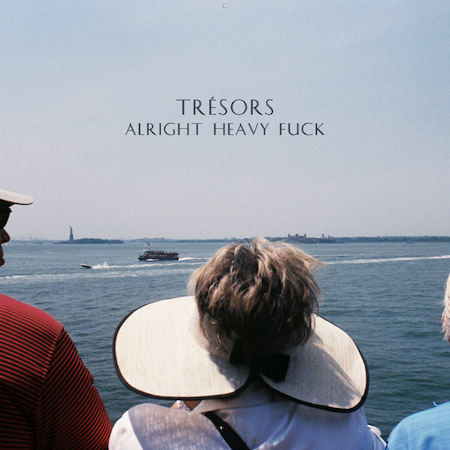
Parisian synth-pop duo Trésors is set to release its new single “Alright Heavy Fuck,” along with remixes from the likes of Ricardo Tobar, Montag, and Claude Violante. Montreal artist Montag, who recently signed with indie label Carpark, offers a forboding, cinematic take on the original track—featuring a pulsing and distorted eighth-note bassline, fizzy white noise, chopped and delayed vocals, arpeggiated synth melodies, and one hell of a chaotic climax. Before the rest of Trésors’ single to drops on October 8, you can stream it here.
For an artist hailed worldwide as the kingpin of the so-called beat scene, Los Angeles resident Steven Ellison is surprisingly enamored with melody. He exercises a deft command of its powers, too. But the producer’s work as Flying Lotus has always been beholden to the rhythms and sounds of hip-hop, elements which provided his intergalactic excursions with a vehicle familiar to its earthbound listeners, even if those beats were experimental in their own right. Los Angeles, an album rife with chunky beatwork and alien soundscapes as sprawling as its namesake, presented this sound at its most arresting and complete, but Ellison proved himself to be creatively restless on the ambitious follow-up, Cosmogramma. On that record, he expanded his scope to include more live instrumentation, high-profile vocalists, and two other major components: a predilection for proper jazz motifs and all of the ambling melodies that came with the genre. But the producer’s slant toward mind-boggling drum programming continued to prevail—that is, before he started work on Until the Quiet Comes.
A lot can be gleaned about what’s in store on any given Flying Lotus record from its opening track, as he treats each of them like portals to individual sonic worlds with their own unique inhabitants, geology, and weather patterns. “All In” is no different. The song starts off Until the Quiet Comes with beautifully somber chords, a simple drum pattern, and unexpectedly subtle undercurrents of Ellison’s beloved galactic shimmer, sounds which glaringly imply that this is the least extraterrestrial and most melodic Flying Lotus album to date. Not only is Quiet driven largely by seemingly acoustic instrumentation, but also soulful vocal turns and breezy atmospherics. Only on a small handful of the 18 tracks does Ellison dip into his patented unquantized MPC button mashing. “Heave(n)”‘s rhythmic jerks, the oppressive buzz of “Sultan’s Request,” and the dimension jumping “Hunger (feat. Niki Randa)” revisit the mystically intangible realm of Los Angeles, but like with most memories, they never quite capture the essence of those past gems.
Similarly, Until the Quiet Comes often comes off as a smoothed-out and watered-down Cosmogramma. Gone is the otherworldly skitter and shuffle of beats that made productions like “Computer Face//Pure Being” and “Pickled!” such a joy to return to; Ellison now seems to favor rhythms that could quite easily be performed by a novice jazz drummer. Granted, the wealth of harmonious layers—strings, keys, bass, vocals, synths, etc.—piled over those simple beats are undeniably well-arranged and gorgeous. It’s impossible to deny the allure of “Getting There”‘s brilliant sparkle and the poignancy of the warbling plucks in the first half of “me Yesterday//Corded.” More often than not, however, Flying Lotus leaves Thundercat’s breakneck bass riffs, or the guest singer’s croons, or the onslaught of wandering melodies to do most of the heavy lifting on these productions, as fully evidenced on “See Thru to U” with the show-stealing Erykah Badu. Save for a soft-but-consistent thump, “Phantasm (feat. Laura Darlington)” is basically an ambient chillout track with a vocal performance fitting of a Stereolab cover band providing the main attraction. It’s easy to drift into wondering exactly what happened to the instrumental hip-hop guru fans have been falling for since 1983‘s dense sci-fi beatscapes first appeared.
There are moments that hint towards Ellison’s rhythmic genius, though. When “The Nightcaller” transforms from a buoyant free-jazz jaunt into a punch-drunk funk-blap hybrid, something about the swagger of the walking bassline and drum-machine knock makes for a deliciously nod-worthy combination we haven’t heard since 2007’s Reset EP. Thom Yorke’s contribution to “Electric Candyman” finds the inimitable singer working with a seductive vocal quality uncommon to his own repertoire, which is then woven throughout a subdued production that also manages to be particularly manic and syncopated, even compared to a pre-Quiet FlyLo tune. These outstanding tracks are few and far between, however, and almost sound out of place when they do appear. When Ellison jumps between rehashing Cosmogramma and remembering Los Angeles, it can feel like listening to portions of two albums that have been haphazardly stitched together, which is unfortunate for an artist whose past works congeal with such a fluid continuity. The two-track suite of “Tiny Tortures” and “All the Secrets” is a good example of how Flying Lotus could blend his increasingly split musical personalities by unleashing a bit of wild drum programming, a handful of unchained melodic themes, some metaphysical soundscapes, and a few surprises, all at once.
None of which is to say that Until the Quiet Comes is a bad record, per se. It almost goes without saying that no one else in the Southern California beat scene (or any of its respective off-shoots, for that matter) could have written this music, certainly not without coming off as a dyed-in-the-wool copycat or wannabe. And only after releasing genre-defining and genre-defying LPs in tandem could a record like this sound subpar. Flying Lotus has a lot to live up to, it’s true. To his credit, he delivers the goods more consistently than we should probably expect, and even the greatest auteurs have moments in their careers that are less than glowing. It would be a stretch to call Until the Quiet Comes‘ disjointed tracklist and middling retreads the low point of Ellison’s discography, but suffice it to say that the LA cornerstone has produced far more challenging and consistent records than this. Chances are that’s a gift he hasn’t completely lost.
Birmingham’s Tom Flynn has been cranking out releases this year. He recently unleashed his third record of 2012, Freshly Squeezed, via Mobilee‘s Leena imprint, from which the sloshing, booty-bass stomper “Like Saying” is lifted. Flynn’s heavily bouncing beat is flecked with hand drums and faraway chants that help balance the song’s bottomless depth with lighter sounds and lend it an extra spark of energy.
Last year, Dusseldorf-based composer Hauschka released Salon des Amateurs, an inventive, classically informed ode to house and techno music performed on his “prepared” piano. (For the uninitiated, check out NPR’s fantastic video series, in which he details his technique of piling seemingly random household objects like bottle caps, leather, and marbles onto/under the strings/hammers of his piano to cull new and unusual noises from the instrument’s 88 keys.) On his latest release, he pushes Salon des Amateurs deeper into the world of electronic music by selecting a number of heavyweight producers to rework it into a captivating, techno-leaning record.
Salon des Amateurs Remixes opens with a reinterpretation of “Radar” by Kompakt boss Michael Mayer, who transforms Haushka’s delicate work into a minimal-techno masterpiece that recalls the neon noir feel of Kavinsky’s retro-futuristic Drive theme. Mayer’s take on “Radar” builds tension slowly and then chips away bits and pieces to make room for a deep, hypnotic bassline that gives the song its backbone. Sound artist and Raster-Noton co-founder Alva Noto also takes a stab at “Radar,” producing a characteristically glitchy, ambient edit far removed from Hauschka’s version.
Hauschka strikes gold tapping Matthew Herbert; his whimsical “Sunrise” mix, which adds layers upon layers of odd and beautiful sounds of indiscernible origins, is a real stunner that embodies the spirit of experimentation that made Salon des Amateurs so appealing in the first place. Lost stalwart Steve Bicknell is also an excellent choice; in his hands, “Tanzbein” is almost unrecognizable—reborn as bludgeoning industrial techno, it’s probably the closest a Hauschka track will ever get to being club ready.
As with “Radar,” there are dueling “Ping” revisions. René Löwe, under his Vainqueur moniker, uses synth delays to reimagine “Ping” as a shimmering, atmospheric number that’s quite beautiful in its divergence from the original. Tolouse Low Trax (a.k.a. Detlef Weinrich, formerly of the ’90s post-rock group Kreidler) also strayed a ways from Hauschka’s composition, but with less success. Gutting all the bells and buzzes that give the song its character wasn’t the wisest decision; perhaps he should’ve chosen a different track instead of going up against one of the best.
The trouble with a lot of remix albums is that they often come off as half-assed throwaways produced to buy time between an artist’s major releases. Thankfully, that’s not the case here. Building on a pair of EPs he released earlier this summer, Salon des Amateurs Remixes ranges from respectful edits to inspired reworkings of tracks from the critically acclaimed album, and stands as a tightly curated collection of high-quality collaborations that allow for deeper exploration of Hauschka’s wonderfully complex compositions.
Hotflush kingpin Scuba recently sat down with Resident Advisor for an interview which touched on the ideas of identity and his open-minded tastes, among other topics. DJ/producer Paul Rose’s diverse palette is reflected in the multitude of genres that Hotflush has been releasing, as of late—including the stark techno of Sigha, the soulful stylings of Shelter Point, and the club-ready productions of Jack Dixon. You can listen to Scuba’s RA Exchange discussion here.
Tokyo-based producer A Taut Line (a.k.a. Matt Lyne) is set to drop his latest EP, called Sands, via his own Diskotopia imprint. The release includes two originals along with four remixes from the likes of Mau’lin, Myakkah, and Arctic. “Sands (Arctic Remix)” utilizes the spacey, dreamy pads from Lyne’s production before caving into an acidy, bass-driven drop. Arctic’s mix also features plenty of varied percussion, from 808 bells to tablas to congas. You can preview the rest of A Taut Line’s Sands EP before he makes it available on October 1, below.