Bubblin’ Up: Vessel

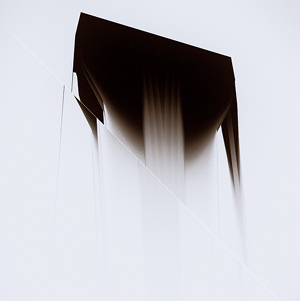
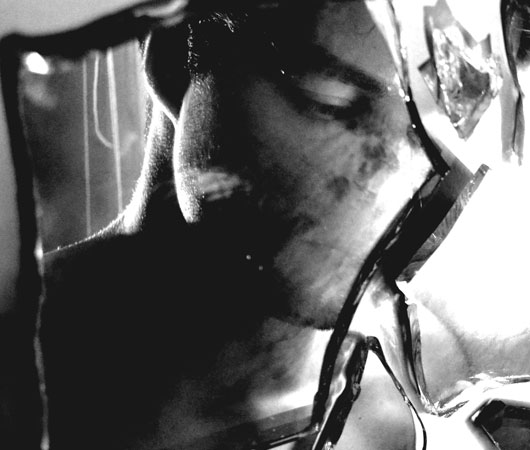
Late last month, a young Bristolian named Sebastian Gainsborough released an excellent LP, Order of Noise, under the name Vessel. It’s a remarkably unique record marked by metallic clatter, chunky basslines, banks of prickly synth tones, fizzing atmospheres, and the muffled moans of phantoms, sounds which Gainsborough crafted by hand and arranged within drifting and dubwise techno structures. Order of Noise is arguably one of the strongest debut albums released this year, and, to hear it from the producer himself, the ingenuity exhibited therein can all be boiled down to his inborn urge to create sound.

“To me, noise represents something that communicates through our entire sensory and imaginary apparatus, and tends to create a fantastical soup of sensations and feelings,” says Gainsborough via email. He’s been asked to elaborate on his use of the word “noise” in his new album’s title, and explain its significance to him as an artist. “Noise is a loaded term,” he speculates. “People are still arguing over how to define it; whether it’s positive or negative, whether it is meaningless or meaningful, an attracting force or an alienating one, and so on. It’s a challenging term, and it means all sorts of things to different people.” For the 22-year-old’s musical work, however, noise is also synonymous with possibility, the endless tangents and visceral experiences that can be explored through sound. Vessel has been active for over two years now, and it’s all because of his desire to wander these tonal paths. As he explains it, “I wasn’t [initially] interested in creating coherent compositions; the process of creating a sound, listening to it, altering it, listening to it, etc. was the immediate draw. It’s a very instinctive thing for me to do, and is the foundation of my interest in making electronic music.”

When it comes down to it though, conjuring and manipulating sound is as much the framework and the rooftop as it is the foundation of Vessel, a fact that’s evident in every release he’s put his name to. From his first two 12″s for London imprint left_blank to the Wax Dance EP for A Future Without to his debut LP for of-the-moment electronic outpost Tri Angle, Vessel’s identity has always been defined by the gritty and metaphysical aesthetic he applies to his mangled techno hybrids. Early tracks like “Blowback” or the outstanding “Standard” are equal parts slow-motion dance grooves and planes of altered consciousness, each element implicitly relying on the other’s strengths to thrive. Much of the same still exists on Order of Noise, but Gainsborough has undoubtedly taken it to a new realm. “I think if you played [my album] and my previous releases side by side, you would hear similarities in terms of the processing of sound material and perhaps a tendency toward structural decomposition, but not much else,” he says. “The album was made in a completely different way.”

And the differences show. Whereas Vessel’s earlier productions boast loftier tempos and meaty beats, Order of Noise subsists largely on the spaciousness of dub music and is permeated by a lilting, ghostly aura. Songs like “Stillborn Dub” and “Aries” rattle and throb with a slow, meditative pace, while the more hurried shuffle of “Court of Lions” or the manic churn of “Scarletta” evoke a sinister edge. This shift of focus came about when Gainsborough was approached by Tri Angle label head Robin Carolan, who asked him specifically for an LP of material. “As I’d had no intention of making an album prior to being asked by Robin, I had no concept in place, no substantial theme to start the process,” the producer admits. “That was both a blessing and a curse. It was really fascinating to just immerse myself in the process in real time, day by day just making music without being beholden to any predetermined structures.” However, the experience wasn’t without its downsides. “In retrospect, [Order of Noise] was made in a completely draining state of hyper-awareness and self-exploration, only gaining a discernable form and character right towards the end.”
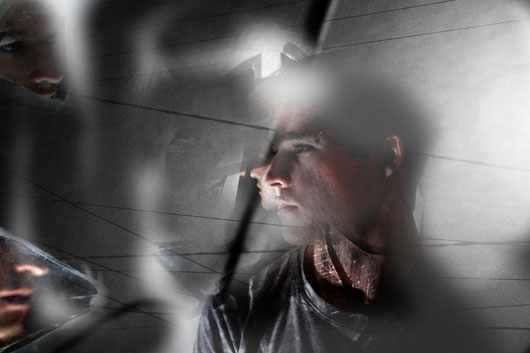
His process sounds something like what Darren Cunningham (a.k.a. Actress) underwent when creating his excellent R.I.P. album; the music is comparable, too, but Vessel has unquestionably found his own niche. Techno, dub, and proper electro are primary touchstones for Gainsborough, but his interests run well outside of the electronic-music world. “Vessel is a bit of a sinkhole in terms of cultural appropriation,” he shares before going on to name painter Hieronymus Bosch, writer Marilynne Robinson, French intellectual Jacques Attali, and Sonic Youth as inspirations. It seems like an unlikely list from a producer living in one of the UK’s bass-music capitals, but as Gainsborough puts it, “Living in Bristol has certainly influenced my music, but not directly.” He elaborates, “A person’s environment will shape their focus and interests, regardless of whether they actively engage with it as a cultural space.”

Maybe his ambivalence towards Bristol’s music scene stems from his opinion of its general output. “Electronic music—dance music, specifically—tends to be fairly homogenous,” Vessel argues. “Genres flock together, and there’s little in the way of confrontation or dialogue with audiences beyond the well-worn theme of collective euphoria.” In spite of this (or maybe because it), Gainsborough has carved out a corner of Bristol for himself with his Young Echo collective, a small group of artists—comprising El Kid, Kahn, Jabu/Zhou, and Vessel—who work together on music, events, podcasts, and more. “When we play together, there’s something of a freeform, instinctive, sometimes confrontational approach to the selections we make,” Gainsborough gushes. “I think we feel it’s a certain sense of unpredictability we bring, [something] that contrived dance scenes tend to lack.”

But like he said before, Vessel’s location and scene are secondary to the hauntingly unnatural sounds he creates. While listening through his new 12-track record, a question repeatedly bubbles to the surface: Where exactly do these noises come from? The artist explains, “I get my source material from anywhere that I can, although I don’t use samples.” It might be hard to believe at first, but a close inspection of Gainsborough’s work reveals both a singular, impeccably curated sonic pallette and a high level of clarity, the latter of which is especially uncommon for sample-based music. Unwittingly proving his claim further, the producer makes it seem that crafting tunes is almost just an excuse for him to make some noise. “The process of source sound preparation and development for the album was perhaps the most fun,” he shares. “I spent maybe 10 days utilizing everything available to me in order to collect material. Software, hardware, coding, circuit stuff, recording… That was the only time I was creating any raw junk. From then on, the songs just ate themselves.”

Order of Noise

Thankfully, songcraft and a narrative arc also drives Order of Noise, and, for that matter, Vessel’s sonic identity. Without it, the music wouldn’t resonate with his audience like it does, and the producer is well aware of that. “That was the most important thing to me,” Gainsborough says about making his LP, “To be able to create something that was self-reflective, challenging, and narrative-based, a body of work that’s inter-referential and coherent as a whole.” What exactly that narrative is isn’t entirely clear, but that doesn’t really matter. The realization of Vessel’s ideas sound nonetheless imbued with raw physicality and a palpable sense of the unknown. It all comes off as downright magical and mystic, but for the music’s creator, it’s entirely personal. “An act of creativity for me is a rendering of the artists’ imagination and the subconscious into something tangible,” Vessel explains. “It’s a reflection of a person’s state, filtered through culture, experience, and the emotional and sensory apparatus.”


Hi, Doctor Nick! – Start Making Tunes and Stop Getting Lost in the Party Scene

Nick Hook may not be an actual doctor, but even after only a month at the helm of the weekly Hi, Doctor Nick!, it’s clear that the man is helping people. Every Thursday morning, he reaches into his brain and extracts useful information to advise the XLR8R faithful, and no topic is off limits; life, love, music, production, touring, travel, gear, food—it’s all on the table. If you have an inquiry of your own, don’t hesitate to drop Doctor Nick a line at doctornick@xlr8r.com, and perhaps he’ll help you in a future edition of the column. As for this week, he’s offering his thoughts on two very different aspects of the game: how to start making music, and how to avoid getting lost in the party scene.

Hi Doctor Nick,
I’m 22 and in my last year of school. I’ve been partying since my teens, but lately, I’ve been feeling utterly out of control. I’m being reckless, and my friends in the party circuit think I have lost my sense of self. The thing is that I practically live for music and DJ-oriented events and I have been working towards getting into the industry since high school! I can never imagine a career path in any other field. With that said, I have two questions. Could a string of embarrassing incidents at a young age totally screw me over professionally? More importantly, how do I go about getting my life back in order?
Molly

Dang. I don’t know if i’m the best to answer this question for you, but I’ll try anyways. I’m still gonna stick with the fact that if you don’t have a kid or an STD, you can recover from anything. So maybe go get tested first.

To be completely honest, and I think maybe the only difference is that I’m a guy, is that a turning point in my life was the one year where I was out almost every night until the sun came up. I bonded with a lot of people that year, and I look back on it in an amazing way. I was a little bit out of control, but aren’t you kinda supposed to be at some point?

I think you should set some goals for yourself. What do you want exactly? If you don’t know, you are essentially working towards nothing. When I was 22, I hadn’t ever put out a record or left the country, but I knew I wanted to. So I felt like if I was at least taking forward strides every day, whether it was one tiny one, or 100,000 huge ones, I was doing my best. Now I’m an advice columnist, so it obviously worked out.

Also, don’t do coke. I’ve seen it ruin mad people. Good luck.

Hi Doctor Nick,
How can I start making some tunes? I’ve got a musical background and I’m pretty computer savvy, but when it comes to electronic music, I’ve never gone beyond stringing together a few loops in GarageBand. I’d like to learn how to make some beats, but I definitely can’t afford to enroll in any of the online programs I’ve looked into. Got any resources to get a beginner started with minimal investment? Any software recommendations? Can I get by in the start without buying any hardware? Ideally, I’d like to be able to DJ parties for friends and create some original tunes. Thanks for the help, I’m diggin’ the column.
Justus

Hi. Thanks. I’m glad you like it.

I learned how to iron my clothes last week on YouTube, so I don’t see why there’s any reason you can’t learn how to sound like Skrillex on there either.

My suggestion would be to get some programs and a decent MIDI controller. I use Ableton Live and Novation stuff. Reason is tight. Personally, I hate Logic cuz it’s slow and clunky, but some people go wild on it.

When I got Ableton in 2004, I picked up this book. I kept it with me all the time. I read one page here, 10 pages there… sometimes I didn’t read any, but my brain was racing to try and understand it all. I kept learning, bit by bit. If you go back to my first column, we talked drum machines. I would listen to some of your favorite music and see what sounds resonate with you. See what synths you like, if you like samples, drum machines, and all that. When I work with people, I try and understand that as fast as possible. I find it really important. It’s a language that you can speak together.

My other favorite book that I still keep with me today is this. It’s trippy as fuck, and funny, but awesome… and when I Googled the link just now, I realized that my dude has the book notated on YouTube. Yes!

Don’t worry about hardware yet. Some of my illest friends that make all the beats we love use no hardware at all. It’s all good. I didn’t get a real synth ’til like three years after I was making beats. Reason was great for me in the beginning because it really does emulate the process of a studio. Once I started making “real” records, I actually understood the process.

Hope that gets you started. Hit me back for more.

Hi, Doctor Nick! appears every Thursday on XLR8R. Do you have a question for Doctor Nick? Please submit your inquires to doctornick@xlr8r.com. Nick Hook can help you.

Fauna “Soulmates”

Vienna-based producer Fauna just sent us over a cut from her forthcoming album D(R)ONE. According to her label, moun10, the album tells the following story: “Once upon a time in the future, a nameless hydra ate Enya. As punishment, it is sent to hell and sings Satan a song about its life.” There is a particular noise that haunts the album, and while it may sound something like a bitcrushed kick drum, one could speculate it’s more like a noise sent from the netherrealms. Indeed, “Soulmates” opens with the otherworldly noise in question setting a dim tone for the tune, a vibe which is further explored by the heartbreaking vocals and melancholy chords. Before Fauna’s album drops on October 31, you can stream a preview of D(R)ONE after the jump.

Soulmates

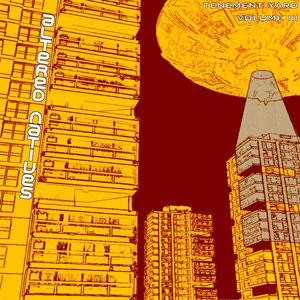
Altered Natives Tenement Yard Vol. 3

Not once during the course of Altered NativesTenement Yard series—now in its third volume over the past three years—has it ever sounded like Danny Yorke was making music for anyone but himself. Without a doubt, his brand of hard-edged, heavy-handed house continues to be aimed at the dancefloor, but that seems to be as much to suit his own preferences as those of any particular audience, and furthermore, the track titles and vocal samples used throughout this trilogy have frequently been tied to inside jokes or—while seeming ambiguous to most listeners—have been said to each have specific meaning to the artist. In 2012, crafting music that is this personal in such high volume (Tenement Yard has added 45 tracks to Yorke’s run) while maintaining such an impeccable standard of quality is no easy feat. Clearly though, Altered Natives is up to the task.

To give a sense of how close the London producer is to the themes and ideas which run through Tenement Yard Vol. 3, Yorke sent along earnest descriptions of each album track with his press release. “This is where it all begins. Love and betrayal” describes the Sade-sampling “The K I S S;” “Be Nice (Like We Should)” comes with a note about wanting to send a message to all the “miserable clubbers of the world;” and the title of album opener “Martyn’s Friend” emanates from multiple experiences where guys at shows would introduce themselves under the pretense of being mates with the 3024 label boss. As one might expect, it’s not all serious, and Yorke ends one of his more revealing thoughts with a ping of self-deprecation, “I write music as personal notes to remind me of stuff. Lessons I feel I should never forget, with bass and stuff.” The humor, sentimentality, and genuine insightfulness with which Yorke appears to approach his music is surprising, especially considering the rough rhythms and dense tones which result from his process. Rather than indulging in sentimental melodies or emotive soundscapes to log these memories, Altered Natives casts his lessons in much darker trappings—clipped drum patterns, overpowering percussion, full-bodied stabs, and an entire spectrum of haunting synths (usually in pad form) account for much of the album’s core. Maybe because these stem from such genuine roots of inspiration, they all appear to come together with an effortless touch.

But all this is largely meaningless without quality tunes, something Vol. 3 fortunately has in spades. The grimmer strains of the album account for most of the highlights; songs like “In My Heart Forever (Stay Dead),” “You Used To,” “The Calling,” and the aforementioned “The K I S S” and “Be Nice (Like We Should)” are trademark Altered Natives fare, finding a balance between punishing drum loops, ghostly pads, and revolving patterns of lead stabs. Still, some of the more intriguing tracks are the ones which peer just outside Yorke’s comfort zone—”Natural Freak” reworks gorgeous piano and disco samples into a loaded skipper; “Allwhere” simmers with skittering drums and classic house chords; and the closing “You Cut Me Out of My Life” is almost—dare we say—blissful.

In truth, Vol. 3 is not the crown jewel of Altered Native’s Tenement Yard trilogy, as last year’s Vol. 2 still remains the strongest effort of the series. But with another 90 minutes of quality, pumping house added to his discography, and our appetite for Altered Natives production nowhere near satisfied, the trilogy’s final chapter is indeed a success.

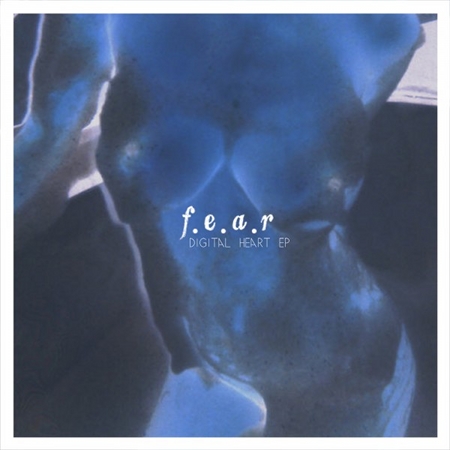
F.E.A.R. “Astrid”

The second cut from London production outfit F.E.A.R.‘s Digital Heart record, “Astrid” comes fully dipped in ’80s vibes, with a vintage-sounding drum kit and rumbling bassline working out its heavy groove. F.E.A.R. brings to mind a realm similiar to the dancefloor-friendly work of Disclosure (albeit on a much darker tip), and tunes like this one exhibit that infectiously skewed blend of pop, house, and UK garage sounds. You can preview the rest of F.E.A.R’s Digital Heart EP, which is out now via Black Butter, after the jump.

Astrid

Hiawatha Language

Those who have been following Egyptrixx sets over the last year or two have heard the Toronto producer segue swiftly out of the post-dubstep box and into a mysterious and ever-heavier techno idiom, one that incorporates brooding atmospheric touches from black metal and shoegaze. Rivulets of reverb and swaths of delay are all over his 2011 album Bible Eyes, and this interest in rock dynamics has spilled over into his latest project, a duo called Hiawatha.

Hiawatha’s Language is no rupture, but a logical next step in Dave Psutka’s canon. With partner Ian McGettigan, the bass player and songwriter for ’90s Canadian alt-rock act Thrush Hermit, Psutka creates a lingua franca in between electronic music and rock, using equal parts analog and digital—both “real” instruments and synthesized ones—to create the desired effect: an enveloping and hypnotic pop ambience. Sometimes, this takes a more traditional song form—the cascading “Dogs of War,” the early-morning mist of “Miracle Language,” and the walking meditation “Glass” are all set off by McGettigan’s soothing vocals and elliptical lyrics—though much of the album is instrumental ebb and flow. Album opener “Hiawatha” sets forth the mission statement: feedbacking guitars (sounding for all the world like a between-song interlude at a Sonic Youth show) dissolve into a dark fire of melting, deconstructed tribal acid that is intermittently snuffed out by a warm blanket of hazy synths and vocals. It’s a bit like walking between rooms at a festival, albeit one where the palette is drone, doom, minimal, and darkwave.

That’s not to say Language is a depressing album: its palette is grey, purple, and navy, rather than black. And though the dialect is more muted and muffled, the language is still (loosely) synth-pop; in vibe and style, Hiawatha has much in common with Holy Other, Tycho, and fellow Canadians Purity Ring and Trust (with whom Psutka has collaborated in the past). What sets Hiawatha apart is Psutka’s way of making the synthetic feel organic—an economy of effect and mixdown he’s carried through his various releases. Putting the “tricks” in Egyptrixx, he finds a way of panning and abstracting keyboards, percussive elements, and bass to sound like elements of the natural world: condensation dripping in a cave, dragonflies dancing on a lake, glaciers groaning and readjusting, the communication of prehistoric animals swimming in the depths of the deepest sea.

And as if nodding to the noble leader of the Iroquois from which the duo takes its name, Hiawatha dabbles in the occasional tribal texture, from kicks and toms that feel lifted from the ceremonial circle to distorted noise suggesting a warrior on a cliff watching a storm brewing in the distance. “Old Black,” a cover of a song by seminal Seattle doom metal band Earth, is one to make the elders proud: a deep trance of rolling drums made hazy with the smoke of a MIDI peace pipe and the piercing echo of digitally demented war cries.

Fatima Al Qadiri Readies EP for Fade to Mind, Shares First Leak

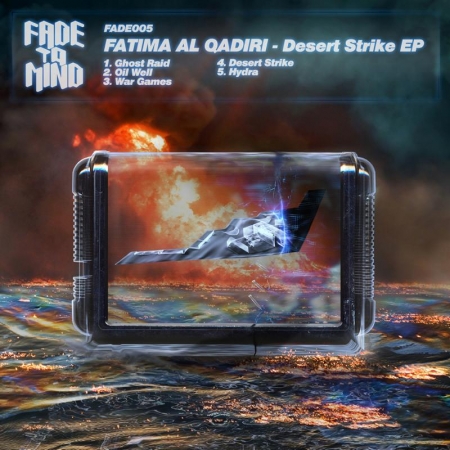
Genre-bending Brooklyn producer Fatima Al Qadiri has announced she will helm the next record released via Kingdom’s, Nguzunguzu’s, and Total Freedom’s collaborative label, Fade to Mind. Called Desert Strike (a title which was inspired by Sega’s ’92 shooter game Desert Strike: Return to the Gulf), the EP is said to boast “sparse, decisive percussion” and “melodic virtuosity” across its five productions, and is scheduled to drop on October 23. Before then, you can hear its lead tune, “Ghost Raid,” as well as check out the tracklist for Al Qadiri’s new record, below.

1. Ghost Raid

XLR8R Couldn't find the embed function for type: "soundcloud" and source: "<embed allowscriptaccess="always" height="81" src="https://player.soundcloud.com/player.swf?url=http%3A%2F%2Fapi.soundcloud.com%2Ftracks%2F61918935" type="application/x-shockwave-flash" width="100%">".

2. Oil Well
3. War Games
4. Desert Strike
5. Hydra

Jam City Unveils New 12″ and EP

Jam City‘s ambitious Classical Curves LP for Night Slugs isn’t even six months old yet, but will nonetheless be followed by a couple of new releases from producer Jack Latham in the weeks to come. Juno reports that the UK artist will release the digital-only Classical Club Mixes EP—featuring extended mixes, dubs, and instrumentals of tracks from his debut LP—on October 22. A 12″ for a new mix of “How We Relate to the Body” is also coming soon, but currently has no confirmed release date. Both releases will feature an all-new Jam City production, called “Now We Relate.” You can check out the tracklist and artwork for each offering below.

1. Her (extended dub)
2. The Courts (12? mix)
3. How We Relate To The Body (12? mix)
4. Club Thanz (dub)
5. Now We Relate
6. The Nite Life (instrumental)

A. How We Relate To The Body (12? mix)
B. Now We Relate

LuckyMe Readies New EP from S-Type

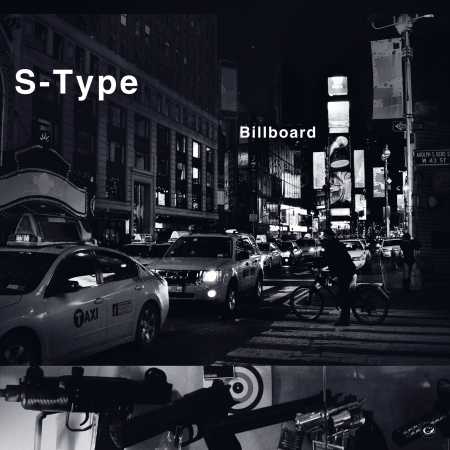
Glaswegian producer S-Type may not be the biggest name affiliated with Scottish record hub LuckyMe, but we’ve been following his work all the same (you remember some of his tunes we posted this year). Now, the artist born Bobby Perman is readying his next offering for the label, a six-track record called Billboard. S-Type’s EP is set to drop on October 16, but is preceded by a stream of the slow-grooving, vocoder-heavy “Walrus (feat. Budgie),” which you can check out along with the tracklist for Billboard, below. (via FACT)

A1 Billboard
A2 Flyp City
A3 Sensi Star (feat. Luke Slott)
B1 Walrus (feat. Budgie)

XLR8R Couldn't find the embed function for type: "soundcloud" and source: "<embed allowscriptaccess="always" height="81" src="https://player.soundcloud.com/player.swf?url=http%3A%2F%2Fapi.soundcloud.com%2Ftracks%2F61923577" type="application/x-shockwave-flash" width="100%">".

B2 Whole Lotta
B3 You Da Best

Telephoned “Last Time (Krystal Klear Remix)”

Taken off of Telephoned‘s Last Time (Remixes) EP for Brooklyn’s Fool’s Gold label, we have a jacking remix from Manchester’s Krystal Klear (pictured above). The producer, who recently dropped a solid single via MadTech, “drags the song into proper New Jack Swing territory,” according to the label, and boasts plenty of funky bass licks throughout his production. The rest of Telephoned’s remix album is out now, and can be streamed in full after the jump.

Last Time (Krystal Klear Remix)

Last Time (Krystal Klear Remix)

Page 1924 of 3781
1 1,922 1,923 1,924 1,925 1,926 3,781