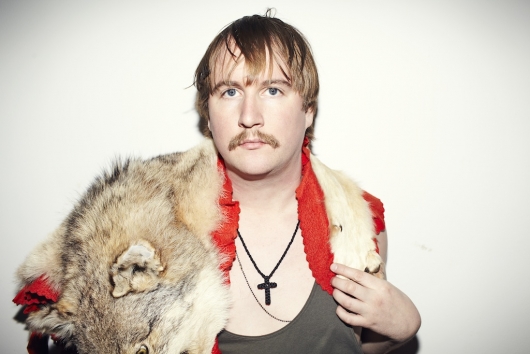
Hi, Doctor Nick! – Balancing Work with Music, Playing the PR Game, and Vinyl vs. Laptop DJs

Thursday morning has arrived, which means it’s time again to welcome Dr. Nick Hook back to the front page of XLR8R. Even if he’s not actually a doctor, his wealth of wisdom has already helped numerous readers with their burning questions about life, music, romance, travel, production, and more. If you have an inquiry of your own, don’t hesitate to mail it in to doctornick@xlr8r.com, and perhaps Doctor Nick will help you in a future edition of his weekly advice column. In the meantime though, continue reading to find out his thoughts on keeping the creative fires burning while holding down a job, the vinyl vs. laptop DJ debate, and how best to play the PR game.

Hi Doctor Nick,
As a creative professional, I’m quite lucky to have a job where I get to create all day, but my job only represents a fraction of the other creative outlets I enjoy–most of which are music things. I’m always at my creative prime in the morning, which is great for my day job, but by the time I get done at work, go to crossfit, and get home, all I want to do is sit on the couch. How do I find the creative juices and energy to work on my own music without it feeling labored and passionless?
Bailey

I dunno man. I think you need to assess what’s important and try to focus on that. I only had a 9-5 job for three months once, but I went through what you are going through. I got home and I had nothing left. Creative energy is something that I think is hard to talk about, because sometimes it’s not important how long you actually work on something, but where your head is at when you do work, just so you can pour it all out in a focused batch. It’s that five minutes where you are at your best that could impact the next 10 years of your life, or more. I sacrificed all of the normal things humans usually have—insurance, a steady income, relationships, etc.—because I did realize that I wanted to do this. It’s just now kinda starting to work out after a LONG time. Maybe you talk to your job and switch a few days around so you can focus two days a week on being creative at your prime. Maybe you eliminate crossfit. I’m not sure, but something has to give. You can’t do it all.

Hi Doctor Nick,
As a new DJ (I’ve been mixing for 12 months), will purely using vinyl limit my progress or opportunities for success within the club scene? I’m not looking to become the next Pete Tong or make loads of money, I just want to be able to play decent music to decent crowds on a regular basis.

I started out with just vinyl is because I didn’t own a computer at the time and could only afford either a basic laptop or a pair of secondhand 1200s and a mixer… so I chose the latter. A year later, I’m confident enough to hold down a decent 1-2 hour club set and I have a quality collection of music, but I’m wondering whether I would find it easier to get DJ gigs and build my DJ profile if I started using Serato or CDJs. I do own a Macbook Pro now, so I could make the transition fairly easily.
Daniel

If you can switch easily, why not do both? I think the main thing is to be yourself. That’s why you will get booked. If nine million dudes are playing trap, are you going to fire up your laptop and torrent everything so you can be just like them tomorrow? That would kinda blow.

I do miss the times of all-vinyl DJing, just because every single one of us was completely different. I’d go see one friend cuz he had all the weirdo ’80s electro records and my friends liked to come see me cuz I had all of Project Pat’s records. I think if you can utilize all the time you’ve spent in record stores to show what personifies you, then you are on to something. Obviously, the computer is going to help cuz we all know it takes seven million years for something new to get to wax.

I appreciate the non-purist thing. To me, you can extract so much out of both kinds of DJing. Going into a record store is so inspiring on so many levels—the format, the art, what it took to make those records, the sounds—but it’s also dope to play an MP3 your friend sent you that day.

Anyways, be yourself. That’s gonna shine through everything, whether you have a computer or not.

Hi Doctor Nick,
Is hiring a publicist to work on releases worth it for small- and medium-sized labels? Is it better to build a network of contacts yourself over time, and build personal relationships with bloggers and tastemakers… or hire someone who is already established to do it for you? I’ve been grappling with this question for a few months now. It seems kind of silly to be paying someone a pretty penny to ultimately do what I want to be doing myself.
Aaron

I think it’s a balance, although your geographic location is really important. I live in New York, which I did make happen myself, but I’m also lucky that everyone is always coming in and out of here. I’ve also established a ton of business relationships that actually had nothing to do with business, just by connecting with people. (Kinda like my relationship with Shawn, our editor at XLR8R. To be honest, I don’t know if he loves or hates my music, and I never send it to him, but that’s cool, we connect.)

My band Cubic Zirconia, we had to start our own label cuz no one really liked us, except for our artist friends. I think the more I’m in the music biz, the more I realize that I don’t even understand why half the people are in this industry. They go to bed at 10 p.m. Literally EVERY business dealing I’ve ever had in music has happened at like 5 a.m., and maybe I was high as hell and wasted, but they were genuine and they actually all happened.

Also, I think it’s important to inspect your own product. You need to target the RIGHT people, not just anyone. And if it’s not interesting, no one’s writing about it, so make sure everything you do is dope, or at least on the way to that. Make sure you’re an asset, not a liability. If you can build some steam with some contacts, once a press agent does finally come in, you give them something to run with. THEN you can focus on being a better A&R and promoting your records in new ways, while they do what they do.

Remember: spend money to make money… but do it wisely.

Hi, Doctor Nick! appears every Thursday on XLR8R. Do you have a question for Doctor Nick? Please submit your inquires to doctornick@xlr8r.com. Nick Hook can help you.

Dirt Crew “Sweeter”

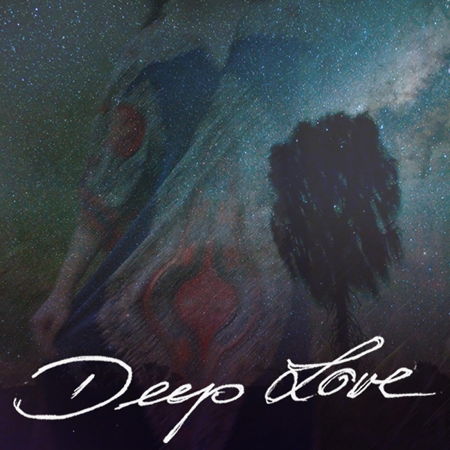
Break 3000 (a.k.a. Peter Gijselaers) and James Flavour (a.k.a. Felix Eder), the two German tech-house lovers who make up Dirt Crew, are following up their Deep Love compilation from last year with Deep Love 2, a collection of deep, dancefloor-ready cuts with a heavy focus on their label’s newcomers. Ahead of the compilation’s physical release on October 8, we have “Sweeter,” an eight-minute tune from the label bosses themselves. Dirt Crew’s production features all the hi-hats, cymbals, and claps you could ever need to get down on the dancefloor, as well as a bubbling bassline and some sweet vocal samples that help work out “Sweeter”‘s deep groove.

Sweeter

Strategy Strategy

Over the last decade or so, Portland’s Paul Dickow has cut a career through house, ambient, and dub, filtering his tracks through lenses that are equal parts tropical pastel and Cascadian grayscale. His sound’s spacey, searching quality has generated a catalog that feels less like a progression than a constant exploration. But this isn’t to suggest that Dickow is wandering aimlessly. On the contrary, his records have consistently depicted an artist who is immensely comfortable with his palette, satisfied with etching endless variations on a few trustworthy motifs. For many contemporary producers, the internet affords the chance for recognition based upon the strength of early, unpolished tracks; as such, constant progression, a hunger for new technology, and being part of a continuum have all become common narratives within electronic music. Dickow is certainly not a luddite, but he does call the wisdom of accelerationism into question on his latest, self-titled LP, which is appropriately being released on a new label called Peak Oil.

It’s then fitting that Strategy opens with ambience recycled from “I Have to Do This Thing,” a track so fine that Dickow has previously released it twice—in its original, pumping house form and as the near-beatless finale to his 2007 album, Future Rock. Its appearance here exemplifies the project’s fluidity. Several of Dickow’s other trademarks are also present throughout—submerged but resonant bass, highlife guitar, shimmering synthetics—but when that ambience drops out a minute into “Sugar Drop,” it’s immediately apparent that the producer’s mindset has shifted.

Dickow released the largely ambient Music For Lamping in 2008, but Future Rock was his last ostensibly pop album, in that it attempted to congeal his various interests with stricter structures, as well as the occasional vocal. On Future Rock, Dickow’s voice was often vocoded and quiet in the mix, but nevertheless displayed a shy optimism in lines like, “You can’t roll forward/Looking over your shoulder.” The mood was pensive but easygoing, and if the record strove to make a critical statement, it wasn’t easily decipherable.

This is not true of Strategy. The slinky funk of “Sugar Drop” recalls bubbly recent efforts by Heatsick and Plvs Vltra, a comparison backed by its processed, semi-unintelligible schoolyard chants about “Coca-cola surges” and “ice cream swirl[s].” When Dickow’s mechanized vocal mentions a “sugared-up world,” however, the track is suddenly, if subtly, charged. It’s an unwilling pop song, and the artist is exhaustedly delivering his lines as if by rote. On “Objects of Desire,” things are even more downcast, as guest vocalist Thomas Meluch (of Benoit Pioulard) tiredly laments, “I see it/I need it.” Again, the track’s backdrop, marked by shimmering guitar and synth interplay, is deceptively beautiful. Jubilantly polyrhythmic and laced with a nosediving bassline, it chugs forward into near chaos, against its narrator’s best wishes. It’s easily analogous to Talking Heads—the song offers impeccably tight, tropical pop, clouded over by vocalized dread.

“Baby Fever” turns Dickow’s anxieties inward. Its arrangement, replete with live horns, matches the riotous intensity of the best Afrobeat. But where its vocal is poised for politicization, Dickow delivers direct, half-spoken lyrics about the titular “fever.” “Everybody’s got it,” he sings. He goes on about, “little round faces” and “fuzzy proxies,” which, “are not quite the same,” because they, “never leave the nest.” Is procreation becoming a societal problem as parents produce children in assembly lines and then are confused when they, “never grow up?” Is Dickow’s generation exceptionally immature? Or is the topic a personal insecurity—is the narrator losing friends to parenthood? Who or what are these “fuzzy proxies,” exactly? These questions are never resolved, but they loom above the punchy arrangement.

While the instrumental “Friends and Machines” offers a breather in the form of lilting but energetic Afro-house, the sense of drudgery returns on “Saturn’s Day.” Dickow employs a sluggish pace to complement couplets like, “Every day is exactly the same/Saturday is just a name,” and drops in a solo that’s heavily redolent of Malian desert blues. Closer “Dilemmas” is all widescreen, instrumental psychedelia. It’s set apart by its expansiveness, maybe aiming for some kind of calming, cosmic conclusion to the prior tracks’ stress. It isn’t, however, enough to shake the sense of discomfort brought on by Dickow’s lyricism.

Strategy is a studiously produced record, and the gap between electronic and organic instrumentation is frankly imperceptible. But it’s the vocals—absent on so many Strategy releases—that keep it a provocative listen, as they pose more than a few pertinent questions about where society is headed. In a largely apolitical electronic-music landscape, this is laudable.

Mr. MaDjestyk “Goin’ Down (Delect Remix)”

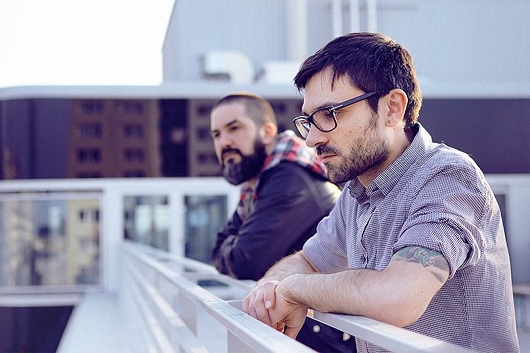
Following Delect‘s summer EP, Love Songs, the Parisian duo (pictured above) has collaborated with producer Mr. MaDjestyk on its remix of “Goin’ Down,” a song from the latter producer’s forthcoming Dubplate Policy. Here, Delect’s production work strikes a balance between elegant, upscale nightclub sounds and a hot, sweaty warehouse in the early morning hours—its piano-referencing pads going head-to-head with a pounding beat and rave-appropriate synths. You can stream the rest of Mr. MaDjestyk’s Dubplate Policy before it drops on October 8 via Leonizer, after the jump.

Goin’ Down (Delect Remix)

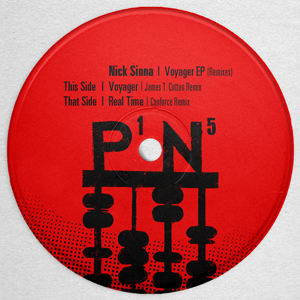
Nick Sinna Voyager EP (Remixes)

Mancunian producer Nick Sinna debuted in June with the Voyager EP. Its four tracks were, like many releases on the Prime Numbers imprint, largely informed by Detroit’s dance music legacy. But where the likes of Trus’me and Linkwood draw from the house blueprints of Moodymann and the Detroit Beatdown crew, Sinna is principally informed by another side of the city. Tracks like the titular, storming opener, with its propulsive electro patterns, dramatic synth washes, and murmured refrain of “outer space,” recalled an early style of techno that has perhaps fallen by the wayside in recent years. Granted, there were glimpses of other genres throughout—”Kick The Habit” was laced with a repeating Mikey Dread sample, probably a throwback to Sinna’s days in drum & bass—but overall, the glory days of Detroit techno loomed large. The two turns on Voyager EP (Remixes) find rich possibilities in this influence.

Although James T Cotton (a.k.a. Tadd Mullinix) hails from nearby Ann Arbor, Detroit’s luminaries have clearly made their mark on his powerful productions. His remix of “Voyager” keeps parts of the original’s astral groove intact, namely its jerky bounce and the vocal refrain. Sinna’s synths drift in delay, but Mullinix molds them into taut, cyclical movements, reminiscent of tracks by second wavers like Claude Young in the way they form a silvery tunnel around the drums. On the flip, Dutch producer Conforce (a.k.a. Boris Bunnik) delivers a typically muscular take on “Real Time.” Unlike Mullinix, Bunnik brings Sinna’s material firmly into his own universe, recalling the sounds his own 24 EP and last year’s Escapism LP. The track melds a thudding, filtered kick drum with scuffed hi-hats and square, acidic bass, and locks this blunt arrangement into a hip-swiveling, if slightly sinister, groove. Bunnik modulates the elements by one another, and deploys a smothered, scrambled vocal as a kind of hook, but for the most part, the track seems content to simmer in the murk. Divergent as their versions are, Mullinix and Bunnik would surely agree that Sinna’s sense of futurism—throwback though it may be—is worth emphasizing.

Trainwreck: FaltyDL

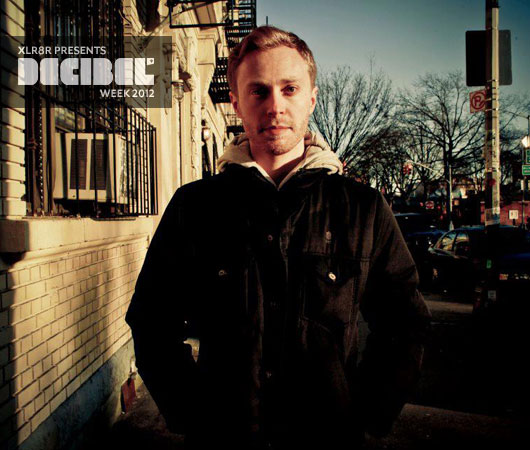
For this Decibel-themed Trainwreck, we talked to Brooklyn beatmaker FaltyDL—who performs tonight at the Global Selektors 1 showcase at Re-Bar—about the time he destroyed his own passport while on tour in Italy. It’s a cautionary tale about the dangers of getting drunk and playing with your only legal document in a foreign country. “It’s all because of alcohol,” he says, describing the nightmare that inspired his new no-drinking-on-tour rule.

I was playing a show at the Astoria Club while on tour in Turin, Italy. It was in the middle of a quick, one-gig tour. I was in Berlin the night before, and I had to go to Frankfurt the next night. I’m in Italy, and I’m having a wonderful time drinking Negronis—because that’s where they’re from. I had asked people what I should drink there and they all said, “Oh, you gotta drink Negronis.” I was drinking those and they were lovely, but I had absolutely no tolerance for alcohol whatsoever. So this is a story about losing my passport—but also why I don’t drink on tour anymore.

I’m at the club drinking Negronis, just putting them away because they’re so delicious. I’m meeting people and eating this delicious food. I’m getting ready for the gig and hanging out with the promoters at the door while people are coming in. It’s a funny place to hang out on a night you’re playing, because you end up meeting people who are there to see you. Anyways, at some point, I had my passport out and I was showing it to someone there, showing this promoter all the places I had been. At that point, I was really proud of my passport. I had a visa page for going to Tokyo, to Moscow, all these other places, stapled into my huge extended passport that took several years to make. And I was so happy being there, in the moment, and I took the stamp—you know, they stamp you on the wrist when you go in so you can come in and out of the club—and I took that stamp and was like, “I love this club!” and stamped my passport!

They were like, “Woooooooooah.” And I was like, “Yeah, it’s so funny, huh?” They were like, “Uh, why did you do that?!” So I was like, “Holy shit, why did I just do that?” You can’t do that. It’s totally illegal. And I had to go to Frankfurt the next day and then get back into the States after. I was super terrified and super drunk and I still had my set to play. I really fucked up. I thought there was no way I’d be able to get back. I started thinking the worst things. I was like, “My only legal document is now destroyed, there’s no way they’re going to let me into this country or that country.” It’s pretty ridiculous, of course, to worry that much, but the worrying was from the alcohol.

Then I had to go play my set, and actually, that was the one hour and a half that I wasn’t freaking out. I forgot about [my passport] for a minute and was just playing music, which was lovely. But back in my hotel, at like 6 a.m., I was still drunk, and took a wet paper cloth to try to clean up my passport. That wasn’t happening, because it was permanent ink, and I think I tore a page in the process of trying to clean it. So I had this awful, damaged passport. And, mind you, I had to go on another tour about three weeks later. I had to come back to New York to get another visa, but I knew I had to get a whole new passport because they wouldn’t take this old one.

So at every border for the next couple of days, I was just sweating, back soaked through. I spent the next 48 hours worrying, trying to reassure myself that I would be okay. Finally, I got back through JFK in New York and I was home free. Then I had to get my new passport, which I did—it only took 48 hours. But since then, I’ve really reined it in on tour. No more drinking on tour. No more messing around with my passport—I don’t even take it to the club anymore. I don’t know why I even had it with me at the club in the first place! I just had it in my back pocket. What a stupid, idiotic thing I did to myself. I kind of deserved every second of all that worrying.

Wolf & Lamb Readies Second Album

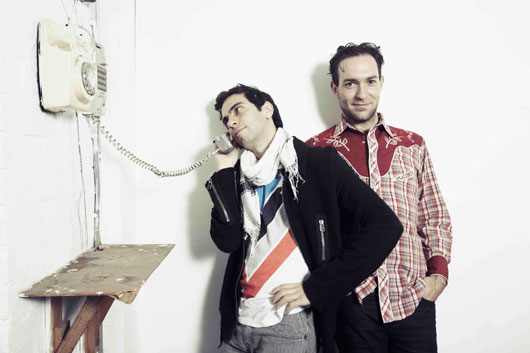
The NYC duo of Zev Eisenberg and Gadi Mizrahi (a.k.a. Wolf & Lamb) has announced it will soon release its sophomore full-length, a seven-track record called Versus. As its title indicates, the forthcoming LP is mostly made up of collaborative tracks with friends—like Soul Clap, Night Plane, and PillowTalk, among others—with one solo outing from the DJ/production outfit. Versus, which is said to be “a remarkable cross-pollination of genres, a true testament to the…spirit of collaboration,” will follow Wolf & Lamb’s 2010 debut album, Love Someone, on October 22 via Eisenberg’s and Mizrahi’s own label, also called Wolf & Lamb. There is also another Wolf & Lamb record—referred to in the press release as a “full follow-up”—said to be arriving in early 2013. You can check out the artwork and tracklist for Versus before then, below.

1. Real Love feat. PillowTalk
2. Weekend Affair feat. Soul Clap
3. Fo Porter feat. Voices Of Black
4. World Turning feat. Casey Gibbs and Night Plane
5. In The Morning
6. Serpentine feat. Rap Lisa
7. Close To You feat. Greg Paulus

Maze Hill “Long Haul (LV Remix)”

Maze Hill is the new collaboration between producer Andy Highmore, vocalist Holly Bestic, and singer/spoken word artist Joshua Idehen (who you may remember from LV‘s XLR8R Pick’d Routes album from last year), who just sent over a remix of its forthcoming debut single by London trio LV. The outfit exercises supreme control on its version of “Long Haul,” keeping Bestic’s and Idehen’s soulful and jazzy vocals wrapped around their collective finger, so to speak, with an exceptionally tight production. Never rigid, the synth melodies shift seamlessly between varying levels of fluidity around the high-stepping beat. The rest of Maze Hill’s four-track Long Haul record will be released on October 29 via Wah Wah 45s.

Long Haul (LV Remix)

Machinedrum Shares “Sacred Frequency” Ableton Session, Talks Production Process

As part of an interview on Ableton Live‘s website, Berlin-based artist Machinedrum shares his process behind the making of Room(s) cut “Sacred Frequency,” and gives away the song’s complete Live session to further illuminate the details of his production practice. Like we discovered in our recent In the Studio interview with producer Travis Stewart, much of his studio revolves solely around the computer, so it’s safe to say that getting a glance at the man’s Ableton session is about as close to “behind-the-scenes” as one can get with Machinedrum. You can read the entire interview and download the “Sacred Frequency” set here; in case you’ve forgotten what the tune sounds like to begin with, we’ve gone ahead and provided a stream of it below.

Richie Hawtin and Loco Dice to Embark on North American Tour

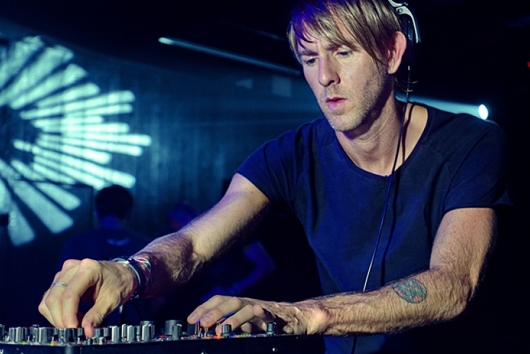
With the help of NYC-based production school Dubspot, Richie Hawtin (pictured above) and Loco Dice are launching an “educational” music and technology tour across North America, calling it CNTRL: Beyond EDM. The tour’s daytime curriculum includes lessons by Richie Hawtin on using technology to control creativity and Loco Dice giving a how-to course on old-school DJing with modern technology. Other lessons will touch on the importance of sound quality, digital DJing, and using controllers. CNTRL will also feature a number of guest DJs and producers—such as Paco Osuna, Ean Golden, Josh Wink, tINI, Victor Calderone, Carl Craig, Seth Troxler, and Kevin Saunderson—who will lecture and perform alongside Richie Hawtin and Loco Dice on select dates. CNTRL begins on October 29 in Buffalo, NY, and then hits a number of colleges and universities throughout the East Coast, Midwest, and Canada, before wrapping up in Minneapolis on November 18. Below, you can check out the full list of dates and performers schuled to appear.

10/29Buffalo, NY — TBA // Town Ballroom*
10/30Syracuse, NY — Syracuse University // Westcott Theatre*
10/31Boston, MA — Berklee College of Music // RISE*
11/1Washington, DC — American University // EchoStage*
11/2Philadelphia, PA — Drexel University // Electric Factory**
11/3New York, NY — New York University // Webster Hall***
11/5Montreal, QC — McGill // SAT****
11/6London, ON — UW Ontario // London Music Hall****
11/7Windsor, ON — University of Windsor // Boom Boom Room*****
11/8Toronto, ON — TBA // The Hoxton*****
11/12Detroit, MI — Wayne State University // TV Bar******
11/13Urbana, IL — TBA // Canopy Club******
11/14Ann Arbor, MI — University of Michigan // Necto******
11/15Dayton, OH — University of Dayton // Masque*******
11/16Chicago, IL — Columbia College // The Metro*******
11/17Madison, WI — TBA // The Majestic Theater*******
11/18Minneapolis, MN — Slam Academy with UMN EDM Club // The Loft at Barfly*******

*Indicates date with Richie Hawtin, Loco Dice, Paco Osuna, Ean Golden
**Indicates date with Richie Hawtin, Loco Dice, Josh Wink, Ean Golden
*** Indicates date with Richie Hawtin, Loco Dice, tINI, Ean Golden
**** Indicates date with Richie Hawtin, Loco Dice, Victor Calderone, Ean Golden
***** Indicates date with Richie Hawtin, Loco Dice, Carl Craig, Ean Golden
****** Indicates date with Richie Hawtin, Loco Dice, Seth Troxler, Ean Golden
******* Indicates date with Richie Hawtin, Kevin Saunderson, Gaiser, Ean Golden

Page 1931 of 3781
1 1,929 1,930 1,931 1,932 1,933 3,781