It’s hard to imagine that a person as reserved and unassuming as LA producer Jimmy Tamborello is behind some of the strongest and most widely loved electronic music to be released in the last decade or so. He’s a man of many accomplishments who wears even more hats. As a youngster during the late ’90s in Figurine, Tamborello helped lay the groundwork for the coming onslaught of synth-pop revivalists; as Dntel he crafts tender and sullen IDM whilst working with a wide range of vocalists; his best known project with singer Ben Gibbard, The Postal Service, has made the multi-faceted artist about as close to a household name as any softspoken music lover could hope to become.
Tamborello’s latest offering, the Aimlessness LP for DJ Koze’s Pampa label, won’t likely reassert him as the utmost producer of our generation, but it was never meant to. These 12 deeply personal tunes are a sort of return to form for the storied artist, a reconnection to the moods and sounds that colored in his early work as Dntel. We were curious to have him tell us exactly how he got back to that mindset, so we chatted with Tamborello about a few of his most notable releases. During our discussion, the producer treated us to some stories from the road, gave us some insight on his production process, and even hinted a bit at what he hopes to accomplish with future projects.
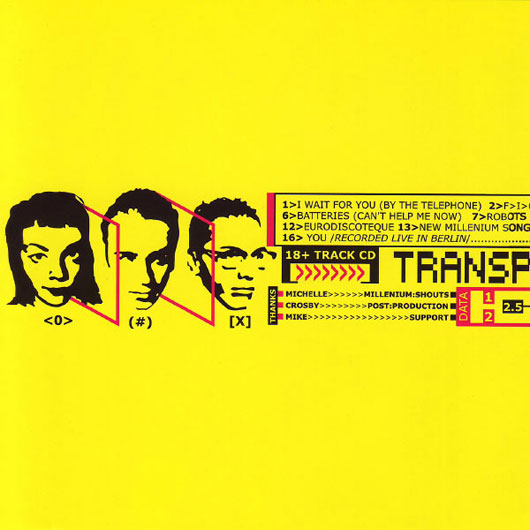
Transportation + Communication = Love (1999, Black Bean and Placenta Tape Club)
XLR8R: With Figurine, you guys had met in high school, but didn’t really start the band until the summer before going off to college, right?
Jimmy Tamborello: I think so. Maybe the summer after freshman year [of college]. Somewhere around there.
Did you all go to the same college?
No, we were all in different parts of the country.
It seems like a lot of the themes in your music have always revolved around disconnection, love, technology, and how that all sort of interrelates. Did the band’s early separation spawn that, or at least a title like Transportation + Communication = Love?
I don’t think it was ever that sincere, lyrically. It was more like we kind of came up with characters. We sang in sort of deadpan, fake European accents, and I think those were just the kinds of words that made sense to sing with those voices and to fit with the music. It was also because of our love for bands like Kraftwerk and Depeche Mode. It was easy to get inspiration to write those kind of lyrics.
And you recorded those songs at your parents’ house on an eight-track recorder.
Yeah, it was at the house I grew up in. Because that would be the only time we were together, during breaks from school. So that would be our headquarters.
In the meantime, did you guys do anything similar to what you and Ben Gibbard did in The Postal Service, as far as exchanging ideas from long distance?
I’m trying to remember. It was definitely harder back then to do that. I mean, I don’t even know if David [Rudolph] had the ability to record what he was working on to send it to me. He would just have it programed on his keyboard, and then when we could get together we would record it. But I don’t know if we were ever able to use the mail.
Then you started giving the original tape you guys recorded to local record stores.
Yeah, but I’m really foggy how long that lasted before the label [Black Bean and Placenta Tape Club] got involved and put it out more officially. I mean, it was still barely official. It was still, like, xeroxed artwork, but at least it was a real CD. I think David did the printing. I wish it wasn’t so foggy, but I think it was a big deal that we were able to get different colors to print on the Xerox machine.
That’s cool. Sounds like it gave it a kind of DIY aesthetic.
Yeah, and it definitely fit the aesthetic of the music, the lo-fi-ness.
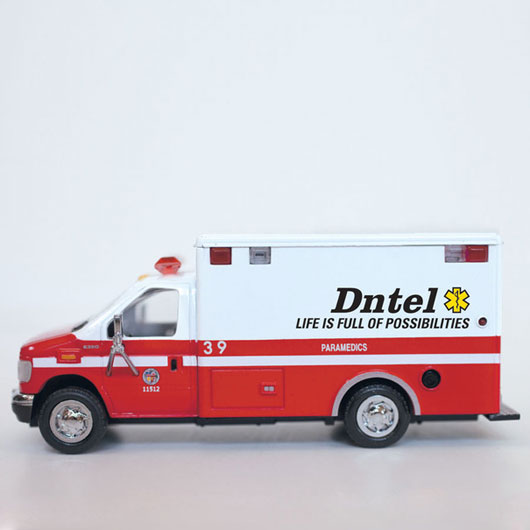
Life is Full of Possibilities (2001, Plug Research)
So, if Figurine’s first record was “officially released” in 1999, and Dntel’s Life is Full of Possibilities showed up just about two years later, were you working on those albums around the same time?
Yeah, I was always working on Dntel stuff the most since 1994. That was always my main thing I’d be working on. At some point, I got hooked up with Plug Research, who asked if I could do an album. And that was the first time I ever had a goal of making an album for Dntel, which I started working on around ’99.
Did your work with Figurine inform your approach to making Possibilities?
A little bit. I was using the same equipment, although the big step ahead while I was working on that album was that I got a computer that was fast enough and had enough space on it to record vocals. I got to stop using the ADAT recorder, and that was a big move in refining the sound a little bit. But I used Meredith [Landman] from Figurine as a vocalist on the album, and it definitely has some techno-pop leanings, even though they’re a little more obscured.
What kinds of software were you using on that computer?
I think by the time I was doing Life is Full of Possibilites I was using an early version of Cubase as my main program. Before that, it was one called Vision, which was mostly a sequencer, I guess. It might not have even had audio recording capabilities.
In addition to Meredith’s vocal contributions, you also worked with Mia Doi Todd and, obviously, Ben Gibbard on that record. How did those connections come about?
It was all just through friends. I mean, Mia was a friend for a while before that record. With Ben, my roommate’s band The Jealous Sound had toured with Death Cab for Cutie, so they became friends, and we met through him.
Even at that time, Death Cab for Cutie was a pretty big band in certain circles. Did that, along with the other connections you made with contributing vocalists, create any kind of “buzz” around the release of that record?
I do remember being a little worried that it would seem like I was jumping on people’s coattails, but it was really just about the voices that I thought would fit the music and who was around that I could work with. I didn’t really feel comfortable reaching out to strangers or singers that I didn’t know personally, so those were just the people that made sense. But when the record came out, there was definitely a sticker on the album that said who was on it. If you’re totally unknown, it’s nice to have something that people can initially recognize. And back then, it wasn’t so easy to just get music out there and have people hear it.
Did it seem like people caught on to Possibilities really quick, or was it something that slowly grew into a sort of cult classic?
I never really got a good sense of that. I remember, right after it came out, Figurine did a tour in Germany maybe a couple of months after the Dntel album came out, and I remember people bringing it up a lot at the shows. I was excited that it had gotten out there, but there was never, like, a big moment of success.
Give Up (2003, Sub Pop)
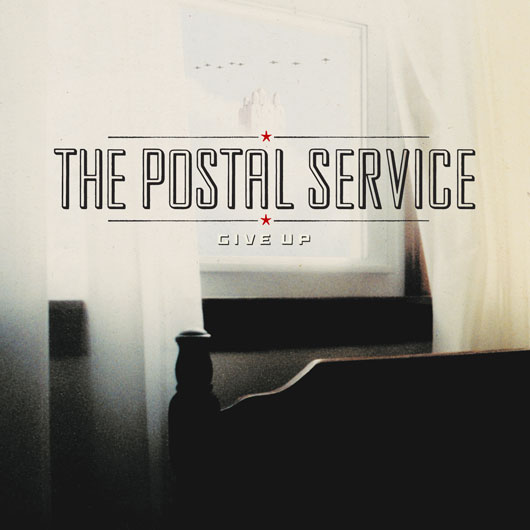
So it was kind of an underground thing at the time, but it still somehow managed to bring about what is surely your biggest record, The Postal Service’s Give Up. How did it go from a one-off collaboration to a full-on project? I’m sure you’ve answered this question a million times.
[laughs] Ben came to visit for a weekend, mostly to visit my roommate, and we were going to record the vocals for the Dntel song. I think we just had fun doing it, liked how it came out, and got along, so by the end of that weekend, we were already talking about doing more. A friend from college worked at Sub Pop. He was like an A&R guy at Sub Pop at that point, so we told him about it and said that we were thinking about doing an EP or something. He said that if we would do a full-length, he would put it out. It was almost just in that one weekend that we recorded the Dntel vocals that we decided to do an album.
So Sub Pop said they would release it without ever hearing it or any of your songs?
Yeah, well, he knew my stuff just from being friends, because I would make tapes and stuff for friends. So he knew my stuff and he really liked Death Cab for Cutie. He was living in Seattle, so I think he knew Ben, too. I think that he just kind of trusted that he would end up liking it. I don’t think we signed a contract right then or anything.
Did the process of making Give Up take considerably longer because of the distance and separation?
Not really. For me, it was probably only like a year. I think, if anything, working with just one other person probably sped me up, because I had someone to answer to. I think when I’m just by myself working on something, I tend to keep going back and reworking stuff. But with The Postal Service, I had someone else to say, “I like how this sounds,” and then I would leave it alone. Yeah, it only took a year, I think, and not with constant work either. It was pretty casual.
What would you do in the meantime, when you were, say, waiting on a vocal part from Ben?
I’d be working on the next ones to send him, and also working on other Dntel stuff. I was already trying to think of the second Dntel album at that point.
So the workflow was pretty split between you doing production and Ben doing vocals?
He also added some instruments to it, and would also cut the songs and rearrange them a little bit, depending on how he wanted to sing on it. I would kind of send him a raw instrumental, and he would adjust it to what he wanted to do with it. Then I would usually finish it.
Compared to your prior work, Give Up seemed to take off a bit quicker.
Yeah. It was pretty fast. I hadn’t really experienced anything doing well before. [laughs] I remember that we went on tour maybe a month or two after the album came out. It was all pretty small venues, but as we were doing the tour, I feel like that’s when it was starting to grow. We started having to change the venues. The last show was in LA. It started out as a show for 400 people and it ended up being for 2000 people. But then, I think it was later when it really took off. It had to do with getting radio play on bigger commercial stations, I guess.
And it made Give Up a massive success. The music was covered all over the place, it was on commercials, and Rolling Stone named “Such Great Heights” the 27th best song of the decade. Obviously, those kinds of accolades must feel good to a certain extent, but is there a part of it that haunts you? Being such a multi-faceted artist, do you always feel like The Postal Service is looking over your shoulder?
Not really. I feel like it changes what people expect from me a little bit. I remember on this last Dntel tour in August, it was just a few of us in a van, and I remember I would set up all of my gear and load it up at the end of the night, sell the merch, and all that. And I remember there being a comment online about someone being surprised I was lugging my gear. [laughs] Which, for me, is totally normal, but some people think that that means that I’ve dropped off or failed.
Like you should have some roadie or something carrying all your stuff around for you. [laughs]
Yeah. And Dntel music, just because of the kind of music it is, it’s never going to be anywhere near the size of what The Postal Service did. So I don’t love the idea of people thinking that I’m a one-hit wonder, or something. Besides that, it’s not like I’m worried about being only thought of for that music. I’m glad to have made something that people are going to remember. And it only helped me in my life, and it was one of the most fun times of my life.
Don’t take this as asking if there is another Postal Service album coming, but do you ever find yourself thinking about or toying with making pop tracks again?
Yeah, for sure. Maybe it’s not going to be a Postal Service album, but I definitely would have fun doing a poppy project again. It would just have to be done with the right person. I can’t do it myself, I don’t have the voice or the lyrical inspiration for it.
But you’ve contributed vocals to your music before.
I sang on “Dumb Luck” from the album Dumb Luck, and I sang on Figurine songs, but anything I sing on I can’t take that seriously. I just don’t have a very emotional voice. I feel like, in order to make a good pop record, the voice really has to be emotional, and I can’t get that across.
Aimlessness (2012, Pampa)
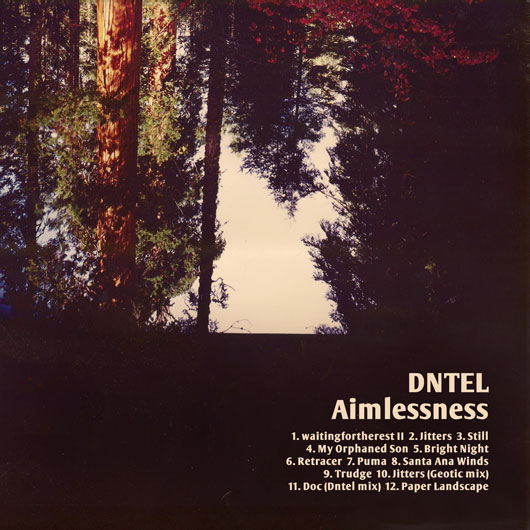
Now, as you get ready to release your latest Dntel album, Aimlessness, how does it seem to fit in with your past work?
I think there’s a lot of that old stuff in there, but not really on purpose. Well, some of it’s on purpose, but it’s not meant to be like, “Let me put it all together as one statement.” It’s mostly just a bunch of random songs that I didn’t know what to do with. Then DJ Koze at Pampa helped me choose the songs and arrange them into an album. But at first it was just a blob of songs that I didn’t know if I could ever finish. I didn’t know what my goal was. But looking at them now, I feel like there is a lot of me trying to maybe recapture the mood of my earlier music.
I’m not going to be good at expressing this, but I think, looking back at Life is Full of Possibilities and even the earlier instrumental music I made, I really like that it had more of a melancholy feel. It was a little more somber and pretty, and I think doing The Postal Service got me in a more pop headspace. When I went back to Dntel and made Dumb Luck, it came out a lot more quirky and poppy, so I feel like I lost that mood that I like so much. When I’m listening to other people’s music, that’s what I like the most. Maybe even when I first heard Burial or some of the newer electronic music that’s happening, it had things that reminded me of my old music, and I thought that I should try to conjure that again. It seems like the most honest music, for me. Also, I’d been listening to a lot more instrumental music than vocal music, so I think I started going that direction. I always feel like I’m making music based on what I’m listening to and wanting to be a part of, the music that I like.
What would you say you want to be a part of at this moment? It seems like a big jump from working with Sub Pop, or even Plug Research, to a label like Pampa, which deals largely with house-y dance music.
I mean, I think I will still be doing stuff with Sub Pop in the future. This is more that I wanted the opportunity to work with DJ Koze. I like his music a lot, and I like the idea of having someone at the label who is really telling you what to do, picking out songs, and giving you suggestions on how to finish them. Kind of like an extreme A&R guy. I like that idea for this music, because otherwise I feel like I just wasn’t ever going to put anything out.
Calling the album Aimlessness, was that how you thought the Dntel project was going? Sort of drifting along aimlessly?
Yeah. When you start a new song in Logic, which is what I use now to make the music, you have to save it as something right away, so you have to give it a title. Usually, I don’t know what I’m going to be working on until I start working on it, so I always get frustrated with having to put down a title right away. I just started calling everything “Aimless” and then with a number on it. So I just had all these tracks called “Aimless,” but it was because I didn’t really know what to do next. I feel like I’m in a weird position, because I want to be making music for clubs, but I can’t quite do it, so it ends up being like a home version of club music. And when I’ve taken it out and done it live, it always feels a little uncomfortable and not right for a party atmosphere. I think something like my Dublab radio show [Dying Songs] is where it’s meant to be listened to, at home in the context of other IDM.