Alec Carlsson “Doux Velour (Borrowed Identity New Jack City Dub)”

It will be 2016 before Alec Carlsson is finally legally permitted to enter most nightclubs in the United States, but the 17-year-old French producer has already begun turning heads with his house productions. Earlier this week, the wunderkind dropped a four-track EP for Stripped & Chewed, a Chicago-based imprint recently founded by DJ/producer Ghosts Of Venice. The EP is titled Doux Velour, and contains two originals and two remixes. This “New Jack City Dub” from young German producer Borrowed Identity takes the filter house of the EP’s title track and blends it with the jacking sounds of old-school Chicago. It won’t be on the EP, but an acid-flavored 303 remix by Borrowed Identity will be, as will a rework from German duo Chicago Life. If this tune has piqued your interest, listen to a preview of Doux Velour and spy its artwork, after the jump.

Doux Velour (Borrowed Identity Raw Jack City Dub)

Nautiluss ?lpha EP

When Nautiluss first appeared last year with a collaborative single for Untold’s Hemlock label, it seemed a pretty safe bet to place the Canadian amongst the ever-growing list of producers emerging with their own take on the contemporary sounds of underground UK dance music. But with his sophomore outing, Nautilus proves first impressions can be a bit misleading, as he’s turned in an EP’s worth of crunchy, techno-rooted tracks that still throw glances towards the Brits for occasional guidance, but ultimately stand on their own merits.

In the theme of changing impressions, it seems appropriate to point out that this bass-minded four-tracker hails from the Tiga-helmed Turbo label, an imprint that since the early aughts has served as the home to a neverending string of techno heaters (most which were electro-oriented). Now, the label appears to be opening its doors to more subtle styles, enlisting Nautiluss alongside producers like Locked Groove and Sei A to continue forging the label’s newest tributary amongst its extensive roster. Truthfully, it’s a great fit, especially when considering the first two cuts that make up ?lpha, “Mixed Numbers” and “Sabbath.” Accounting for the first half of the EP, the pair of selections leans heavily on Nautiluss’ techno inklings, both utilizing over-compressed drum tones and restlessly filtered and sequenced basslines to push their heavy-handed grooves along. There’s an underlying grit to these songs—it’s somewhere along the lines of the blown-out textures of Gerry Read, but with a techier edge—that allows “Mixed Numbers” and “Sabbath” to straddle a few lines at once, mainly keeping the Turbo faithful pleased with deep, dancefloor-ready four-on-the-floor while simultaneously enlisting the ears of forward-thinking heads by skirting around cliches and traps, fully exploring the sunken beats with adventurous synth work and a few unexpected twists and turns.

The second half of ?lpha is considerably more indebted to the UK lineage of beatmaking. Beginning with “Cloud City,” Nautiluss gradually takes a step towards less bombastic territory, presenting an excursion built around a revolving synth loop and garage-like swing. Again, the synth offerings are slightly overdriven and constantly filtered and affected, revealing harmonics as the frequencies rise and giving a real sense of movement to the track. The result is a bit reminiscent of Zomby’s earlier works (but with a touch of Detroit thrown in); it has the same ability to be instantly infectious in its simplicity, but “Cloud City” expands on its idea longer than Zomby would have (probably because the melodies here aren’t quite as strong), eventually building the track out to a five-plus minute endeavor. The EP’s final cut, “Spidercrawl,” proves to be more aligned with our original expectations. Its half-time step would have fit a little better with Nautiluss’ previous release, but it doesn’t feel entirely out of place here, particularly as the textures move about in saturated warmth and the layers of sizzling synths move through their filtered motions.

In the end, ?lpha is a solid record, even if its direction is a bit unexpected. It also serves to show that Nautiluss is a producer with a grander vision than some of the current up-and-comers, and, given his output so far, also appears to be one with the chops to back it up.

Stream the entire ?lpha EP here.

Video Premiere: Duke Dumont “Street Walker”

XLR8R Couldn't find the embed function for type: "vimeo" and source: "<iframe src="http://player.vimeo.com/video/39855680" width="530" height="424" frameborder="0" webkitallowfullscreen="" mozallowfullscreen="" allowfullscreen=""></iframe>".

As reported last month, UK producer Duke Dumont will soon be releasing a new EP, For Club Play Only Vol. 1, via Turbo Recordings. While the record’s release has been pushed back to May 21, this seedy clip for lead cut “Street Walker” has been unveiled in the meantime. Largely a compilation of grainy footage, the piece shows a variety of ladies of the night cruising the street and doing, well, what they do. It’s a bit dark, especially as compared the the campy feel of drum-machine-driven track, but it’s hard to argue that the video doesn’t fit the song’s theme. That said, trolling around society’s underbelly has rarely been such a danceably upbeat affair.

Matthias Zimmermann “George”

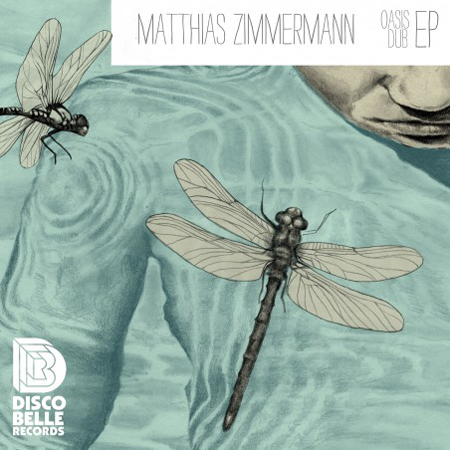
Matthias Zimmermann has followed up his impressive 2011 Sound Pellegrino debut with a five-track EP for Swedish blog/label Discobelle. “George,” featured here, is the first of two original tracks that the German producer contributes to the Oasis Dub EP (pictured above). Zimmermann seems to draw from an ambient beat palette, throwing together sampled loops, glittering high range synths, and unruly percussion. But a funky bassline and four-to-the-floor kick eventually anchor the song, creating a danceable cut—let’s call it subtle house. Oasis Dub is out now; grab “George” below and check out the EP’s tracklist and a streaming preview, after the jump.

1. George
2. George (Noob Remix)
3. George (Coni Remix)
4. Maria
5. Maria (SCNTST Remix)

George

Pariah Announces New EP for R&S

It’s been about two years since we’ve heard from the London producer who calls himself Pariah, as he’s been busy collaborating with Blawan on their Bubblin’ Up Karenn project, helping run the duo’s She Works the Long Nights label, and doing who knows what else. Thankfully, that silence will soon end, as Arthur Cayzer has announced a forthcoming EP for R&S. The three-song record appears to simply be called RS1207, though the facts are a bit skim, as an actual release date has yet to be confirmed. While we wait for those details, you can check out the record’s artwork and tracklist, below. (via FACT)

1. Rift
2. Signal Loss
3. Among Those Metal Trees

Gulls “SOID”

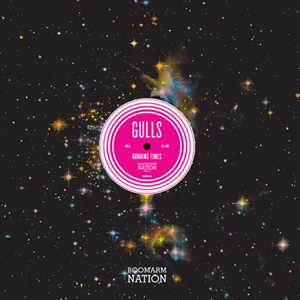
Gulls, the production handle of Boomarm Nation founder Jesse Munro Johnson, has shared this cut from his upcoming EP, Running Times. “SOID,” one of the EP’s five tunes, is a slice of melodic bass music replete with futuristic bleeps, bloops, and lazer tones. The song kicks off right away with a complex drum pattern and quickly adds layers of synths and handclaps, along with a breathy vocal snippet. The Running Times EP will be released digitally, on vinyl, and on cassette tape through the Portland-based imprint on July 1, but before then, take a look at the record’s artwork and tracklisting, after the jump.

A01. Running Times
A02. Cherish The Boy
A03. Overplexx
B01. SOID
B02. OB Snaxx

SOID

Petar Dundov & Gregor Tresher “Hex” b/w “Solstice”

Thanks to his majestic full-length from back in March, Ideas from the Pond, Croatian producer Petar Dundov is bound to be the more familiar name on the collaborative “Hex” b/w “Solstice.” On that album, spiralling, trancey melodic lines do the heavy lifting, giving Dundov’s tracks a contemplative feel while consolidating their cumulative momentum. A natural affinity with the similarly melodic German techno producer Gregor Tresher can be found in Dundov’s more club-oriented “Stairway” b/w “The Arch,” also from 2012, a single that also comes across quite nicely in the home environment. These producers share a distinctly European sensibility, availing themselves of melody in an unselfconscious way, and stretching those patterns out over long, involved durations. It makes for a unique listening experience, with hints of trance (before it became a dirty word) embedded in its more functional aspects.

Like the aforementioned releases, the second collaboration from Dundov and Tresher —following their Duo Tone EP from late last year—appears on Ghent, Belgium’s Music Man label, and finds the veteran producers focusing on rhythm as much as melody. Despite the occult overtones of the titles, the spookiest signifier is not a Demdike Stare/Coil borrowing but the steely dub-techno conk that appears in the second part of the a-side. Apart from that, and some relatively gnarly FM synthesis, it’s fairly smooth, gluey dance material. As 11- and 8-year production veterans, respectively, both Dundov and Tresher own their voices with confidence. While “Hex” and “Solstice” fall short of captivating, they are successful compromises between sounds that aim for the sky and sounds that aim for the dancefloor, and it’s fun to hear these guys find some wiggle room within their established approaches.

Tresher’s voice tends to be more terrestrial than Dundov’s. An album like his The Life Wire conveys a more linear, one-track-at-a-time experience relative to Ideas from the Pond’s ambitious, album-length arc. Both producers’ palettes consist of crisp analog textures, and “Hex” kicks things off with an uncharacteristically guttural, saturated bass-and-kick drum pattern. Over its eight-minute runtime, “Hex” builds up a nice head of steam, slurring a tightly framed melody into the rhythm and blowing it up with clean, harmonic distortion. The effect is like watching a rocket launch and then disintegrate in orbit before coming back to earth as weightless scraps. “Solstice” is funkier, less driving, and cleaner sounding, growing a more complex arpeggio out of a couple of swung synth chords and cycling, stepped layers of drum programming.

There is plenty to observe and appreciate in the construction of and carefully considered interactions within this EP. Yet, it falls short of vital, lacking the kind of energy or scope that could connect these sequential circuits to the world outside. Dundov and Tresher are well suited for collaboration, and the results get more interesting the further they get from the arithmetic mean of their sounds.

Blackdown Shares Production Advice

Noted writer, producer, DJ, Keysound co-owner, and Rinse FM host (along with his cohort Dusk) Martin “Blackdown” Clark has taken on an essential, though often overlooked topic, over on his blog—attempting to answer the question, “How do I get started in production?”

This topic can be a slippery slope for most, as production advice is inherently a subjective topic of discussion (a point which Clark also makes in his piece), but the London resident does an exemplary job of sticking to key points and giving a bit of more or less objective advice on the earliest stages of anyone’s production career. Beginning with more tangible concepts such as “Make music, a lot” and “Don’t let the machines master you,” the piece eventually goes on to cover more conceptual matters involved with dedicating oneself to making beats. Clark manages to keep the discussion well grounded with gems of wisdom like, “Learning to produce well and find your sound takes ages: years of dedication at the expense of other things that are more fun like drinking, clubbing, sex, drugs and Xbox. It’s also a terrible way to make money: people don’t buy music anymore.”

In simpler terms, the man knows how to keep it real. We recommend that those just getting their feet wet in the production world, and even those who would consider themselves somewhere along the path to being a veteran, read the full article, here. You’re bound to learn something.

T-Polar “Hot Butter VIP”

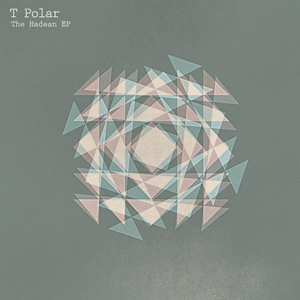
Belfast’s T-Polar warms up his VIP version of “Hot Butter” with some sultry spoken word that seems to have been lifted from a butter-focused porno. If you get off on deep bass, the rest of the tune is sure to excite you, as a full and heavy sub permeates the tune’s entirety. Scattered synths also play into the mix, as do chopped vocal snippets, including a piece of a Michael Jackson tune. T-Polar has just released a new record, The Hadean EP, via the Rebirth imprint, and while “Hot Butter VIP” is not one of its selections, you can listen to a preview of the EP and take a look at its artwork, after the jump.

Hot Butter VIP

Distal Civilization

Since first appearing on the scene, Atlanta’s Michael Rathbun (a.k.a. Distal) has been responsible for such a prolific output that it’s easy to forget he’s really only been releasing music for about two years. Even with a mass of releases to his name (both in solo and collaborative roles), Rathbun’s discography has yet to grow stale within the bass-music community, and Civilization, his first chance to display his strengths in a more complete fashion via the full-length format, continues the man’s impressively steady run.

Although the argument could be made that Distal has been a chameleon of sorts throughout his brief career, there have always been a few underlying themes to his production—mainly the ever-present influence of juke/footwork. Obviously, this is not a trait Rathbun picked up directly from the source, but the Southerner’s penchant for the types of spastic 808s and chopped-to-hell samples that define the Chicago-born genre is undeniable. In some ways, footwork has risen on an almost-parallel path with artists like Distal (not to mention his cohorts at the Embassy label, for which he co-heads), many of who have wholeheartedly incorporated the once-regional sound into their own styles. At this point, many of the trademarks of the genre have simply been absorbed by the bass-music continuum, making them almost indistinguishable amongst the other pieces of microgenres that appear under the same umbrella. This convergence of sounds and styles forms a near-perfect climate for Distal’s productions to exist, as he can nimbly move amongst a number of different feels and tempos over the course of Civilization while still firmly planting his output in a single conceptual space.

As it turns out, only a few moments of straight-up juke grace the album’s tracklist, with “Drop Like This” and “Boca Ratawn” serving as the most obvious examples. But even these selections fold extra layers atop the frantic skeletons, incorporating an extra sense of space and a smoothing of the edges that originally marked the lo-fi, often-sloppy production associated with the traditional juke aesthetic. The bulk of the album actually spends most of its energy in a half-time slink, wrapping processions of skittering hats, rims, claps, and arps around monstrous kicks and toms. For the most part, Civilization houses the kind of music that encourages a slow, grinding dancefloor, one where big steps and wide turns dominate the lower body, while the upper half is left to fill the spaces in between. Surprisingly—especially given that this LP appears on Pinch’s Tectonic imprint—there is little focus on the darker side of the sound spectrum here, and songs like album opener “The Sun,” “Preach on Hustle,” and “Anti-Cool” incorporate a healthy amount of gliding G-funk and slippery R&B into their palettes. When Distal does land on more sinister moments, such as the dub/dancehall-influenced “Rattlesnake” and the loaded step of “House Party of Five,” his productions do yield a more powerful response. The tracks are never aggressive, but they are noticeably more rooted in a menacing mind frame via brooding bass tones and a much more dissonant interplay between chord progressions and melodies.

The most rewarding selections from Civilization often seem to be its most adventurous, and although these will likely not reveal themselves as the album’s most potent dancefloor weapons, they do show Distal successfully pushing into rather intriguing territory. Two cuts stick out in particular. First is “Gorilla,” which appears on the album’s second half and wraps the listener in a virtual jungle of sound with a cricket-like layer of shakers and intricately tuned toms before diving into an increasingly tense sonic world, one topped off by a haunting, string pluck-esque melody fit for use in a space-age horror film. Four tracks later, we land on the pleasantly unexpected album closer, “She Wears Pearls,” a tune that folds samples of saxophone and cascading keys amongst military snare rolls. These bits are syncopated and arranged into a perfect rhythm that floats alongside four-on-the-floor kick drums. It’s an impressively executed combination and a fine example of what makes Distal and Civilization stand above their contemporaries. Clearly, Rathbun is a talented producer, and his debut full-length appears to imply that he’s nowhere near to running out of ideas.


Page 2050 of 3781
1 2,048 2,049 2,050 2,051 2,052 3,781