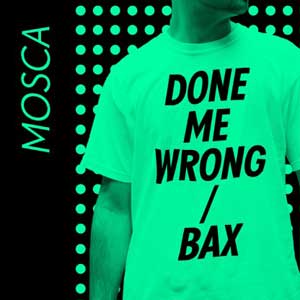
Ever since Mosca crashed into the electronic-music world in early 2010 with his debut single—which just happened to be the first record from Night Slugs and contained our favorite track of last year—a few things have become evident about the London producer. One: he’s not particularly prolific, as “Done Me Wrong” b/w “Bax” is only his third single in nearly two years. Two: he’s a bit of a shape-shifter, with seemingly every track and remix in his discography delving into a new sound, or tempo, or both. Three: he’s incredibly talented.
While Mosca’s Square One EP on Night Slugs offered mutant bass music that incorporated elements of hip-hop, house, grime, techno, and drum & bass, and follow-up “Tilt Shift” was a futuristic, deliberately paced bhangra-hip-hop hybrid, “Done Me Wrong” and “Bax” might be his most straightforward tracks yet, as both delve headlong into classic 2-step garage. On the surface, the songs aren’t terribly different from one another, as both find Mosca expertly revisiting the late-’90s/early-’00s sound, complete with chopped-up diva vocals, infectiously swinging drum patterns, and darting basslines. “Bax” is the tune DJs have been salivating over in recent months, and it’s not hard to understand why, as it’s the more upfront track with its jazzy chords, classic garage melody, and undeniably tough bassline. “Done Me Wrong” is slightly more laid back, riding along at a slower tempo and relying more on the track’s soulful vocal and rolling snares to carry the day. It’s less immediate, but just as good.
In 2011, electronic music is moving faster than ever, and the demand for producers to constantly turn out new material must be incredibly daunting. In one sense, Mosca has selected a risky path by taking it slow, as several months of inactivity—particularly in the world of UK bass—can quickly prompt questions of “whatever happened to that guy?” and also lead to unfairly high expectations when a new release finally does drop. Yet Mosca continues to move at his own pace and consistently answer the call, as his discography to date is remarkly dud-free. That he’s done this while also making an effort to repeatedly experiment with new sounds and styles is even more impressive, which is a big part of why Mosca is one of the most exciting UK producers at work today.
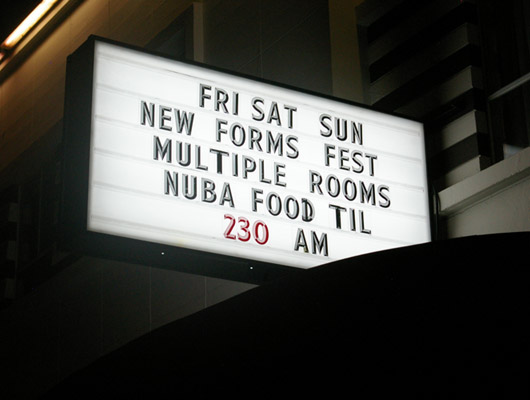
This past weekend, XLR8R attended the annual New Forms Festival in Vancouver, Canada. Here’s what we saw…
Now in its 11th year as an organization, the New Forms Festival set up shop for the first time this year in the Eastern part of town (think used car lots, check-cashing windows, and non-descript convenience stores) at the Waldorf Hotel, which has over the decades gone from upper-class (and, might we add, Hawaiian-themed), to completely run-down, and, in more recent times, the place has been re-imagined as a hub for youthful resorting, casual dining, and, most importantly, a new platform for forward-thinking art and music alike.
Day One The night started off with a curious exploration of hotel room art installations. Stripped of their usual amenities (a bed, towels, desk, etc.), the rooms were transformed into cryptic messages that proved to be thought-provoking, entertaining, and at times hilarious. Combined with a nice dose of drinks, chatter, and a wash of subliminal sounds, the festival warm-up served as an appropriate sonic palette cleanser before diving into the night’s musical offerings, which would be divided into three separate spaces—the Cabaret Room and the Hideaway (both on the basement floor), and the Upstairs restaurant area (which for some reason doesn’t come with a cool name).
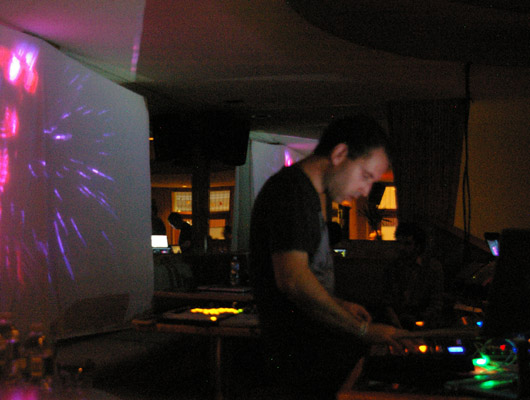
Some impressive local talent kicked off the evening’s performances with Vancouver’s own Resorts gradually taking over the Cabaret Room (the largest space the venue has to offer) with a dynamic, orchestrated dub-techno-inspired set that pitted a main laptop/knob-twiddler with a clarinetist, who also utilized a woodwind midi-controller at times, and a French horn player. Meanwhile, another British Columbia resident, Cloudface, inspired the night’s first palpable dance party with a punchy set of hardware house in the dark, secluded Hideway room.
Cloudface
Take
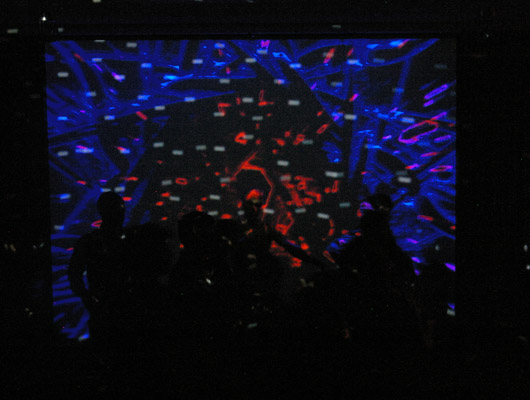
The night’s highlights were many, with more beat-oriented sounds emanating from the upstairs venue, including the hyper-textural synth-pop of local Evy Jane and LA beat-scene staple Take, who made one of the more intense connections with festival goers via his solid set of visceral, heavy-handed beats. All the while, Brainfeeder’s resident visual magician, Strangeloop, had no shortage of spell-binding and mind-fucking moving imagery of the highly-detailed, drug-inspired variety.
Nautiluss
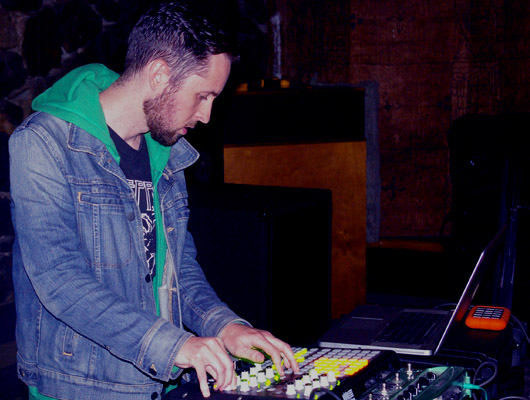
The downstairs area quickly turned into a bustling center, with a bar in between the Cabaret and Hideaway rooms acting as the buffer and deciding point between sounds. Recent Hemlock-signee Nautiluss captivated a small but focused audience of bass fiends with a set of ultra-percussive, UK-influenced sounds. Sprinkled with some deliciously re-pitched female R&B accapellas (think Aaliyah, Mary J Blige, etc.), the Canadian utilized his controller prowess to fill the speakers with lush, futuristic chords, propulsive drums, and some of the night’s most poignant bass. Just past the bar and down some stairs, the pair of DJs behind New York’s Mr. Saturday Night party (Eamon Harkin and Justin Carter) weaved in and out of slick, glistening disco-tinged house tunes as the last act to grace the Cabaret Room. Being the only act to use any sort of vinyl on the opening night, the duo cultivated the appropriate vibe for the hour (which was post-1:30 AM by then), smartly refraining from dropping anything that resembled an over-the-top selection and instead picking through an array of inescapable rhythms marked by tastefully funky bass and touches of dreamy melody.
Justin Carter of Mister Saturday Night
Mike Slott
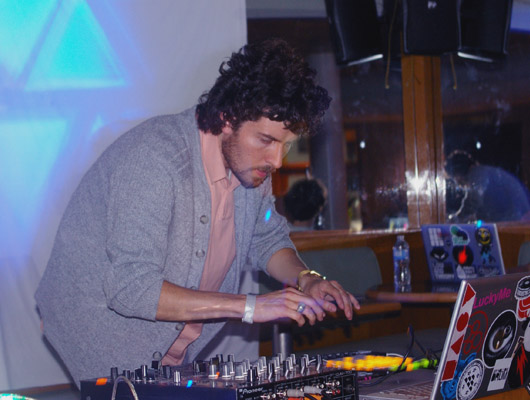
The night’s most stirring performance came from the Upstairs’ final act, Mike Slott. The LuckyMe co-founder seemed to put his all into his set, moving in grand sweeps from meandering ambiance to intricate beatwork with a palpable air of focus. Armed with a seemingly always-blinking controller hidden behind his laptop and a standard DJ mixer, Slott pushed and pulled the (admittedly) whittled-down crowd into a state of awe, jolting us awake whenever he felt like it with an onslaught of larger-than-life, hyper-detailed drum programming.
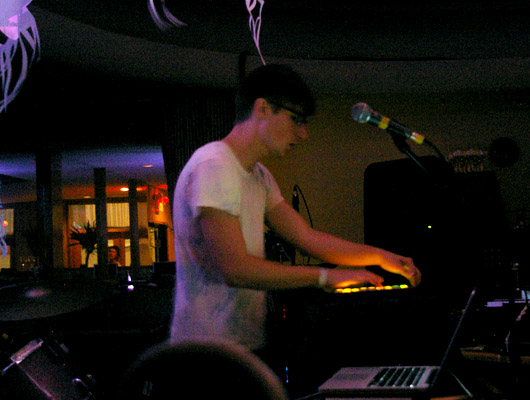
Day Two The second night of the festival saw a bit of a later start, setting the tone for what would be a much more party-oriented mix of performances that would last well into the early morning. After a few solid opening acts, the night really began to take hold when Canada’s own Teen Daze took to the stage upstairs. Armed with the usual laptop/controller combination and a humble yet enthusiastic stage presence, the young producer filled the room with warm, friendly vibes, gliding between mature slices of arpeggiated chillwave and pop-infused, blissful house. His closing number, a playful re-edit of Earth Wind and Fire’s “Let’s Groove,” provided just the right amount of cheese and, well, groove to have the crowd excitedly attempting to clap and sing along.
Teen Daze
Shlohmo
Shortly thereafter, West Coast beatsmith Shlohmo lulled a large gathering into an altered state of mind with the help of Strangeloop, whose otherworldly visuals were relocated to the Cabaret room for the night and displayed on three large screens spanning two walls. Deftly moving between dubbing out and reworking his own syrupy tracks to simply DJing some choice cuts, Shlohmo maintained complete control over the crowd with his calm confidence and endearing stage antics, which involved moving his hands along to the tracks, lip-synching the set’s vocal numbers, and asking the crowd things like—paraphrasing here—”You guys want to hear a hip-hop beat I made?” Between the usual stoney, textured beats a Sholhmo set is bound to entail, not to mention the good amount of his more recent UK leanings that also found their way into the mix, it was virtually impossible for onlookers to not nod their heads in unison, especially when the most memorable track of his almost-hour-long performance burst through the speakers in the form of an absolutely nasty beat from fellow Wedidit Collective member RL Grime.
Superisk
The Cabaret room proved to be the place for the night’s more intense offerings, capped off by Superisk‘s closing set. Properly representing his hometown of Bristol, the DJ moved through the grimier side of UK bass via the Bristol decks of choice—two CDJs. With no shortage of buzzing synths, funky riddims, and slap-you-in-the-face percussion, the crowd was basically helpless to resist, leading to a flurry of stomping and stepping with Superisk presiding over the happenings like a stoic master of ceremonies.
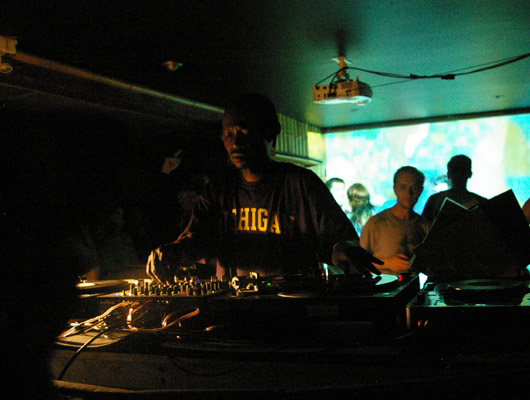
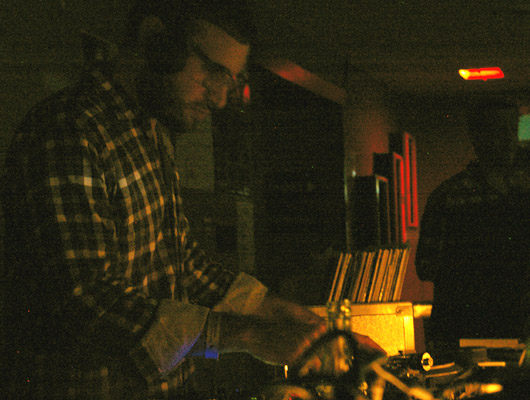
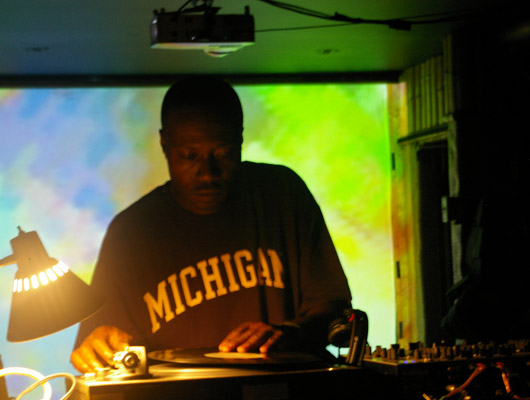
But for all the highlights to be had throughout the evening, the core of the festival’s energy was concentrated in the Hideaway, where two Midwest DJs proved capable of inspiring the most rewarding of dance parties with just two turntables (and a sparsely used CD player). Beginning his set like a monk (albeit from the funkiest church on earth), Detroit veteran Marcellus Pittman appeared in deep concentration as he moved from forgotten retro cuts to deep, soulful house amidst a constant trail of incense smoke. Pulling pieces of vinyl from his bags like a biologist examining a favorite specimen, Pittman felt the crowd out perfectly and moved through his early set with an enthralling dynamic.
Marcellus Pittman
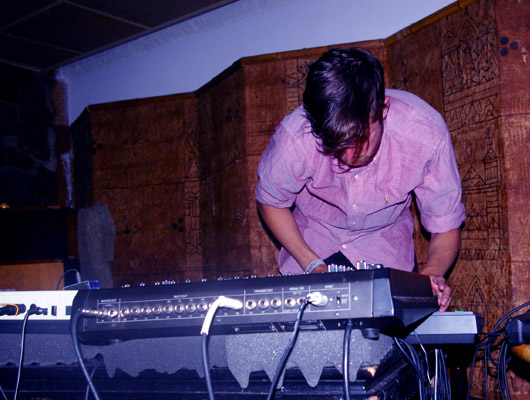
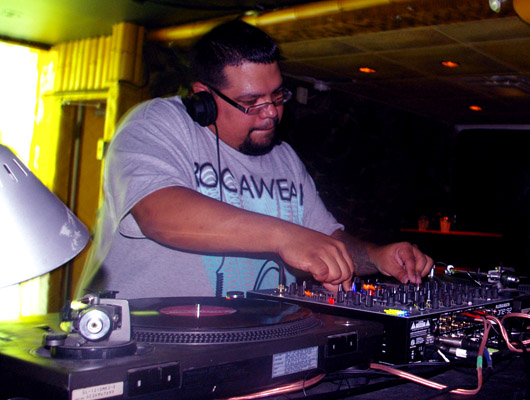
Specter
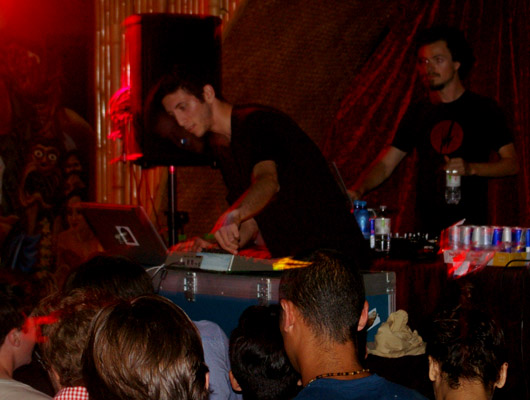
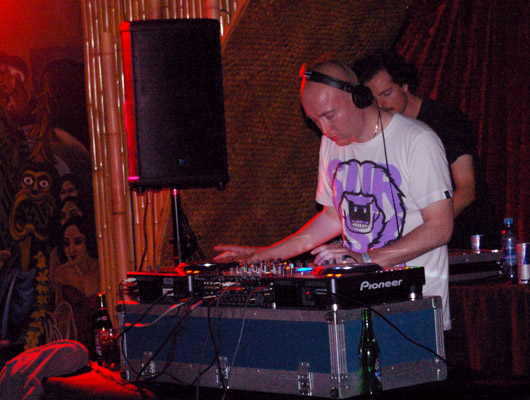
Eventually, Pittman’s Midwest counterpart Specter took over the proceedings, pushing on in much of the same vein while gradually picking up the momentum thanks to a slightly funkier track selection, incorporating the pounding house from his hometown of Chicago and no shortage of incredibly appropriate cuts from decades past. As his hour-plus set voyaged into deeper and deeper territory, a steady influx of attendees joined the core group of folks who seemed to never leave the dancefloor for the entire night, but who could blame them?
After a particularly bass-heavy cut filled the room, Specter looked back at Pittman and nods were exchanged, signifying the night was about to become simply magical. Rumored to have never done this together live before (at least in a planned scenario), the two like-minded DJs traded off behind the decks for the rest of the night, electing not to go back-to-back but rather switching every four or five tunes in a set that was spontaneous, fun, intriguing, and completely fluid. As the men pushed each other to reach deep into their respective crates, a wide range of soul-infused, percussive house met with vintage disco tracks and everything in between, resulting in an all-out dance party that lasted way beyond what was scheduled, most likely due to the fact that no one wanted them to stop. As the late-night turned into early morning, the lights were eventually raised and the moving and shaking came to an end, but not without Pittman sharing a concisely strong opinion concerning his place in the modern electronic music world, “We play records.” Yes they did, and, really, that’s all they needed to do.
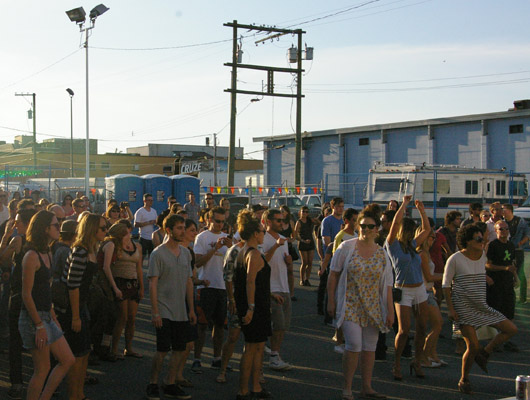
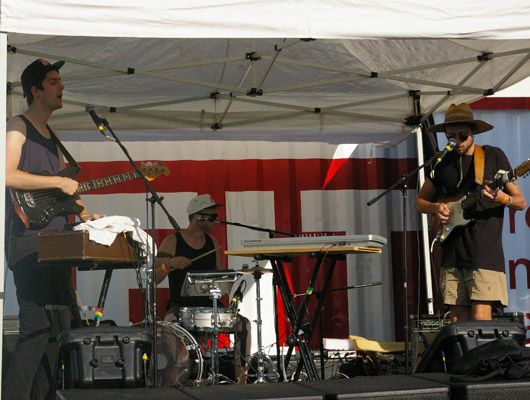
Day Three New Forms’ final day moved things outside—to the parking lot next the venue to be exact. With a picturesque Vancouver summer day at hand, the mountainous jams of V. Vecker and the Sun Araw Band began the afternoon on a note of psyched-out sonic exploration. More dance-friendly vibes were dropped shortly thereafter by Vancouver’s own No Gold, a three-piece dance-pop group consisting of drums (with v-pads), guitar, keyboard, bass, and sampler. The performance evoked simultaneous comparisons to the percussive songs of El Guincho and, at times, a more modern version of The Police (at least their good songs, of which, come on, there were quite a few).
No Gold
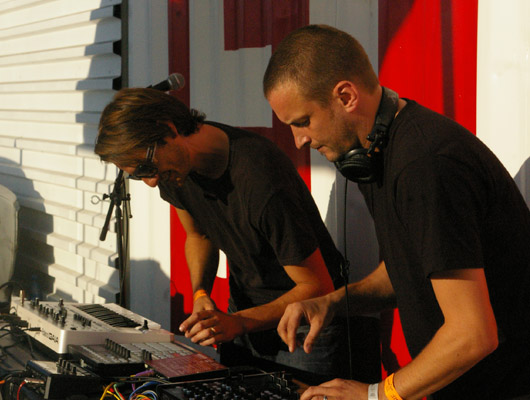
As the sun was beginning to show signs of its eventual exit, the dance-music takeover began with a set from Danuel Tate and Tyger Dhula (of Cobblestone Jazz fame). With Dhula at the controls laying down a series of infections tech-house beats, Tate was free to improvise on his keyboard and accompanying sampler/effects unit. Hitting on a plethora of jazzy chords and melodies, as well as the occasional vocoded message, Tate flowed with ease over Dhula’s rhythmic pilings, resulting in a smooth, soulful set that seeped through the festival grounds, inspiring the mass of bodies to start moving in no time.
Danuel Tate and Tyger Dhula
Deadbeat
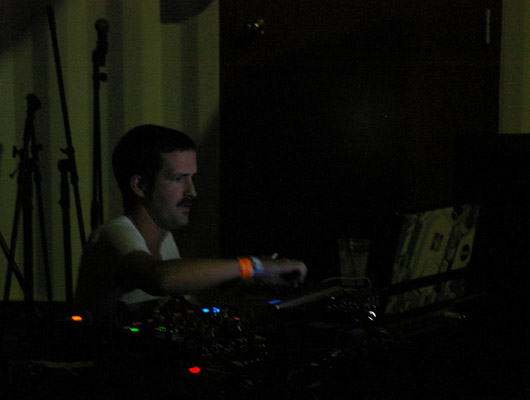
The festival’s closing honors were bestowed upon Deadbeat, a man who has been somewhat of a regular over the course of New Forms’ 11 years in action. The formerly Montreal-based, now Berlin-based dub-techno producer moved the proceedings to a more intimate part of the outdoor area, and began pushing ultra-low frequencies just as the sun had disappeared. Beginning in familiar territory, Deadbeat’s set seemed poised to be a vast, textured exploration of his more recent catalog, but as he moved along, the focus changed from rich, sparse tones to deep, dense techno and house, which touched on some unexpected contributors—even pulling Matias Aguayo’s “Dance Machine” seamlessly into the mix. Chain-smoking coyly behind his glowing laptop throughout the entire performance, Deadbeat shifted the momentum in grand, elongated gestures until the pavement, which had formerly served as the eating grounds for those indulging in the day’s barbecue, was transformed into an ebullient dancefloor.
And with that the weekend’s festivities ended on one of its highest notes, a closing performance that, no doubt, insured Deadbeat will be invited back next year, and, with any luck, so will we.
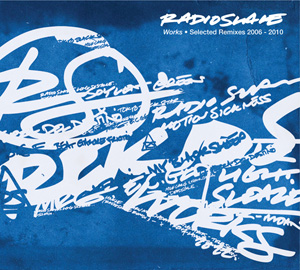
With a long and varied career that stretches back to 2005, Matt Edwards (a.k.a. Radio Slave, Rekid, and Quiet Village) has built a formidable discography of original material and remixes. It’s actually so sizable that Rekids, his label, has decided to compile an unmixed, 22-song, three-disc anthology entitled Works (Remixes 2005-2010). Focusing specifically on Edwards’ remix work, the compilation features a diverse roster of collaborative material that stretches from the electro-disco vibes of Chicken Lips “Motion Sickness (Radio Slave Remix)” to the slow-burning progressive sounds of Trentemøller’s “Moan (Radio Slave Remix For K).” Works (Remixes 2005-2010) comes out October 29, but in the meantime, check out the artwork and tracklisting below.
CD1 01. UNKLE feat. Ian Astbury – Burn My Shadow (Radio Slave Remix) 02. Partial Arts – Telescope (Radio Slave’s Prenzlauer Blur Remix) 03. Mlle Caro & Frank Garcia – Dead Souls (Radio Slave’s Long Distance Kiss Remix) 04. Tokyo Black Star – Caballero (Radio Slave’s Innervision Remix) 05. K3 feat. Alice Lascelles – Play to Win (Radio Slave Dub) 06. Slam – Azure (Radio Slave Remix) 07. Trentemoller – Moan (Radio Slave Remix for K)
CD2 01. Peace Division feat. Pleasant Gehman – Blacklight Sleaze (Radio Slave Vocal Mix) 02. Len Faki – My Black Sheep (Radio Slave Remix) 03. Soylent Green – La Forza Del Destino (Radio Slave Remix) 04. Yam Who? feat. Robin Lee, Peter Gordon & Mary Moore – Go Bang (Radio Slave Remix) 05. Beat Galore Friction – Bubble Dancing (Radio Slave Remix) 06. Mr. G – E.C.G.’ed (Rekid Remix) 07. Hell – The DJ feat. P. Diddy (Radio Slave Remix Edit)
CD3 01. Le Noir – Eleny (Radio Slave’s Panorama Garage Remix) 02. Matt O’Brien – Serotone (Radio Slave’s Panorama Garage Remix) 03. Ramirez – Hablando (Radio Slave’s Panorama Garage Remix) 04. Mr. G – Sometimes I Cry (Radio Slave’s Panorama Garage Remix) 05. Minilogue – Space (Radio Slave’s Panorama Garage Remix) 06. Jamie Anderson – Time Is Now (Radio Slave’s Panorama Garage Remix) 07. Nelski – Body Pop (Radio Slave Remix feat. Tom Gandey) 08. Chicken Lips – Motion Sickness (Rekid Remix)
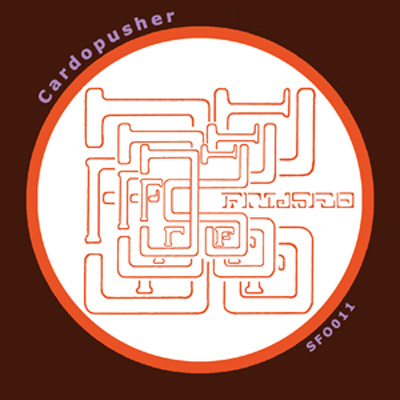
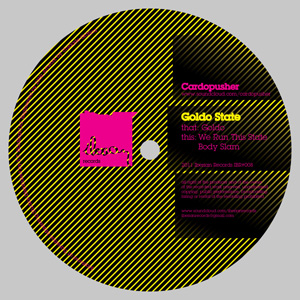
Fans of Venezuelan-born producer Cardopusher have a lot to look forward to in the coming months. The artist has announced the release of not one, but two upcoming EPs that showcase his constantly evolving sound. Of the two releases, the first one to come out is the Instant Loving EP (artwork above) on Frijsfo. As a teaser, the folks at the UK-based label have sent us “Reinforce,” a bonus cut that won’t be on the EP. A fine example of his musical evolution, “Reinforce” sees Cardopusher moving away from his tropical past toward a more straightforward bass-music sound that, uniquely, takes cues from ’80s electro, rave, and modern boogie. Imagine a snare-led drum pattern combined with a Dam-Funk bassline, FM chimes, and blaring rave stabs, and you’ve got “Reinforce.” Instant Loving is out now, and is available for purchase through Boomkat. Fans of Cardopusher should also take note of his next release, the even more ’80s-leaning Goldo State EP—out October 3 on 12″ and October 17 digitally—on Iberian Records. Check below the jump for the Goldo State artwork, and click here for a full stream of Goldo State on Iberian’s Soundcloud.
The Beatport sales charts are often dominated by the latest international club smashes, but its vault of music runs deep and covers a wide variety of artists and sounds, which is why XLR8R has been asked to curate a special two-week series of Beatport charts by some of our favorite DJs and producers. The first one comes from legendary Detroit techno artist and one-time Underground Resistance crew member Rolando, who has put together a list of 10 of his favorite tunes at the moment.
Listen to each individual track by clicking the song titles above, or go here to check out the entire chart. To see the rest of the charts in the XLR8R x Beatport series, click here.
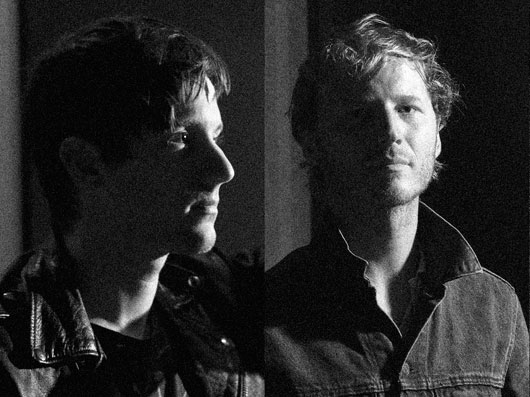
Daniel Martin-McCormick and Damon Palermo could both easily be counted among the busiest, hardest-working artists active today. The guys might be best known for their work in the shapeshifting Mi Ami, though Palermo also puts in time drumming for krauty psych outfit Jonas Reinhardt and Martin-McCormick has toyed with experimental noise music as Sex Worker for several years (not to mention his involvement with D.C. post-hardcore band Black Eyes in the early aughts). But after Martin-McCormick’s shift in location last year (he’s now based in Brooklyn, leaving Palermo in San Francisco), both musicians have found themselves with the opportunity to properly explore a realm of sound they’d previously only flirted with: dance music.
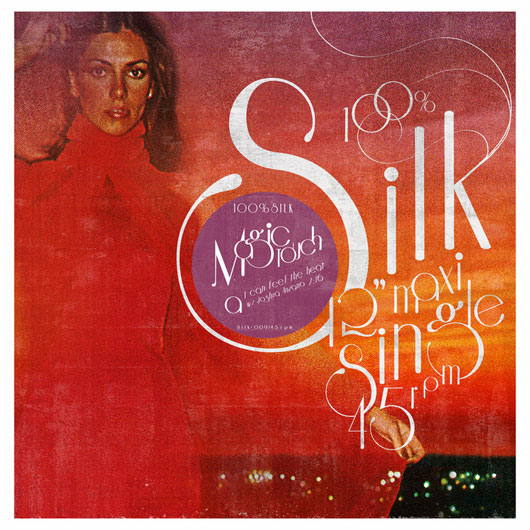
Palermo took on the moniker Magic Touch and Martin-McCormick opted to call his new solo project Ital, each of them diving deep into their new production endeavors with heavy influences of stripped-down house music and touches of disco. It was only a matter of time before record labels would hear their new tunes, and 100% Silk, a dance-centric sub-label of the LA-based Not Not Fun imprint that was apparently inspired by a mixtape Martin-McCormick made for label head Amanda Brown, was first to arrive.
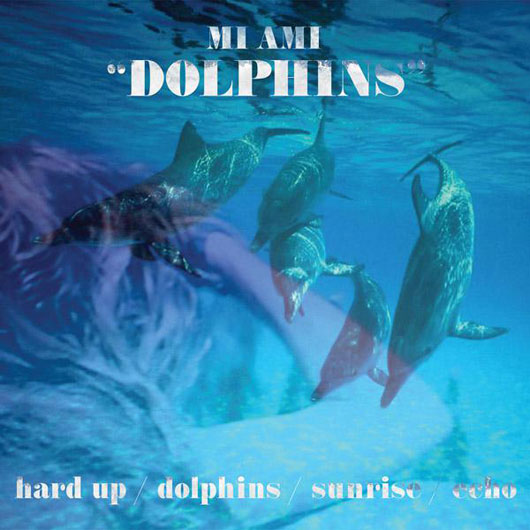
Ital’s first 12″ marked the inauguration of Brown’s new record hub in January of 2011, which was quickly followed by a slew of other left-of-center, club-leaning singles from the likes of Estonian outsider-disco artist Maria Minerva and Brooklyn house duo Innergaze. Magic Touch’s own debut single, “I Can Feel the Heat,” just recently dropped, as did Martin-McCormick’s follow-up record, the stellar “Only For Tonight.” Everything took off practically overnight for the two friends, and it doesn’t seem to be slowing down any time soon. Mi Ami is currently working on the follow-up to this year’s solid Dolphins EP (slated for release on 100% Silk), Ital will release an EP via Planet Mu this coming January, and both artists will soon embark on separate European tours.
Amidst the flurry of live performances, studio time, and travel, we asked Palermo and Martin-McCormick to sit down together to catch up on what they’ve been doing the past year or so. They share laughter, a bit of nostalgia, and some reflective moments, which should be expected when two band mates that no longer live in the same city come together to discuss their lives and their work. The pair also touch on the differences between making music alone and playing together, talk about how computers and gear factor into each of their sounds, and contemplate the world of contemporary dance music.
XLR8R Couldn't find the embed function for type: "vimeo" and source: "<iframe src="http://player.vimeo.com/video/27409324?title=0&byline=0&portrait=0" width="530" height="391" frameborder="0" webkitallowfullscreen="" allowfullscreen=""></iframe>".
Ital: I remember, over the years, you were buying sequencers and synthesizers. Not a lot of them, but there was always new gear you were getting off eBay that seemed promising. It would sit around for a while, and you would kind of meditate on it. Then all of a sudden you had these tracks. I was pretty impressed because I wasn’t sure what was going to happen with that gear. How do you think that all came about?
Magic Touch: I think when Mi Ami first started, we had that TR-707. And when Jacob [Long] left the band, we got an MPC, but that wasn’t working. I think I was partly trying to get gear for the new shift with Mi Ami, and then I also had some stuff I was trying to use with Jonas Reinhardt. Everything was kind of for all of the separate bands at the same time. Then you moved, and I wasn’t using it for Jonas Reinhardt as much, so I sort of had it all in one spot in my house. For a while some of the gear was there, and some was at the practice space for the bands, so I wasn’t sure how to use it as a whole. Was it after you left or during the time you were still in SF when I started putting everything together?
I: Well, you’d started to use the sampler for the new Mi Ami stuff as a duo.
MT: That’s right.
I: Before then, in 2010, you’d been working on tracks in Ableton. You had all those loops going. I feel like maybe you loaded all those loops into the sampler at some point after I left, and used that to give yourself a frame to work from.
MT: Yeah, I think when Mi Ami was in Europe the third time I was trying to sort of do the tracks on the computer. I didn’t have a specific idea in mind, really, I was just trying to put some stuff together. I think when we got back, shortly after you left, I started putting more of it together on the gear. I think also what brought it together was collaborating with Josh [Anzano of Corinne] and Honey [Owens of Miracles Club]. When I had their solo productions to pair with my loops, it helped me structure the songs. So, to answer your question, I had a lot of stuff, but never really put it all together. Now, I think I have a better idea of how everything works, whereas before it seemed kind of unfathomable.
I: Yeah, a lot of it still seems unfathomable to me. [laughs] Your solo stuff still has some collaborative aspects though, so how do you think it’s different from our band?
XLR8R Couldn't find the embed function for type: "soundcloud" and source: "<embed allowscriptaccess="always" height="165" src="http://player.soundcloud.com/player.swf?url=http%3A%2F%2Fapi.soundcloud.com%2Fplaylists%2F472427" type="application/x-shockwave-flash" width="100%">".
MT: Well, I think Mi Ami was so much about the live aspect, and working on these songs is more… You know I was just working on them a lot in my room, not really thinking about [playing them] live as much, so it’s kind of almost the opposite way I’m used to working.
I: I wonder, did it feel sort of liberating? Because we’d been doing the band for a while, so there was a kind of momentum and a certain amount of expectation—like, this record is different from the last record…
MT: I’d say yes and no. The reason I’d say no is because, even though I [felt liberated] at first, I quickly realized that when you’re working alone, you can put yourself in a trap more than with a band. The band is people working together, but when it’s just yourself, it’s easy to be, like, “Oh, no. This isn’t cool,” or, “This is not exactly what I was thinking.” In a way, it was awesome to just start from scratch. I feel like, with the band we had our sound, and to start without that is pretty interesting.
I: Yeah, it’s interesting working in a situation where you can control all the parts—whether you’re sampling them, writing them, or whatever—and you don’t have to worry about what anybody else wants. You create it so much from home, almost like it’s straight out of your brain instead of having to balance everything with the limitations of a live set up or the limitations of your technical ability. That is kind of refreshing. But it can be such a strange feeling if you don’t know what you want, or you’re sitting around waiting for inspiration to come, and you’re all alone.
MT: Also, with the band, you just go into the practice space and sort of let it out. But when you’re in your room, or wherever, you’re just, like, messing with the sound of the hi-hat.
I: [laughs] You gotta get it perfect.
Magic Touch by Aurora Halal
MT: That’s actually one thing that’s a big difference: doing something physical. In my songs, there’s keyboard parts that are played, but there’s no really loud aspect, like being in a practice space.
I: Do you miss that?
MT: Yeah, I do. Even with the songs I make, I wish it was more like a band setup instead of just me doing all this stuff.
I: When we met, we kind of bonded over disco and dance music. And I remember, as a three-piece, we would listen sometimes to, like, Dinosaur Jr. and Neil Young, but there wasn’t a lot of rock that any of us were listening to all together.
MT: Even Jacob, though he wasn’t into the same kind of dance music, was into dubstep, dub, and other forms of electronic music.
I: Do you feel like this is a truer expression of you, cause it’s closer to the music you listen to at home?
MT: It’s hard to say. Because even when I was playing drums and stuff, there’s a strong feeling there… Yeah, I’m not sure.
I: So, even though [Magic Touch] is maybe stylistically closer to what you’re into, you prefer the overall experience of being in the band?
MT: Yeah, because you’re, like, in the zone. [laughs] When I [perform as Magic Touch], I am, too, but not so much when I’m working on a track over and over. But it is cool. I feel like when your stuff came out and my stuff came out, a lot of DJs started coming to San Francisco and everywhere else that weren’t really coming around in, like, 2002. Older guys like Virgo and Anthony “Shake” Shakir are sort of re-emerging, and there’s all this excitement for stuff that happened 20 years ago, which is really cool. I feel like everything kind of hit at the same time.
Ital
I: It’s funny. I remember living in San Francisco, and how, when I first wanted to go out to hear DJs, it was awful. There was so much bad ‘electronica,’ and tons of, like, pro-soul patch, shaved head minimal DJs. The converstation really seemed to be about clean, minimal music, like, “Oh, that track is deep,” and it would have a two-note melody.
MT: That sort of stuff is still happening, but maybe not as much.
I: It sort of feels like there is a new wave of dance music that’s less, like, ‘modern European’ and more English and American. It’s exciting. Even when we were DJing the other night, I was surprised so many people were out dancing on a Thursday. In the past, it would be so hard to get people to come out if there wasn’t, like, a no-wave band playing or something.
MT: Right.
XLR8R Couldn't find the embed function for type: "soundcloud" and source: "<embed allowscriptaccess="always" height="145" src="http://player.soundcloud.com/player.swf?url=http%3A%2F%2Fapi.soundcloud.com%2Fplaylists%2F793558" type="application/x-shockwave-flash" width="100%">".
I: Do you see your music going in a specific direction? In some ways, I hear strong influences of, like, classic house, but it still feels pretty personal. Do you think that’s kind of what you ended up with, or was it a specific decision? Do you want to do more [songs] like that?
MT: Well, I was working on the two tracks seperately.
MT: Yeah. I was like, “Oh, these aren’t going to work together because one is house and is more disco.” Now, I feel like the a-side and b-side could be from different people almost. And the new song I’m working on is different, too, so I guess I’m just gonna go with whatever ideas I have.
I: To me, they do sound different, but not radically so. They don’t clash with each other.
MT: How about you? I feel like your songs are definitely very different, but I could tell they’re all yours just from hearing them.
I: When I started making the tracks that ended up on my first 100% Silk release, I just wanted to make a track, then another track, and kind of experiment with the music. This was like in January and spring of 2010. I feel like this year, things started to form more into a style. So, for the EP I just finished for Planet Mu, I think I was trying to explore some stuff that has come up in my process. I really wanted to make songs expansive and strange. Not like, “Oooh, this so weird,” but to give them a tactile quality, or something like that. Then I also think that I shouldn’t worry about it too much, and just focus on writing good melodies and see what happens. I like how it came out, but it can turn into a dead end to just always be making stuff as weird as possible. That’s not necessarily always so virtuous or exciting. I guess I wanted to explore the stuff that seems more specific to the [Ital] tracks that have come out, especially, like, “Culture Clubs.”
MT: That’s another thing that’s interesting about being in a band versus doing solo stuff. You make the beat and the bassline with certain samplers and certain gear that can only do certain things. Sometimes your sound is based on that. It’s partly also why my stuff all sounds really different. I’ll learn this new piece of gear, and then I’ll be able to do this new trick that changes the music.
XLR8R Couldn't find the embed function for type: "vimeo" and source: "<iframe src="http://player.vimeo.com/video/27556706?title=0&byline=0&portrait=0" width="530" height="351" frameborder="0" webkitallowfullscreen="" allowfullscreen=""></iframe>".
I: That’s something I personally try to avoid. I remember sitting almost in this exact spot in your living room in late 2007, and our friend Steve was in his room talking to a friend. His friend was playing him some tracks, and he was like, “This one’s got an 808 and a Juno-6, and this one’s got a 909 and a Juno-106.” And I remember having this intensely averse reaction. Not to the music, which sounded fine, but to that kind of way of talking about it and conceiving of it, where you only articulate the songs through the gear that you’re using. It seemed kind of tragic to me.
MT: I do feel like there’s been a shift of people I know doing, well, not specifically dance music, but definitely electronic music. Maybe because touring in a band and having a practice space has kind of become and really always has been unaffordable.
I: Yeah, it feels like there’s this one ‘snake’ that sort of runs across the country, a thread that connects this crew of people. In general, it seems like a really good time for dance music. There’s all the stuff in England, the footwork stuff in Chicago…
MT: I think also with, like, CDs going to shit, there seems to be more people getting excited about 12″s.
I: But I wonder if it’s really a craze, or if it’s just where my attention is at right now.
MT: Yeah, totally.
I: I mean, people talk about how there’s, like, this new wave of American techno producers and dance-music producers. You’re hearing about stuff all the time, but if I step outside my little bubble there’s all sorts of people who I’m friends with that don’t even know that I’m making tracks. [laughs] They don’t know anything about this stuff. So, I’m not really even sure if it’s a special moment in a historical way or if it’s just a nice moment for us.
Music may not be a universal language, but it seems as though bass music has a certain ability to cross vast geographic distances and traditional cultural barriers. For instance, take Washington-based producer Cedaa‘s (pictured above) remix of “Annie’s Mac,” a new track by UK garage producer Kingthing, which appears on his Cassini EP, out soon on Texas-based label Freshmore. Cedaa strips out the original track’s straightforward four-to-the-floor drive and replaces it with a broken, snare-led beat that provides ample room for his deep, wobbly sub-bass tones and cutting ’90s synth stabs. The resulting breathing room creates a dynamic and dubby space, resulting in a digitally infused and thoroughly stoned dance cut.
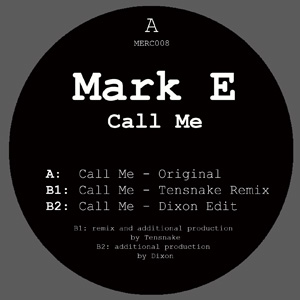
Hypnotic and deep, Mark E‘s “Call Me” is a song with a strange story. First played on his August 2010 Beats in Space mix, the track was one of his most anticipated tracks of last year. Yet, the single remained elusive, and after being notably absent from his debut LP, Stone Breaker, it seemed as though “Call Me” might never see release. We’re not sure what took so long, but Mark E has finally decided to drop the track on unsuspecting dancefloors the world over. He’s not doing it alone, either, as “Call Me” comes with two wildly different remixes from two of Germany’s biggest DJs. Innervisions label head Dixon gives the track a subtle re-rub while Tensnake breaks form to deliver an uncharacteristic 2-step garage overhaul. “Call Me” comes out sometime mid-September on the Merc label, but while you wait you can check out the artwork and tracklisting below.
1. Call Me 2. Call Me (Tensnake Remix) 3. Call Me (Dixon Edit)
Earlier this year, UK-based music-sharing website Carbon Logic got together with Brooklyn’s Telepathe to collaborate on a brand-new compilation, with songs being selected from the entries for Cycle, a contest on the site seeking user-submitted content. Now, months later, Telepathe have selected 12 of their favorite tracks to see release on a digital comp entitled Carbon Logic Cycle #10, with the winner of the competition, AZitiZ, having her song “Where Is the Love” also released separately on 12″. As a teaser for the whole thing, they’ve slipped us UK producer Alphabets Heaven‘s track, “KOPS.” Functioning as an excursion into leftfield territory, “KOPS” plays like a video game with a 16-bit synth palette punctuated by power-up bloops and a swung-out and broken rhythm. The resulting sound stands somewhere between LA’s beat scene and UK grime. “Where is the Love” (which features an Alphabets Heaven remix) comes out September 19, while Carbon Logic Cycle #10 comes out October 3.
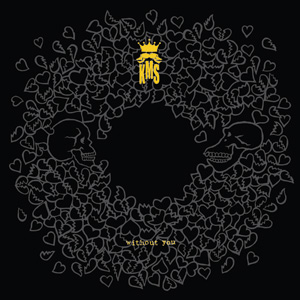
Fresh off the success of last year’s Waiting For You, the London-based dub explorers of King Midas Sound have announced Without You, a brand-new album set for release on Hyperdub. The LP features radical reworkings of the Waiting For You material by a heavy-hitting and diverse cast of artists that includes Flying Lotus, Gang Gang Dance, Nite Jewel, Kode 9 and Spaceape, Deepchord, Ras G, and Hype Williams, among others. Without You drops November 1 on CD and double LP , but while you wait, check below for the tracklisting, artwork, and an advance video of Kuedo’s remix of “Goodbye Girl.”
CD: 1. Goodbye Girl – Kuedo Rework 2. Without You – D-Bridge Revoice 3. Lost – Flying Lotus Rework 4. Earth A Kill Ya – Gang Gang Dance Rework 5. Tears – Kiki Hitomi Revoice 6. Spin Me Around – Cooly G Revoice 7. Goodbye Girl – Robert Aiki Aubrey Lowe Rework 8. Say Somethin’ – Joel Ford Revoice 9. Lost – Nite Jewel Rework 10. Sumtime – Hype Williams Rework 11. Meltdown – Kode 9 and the Spaceape Rework 12. Earth A Kill Ya – Mala Rework 13. Goodbye Girl – Deep Chord presents Echospace Rework 14. Come and Behold – Green Gartside Revoice 15. Cool Out – Ras G & The Afrikan Space Program Rework Bonus Hidden Track 16. One Ting – Dabrye Rework
Vinyl – double LP:
Side A 1. Goodbye Girl – Kuedo Rework 2. Without You – D-Bridge Revoice 3. Lost – Flying Lotus Rework 4. Miles & Miles – T ++ Rework
Side B 1. Earth A Kill Ya – Gang Gang Dance Rework 2. Tears – Kiki Hitomi Revoice 3. Spin Me Around – Cooly G Revoice 4. Goodbye Girl – Robert Aiki Aubrey Lowe Rework
Side C 1. Say Somethin’ – Joel Ford Revoice 2. Lost – Nite Jewel Rework 3. Sumtime – Hype Williams Rework 4. Meltdown – Kode 9 and the Spaceape Rework 5. Come and Behold – Green Gartside Revoice
Side D 1. Goodbye Girl – Intrusion rework 2. Goodbye Girl – Deep Chord presents Echospace Rework 3. Goodbye Girl – King Midas Sound Dub 4. Cool Out – Ras G & the Afrikan Space Program Rework
XLR8R Couldn't find the embed function for type: "vimeo" and source: "<iframe src="http://player.vimeo.com/video/27762488?title=0&byline=0&portrait=0" width="530" height="298" frameborder="0" webkitallowfullscreen="" allowfullscreen=""></iframe>".