
Taken from their upcoming new album for Planet Mu, UK-based Ceephax (occasionally known as Ceephax Acid Crew) has made this not-exactly-wallet-busting marvel of a music video for the track “Sidney’s Sizzler.” The video appears to take its genre name to heart, and could potentially depict what actually goes through producer Andy Jenkinson’s head whilst performing his tracks. Regardless, the acid synthlines and old-school production methods of “Sidney’s Sizzler” fit perfectly with the flashing colors, antique electronic imagery, and busted-VCR aesthetic of its accompanying video.
Pantha du Prince Signs to Rough Trade, Readies New Album

Patron of deep house grooves and esoteric field recordings, French-German Pantha du Prince has decided to switch his label home from the Hamburg-based, boutique Dial to the UK’s eclectic Rough Trade. Prince’s first order of business at his new home is to drop a brand new 12″ entitled The Splendour in early December, which will be promptly followed by his third full-length record, Black Noise, on February 9. Previously a remixer for the likes of Animal Collective, Depeche Mode, and Bloc Party, Pantha du Prince’s new music is said to “…balance precariously on the slippery threshold between art and nature, between techno and folklore, which lends it a certain spectral and intangible aspect.” We look forward to hearing such forays into a musically transcendental experience.
Podcast 112: Ghosts on Tape’s Bay Heat Mix
As part of the kick-off for our brand-new City Guide page and mobile application, we’ve invited some of our favorite artists to put together special editions of the XLR8R podcast highlighting the artists and sounds that make their hometowns unique. We begin with San Francisco’s Ghosts on Tape, whose Bay Heat Mix combines his own tropical turbo-crunk productions—many of them unreleased—with bass-heavy electro, glitch, cumbia, reggaeton, and more from a legion of fellow Bay Area dancefloor smashers.
01 Low Limit “Out the Club”
02 Asobi Seksu “Familiar Light (Lemonade Remix)”
03 Ghosts on Tape “Mogadishu Night Life” (Wireblock)
04 Hernan Bulles “Chela (Sneaky P Remix)”
05 Los Rakas “Esa Mulata”
06 Lemonade “Sunchips (Ghosts on Tape Remix)” (True Panther)
07 Ghosts on Tape “Equator Jam” (Wireblock)
08 Ghosts on Tape “Woofer Cooker” (Numbers)
09 Kid606 “Umbilical Bullets” (Tigerbeat6)
10 Ghosts on Tape “Shake Remix”
11 Banana Clipz “Push Am (Left, Right)”
12 Too Short “I Need a Freak” (Priority)
13 Talking Heads “Psycho Killa (White Girl Lust Daft Mix)”
14 Boys Noize vs. Toy Selectah “Arcade Roboton (This is Raverton Remix)” (Bersa Discos)
15 Lando Kal “Sex Beast”
16 Rainbow Arabia “Omar K (Ghosts on Tape Remix)” (Manimal Vinyl)
17 Ghosts on Tape “Predator Mode” (Wireblock)
18 DJG “Birds Of Prey”
19 Señor Stereo “I am the Beat (Salva Remix)”
20 Ghosts on Tape “Gangsterplayer”
Download MP3
Download M4A (iTunes enhanced)
Subscribe to Podcast (RSS)
Radian “Git Cut Noise”
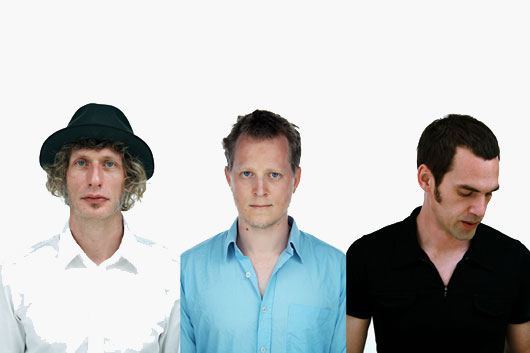
The closest thing to rock music you’re likely to hear from this glitchy, Vienna-based live electronics trio, Radian, can be found on the opening track from their upcoming new album. Coming four years after the group’s last effort, Juxtaposition, Radian’s Chimeric is built around live recordings of drums, bass, and guitar, although they’ve been cut up, rearranged, and tweaked into near oblivion. Despite efforts made to keep “Git Cut Noise” away from anything easily called “straightforward,” passages of stripped down and crunchy rock flirtations do bubble to the surface.
2562 “Flashback”
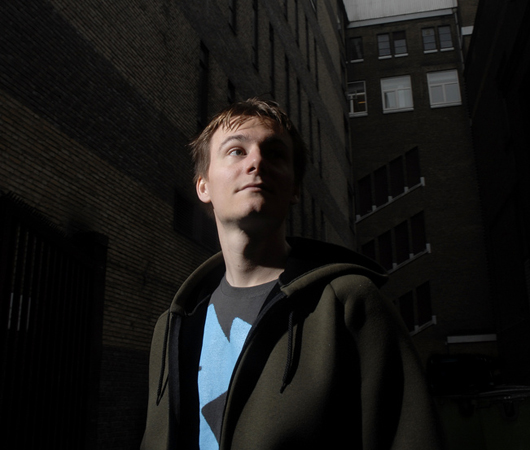

Dave Huismans, who works under the monikers of 2562 and A Made Up Sound, has made a startling rise to the top ranks of dubstep and deep, dubby house within only a few years. As 2562, Huismans creates atmospheric dubstep that has as much to do with shuffling Detroit house and dub-techno as it does with the current Hyperdub roster. In front of a dusty dubstep beat, “Flashback” features a lush, two-note synth line reminiscent of Theo Parrish, spacy squelches, breathtaking polyrhythms, and synth flourishes that somehow recall Aril Brikha’s first full-length. There’s an undeniably organic sonic quality to much of Huisman’s work, and “Flashback” is definitely not a departure from his oeuvre. Taken from his new album Unbalance.
Traxx Faith
The first full-length from Traxx (a.k.a. Chicago-based DJ and producer Melvin Oliphant III) touts the most jacking-est of styles—”jakbeat,” an Ann Arbor and Chicago sound that’s both an ode to and update of early Chicago house. Traxx, no purist, reaches back even further (“Parametric Melody” nods to Larry Levan, quoting Peech Boys’ “Don’t Make Me Wait”) while also looking ahead. Vintage as the drum programming and acid synths are on a track like “Enka,” Faith has a soulful, futuristic quality throughout. Album standout “XTC for Love” features guest vocalist James T. Cotton (a.k.a. Tadd Mullinix, a.k.a. Dabrye) contributing yearning, indignant vocals over glowing keyboard chords and a hard-driving beat. A slow-burning, addictive debut.
Quick Blockhead Tour Starts Tonight

To prepare for the January 12 release of his third proper Ninja Tune record, The Music Scene, Blockhead is heading out on a short tour starting tonight at the Echo in Los Angeles. Check the downloads section in the coming days for a taster of the new disc.
Tour dates
11.11.09 The Echo Los Angeles, CA Blockhead – Live w/YPPAH, Amplive of Zion I, and Deru
11.12.09Chop Suey Seattle, WA Blockhead – Live
11.13.09The 2410Portland, OR Blockhead – Live
11.14.09CervantesDenver, CO Blockhead – DJ Set
Fabric Forges New Territory With Upcoming Compilation
Known primarily for its massive club and ongoing DJ-mix releases, Fabric is set to venture into new territory with an upcoming compilation series. Using the unusual title of Elevator Music, each edition of the series is meant to showcase unreleased songs from producers that have caught the ears of Fabric’s staff. With a quick look at Volume 1‘s tracklist, it’s easy to see they’ve been listening to a lot of dubstep, UK funky, and all around bass-centric music. We wholeheartedly approve. Fabric’s Elevator Music Vol. 1 will be available January 18 and you can check the tracklist after the jump.
Tracklist
01. Hot City – If That’s How I Feel
02. xxxy – Sing With Us
03. Doc Daneeka – Drums In the Deep
04. Hackman – Pistol. In Your Pocket
05. Julio Bashmore – The Moth
06. Untold – Bad Girls
07. Octa Push – Doctor Bayard
08. Shortstuff – Behave
09. Skinnz – Ukraine
10. Mosca – Gold Bricks, I See You
11. Martyn – Friedrichstrasse
12. Vista – Elixir
13. Caspa & Rusko – One of the Same
14. Om Unit – Encoded
15. Starkey – Black Monolith
16. Shortstuff & Brackles – Melvin Blue (Digital Bonus Track)
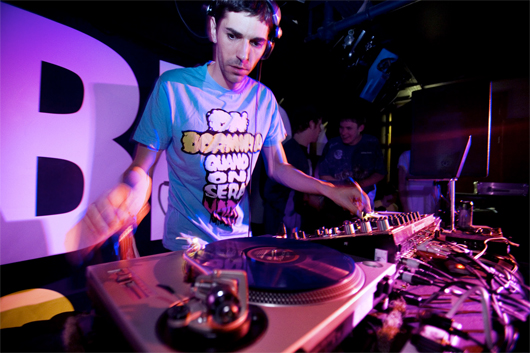
pictured Martyn
TBC: Fear of Music – Why People Get Rothko But Don’t Get Stockhausen
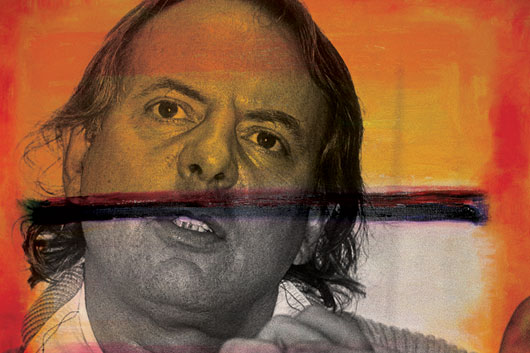
Author David Stubbs contributed to the influential fanzine Monitor before writing for Melody Maker. He is also a former reviews editor of The Wire and has written books on Jimi Hendrix, Eminem, and Ace Records. His latest polemic, Fear of Music (O Books; $19.95), considers—to quote the suffix—”why people get Rothko but don’t get Stockhausen.” Why, asks Stubbs, do the same people who “flock from miles around to mill in the presence of abstract art run screaming from ‘abstract music’?”
XLR8R: You touch upon this in the final chapter of Fear of Music, but is experimental music simply more difficult to ignore than experimental visual art, in terms of trauma/pain?
David Stubbs: Yes. The lack of “earlids” is one problem. Art, even enormous works, only occupies a limited space within your field of vision, whereas music occupies all of your field of hearing. You can cut out art in a blink of an eye or simply turn your head. Alternatively, imagine if Munch’s “The Scream” were conveyed as an audible, prolonged cry of anguish, rather than merely a silent evocation on canvas—how soon would that clear the gallery?
Do you envisage the book being read predominantly by fans of music or art?
Ideally, I’d like it to be read by the “people” alluded to in the title—the great many who turned up to the Tate Modern to see the Rothko exhibition but whose experience of experimental music is either non-existent or limited to a horrified shudder and a [cry of] “that’s just noise, turn it off!” Fans of experimental music would probably be very familiar with both the music and the art talked about in the book.
Where do, say, Autechre, Timbaland, and Public Enemy fit into your dichotomy? People seem to “get” them, to varying degrees, and their music could reasonably be described as “experimental.”
True—and they are illustrations of how brutalist noise elements can find their way into popular, everyday listening, weave their way into the warp and grain of the modern soundtrack to life. Given the chance, people can get used to this stuff, however, “varying degrees” is the key phrase. That looped, sampled squeal that runs through PE’s “Rebel Without a Pause” is tolerable to many only because of the more traditional [hip-hop] rhythm riding shotgun alongside it. Conversely, Autechre have found commercial success harder to come by with their more extreme excursions into free-form neo-concrete, like Draft 7.30.
What do you perceive as the purpose of the book?
To highlight the existence of a vast swathe of 20th-/21st-century cultural activity that has been marginalized only in part because of its inherent difficulty, but also because it’s been harder to market. Also, to point out that that is one of its strengths—what I might call its resistance to bourgeois assimilation, if I were the sort of person who talked like that.
I suspect you raise as many questions as you provide answers in the book. Succinctly, why do people get Rothko but don’t get Stockhausen?
Well, if you’re only into culture out of a sense of self-affirmation, to show to yourself that you’re the sort of person who attends such events, Rothko’s the easier option. You can be in and out of the Rothko room in 10 minutes, down in the museum café in 15. Sitting through a piece by Stockhausen, say, Hymnen, that’s a 100-minute slog. If you’re just there to be pretentious, you’ll be flushed out.
If you could take over the Turbine Hall of the Tate Modern with a piece of music/sound art, what would it be and why?
Perhaps something by Phillip Jeck or William Basinski—music which is beatless, vast in its implications, would fill the space, and make material points about the nature of organized sound (touching on memory, decay) but which is actually very seductive and accessible.
David Stubbs’ Fear of Music: Why People Get Rothko But Don’t Get Stockhausen is published by Zero Books.
Robot Koch “Gorom Sen (Shlohmo Remix)”

The frenetic dubstep of Robot Koch gets the remix treatment from a mysterious young buck from Los Angeles. Taking the original from Koch’s forthcoming album, Death Star Droid, Shlohmo slows its breakneck pace, creating a piece where the sampled Angolan vocal stems are still evident, but put to a dark, low-slung bass slice. A piece meant for blunted, late-night drives through the ‘hood, Shlohmo’s remix of “Gorom Sen” shows that the 19-year-old has earned his upcoming mini-album on Friends of Friends.
