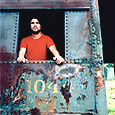
In 1983, at the urging of a colleague, Steve “Steinski” Stein and his friend, Douglas “Double Dee” DiFranco, entered a Tommy Boy-sponsored contest to remix G.L.O.B.E. and Whiz Kid’s “Play that Beat Mr. DJ.”
Their prize-winning entry, Lesson 1 – The Payoff Mix, turned hip-hop into a funhouse, shoving samples from two-dozen records–including tracks by Boy George, Little Richard, and cha-cha dance instructionals–into exactly five minutes. This radical reconstruction presaged turntablism, modern mixtapes, and acts like Girl Talk, and it’s now considered a masterpiece, having been sampled, scratched up, and bootlegged for the last 25 years.
Steinski and Double Dee didn’t stop there. Their subsequent Lesson 2 and Lesson 3 sound collages went further into the funk, supplying breaks used by a battalion of DJ/producers, including Prince Paul, Cut Chemist, and DJ Shadow. In the times since, Stein has done mixes for Ninja Tune and a track for Stones Throw, and dabbled in sound-collage-as-social-commentary with sonic think pieces on the JFK assassination and 9/11.
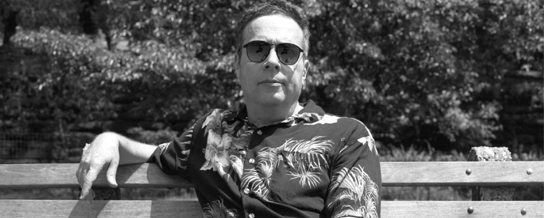
Stein–now 57 and based in the New York suburbs–is a member of AARP, but he’s hardly retiring; he continues to DJ, produce, lecture, and blog at a steady pace. On the 25th anniversary of The Payoff Mix, plunderphonic label Illegal Art has issued What Does It All Mean?, a retrospective of Steinski’s best work, so we thought the time was ripe for a ring from XLR8R.
XLR8R: We hear one of your first gigs was at a food co-op in Brooklyn. Tell us, what did Steinski play back in the day?
Steinski: I played a lot of old funk–the co-op was basically a bunch of old hippies, so that went over very large. [There were] a lot of different kinds of people, so I could play African music, a little bit of Brazilian music, salsa, Nuyorican stuff and it was a gas. This would’ve been 1981 or 1982, and you could still free-form DJ and cover a whole lot of stuff. I could play rock that would now be considered very campy or corny, but back then it was like, “Oh yeah, this great old Elvis Presley song!” [The party was] on the floor of the grocery store with the stuff pushed back and I used to DJ on top of the dairy case. It was the first time I DJed in public.
When you and Double Dee were putting together The Payoff Mix, what was the first idea that came to mind?
We [decided] were going to open it [with a] countdown. You’d think, “My goodness, how old is a countdown nowadays?” but back then, no one had done it. We did the obvious stuff before most people [laughs], so we were hitting the low-hanging fruit very easily. It was all totally improvised. It wasn’t like we had
a plan.
What gear did you use?
Douglas was using a state-of-the-art commercial production studio. He had a Studer eight-track machine the size of a refrigerator; it recorded eight tracks on one-inch tape. There were a couple of industrial reel-to-reel decks, and a turntable and a board. This was stuff that he worked with all the time and knew intimately. He killed it with this stuff.
What made your early mixes, like The Payoff and the Lessons series, stand apart from other hip-hop mixes at the time?
There are a couple of things. [There was] the fact that we were old white guys with different sensibilities in terms of the music we knew. Shit, man, we had show tunes in some of those things. Most people were not up on show tunes and that was stuff I had been listening to since I was old enough to go to the library and take out records. [And there was] Douglas’ expertise in the studio… If you’re not using pause buttons going to a cassette-to-cassette or a reel-to-reel deck at home with two tracks, then you have a lot more liberty. People can now do things on their home computers that are astonishing for a homemade mix. But back then Douglas was like the nuclear weapon of mixing. It was great. The two of us were going to The Roxy a lot–we were up on what was going on. We weren’t being condescending and saying, “Oh yes, we can make a record for the colorful natives.” We were the colorful natives.
Speaking of mixes, I listened to your Ninja Tune 10th anniversary mix last night and it’s amazing how many records you sampled…
I think there were 37 [Ninja Tune] records in 60 seconds.
And everything clicks and nothing clashes.
The pre-production for that was really the key. It was just sitting and listening to all the songs and literally making notes like,
“This part of the song with this part.” I was using Pro Tools by then, thank God. It was the case of recording them all, cutting out pieces, fitting them like a jigsaw puzzle, and then finding out, “Oh yeah, it sounds great except that it’s 90 seconds long.” That was where advertising discipline seriously worked. In advertising, 60 seconds is 60 seconds. You have to just refit… until you get it to work. That’s one of the larger advertising techniques: to be able to edit in a heartless but effective way.
You also like to sneak in surprises.
A lot of my feeling about what makes a good audio stream came from listening to Top 40 radio in the 1960s when I was growing up. A song would be ending and the DJ would come in and there would be sound effects and hollering and yelling, and then into the commercial. Out of the commercial would be a bell ringing and a guy hollering some more, and then into the next song. It was a very high-energy thing maintained with spoken word. Since I don’t get on the mic during a mix, I look for other material that would work about as effectively–about a third of the time, it’s humor.
Many of the tracks on your retrospective have a political message. What is the strength of adding historical and archival sounds to hip-hop rhythms, like you do in the JFK piece?
The rhythm has the jet propulsion. You’ve got two things engaged: You’ve got the intellectual side, which is where the lyric would be, and you’ve got the hip-hop rhythm that would engage the hips, as it were. It makes for a strong delivery and it’s something that I’ve always really appreciated. The Kennedy thing… was my first record that I didn’t do with Douglas. There was a lot of experimentation, and going back and forth in the studio trying to figure out what I was doing. The 9/11 record was treated much more delicately. [The attacks] were much fresher in people’s minds. I didn’t want it to be… like, “Ooh yeah, we’ll take these groovy, crazy samples and make this arty, sad thing out of it.” There’s almost no rhythm, or it’s a very funereal rhythm. I was in Manhattan watching the second plane fly in–it was something that affected me very immediately, so I didn’t want anybody to think I was pissing on anything. I wanted it to be reverential.
What’s your general outlook on copyright law and sampling?
When I first started out and we were encountering things like, “This record will never be legal because there’s no way that all of the samples can be cleared and negotiated,” we started becoming like outlaws a little bit. [For] nice, middle-class boys who had never done anything really wrong in their lives, it was a little romantic.
A couple years ago, I stumbled over one of [Creative Commons founder] Lawrence Lessig’s books, and since then I’ve read several of them. He wrote about what copyright is actually for. He pointed out that this is not a natural law–it is a dispensation granted by the people through the government for creative types. I learned about the history of copyright, the purpose of copyright, what has been done with copyrighting, intellectual property, and trademarking things… and how it might be used in different ways in society. [It was] a revelation. All of a sudden, I felt there was legitimacy to what I was doing.
In the liner notes of your retrospective, you speak about the future of digital sampling and how we’re at “the tip of the iceberg.” What’s the iceberg?
I’m not absolutely sure. I’m sure that some 15-year-old kid in a bedroom in the Czech Republic is going to come up with something that is going to blow everyone away. Or it’s going to be some kid with a laptop on an island in the middle of the Pacific who has been listening to shortwave radio and the internet. I guess that I’m always hoping that somebody is going to come around the bend that absolutely blows everybody out of the tub.I enjoy the feeling that there really are infinite possibilities and you can’t predict what’s going to happen. That’s a real comfort to me.
Extra: Read outtakes from this interview.
These Are the Breaks
A few drum cuts that Steinski really digs.
Dyke & The Blazers
“Let a Woman Be a Woman, Let a Man Be a Man”
For a long while, I felt the break on this was the funkiest part of the funkiest song ever. Sometimes I still think that. When I discovered the longer, unedited version of this break on the original recording, I thought I’d gone to heaven.
Parliament
“Good Old Music”
Crisp, clean, and banging. I made a five-minute loop of this on cassette many years ago, and listened to it obsessively. I began to hear things in that break I’ve never heard again. I can still listen to it play over and over for an incredibly long time, which I imagine says something about my personality, although I’m not sure what.
Dom Um Romao
“Brown, Black, Blue”
One of the first huge drum songs I heard back in the ’70s, when I was listening mostly to jazz. It’s got a samba bateria going off to the max. When I started digging for drum breaks in the ’80s, this break is what propelled me into the Brazilian music sections of the NYC record stores.
The Everyday People
“I Like What I Like”
A Canadian funk group who had a club hit in Philadelphia with this in the mid-’70s. Great, hard-driving instrumental on the a-side of the 7”, lukewarm vocals on the b-side. Danny Krivit did a nice edit of this at some point.
Secret New Orleans
brass break
There’s a 16-bar drum break I play out that’s edited down from an old-school New Orleans brass band. It’s got a great second-line rhythm that fits perfectly under a number of other records (gospel, chanting), and also works wonderfully by itself. I’d kick myself if I didn’t mention it because it’s so great, but I’ll be damned if I’m going to tell anyone what it is.