Panther Gets New Drummer, Preps New Album for Kill Rock Stars

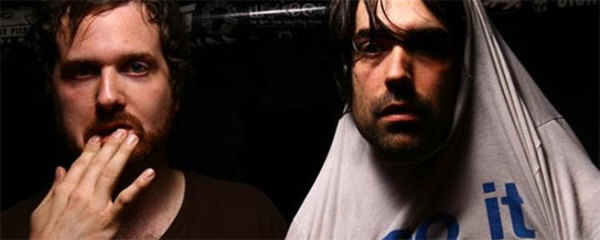
You may or may not be aware that Portland-based freak-out act Panther is comprised of more than the inimitable Charlie Salas-Humara and his spastic dance moves. Though a recent press release states that “even when [Panther] was Charlie’s solo effort, he was never really alone… there was a sense that Panther was being overtaken by something,” fans will be introduced to a more literal version of multiple band members with 14kt God. Due out February 19 on Kill Rock Stars, Panther’s debut album sees the inclusion of one Joe Kelly lending his skills on the drum set.

The result of this newfound collaboration is an album with its fair share of outrageous lyrics, falsetto tones, and scatter-brained beats, but also some new sides of Panther, in the form of more tempered songwriting and even some political commentary. It’s the new era of Panther, and we’re stoked.

Tracklisting
1. Puerto Rican Jukebox
2. Her Past Are the Trees
3. Decision, Decision
4. On The Lam
5. Violence, Diamonds
6. These Two Trees
7. Worn Moments
8. Glamorous War
9. Take Yr Cane
10. Beautiful Condo
11. 14kt God
12. Total Sexy Church
13. What You Hear

Photo of Panther by Rys.

Blockhead Uncle Tony’s Coloring Book

Blockhead knows how to bounce–he even has a song called “NYC Bounce” to prove it. But that tune is less a telegraph than a template, as the producer’s first self-released effort is full of tracks that digitally swing and sway rather than boom and bap. Juicy entries like “Do the Tron,” “The Strain,” and “Grape Nuts and Chalk Sauce” feature phat MacBook beats for sure, but lack the hard-hitting drums that he delivered on his last effort, Downtown Science. There’s more glory for distorted guitar solos, especially on “Duke of Hazzard” and the aforementioned “NYC Bounce,” a twist that strangely skews Blockhead’s soundtracking into Moby territory. But his ear for rump-shaking anthems is as tight as ever, which is why rappers are clamoring more to work with him.

Chris Schlarb “Section I”

Twilight and Ghost Stories is an aptly eerie title for Long Beach, CA-based Chris Schlarb‘s debut solo album. Sound clips–contributed by the likes of Black Mountain’s Stephen McBean, Asthmatic Kitty founder Sufjan Stevens, Triptych Myth’s Tom Abbs, and more–of pianos, clarinets, children screaming, and in-womb heartbeats explore a multitude of themes, many of them reflecting the recent losses and gains in Schlarb’s own life.

Chris Schlarb – Section I

Various When Rhythm Was King

Heartbeat Records has been on a tear, repackaging and releasing material from Studio One, the hyper-influential Jamaican recording studio. Clement ‘Coxsone’ Dodd, who opened the studio in 1963, was a workaholic, setting up labels, producing constantly, and mentoring up-and-comers. The happy result is a wealth of classic material from his studio, the source of Heartbeat’s series. The current installment is unsurprisingly excellent, with contributions from the likes of Dennis Brown (an extended mix of “Created by the Father”) and the Wailing Souls, as well as lesser-knowns such as Basil Daley. The enduring popularity of these songs, whose rhythms have been used countless times since their original recording, is no mystery; they are, frankly, just plain good.

What Is It? Bounce

While it developed concurrently with Miami bass and Memphis buck, no regional sound has influenced the slang and styles of the Dirty South more than New Orleans bounce music.

Mardi Gras Indian chants and early hip-hop’s call-and-response routines equally inform the swinging, uptempo hip-hop offshoot, which almost invariably features sample elements of the Showboys’ “Drag Rap” (a.k.a. “Triggerman”) and Derek B.’s “Rock the Beat” (known in New Orleans as “Brown Beat”), along with shout-outs to New Orleans’ wards and projects.

But while some elements of bounce–mainly crude lyrics–can be found in early releases by Warren Mayes and Bustdown, Crescent City rappers generally followed national hip-hop trends until 1991, when MC T Tucker and DJ Irv recorded “Where Dey At?” for a cassette-only release known as the “Red Tape.”

Based around repetitive chants (“Shake that ass like a saltshaker!”), “Where Dey At?” was the first studio recording to combine the inclusive energy of the city’s block parties and all-night clubs with the propulsive “Triggerman” beat.

“We’d been using ‘Triggerman’ since it came out, chopping that beat, getting gangster with it, dancing with it,” explains veteran bounce artist and special-ed teacher DJ Jubilee. “But Tucker took that sound and ‘rawed’ it with uncut, streetwise lyrics.”

DJ Jimi’s “(The Original) Where They At?” became the first bounce record released nationally, and UNLV and Juvenile solidified bounce’s nursery-rhyme flow on “Another Bitch” and “Bounce for the Juvenile,” respectively. In 1993, Jubilee added the last piece to the puzzle by turning popular dances from the high-school socials he was DJing into fodder for “Do the Jubilee All,” a G-rated anthem that allowed X-rated themes to follow.

As New Orleans rappers like Baby, Master P, and Juvenile (who lifted the hook for “Back That Azz Up” from Jubilee) broke nationally in the late ’90s, bounce declined in popularity before gaining a second wind with the unlikely emergence of cross-dressing “sissy” rappers like Katey Red and Big Freedia several years later. “Their music transcends the boundaries of gay and straight, which speaks to the uniqueness of New Orleans and also that bounce has always had a larger female market,” says Matt Miller, director of the bounce documentary Ya Heard Me? “The music’s in conversation with the audience. It’s not about talking about yourself or politics, even though there’s all sorts of individual spins put on it. The voice is exhortational.”

Shot between 2002 and 2007, Ya Heard Me? provides glimpses of the rich scene both before and after Hurricane Katrina. But while the later scenes are depressing, recent developments (bounce nights sprouting up in Atlanta and Dallas; the rise of a new generation of artists like Nake Niggidy, Peecachoo and Gotty Boi Chris, Beyonce’s bounce-inspired “Get Me Bodied”) suggest that the music will bounce back from the disaster.

Funckarma Refurbished Two

The Funcken brothers get caught up in a few post-techno habits, but all is forgiven in this remix collection. The Dutchmen’s remixes usually place number-crunched hip-hop rhythms in synth textures that stroll through a moonless alleyway. Their execution is awfully relaxed, but an odd tension still seeps into the mix, namely on their reworking of Celine’s “Here and Now.” The Funckens’ clearest fingerprint is a choppy rhythm that flickers in an eyeblink cadence as best heard in the fractal, aquatic funk of Machine Drum’s “Machinebong.” They also inject rich morphine into the cliché of stapling music-box lullabies onto jagged beats on the Spyweirdos’ “The Key.” Refurbished is a worthy reason for the bedroom-IDM set to keep the faith.

Various Cinematic: Classic Film Music Remixed

Considering the historical significance of the film scores revisited on this compilation, it’s impossible to not be skeptical of this project. Although upon further inspection, one can see that most of these decades-old soundtrack classics are not necessarily beyond amendment… or at least a little modernization. Organizer Bob Duskis of Six Degrees Records cautiously selected remixers who weren’t going to haphazardly rework these groundbreaking instrumentals. Respect is particularly due to the Bombay Dub Orchestra for its take on the “Love Theme from Ben Hur.” This stirring sitar-and-string-driven composition could easily be a work of its own, yet the original foundation remains recognizable. Other standouts include Bent’s ethereal remix of Fellini’s Roma soundtrack and King Britt’s bouncy hip-hop take, “They Call Me Mr. Tibbs Main Title.” While it helps to be familiar with the original scores that inspired this disc, listeners won’t be lost without the history.

Mahjongg Return with K Records

Upon its release three years ago, Mahjongg‘s Raydoncong EP garnered a slew of live shows for the band, as well as captivated K Records founder Calvin Johnson, who signed the group to his now legendary label. We’ve heard little from the Chicago-based art-punk outfit since, but rumor has it a new full-length is on the way. Slated for release February 12, Kontpab will contain more of the post-industrial, afro-beat, art-pop that has various media outlets in full-on jock mode.

The band will also hit the road for its first headlining tour since 2005. If you were on the internet or read weeklies in 2005, it’s obvious that Mahjongg’s live shows we’re apparently life altering–and after hearing the final, 8-minute-plus track on Kontpab, “Rise Rice,” it’ safe to assume these forthcoming shows may redefine the term cathartic.

Tracklisting
1. Pontiac
2. Problems
3. Kottbusser Torr
4. Tell The Police The Truth
5. Those Birds Are Bats
6. Wipe Out
7. Teardrops
8. Mercury
9. Rise Rice

Tour Dates
01/22 Cleveland, OH: Beachland Tavern
01/23 Buffalo, NY: Soundlab
01/24 Cambridge, MA: T.T. The Bears
01/25 Providence, RI: AS 220
01/26 Brooklyn, NY: Southpaw
01/27 Baltimore, MD: The Depot
01/28 Philadelphia, PA: Johnny Brenda’s
01/29 Columbus, OH: Skully’s Music Diner
01/31 Chicago, IL:Subterranean

Mighty Crown Takes NYC World Clash Trophy

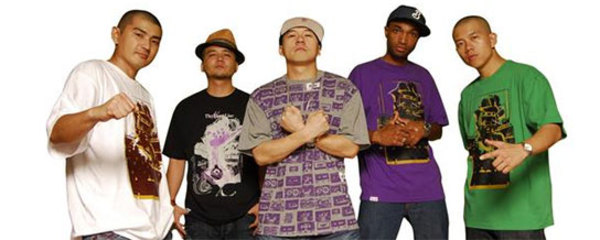
Japan’s Mighty Crown Sound System (pictured above) bested four international reggae sound systems to win its second World Clash trophy at an event being billed as the last such competition in New York. Promoters Irish and Chin announced that, after 10 years of promoting the New York installment of World Clash, they would end their run with an event titled Game Over.

The UK and Jamaica also host World Clash events, in which reggae sound systems face off in rounds, with a live audience determining the winners. Each sound gets a predetermined amount of time to joust against the others; they often use exclusive dub plates (acetate records) featuring big-name artists dissing the other sounds. In the past, sound systems have won using exclusive one-off recordings from artists including veteran Jamaican toaster U-Roy, The Fugees, and Michael Jackson, as well as reggae stalwarts Sizzla, Bounty Killer, and Johnny Osbourne.

In addition to Mighty Crown, Game Over featured previous New York World Clash winners Black Kat (Jamaica), Bass Odyssey (Jamaica), Rebel Tone (Canada), and Sentinel (Germany). As reported by Yard Flex: “Mighty Crown is the champion! And only just, as they took the 2007 title by a narrow margin from Bass Odyssey.”

Many sound clashes end in controversy as judges try to determine which sound the audience is most enthusiastic for, and Game Over was no exception. One disgruntled fan complained, “Bass Odyssey ‘killed’ all the other sounds in the second-to-last round, before the Dub-Fe-Dub section… Mighty Crown played some extremely old dub-plates–it must have been an old hits session.”

In the night’s other featured events, Jamaican selector and performer Tony Matterhorn won in a dubplate clash versus recording artist Beenie Man, while London’s David Rodigan (who donned an Elvis Costume) beat DJ Ninja Man in their celebrity clash.

World Clash New York’s Previous Winners (1998-2006)

Page 3044 of 3781
1 3,042 3,043 3,044 3,045 3,046 3,781