Real Talk: Laurent Garnier

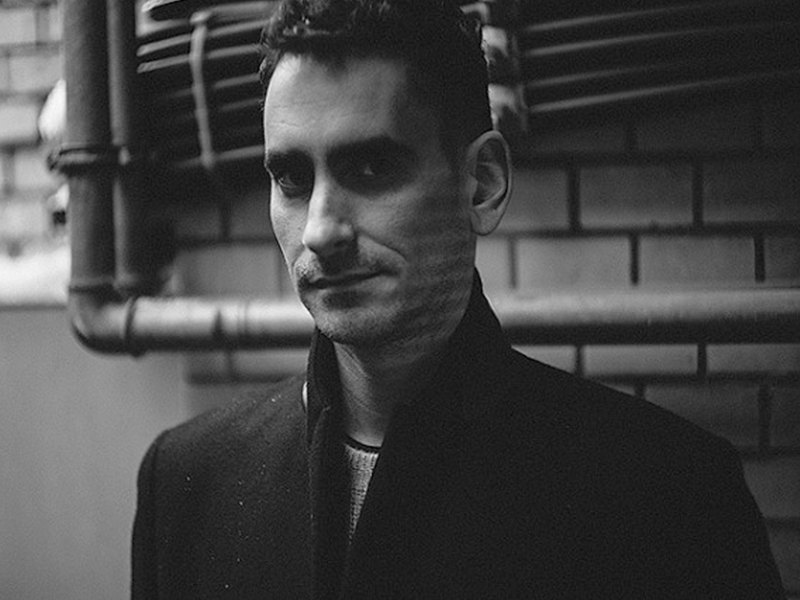
Penning an introduction detailing Laurent Garnier’s career risks conceiving a text longer than the Real Talk itself. Having been making the planet dance for over 30 years, Garnier is a man who needs no introduction—but for those few who remain unaware of his extensive and ongoing contributions to dance music culture, we’ll lay out his story (which is conveniently laid out in the Electrochoc book that Garnier and the journalist-writer David Brun-Lambert wrote together, released in 2003, and then updated in 2013, which sold 25,000 copies in France alone.) In no uncertain terms, there are few harder working and more genuine people in dance music; he is a multi-faceted artist whose impact on the music scene is far-reaching; an explorer of old and new sounds who possesses an almost unparalleled knowledge of dance music. You’d have to think hard to find someone better qualified to discuss the evolution of techno and its future relevance. 

Hitting the decks in the late ’80s under the DJ Pedro moniker—at Manchester, England’s Haçienda, no less—Garnier experienced first-hand the euphoria of the city’s acid-house movement. From there, he went on to kick off the Wake Up parties at Paris’ Rex Club, helping propel that nightspot into the upper ranks of international clubbing; around this period, too, he got behind the microphone, playing records on Radio FG, Maxximum, Fun Radio, and Radio Nova, where he remained a vital force for 18 years; and, alongside Eric Morand, launched one of house and techno’s most influential labels, F Communications, which released scores of pioneering records from St. Germain, Alexkidd, Mr. Oizo, Jori Hulkkonen, Vince Watson, Garnier himself and many, many others. Among his production catalog are some of dance music’s all-time great tracks, including “Crispy Bacon,” “The Man with the Red Face,” “The Sound of the Big Babou,” and “Acid Eiffel,” the latter two of which were both soundtracks to the explosion of dance music in France. And the list could go on. Aside from his albums and singles, Garnier is also a composer for the cinema, television, and theatre.

DJ, producer, radio host, and composer—there are many ways to describe Garnier, but above all he is a music enthusiast; it is this deep-rooted love for music that has inspired this rich list of endeavours. Still today, with a long and growing list of extraordinary achievements to his name—including being made Chévalier de la Légion d’Honneur in 2017—this appreciation for music still burns as brightly as ever. Over the phone one day from his France home, he talks enthusiastically about the contemporary records that inspire him to continue digging for new music for six hours a day, be it through old vinyl in record shops, checking music blogs, following the most obscure leads on the internet, and listening to every single piece of music he is sent. And then, as the initial conversation reaches a natural close, Garnier went on to explain why he feels that techno music is not the music of tomorrow. This, with a few amendments here and there, is what he had to say. 

Next year there will be a big exhibition at the Philharmonie de Paris that aims to tell the history of techno music.

In a time where our music, that was once seen as controversial, is now entering institutions and museums, it seems appropriate to ask ourselves a question: is techno still the music of the future—the music of tomorrow?

For this exhibition, I’ve been invited to be the musical curator. Over the past few months, they’ve compiled the topics the exhibition will cover, and my task is to prepare a short mix to summarize each of the different phases of the techno/electro music story. Each mix is between 25 to 30 minutes long; covering musical genres from Detroit techno, Chicago house, New York garage, Belgium new beat, disco, electronica, UK bass, German techno, and a couple of others. I was supposed to prepare 10 mixes in total.

But, when I submitted all the mixes to the organizer, I felt like we were missing the futuristic side of things—”tomorrow’s music!” I wanted to compile another mix with music that sounds modern, fresh, and forward-thinking. Ninety-nine percent of the music I selected for this last mix was brand new; some tracks are not even released yet, but I also wanted to include an old track from Jeff Mills and to finish the mix with “Big City Sky,” a track Derrick May did a long time ago with System 7. This track is amazingly futuristic and if you didn’t know that it was produced over 20 years ago, you would feel like it was done yesterday.

What’s funny is that I also started the whole process of making these different mixes with a Derrick May track. The first mix I worked on was the “Detroit mix” (as that’s where it all started for techno) and I opened it with a track Derrick did under the alias Longer Than Long Ago. So closing the very last mix with a Derrick May track felt like a great way to close the loop.

Although Derrick hasn’t released new music for over 20 years, we can easily notice that his music still sounds more futuristic and more about tomorrow than a lot of the stuff that is actually being made today. So, I asked myself: was the most innovative form of techno music made 20 years ago? The more I thought along these lines, the more I wondered whether techno is actually still the music of the future at all.
To explore this question, let me explain what I mean by “techno.” For me, techno music is like a huge record bag filled with many different sub-genres. From ambient/electronica to all the many styles of house and techno to breakbeat (even some drum & bass), all the way through to the most extreme gabba. Within techno is an ever-expanding amount of variants and offshoots (not just your standard ‘4 on the floor’.) Over the last 30 years, since the birth of techno in Detroit, we’ve heard it all, from the noisiest, most abstract types of techno to its most minimal breeds; the deepest to the strangest; the most classically musical to the wildest abstractions. Put simply, techno has grown to encompass almost anything possible.

Nowadays, a lot of the techno tracks that we could qualify as modern and futuristic are mostly produced in France, Belgium, Germany or Holland. Music released by labels such as Skryptöm, Ilian Tape, Clone, Token, Phantasy or Unknown to the Unknown, just to name a few. The music they put out is amazing. It’s often atmospheric, sometimes dark and moody, and usually nods to futuristic themes of space travel or the unknown.

It’s funny because I’ve always used my own musical shorthand to summarize the new music I put in my record box for my DJ sets. I write things like “another chord ride” or “shake my hips,” but when it comes to this more upfront stuff, like that above, I use a lot of space references like “Starship enterprise music” or “Entering deeper Space.” These are the same phrases that I was using on Jeff Mills’ early Axis records 25 years ago. Jeff’s music had a huge impact on the new generation of producers, his music is obviously one of the main inspirations for all this modern type of spacey sounding music.

But even though these new tracks feel very futuristic it could also just be an illusion. Listening to Derrick’s and also Jeff’s track on this final mix really made me realize that some of the most futuristic sounding techno music was actually produced a very long time ago.

So is all this “modern-sounding” music still the music of tomorrow? I guess the honest answer is “perhaps not”.
I don’t want to stand here and say that everything that can be done with the artform already has been. I don’t know if that’s the case; nobody really does. And I would sound very blasé if I said this. But when you look at the history of modern music, over the last 80 years music has always reinvented itself and offered something fundamentally new within a pretty short period of time, no more than 10 to 15 years. If you look at the history of jazz, funk, rock, hip-hop or even some newer genres/sub-genres of music, you’ll see that at some point the music stopped moving forward because it had experimented with nearly everything within those set parameters.

As inclusive and expansive a term as techno is, I think it might also be at that point today, and, what’s more, I think it might have been there for some time. It’s not exactly a crisis, as there are still tons of exciting underground techno records coming out every month, but it feels like we’re in a similar situation to jazz when Miles Davis and John Coltrane died. Around that period, a lot of people said that jazz was just going to go round in circles. I think with the free jazz movement in the ‘70s, musicians experimented so much that they might have pushed jazz as far as it could go. Jazz still exists today, and there are many brilliant jazz artists, but what we are hearing in jazz today no longer qualifies as ground-breaking.
Techno was the last real musical revolution of the 20th century (a few years after hip-hop), but we’re already in 2018 and this revolution now belongs to the last century. And since this revolution—since the arrival of techno music 30 years ago—nothing totally new has taken over, sweeping away all that had come before like techno did in 1987/1988. If you look at what teenagers are listening to nowadays (including my son, who is 14 years old)—trap and grime, which clearly belongs to the hip-hop world; techno; pop/rock—all of it belongs to the last century, before they were even born. It’s so strange to me that the 20 years olds of today have no other choices than to listen to musical genres that belong to their parents’ generation.

This brings with it a certain irony. Techno was always about “the future,” about looking forward. We were also making music with computers, which were in themselves a symbol of the future. The music was about bringing the future into our lives and seeing what we could do with technology. Nowadays, some techno DJs are even refusing the future; making a stand to play on vinyl to an almost fetishized extreme. While I understand and respect the political sentiment behind this approach, I can’t help thinking this is a misunderstanding of what techno is all about.

I think this change also has a generational aspect to it. If you’re a 20-year-old techno DJ today, you’re in a scene that has a very long history; and understandably, some of this history just doesn’t feel relevant. With all the over-exposure of our lives in social media, it must be impossible for a teenager now to understand the idea of faceless techno!

But, at the same time, this could also be a source of frustration. I was born in ‘66, and when I was 14 or 15, I felt sad that I had never lived the “swinging ’60s.” I had this big sense of nostalgia; I would have loved to have lived it. But because I am part of a generation where new styles of music were cropping up every five years, I didn’t really have much time to look backwards. As a kid it was all about disco and funk; then punk; after that reggae, new wave, and ska arrived; and then hip-hop came from New York and electro from Miami. A short few years later, house and techno came into my life. All of this happened in a span of only 20 years! So I can definitely understand that someone who is 20 today must feel a bit frustrated to know that the bulk of the history of the music he loves belongs to a much older generation.

Nonetheless, I’d like to be very clear at this point to say that I am definitely not saying that techno music has become boring, nor that there isn’t good music being made anymore. If this music was boring for me, I would have stopped a very long time ago. I spend about six hours a day searching for music, and I still discover and enjoy a lot of what I hear. Techno has always been “my music,” and I still love it to death. Today’s underground scene still makes sense and so many new labels and artists are still making exceptional music. Techno has never been so alive.

But while I am always finding new records that I am excited to play, while so many artists are coming up with interesting ideas and making music that sounds futuristic and fresh, we can’t really say anymore that the music we are hearing is fundamentally breaking new barriers.

Like the idea behind Jeff Mills’ EP Cycle 30, after 30 years techno is now feeding itself from its own roots, and the music changes fast. In France, hard techno is becoming trendy again, whereas only a few years ago, it was all about the Chicago booty sound and New York house. Music goes in cycles and these “new” sounds aren’t that different from what labels were doing in the past. It’s still great music, but it’s not a reinvention of the wheel.

Or look at it like this. Take someone like Aphex Twin: if you listen to Richard’s very prolific music, how the hell can you break more barriers than that? The guy is on another level. He experimented so much. He was a complete freak about his instruments. He was actually opening his machines and modifying them himself. He didn’t accept that this machine makes 100 sounds; he was thinking fuck that, I am going to make it make 1,000 sounds. That’s why he was so forward thinking. Remember “Windowlicker?” It was produced in 1999, that’s 19 years ago! It’s hard to think of anyone today who is bringing something that radically different and futuristic.
So have we in the last 30 years heard everything that techno music can offer? Is there anything more that can be done to deeply change the direction? Have we exhausted the subject?

And if there’s no longer room for innovation in techno, why is it still such a powerful force when so many other genres have faded out?

I think a lot of musical revolutions were inspired by frustration. If you look back at the birth of many major musical movements, a lot of them were triggered by social or political actions/reactions; jazz was the music of freedom, a way for African American musicians to express themselves and exist in their own country. Artists made techno music in Detroit as a means of surviving, existing in a community and feeding their families. We forget that sometimes. For them it was a means of survival rather than a means of entertainment. Chicago house music was born in black gay clubs, born out of a repression. It was very fertile for something new to happen. Rock & roll was a movement of the kids who were rebelling against their parents’ generation. Rave music took over the UK in the late ‘80s partly because in England people had had enough of Margaret Thatcher, joblessness, and police repression; it was not an easy time in England, and this made a fertile ground for something new to happen. Punk was the same: a reaction against something, as was hip-hop.

Unfortunately a lot of the music world today seems pretty passive and has switched to a pure form of entertainment; also I think a lot of our fights have been won. Back in those days, while our music was partly about hedonism, we were also constantly fighting for (or against) something. Also, the fascination for the “future” and “outer space” was definitely a big inspiration for early techno producers, this is why Detroit techno was so futuristic from day one. Perhaps it’s this forward way of thinking that kept techno alive for longer than expected?

It is obvious that there is no longer a political basis in a lot of today’s music; also the fascination for space and the great unknown seems like something from the past (aren’t we supposed to have colonized new planets by now?), so we must hope that new generations will find new battles, new ideas, new obsessions in order to shape the real music of tomorrow.

But I think techno has been “tomorrow’s music” for so long, and it’s surely only a matter of time before a new revolution comes to start a new fight; and most importantly this will bring something that belongs to the new generation. I still believe there is a lot for them to fight for.
Before we finish, I’d like to point out a very positive thing that is quite different from the situation in the late ‘80s. There is so much great music coming out from everywhere these days that at least we can’t feel frustrated music-wise, unless you’ve gone deaf!

This wasn’t the case back then: when house music arrived, other music had become so boring. Besides the fact that hip-hop was starting its mutation towards gangster rap (it was getting more radical), everything else was getting very dull. Funk became very commercial, punk wasn’t going anywhere, new wave had lost all it’s radicalness, and we’d heard disco for many years already. There was a real need for something fresh to happen.

A music that has been experimenting for over three decades can hardly reinvent itself, but the good thing is that there’s never been so many great producers and so much good music around. This is partly because it’s easier to make and distribute music than ever before.

I am convinced that one of these days, someone, somewhere will make something as innovative as Derrick and Jeff did years ago. Then the kids will go mental about it and it will sweep away everything else as it did in the UK back in ‘88. And this will be the new music of the future.

We’re not quite there yet, though I can’t wait to hear it. And in the meantime there’s still 30-years worth of incredible forward, inward, and upward looking tunes to listen to and dance to. After all, techno might not be the music of the future any more, but luckily for all of us, it’s most definitely the music of today.

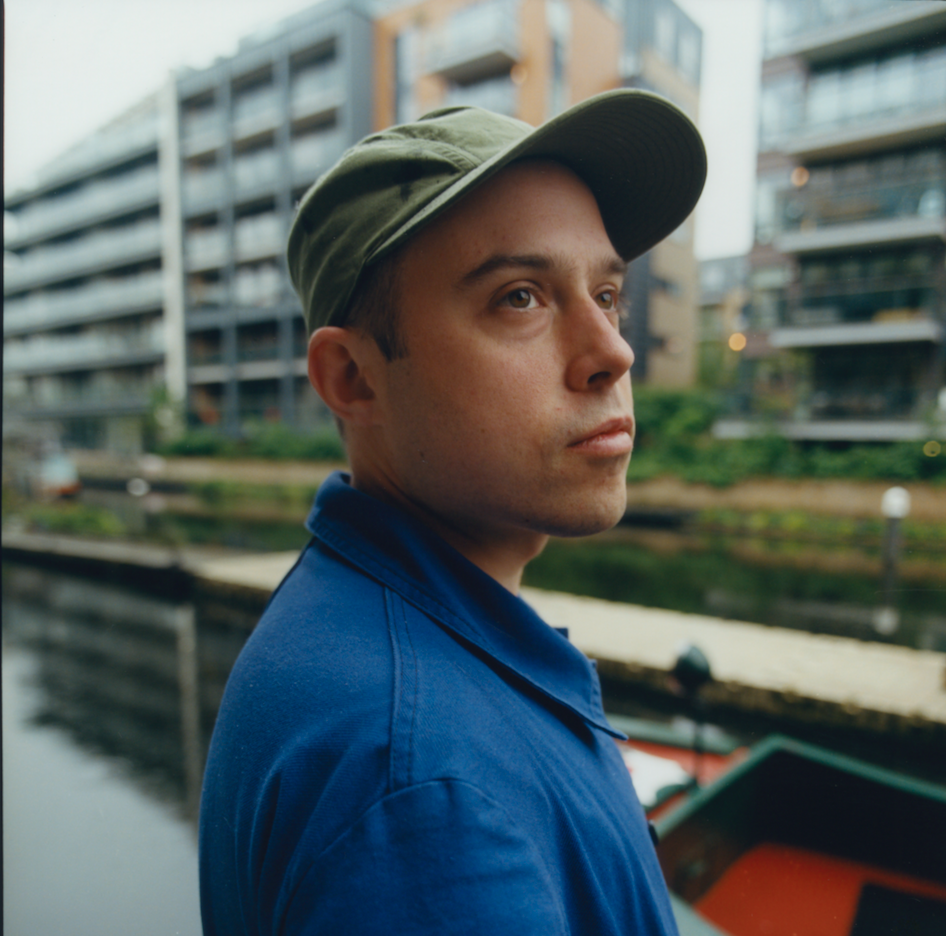
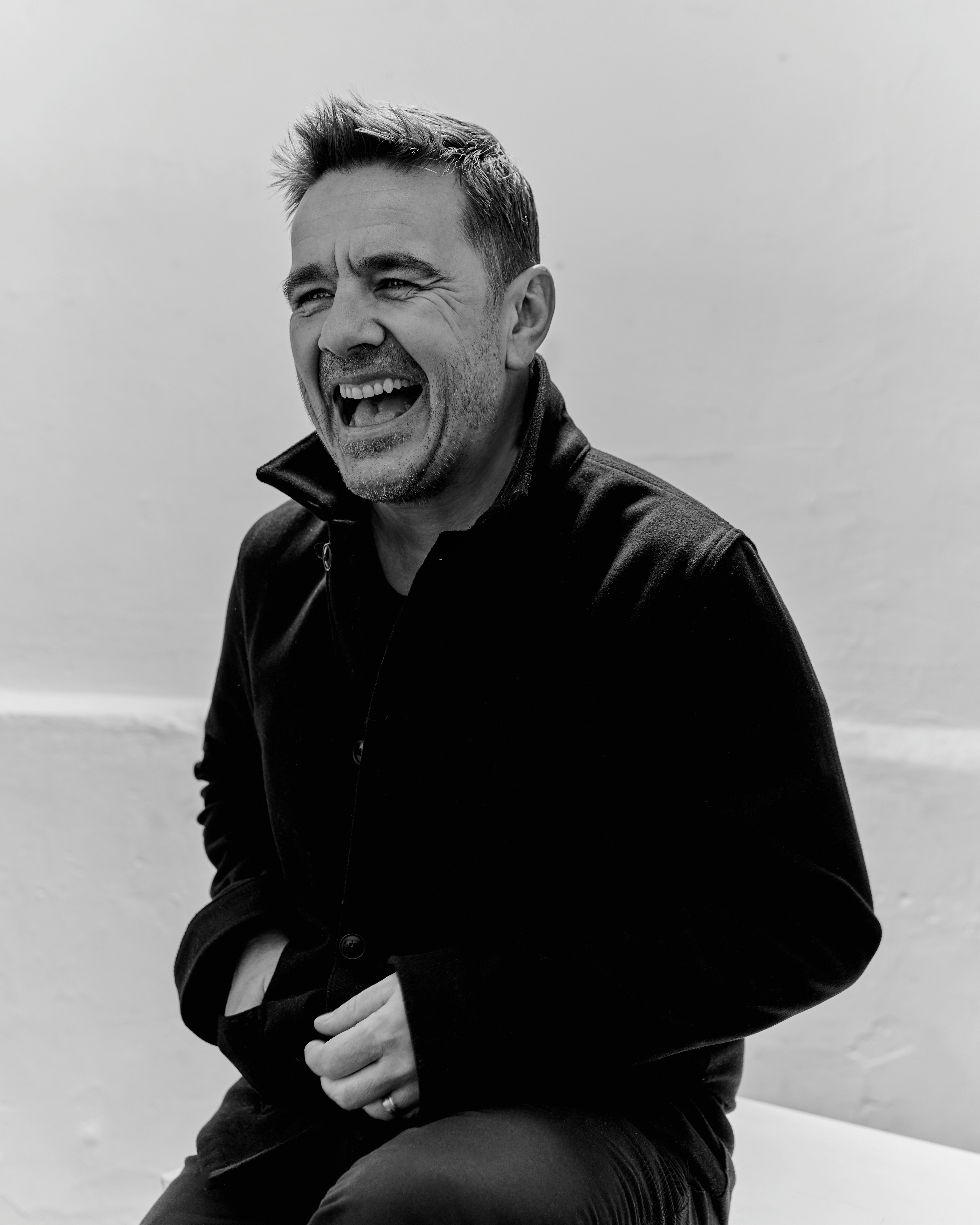
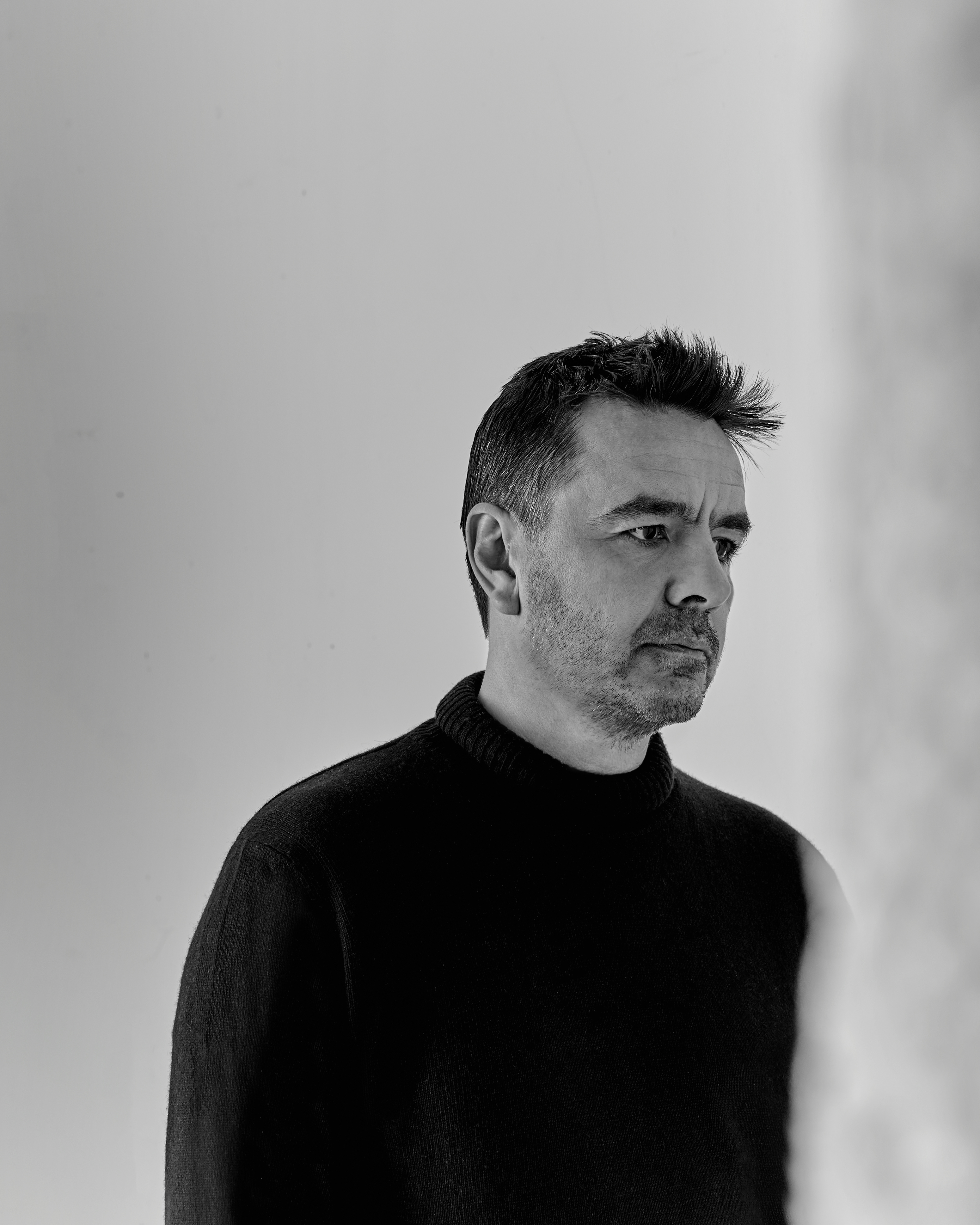
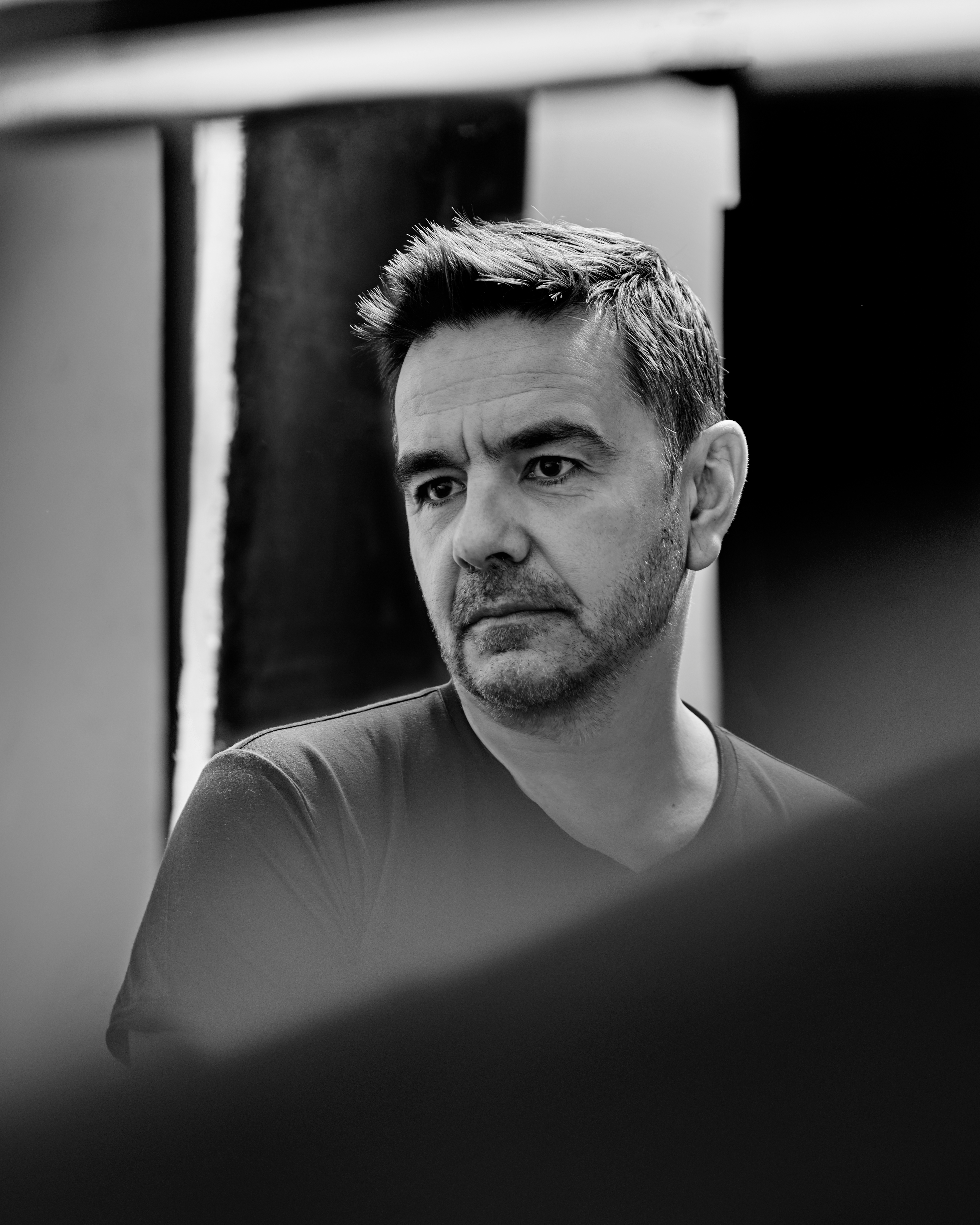
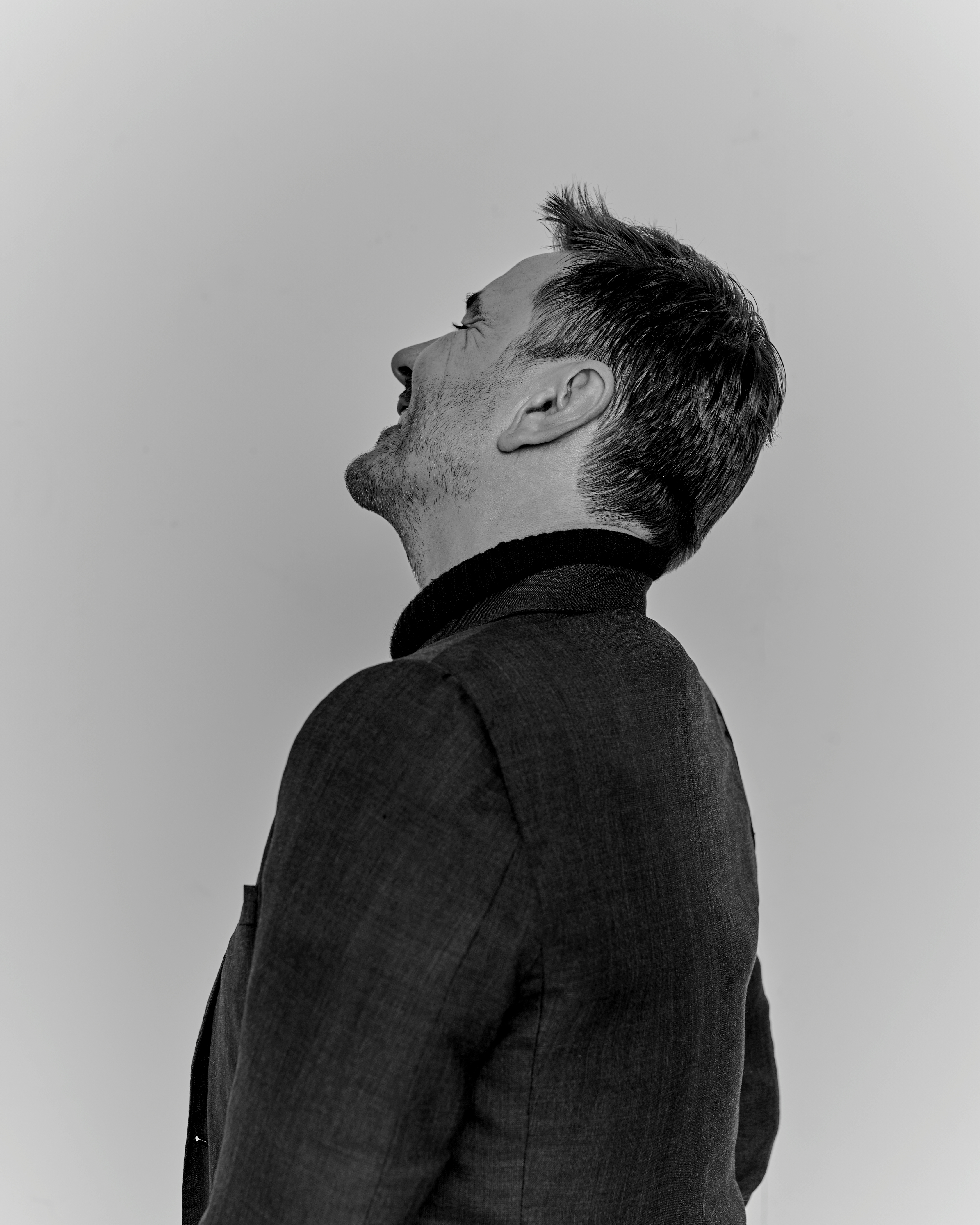
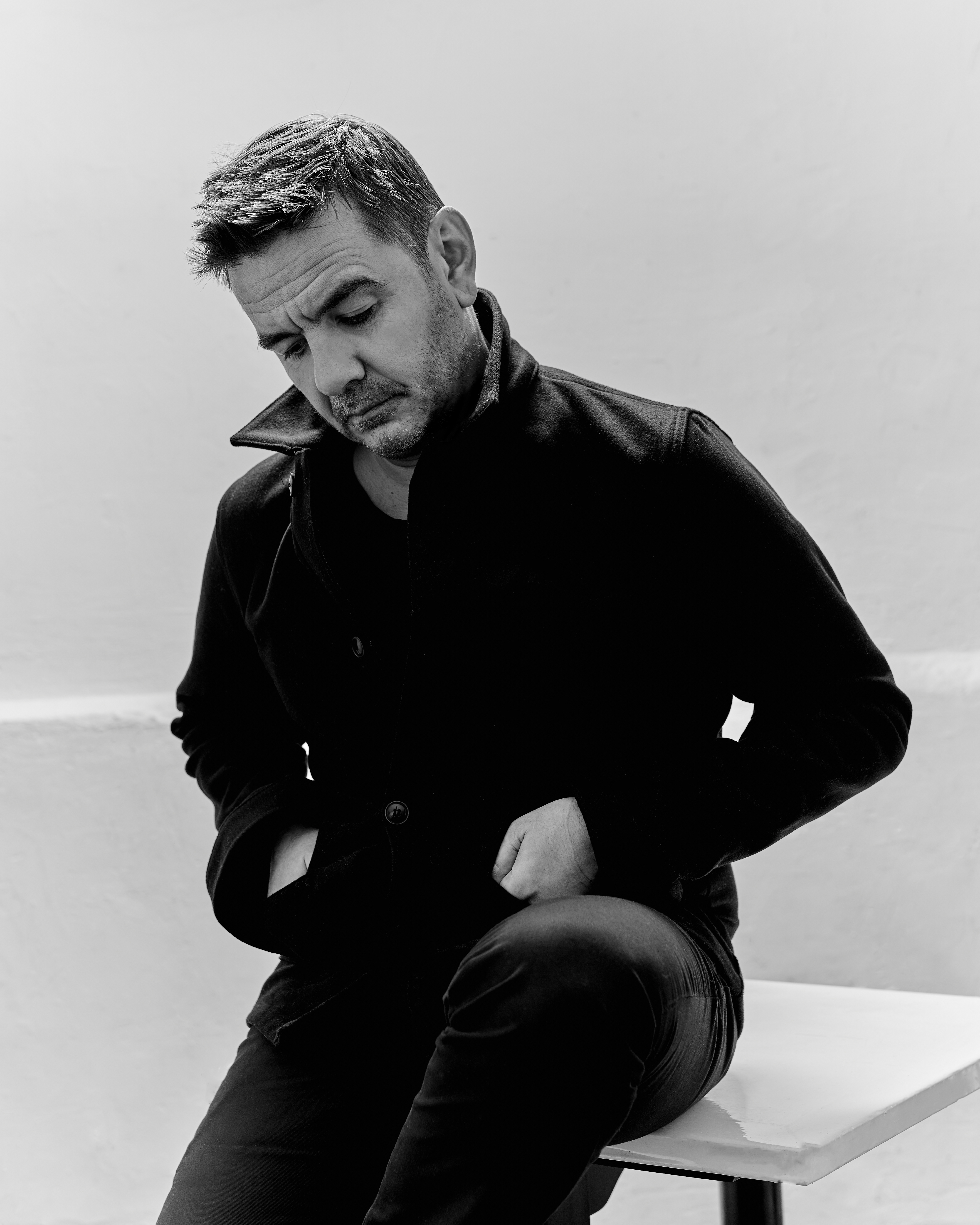
All photos: Denis Boulze

Laurent Garnier will perform at this year’s Polaris Festival, taking place from November 29 to December 2 in Verbier, Switzerland. Also on the bill are Jeff Mills, Massive Attack, Nina Kraviz, and more. Information can be found here

Premiere: Hear a Devastating Techno Cut From Pfirter

Voxnox Records will release the latest EP from Sept on October 26.

Titled Chaos Collider, the EP will be Sept’s second of the year on Voxnox, following May’s Challenge EP. Alongside the two originals, which range from the warehouse-ready title track to the eerie “Sin Area,” Voxnox has enlisted the talent of Setaoc Mass and Pfirter, who both deliver driving remixes of the title track and “Sin Area,” respectively.

In support of the upcoming release, Voxnox has offered up a full stream of Pfirter’s remix, a six-and-a-half minute off-beat techno weapon, available via the player below.

Chaos Collider drops tomorrow and can be picked up here.

Ripperton Returns as Headless Ghost

Ripperton is set to return back under his Headless Ghost guise, once again on Drumpoet Community.

The six-track EP follows 2018’s Sight Seeing LP on ESP Institute, and marks a “return to the dancefloor,” the label explains, and “pulls no punches” across six tracks. 

The Swiss artist last appeared as Headless Ghost with 2016’s Dirtee Grooves EP. 

Tracklisting 

A1. Real Smile Fades 

A2. Abandon 

B1. See You Yever 

B2. One Day OK, One Day Not 

B3. So Many Podcasts And So Little Time 

B4. Deep In The Park

Breakthrough EP will land on December 7, with “Real Smile Fades” streaming below. 

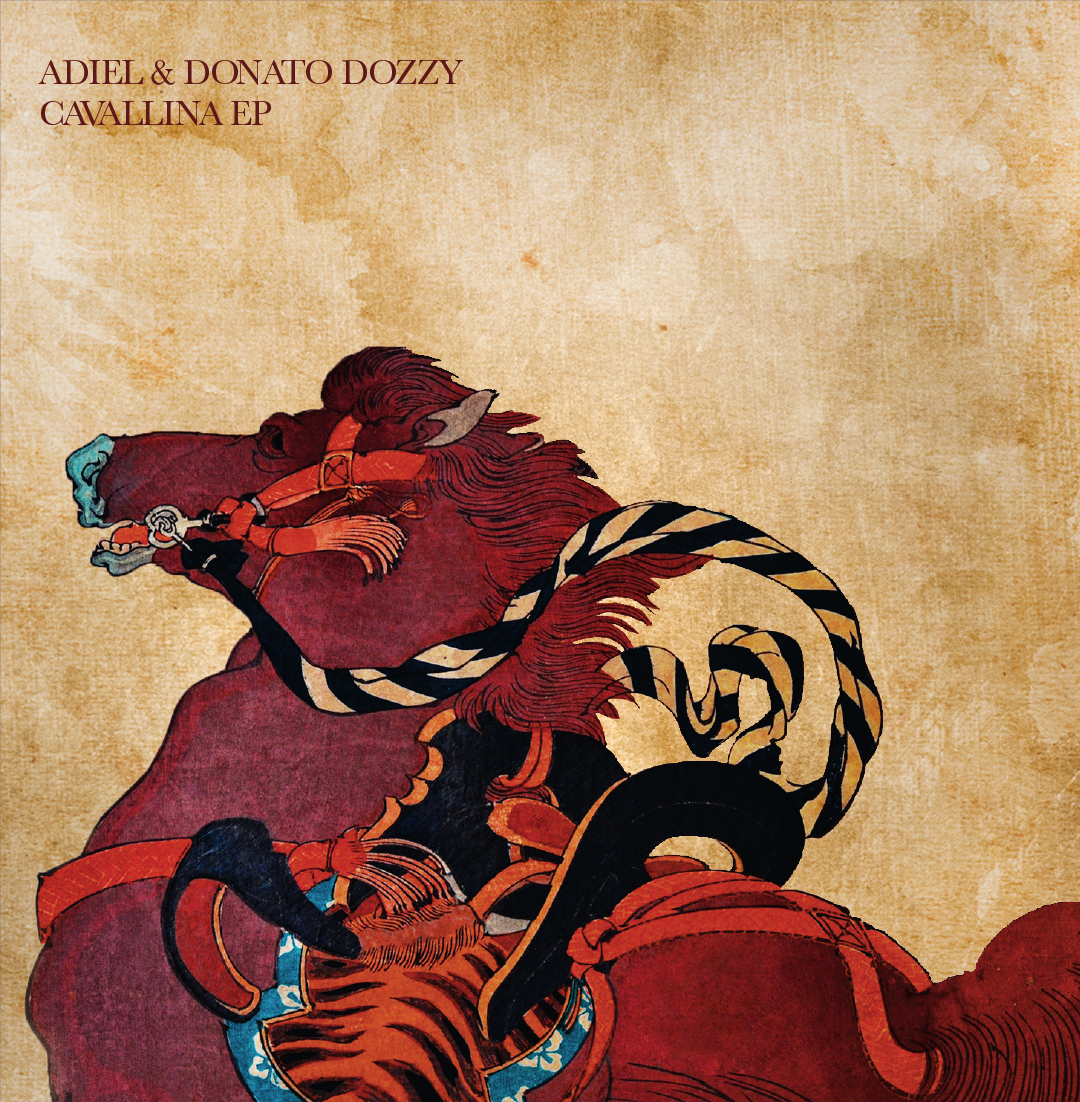
Donato Dozzy Collaborates with Adiel on ‘Cavallina’ EP

Donato Dozzy has collaborated with Adiel on a new EP, Cavallina

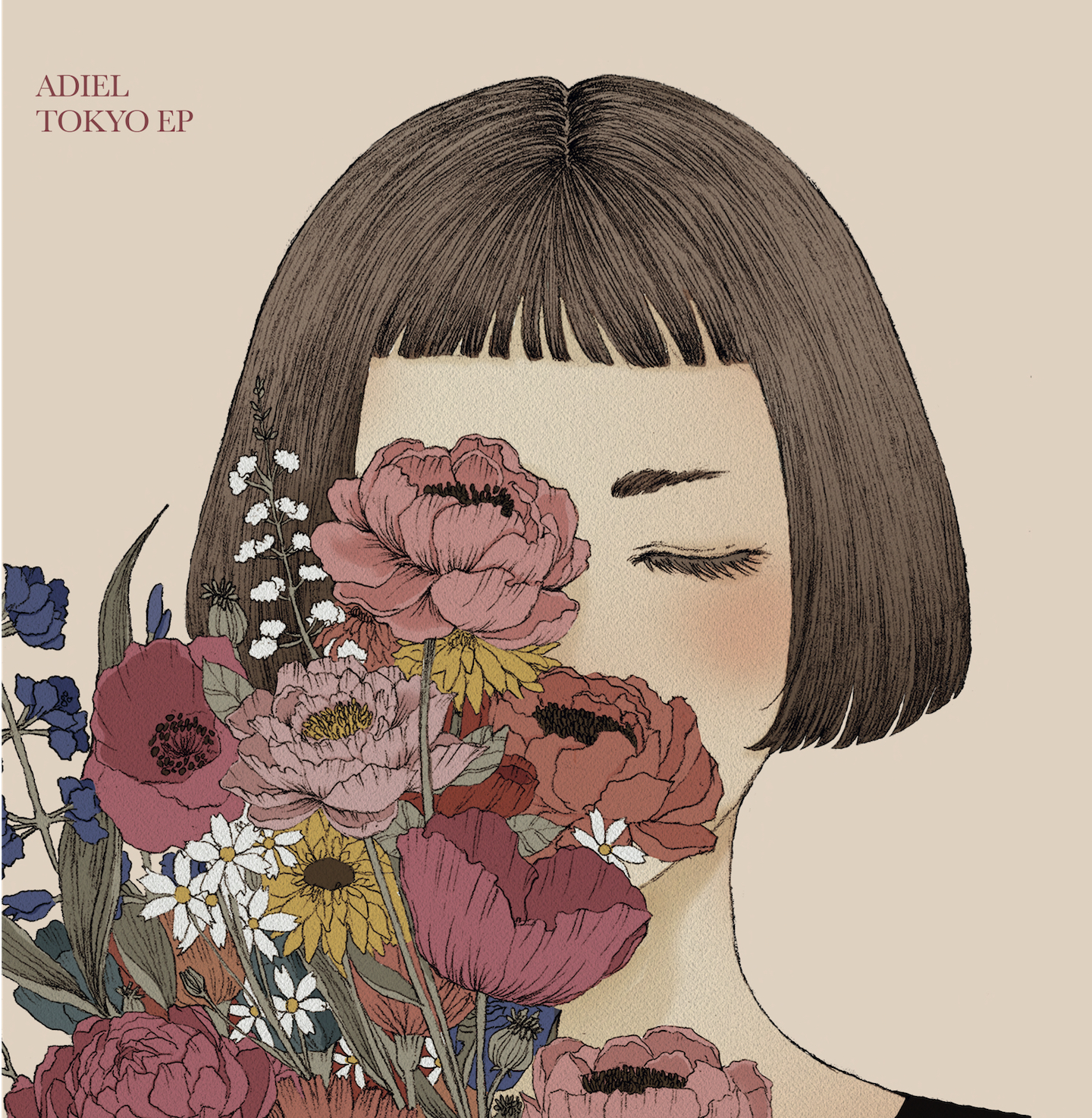
Adiel is a resident at Rome’s Goa Club and the founder of the label Danza Tribale, where the EP will land as the fifth installment. Adiel kicked off the label with 2016’s Anatomia Del Cavallo and has since returned with two more solo EPs, Tempo Lunare and Ritmo. Cavallina will be preceded by Adiel’s solo Tokyo EP, landing November 19. 

With “Cavallina,” the title track, we’re told to expect a steadfast tribal-indebted dub breaker” that also offers “a fondly immersive backdrop for hazy minds to wander with unrestrained freedom.” Also on the EP is Dozzy’s solo contribution, “Cavallina Matta,” which draws in a hybrid vein of hypnagogic techno, oddball modular, and chimey downtempo electronics.

Tracklisting, In Tokyo 

A1 / 1. In Tokyo 

B1 / 2. ジャングル

Tracklisting, Cavallina

A1 / 1. Adiel & Donato Dozzy “Cavallina” 

B1 / 2. Donato Dozzy “Cavallina Matta”

Cavallina will land on December 17, with In Tokyo arriving on November 19. Meanwhile, you can stream “Cavallina” in full below. 

Lixo “Wein”

Lixo—the production alias of Alex Hislop, founder of London party collective GETME!—will return to the crew’s label arm with his Cicada EP. .

The follow-up to 2016’s Writer’s Block single feat Trim and 2017’s Ida Ep in collaboration with Quays, the Cicada EP sees Lixo “explore the gamut of electronic music with washed out vocal sampling, warm, tribal bass sounds and fluttery, dreamscape melodies that tug at the more experimental, exploratory corners of London’s club music landscape,” the label explains. 

With a back catalog spanning 19 records—including releases from the likes of Lil Jabba, Slime, Trim, and Dam Mantle—London party-come-label GETME! have established themselves as one of the city’s rising electronic hubs over the last 10 years. Formed by Alex Hislop (a.k.a Lixo) in 2006, the brand now spans events, radio, and their aforementioned label arm.

Ahead of the EP’s November 30 release, you can download “Wein” in full via the button below, or here for EU readers due to temporary GDPR restrictions. 

Tracklisting

01. Wein

02. Whistler 

03. Dromer 

04. Phoxi

05. Rudder

20 Questions: Ouri

Ourielle Auvé is Ouri, a Montreal-based DJ, electronic producer, and multi-instrumentalist hailing from South America by way of Paris, France. Her musical development began with the piano, harp, and cello, all of which “heavily influenced” her shape-shifting approach to melody and bass,” she explains. Her 2015 Maze EP is a provocative experience of vivid, entrancing dance music that preceded her 2017 Superficial album debut. Later that year, she joined forces with Montreal-based singer-songwriter Mind Bath and dropped a surprise EP that features both tenderness and aggressiveness, balancing the femininity and masculinity of the two artists. Her January 2018 live Boiler Room performance is also well worth a listen. 

It wasn’t until her September Ghostly debut that Ouri really broke through. We Share Our Blood, a five-track EP, is “shaped out of mantras and hymns, ushering through the portal an offering of space for listeners to investigate their own fantasies”—and sees Ouri use her own voice for the first time. To learn more about the music and the artist behind it, we dialed in Ouri for 20 quick-fire questions. 

01. Describe your surroundings right now.

I’m in my living room, surrounded with plants, biscuits, and papers.

02. What have you been up to recently?

I’ve been working on the release of my EP, preparing shows, starting a couple of new creative projects, and taking care of my loved ones.

03. What’s your idea of the perfect holiday?  

The perfect holiday would be alone with my dog in a small house. No neighbors, remote from civilization. A forest and a river/lake. Either in a tropical or a Nordic environment. I don’t mind the cold as long as there’s a body of water and no human pollution (noise, gas, lights, radioactive, personal…)

04. You recently debuted on Ghostly International with We Share Blood. How did your relationship with the label come about?

Matthew from Ghostly reached out during summer ’17. We kept chatting for months. It was a tumultuous time and I had a lot of trouble just having time to create new music. But during the winter I finally unraveled and finished a project to send them. They were in. Everything was fluid from that point.

05. What is it that drew you to Ghostly as a label?

Their attitude and the other artists on the label. They are people I profoundly respect and I had absolutely all the reasons to work with them. Their support is authentic and rare; they are honest, serious, and do not rush anything. I want to give my best self.

06. It was the first EP on which you’ve used your own voice. How do you feel this changes the aesthetic of your work?

I think it doesn’t change the aesthetic of my work; but it changes the experience of creation (and I hope listening, too) to something straight-forward and direct. Music is the only medium I have for free expression; at the same time, I want to use instrumental music to convey my ideas but voice adds a lot of intimacy to the whole.

07. What inspires the lyrics that you write? Is there a story behind each song?

There is a story behind each song. I start with a very defined moment of my life experience, and I shape it. I want the moment to be felt when listening to the song. I also explore obsessions in my lyrics. I talk about power dynamics, attraction, strangeness. I am not seeking a meaning or a solution. I will never tell people what to do but rather share my take on those themes, share my perspective. Sharing experiences as we lived them is the most valuable gift in my opinion. In “We Share Our Blood,” for example, I was inspired by Audre Lorde’s very descriptive and human approach, describing basic motives to live and give life.

08. Can you give a brief background in how you first got into production? What inspired you?

I got into production because music was my most defined tool for expression since I was a kid but I didn’t quite understand percussion and electronics. I come from classical training in piano, harp, and cello, traditionally used for harmony and melody. Frustration started to develop as I was unable to convey my ideas in the style I was aiming. I downloaded Ableton, got a 49 keys Arturia keyboard with tons of presets; and my boyfriend at that time gave me a lot of drum samples and breaks and I just dived into it. 

My friends were releasing their first projects, I had five songs I wanted to share. My partner really pushed me to release it, we were collaborating a lot and I needed to start my own path. I took my savings and reached out to a friend of a friend, JF Sauvé, to make my first music video, for “Surreal.” My friend Seb mixed and mastered the project. I got support from Thump for a premiere and I was so excited! Then I started using my savings for my first hardware synth, fancy VST, and a proper soundcard. I remember wanting to be anonymous at first, but this project became a way to embrace my perspective and I stop being ashamed.

Then I was studying electroacoustic music at university, learning a lot from recording to programming, taking some extra jazz harmony classes. Then I got into composition. This project was more about shaping my sound. I don’t want to restrain myself to any genre, but I needed to shape more clearly my aesthetic. It led to my second release, Superficial. My third release, We Share Our Blood, creates a direct line to the listener, establishing a clearer direction in the music and reducing the ornaments. All of this analysis came after the release, naturally.

09. You were born and raised in France. What was it like growing up there? 

I was living in France until I was 16 years old. Then I moved to Montreal. Living in Paris the few years before I left, it was fascinating and very stressful. I feel like a lot of people from my generation, mixed folks, in particular, have experienced this; disconnected from part of your origins, not having a real place in society, not deserving to be recognized because identity is mixed. I was studying in music classes from the age of eight, and I felt a long time like a misfit, disconnected from the other classes. At that time I could only express myself through music (cello, harp, piano.) I was listening to music all the time, whenever I was alone, when I was on the train or walking. I was obsessed with my very cheap mp3 player and my collection of CDs and vinyl.

10. What sort of music were you listening to growing up in France? What music did you connect to? 

I was listening to a lot to American and British pop music, I actually skipped most of the French repertoire because I was hanging on to MTV, the radio, and my elder brother’s hip-hop and electronic compilations. I also had a collection of jazz vinyl that I was obsessed with, but I lost them in a move. 

At some point, I began listening to a lot of progressive house, techno, trance, Eurodance, minimal, dance, breakbeat, electropunk, a lot of hip-hop, pop, indie. Anything emotional and high-energy, mostly electronic and pretty much mainstream. Later, I got into underground, obscure and more sophisticated genres of music, but only when I arrived in Montreal at 16. 

11. Musically speaking, do you find yourself connecting with the music of South America? What are some of your favorite South American artists?

I’m inspired a lot by South American music. I’m fusing these sounds and I’m inspired by the groove and structure. I don’t think it’s the most important feature in my music but it is definitely connected.

Deise Tigrona, Arca, NAAFI, Nicolas Jaar, Vinicius de Moraes, Mc Bin Laden, Mc Kevin, and Baden Powell de Aquino all inspire me.  

12. You’re now based in Montreal. What took you to Canada, and how do you find living there?

A trip I did in Quebec when I was 12 years old. I fell in love with this land. My mom pushed me to continue my studies and life in a new country when I was 16, and Montreal was my ultimate goal. I adore this chapter of my life. I feel extremely lucky to be here. It feels like home for now.

13. You released a collaboration with Mind Bath. Can we expect more work from this project or are you focused on solo material?

There will definitely be more work. I actually just released a remix for him, for Flower Tattoo.

14. What are your three favorite records of all time, and why? What made them so special?

Jimi Hendrix Are You Experienced. It’s one of my first musical obsessions.

D’Angelo Voodoo. The interpretation and music is a pure delight. It’s bold and very elegant. I will never stop listening to this.

Travis Scott Astroworld. It’s so raw and alive and the aesthetic of this whole project is mesmerizing.

15. Which artists are inspiring you right now?

DJ J Heat; Toxe; Calibre; Tirzah; Father; XXXtentacion; MC Kevin

16. You’re beginning to tour with more frequency. How do you find life on the road?

I would love to tour for real or not at all. At the frequency I’ve experienced, I just had no structure, no stability. It’s awesome to visit new places and meet new people, but I’d love to do it for a long time and really get into it. This is just a tease and I want more or nothing.

17. How do you enjoy spending your time outside of music?

I read a lot but I need to figure out how to spend my time outside of music and reading.

18. What’s the last book you read?

The biography of Carl Gustav Jung and a correspondence between Paul-Emile Borduas (le Refus Global) and his last lover Rachel Laforest. Currently, I’m reading a book about the world global history.

19. if you could travel anywhere in the world, where would you go?

I would go to the South Pole, a long expedition, months in the cold, in the dark and wait for the first sunrise. I would go to the Salomon Islands, meet the Melanesian people and learn their music. I would go to Korea, get lost in the Amazonian forest of French Guyana, discover Sweden, Tahiti, and learn music in India.

20. Tell us something we don’t know about you.

My mom gave me birth during an ice storm, and a little piece of ice got into my eyes 

Farai Album Next on Big Dada

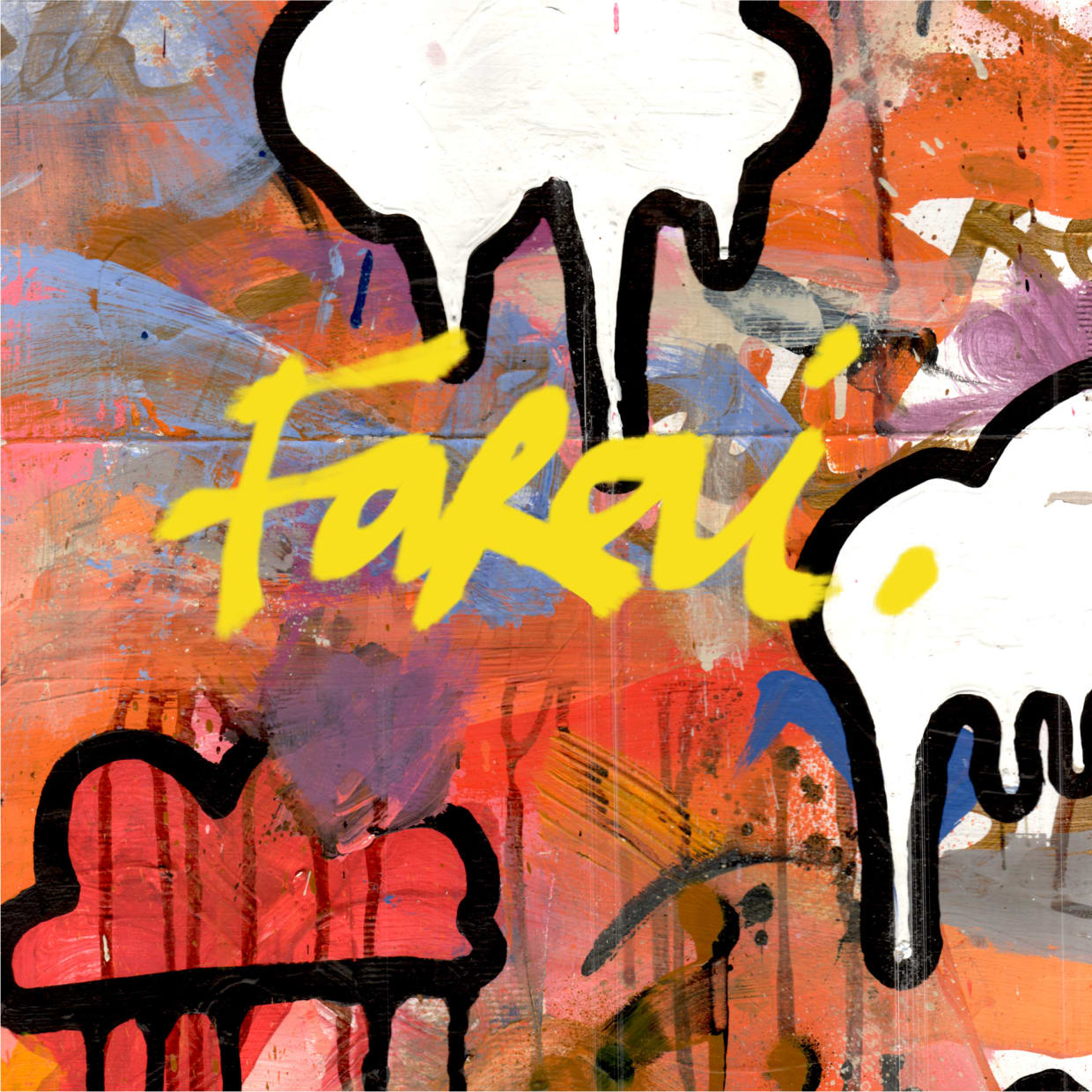
London-based duo Farai will release a debut album via Big Dada, out November 30.

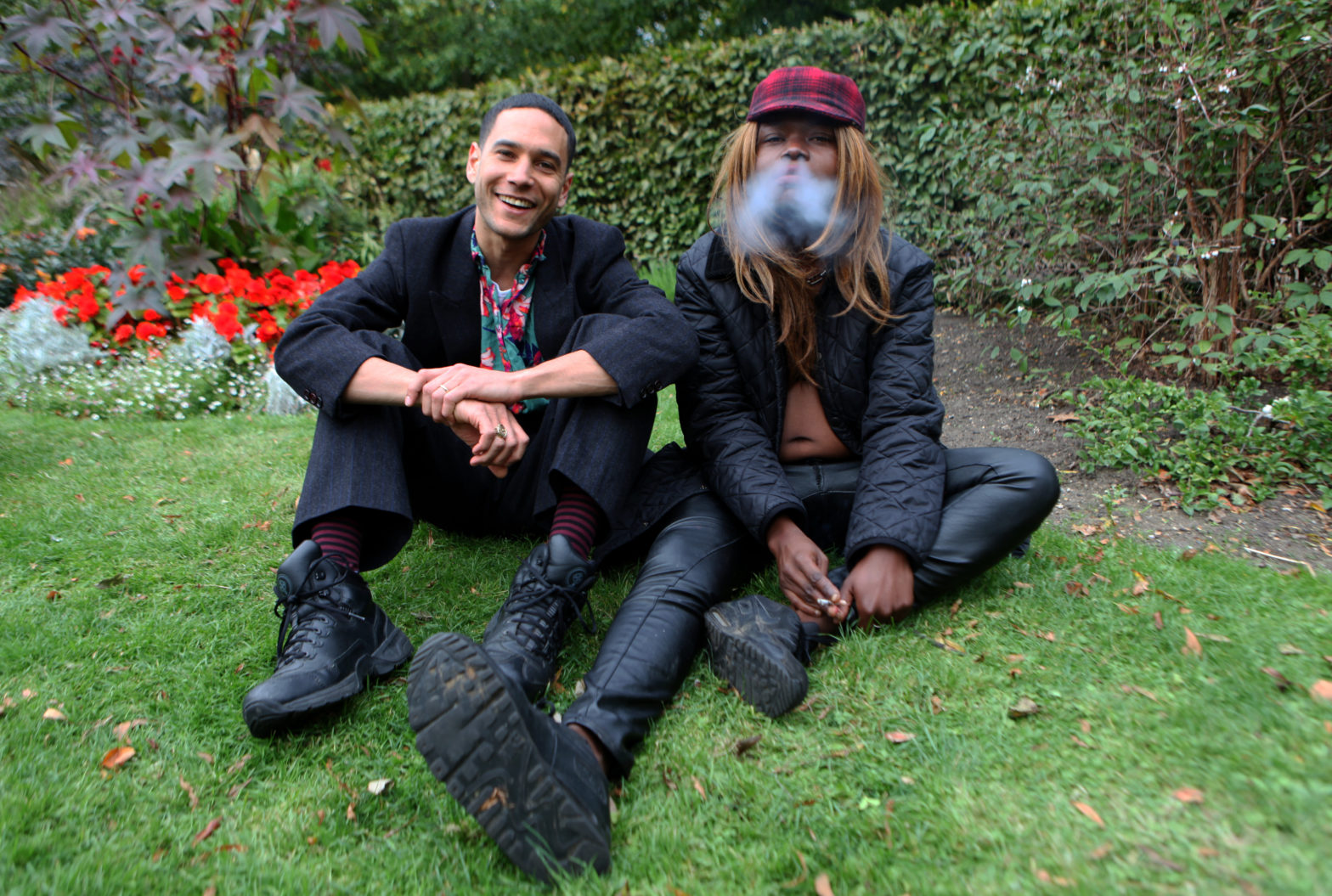
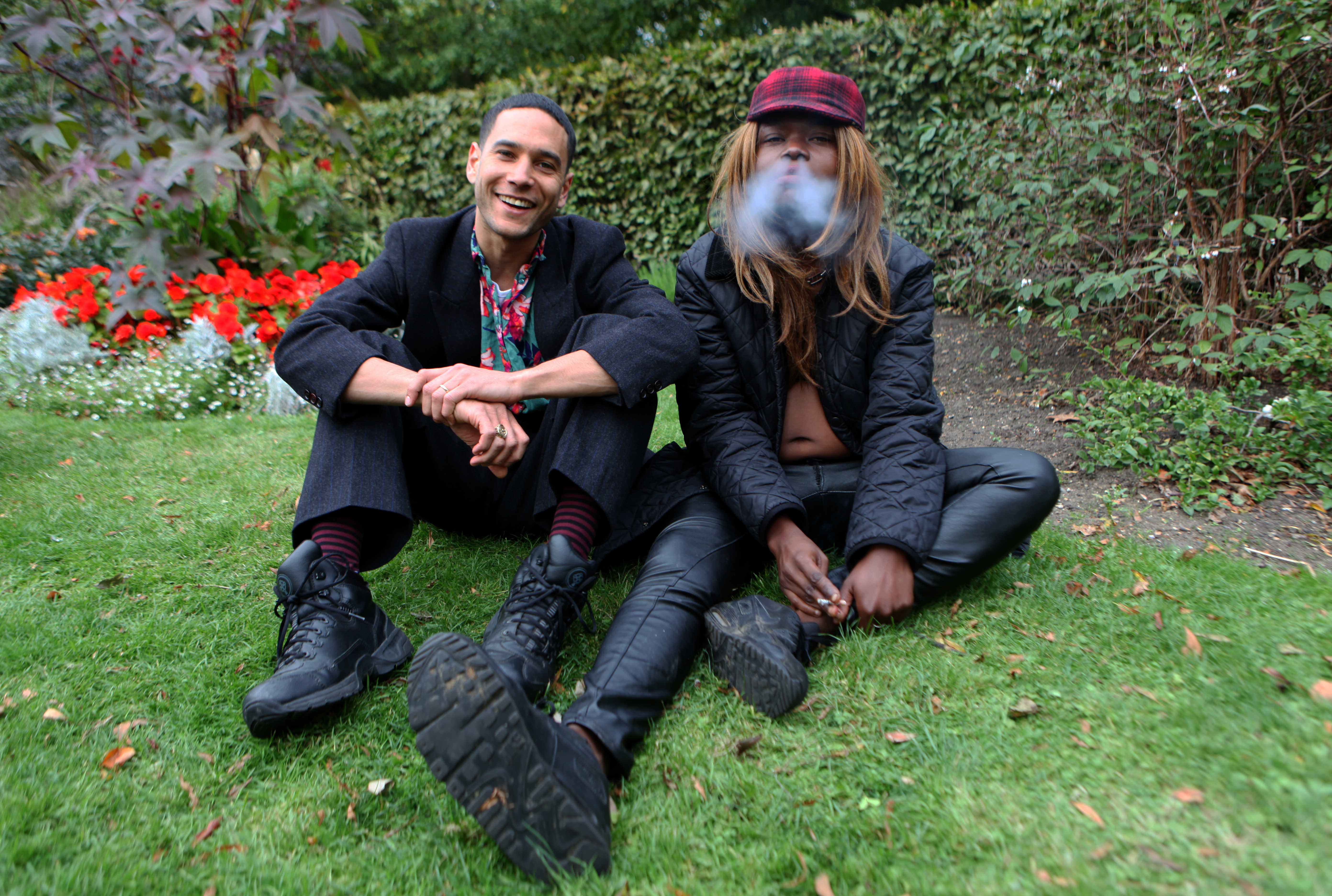
The duo, made up of vocalist Farai Bukowski-Bouquet and musician Basil Harewood Jnr. (a.k.a TONE) met five years ago through a video that TONE discovered of Farai performing with the Shop Floor Sessions collective. They met in Dalston’s Gillett Square and retreated to TONE’s home studio that same day, where they spent all night writing and recording. Their 2017 Kisswell EP arrived on NON-Worldwide last year. 

Ahead of the album, the duo have shared new single Punk Champagne’ / ‘This Is England, a double slab of warped, alternative pop channeling the bare bones ethos of post-punk, where the pair connect over upbringings dotted between different countries, and a shared heritage in the African diaspora (Farai grew up in Zimbabwe’s capital, Harare, until she was 11, and TONE’s father is from Guyana). 

“Punk Champagne” is characteristic of their stripped-back approach, composed of simply drums, vocals, and synths, its title a nod to a homemade cocktail TONE mentioned to Farai, made of buckfast and prosecco. “This Is England,” accompanied by a video directed by TONE, explores Farai’s reflections on work and hardship in contemporary Britain. The video is shot on a South London housing estate, a choice which TONE says reflects how “run down council estates crumble in the shadows of multi-million (or could be billion) pound private developments.” 

Tracklisting

01. Cray Cray

02. Lizzy

03. Punk Champagne (feat. TONE)

04. Social Butterflies

05. Talula

06. This Is England

07. National Gangsters

08. Love Disease

09. Secret Gardens

10. Space Is A Place (feat. Chris Calderwood)

 11. Radiant Child

Rebirth LP will land on November 30, with “This is England” streaming below. 

Podcast 565: Intergalactic Gary

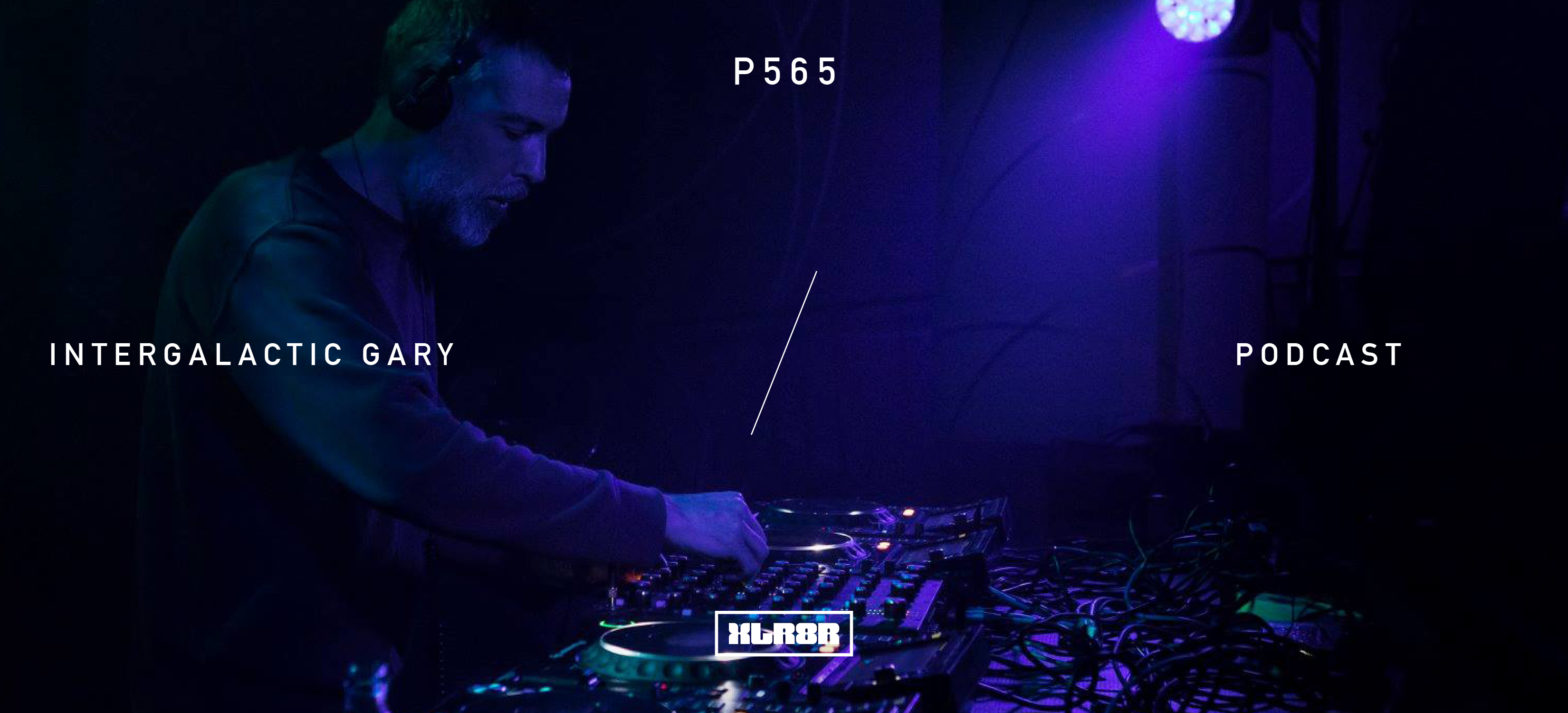
Having started mixing in his bedroom in the early ’80s, influenced by by the Italo-disco scene in The Hague, Intergalactic Gary—the alias of New Zealand-born John Scheffer (“I was actually called Gary, that’s the name my New Zealand birth mother gave me,” he told RA in a rare interview)—began his DJ career at the turn of the decade with the city’s squad and club parties. Among these was the LA D.S., where he appeared weekly from 1992 until 1996, delivering house, garage, and disco on Sunday nights. In 1994, he became a weekly guest DJ for regional pirate radio stations (Trend FM, Radical Radio) together with I-f and crew, and also produced his first record, Cold Turkey, released on Top Secret Records as Silverstream. 

Fast forward five years and he’d established himself as a pillar of The Hague’s electronic music scene, a fine purveyor of the local “West Coast sound”—think a mash of Detroit techno, Italo, and electro—and was beginning to see regular booking requests from promoters all across Europe, despite a reluctance to stray too far from home turf with much frequency. These progressions were certainly supported by his “Lift Off” track, released in 1998 in collaboration with I-F as The Parallax Corporation, but Scheffer’s reputation has been built predominantly on well-composed DJ sets and a complete dedication to his craft. Two published mixes for Intergalactic FM and Crème Organization respectively have raised his profile further, so much so that he was booked at Dekmantel, Dimensions, and this year’s Houghton Festival. And soon he’ll perform at Berlin’s Tresor and at London’s XOYO alongside Hunee on November 23, symbolic of the high regard in which he’s held by those in his orbit. 

And Scheffer’s podcast shows us why. At just over one-hour in length, is more compact and intense that some of his mixes, but it’s no less hypnotic or captivating. Interestingly, much of the material included is new, including Balaban’s “Takarini,” A Strange Wedding’s “Meta Romance,” and “Las Maquinas,” the latest from Argentinian producer Nehuen, all of which are dated 2018; 1984’s “La Edad Del Bronce” is unique in that it comes from another decade. Tracklisting aside, tune in now for a stylish mix of left-field techno and electro.  

What have you been doing recently? 

I have been busy traveling around Europe playing gigs and, while at home, collecting new music to play out. Also, I have been working on new music at my studio.

How and where was this mix recorded? 

This mix was recorded at home, with two x Pioneer CDJ-850s, and a Pioneer DJM-850 mixer. Recorded straight to a Sony digital recorder.

Is there a particular theme or idea behind it?

The theme or idea was to make a mix on a slow pace with hypnotic, driving tracks.

How did you choose the tracks that you included? 

I wanted to include some of my current favorites, mainly new tracks and upcoming material. 

How do you think it differs to your regular club mix?

This could be a selection that I would play on a radio show, or during an opening set in a club. 

What else have you got on the horizon? 

Currently working on new music in the studio, and about to finish a track together with Pasiphae for a compilation release of the Stroboscopes & Smoke machines documentary which is focusing on the current state of the “West Coast Sound of Holland.” Some of my newest music will be also released in 2019. 

Due to temporary issues regarding the GDPR, EU readers can download the podcast here.

Tracklisting

01. John T. Gast  “Jettison II”

02. Mecanica Popular “La Edad Del Bronce”

03. Balaban “Takarini”

04. Elements of Joy “In Every Man”

05. Block del Sur “Megaperiferia”

06. A Strange Wedding “Meta Romance”

07. Exhausted Modern “Minutes to Midnight”

08. Half-Mute “Xyncroton”

09. A Strange Wedding “The Wedding”

10. Autarkic & Hektic “Dolphin Dub”

11. Isatooment “Kijyoka”

12. In Flagranti “Sensory Cue”

13. Nick Mackrory “Uneven Keel”

14. The Horn “Injector”

15. Kris Baha “Something Something”

16. Nehuen “Las Maquinas”

17. Imre Kiss “Whipromance”

Smalltown Supersound Celebrates 25 Years With Three-Hour and 40-Minute Mix by Prins Thomas

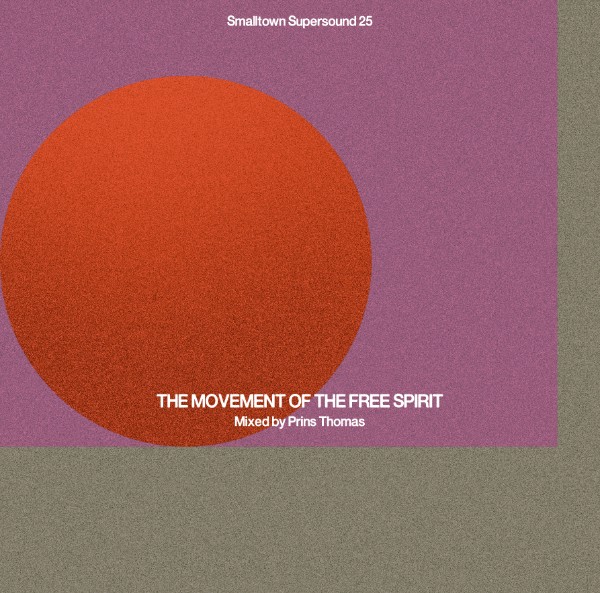
Smalltown Supersound, the Norwegian label run by Oslo-based Joakim Haugland, celebrates its 25th anniversary this year and will mark the occasion with The Movement Of The Free Spirit, a new mix album of the Smalltown Supersound catalog by Prins Thomas, out November 30. 

The Movement Of The Free Spirit is a three-disc mix comprised of 80 tracks and three hours and 40 minutes of music featuring artists including Sonic Youth, DJ Harvey, Studio, Yoshimi (Boredoms), Kim Gordon, Oneohtrix Point Never, Todd Rundgren, Stereolab, High Llamas, Neneh Cherry, Ricardo Villalobos, Four Tet, Bjørn Torske, Dungen, The Orb, Kelly Lee Owens, Lindstrøm, Unknown Mortal Orchestra, Biosphere, Peter Brötzmann, and many more (full track list is below). The mix will be released as a CD box set, digitally (mixed and unmixed) and disc one will be available as a double LP.

 The title, The Movement Of The Free Spirit, is borrowed from a Bruce Russell (of The Dead C) 10” that Smalltown Supersound released in 2000. Russell had borrowed it from the book by legendary Situationist activist and author Raoul Vaneigem.

The Movement Of The Free Spirit liner notes 

Trying To Be Like SST. Since 1993. 

I started Smalltown Supersound in 1993 while in high school in Flekkefjord, a small town of 4,000 inhabitants in the south of Norway. There was obviously no supersound in our small town. It was just an ironic name I came up with to release some tapes with lo-fi/noise/bedroom recordings by my brother and his friends. The name was inspired by my hometown and the catalog number STS was a homage to SST, a label I deeply admired at the time (and still do). Little did I know that I would have to live with that name for the rest of my life.

“I started the label before I knew what a record label was. So I gradually learned it by doing. And it was part of me growing up. It might sound like a cliché, but in many ways, the label is the soundtrack of my life. Thomas has now made it into a mixtape.

“We all hate to see photos of ourselves when we were younger, the bad haircuts and the strange clothes. It is the same thing when you run a label. You constantly look back on things you regret. This mix makes me see the label from the outside in a way I don’t think I have before. And to my surprise, the haircuts and the clothes weren’t as bad and strange as I remembered.

“I have to admit that I when I listened to it the first time, I was moved. First of all, because of the deep and true love Thomas has put into this mix. Second, because some of these tracks I haven’t heard in 20-25 years. It really felt like revisiting the past. And in a very good way.

“Thomas has followed the label since the early beginnings. Back in the days, I was always thinking: “He’s a house/disco DJ—why does he want my noise records?” I realize now I wasn’t smart enough to understand his scope. I didn’t understand it until his mix album Cosmic Galactic Prism, which is one of my favorite mix albums of all time. So for me, it was very obvious that Thomas should make the Smalltown Supersound mix. I just couldn’t imagine that he would go this beautifully far with it.

“Since day one I have tried to have a red thread run through the releases and the label’s DNA. Most of the time I am probably the only one who sees it. And many times I don’t even see it myself. Now Thomas has found the spiritual unity.

“While I have always struggled to describe what the label is, only now— with this mix—I can finally say: this is what it is.” — Joakim Haugland Oslo, August 2018

Tracklisting

Part 1 

01. Echo Troopers “Fred Astaire Session” (Intro) 

Deathprod “Orgone Donor”

Yoshimi & Mats Gustafsson “Soundless Cries With Their Arms In The Air” 

Yuichiro Fujimoto “Little Sun”

02. Bendik Giske “Hole”

Supersilent “13.1”

Biosphere “Aura In The Kitchen”

Supersilent “13.1”

Elektro Nova/Electro Nova “T03”

Bruce Russell “The Movement Of The Free Spirit” (The 1st Movement) 

03. Carmen Villain “Safe” 

Alexander Rishaug “Time And Place” 

04. Monopot “Scena Napoletana”

05. Continental Fruit “Dear Heart”

06. Biosphere “Wyll And Purpose” 

Lindstrøm “Call Me Anytime” (Oneohtrix Point Never Remix) 

Deathprod “Orgone Donor”

Arp “V2 Slight Return”

Monopot “Dronningen”

07. Monopot “Dronningen” 

Jaga Jazzist “Plym”

Todd Rundgren “Anything” (Vocal Outtake) 

08. Todd Rundgren “Anything” (Vocal Outtake) 

09. Todd Rundgren, Emil Nikolaisen & Hans-Peter Lindstrøm “Wrap Your Arms Around Me” (Stereolab vs High Llamas Remix) 

10. 120 Days “Sleepless Nights” 

11. Carmen Villain “The Moon Will Always Be There”

Continental Fruit “The Moon Was My Only Witness”

Mats Gustafsson & Sonic Youth “Part 3” (Contrabass Sax) 

12. Erik Wøllo “Ody At Sea”

Alexander Rishaug “Satellites”

Prins Thomas “B” (Sun Araw Saddle Soap Remix) 

13. Prins Thomas “B” (Sun Araw Saddle Soap Remix) 

Bjørn Torske & Prins Thomas “Arthur’s Return” (Long Unreleased) 

Serena Maneesh “Introspection” 

Serena Maneesh “Leipziger Love Life” (Ancient Mix) 

Mats Gustafsson & Sonic Youth “Part 4” (Voice) 

14. Wildest Dreams “Off The Lip”

Part 2 

01. Lindstrøm & Christabelle “Lovesick” (Four Tet Remix) 

02. Dungen “Franks Kaktus” 

03. Idjut Boys “One For Kenny” (Bjørn Torske remix) 

Idjut Boys “One For Kenny” (Idjut Version) 

04. Dungen “Alberto Balsam”

05. Prins Thomas “H” (The Orb Remix) 

Bjørn Torske & Prins Thomas “Arthur”

Kjetil D. Brandsdal “Komboloi”

Lindstrøm “No Release” (Owen Pallett Remix) 

06. Lindstrøm “No Release” (Owen Pallett Remix) 

Diskjokke “Cold Out” 

Yoshinori Hayashi “Bit Of Garden”

07. Yoshinori Hayashi “Bit Of Garden” 

Diskjokke “Cold Out”

Meanderthals “Andromeda” (Basic Idjut Version) 

Arp “The Past” (Version By Studio) 

Meanderthals “Andromeda”

08. Prins Thomas “C” (I:Cube Remix) 

09. Lindstrøm “Another Station” 

10. Bjørn Torske “Se Torsken” (Mungolian Jetset Remix) 

Dan Lissvik “Airwalk”

Dan Lissvik “G” 

11. Neneh Cherry “Slow Release”

Bjørn Torske & Prins Thomas “K16”

12. Bjørn Torske “Totem Expose” 

13. Kim Hiorthøy “Door Opens Both Ways”

14. Toy “Don’t Be”

15. Lindstrøm “Raakost” (Unknown Mortal Orchestra Version) 

Part 3 

01. Lindstrøm “The Contemporary Fix” (Bjørn Torske Remix) 

02. Matt Karmil “Morals”

Biosphere “With Their Paddles In A Puddle”

Andre Bratten “Minor Misconception” 

Carmen Villain “Planetarium” (Gigi Masin Remix) 

03. Andre Bratten “Minor Misconception” 

Carmen Villain “Planetarium” (Gigi Masin Remix) 

Brian Reitzell “Ozu Choral”

04. Carmen Villain “Planetarium” (Gigi Masin Remix) 

Mungolian Jetset “Mush in the Bush”

Bjørn Torske “Langt Fra Afrika”

05. Kelly Lee Owens “CBM”

Carmen Villain “Obedience” (Bjørn Torske Remix) 

Elektro Nova/Electro Nova “Phase One”

Elektro Nova/Electro Nova “Phase Two Part 3”

Brian Reitzell “Honeycomb”

06. Prins Thomas “C” (Ricardo Villalobos King Crab Remix) 

Bendik Giske “Adjust”

Elektro Nova/Electro Nova “T03” 

Prins Thomas “C” (Ricardo Villalobos Knödel Prince Dub) 

Mungolian Jetset “Shelton’s On A Bender” 

07. Neneh Cherry “Everything Is Everything” (Villalobos & Loderbauer: Vilod High Blood Pressure Mix) 

08. Bjørn Torske “Furu”

09. Andre Bratten “Pax Americana” 

10. Lars Horntveth “Kaleidoscopic”

11. Peter Brötzmann Chicago Tentet “II” (Performed by Joe McPhee & Ken Vandermark) 

The Movement Of The Free Spirit mix by Prins Thomas is out November 30. 

Jacknife Lee “Overview”

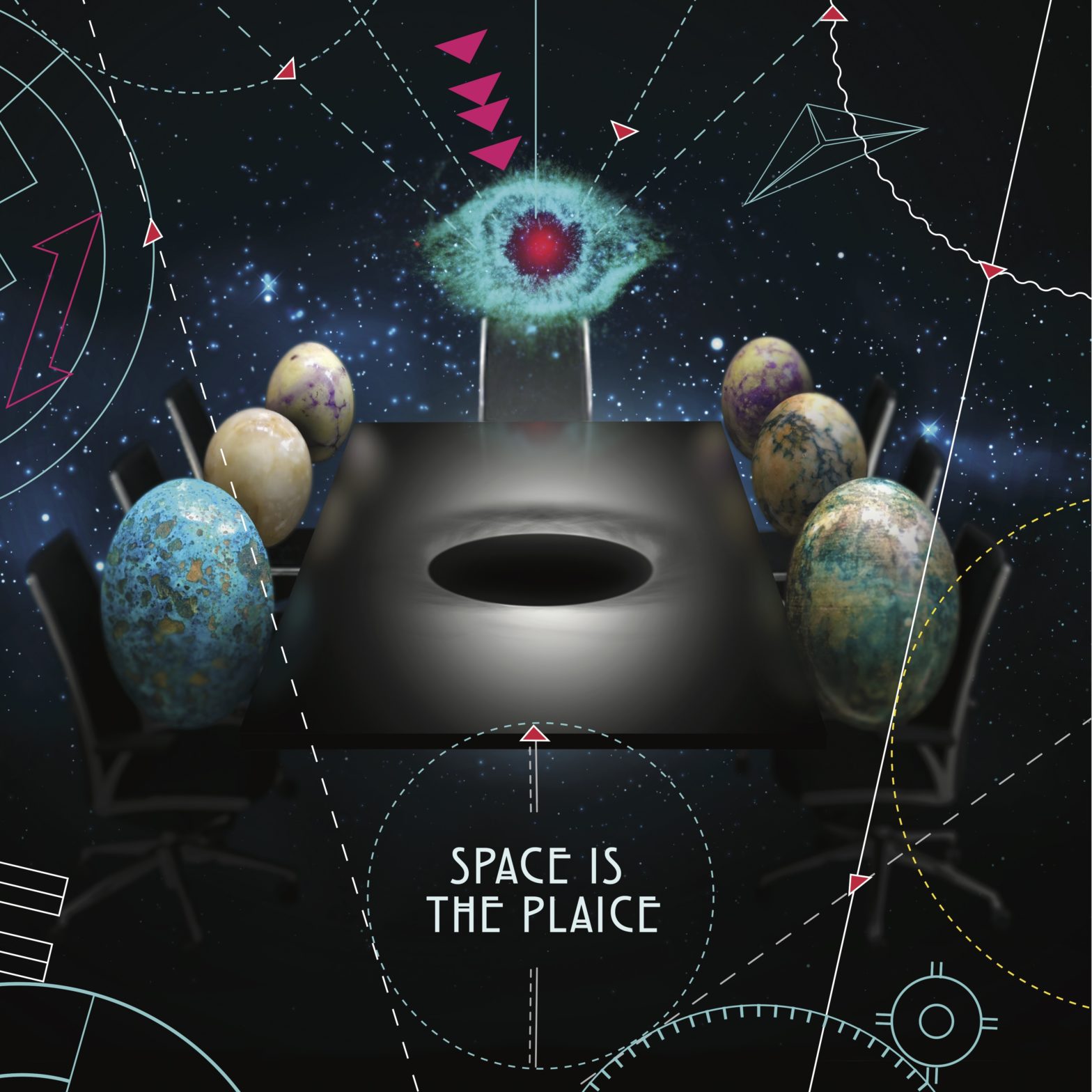
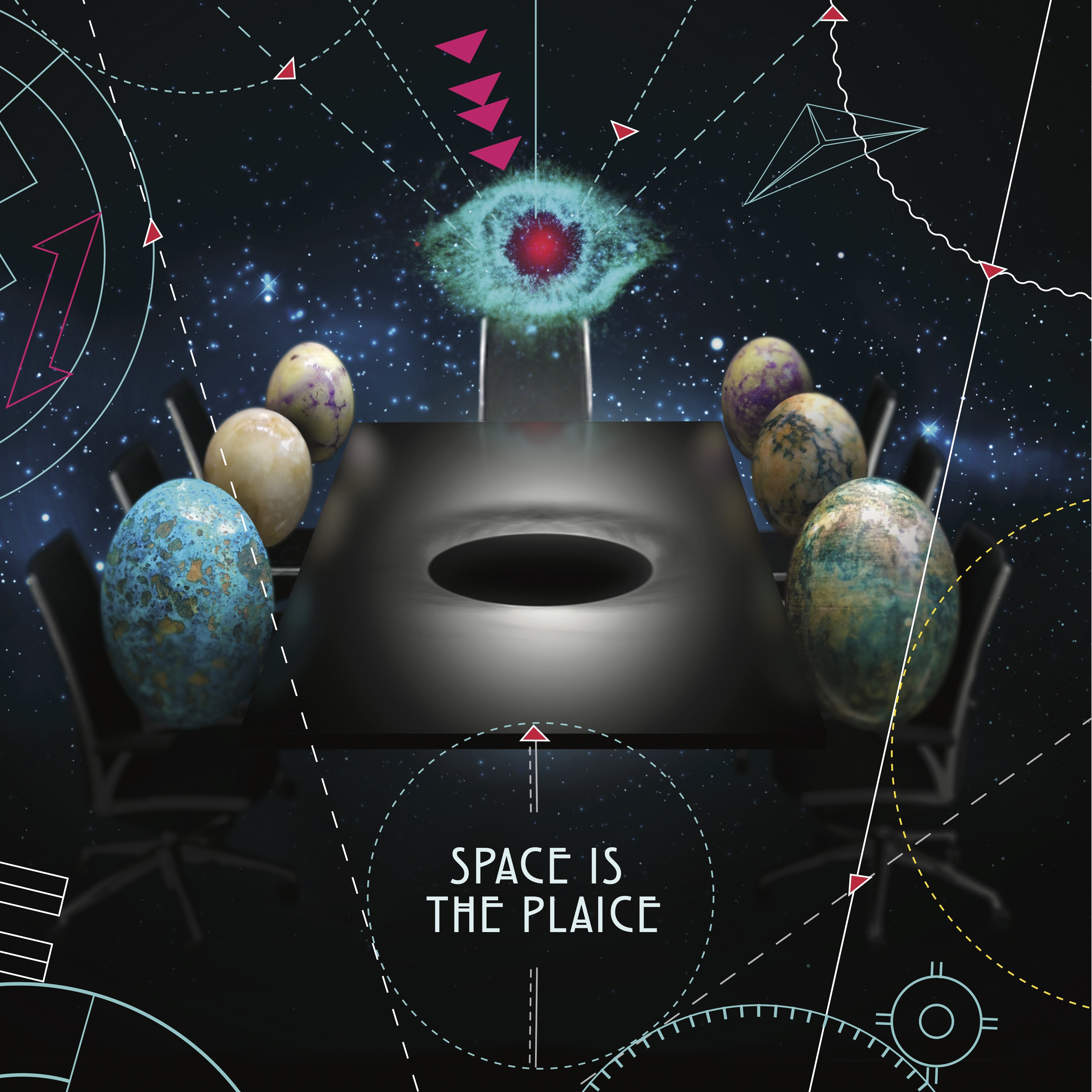
Reactivated cult label Pussyfoot Records presents a new installment of their renowned compilations. Space Is The Plaice is a 35-track “aquatic space opera,” the label explains, featuring all new and exclusive tracks from familiar faces such as label boss Howie B (ft. Walking Dead actor Norman Reedus), Major Force Productions, Jacknife Lee, Nick Faber, Rui Da Silva, Flowdan (of Roll Deep), Palm Skin Productions, and Pye Corner Audio to new artists like warped-jazz trio Blood Wine or Honey, art-pop talent Ninna Lundberg, and Milo Clare.

We’re told that the contributions interpret the galactic theme across a wide spectrum of sounds; from spacial soundscapes to trip-hop to cosmic disco to electronic ballads to extra-terrestrial funk and dream-pop. 

The album reaches to places that no label has reached before. Within the album, there is a deep sense of exploration of musical style and genre. A few years ago, the rebirth of Pussyfoot seemed light years away but all it took was a phone call to a few friends, asking if they’d like to write some music with a space edge. The result is beautiful and it will lead you far into the galaxy and beyond.”— Howie B

Space Is The Plaice will be released as a 35-track digital album with 28 track 3LP and 2CD versions on November 30. Ahead of the release, you can download Jacknife Lee’s “Overview” in full via the WeTransfer button below, or here for EU readers due to temporary GDPR restrictions. 

Tracklisting:

01. TILT “Creation”

02. Blood Wine or Honey “Brilliant Pebbles”

03. Major Force Productions “Watashi wa Hikari”

04. Timothy Fife and Deadly Avenger “Anemone Mine”

05. Palm Skin Productions “Air Is The Prayer”

06. Jacknife Lee “Overview”

07. MX-774 “Into The Cosmos”

08. Ancient Lights featuring Flowdan “Crash Landing”

09. Kensuke Shiina “Orbiting Satellites”

10. Knowone “airy’S”

11. Ninna Lundberg “Way Out”

12. Milo Clare “20000”

13. Nick Faber “Dancing At The End Of The Universe”

14. Dobie “Ripley’s Theme”

15. David Harrow “Jovian System” (Digital only)

16. Ezra Hames “Lightseeker” (Digital only)

17. KingKong & The Chum “This Is The Place”

18. Chari Chari “Backward Compatibility”

19. Howie B featuring Norman Reedus “Letter from Space”

20. Rui Da Silva “Interstellar Voyager 3”

21. Romin “Riders To The Stars”

22. Skylab “Hostile Planet Escape Sequence”

23. Tojin Kit “Machina”

24. Spacer “Pseudomorph” (Digital only)

25. Pye Corner Audio “Deep Space Probe”

26. Luke Haines “Deep Space Junk”

27. Snuffy.NYC “Premium Goods” (Digital only)

28. FPM “Accept You All”

29. Rob Spectrum “FTBG” (Digital only)

30. Sunny Levine “Moon Hung”

31. Borgar Magnason “Into the Wild”

32. Snerv “The Space In My Place” (Digital only)

33. Oisin Lunny “Spaceport” (Digital only)

34. Sie “Music For Spacestations”

35. Ofeliadorme “Hands”

Page 309 of 3781
1 307 308 309 310 311 3,781