
A lot has been written about Iglooghost but surprisingly little is really known of him. The young British artist, real name Seamus Malliagh, has been in the spotlight for some time—ever since his frantic, grime-infused 2015 breakthrough on Flying Lotus’ Brainfeeder—but has remained shy of the media, declining interviews out-right and comically circumventing any questions that threaten to puncture his playful persona. Malliagh is as intriguing as the music he produces.
Malliagh was born in Belfast, raised in London, and started experimenting with music around the age of 15. “I was trying to make like silly rap beats for other kids on the internet,” he once said. He’s been releasing music since the age of 17, much of it through his own Bandcamp page or through one of several imprints, including Error Broadcast, Activia Benz, and, of course, Brainfeeder. It was through the latter that he released his Chinese Nü Yr EP accompanied by the chimerical phantasy of a gooey worm-like creature and his witch hat named xiāngjiāo, before returning last year with a debut album that told of cartoonish adventures set in the fantastical realm of Mamu, once again with a bizarre visual aesthetic and outlandish computer-generated sound that blends footwork, IDM, hip-hop, bass, two-step, and more. It often feels as if sounds are strewn on the canvas without rhyme or reason.
More recently, he’s self-released the Clear Tamei and Steel Mogu, two EPs that explore Mamu as it was millennia ago and cement Malliagh as one of the most innovative and interesting producers out there. In light of this, XLR8R dialed him in to investigate the method behind the madness.
You appear to have picked up music production very quickly. Is it as easy as it seems?
Sometimes it’s so piss easy I want to scream with joy, and sometimes it’s so hard I have to get on my motorbike and do 200MPH on the M25 and just scream for 30 minutes.
What determines whether it’s easy or not—is it your headspace or is it more random than that?
I think there’s probably some chaos-theory-esque equation to figure out why it feels different depending on the way the wind’s blowing, but it’s got way too many factors for my puny brain to comprehend, innit.
Do you have a process for dealing with creative block?
Steal new noises, look at new pictures, run around outside—but I try to never ever pussy out and use it as an excuse to go into a cozy little slump. That’s wack as hell and just increases the stage-fright whenever it’s time to sit back in that chair.
So you always try to push through on “hard days”?
Yeah, I usually try and brute force my way through. It’s a kind of tough reality—but all my favorite stuff I’ve made has come from absolute ass-shattering, maddening, horrible processes, hahaha! It’s worth it though! I can buy mushy peas and chips whenever I want! But if it really feels like a terrible use of my time I’ll take pictures instead.
It’s interesting that you feel you make some of your best stuff when you’re struggling for inspiration. Has this always been the case?
No, it really depends, and I do sometimes wish I understood the logic and inner-workings of it all. Sometimes it’s scarily easy. Sometimes it’s as easy as saying: “I wanna make a song that sounds like an art version of “Loyal” by Chris Brown with loads of sound design,” and then exactly that gets made in like two days and is really fun. But I’m happy with staying ignorant as to how it all works behind the scenes in our brains though; I think that makes it all more magic and unpredictable.
Which tracks or releases specifically have come from these challenging periods?
That “Niteracer” track came out of not being able to make music for like four months despite trying all day everyday….then right after that, it felt like it unclogged a big pipe and I made a million cool songs really quick.
Do you feel that your best ideas come when you’re outside of your comfort zone?
Sometimes, but it’s not that simple. I have made songs I like wrapped up in a big duvet gargling seven hundred cups of tea but also with a headache and bogeys up my nose on a European train on an uncomfy chair.
Your music is very out there, with lots of elements and textures. How much of this creative process is based on instinct and how much on conscious analysis?
It’s all literally an accident. I’m a really bad producer because my intention is just to make “donk” music. It never goes as planned because my IQ is so low so it ends up sounding like Iglooghost.
How do tracks come together—and how long do they take, speaking generally?
I made these two new recent EPs in a day.
Is this the same for all tracks, or does it change?
I finish some of my tracks in one minute but Clear Tamei and Steel Mogu took about 10 minutes each and then I spent the rest of the day considering if I should put them in the recycle bin and smash up my hard drive or not, so I count that as a whole day’s work.
So is it fair to say a lot of your studio time is analyzing your work rather than making new music? If tracks are made in a minute then you’d be making many albums each day.
Yes. I have 7,000 albums made that I will never release. I never listen to them though because they make me feel sick and worried.
How is a track actually created? Can you shed some light on the actual process?
Throwing shit at the wall and seeing what sticks. There is no process and I get really worried when I find myself making shit in the exact same way. I think that’s a gross way of falling into becoming a boring ass producer. I know motherfuckers who have a saved preset rack of all their favorite sounds… like cool!!! Everything will sound like a remix of the same song. That’s some shit I’m really trying to avoid right now.
How much of your work ever sees the light of day, and how much goes in the bin?
I don’t ever finish or export anything I think is shit, so the unreleased tracks in my vault are at least okay to me. It can sometimes take me ages to make one song so it’s usually a big commitment to stick to composing a song when I think the original idea is ass.
You say it “takes you ages to make one song,” but you also said tracks are finished in a minute? Which is true?
It really depends, in truth. One time I made a song about being a crystal called “Pyong” who goes to high school but one time I made a song called “God Grid” and it took three months!
Do you find it helpful to revisit old sketches, or do you always start from scratch?
There are always bits in my finished tracks that come from loops that I’ve put in the bin. I think it’s cool to always remember that there are bits in some of my favorite stuff that originally existed in A TERRIBLE, UNLISTENABLE, SHITTY LOOP.
On any given day, what determines whether you start from scratch or start with an old sketch?
I usually swipe bits from whatever last failed project is open, and then start something new.
How do you feel the Clear Tamei and Steel Mogu dual EPs differ from your earlier work?
Hardly at all, they’re total shit.
Do you like the music that you make?
Yeah, it’s wicked. I’m cool. My next stuff is really good.
Can you elaborate—how is it different, or better?
It’s big and slow.
Where and when were these two EPs produced?
I produced them in the backseat of a car with horrible little iPhone earphones that hurt my ears. It was a bumpy journey and my friend driving kept stalling the car and running red lights. I kept looking out the window to look down manholes because I could see blinking eyes poking out of them.
Can you talk me through the specific production process behind one of the tracks? How come they’re produced so quickly?
I do it bar by bar by bar by bar by bar, and try and copy and paste as little as I can but also not get stuck in hypnosis, hacking away at one loop.
Where do you do the vast majority of your production? Where is your studio?
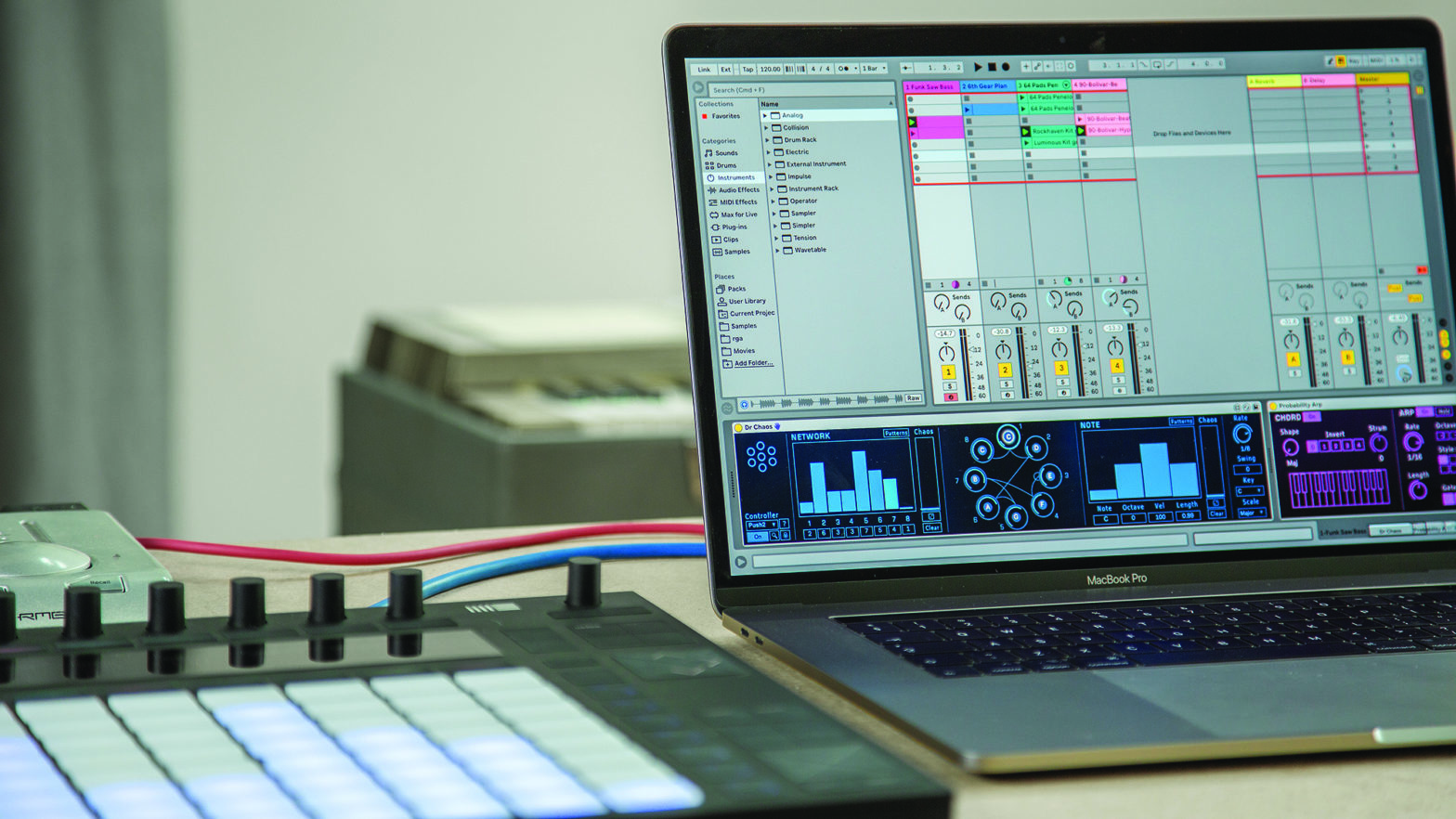
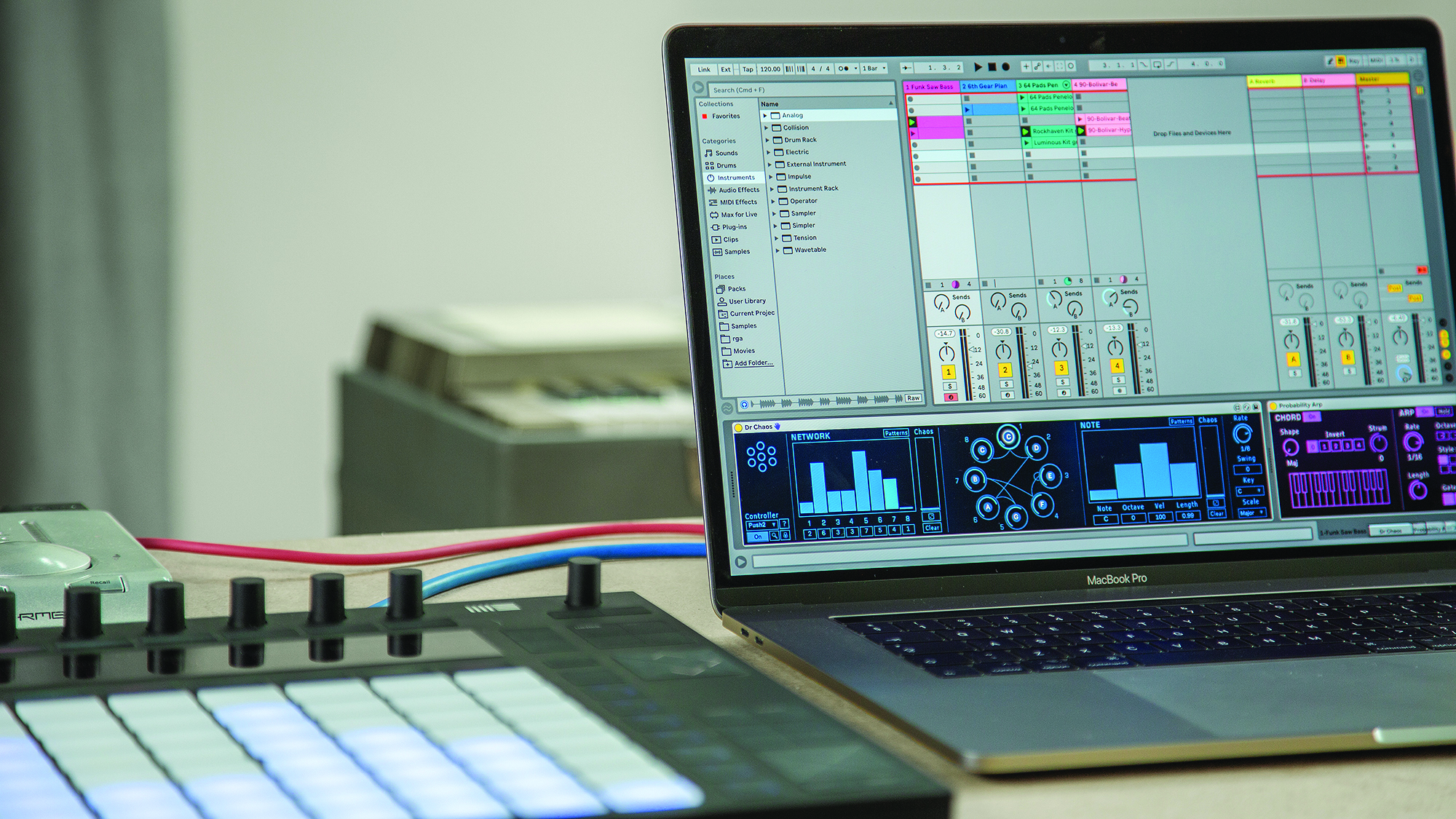
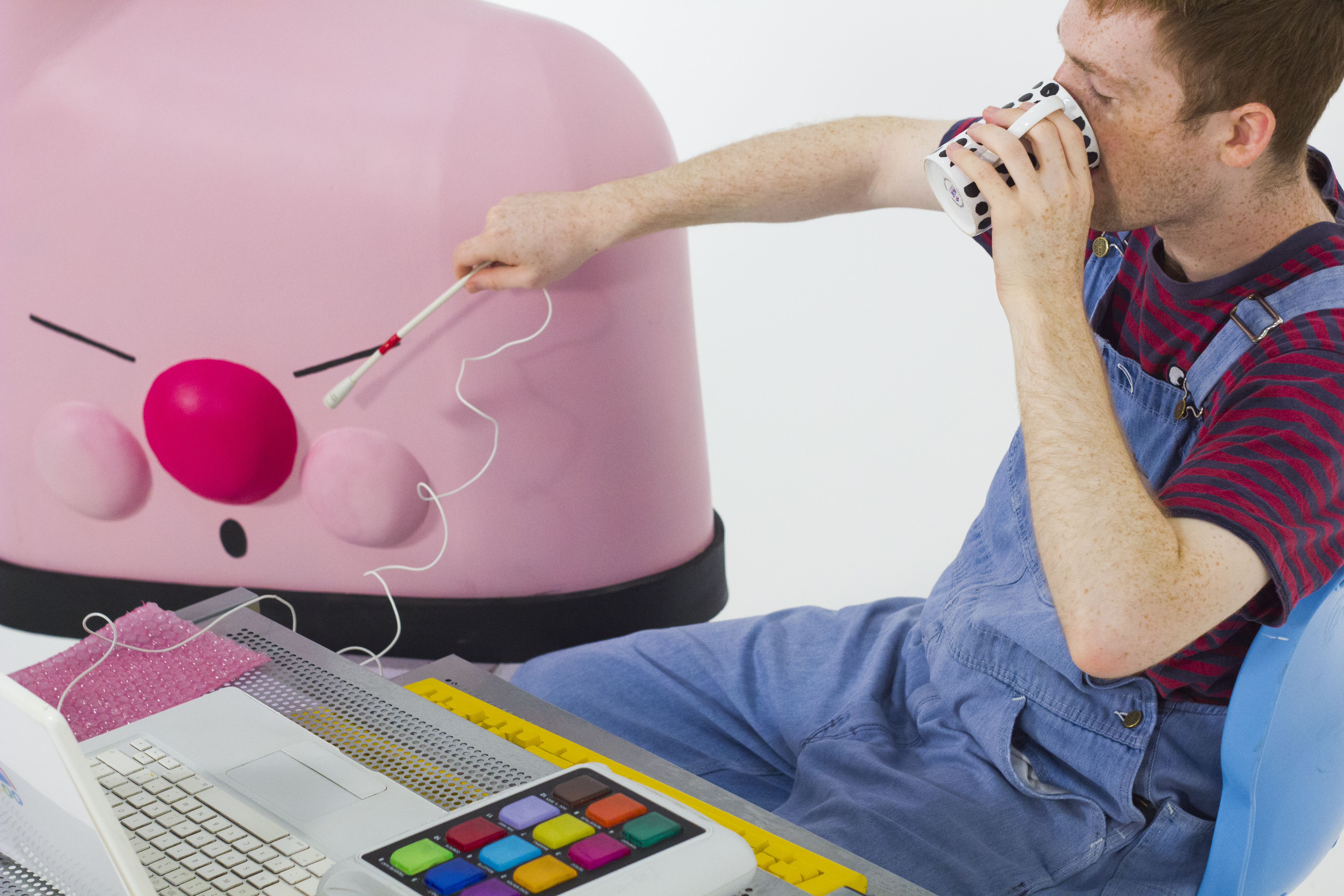
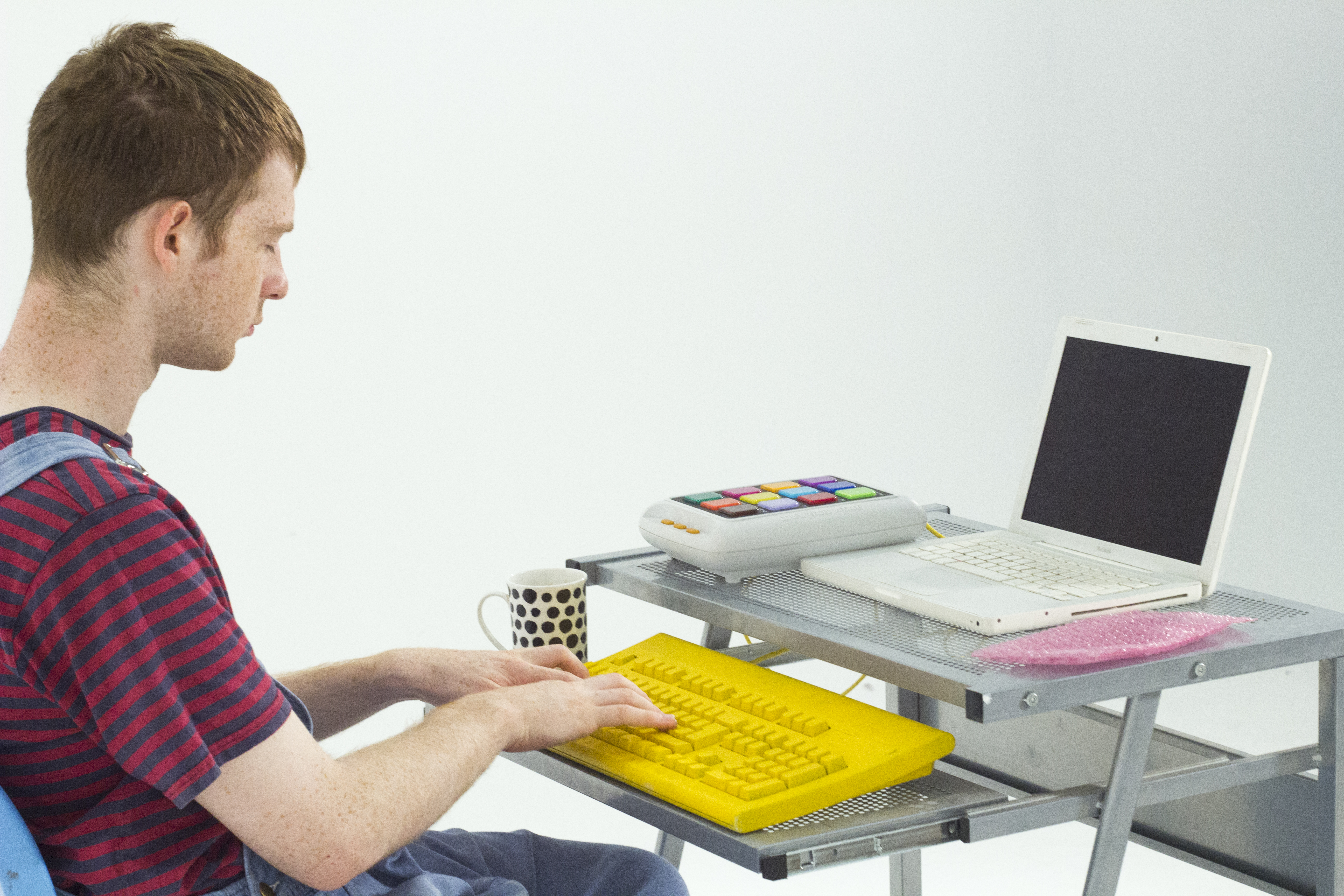
Me, sat in a chair with an aching back on a laptop. I like putting tons of objects around me.
What sort of objects and why?
Treasures and stuff I found that look cool together. I found a toy alien in a jar the other day—the cork on top is hot pink and the liquid has glitter in but the alien is hella ugly. It rules.
So are each of your tracks produced in different spaces, on the road, at home, etc?
Yes. But wherever it is I want it to be as uncomfortable as possible. Sometimes I make really complicated Rube Goldberg machines that are designed to repeatedly kick me up the ass while I make songs.
Why uncomfortable?
I don’t ever want music to be some indulgent escape that’s pleasurable enough as a process. It should be about what I manage to poop out at the end.
Do you find it easy getting into the creative headspace when your environment is changing so often?
Yeah, ‘cos I’m well clever.
So it’s a conscious effort to get into this headspace or does it happen naturally?
I usually plan ahead knowing I’m gonna start making stuff in like the next hour or something. Ninety percent of the time I’ll take a big long run-up.
Like psyching yourself up.
Yeh, I used to force myself to start the second I woke up but that makes music feel like forced labor.
And how long do sessions normally last?
All day.

What do you need to begin producing? What are the basic requirements?
A laptop, eight cups of disgusting pungent smoky tea, me slapping myself on the head and screaming sometimes. I eat whole cucumbers usually while I make songs.
Why cucumber?
They’re well good. Pure big ass crunchy cold juicy grass energy. You can pretty much taste all the sun and energy inside them.
Do you eat it with hummus?
Dunno, that feels too slimy. Hummus is alright. I don’t wanna get water in it though, you smell me?
What are the key pieces of gear behind Clear Tamei and Steel Mogu?
I made them on my laptop—but I turned it upside down so the keyboard and the screen were the wrong way round. That’s why they sound so good.
Why do you need to do this?
Bit of fun, innit? You ever made music with an upside down laptop? Don’t knock it till you try it.
Do you believe that unconventional approaches sit behind your unconventional music? Are you always looking to break the rules?
I like breaking rules but legally. Loopholes are cool and funny to me. I never got a detention in school but I was still sneaky as fuck. I wanna slip weird noises into people’s ears using a trojan horse of semi-normal 4×4 song structures.
How have your techniques and processes changed over time?
I think when I started making music I thought it was a good use of my time to go to parks and try and record field recordings of gates slamming and birds chirping and shit—not knowing that really I could just steal this stuff off freesound.org. I stopped messing around with hardware and toys and gadgets a few years ago when I realized it just doesn’t result in getting shit done for me. It’s honestly just a matter of strapping myself to the chair and being clever with MIDI and soft stuff. I hate touching things in real life and I’m glad I finally ended up admitting that I get no enjoyment out of pretending a fucking $300 Microkorg sine wave can’t be recreated in two seconds on a DAW for $0.00.
So, in terms of making your music, it’s all digital rather than organic?
Yes, the only gear I like is when it’s on a screen and downloaded from a torrent site! My favorite torrent team is Demonoid! Not even the cucumbers I eat are organic mate. It’s straight GMO to the tomb.
What software are you using and why?
I use Reason. I think I first got it ‘cos I wanted to remake Tyler The Creator beats when I was younger. Free Earl!
Have you ever tried producing on gear?
Yes, but I’m actually looking to destroy gear rather than acquire it usually. I don’t enjoy using hardware—so I don’t understand how anyone else could enjoy hardware. I’m usually correct about literally everything so I’m probably right about this. Hardware’s shit mate!
Why do you have this aversion to gear?
Yeah, it’s wank. People will spend literally £300 on a knob that just has a low pass filter on haha! You could buy 600 cucumbers, you morons!
Can you talk to me about your earliest memories with production? How did you first begin experimenting with music?
I made really horrible hardstyle beats when I was 12. That’s not even one of my stupid answers. Here’s the link.
What inspired you to start making music, and what were you trying to replicate?
Just wanted to impress girls and make a million dollars. I was 12 so I probably wanted to buy loads of those white chocolate buttons you get with the multicolored sprinkles on. They used to be my favorite things in pick n mix.
What were you using?
I used to use like a ‘90s ass software tracker. It was vertical and I had it on my old shitty whirring Dell laptop. I didn’t know what a BPM was!
How did you learn to produce?
I taught myself but probably in the wrong way. Nobody uses Reason so I never had a mentor or whatever. I am a lone wolf and I want everyone to pay.
Do you think this lack of musical training is fundamental in the unconventional nature of your work?
How dare you?!?!? I’ll have you know I’m near virtuosic at Toshio Iwai’s 2005 Nintendo DS game Electroplankton.
No seriously, I’ve heard it said that by following the rules you’ll just end up sounding like the person who wrote them. What do you think about this?
Yeah, maybe. It doesn’t matter as long as it sounds good in your own brain though. Depends how much you care about adding to the big fat musical cultural art conversation. I like dipping my toes in but then running away and making fun of it from afar.
As a producer, what do you think you’re good and not good at?
I think I’m good at squashing loads of things together like pictures and videos and talking and turning it into one package. Something I’m trying to get better at is escaping echoing older songs. That used to be fun to me but now I’m trying to make shit that sounds ten percent like older songs.
Something original, you mean—that’s your focus?
Yer.
How do you determine originality?
I dunno. I just wanna make stuff that’s only in my head and doesn’t exist already.
Do you find yourself to be more productive at a certain time of day, or do you need to be in a certain headspace to make music?
I tour a lot so I’m trying to get good at making shit in planes and trains etc. But I’m a massive diva and need everything right or I can’t do it. Actually, I made the song “Clear Tamei” on a bus from London to Bristol really hungover so that’s not true.
But “Clear Tamei” is an exception?
Nah, I’m just trying to say there’s no real consistency in the methods.
In what environment do you feel you do your best work?
It’s so inconsistent… sometimes I’ll wake up at 6 AM with a spring in my step, go on a run, eat bananas all day—and produce absolute fucking garbage. Then sometimes I’ll roll out of bed at like 4:30 PM, get to my laptop at like 5:15 PM and make the best shit I’ve ever heard in like one hour. I just want answers!
Would you say that tracks are normally conceptualized prior to writing and recording, or are they a result of spontaneous jamming and random ideas?
I make a lot of them in my head on train journeys ‘cos I don’t listen to music anymore, then I’ll go home and make them.
Why do you not listen to music?
‘Cos I keep losing my iPhone headphone adaptor!
How do you record these ideas, if at all?
Play them again and again and again in my head, or write them on my phone.
What forms the basis of each project?
Dunno, I get bored, innit.
Is boredom really the root of your work?
I think it’s mostly a deep-rooted mental affliction myself and a lot of people have, where I feel like I need to be removed from the planet if I don’t make anything of worth every day. It’s just fun accidentally hahaha.
It sounds like a love-hate relationship with music, is that fair?
Nah, I love it loads and it’s a bit baffling that music even exists. I like it more than pictures or smells or physical feelings or video or film or taste or anything—even though it’s technically just one dimension of a big puzzle. It’s insane that something that can only reach your ears can be that compelling. I’ve just slightly started prodding at about 0.000000000000000000001% of it and I don’t even wanna go a tiny bit any further because I like that it’s one of the only magic things that exist to me on planet Earth.
Are you critical with your productions?
Yeah. I’m trying to make a really really really good second album so I stop seeing myself in the mirror and thinking, “Who the fuck is that, I want to knock him out!!!” then realizing it’s myself. I wanna make a thing and be really proud and look in the mirror and look smug and think, “What a cool, clever, fit lad!!!”
Are you proud of what you’ve made so far?
Nah, it could be 400x better. I hate self-reflecting.
How do you know when a track is ready?
When my laptop runs out of RAM or I pass out.
Even though tracks are often done in a minute? You must have a shitty computer.
I make music on a DS Lite.
What’s next release-wise?
A big enormous album that sounds like slow motion god slugs.